SR1001 - Moligand™, ≥98% , Agonist of RAR-related orphan receptor-α;Agonist of RAR-related orphan receptor-γ, CAS No.1335106-03-0, Agonist of RAR-related orphan receptor-α;Agonist of RAR-related orphan receptor-γ
SR1001 - Moligand™, ≥98% , Agonist of RAR-related orphan receptor-α;Agonist of RAR-related orphan receptor-γ, CAS No.1335106-03-0, Agonist of RAR-related orphan receptor-α;Agonist of RAR-related orphan receptor-γ
QUALITÉ & PURETÉMoligand™?Moligand™ — Aladdin's line of ligands and bioactive small molecules. Use for receptor, pathway, and binding studies needing defined small-molecule tools.≥98%
Moligand™, ≥98% Moligand™ pour les flux de travail chromatographiques et analytiques sensibles nécessitant une interférence de ligne de base minimale.
🌡
Stockage & expédition
Store at -20°C,Desiccated Expédition Ice chest + Ice pads. Consultez le COA spécifique au lot pour les spécifications exactes.
📋
Documents qualité
SDS, COA, fiche technique et fiche de spécifications disponibles au téléchargement. COA spécifique au lot accessible via la recherche par numéro de lot.
📚
Preuve documentaire
Cité dans 0 publications à comité de lecture couvrant la chromatographie, la synthèse organique et les réactions de couplage croisé.
Vue d’ensemble
Store at -20°C. Store under desiccating conditions. The product can be stored for up to 12 months.
SR1001 has been used for inhibiting retinoid-related orphan receptor-γ t (RORγT) activation in Itch−/− mice.
SR1001 has been used as retinoic-acid receptor (RAR)-related orphan nuclear receptor gamma (RORγt) inhibitor to study its effects on interleukin 17 (IL-17) expression in itch cells , as a RAR-related orphan receptor alpha (RORα)- inhibitor to study its effects on RORα-dependent transcription of glucose-6-phosphatase (G6Pase) .
Potent, selective RORα and RORγt inverse agonist (K i values are 172 and 111 nM for RORα and RORγ respectively). Suppresses IL-17 promoter driven transcriptional activity. Inhibits TRAP220 nuclear receptor box 2 peptide interaction (IC 50 = 117 nM).
Conditions de stockage de stockage
Store at -20°C,Desiccated
Expédié en
Ice chest + Ice pads
Ce produit nécessite l'expédition en chaîne froide. Les services terrestres et autres services économiques ne sont pas disponibles.
Grade
Moligand™
Type d'action
AGONIST
Mécanisme d'action
Agonist of RAR-related orphan receptor-α;Agonist of RAR-related orphan receptor-γ
Note
Wherever possible, you should prepare and use solutions on the same day. However, if you need to make up stock solutions in advance, we recommend that you store the solution as aliquots in tightly sealed vials at -20°C. Generally, these will be useable for up to one month. Before use, and prior to opening the vial we recommend that you allow your product to equilibrate to room temperature for at least 1 hour. Need more advice on solubility, usage and handling? Please visit our frequently asked questions (FAQ) page for more details.
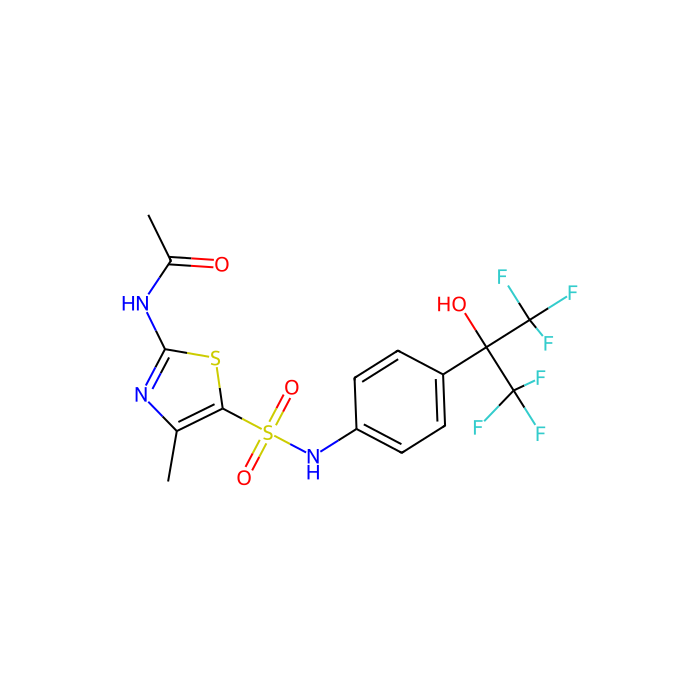
This compound belongs to the class of organic compounds known as sulfanilides. These are organic aromatic compounds containing a sulfanilide moiety, with the general structure RS(=O)(=O)NC1=CC=CC=C1.
External Descriptors
Not available
1. Djoumbou Feunang Y, Eisner R, Knox C, Chepelev L, Hastings J, Owen G, Fahy E, Steinbeck C, Subramanian S, Bolton E, Greiner R, and Wishart DS. ClassyFire: Automated Chemical Classification With A Comprehensive, Computable Taxonomy. Journal of Cheminformatics, 2016, 8:61.
Determine the necessary mass, volume, or concentration for preparing a solution.
Dilution Calculator
Determine the dilution needed to prepare a stock solution.
Reconstitution Calculator
Avis
Avis des clients
Application Protocols
General, literature-based guidance for using SR1001 as a research ligand (not item-validated; optimize per assay)
Preparation
Warm vial to room temperature in a desiccated environment. Add anhydrous DMSO to prepare a concentrated stock (e.g., 10 mM). Vortex until fully dissolved; brief sonication may help. Record exact concentration.
Aliquot the stock into single-use volumes (e.g., 10–50 µL) to avoid repeated freeze–thaw. Store at -20°C protected from light.
Cell-based assays
Dilute the DMSO stock into pre-warmed culture medium to the desired working concentration, maintaining final DMSO ≤0.1–0.2% v/v when possible.
Include a vehicle control at the highest matching DMSO level. Consider a positive control ligand (if applicable) and a non-targeting negative control.
Typical exposure windows: 4–24 h for transcriptional assays; adjust based on kinetics and cell health. Assess viability in parallel (e.g., resazurin, ATP content).
Biochemical assays
For TR-FRET/coactivator recruitment assays, pre-incubate receptor LBD with SR1001 across a concentration range (e.g., 0.001–10 µM) and read after equilibrium is reached per kit guidance.
For binding/competition assays, maintain constant receptor concentration and titrate ligand; verify absence of compound autofluorescence interference.
Notes
Filter working solutions (0.22 µm) if needed. Avoid repeated warming/cooling cycles. Document lot number and preparation details in lab records.
Biological Roles
General literature context (no medical/clinical claims)
Target class: SR1001 is widely cited as a small-molecule modulator of retinoic acid receptor–related orphan receptors, notably RORα and RORγ, acting as an inverse agonist in many assay systems.
Mechanistic rationale: RORs are ligand-regulated transcription factors. Inverse agonism typically suppresses basal transcriptional activity by stabilizing receptor conformations that disfavor coactivator recruitment and/or promote corepressor engagement.
Research applications: SR1001 is used to probe ROR-dependent transcriptional programs in cell lines and primary cells, evaluate pathway cross-talk (e.g., with retinoid and sterol signaling), and benchmark new chemical entities in SAR campaigns.
Assay modalities: common use cases include luciferase reporter assays driven by ROR response elements, coactivator recruitment TR-FRET, radioligand or competition binding (where available), and qPCR readouts of ROR target genes.
Caveats and best practices
Off-target profiling is recommended; nuclear receptor ligands can display polypharmacology at higher concentrations.
Validate activity in multiple assay formats (binding vs. function) to disentangle direct receptor modulation from downstream effects.
Match vehicle controls to the highest solvent concentration, and include cytotoxicity/viability readouts to contextualize transcriptional effects.
Item-specific note
No lot-specific potency, selectivity, or assay validation data are provided for this item; consult literature and generate in-house controls as needed.
Buffer Applications
Not typically applicable. SR1001 is a bioactive small molecule, not a buffering agent.
Practical guidance
When introducing SR1001 into buffered aqueous systems (e.g., PBS, HBSS, culture media), first prepare a concentrated stock in an appropriate organic solvent (commonly DMSO), then dilute into the buffer with rapid mixing.
Keep final organic solvent content low (commonly ≤0.1–0.5% v/v) and confirm that buffer components do not precipitate the compound. If precipitation occurs, increase mixing time, adjust temperature slightly (to ambient), or increase the proportion of a biocompatible co-solvent (ethanol, DMSO) within assay tolerance.
Filter solutions through a 0.22 µm membrane if clarity/sterility is required.
Green Alternatives
Context: As a bioactive ligand, SR1001 itself does not have a greener “substitute” in the synthetic sense. However, greener handling can be achieved through solvent and process choices when preparing and using solutions.
Greener handling strategies
Prefer ethanol or aqueous cyclodextrin formulations over high percentages of DMF when assay compatibility allows.
Minimize DMSO concentration in final assay media (≤0.1–0.2% v/v) to reduce solvent burden while maintaining solubility.
Use small-volume aliquots to reduce waste from freeze–thaw and expired solutions.
Ethanol: renewable feedstocks available; good biocompatibility; lower solvency for hydrophobic ligands.
PEG400/cyclodextrins: can enable aqueous delivery; assess potential assay interactions and downstream disposal requirements.
Operational choices
Adopt microplate-based serial dilution to minimize solvent consumption.
Validate room-temperature short-term handling to avoid unnecessary dry ice usage during frequent access, while retaining -20°C long-term storage.
Note: No item-specific green certifications or solvent substitution data are provided; evaluate options within your assay constraints and institutional green-chemistry policies.
Pharmaceutical Uses
Scope and limitations
This product is provided strictly for research use only; it is not intended for human or veterinary use, diagnostic procedures, or as an API.
General formulation roles (literature/discovery context)
Reference tool compound: SR1001 is commonly used in discovery biology as a pharmacological control or benchmark ligand for RORα/γ in vitro and ex vivo studies.
Early formulation screening: researchers may explore solvent systems (DMSO, ethanol, PEGs, cyclodextrins) to study exposure and stability in preclinical models; these activities are exploratory and not equivalent to GMP manufacturing.
Not specified for this item; refer to CoA/Spec Sheet
No pharmacopeial monograph, excipient status, residual-solvent class data, or GMP documentation are provided for this item.
Best practices
If using in regulated environments, independently qualify identity, purity, and stability; develop fit-for-purpose specifications. Maintain chain-of-custody and storage logs to document material history.
Physical Properties
Item-specific (from Product Data)
Appearance: Not specified for this item; refer to CoA/Spec Sheet.
Not specified for this item; refer to CoA/Spec Sheet
Molecular weight, molecular formula, exact solubility limits, melting point, boiling point, density, refractive index, pKa, logP/logD: Not specified for this item; refer to CoA/Spec Sheet.
General/literature handling characteristics for SR-class ligands
Physical state: commonly supplied as an off-white to light solid or film; may also be provided as a dry film in vials to facilitate accurate DMSO reconstitution (verify on CoA).
Solubility (qualitative, literature): typically soluble in DMSO and DMF; limited aqueous solubility is expected without co-solvent or surfactant. Ethanol or isopropanol can serve as secondary solvents; aqueous working solutions often require serial dilution from a DMSO stock with vigorous mixing.
Hygroscopicity: many bioactive small molecules can be moisture-sensitive; desiccated storage is recommended (see Storage & Reconstitution).
Stability: protect from prolonged exposure to light and repeated freeze–thaw cycles to minimize degradation and potency drift; tightly recap under inert atmosphere if available.
Practical notes
Prepare fresh working solutions before use; filter sterilize (0.22 µm) if sterility is required for cell-based assays. Assess solubility visually after dilution (turbidity or precipitate indicates the need for additional co-solvent or lower final concentration).
Quality and Grades
Item-specific (from Product Data)
Grade/Purity designation: Moligand™
What Moligand™ implies (general explanation)
The Moligand™ designation is used for small-molecule ligands intended for research screening, target validation, and mechanistic studies. Emphasis is typically placed on identity confirmation and suitability for biochemical/cellular assays rather than on chromatographic UV cutoffs or ultra-trace impurity certification associated with analytical solvents.
Typical controls (general): identity verification by NMR/HRMS and/or LC–MS, assay of purity by HPLC/UPLC, and documentation suitable for research use. Exact test suite and acceptance criteria are product-specific.
Not specified for this item; refer to CoA/Spec Sheet
Exact purity percentage, residual solvent limits, water content, metal content, stabilizers, and UV characteristics are not specified for this item; refer to CoA/Spec Sheet.
Practical notes for users
For quantitative biology or medicinal chemistry, request and review the CoA/Spec Sheet and (if needed) a lot-specific analytical package (chromatogram, MS, NMR) to ensure suitability.
If your application demands ultra-low endotoxin, bioburden, or specific counter-ion content, contact Technical Support to confirm feasibility prior to use.
Reaction and Applications
This product is not typically employed as a synthetic reagent or catalyst. It is supplied as a research-grade small-molecule ligand for receptor pharmacology and chemical biology.
Relevant applications (literature/general)
Chemical probe for nuclear receptor biology: commonly used to interrogate retinoic acid receptor–related orphan receptors (RORs) in biochemical binding assays, reporter gene systems, and cellular pathway studies.
Target modulation studies: supports concentration–response profiling, mechanism-of-action investigations (e.g., inverse agonism), and temporal dosing paradigms in cell culture.
Proteomics/chemoproteomics workflows: may serve as a competitor/positive control in ligand-binding or pull-down experiments targeting ROR ligand-binding domains.
Practical tips
Prepare fresh DMSO stocks; verify concentration by UV or quantitative NMR if required for precise dosing.
Include solvent-only controls matching the highest vehicle percentage in assay wells.
Confirm lack of fluorescence/absorbance interference in reporter assays by running counter-screens.
For synthetic organic chemistry purposes, SR1001 is not recommended as a reagent or building block. Users seeking transformations, named reactions, or catalytic applications should consult alternative reagents specifically designed for such roles.
Reaction Conditions
Not applicable for this product’s intended use. SR1001 is not used to mediate chemical reactions as a reagent or catalyst.
General assay conditions (literature/guidance for use as a ligand)
Stock solutions: commonly 5–50 mM in anhydrous DMSO; store aliquots at -20°C.
Working concentrations: exploratory ranges in cell-based assays often span low nanomolar to low micromolar; optimization is assay- and cell-type–dependent. Always include a vehicle control.
Incubation: 4–24 h exposures are typical for transcriptional readouts; shorter times may suffice for binding/coactivator assays. Validate time course.
Temperature/light: standard cell culture conditions; protect solutions from strong light to minimize photodegradation.
Note
The above are general literature practices for small-molecule receptor ligands and are not item-specific specifications. Validate conditions empirically for your system.
Safety and Handling
Item-specific (from Product Data)
GHS signal word, pictograms, hazard statements, and classification: Not specified for this item; refer to SDS.
General laboratory safety guidance (not a substitute for SDS)
Handle in a chemical fume hood wearing appropriate PPE: lab coat, safety glasses, and chemical-resistant gloves (e.g., nitrile). Avoid inhalation, ingestion, and skin/eye contact.
Bioactive nature: as a receptor-active small molecule, treat as potentially harmful at low doses; minimize exposure and avoid aerosol generation.
Storage incompatibilities: avoid strong oxidizers and strong acids/bases unless compatibility is known. Protect from moisture and light where possible.
Spill/accidental exposure: for skin contact, wash with soap and water; for eye contact, rinse cautiously with water for several minutes and seek medical advice; if inhaled, move to fresh air; if ingested, rinse mouth and seek medical attention. Follow institutional incident procedures.
Waste disposal: collect solid and liquid waste in properly labeled hazardous waste containers; do not discharge to drain. Follow local regulations and institutional EHS guidance.
Transport within facility: keep container closed, secondary containment recommended to prevent breakage.
Always consult the product-specific Safety Data Sheet (SDS) for authoritative hazard information and first-aid measures.
Solvent Selection
Applicability: SR1001 is used primarily as a bioactive chemical probe; solvent selection focuses on stock preparation and delivery into aqueous systems.
General solvent guidance (literature/common practice)
Primary stock solvent: DMSO is the standard due to high solvating power and biological compatibility at low percentages.
Secondary solvents: ethanol or isopropanol can be used when DMSO is undesired; DMF is effective but less favored for biological work.
Aqueous delivery: prepare concentrated organic stocks (e.g., in DMSO) and dilute into buffered media with vigorous mixing; keep final organic solvent ≤0.1–0.5% v/v where cell/tissue compatibility is critical.
Polarity/miscibility context (general)
DMSO: highly polar aprotic, completely miscible with water; excellent for difficult-to-dissolve ligands.
Ethanol: polar protic, miscible with water; good biocompatibility at low percentages.
PEG400 or Captisol (cyclodextrin): can aid solubilization for in vivo-like models; evaluate for assay interference.
Selection tips
Choose DMSO for maximum solubility and stability screening.
Prefer ethanol when assay design demands minimal DMSO and the ligand’s solubility permits.
Filter 0.22 µm after dilution if particulates are observed; avoid heating above ambient unless stability has been established.
Not specified for this item; refer to CoA/Spec Sheet
Exact solubility values in specific solvents are not provided for this item.
Storage and Reconstitution
Item-specific (from Product Data)
Storage conditions: Store at -20°C, desiccated.
Shipping: Ice chest + ice pads.
General best practices
Keep container tightly closed under dry, inert atmosphere if available. Protect from light. Allow vial to equilibrate to room temperature before opening to avoid moisture condensation.
Upon first use, prepare concentrated stocks in anhydrous DMSO (or another validated solvent). Vortex to dissolve completely; do not heat unless stability has been established.
Aliquot into single-use portions to minimize freeze–thaw; store aliquots at -20°C. Avoid frost-free freezers that cycle temperatures.
For short-term bench use, limit cumulative time at room temperature; return unused material promptly to cold, dry storage.
Stability and specifications
Item-specific re-test dates, stability indicating methods, and solution shelf-life are not specified for this item; refer to CoA/Spec Sheet.
Reconstitution troubleshooting
If undissolved: confirm solvent choice, increase concentration of organic co-solvent, or apply brief bath sonication. If precipitation occurs on dilution into aqueous media, add slowly with vigorous mixing and ensure final solvent composition is within assay tolerance.
Structure and Identity
Brief overview: SR1001 is a research-grade small-molecule ligand supplied as Moligand™ quality for chemical biology and receptor pharmacology workflows.
Item-specific (from Product Data)
Product name: SR1001 (SKU: S275957)
CAS: 1335106-03-0
PubChem CID: 44241473
InChIKey: 271292 (as provided)
Grade: Moligand™
Not specified for this item; refer to CoA/Spec Sheet
Molecular formula: Not specified for this item; refer to CoA/Spec Sheet.
Molecular weight: Not specified for this item; refer to CoA/Spec Sheet.
SMILES: Not specified for this item; refer to CoA/Spec Sheet.
General structural notes (literature)
Compound class: small-molecule nuclear receptor ligand; commonly cited as an inverse agonist/modulator of retinoic acid receptor–related orphan receptors (RORs).
Functional features typically associated with such ligands include a multi-ring or polyaromatic scaffold with heteroatom substituents capable of engaging the ligand-binding domain (H-bond donors/acceptors and hydrophobic pharmacophore regions). Exact atom connectivity should be confirmed against the provided CoA/SDS.
2D structure description (general, literature)
SR1001 is generally depicted as a compact, polyfunctional organic molecule designed to occupy the ROR ligand-binding pocket, presenting both hydrophobic surface area and polar interaction points. For definitive stereochemistry, ring count, and substituent regiochemistry, consult the manufacturer’s CoA or an authenticated structural record (e.g., PubChem CID 44241473).
Synthetic Utility
Not a typical synthetic building block. SR1001 is supplied as a finished bioactive ligand rather than a reagent for transformations or a scaffold bearing orthogonal handles for routine derivatization.
General medicinal chemistry considerations (literature)
While SR1001 itself is generally used as a tool compound, related programs may use it as a reference for structure–activity relationship (SAR) efforts targeting RORα/γ. Analog development commonly explores modifications that maintain key receptor interactions while tuning potency, selectivity, and ADME properties.
If derivatization is pursued, ensure that any new analogs are fully characterized (NMR, HRMS, HPLC) and reassessed in both binding and functional assays to confirm retention of the intended pharmacology.
Operational guidance
Avoid using SR1001 as a surrogate reagent in coupling, redox, or catalytic reactions; choose dedicated reagents optimized for synthetic chemistry instead.
For assay bioconjugation or immobilization concepts, custom synthesis using SR1001-inspired linkable analogs is generally preferred over direct modification of this item.
Target Specificity
General literature information
Primary targets: Retinoic acid receptor–related orphan receptors RORα and RORγ are widely reported as the intended nuclear receptor targets for SR1001 in inverse agonism paradigms.
Mode of action: inverse agonist/modulator of the ligand-binding domain, reducing basal transcriptional activity in reporter and cellular assays.
Selectivity: Detailed cross-screening data versus other nuclear receptors vary by study and assay format. Users should confirm selectivity in their system (e.g., NR panel, off-target profiling) since potency and selectivity can be context-dependent.
Item-specific data
No lot-specific binding constants (Ki), IC50/EC50 values, or selectivity panel results are provided with this listing. Refer to primary literature and perform in-house verification for critical applications.
Recommendations
Include orthogonal readouts (binding vs. function) and incorporate negative/positive controls to substantiate target engagement.
Foire aux questions
What is the purity of this product?
This product is supplied at ≥98% purity (chemical assay). Lot-specific values are stated on the Certificate of Analysis.
What is Moligand??
Moligand? is one of Aladdin Scientific's premium product lines, formulated for high-purity applications across multiple workflows. Compared to standard grades in the same workflow, Moligand? products typically offer tighter specifications, more rigorous QC, and stronger lot-to-lot consistency.
How should this product be stored?
Store at ?20 °C, desiccated. Keep the container tightly closed with desiccant — the material is moisture-sensitive.
How is this product shipped?
This product ships in an insulated container with ice pads. Unpack on arrival and transfer it to the storage condition stated above.
What are the CAS number, molecular formula and molecular weight?
The CAS Number is 1335106-03-0, the molecular formula is C15H13F6N3O4S2, and the molecular weight is 477.39 g/mol. InChIKey OZBSSKGBKHOLGA-UHFFFAOYSA-N.
What documentation is provided?
Available product documentation, including Certificates of Analysis (COA), Safety Data Sheets (SDS), and specification sheets, is shown in the product document area. Document availability and access follow the current site policy.
Besoin d'aide pour choisir la qualité ?
Notre guide de sélection des qualités couvre la pureté, le statut du stabilisant et l'adéquation à l'application pour toutes les variantes de notre catalogue.
Nous utilisons des cookies pour garantir le bon fonctionnement du site et, lorsque cela est autorisé, pour améliorer votre expérience. Vous pouvez gérer vos préférences à tout moment dans les Paramètres. Pour en savoir plus, consultez notre Politique relative aux cookies.
Souhaitez-vous que nous vous envoyions un message lorsque des réductions seront disponibles?
Me rappeler plus tard
Merci ! Veuillez vérifier votre boîte de réception e-mail pour confirmer.
Products are supplied to verified businesses, institutions, and qualified professionals for research and development use only. Not for use in humans, animals, diagnosis, or therapy.

 A2215001