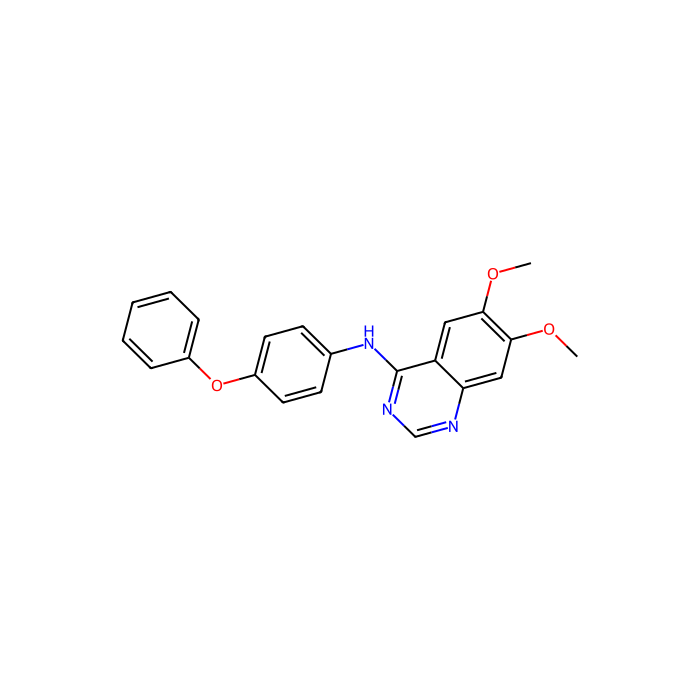
Src Inhibitor-1 - Moligand™, ≥98%(HPLC) , Inhibitor of receptor interacting serine/threonine kinase 2, CAS No.179248-59-0, Inhibitor of receptor interacting serine/threonine kinase 2

CAS: 179248-59-0 Cat. No.: D135775 Formule: C22H19N3O3 Poids moléculaire: 373.4 Numéro CE: 686-974-3
DISPONIBLE À COMMANDE
QUALITÉ & PURETÉ Moligand™ ? Moligand™ — Aladdin's line of ligands and bioactive small molecules. Use for receptor, pathway, and binding studies needing defined small-molecule tools. ≥98%(HPLC)
Synonyms
SKI-1|Src-l1|Src I1|4-Quinazolinamine, 6,7-dimethoxy-N-(4-phenoxyphenyl)-|Src Inhibitor-1|6,7-dimethoxy-N-(4-phenoxyphenyl)-4-quinazolinamine|Src Kinase Inhibitor 1;Src-l1|Src Kinase Inhibitor I|(6,7-Dimethoxy-quinazolin-4-yl)-(4-phenoxy-phenyl)-amine|4-(4'-PHENOXYANILINO)-6,7-DIMETHOXYQUINAZOLINE|Src Kinase Inhibitor I - CAS 179248-59-0|6,7-dimethoxy-N-(4-phenoxyphenyl)quinazolin-4-amine|SRC-kinase-inhibitor-I|Src Kinase Inhibitor 1|Src I 1|(4'-oxyphenyl-phenylamino)-6,7-dimethoxyquinazoline|Src-I1|SKI|6,7-Dimethoxy-N-(4-phenoxyphenyl)-|Src Inhibitor 1
Storage
Store at 2-8°C
Shipped In
Wet ice
★
Taille
USA
Allemagne (EU)*
Prix
Qté
1mg
D135775-1mg
3 En stock
—
9,90$US
5mg
D135775-5mg
3 En stock
—
10,90$US
25mg
D135775-25mg
3 En stock
—

36,90$US

55,90$US
Enregistrer 19,00 $US (33.99%)
Enter a quantity for the sizes you want to add.

Vue d’ensemble

Src kinase inhibitor I is a 4-anilinoquinazole competitive inhibitor of Src family tryosine kinases. Src kinase inhibitor I is a dual site inhibitor, described to compete at both the ATP and peptide binding sites of the kinase.
Src Inhibitor-1 may be used in Src kinase-mediated cell signaling studies.

Spécifications

Synonymes
SKI-1 | Src-l1 | Src I1 | 4-Quinazolinamine, 6,7-dimethoxy-N-(4-phenoxyphenyl)- | Src Inhibitor-1 | 6,7-dimethoxy-N-(4-phenoxyphenyl)-4-quinazolinamine | Src Kinase Inhibitor 1;Src-l1 | Src Kinase Inhibitor I | (6,7-Dimethoxy-quinazolin-4-yl)-(4-phenoxy-phenyl)-amine | 4-(4'-PHENOXYANILINO)-6,7-DIMETHOXYQUINAZOLINE | Src Kinase Inhibitor Afficher plus
Spécifications et pureté
Moligand™, ≥98%(HPLC)
Mécanismes biochimiques et physiologiques
Potent, selective and dual site Src family tyrosine kinase inhibitor (IC 50 values are 44 and 88 nM for Src and Lck, respectively). Cell-permeable, reversible and ATP-competitive. Interacts with both ATP and peptide-binding sites.
Conditions de stockage de stockage
Store at 2-8°C
Expédié en
Wet ice
Ce produit nécessite l'expédition en chaîne froide. Les services terrestres et autres services économiques ne sont pas disponibles.
Grade
Moligand™
Type d'action
INHIBITOR
Mécanisme d'action
Inhibitor of receptor interacting serine/threonine kinase 2
Note
Wherever possible, you should prepare and use solutions on the same day. However, if you need to make up stock solutions in advance, we recommend that you store the solution as aliquots in tightly sealed vials at -20°C. Generally, these will be useable for up to one month. Before use, and prior to opening the vial we recommend that you allow your product to equilibrate to room temperature for at least 1 hour. Need more advice on solubility, usage and handling? Please visit our frequently asked questions (FAQ) page for more details.
Pureté
≥98%(HPLC)
Noms et identifiants
Pubchem Sid
Pubchem Sid Url
https://pubchem.ncbi.nlm.nih.gov/substance/504760500
Sourires canoniques
COC1=C(C=C2C(=C1)C(=NC=N2)NC3=CC=C(C=C3)OC4=CC=CC=C4)OC
IUPAC Name
6,7-dimethoxy-N-(4-phenoxyphenyl)quinazolin-4-amine
InChIKey
DMWVGXGXHPOEPT-UHFFFAOYSA-N
INCHI
1S/C22H19N3O3/c1-26-20-12-18-19(13-21(20)27-2)23-14-24-22(18)25-15-8-10-17(11-9-15)28-16-6-4-3-5-7-16/h3-14H,1-2H3,(H,23,24,25)
Isomères SMILES
COC1=C(C=C2C(=C1)C(=NC=N2)NC3=CC=C(C=C3)OC4=CC=CC=C4)OC
WGK Allemagne
3
Poids moléculaire
373.4
Reaxy-Rn
8790191
Reaxys-RN_link_address
https://www.reaxys.com/reaxys/secured/hopinto.do?context=S&query=IDE.XRN=8790191&ln=

Données avancées

Taxonomic Classification

Taxonomy Tree

KingdomOrganic compounds
SuperclassBenzenoids
ClasseBenzene and substituted derivatives
SubclassDiphenylethers
Intermediate Tree Nodes Not available
Direct ParentDiphenylethers
Alternative Parents Quinazolinamines  Diarylethers  Phenoxy compounds  Anisoles  Aniline and substituted anilines  Aminopyrimidines and derivatives  Alkyl aryl ethers  Imidolactams  Heteroaromatic compounds  Secondary amines  Azacyclic compounds  Organopnictogen compounds  Hydrocarbon derivatives  
Molecular FrameworkAromatic heteropolycyclic compounds
Substituents Diphenylether - Diaryl ether - Quinazolinamine - Diazanaphthalene - Quinazoline - Phenoxy compound - Anisole - Phenol ether - Aniline or substituted anilines - Alkyl aryl ether - Aminopyrimidine - Pyrimidine - Imidolactam - Heteroaromatic compound - Ether - Azacycle - Organoheterocyclic compound - Secondary amine - Organonitrogen compound - Organic nitrogen compound - Hydrocarbon derivative - Organooxygen compound - Amine - Organic oxygen compound - Organopnictogen compound - Aromatic heteropolycyclic compound
DescriptionThis compound belongs to the class of organic compounds known as diphenylethers. These are aromatic compounds containing two benzene rings linked to each other through an ether group.
External Descriptors aromatic ether - secondary amino compound - quinazolines - polyether
Structure 3D
Modèle de structure chimique interactif


Cibles associées (humaines)
RIPK2 Tchem Receptor-interacting serine/threonine-protein kinase 2 (2 Activities)
Activity TypeActivity Value -log(M)Mechanism of ActionActivity ReferencePublications (PubMed IDs)
ABL1 Tclin Tyrosine-protein kinase ABL (18331 Activities)
Activity TypeRelationActivity valueUnitsAction TypeJournalPubMed IddoiAssay Aladdin ID
EGFR Tclin Epidermal growth factor receptor erbB1 (33727 Activities)
Activity TypeRelationActivity valueUnitsAction TypeJournalPubMed IddoiAssay Aladdin ID
INSR Tclin Insulin receptor (5558 Activities)
Activity TypeRelationActivity valueUnitsAction TypeJournalPubMed IddoiAssay Aladdin ID
PDGFRB Tclin Platelet-derived growth factor receptor beta (5195 Activities)
Activity TypeRelationActivity valueUnitsAction TypeJournalPubMed IddoiAssay Aladdin ID
IGF1R Tclin Insulin-like growth factor I receptor (8605 Activities)
Activity TypeRelationActivity valueUnitsAction TypeJournalPubMed IddoiAssay Aladdin ID
KIT Tclin Stem cell growth factor receptor (10667 Activities)
Activity TypeRelationActivity valueUnitsAction TypeJournalPubMed IddoiAssay Aladdin ID
DAPK3 Tchem Death-associated protein kinase 3 (2108 Activities)
Activity TypeRelationActivity valueUnitsAction TypeJournalPubMed IddoiAssay Aladdin ID
MAPK11 Tchem MAP kinase p38 beta (2785 Activities)
Activity TypeRelationActivity valueUnitsAction TypeJournalPubMed IddoiAssay Aladdin ID
LCK Tclin Tyrosine-protein kinase LCK (9212 Activities)
Activity TypeRelationActivity valueUnitsAction TypeJournalPubMed IddoiAssay Aladdin ID
MAPK14 Tchem MAP kinase p38 alpha (12866 Activities)
Activity TypeRelationActivity valueUnitsAction TypeJournalPubMed IddoiAssay Aladdin ID
GSK3B Tclin Glycogen synthase kinase-3 beta (11785 Activities)
Activity TypeRelationActivity valueUnitsAction TypeJournalPubMed IddoiAssay Aladdin ID
PRKCZ Tchem Protein kinase C zeta (2414 Activities)
Activity TypeRelationActivity valueUnitsAction TypeJournalPubMed IddoiAssay Aladdin ID
MAP2K6 Tchem Dual specificity mitogen-activated protein kinase kinase 6 (1284 Activities)
Activity TypeRelationActivity valueUnitsAction TypeJournalPubMed IddoiAssay Aladdin ID
MYLK Tchem Myosin light chain kinase, smooth muscle (1267 Activities)
Activity TypeRelationActivity valueUnitsAction TypeJournalPubMed IddoiAssay Aladdin ID
CSNK1G1 Tchem Casein kinase I gamma 1 (2496 Activities)
Activity TypeRelationActivity valueUnitsAction TypeJournalPubMed IddoiAssay Aladdin ID
FGFR2 Tclin Fibroblast growth factor receptor 2 (3405 Activities)
Activity TypeRelationActivity valueUnitsAction TypeJournalPubMed IddoiAssay Aladdin ID
FGFR1 Tclin Fibroblast growth factor receptor 1 (9149 Activities)
Activity TypeRelationActivity valueUnitsAction TypeJournalPubMed IddoiAssay Aladdin ID
STK3 Tchem Serine/threonine-protein kinase MST2 (3069 Activities)
Activity TypeRelationActivity valueUnitsAction TypeJournalPubMed IddoiAssay Aladdin ID
CSNK1D Tchem Casein kinase I delta (4546 Activities)
Activity TypeRelationActivity valueUnitsAction TypeJournalPubMed IddoiAssay Aladdin ID
CAMK2B Tchem CaM kinase II beta (1626 Activities)
Activity TypeRelationActivity valueUnitsAction TypeJournalPubMed IddoiAssay Aladdin ID
SRC Tclin Tyrosine-protein kinase SRC (10310 Activities)
Activity TypeRelationActivity valueUnitsAction TypeJournalPubMed IddoiAssay Aladdin ID
CHEK2 Tchem Serine/threonine-protein kinase Chk2 (4015 Activities)
Activity TypeRelationActivity valueUnitsAction TypeJournalPubMed IddoiAssay Aladdin ID
PDPK1 Tchem 3-phosphoinositide dependent protein kinase-1 (3758 Activities)
Activity TypeRelationActivity valueUnitsAction TypeJournalPubMed IddoiAssay Aladdin ID
AKT2 Tchem Serine/threonine-protein kinase AKT2 (4301 Activities)
Activity TypeRelationActivity valueUnitsAction TypeJournalPubMed IddoiAssay Aladdin ID
AKT3 Tchem Serine/threonine-protein kinase AKT3 (3157 Activities)
Activity TypeRelationActivity valueUnitsAction TypeJournalPubMed IddoiAssay Aladdin ID
CHUK Tchem Inhibitor of nuclear factor kappa B kinase alpha subunit (3170 Activities)
Activity TypeRelationActivity valueUnitsAction TypeJournalPubMed IddoiAssay Aladdin ID
IKBKB Tchem Inhibitor of nuclear factor kappa B kinase beta subunit (5554 Activities)
Activity TypeRelationActivity valueUnitsAction TypeJournalPubMed IddoiAssay Aladdin ID
DAPK2 Tchem Death-associated protein kinase 2 (740 Activities)
Activity TypeRelationActivity valueUnitsAction TypeJournalPubMed IddoiAssay Aladdin ID
AURKB Tchem Serine/threonine-protein kinase Aurora-B (6805 Activities)
Activity TypeRelationActivity valueUnitsAction TypeJournalPubMed IddoiAssay Aladdin ID
RPS6KA4 Tchem Ribosomal protein S6 kinase alpha 4 (2104 Activities)
Activity TypeRelationActivity valueUnitsAction TypeJournalPubMed IddoiAssay Aladdin ID
ROCK1 Tclin Rho-associated protein kinase 1 (4723 Activities)
Activity TypeRelationActivity valueUnitsAction TypeJournalPubMed IddoiAssay Aladdin ID
PIM1 Tchem Serine/threonine-protein kinase PIM1 (9629 Activities)
Activity TypeRelationActivity valueUnitsAction TypeJournalPubMed IddoiAssay Aladdin ID
PKN2 Tchem Protein kinase N2 (1991 Activities)
Activity TypeRelationActivity valueUnitsAction TypeJournalPubMed IddoiAssay Aladdin ID
CSK Tchem Tyrosine-protein kinase CSK (2395 Activities)
Activity TypeRelationActivity valueUnitsAction TypeJournalPubMed IddoiAssay Aladdin ID
JAK3 Tclin Tyrosine-protein kinase JAK3 (8349 Activities)
Activity TypeRelationActivity valueUnitsAction TypeJournalPubMed IddoiAssay Aladdin ID
RPS6KA5 Tchem Ribosomal protein S6 kinase alpha 5 (3355 Activities)
Activity TypeRelationActivity valueUnitsAction TypeJournalPubMed IddoiAssay Aladdin ID
PRKCE Tchem Protein kinase C epsilon (1520 Activities)
Activity TypeRelationActivity valueUnitsAction TypeJournalPubMed IddoiAssay Aladdin ID
PRKCG Tchem Protein kinase C gamma (2471 Activities)
Activity TypeRelationActivity valueUnitsAction TypeJournalPubMed IddoiAssay Aladdin ID
PRKCI Tchem Protein kinase C iota (2821 Activities)
Activity TypeRelationActivity valueUnitsAction TypeJournalPubMed IddoiAssay Aladdin ID
PRKD1 Tchem Protein kinase C mu (1904 Activities)
Activity TypeRelationActivity valueUnitsAction TypeJournalPubMed IddoiAssay Aladdin ID
RAF1 Tclin Serine/threonine-protein kinase RAF (4169 Activities)
Activity TypeRelationActivity valueUnitsAction TypeJournalPubMed IddoiAssay Aladdin ID
SYK Tclin Tyrosine-protein kinase SYK (7372 Activities)
Activity TypeRelationActivity valueUnitsAction TypeJournalPubMed IddoiAssay Aladdin ID
PLK1 Tchem Serine/threonine-protein kinase PLK1 (28605 Activities)
Activity TypeRelationActivity valueUnitsAction TypeJournalPubMed IddoiAssay Aladdin ID
ITK Tclin Tyrosine-protein kinase ITK/TSK (3699 Activities)
Activity TypeRelationActivity valueUnitsAction TypeJournalPubMed IddoiAssay Aladdin ID
RPS6KA1 Tchem Ribosomal protein S6 kinase alpha 1 (2796 Activities)
Activity TypeRelationActivity valueUnitsAction TypeJournalPubMed IddoiAssay Aladdin ID
JAK2 Tclin Tyrosine-protein kinase JAK2 (12915 Activities)
Activity TypeRelationActivity valueUnitsAction TypeJournalPubMed IddoiAssay Aladdin ID
RPS6KA6 Tchem Ribosomal protein S6 kinase alpha 6 (2027 Activities)
Activity TypeRelationActivity valueUnitsAction TypeJournalPubMed IddoiAssay Aladdin ID
CAMK1 Tchem CaM kinase I alpha (1664 Activities)
Activity TypeRelationActivity valueUnitsAction TypeJournalPubMed IddoiAssay Aladdin ID
CAMK4 Tbio CaM kinase IV (2116 Activities)
Activity TypeRelationActivity valueUnitsAction TypeJournalPubMed IddoiAssay Aladdin ID
FLT1 Tclin Vascular endothelial growth factor receptor 1 (6262 Activities)
Activity TypeRelationActivity valueUnitsAction TypeJournalPubMed IddoiAssay Aladdin ID
Cibles associées (non humaines)
Prkcd Protein kinase C delta (192 Activities)
Activity TypeRelationActivity valueUnitsAction TypeJournalPubMed IddoiAssay Aladdin ID
Prkcb Protein kinase C beta (2 Activities)
Activity TypeRelationActivity valueUnitsAction TypeJournalPubMed IddoiAssay Aladdin ID
Mapk1 MAP kinase ERK2 (650 Activities)
Activity TypeRelationActivity valueUnitsAction TypeJournalPubMed IddoiAssay Aladdin ID
Hdac6 Histone deacetylase 6 (222 Activities)
Activity TypeRelationActivity valueUnitsAction TypeJournalPubMed IddoiAssay Aladdin ID
Fgfr4 Fibroblast growth factor receptor 4 (138 Activities)
Activity TypeRelationActivity valueUnitsAction TypeJournalPubMed IddoiAssay Aladdin ID
Fgfr3 Fibroblast growth factor receptor 3 (21 Activities)
Activity TypeRelationActivity valueUnitsAction TypeJournalPubMed IddoiAssay Aladdin ID
Camk2g CaM kinase II gamma (1 Activities)
Activity TypeRelationActivity valueUnitsAction TypeJournalPubMed IddoiAssay Aladdin ID
Tec Tyrosine-protein kinase TEC (25 Activities)
Activity TypeRelationActivity valueUnitsAction TypeJournalPubMed IddoiAssay Aladdin ID
Dengue virus (413 Activities)
Activity TypeRelationActivity valueUnitsAction TypeJournalPubMed IddoiAssay Aladdin ID
rep Replicase polyprotein 1ab (378 Activities)
Activity TypeRelationActivity valueUnitsAction TypeJournalPubMed IddoiAssay Aladdin ID
Mécanismes d'action
Certificats (CoA, COO, BSE/TSE et tableau d'analyse)
C of A & Other Certificates(BSE/TSE, COO):
Analytical Chart:

Find and download the COA for your product by matching the lot number on the packaging.

3 results found

Lot NumberCertificate TypeDateArticle
H1810209H1810209Certificate of AnalysisNov 06, 2025 D135775
H1810208H1810208Certificate of AnalysisNov 06, 2025 D135775
E1620084E1620084Certificate of AnalysisJul 09, 2025 D135775
Propriétés chimiques et physiques
SolubilitéSoluble in DMSO (>10 mg/ml).
Poids moléculaire373.400 g/mol
XLogP34.900
Hydrogen Bond Donor Count1
Hydrogen Bond Acceptor Count6
Rotatable Bond Count6
Exact Mass373.143 Da
Monoisotopic Mass373.143 Da
Topological Polar Surface Area65.500 Ų
Heavy Atom Count28
Formal Charge0
Complexity466.000
Isotope Atom Count0
Defined Atom Stereocenter Count0
Undefined Atom Stereocenter Count0
Defined Bond Stereocenter Count0
Undefined Bond Stereocenter Count0
The total count of all stereochemical bonds0
Covalently-Bonded Unit Count1
Calculateurs de solution
Avis

Avis des clients

Application Protocols

No manufacturer-tested application protocols are provided in the Product Data for this SKU. The following are generic protocol outlines for small-molecule kinase pathway studies and should be adapted to your system. They are not specifications for this item.

Biochemical kinase inhibition (general):

  • Prepare a DMSO stock solution; serially dilute in assay buffer to achieve a concentration range spanning expected potency. Maintain constant DMSO across wells.
  • Preincubate enzyme with inhibitor (e.g., 10–30 min), initiate with ATP/substrate, and monitor phosphorylation via coupled luminescence, radiometric transfer, or phospho-specific detection.

Cell-based phospho-readout (general):

  • Seed cells to desired density; treat with inhibitor or vehicle for 5–60 min for acute signaling studies.
  • Lyse and analyze phospho-tyrosine or pathway-specific nodes (e.g., p-FAK, p-ERK) by immunoblot or ELISA. Include cytotoxicity assessment to ensure on-target interpretation.

Data quality tips:

  • Use triplicates and include positive/negative controls; confirm compound integrity by LC-MS after assay.

For any item-specific instructions (e.g., recommended solvent, working concentration range), consult the CoA/Spec Sheet supplied with your lot.

Biological Roles

Context (general, literature): Src is a non-receptor tyrosine kinase and prototypical member of the Src-family kinases (SFKs) that modulate signaling pathways controlling cell adhesion, migration, proliferation, and survival. Pharmacological inhibition of SFKs is widely used to probe tyrosine phosphorylation networks.

Typical research uses for a Src-pathway inhibitor (not item-specific):

  • Dissecting integrin/FAK/Src signaling at focal adhesions and cytoskeletal remodeling.
  • Modulating downstream cascades (e.g., PI3K/AKT, RAS/RAF/MEK/ERK) to assign pathway dependencies in specific cell types.
  • Studying crosstalk with receptor tyrosine kinases (e.g., EGFR, PDGFR) and GPCR-mediated activation routes.
  • Investigating immunoreceptor signaling in hematopoietic cells (Lck/Fyn pathways) when selectivity extends to other SFKs.

Experimental considerations:

  • Potency/selectivity are compound- and context-dependent; cellular efficacy is influenced by permeability, efflux, protein binding, and ATP concentrations.
  • Off-target interactions occur to varying degrees across kinase panels; orthogonal validation (genetic perturbation or alternative chemotypes) is recommended.
  • Time-resolved dosing permits analysis of immediate vs adaptive signaling responses; washout studies can assess reversibility.

For this SKU, target specificity, IC50 values, and selectivity panels are Not specified for this item; refer to CoA/Spec Sheet. Use appropriate concentration ranges with vehicle controls and monitor cytotoxicity to distinguish on-target signaling effects from general stress responses.

Buffer Applications

This product is a bioactive small-molecule inhibitor, not a buffering agent. It is therefore not used to set or maintain pH in biochemical systems.

Practical notes for buffer use with small-molecule inhibitors (general):

  • Prepare concentrated stock solutions in an appropriate organic solvent (commonly DMSO), then dilute into assay buffer maintaining low final organic content (often ≤0.1–0.5% v/v) to minimize perturbation of proteins/cells.
  • Common kinase assay buffers (general examples; not item-specific): HEPES or Tris (pH 7.2–7.5), supplemented with Mg2+/Mn2+, ATP, DTT/TCEP as needed, and BSA/Tween-20 to reduce nonspecific binding. Optimize composition for enzyme stability.
  • Filter and degas buffers to reduce particulates/bubbles that can affect microplate readouts. Validate that buffer components do not chemically react with the inhibitor or absorb strongly at detection wavelengths.

No item-specific buffer recipes are provided for this SKU; consult your assay’s validated protocols and the CoA/Spec Sheet for any manufacturer-tested conditions if available.

Green Alternatives

This product is a bioactive inhibitor rather than a process solvent or bulk reagent; “green alternative” analysis therefore focuses on solvent and handling choices in its use rather than replacement of the active itself.

Greener handling strategies (general):

  • Stock solvent choice: prefer anhydrous DMSO over chlorinated solvents; limit DMF use in cell-based assays due to toxicity and disposal burdens.
  • Concentrated stocks and micro-aliquoting reduce waste and repeated thaw cycles, improving stability and minimizing solvent consumption.
  • Aqueous delivery systems: where compatible, use minimal DMSO and employ cyclodextrins or serum proteins to aid solubilization at low organic content.
  • Miniaturization: adopt microplate-based assays (384/1536-well) to reduce per-experiment material and solvent footprints.

Small comparison (general, literature-based):

  • DMSO vs DMF: DMSO offers preferable toxicity and waste profile and broader assay compatibility; DMF should be avoided in live-cell contexts when possible.
  • Ethanol vs acetonitrile: ethanol is generally preferred from a green chemistry standpoint, but check solubility and biological compatibility.

Trade-offs: Reducing DMSO below solubility limits may lead to precipitation and experimental variability. Validate greener solvent systems with small-scale pilot assays before adopting widely.

Pharmaceutical Uses

This SKU is supplied strictly for research use only and is not intended for human or veterinary use, clinical diagnostics, or as an API. No pharmacopeial status or excipient role is stated for this item.

Context for researchers (general, non-clinical):

  • Small-molecule Src-pathway inhibitors are widely used as chemical probes in target validation and preclinical biology. In medicinal chemistry, such probes can serve as starting points for structure–activity relationship (SAR) exploration, ADME optimization, and selectivity engineering.
  • Formulation learnings (general): hydrophobic kinase inhibitors are often delivered in discovery settings via DMSO stocks for in vitro screens and may require solubilization strategies (co-solvents, surfactants, inclusion complexes) for advanced in vivo research; any such use must comply with institutional approvals and is outside the scope of this catalog entry.

Item-specific note:

  • No clinical, therapeutic, or formulation claims are made for this product. Any discussion of dosage forms or therapeutic indications would be inappropriate. For stability, impurity profile, and excipient compatibility specific to this SKU, refer to the CoA/Spec Sheet.
Physical Properties

Only limited item-specific physical property data are provided for this SKU. Do not treat literature values as specifications.

Item-specific (from Product Data):

  • Appearance: Not specified for this item; refer to CoA/Spec Sheet.
  • Molecular weight: Not specified for this item; refer to CoA/Spec Sheet.

General/literature guidance for small-molecule SFK inhibitors (not item-specific):

  • Physical state: typically solid, off-white to pale yellow crystalline powders (varies by structure).
  • Solubility: commonly soluble in polar aprotic solvents such as DMSO; variable solubility in ethanol/methanol; low aqueous solubility at neutral pH is common for hydrophobic kinase inhibitors.
  • LogP/cLogP: often in the 2–5 range (lipophilic), enabling cell permeability but limiting water solubility.
  • pKa: hinge-binding heteroaromatics frequently possess weakly basic nitrogens (pKa of conjugate acid roughly 1–4) and neutral/aromatic functionalities; ionization depends on exact scaffold.
  • Melting point, density, refractive index, UV-Vis characteristics: structure-dependent; consult CoA or analytical certificate for this product.

Important: For quantitative method development (HPLC/LC-MS), determine actual solubility, extinction coefficients, and stability empirically with the lot in hand. Where precise BP/MP, logP, pKa, or solubility values are required for your workflow, rely on the lot-specific CoA/Spec Sheet or your in-lab measurements.

Quality and Grades
  • Grade/Purity: Moligand™ (item-specific). Moligand™ designates compounds curated for screening and ligand-discovery workflows. In practice, this entails suitability for biochemical/cellular assays, typically accompanied by identity testing and purity control appropriate for research screening. The precise test panel (e.g., HPLC purity threshold, NMR identity, residual solvent limits) is lot- and product-specific.

What this means for users:

  • Intended use: discovery research, target validation, and chemical biology. Not for human or veterinary use, clinical diagnosis, or household use.
  • Analytical expectations: Moligand™ items are prepared with assay-ready utility in mind. However, do not assume a specific purity percentage, residual water/peroxide/metal content, or UV cutoff unless stated on the CoA.
  • Stabilizers/additives: Not specified for this item; refer to CoA/Spec Sheet. If present, they will be disclosed on documentation.

Recommendations:

  • Before SAR or potency comparisons, verify identity and purity of your lot (HPLC/LC-MS/NMR) and document solvent residuals if relevant to biological assays.
  • For chromatography-based readouts, consider a quick UV scan to understand background absorbance in your detection window.
  • If you require a defined regulatory or analytical grade (e.g., HPLC grade solvent compatibility, elemental impurity limits), contact us with your specifications prior to purchase. This SKU is intended for research screening workflows.

Research use note (item-specific): For research use only.

Reaction and Applications

This SKU is a bioactive small molecule supplied for research use as a Src-family kinase pathway tool compound, not as a synthetic reagent. Consequently, it is not typically used as a stoichiometric reactant, ligand, or catalyst in preparative organic synthesis.

Research application contexts (general, not item-specific):

  • Biochemical kinase assays: assessment of Src-family kinase activity modulation in purified enzyme systems; determination of potency under defined ATP concentrations.
  • Cellular signaling studies: interrogation of SFK-dependent phosphorylation cascades (e.g., FAK, PI3K/AKT, MAPK pathway nodes) using immunoblot or phospho-proteomics readouts.
  • Target validation: pharmacological perturbation to support genetic knockdown/knockout studies, pathway mapping, and temporal control.
  • Selectivity profiling: panel testing against kinases to evaluate off-target risk; data guide concentration selection to minimize polypharmacology.

Practical tips (general):

  • Prepare concentrated DMSO stocks (e.g., 10–50 mM) and dilute into assay media to keep final DMSO ≤0.1–0.5% v/v where possible.
  • Include vehicle controls and, when feasible, orthogonal inhibitors to strengthen mechanistic conclusions.
  • Consider ATP-competitive behavior for many SFK inhibitors: potency can vary with assay ATP concentration—set ATP near Km to reflect cellular conditions.

For this specific item, consult the CoA/Spec Sheet for any additional usage notes validated by the manufacturer.

Reaction Conditions

Not typically applicable. This material is a research inhibitor and is not supplied for use as a reagent in chemical reactions; therefore, there are no item-specific synthetic reaction conditions to report.

If employing the compound in biochemical reactions (general guidance, not item-specific):

  • Kinase assays: perform at 20–30°C in buffered aqueous media (e.g., HEPES pH 7.4) with Mg2+ and ATP; preincubate enzyme with inhibitor to reach equilibrium, especially for slow-binding chemotypes.
  • Cell-based studies: maintain low final DMSO (≤0.1–0.5% v/v) and include vehicle controls; exposure times typically range from minutes (acute signaling) to 24–48 h (phenotypic outcomes), as appropriate to the biology.
  • Stability: verify compound stability over assay time by LC-MS, especially in the presence of reducing agents or light.

For any chemical synthesis involving this scaffold, obtain the exact structure and consult primary literature for conditions appropriate to that chemotype. As no structure-specific conditions are provided for this SKU, defer to the CoA/Spec Sheet and peer-reviewed sources.

Safety and Handling

Authoritative safety information resides in the SDS. The following summarizes available item data and general best practices for small-molecule research inhibitors.

Item-specific hazard data (from Product Data):

  • Signal word: Not specified for this item; refer to SDS.
  • H-statements: Not specified for this item; refer to SDS.
  • GHS classification/pictograms: Not specified for this item; refer to SDS.

General laboratory precautions (not item-specific):

  • PPE: wear lab coat, safety glasses, and suitable chemically resistant gloves (e.g., nitrile). Handle powders in a fume hood to avoid inhalation of dust/aerosols.
  • Avoid: inhalation, ingestion, and skin/eye contact. Prevent environmental release; collect waste as organic hazardous waste per institutional rules.
  • Incompatibilities: avoid strong oxidizers and strong acids/bases unless stability is known. Many heteroaromatic inhibitors are stable but can degrade under prolonged light/heat or strong acidic/basic conditions.
  • First aid (generic): in case of skin/eye contact, rinse with water for at least 15 minutes; remove contaminated clothing. If inhaled, move to fresh air. If ingested, do not induce vomiting and seek medical attention. Consult SDS for specifics.
  • Weighing and solution prep: minimize exposure by using pre-tared containers, antistatic measures, and dust control. Dissolve slowly with stirring; use anhydrous solvents when moisture sensitivity is suspected.

Always consult the SDS for this exact SKU/lot before first use.

Solvent Selection

Item-specific solubility data are not provided for this SKU. Use the guidance below as general practice for small-molecule kinase inhibitors; verify empirically for your lot.

  • Primary stock solutions (general/literature):
    • DMSO is typically the first-choice solvent for hydrophobic heteroaromatic inhibitors due to high solvating power and assay compatibility at ≤0.1–1% v/v in most biochemical/cellular systems.
    • Alternative organic solvents: DMF, ethanol, or methanol can be used when compatible with downstream assays. Co-solvent systems (DMSO + aqueous buffer with surfactant or cyclodextrin) may improve solubility.
  • Aqueous buffers: Many SFK inhibitors show poor aqueous solubility at neutral pH. Solubilization may improve by adjusting pH (if ionizable) or using carrier systems (e.g., 0.5–2% v/v DMSO, 0.01–0.1% non-ionic surfactant). Confirm that such excipients do not interfere with the assay.
  • Filtration: Use 0.22 µm PTFE or PVDF filters for organic solutions. Avoid nylon if strong hydrogen-bonding interactions are suspected.
  • Light and temperature: Prepare fresh aliquots and minimize heat/light exposure; some heteroaromatics undergo slow oxidative/photo-degradation.

Comparison (general):

  • DMSO: highest solvating power, broad assay acceptance; potential effects on cell membranes above ~0.5–1%.
  • Ethanol: volatile, good miscibility; lower solubility for some scaffolds; higher cytotoxicity at similar v/v.
  • DMF: strong solvent; consider cytotoxicity and extractables; less favored in live-cell assays.

Always determine actual solubility and stability for this item experimentally.

Storage and Reconstitution

Item-specific storage and logistics (from Product Data):

  • Storage conditions: Store at 2–8°C.
  • Shipped in: Wet ice.

Reconstitution (item-specific):

  • Solvent and concentration: Not specified for this item; refer to CoA/Spec Sheet.

General guidance for small-molecule inhibitors (not item-specific):

  • Upon receipt, allow the container to equilibrate to room temperature before opening to minimize condensation. If supplied as a solid, prepare a concentrated stock (e.g., 10–50 mM) in an appropriate anhydrous solvent (commonly DMSO) using sterile technique.
  • Aliquot stocks into inert, airtight vials or tubes to avoid repeated freeze–thaw; store aliquots at low temperature consistent with solvent stability (e.g., −20°C for DMSO stocks) unless the CoA instructs otherwise.
  • Protect from light and moisture. Record preparation date and concentration on the label.
  • Before critical experiments, verify compound integrity by analytical HPLC/LC-MS.

Stability notes:

  • Long-term stability, hygroscopicity, and light sensitivity are Not specified for this item; refer to CoA/Spec Sheet. Follow the provided 2–8°C storage guidance for the solid as supplied, and avoid prolonged exposure to ambient conditions during handling.
Structure and Identity

Item-specific identifiers provided for this catalog entry are limited. Where values are missing, consult the CoA/Spec Sheet for definitive identity data.

  • Product name: Src Inhibitor-1 (tool compound; small molecule)
  • CAS: 179248-59-0 (item-specific)
  • PubChem CID: 1474853 (item-specific)
  • InChIKey: 67615 (as provided; note: atypically short—verify on CoA)
  • SMILES: Not specified for this item; refer to CoA/Spec Sheet.
  • Molecular formula: Not specified for this item; refer to CoA/Spec Sheet.
  • Molecular weight: Not specified for this item; refer to CoA/Spec Sheet.

Structural features (general/literature context for Src-family kinase inhibitors; not item-specific):

  • Many Src-family kinase (SFK) inhibitors are ATP-competitive heteroaromatics featuring fused bicyclic cores (e.g., pyrazolopyrimidines, quinazolines) that H-bond within the hinge region of the kinase domain and present hydrophobic substituents into the adenine pocket.
  • Typical motifs include: multiple ring nitrogens (hydrogen bond acceptors), a planar heteroaromatic core, and lipophilic aryl/tert-alkyl appendages to engage the hydrophobic back pocket. Some bear halogens for enhanced potency/metabolic stability.

2D structure description (literature, general): planar polycyclic heteroaromatic scaffold with one or more anilide/aryl substituents; donors/acceptors positioned to mimic adenine interactions in kinases. This is a general description of SFK inhibitor chemotypes and is not a substitute for the item’s exact structure. Always confirm the precise structure on the CoA/Spec Sheet for this SKU.

Synthetic Utility

Not typically applicable. This SKU is a finished bioactive small molecule intended as a research probe rather than a building block or reagent for synthetic transformations.

General considerations (if derivatization is contemplated by advanced users):

  • Many Src inhibitor chemotypes possess heteroaromatic cores that can, in principle, be derivatized at peripheral positions (e.g., halogen–metal exchange, cross-coupling) if suitable handles exist; however, the precise structure for this item is Not specified for this item; refer to CoA/Spec Sheet.
  • Stability concerns: ATP-competitive heteroaromatics can be sensitive to strong acids/bases and prolonged high-temperature reactions, risking ring-opening or N-oxidation. Protecting group strategies or milder coupling conditions may be required.
  • IP/usage: Users are responsible for ensuring that any chemical modification complies with intellectual property and licensing constraints.

Given the lack of item-specific structural information in the Product Data, Aladdin Scientific supplies this material for direct biological assay use; it is not promoted as a synthetic intermediate.

Target Specificity

Item-specific biological target details are not provided in the Product Data beyond the name “Src Inhibitor-1.”

  • Primary target: Not specified for this item; refer to CoA/Spec Sheet.
  • Reported potency (IC50/Ki/Kd): Not specified for this item; refer to CoA/Spec Sheet.
  • Kinome selectivity profile: Not specified for this item; refer to CoA/Spec Sheet.
  • Species reactivity or cellular context: Not specified for this item; refer to CoA/Spec Sheet.

General note (literature context):

  • Src-family kinase inhibitors often exhibit varying degrees of cross-reactivity among SFKs (Src, Fyn, Yes, Lyn, Lck, Hck, etc.) and may also engage off-kinome targets depending on scaffold. Apparent potency can shift with ATP concentration and assay format (biochemical vs cellular).

Recommendation:

  • Determine operational selectivity in your system by testing orthogonal readouts and, where possible, complementary inhibitors with distinct chemotypes. Consult the item’s CoA or any supplied reference data for guidance on expected target coverage.

Foire aux questions

What is the purity of this product, and how is it determined?
This product is supplied at ≥98% purity, determined by HPLC. Lot-specific values are stated on the Certificate of Analysis.
What is Moligand??
Moligand? is one of Aladdin Scientific's premium product lines, formulated for high-purity applications across multiple workflows. Compared to standard grades in the same workflow, Moligand? products typically offer tighter specifications, more rigorous QC, and stronger lot-to-lot consistency.
How should this product be stored?
Store at 2–8 °C. Refrigerated storage is required to maintain the specified shelf life.
How is this product shipped?
This product ships chilled on wet ice. Unpack on arrival and transfer it to the storage condition stated above.
What are the CAS number, molecular formula and molecular weight?
The CAS Number is 179248-59-0, the molecular formula is C22H19N3O3, and the molecular weight is 373.4 g/mol. InChIKey DMWVGXGXHPOEPT-UHFFFAOYSA-N.
What documentation is provided?
Available product documentation, including Certificates of Analysis (COA), Safety Data Sheets (SDS), and specification sheets, is shown in the product document area. Document availability and access follow the current site policy.

Besoin d'aide pour choisir la qualité ?

Notre guide de sélection des qualités couvre la pureté, le statut du stabilisant et l'adéquation à l'application pour toutes les variantes de notre catalogue.

Voir le guide des qualités Moligand™ →

Souhaitez-vous que nous vous envoyions un message lorsque des réductions seront disponibles?

Me rappeler plus tard

Merci ! Veuillez vérifier votre boîte de réception e-mail pour confirmer.

Oups ! Les notifications sont désactivées.