≥98%,≥98 atom% D pour les flux de travail chromatographiques et analytiques sensibles nécessitant une interférence de ligne de base minimale.
🌡
Stockage & expédition
Protected from light,Store at -20°C,Argon charged Expédition Ice chest + Ice pads. Consultez le COA spécifique au lot pour les spécifications exactes.
📋
Documents qualité
SDS, COA, fiche technique et fiche de spécifications disponibles au téléchargement. COA spécifique au lot accessible via la recherche par numéro de lot.
📚
Preuve documentaire
Cité dans 0 publications à comité de lecture couvrant la chromatographie, la synthèse organique et les réactions de couplage croisé.
Vue d’ensemble
Stearic acid-d 7 is the deuterium labeled Stearic acid. Stearic acid is a long chain dietary saturated fatty acid which exists in many animal and vegetable fats and oils.
Spécifications
Synonymes
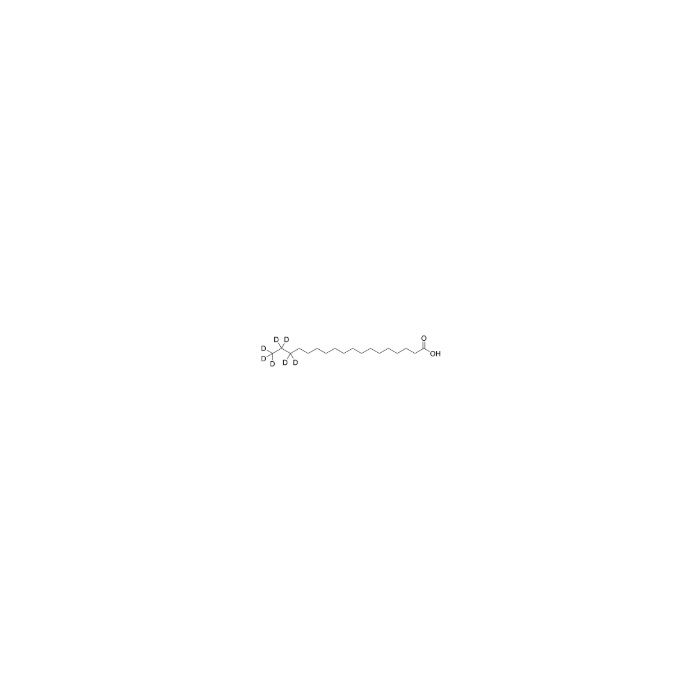
Octadecanoic-16,16,17,17,18,18,18-d7 Acid
Spécifications et pureté
≥98%,≥98 atom% D
Conditions de stockage de stockage
Protected from light,Store at -20°C,Argon charged
Expédié en
Ice chest + Ice pads
Ce produit nécessite l'expédition en chaîne froide. Les services terrestres et autres services économiques ne sont pas disponibles.
Pureté
≥98%,≥98 atom% D
Noms et identifiants
CAS alternatif
57-11-4(unlabeled)
Poids moléculaire
291.52
Documentation
📋 Fiche de données de sécurité (FDS)
Document complet couvrant les dangers, la manipulation, le stockage et la conformité réglementaire.
Determine the necessary mass, volume, or concentration for preparing a solution.
Dilution Calculator
Determine the dilution needed to prepare a stock solution.
Reconstitution Calculator
Avis
Avis des clients
Application Protocols
No item-specific tested protocols are provided for this listing. The following general practices are commonly used for deuterated fatty acids in analytical workflows (informational; adjust to your method and instrumentation):
LC–MS lipidomics internal standard
Prepare a 1–5 mM stock in CHCl3:MeOH (2:1). Store at −20 °C under argon in amber vials.
Spike a fixed amount into samples before extraction (e.g., Bligh–Dyer or MTBE methods) to correct for recovery and ionization variability.
Monitor M+7 precursor and appropriate product ions; verify retention time near unlabeled analyte.
BSA-complexed fatty acid for cell studies
Dissolve stearic acid-d7 in a small volume of warm 0.1–0.2 M NaOH to form sodium stearate.
Add dropwise to warm (37 °C) fatty acid–free BSA solution (e.g., 5–10% w/v) under stirring to achieve target FA:BSA molar ratio (commonly 2–6:1). Filter-sterilize if needed.
Surface monolayer preparation
Dissolve in chloroform (1–5 mg/mL). Deposit on aqueous subphase or solid substrate; allow solvent evaporation to form monolayer; characterize by ellipsometry or neutron reflectometry.
Always verify compatibility with your cells/instrumentation and consult the SDS.
Biological Roles
Stearic acid is a major saturated fatty acid in animals and plants; the d7 label enables precise tracking without altering core biochemical behavior.
Endogenous context (general biochemistry)
Incorporated into membrane phospholipids, sphingolipids, triacylglycerols, and cholesteryl esters, influencing membrane order and lipid raft formation.
Metabolic pathways include activation to stearoyl-CoA, mitochondrial β-oxidation, peroxisomal oxidation, and desaturation by stearoyl-CoA desaturase to oleoyl-CoA.
Transported in plasma bound to albumin; intracellular trafficking via FABPs.
Uses of the deuterated analog
Isotopic tracing of uptake, acylation, remodeling (Lands’ cycle), and oxidation using MS-based isotopologue analysis.
Internal standard in lipid extraction efficiency assessments and quantitation of stearate-containing lipid species.
Studies of monolayer/film mechanics where deuteration facilitates neutron and IR spectroscopic contrast.
Notes
Deuterium substitution on carbon yields non-exchangeable labels under physiological conditions, maintaining label integrity during typical experiments.
Avoid clinical or diagnostic use; this product is for research use only.
Buffer Applications
Not typically used as a buffer component due to very low aqueous solubility and lack of buffering capacity near physiological pH. For aqueous applications involving stearic acid-d7:
Practical approaches (general)
Prepare fatty acid–BSA complexes: dissolve stearic acid-d7 in ethanol or a small volume of warm NaOH to form sodium stearate, then slowly add to pre-warmed fatty acid–free BSA in buffer (e.g., PBS) while stirring to achieve clear solutions.
Alternatively, generate sodium/potassium stearate in carbonate/bicarbonate buffer (pH ≥ 8) for micelle/vesicle studies; titrate to target pH after dispersion.
Buffer compatibility
Avoid strong oxidizing buffers; maintain inert atmosphere if solutions are stored. Use amber containers to limit photodegradation.
Reference
For precise recipes (FA:BSA molar ratios, temperature profiles), consult lipid handling literature and adapt to experimental scale.
Green Alternatives
As a substance, stearic acid-d7 itself is not replaced by a “greener” chemical when isotopic labeling is required. However, greener choices can be made in handling, solvents, and synthesis.
Greener solvent choices for dissolution/processing (general)
Prefer bio-based ethanol or isopropanol (with gentle heating) over chlorinated solvents when compatible with the workflow.
Consider 2-MeTHF or CPME instead of THF or DCM for coupling/activation steps, provided reagents remain efficient.
For extractions, heptane/ethyl acetate systems may replace hexane/DCM where solubility permits.
Oxidation control without excess hazards
Use inert gas headspace and amber containers rather than adding stabilizers.
Store at −20 °C to slow degradation, reducing waste.
Alcohols (EtOH/iPrOH): safer, renewable options; may require heat and have limited solubility at room temperature.
Ethers (2-MeTHF): greener profile vs THF; good for coupling but may not dissolve highly crystalline solids at RT.
Sourcing considerations
Where possible, select lots made from sustainably sourced starting materials and with minimized waste solvents (supplier documentation).
Pharmaceutical Uses
This product is for research use only and is not intended for human or veterinary use. In a general formulation context (informational):
Excipients related to stearic acid (general)
Stearic acid and its salts/derivatives (e.g., magnesium stearate) are widely used as lubricants, emulsifiers, and matrix components in solid dosage forms and cosmetics. These roles leverage hydrophobicity and lubricity.
Relevance of the deuterated analog
Deuterated stearic acid can serve as a process tracer or analytical internal standard during development work to evaluate extraction recovery, matrix effects, or to validate analytical methods for stearate-containing excipients or APIs.
Regulatory note
No pharmacopeial monograph applies to the deuterated analog per se. Any GMP or clinical use would require separate qualification; this catalog item is not supplied for such use.
Physical Properties
Item-specific physicochemical specifications for this catalog entry are not provided.
Item-specific values
Appearance: Not specified for this item; refer to CoA/Spec Sheet.
Grade/Purity: Not specified for this item; refer to CoA/Spec Sheet.
Molecular weight: Not specified for this item; refer to CoA/Spec Sheet.
Typical properties for stearic acid and deuterated analogs (literature/estimated; for method development only, not product specifications)
Melting point: ~69–70 °C (stearic acid, literature). Deuteration generally shifts MP minimally.
Boiling point: ~383 °C at 760 mmHg with decomposition (stearic acid, literature).
Density (solid, 20–25 °C): ~0.84–0.85 g/cm3 (stearic acid, literature).
pKa (carboxyl): ~4.7–5.0 in water (fatty acids, literature).
Solubility: Insoluble in water; soluble in nonpolar and moderately polar organics (e.g., chloroform, dichloromethane, toluene, hot ethanol/methanol, acetone) and in basic aqueous media as stearate (literature).
Critical micelle/monolayer behavior: readily forms monolayers and self-assembled films at air–water and solid–liquid interfaces (literature).
Practical notes (general)
Warm gently (40–60 °C) to aid dissolution in organic solvents.
For aqueous work, dissolve as stearate salt or complex with fatty acid–free BSA. Avoid prolonged heating with air exposure to minimize oxidation.
Quality and Grades
Item-specific grade/purity
Grade/Purity: Not specified for this item; refer to CoA/Spec Sheet.
Considerations for isotopically labeled fatty acids (general guidance)
Isotopic enrichment: For quantitative MS workflows, knowledge of deuterium enrichment (%D) and labeling pattern is crucial to ensure consistent mass shift and chromatography. Verify enrichment on the CoA.
Chemical purity: Residual unlabeled stearic acid can influence quantitation; look for high chemical purity and low related fatty acid impurities (e.g., palmitic/oleic acids) on the CoA.
Oxidative stability: Deuterated fatty acids can oxidize similarly to protiated analogs. Suppliers may recommend inert gas backfill (argon) and light protection, as specified for this item.
Solvent residues/UV specs: Not specified for this item; refer to CoA/Spec Sheet.
What the listed storage/shipping implies for this item
Argon charged and protected from light, stored at −20 °C, shipped cold: indicates preservation of chemical and isotopic integrity by limiting oxidation and photodegradation. Upon receipt, promptly return to −20 °C under inert atmosphere.
Documentation
Request the lot-specific Certificate of Analysis for detailed purity, isotopic enrichment, residual solvent, and analytical method data prior to critical quantitation work.
Reaction and Applications
This deuterium-labeled fatty acid is primarily used as an internal standard and tracer, but it also participates in typical carboxylic acid transformations.
Analytical applications (general best practices)
LC–MS/MS internal standard for quantitative lipidomics: spiking into extracts for absolute/relative quantitation of stearate and related lipid species. The +7 Da mass shift enables clear separation of precursor/product ion channels.
Metabolic tracing: monitor uptake, β-oxidation, elongation, and desaturation pathways in cells or model systems using MS isotopologue distributions.
Surface science: formation of deuterium-labeled monolayers on metals/oxides for neutron reflectometry or vibrational spectroscopy.
Synthetic/derivatization applications
Esterification: Fischer (acid-catalyzed, alcohol solvent) or DCC/DMAP to give labeled alkyl stearates for standards.
Amide coupling: EDC/HOBt, HATU, or mixed anhydride routes to labeled amides (e.g., N-acylated lipids, surfactants).
Acyl chloride formation: SOCl2 or (COCl)2 with catalytic DMF to access reactive intermediates for further transformation.
Salt formation: sodium/potassium stearate (saponification) for aqueous dispersions and micelle studies.
Practical tips
Maintain inert atmosphere and minimize light to preserve isotope-verified composition.
For MS work, match the solvent system and injection matrix to sample composition to avoid differential ionization of labeled vs unlabeled analytes.
Validate retention time parity and fragmentation behavior relative to unlabeled analytes; deuterium can cause slight isotopologue-dependent retention shifts (isotope effect), typically small for C–D in long chains.
Reaction Conditions
General literature guidance for transforming long-chain fatty acids; adjust to your substrate and scale. These are not item specifications.
Acid chloride formation
Reagents: SOCl2 (2–5 eq) or oxalyl chloride (2–3 eq) with catalytic DMF.
Solvent: dry DCM or toluene; 0–80 °C; 1–4 h until gas evolution ceases. Inert atmosphere.
Steglich esterification
Conditions: alcohol (1.2–3 eq), DCC (1.2–1.5 eq), catalytic DMAP in dry DCM/THF; 0 °C to rt, 2–16 h. Filter dicyclohexylurea.
Fischer esterification
Conditions: refluxing alcohol (MeOH/EtOH/iPrOH) with catalytic H2SO4 or TsOH; Dean–Stark if using higher alcohols; 3–24 h.
Amide coupling
EDCI/HOBt or HATU with base (DIPEA) in DMF/DCM; 0 °C to rt or 40 °C; 2–16 h. Minimize adventitious water.
Saponification / salt formation
Dissolve in minimal ethanol/THF; add stoichiometric NaOH or KOH in water/EtOH; 0–25 °C; complete within 0.5–2 h. Neutralize/exchange as needed.
Notes on isotope preservation
C–D bonds in the alkyl chain are robust under these conditions. Avoid metal-catalyzed H/D exchange (e.g., Pd/C hydrogenation) or radical chain-transfer conditions if label position must remain fixed.
Expected outcomes (literature)
Typical isolated yields: 70–95% for well-optimized ester/amide couplings with long-chain fatty acids; ensure adequate mixing and solubility (warm solvents).
Safety and Handling
Follow good laboratory hygiene and consult the SDS for authoritative guidance. This product is supplied for research use only.
Item-specific hazard data
Signal word: Not specified for this item; refer to SDS.
Hazard statements (H-codes): Not specified for this item; refer to SDS.
GHS classification/pictograms: Not specified for this item; refer to SDS.
General safety considerations for long-chain fatty acids (informational)
Typically regarded as low acute toxicity; may cause skin or eye irritation upon contact. Dusts or aerosols may cause respiratory irritation.
Combustible organic solid; avoid ignition sources and dust accumulation.
Peroxide formation is not a concern for saturated fatty acids; however, autoxidation of the carboxylate tail can occur on prolonged air/heat/light exposure producing peroxides and aldehydes—minimize oxygen and light.
Handling practices
Use in a fume hood or well-ventilated area. Wear lab coat, safety glasses, and appropriate gloves (e.g., nitrile).
Prevent contamination with strong oxidizers and bases/acids during storage.
For isotopic integrity, avoid excessive heating and acidic/basic conditions that might promote isotope exchange at the carboxyl OH (if deuterated there; this product carries deuterium on carbon positions, which are non-exchangeable under typical conditions).
First-aid overview (general)
Skin/eye contact: rinse with water for several minutes; remove contaminated clothing. Seek medical attention if irritation persists.
Inhalation: move to fresh air; seek medical attention if symptoms occur.
Ingestion: rinse mouth; seek medical advice.
Solvent Selection
Stearic acid-d7 is highly hydrophobic; solvent choice governs handling, stock solutions, and derivatization.
Polarity/miscibility profile (literature)
Water: essentially insoluble at ambient conditions.
Miscible/soluble: chloroform, dichloromethane, toluene, hexanes (warm), ethyl acetate (warm), acetone (warm), ethanol/methanol (hot), isopropanol (hot). Soluble in aqueous base as stearate.
Dielectric context: prefers low- to medium-polarity organic media; forms micelles/vesicles only with surfactants or as salts.
Practical recommendations
For LC–MS lipidomics stocks: chloroform, methanol, or CHCl3:MeOH (2:1 or 1:1) are common. Keep solutions anoxic, amberized, and cold.
For derivatization (ester/amide formation): use dry DCM, THF, or toluene. Include base/scavengers as appropriate; exclude moisture.
For aqueous biological assays: pre-complex with fatty acid–free BSA or prepare sodium/potassium stearate in buffered saline (pH > 8), then dilute.
Comparison (general)
Versus shorter saturated acids (e.g., lauric, palmitic): stearic requires warmer/less polar solvents to dissolve; longer chain increases hydrophobicity.
Versus unsaturated analogs (e.g., oleic): stearic is more crystalline with higher MP; dissolution may require gentle heating.
Note
Avoid prolonged storage of solutions in alcoholic solvents with air exposure; oxidized byproducts can accumulate and confound MS quantitation.
Storage and Reconstitution
Item-specific storage and shipping
Storage: Protected from light; Store at −20 °C; Argon charged (as provided).
Shipping: Ice chest + ice pads (as provided). Upon receipt, minimize time at ambient temperature and return to −20 °C under inert atmosphere.
Handling best practices
Allow container to warm in a desiccator to room temperature before opening to prevent moisture condensation.
Reseal promptly; purge headspace with argon or nitrogen. Use amber vials to limit light exposure.
Aliquot on first opening to avoid repeated freeze–thaw and to protect isotopic integrity.
Reconstitution guidance (general)
Organic stocks: dissolve at 10–100 mM in CHCl3, DCM, toluene, or CHCl3:MeOH (2:1). For alcohols, gentle heating (40–50 °C) may be needed. Use dry, oxygen-free solvents for long-term stocks.
Aqueous use: prepare sodium/potassium stearate by neutralization with equimolar base, or pre-complex with fatty acid–free BSA at 37 °C.
Working solutions: keep cold and protected from air/light; discard if oxidation (odor/color change, broadened MS baseline) is detected.
Stability note
Long-chain fatty acids can slowly oxidize; storing cold, dark, and under inert gas significantly extends shelf life. For quantitative MS, periodically verify concentration and integrity by LC–MS against fresh standards.
Structure and Identity
Stearic acid-d7 is an isotopically labeled saturated C18 fatty acid in which seven hydrogen atoms along the aliphatic chain are replaced by deuterium (2H). It retains the carboxylic acid headgroup and an unbranched, fully saturated hydrocarbon tail. No stereocenters are present; the molecule is achiral.
Item-specific identifiers
CAS: 951209-59-9 (provided)
Molecular formula: Not specified for this item; refer to CoA/Spec Sheet.
Molecular weight: Not specified for this item; refer to CoA/Spec Sheet.
SMILES: Not specified for this item; refer to CoA/Spec Sheet.
InChIKey: Not specified for this item; refer to CoA/Spec Sheet.
Structural features (general chemistry/literature)
Core scaffold: octadecanoic acid (stearic acid) backbone with seven non-exchangeable C–D bonds distributed along the methylene chain.
2D description: HO–C(=O)–(CH2)n–CH3 linear chain (n total carbons in chain = 16 methylenes plus terminal methyl; seven positions deuterated). The carboxyl terminus confers weak acidity; the long chain drives hydrophobicity and self-assembly.
Isotopic note (general)
Deuteration provides +7 Da mass shift versus unlabeled stearic acid, enabling mass spectrometric discrimination while preserving chemical behavior closely matching the protiated analog.
Synthetic Utility
As a labeled C18 carboxylic acid, stearic acid-d7 is a versatile acyl donor in synthesis of isotopically defined lipids and surfactants.
Transformations (general)
Activation: convert to the acid chloride (SOCl2, (COCl)2) or mixed anhydrides for subsequent coupling; retain C–D integrity under typical conditions.
Ester formation: Fischer esterification or Steglich (DCC/DMAP) to prepare labeled alkyl or glycerol esters; useful for standardizing GC derivatization (e.g., FAMEs) with known mass shift.
Amide coupling: EDCI/HOBt, HATU, or carbodiimide-mediated coupling to amines (fatty amides, lipopeptides).
Salt/surfactant formation: neutralization with NaOH/KOH/amine bases for micellar systems.
Retrosynthetic value
Serves as a building block for deuterated phospholipids, sphingolipids, wax esters, and polymerizable derivatives (e.g., acrylates via ω-functionalization followed by acylation).
Isotope integrity considerations
Avoid conditions that induce exchange or scrambling at labeled carbons (severe hydrogenolysis, radical H/D exchange). Standard acyl transfer and condensation chemistries preserve the C–D bonds.
Analytics
NMR: 2H NMR enables direct observation of labeled sites; 13C/1H spectra show reduced protonated signals at labeled positions.
MS: predictable +7 Da shift across common ionization/fragmentation modes; confirm fragments retaining the labeled chain.
Target Specificity
Not applicable to this product type. Stearic acid-d7 is a small-molecule fatty acid standard/tracer and does not possess antibody or probe target specificity. For relevant information, see Reaction & Applications and Biological Roles.
Foire aux questions
What is the purity of this product?
This product is supplied at ≥98% purity (chemical assay). This product is isotopically enriched to ≥98 atom% deuterium. Isotopic enrichment is a separate specification from chemical purity — a labelled compound has both. Lot-specific values are stated on the Certificate of Analysis.
How should this product be stored?
Store at ?20 °C, protected from light, under argon. It is supplied under an argon blanket; reseal under inert gas after each use.
How is this product shipped?
This product ships in an insulated container with ice pads. Unpack on arrival and transfer it to the storage condition stated above.
What are the CAS number, molecular formula and molecular weight?
The CAS Number is 951209-59-9, the molecular formula is C18H29D7O2, and the molecular weight is 291.52 g/mol.
What documentation is provided?
Available product documentation, including Certificates of Analysis (COA), Safety Data Sheets (SDS), and specification sheets, is shown in the product document area. Document availability and access follow the current site policy.
Nous utilisons des cookies pour garantir le bon fonctionnement du site et, lorsque cela est autorisé, pour améliorer votre expérience. Vous pouvez gérer vos préférences à tout moment dans les Paramètres. Pour en savoir plus, consultez notre Politique relative aux cookies.
Souhaitez-vous que nous vous envoyions un message lorsque des réductions seront disponibles?
Me rappeler plus tard
Merci ! Veuillez vérifier votre boîte de réception e-mail pour confirmer.
Products are supplied to verified businesses, institutions, and qualified professionals for research and development use only. Not for use in humans, animals, diagnosis, or therapy.

 K2506726