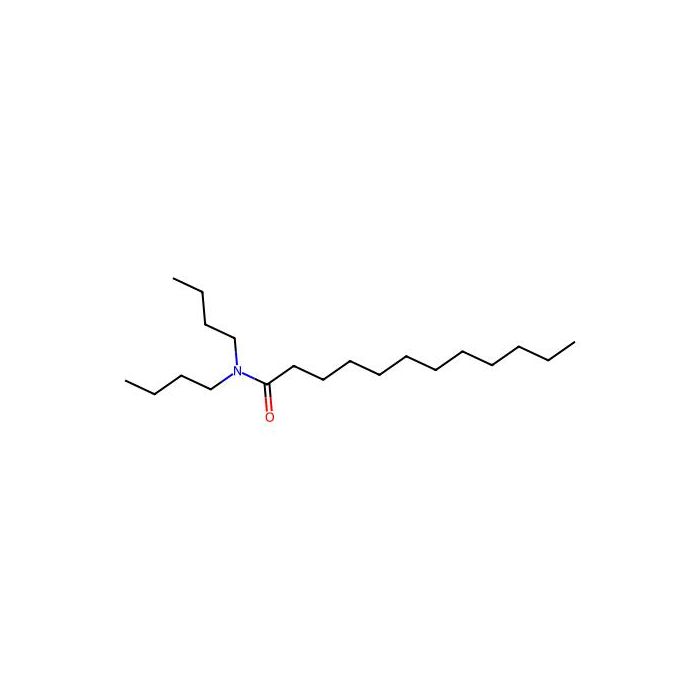
≥95% pour les flux de travail chromatographiques et analytiques sensibles nécessitant une interférence de ligne de base minimale.
🌡
Stockage & expédition
Room temperature Expédition Normal. Consultez le COA spécifique au lot pour les spécifications exactes.
📋
Documents qualité
SDS, COA, fiche technique et fiche de spécifications disponibles au téléchargement. COA spécifique au lot accessible via la recherche par numéro de lot.
📚
Preuve documentaire
Cité dans 0 publications à comité de lecture couvrant la chromatographie, la synthèse organique et les réactions de couplage croisé.
This compound belongs to the class of organic compounds known as n-acyl amines. These are compounds containing a fatty acid moiety linked to an amine group through an ester linkage.
External Descriptors
Not available
1. Djoumbou Feunang Y, Eisner R, Knox C, Chepelev L, Hastings J, Owen G, Fahy E, Steinbeck C, Subramanian S, Bolton E, Greiner R, and Wishart DS. ClassyFire: Automated Chemical Classification With A Comprehensive, Computable Taxonomy. Journal of Cheminformatics, 2016, 8:61.
Certificats (CoA, COO, BSE/TSE et tableau d'analyse)
C of A & Other Certificates(BSE/TSE, COO):
Analytical Chart:
Propriétés chimiques et physiques
Poids moléculaire
311.500 g/mol
XLogP3
7.400
Hydrogen Bond Donor Count
0
Hydrogen Bond Acceptor Count
1
Rotatable Bond Count
16
Exact Mass
311.319 Da
Monoisotopic Mass
311.319 Da
Topological Polar Surface Area
20.300 Ų
Heavy Atom Count
22
Formal Charge
0
Complexity
232.000
Isotope Atom Count
0
Defined Atom Stereocenter Count
0
Undefined Atom Stereocenter Count
0
Defined Bond Stereocenter Count
0
Undefined Bond Stereocenter Count
0
The total count of all stereochemical bonds
0
Covalently-Bonded Unit Count
1
Calculateurs de solution
Molarity Calculator
Determine the necessary mass, volume, or concentration for preparing a solution.
Dilution Calculator
Determine the dilution needed to prepare a stock solution.
Reconstitution Calculator
Avis
Avis des clients
Application Protocols
Not applicable. This product is not an antibody, enzyme preparation, or assay kit. No validated protocols (WB, IHC, IF, FC, etc.) are associated with this SKU.
General handling protocol (for solution preparation, research use only):
Inspect the CoA for purity and any stabilizers. Allow the container to reach room temperature before opening to minimize moisture condensation.
Prepare a small test solution (e.g., 10 mg/mL) in a suitable solvent based on solubility screening (DMSO, methanol, ethanol, acetonitrile, DMF). Sonication or gentle warming may assist dissolution if compatible with stability.
For biological assays, filter-sterilize stock solutions through 0.22 μm PTFE/NYLON filters if sterility is required. Avoid prolonged exposure to aqueous media if the amide is hydrolysis-sensitive.
Record exact solvent lot, concentration, and storage conditions for reproducibility. Prepare fresh solutions as needed to avoid degradation.
Biological Roles
No item-specific biological data are provided for this SKU. The following describes general roles of amide functionality in biochemistry (literature/general knowledge), not specific to this compound and not implying suitability for biological use.
Structural motif: Amide bonds (peptide linkages) connect amino acids in proteins. Their planarity and H-bonding govern secondary structure (α-helices, β-sheets) and influence folding, stability, and recognition.
Hydrogen-bonding: Amide carbonyls are H-bond acceptors; amide NH (if present) is a donor. These interactions are central to ligand–receptor binding and enzyme catalysis positioning in biomacromolecules.
Stability: Compared with esters, amides resist hydrolysis under physiological conditions, making them common motifs in metabolically stable small molecules. Tertiary amides remove the H-bond donor capacity and can tune solubility/permeability.
Polarity and permeability: Amide functionality increases polarity and can reduce membrane permeability; N-methylation or tertiary amide formation can modulate this. Intramolecular H-bonding (when possible) can mask polarity transiently.
Metabolism: Amide hydrolysis in vivo is catalyzed by amidases and carboxylesterases; rates depend strongly on substitution and electronics. Oxidative N-dealkylation (for tertiary amides) is also common.
Research note: This product is for research use only. It is not supplied with any biological activity claims. If you intend to employ it in biochemical assays or as a scaffold, confirm identity, purity, solubility, and potential impurities via the lot-specific CoA and independently evaluate cytotoxicity/compatibility.
Buffer Applications
This product is a substituted alkylamide and is not a dedicated buffering reagent. No item-specific pKa or buffer capacity information is provided.
Buffer use: Not typically applicable. Amides are weak bases due to resonance and generally do not form effective buffering systems in aqueous media near physiological pH.
Practical guidance: If the compound is to be dissolved for biological assays, prepare stock solutions in suitable organic cosolvents (commonly DMSO) and dilute into pre-selected biological buffers (e.g., PBS, HEPES, MOPS) validated for your assay. Select the buffer based on the biological system, not on this compound.
Stability considerations: Verify compound stability across the intended pH range. Amides are generally stable between pH ~3–10 at ambient temperature but may hydrolyze more rapidly under strongly acidic or basic conditions, especially with heat.
For actual buffer recipes and pH ranges, consult standard buffering agents; this SKU is not intended as a buffer component.
Green Alternatives
Without item-specific properties, green strategy focuses on choosing safer reagents and media for common amide transformations and handling.
Greener media (literature/general guidance):
Prefer lower-toxicity, biorenewable, or recyclable solvents: 2-MeTHF over THF for reductions; dimethyl carbonate (DMC), ethanol, or water/MeOH mixes for hydrolysis or crystallizations when feasible.
Minimize dipolar aprotic solvents of concern (DMF, DMAc, NMP) by substituting with Cyrene (dihydrolevoglucosenone), propylene carbonate, ethyl acetate, or MeCN where compatible.
Greener reagents for typical amide chemistry:
Reduction: Replace LAH with BH3·THF (safer handling but still reactive), or catalytic hydrogenation of corresponding imidates/oximes when viable. Emerging hydrosilylation (polymethylhydrosiloxane, TMDS) or catalytic transfer hydrogenation methods can be milder and generate less waste.
Hydrolysis: Favor aqueous conditions (water or water/alcohol) under controlled pH with phase-separable catalysts; avoid stoichiometric mineral acids/bases when enzymatic or catalytic alternatives exist.
Dehydration to nitriles: Employ T3P (propanephosphonic anhydride) in EtOAc or 2-MeTHF as a lower-waste alternative to SOCl2/POCl3, or use microflow with minimal excess reagent to curb inventory and emissions.
Process intensification:
Use continuous flow for exothermic reductions or halogenation-based rearrangements (Hofmann), improving safety and reducing solvent volumes.
Apply in-line solvent recycling and aqueous workups with salt-efficient neutralizations to reduce E-factors.
Trade-offs:
Greener solvents may alter rates/solubility; re-optimize conditions and crystallization. Catalyst recovery and solvent reuse must be balanced against energy inputs for distillation.
Pharmaceutical Uses
No pharmacopeial status, excipient role, or dosage-form application is specified for this SKU. This product is supplied strictly for research use only.
General context (literature/general knowledge):
Role of amides in drug discovery: The amide bond is a ubiquitous linkage in active pharmaceutical ingredient (API) scaffolds due to its stability and predictable geometry. Substituted alkylamides can serve as synthetic intermediates, side-chain mimetics, or protecting/directing elements in medicinal chemistry campaigns.
Process chemistry: Amide-containing intermediates are common stepping stones in multistep API synthesis. They may be converted to amines (via reduction), acids (via hydrolysis), or nitriles (via dehydration) en route to targets.
Excipients: Certain simple amides (e.g., polyamides, specific tertiary amides like DMAc/NMP) can appear as process aids/solvents in manufacturing but are typically removed to acceptable residual levels; they are not general excipients.
Compliance note:
No clinical, therapeutic, or diagnostic claims are made for this item.
If you require materials compliant with pharmacopeial monographs (USP/EP/JP) or GMP manufacturing, contact Technical Support for sourcing or custom manufacturing. Any use in pharmaceutical development must be accompanied by appropriate impurity control, residual solvent assessment (ICH Q3C), and elemental impurity evaluation (ICH Q3D).
Physical Properties
Item-specific physicochemical data were not supplied for this catalog entry.
Appearance: Not specified for this item; refer to CoA/Spec Sheet.
Molecular weight: Not specified for this item; refer to CoA/Spec Sheet.
Density, melting point, boiling point, refractive index: Not specified for this item; refer to CoA/Spec Sheet.
Solubility: Not specified for this item; refer to CoA/Spec Sheet.
General properties of alkylamides (literature/general knowledge; ranges depend on structure):
Hydrogen-bonding: Secondary amides can donate and accept H-bonds; tertiary amides are H-bond acceptors only. This often confers appreciable polarity and elevated boiling points relative to isomeric esters or nitriles.
Boiling/melting: Many lower-mass tertiary alkylamides (e.g., dimethylformamide, dimethylacetamide) are high-boiling liquids; secondary/primary long-chain amides are often waxy solids with high melting points due to intermolecular H-bonding and crystallinity.
Solubility: Small, polar amides are miscible with water and polar aprotic solvents (DMSO, DMF); higher alkyl amides trend toward lower aqueous solubility but remain soluble in polar organics (alcohols, acetone) and sometimes chlorinated solvents.
Acidity/basicity: The amide N is weakly basic (conjugation reduces basicity); the α-C–H acidity on the acyl side can be enhanced and deprotonated by strong bases (e.g., LDA) to form amide enolates.
Stability: Amides are generally robust to moderate heat and neutral conditions; they hydrolyze under strong acidic or basic conditions, especially with prolonged heating.
For exact specifications of this SKU, consult the lot CoA.
Quality and Grades
Grade/Purity: Not specified for this item; refer to CoA/Spec Sheet.
Stabilizers/Additives: Not specified for this item; refer to CoA/Spec Sheet.
Interpretation and implications (general guidance):
Research use only: Supplied for laboratory R&D. Not for human or veterinary use, food, drug, or household applications. This typically focuses QC on identity and chemical purity relevant to experimental reproducibility rather than compliance with pharmacopeial monographs.
If the material is offered in a specified analytical or synthetic grade (AR, HPLC, anhydrous, etc.), it will appear on the CoA/Spec Sheet. Absent such notation, assume standard research grade with routine tests (identity confirmation by NMR/IR/HRMS/GC/LC as applicable) and a purity determination (GC/HPLC area %, or NMR qNMR).
UV/trace metals/ionic contaminants: Not specified for this item; refer to CoA/Spec Sheet. For sensitive applications (photochemistry, catalysis), request the detailed impurity profile.
Water content: Not specified for this item; refer to CoA/Spec Sheet. If your work is moisture-sensitive (e.g., enolate chemistry, peptide coupling), consider Karl Fischer titration on receipt or pre-dry under vacuum.
Batch-to-batch consistency: Aladdin performs lot-specific QC; always download the lot-matched CoA prior to critical experiments to confirm specification alignment (identity, purity, residual solvents, assay basis).
Contact Technical Support for higher grades (e.g., anhydrous, inhibitor-free) or custom packaging if your process requires it.
Reaction and Applications
This substituted alkylamide can serve as a versatile building block or intermediate in organic synthesis. While item-specific reactivity depends on substitution (primary, secondary, tertiary; α-substitution; chain length), common amide transformations include:
Hydrolysis (literature): Acidic (e.g., 6 M HCl, reflux) or basic (NaOH/KOH, reflux) conditions cleave amides to the corresponding carboxylic acid (or carboxylate) and amine/ammonia. Rates increase with electron-withdrawing acyl groups and decreased steric hindrance.
Reduction (literature):
LiAlH4 in etheral solvents converts amides to amines (C=O to CH2). Tertiary amides reduce to tertiary amines; secondary to secondary amines.
BH3·THF selectively reduces amides over esters and carboxylic acids, useful for chemoselective sequences.
Dehydration to nitriles (literature): Use SOCl2, POCl3, P2O5, or T3P/Et3N to convert primary amides to nitriles. Appel-type and Burgess-type dehydrations are alternatives.
Hofmann/Curtius-type upgrades (literature): Primary amides undergo Hofmann rearrangement (NaOCl/Br2, base) to primary amines with one-carbon loss via isocyanate intermediates (not applicable to secondary/tertiary amides).
Activation for acyl transfer (literature): Conversion to imidazolides (CDI), mixed anhydrides, or acyl azoles enables subsequent nucleophilic substitution where the parent amide would be unreactive.
Directed C–H functionalization (literature): The amide can act as a directing group for ortho-C–H activation on suitably substituted arenes or for α-functionalization adjacent to the carbonyl under metalation (e.g., LDA forms amide enolates for alkylation/acylation).
Applications:
Intermediate in agro/functional materials synthesis; protecting/directing group strategies; polymer precursor when bearing polymerizable side chains.
Select procedures should be adapted to the exact structure; consult primary literature and run small-scale trials.
Reaction Conditions
Typical conditions for common amide transformations (literature/general guidance; adjust to the exact structure of this SKU):
Hydrolysis:
Acidic: 6 M HCl or H2SO4, reflux (80–110 C) for 4–24 h; work up by neutralization/extraction to isolate the carboxylic acid and amine salt.
Basic: 2–6 M NaOH/KOH, reflux (80–110 C) for 4–24 h; acidify to pH <2 to precipitate the carboxylic acid.
Reduction to amines:
LiAlH4 (1–3 equiv) in anhydrous THF or Et2O, 0 C to reflux, 2–16 h; cautious aqueous quench (Rochelle salt) then extract. Tertiary amides generally require heating.
BH3·THF (3–6 equiv), 0–25 C to reflux, 2–24 h; quench with MeOH/H2O. Often more chemoselective than LAH.
Catalytic hydrosilylation: TMDS or PMHS with Ir/Ru/Cu catalysts, 25–80 C, provides amines under milder conditions.
Dehydration (primary amides):
SOCl2 (3–5 equiv) with catalytic DMF, reflux (70–80 C) 2–6 h to give nitriles; or POCl3 (reflux) or P2O5/heat in toluene or dioxane.
T3P/Et3N in EtOAc or 2-MeTHF at 25–80 C as a lower-hazard alternative.
Hofmann rearrangement (primary amides): NaOCl (bleach) or Br2/NaOH, 0–25 C then warm, generating the amine (–CO loss) via isocyanate; capture with alcohols or water.
α-Deprotonation/alkylation (tertiary/secondary amides): LDA or LiHMDS (1.1–1.5 equiv) in THF at −78 to −40 C to form enolates; then add electrophile (alkyl halide, acyl chloride). Quench at low temperature to control over-alkylation.
Notes:
Moisture control is important for strong-base or hydride reagents.
Monitor by TLC/LCMS; amides often show strong IR C=O near 1640–1680 cm−1.
Yields vary widely (40–90%) depending on substitution and conditions; optimize stoichiometry and temperature for your substrate.
Safety and Handling
Item-specific GHS data were not provided.
Signal word: Not specified for this item; refer to SDS.
GHS classification/pictograms: Not specified for this item; refer to SDS.
H-statements: Not specified for this item; refer to SDS.
General safety for alkylamides (literature/general guidance):
Expected hazards: Many amides are of low volatility but can be irritating to skin, eyes, and respiratory tract upon contact or aerosolization. Avoid inhalation of dusts/mists and prolonged skin contact.
PPE: Lab coat, safety glasses or chemical splash goggles, and appropriate chemically resistant gloves (nitrile commonly suitable). Use in a fume hood if heated, sprayed, or if dust generation is possible.
Handling: Avoid strong acids/bases that may induce hydrolysis; avoid strong dehydrating agents (e.g., SOCl2, POCl3) unless intentionally reacting; keep away from strong oxidizers and reducing agents inconsistent with the intended chemistry.
First aid (overview; defer to SDS):
Skin/eye contact: Rinse with water for ≥15 minutes, remove contaminated clothing, seek medical advice if irritation persists.
Inhalation: Move to fresh air; seek medical attention if symptoms occur.
Ingestion: Rinse mouth; do not induce vomiting unless directed by medical personnel; seek medical aid.
Fire safety: Many organic amides are combustible. Use CO2, dry chemical, or foam. Combustion may produce CO/CO2 and nitrogen oxides.
Spill response: Absorb with inert material, collect for disposal in accordance with local regulations. Prevent entry to drains.
Always consult the SDS provided with the specific lot for authoritative hazard and exposure controls.
Solvent Selection
Because this product is an organic amide, solvent selection hinges on the compound’s specific substitution (not provided). Below are general principles to aid dissolution and handling.
General polarity/miscibility (literature/general knowledge):
Amides are polar; small amides exhibit high dielectric constants and hydrogen-bonding capacity. Tertiary amides are H-bond acceptors; secondary amides are both donors and acceptors.
Likely good solvents: DMSO, DMF, NMP, DMAc, methanol, ethanol, acetone, acetonitrile. Solubility in water depends strongly on size; long-chain amides are poorly soluble in water but dissolve in polar organics.
Moderately suitable: Dichloromethane, ethyl acetate, THF (depends on alkyl chain length and branching).
Poor solvents for polar/short amides: Alkanes (hexanes, heptane) unless the amide bears long hydrophobic chains.
Selection tips:
For stock solutions for bioassays (research use only), prepare in DMSO first, then dilute into aqueous buffers with agitation to minimize precipitation; verify compatibility and final DMSO percentage for your system.
For reaction media, match to the chemistry: reductions (THF/Et2O; for BH3·THF or LAH), hydrolyses (aqueous acid/base, mixed MeOH/H2O), dehydrations (toluene/xylenes with dehydrating agents), or activation steps (DCM/DMF with coupling reagents such as CDI).
If crystallization is desired, use antisolvents (water/brine for small amides, or alkanes for more hydrophobic amides) and temperature cycling.
Always verify actual solubility and stability of this SKU experimentally or by consulting the lot CoA.
Container: Keep tightly closed in the original container. If the substance is low-melting or hygroscopic (not specified), consider using a desiccator and an inert headspace (argon/nitrogen) to maximize shelf life.
Light/moisture sensitivity: Not specified for this item; refer to CoA/Spec Sheet. As general practice for organic amides, store away from strong acids/bases and oxidizers; protect from excessive heat and direct sunlight.
Stability: Not specified for this item; refer to CoA/Spec Sheet. Many amides are stable for ≥24 months at ambient conditions when dry and protected from reactive vapors.
Reconstitution/preparation of solutions (general guidance):
Stock solutions: Dissolve in an appropriate solvent (e.g., DMSO, methanol, ethanol, acetonitrile, DMF) to a convenient concentration (1–100 mg/mL depending on solubility). Filter if necessary (0.22 μm).
Aqueous use: If required, dilute organic stock into buffered aqueous media under vigorous mixing to prevent precipitation; confirm stability at the working pH and temperature.
Freeze–thaw: If stock solutions are stored refrigerated or frozen to prolong life, aliquot to avoid repeated freeze–thaw cycles.
Always defer to the lot-specific CoA and SDS for definitive storage limits, retest intervals, and any inhibitor/stabilizer present. Research Use Only.
Structure and Identity
Overview: This item is described as a substituted alkylamide (generic amide functional class). Item-specific structural identifiers are largely not provided in the product data.
CAS: 5343-44-2 (as provided)
InChIKey: 217403 (as provided; note this is not a standard-length InChIKey; refer to CoA/SDS for the definitive identifier)
SMILES: Not specified for this item; refer to CoA/Spec Sheet.
Molecular formula: Not specified for this item; refer to CoA/Spec Sheet.
Molecular weight: Not specified for this item; refer to CoA/Spec Sheet.
Structural features (general amide, literature/general knowledge):
Contains the amide functional group: –C(=O)–N–.
The carbonyl (C=O) is conjugated with the amide nitrogen lone pair, imparting partial double-bond character to the C–N bond (planarity and restricted rotation).
Typical resonance forms reduce basicity of the nitrogen and decrease carbonyl electrophilicity relative to acids, esters, and acyl halides.
“Substituted alkylamide” implies N- and/or acyl-side substitution by alkyl groups; stereochemistry is typically not inherent unless chiral substituents are present.
2D description (general):
A trigonal planar carbonyl carbon bonded to an sp2 carbonyl oxygen and to an sp2 or sp3 carbon on the acyl side; the nitrogen is approximately trigonal planar due to resonance, bearing one or two substituents (alkyl or other). The amide may be primary (–CONH2), secondary (–CONHR), or tertiary (–CONR2); exact substitution pattern is not specified in the product data.
Synthetic Utility
As a substituted alkylamide, this compound can participate in multiple synthetic disconnections and functional group interconversions. The exact scope depends on substitution (primary/secondary/tertiary; α-branching), but the following general strategies are well-established (literature/general knowledge):
Amide → Amine: Reduction with LiAlH4, BH3·THF, or catalytic hydrosilylation provides the corresponding amine (tertiary, secondary, or primary depending on substitution). Useful for late-stage unmasking of amine functionality.
Amide → Nitrile: Dehydration of primary amides (SOCl2, POCl3, P2O5, T3P) affords nitriles, enabling homologation and subsequent nucleophilic additions.
Amide → Acid/Carboxylate: Hydrolysis under acidic or basic conditions regenerates the carboxylic acid (or salt), enabling refunctionalization (e.g., to acid chlorides, esters, anhydrides).
α-Functionalization: Strong bases (LDA, LiHMDS) can form amide enolates, allowing α-alkylation or acylation. This provides access to β-functionalized carbonyl compounds after further elaboration.
Directing group chemistry: The amide can coordinate to transition metals to direct ortho-C–H activation in aryl systems or enable β-C–H activation in alkyl amides under tailored catalytic conditions (Pd, Ru, Rh, Co), followed by coupling (arylation, alkenylation, borylation).
N-Modification: While direct N-alkylation is typically challenging due to low basicity/nucleophilicity, activation (e.g., via imidoyl chlorides or using Mitsunobu-type manifolds for secondary amides) can enable N-substitution in specific contexts.
These utilities make alkylamides reliable, bench-stable holding groups and convergence points in retrosynthetic planning.
Target Specificity
Not applicable. This SKU is a small-molecule substituted alkylamide, not a biological macromolecule or affinity reagent. No antigen/epitope or species reactivity information is relevant or provided.
Foire aux questions
What is the purity of this product?
This product is supplied at ≥95% purity (chemical assay). Lot-specific values are stated on the Certificate of Analysis.
How should this product be stored?
Store at room temperature.
How is this product shipped?
This product ships under standard ambient conditions. No temperature-controlled packaging is required.
What are the CAS number, molecular formula and molecular weight?
The CAS Number is 5343-44-2, the molecular formula is C20H41NO, and the molecular weight is 311.5 g/mol. InChIKey MFARGUPPFBTESX-UHFFFAOYSA-N.
What documentation is provided?
Available product documentation, including Certificates of Analysis (COA), Safety Data Sheets (SDS), and specification sheets, is shown in the product document area. Document availability and access follow the current site policy.
Nous utilisons des cookies pour garantir le bon fonctionnement du site et, lorsque cela est autorisé, pour améliorer votre expérience. Vous pouvez gérer vos préférences à tout moment dans les Paramètres. Pour en savoir plus, consultez notre Politique relative aux cookies.
Souhaitez-vous que nous vous envoyions un message lorsque des réductions seront disponibles?
Me rappeler plus tard
Merci ! Veuillez vérifier votre boîte de réception e-mail pour confirmer.
Products are supplied to verified businesses, institutions, and qualified professionals for research and development use only. Not for use in humans, animals, diagnosis, or therapy.