Determine the necessary mass, volume, or concentration for preparing a solution.
BioReagent, Biological Stain, for Fluorescence analysis, for Microscopy, ≥90%(HPLC) Biological Stain,BioReagent,for Fluorescence analysis,for Microscopy for sensitive chromatographic and analytical workflows requiring minimal baseline interference.
Store at -20°C Ships Ice chest + Ice pads Check lot-specific COA for exact specifications.
SDS, COA, datasheet, and spec sheet available for download. Lot-specific COA accessible via lot number lookup.
Cited in 0 peer-reviewed publications across chromatography, organic synthesis, and cross-coupling reactions.
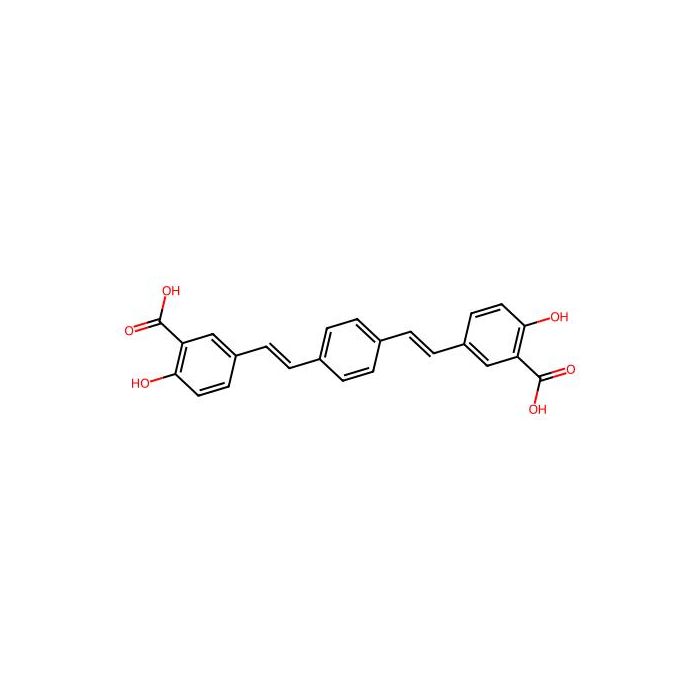
X-34 is a lipophilic and highly fluorescent marker used to examine pathological changes in Alzheimer’s disease (AD). This cellular dye was developed as a derivative of Congo red to be more compatible with in vivo applications. By replacing the azo groups (nitrogen-to-nitrogen double bonds) in Congo red with carbon-to-carbon double bonds and having more lipophilic salicylic acid groups, X-34 has proven to be highly fluorescent and have increased membrane permeability. X-34 detects β-sheet structures and labels amyloid plaques, neurofibrillary tangles (NFTs), neuropil threads, and vascular amyloid in AD brains (1).
Reagents:
1. X-34:Create a 5 mM stock solution of X-34 (200X) using the X-34 diluent. Create a 25 µM staining solution by further diluting the 5 mM stock solution using the X-34 diluent.
Note: X-34 diluent (40% EtOH, pH 10) is the recommended solvent for staining. A slight precipitate may be present, but will not interfere with the product's performance.
2. X-34 diluent (40% EtOH, pH 10): Combine 20 mL of EtOH in 29.5 mL of dH2O. Add 1 µL of 5M NaOH dropwise until the solution reaches pH 10. Bring the final volume of X-34 diluent to 50 mL with dH2O.
3. Differentiation buffer: 50 mM NaOH, 80% EtOH
Protocol:
1. Stain slides in 25 µM X-34 staining solution for 30 min at room temperature in the dark.
2. Rinse slides three times in dH2O.
3. Incubate for 2 min in the differentiation buffer.
4. Rinse slides three times in dH2O.
5. If desired, proceed with immunostaining.
6. Mount and image.
Comprehensive hazard, handling, storage, and regulatory compliance document.
Download SDS →Lot-specific quality data. Enter your lot number to retrieve the exact COA.
Look up COA →Full quality attributes and acceptance criteria for this grade.
View spec sheet →Taxonomy Tree
| Kingdom | Organic compounds |
|---|---|
| Superclass | Phenylpropanoids and polyketides |
| Classe | Stilbenes |
| Subclass | Not available |
| Intermediate Tree Nodes | Not available |
| Direct Parent | Stilbenes |
| Alternative Parents | Salicylic acids Benzoic acids Styrenes Benzoyl derivatives 1-hydroxy-2-unsubstituted benzenoids Vinylogous acids Carboxylic acids Organooxygen compounds Organic oxides Hydrocarbon derivatives |
| Molecular Framework | Aromatic homomonocyclic compounds |
| Substituents | Stilbene - Salicylic acid - Salicylic acid or derivatives - Hydroxybenzoic acid - Benzoic acid or derivatives - Benzoic acid - Benzoyl - Styrene - 1-hydroxy-2-unsubstituted benzenoid - Phenol - Monocyclic benzene moiety - Benzenoid - Vinylogous acid - Carboxylic acid - Carboxylic acid derivative - Hydrocarbon derivative - Organic oxide - Organic oxygen compound - Organooxygen compound - Aromatic homomonocyclic compound |
| Description | This compound belongs to the class of organic compounds known as stilbenes. These are organic compounds containing a 1,2-diphenylethylene moiety. Stilbenes (C6-C2-C6 ) are derived from the common phenylpropene (C6-C3) skeleton building block. The introduction of one or more hydroxyl groups to a phenyl ring lead to stilbenoids. |
| External Descriptors | Not available |
| Solubilité | DMSO: 2.0mg/mL |
|---|
Our grade selection guide covers purity, stabilizer status, and application suitability for all variants in our catalog.
View BioReagent grade guide → View Biological Stain grade guide → View for Fluorescence analysis grade guide → View for Microscopy grade guide →