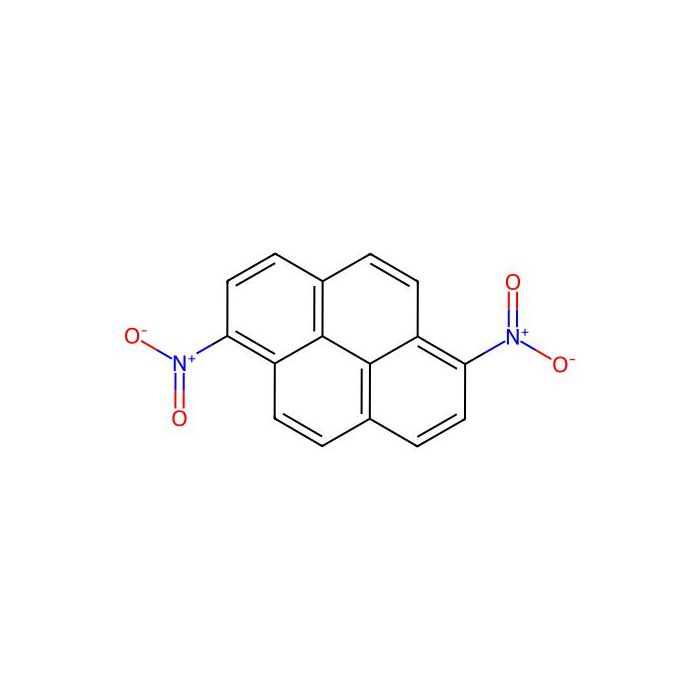
This compound belongs to the class of organic compounds known as pyrenes. These are compounds containing a pyrene moiety, which consists four fused benzene rings, resulting in a flat aromatic system.
External Descriptors
pyrenes
1. Djoumbou Feunang Y, Eisner R, Knox C, Chepelev L, Hastings J, Owen G, Fahy E, Steinbeck C, Subramanian S, Bolton E, Greiner R, and Wishart DS. ClassyFire: Automated Chemical Classification With A Comprehensive, Computable Taxonomy. Journal of Cheminformatics, 2016, 8:61.
Determine the necessary mass, volume, or concentration for preparing a solution.
Dilution Calculator
Determine the dilution needed to prepare a stock solution.
Reconstitution Calculator
レビュー
顧客レビュー
Application Protocols
No tested application protocols are provided in the Product Data for this item. For general laboratory use:
Preparation of stock solutions (research use): dissolve accurately weighed solid in dry DMSO or acetonitrile to make a 10–100 mM stock; filter (0.2 µm PTFE) if needed; store aliquots protected from light.
Analytical standards: prepare gravimetrically in appropriate solvent (e.g., acetonitrile), then serially dilute for calibration; use amber vials and verify stability across the measurement window.
These are generic suggestions; validate and optimize for your specific method. For research use only (per Product Data).
Biological Roles
No biological roles are provided in the Product Data. The following summarizes literature knowledge about nitro-PAHs like 1,6-dinitropyrene in a research context (not medical/clinical claims).
Environmental biochemistry (literature):
Nitro-PAHs are formed during incomplete combustion and via atmospheric nitration of parent PAHs. 1,6-Dinitropyrene is detected in diesel exhaust particulates and urban aerosols at trace levels.
In microbial and mammalian systems, nitro-PAHs can undergo enzymatic nitroreduction (e.g., by nitroreductases) to hydroxylamine and amine derivatives, which may further undergo conjugation or bind to nucleophilic biomolecules. Such pathways underpin their routine use in mutagenicity assays (e.g., Ames tests) as research standards.
Biophysical properties:
Strong hydrophobicity promotes partitioning into lipid phases and particulate matter. Nitro groups confer increased polarity relative to pyrene, influencing transport and sorption.
Research applications:
Used as a reference compound in studies of metabolic activation, DNA adduct formation mechanisms, and structure–activity relationships within the nitro-PAH class.
Note: For any work involving biological systems, follow institutional approvals and handle as a potentially genotoxic research chemical. No therapeutic or diagnostic use is implied.
Buffer Applications
This compound is a hydrophobic aromatic solid and is not used to formulate aqueous buffers. If introduced into buffered media (e.g., for biochemical assays), it is typically first dissolved in a miscible organic co-solvent (DMSO or acetonitrile) and then diluted into the buffer with vigorous mixing to minimize precipitation. For buffer preparation guidance, please refer to buffer-specific reagents (phosphate, Tris, HEPES, etc.).
Green Alternatives
As a nitro-substituted polycyclic aromatic hydrocarbon (nitro-PAH), 1,6-dinitropyrene carries environmental and health concerns typical of PAHs and nitroaromatics. Where feasible, consider alternatives or design choices that reduce hazard and environmental burden while meeting experimental goals.
Use less hazardous fluorophores or quenchers (e.g., nitrobenzoxadiazole, azobenzene derivatives) when pyrene’s extended conjugation is not essential.
For materials research, consider lower-toxicity PAH surrogates (e.g., perylene diimide systems) or polymeric/oligomeric scaffolds that reduce bioavailability.
For analytical methods development, employ certified reference materials at minimal loadings and microextraction techniques to reduce mass used and waste generated.
Trade-offs:
Pyrene’s rigid, planar structure and nitro-driven electron withdrawal impart unique photophysics and reactivity that may not be fully replicated by greener motifs. Substitution can alter absorption/emission, redox potentials, and packing behavior in materials.
Practical green chemistry measures when use is required:
Alternative quenchers/acceptors: typically higher aqueous compatibility, easier handling; may offer reduced persistence but different photophysical fingerprints.
Pharmaceutical Uses
No pharmacopeial or excipient role is provided in the Product Data for this item. In general, 1,6-dinitropyrene is not used as a pharmaceutical ingredient. In a research/manufacturing context, nitro-PAHs like this may appear as:
Analytical reference standards for impurity profiling or environmental method validation.
Stress-test probes for evaluating extraction, cleanup, and detection performance of analytical methods dealing with hydrophobic, strongly UV-absorbing analytes.
No therapeutic or clinical claims are made; for research use only (as stated in Product Data).
Physical Properties
Only item-specific properties provided in Product Data are listed as such. Additional values are literature references for context and planning; they are not specifications for this catalog item.
Item-specific (Product Data):
Appearance: Not specified for this item; refer to CoA/Spec Sheet.
Storage conditions: Room temperature.
Literature/computed (typical for 1,6-dinitropyrene; not item-specific):
Molecular formula: C16H8N2O4
Molecular weight: ~292.24 g/mol
Physical state: crystalline solid (literature)
Color: yellow to orange crystalline (literature, typical for nitro-PAHs)
Melting point: reported for dinitropyrenes typically in the ~250–300 °C range; specific value for the 1,6-isomer varies by source (literature); verify experimentally.
Boiling point: decomposes before boiling; not routinely distilled (literature).
Density: Not well-established; expect >1 g/cm³ for nitro-PAHs (literature, qualitative).
Solubility: sparingly soluble in water; soluble in organic solvents such as DCM, THF, acetone, acetonitrile, toluene, and DMF/DMSO (literature). Solubility increases with temperature and in polar aprotic media.
LogP: high (hydrophobic PAH core) with additional polarity from nitro groups; quantitative values vary by method (literature).
UV–vis: strong π–π* absorption in near-UV; nitro substitution bathochromically shifts and quenches pyrene fluorescence (literature).
Not specified for this item; refer to CoA/Spec Sheet, for: refractive index, residual solvents, water content, metal content, UV cutoffs, and any chromatographic purity metrics.
Quality and Grades
Clarification of quality information for this item.
Item-specific (Product Data):
Grade/purity: Not specified for this item; refer to CoA/Spec Sheet.
Stabilizers/inhibitors: Not specified for this item; refer to CoA/Spec Sheet.
Shipped in: Not specified for this item; refer to CoA/Spec Sheet.
How to interpret typical grades (general guidance):
Research grade: suitable for most synthetic and analytical research applications; impurity profile provided via CoA (HPLC/GC, NMR, HRMS as applicable).
Analytical standard grade: supplied with certified purity and uncertainty, often accompanied by traceability documents; used for environmental and analytical method validation. If you need certified reference material (CRM) for dinitro-PAHs, ensure CRM status is explicitly stated on the CoA.
Photophysical applications: For fluorescence quenching or spectroscopy studies, low UV-absorbing impurities are important; an HPLC trace across 200–400 nm is useful.
What to check on the CoA/Spec Sheet for this compound type:
Identity confirmation (1H/13C NMR in an appropriate deuterated solvent, MS with [M]+ or [M–NO2]+ fragments, and elemental analysis where applicable).
Isomeric purity (1,6- versus other dinitropyrene isomers) by HPLC/UPLC or GC-MS with retention-time/fragmentation matching to authentic references.
Residual solvent content and moisture (Karl Fischer) if relevant to your application.
Reaction and Applications
Applications from our catalog entry were not specified; the following are general research uses and reactivity for 1,6-dinitropyrene (literature context).
Photophysical/analytical research:
Nitro substitution strongly quenches pyrene fluorescence; 1,6-dinitropyrene is used as a fluorescence quencher standard and as a reference nitro-PAH in environmental and combustion particulate studies (e.g., HPLC/GC-MS method development, calibration mixes).
Synthetic transformations of the nitro groups (literature):
Reduction to diamine: Chemical (SnCl2·2H2O/HCl, Fe/AcOH, Zn/NH4Cl) or catalytic hydrogenation (H2, Pd/C) affords 1,6-diaminopyrene, a versatile precursor to dyes, covalent organic frameworks, and conjugated materials.
Denitrative cross-coupling: Nickel- or palladium-catalyzed C–NO2 activation enables aryl–aryl or aryl–alkenyl coupling under reducing conditions (e.g., Ni(0)/phosphine, Zn or Mn as reductant) to access 1,6-disubstituted pyrenes.
Nucleophilic aromatic substitution (SNAr): Though pyrene is not a classic SNAr substrate, strongly activated conditions (e.g., alkoxide or amide nucleophiles, high temperature) can effect displacement of nitro on polycyclic systems; scope is substrate- and condition-dependent.
Stepwise differentiation: Electronic/steric differences between positions 1 and 6 can sometimes be exploited for selective mono-transformation, then subsequent functionalization.
Environmental/analytical chemistry:
Employed as a marker compound for diesel exhaust particulate studies and as a challenging analyte in PAH/nitro-PAH extraction, cleanup, and quantitation method development.
Reaction Conditions
General literature guidance for transforming 1,6-dinitropyrene. These are example conditions for planning; optimize and validate experimentally. They are not specifications for this catalog item.
Reduction to 1,6-diaminopyrene (two-step via hydroxylamines/oximes may occur):
Catalytic hydrogenation: H2 (1–5 bar), Pd/C (5–10 wt%), solvent THF, EtOH, or AcOH, rt to 60 °C, 2–24 h. Monitor for over-reduction or hydrogenolysis. Work up by filtration over Celite.
Tin(II) chloride: SnCl2·2H2O (6–10 equiv), conc. HCl, solvent EtOH or AcOH, 40–80 °C, 4–16 h; basify and isolate diamine. Iron/AcOH or Zn/NH4Cl offer greener alternatives with similar ranges.
Denitrative arylation (C–NO2 activation):
Representative: Ni(cod)2 (5–10 mol%), bulky phosphine or NHC ligand, aryl boron or arylzinc partner, Zn or Mn as terminal reductant, solvent DMF/THF, 25–80 °C, 6–24 h. Outcome depends on ligand, reductant, and substrate electronics. Inert atmosphere required.
Borylation/alkenylation (denitrative):
Ni(II) precatalyst (e.g., NiCl2(dppp)), bis(pinacolato)diboron (B2pin2), base (KOEt/Cs2CO3), solvent dioxane/DMF, 60–100 °C, 8–24 h, then cross-couple the resulting boronate.
Nucleophilic substitution (challenging):
Strong nucleophiles (alkoxides/amides) under high-boiling polar aprotics (DMSO/DMF) and elevated temperature (120–170 °C) can effect displacement on activated positions in some nitro-PAHs; substrate-dependent. Consider stepwise activation via reduction to amines and diazotization for more reliable substitution.
Purification/analysis tips:
Strong π–π interactions can cause tailing on silica; add a small % of polar modifier (e.g., 0.5–2% Et3N) or use reverse-phase chromatography. Monitor by HPLC-UV or LC-MS; characteristic fragments include [M–NO2]+.
Always observe appropriate safety precautions when using pressurized hydrogen, strong acids, or metal reductants.
Safety and Handling
Safety details specific to this catalog item are not provided in the Product Data. The following are general laboratory considerations for nitro-substituted polycyclic aromatics. Always consult the product’s SDS for authoritative guidance.
Item-specific (Product Data):
GHS classification, signal word, pictograms, H-statements: Not specified for this item; refer to SDS.
Storage: Room temperature.
General safety considerations (literature/typical for nitro-PAHs; not item-specific):
Hazards: Nitro-PAHs can be harmful if inhaled, ingested, or absorbed through skin. Many are suspected mutagens in bacterial assays; handle as potentially genotoxic research chemicals. Dust may be irritating. Avoid aerosolization.
PPE: Lab coat, nitrile gloves (change regularly), safety glasses or splash goggles. Use in a fume hood to avoid inhalation of dust or solvent vapors from solutions.
Incompatibilities: Strong reducing agents (exothermic reduction of nitro groups), strong oxidizers (possible violent reactions), and strong bases/nucleophiles under heated conditions (risk of denitrative reactions). Avoid contact with nitrosating agents and strong acids at elevated temperatures.
Thermal/light stability: Many nitroaromatics are thermally stable up to moderate temperatures but may decompose on strong heating; minimize unnecessary heating. Store away from direct sunlight to limit photochemical degradation.
First aid (overview): If on skin, wash with soap and water. If in eyes, rinse cautiously with water for several minutes. If inhaled, move to fresh air. If ingested, rinse mouth; seek medical attention in all cases. Provide SDS to responders.
Waste: Collect solid and solution waste as halogen-free organic (unless halogenated solvent used). Treat as hazardous; do not discharge to drains.
Solvent Selection
This product is a solid aromatic compound, not a solvent. The guidance below concerns selecting solvents to dissolve and handle 1,6-dinitropyrene effectively.
Solubility profile (literature/general):
Poorly soluble in water; use organic solvents. Good solubility in chlorinated solvents (DCM, chloroform), moderate to good in polar aprotics (DMF, DMSO, acetonitrile), and in aromatic solvents (toluene) and ethers (THF) upon warming.
For spectroscopy, HPLC-grade acetonitrile, DCM, or THF are common choices; confirm baseline cleanliness at relevant wavelengths.
Polarity considerations:
The nitro groups increase polarity relative to pyrene, improving solubility in polar aprotics while retaining strong hydrophobicity due to the PAH core. Dielectric constant of the solvent should be matched to the intended chemistry (e.g., DMF/DMSO for reductions with inorganic reagents; THF/toluene for catalytic hydrogenations).
Practical tips:
Gentle warming (30–50 °C) and sonication aid dissolution. Avoid prolonged heating.
For precise concentration control in assays, prepare a DMSO or acetonitrile stock, then dilute into the working medium with vigorous mixing to prevent precipitation.
For moisture/air-sensitive follow-on chemistry (e.g., metal-catalyzed denitrative couplings), dry and degas solvents (molecular sieves, sparging) as per standard practice.
Storage and Reconstitution
Item-specific (Product Data):
Storage conditions: Room temperature.
General handling and reconstitution (literature/good practice; not item-specific):
Keep container tightly closed in a dry place. Minimize exposure to light to reduce potential photochemical changes.
For solution preparation: dissolve the compound in a suitable organic solvent (e.g., DMSO, acetonitrile, DCM, or THF). Gentle warming (30–50 °C) and sonication can assist dissolution. Avoid strong heating.
Recommended stock solutions for research use: 10–100 mM in dry DMSO or acetonitrile. Store aliquots in amber vials to limit light exposure. If freezing solutions, use −20 °C or below and avoid repeated freeze–thaw by aliquoting.
Inspect solids and solutions periodically for discoloration, precipitation, or particulate matter. If changes are observed, prepare a fresh solution from solid and verify identity/purity as needed.
Not specified for this item; refer to CoA/Spec Sheet, for: exact shelf life, stability in specific solvents, and any special inert-atmosphere requirements.
Structure and Identity
Concise identification and structural context for 1,6-dinitropyrene.
Item-specific (Product Data):
Product name: 1,6-Dinitropyrene
CAS: 42397-64-8
CID: 39184
InChIKey: 112197 (as provided in Product Data; full InChIKey not specified for this item)
SMILES: Not specified for this item; refer to CoA/Spec Sheet.
Literature/computed (general reference values; not item-specific):
Functional groups: two nitro groups (–NO2) attached at the 1- and 6-positions on the pyrene ring system; no stereocenters.
2D description: a planar, rigid, conjugated polyaromatic system (pyrene) substituted by nitro groups on the same long axis positions (1 and 6), conferring strong electron-withdrawing character and markedly reduced native pyrene fluorescence.
General chemistry notes:
Nitro substitution deactivates the aromatic ring toward electrophilic substitution and can enable denitrative transformations under appropriate conditions (e.g., reduction to amines, C–NO2 activation).
Synthetic Utility
1,6-Dinitropyrene is a functionalized polyaromatic scaffold featuring two strongly electron-withdrawing nitro groups on a rigid pyrene core, enabling several useful synthetic disconnections (literature context):
Reductive functional group interconversion:
Nitro → amine: Access 1,6-diaminopyrene under catalytic hydrogenation (H2/Pd, H2/Pt) or classical reductions (SnCl2/HCl, Fe/AcOH, Zn/NH4Cl). The diamine serves as a handle for acylation, imidization, urea/carbamate formation, and polymer growth.
Denitrative cross-couplings:
C–NO2 activation under Ni or Pd catalysis enables arylation, alkenylation, and borylation using reductants (Zn, Mn) and tailored ligands (e.g., bulky phosphines, NHCs). This provides 1,6-disubstituted pyrene derivatives without pre-conversion to halides.
Stepwise selectivity:
Electronic/steric differentiation at positions 1 vs 6 can be leveraged for sequential mono-functionalization followed by orthogonal transformation of the remaining nitro group.
Material science relevance:
Pyrene derivatives assemble via π–π stacking; substitution at 1,6-positions modulates packing, charge transport, and emission. The nitro groups themselves are strong electron acceptors and fluorescence quenchers, allowing donor–acceptor architectures after further conversion.
Retrosynthetic considerations:
1,6-Dinitropyrene can be viewed as a masked 1,6-dihalopyrene equivalent for cross-couplings or as a precursor to 1,6-diaminopyrene for divergent derivatization pathways.
Target Specificity
Not applicable. This product is a small-molecule aromatic compound, not a biological targeting reagent (e.g., antibody, aptamer, inhibitor with a defined biochemical target profile). No target specificity information is provided in the Product Data.
よくある質問
What is the purity of this product?
This product is supplied at ≥60% purity (chemical assay). Lot-specific values are stated on the Certificate of Analysis.
How should this product be stored?
Store at room temperature.
What are the CAS number, molecular formula and molecular weight?
The CAS Number is 42397-64-8, the molecular formula is C16H8N2O4, and the molecular weight is 292.25 g/mol. InChIKey GUXACCKTQWVTLG-UHFFFAOYSA-N.
What documentation is provided?
Available product documentation, including Certificates of Analysis (COA), Safety Data Sheets (SDS), and specification sheets, is shown in the product document area. Document availability and access follow the current site policy.
We use cookies to ensure the website functions properly and, where permitted, to improve your experience. You can manage your preferences at any time in Settings. Learn more in our Cookie Policy.
Shall we send you a message when we have discounts available?
Remind me later
Thank you! Please check your email inbox to confirm.
Products are supplied to verified businesses, institutions, and qualified professionals for research and development use only. Not for use in humans, animals, diagnosis, or therapy.