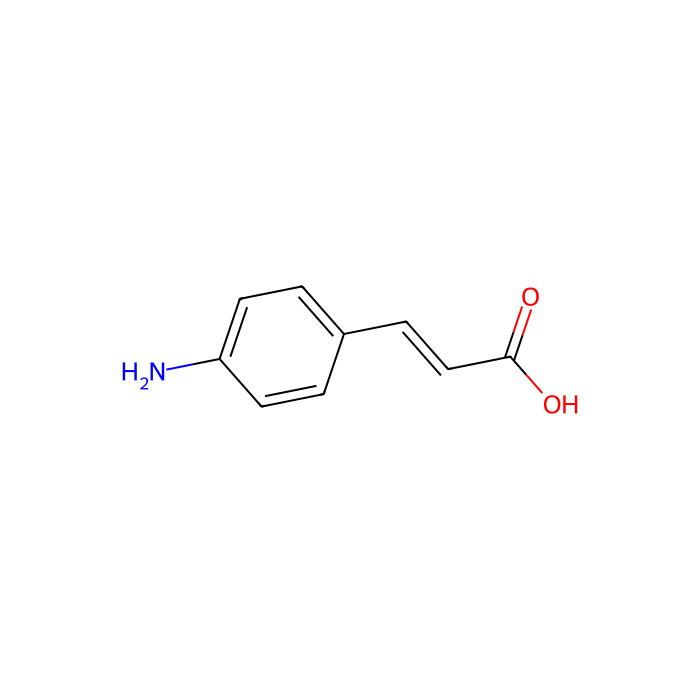
4-アミノ桂皮酸 - ≥97%以上、異性体の混合物 , CAS No.2393-18-2

CAS: 2393-18-2 Cat. No.: A151768 分子式: C9H9NO2 分子量: 163.18 Beilstein Registry Number: 14(3)1305 EC番号: 219-246-7
注文可能
グレード&純度 ≥97% mixture of isomers
Synonyms
(E)-3-(4-aminophenyl)acrylicacid|3-(4-Aminophenyl)-2-propenoic acid #|4-Amino-zimtsaure|2-Propenoicacid, 3-(4-aminophenyl)-, (2E)-|2-Propenoic acid, 3-(4-aminophenyl)-|(2E)-3-(4-aminophenyl)prop-2-enoic acid|(2E)-3-(4-Aminophenyl)-2-propenoic acid|4-Aminocinnamic acid; NSC 1780|(e)-4-aminocinnamic acid|3-(4-AMINOPHENYL)-2-PROPENOIC ACID|(E)-3-(4-aminophenyl)-2-propenoic acid|(E)-3-(4-aminophenyl)prop-2-enoic acid|3-(4-Aminophenyl)acrylic Acid|Cinnamic acid, 4-amino-, trans-|(E)-3-(4-aminophenyl)acrylic acid|p-Aminocinnamic acid|4-Aminocinnamic acid
Storage
Room temperature
Shipped In
ノーマル
★
サイズ
USA
ドイツ (EU)*
価格
個数
1g
A151768-1g
4 在庫あり
—

$49.90

$74.90
保存 $25.00 (33.38%)
5g
A151768-5g
5 在庫あり
—

$145.90

$218.90
保存 $73.00 (33.35%)
25g
A151768-25g
2 在庫あり
—

$547.90

$821.90
保存 $274.00 (33.34%)
Enter a quantity for the sizes you want to add.

仕様

同義語
(E)-3-(4-aminophenyl)acrylicacid | 3-(4-Aminophenyl)-2-propenoic acid # | 4-Amino-zimtsaure | 2-Propenoicacid, 3-(4-aminophenyl)-, (2E)- | 2-Propenoic acid, 3-(4-aminophenyl)- | (2E)-3-(4-aminophenyl)prop-2-enoic acid | (2E)-3-(4-Aminophenyl)-2-propenoic acid | 4-Aminocinnamic acid; NSC 1780 | (e)-4-aminocinnamic acid | 3-(4-AMINOPHENYL)- もっと見る
仕様と純度
≥97%以上、異性体の混合物
保管条件
Room temperature
入荷
ノーマル
純度
≥97%
名前と識別子
パブケム・シド
パブケム・シド・ウル
https://pubchem.ncbi.nlm.nih.gov/substance/504760591
SMILES
C1=CC(=CC=C1C=CC(=O)O)N
IUPAC Name
(E)-3-(4-aminophenyl)prop-2-enoic acid
InChIKey
JOLPMPPNHIACPD-ZZXKWVIFSA-N
InChI
1S/C9H9NO2/c10-8-4-1-7(2-5-8)3-6-9(11)12/h1-6H,10H2,(H,11,12)/b6-3+
異性体SMILES
C1=CC(=CC=C1/C=C/C(=O)O)N
RTECS
UD3000000
代替CAS番号
17570-30-8
分子量
163.18
Beilstein
14(3)1305
Reaxys
1817838
Reaxys-RN_link_address
https://www.reaxys.com/reaxys/secured/hopinto.do?context=S&query=IDE.XRN=1817838&ln=

詳細データ

Taxonomic Classification

Taxonomy Tree

KingdomOrganic compounds
SuperclassPhenylpropanoids and polyketides
分類Cinnamic acids and derivatives
SubclassCinnamic acids
Intermediate Tree Nodes Not available
Direct ParentCinnamic acids
Alternative Parents Styrenes  Aniline and substituted anilines  Amino acids  Monocarboxylic acids and derivatives  Carboxylic acids  Primary amines  Organopnictogen compounds  Organic oxides  Hydrocarbon derivatives  Carbonyl compounds  
Molecular FrameworkAromatic homomonocyclic compounds
Substituents Cinnamic acid - Aniline or substituted anilines - Styrene - Monocyclic benzene moiety - Benzenoid - Amino acid or derivatives - Amino acid - Carboxylic acid derivative - Carboxylic acid - Monocarboxylic acid or derivatives - Amine - Organooxygen compound - Organonitrogen compound - Primary amine - Hydrocarbon derivative - Organic oxide - Organopnictogen compound - Carbonyl group - Organic oxygen compound - Organic nitrogen compound - Aromatic homomonocyclic compound
説明This compound belongs to the class of organic compounds known as cinnamic acids. These are organic aromatic compounds containing a benzene and a carboxylic acid group forming 3-phenylprop-2-enoic acid.
External Descriptors Not available
3 D構造
インタラクティブ化学構造モデル


作用メカニズム
証明書(CoA、COO、BSE/TSEと分析図)
C of A & Other Certificates(BSE/TSE, COO):
Analytical Chart:

Find and download the COA for your product by matching the lot number on the packaging.

6 results found

Lot NumberCertificate Type日付商品
A2214281A2214281Certificate of AnalysisOct 13, 2025 A151768
A2214282A2214282Certificate of AnalysisOct 13, 2025 A151768
A2214362A2214362Certificate of AnalysisOct 13, 2025 A151768
F2115255F2115255Certificate of AnalysisMar 04, 2025 A151768
D2021096D2021096Certificate of AnalysisJan 30, 2024 A151768
E2320354E2320354Certificate of AnalysisDec 20, 2021 A151768
化学的性質と物理的性質
溶解度Solubility in dilute HCl almost transparency;
分子量163.17
XLogP31.100
Hydrogen Bond Donor Count2
Hydrogen Bond Acceptor Count3
Rotatable Bond Count2
Exact Mass163.063 Da
Monoisotopic Mass163.063 Da
Topological Polar Surface Area63.300 Ų
Heavy Atom Count12
Formal Charge0
Complexity181.000
Isotope Atom Count0
Defined Atom Stereocenter Count0
Undefined Atom Stereocenter Count0
Defined Bond Stereocenter Count1
Undefined Bond Stereocenter Count0
The total count of all stereochemical bonds1
Covalently-Bonded Unit Count1
安全と危険(GHS)
信号
Warning
危険表示

H315:Causes skin irritation

H319:Causes serious eye irritation

H335:May cause respiratory irritation

注意表示

P261:Avoid breathing dust/fume/gas/mist/vapors/spray.

P305+P351+P338:IF IN EYES: Rinse cautiously with water for several minutes. Remove contact lenses if present and easy to do - continue rinsing.

P280:Wear protective gloves/protective clothing/eye protection/face protection.

P302+P352:IF ON SKIN: wash with plenty of water.

P321:Specific treatment (see ... on this label).

P405:Store locked up.

P501:Dispose of contents/container to an approved waste disposal plant.

P312:Call a POISON CENTER or doctor/... if you feel unwell.

P233:Keep container tightly closed.

P264:Wash hands [and …] thoroughly after handling.

P260:Do not breathe dust/fume/gas/mist/vapors/spray.

P271:Use only outdoors or in a well-ventilated area.

P304:IF INHALED:

P340:Remove victim to fresh air and keep at rest in a position comfortable for breathing.

P362:Take off contaminated clothing.

P403:Store in a well-ventilated place.

P304+P340:IF INHALED: Remove person to fresh air and keep comfortable for breathing.

P337+P313:IF eye irritation persists: Get medical advice/attention.

P403+P233:Store in a well-ventilated place. Keep container tightly closed.

P332+P313:IF SKIN irritation occurs: Get medical advice/attention.

RTECS
UD3000000
Reaxys
1817838
Reaxys-RN_link_address
https://www.reaxys.com/reaxys/secured/hopinto.do?context=S&query=IDE.XRN=1817838&ln=
ソリューション計算機
レビュー

顧客レビュー

Application Protocols

Not applicable. No immunoassay or bioassay application protocols (WB, IHC, IF, FC, etc.) are defined for this small-molecule reagent. For use in synthesis or materials research, refer to the Reaction Conditions and Synthetic Utility sections for practical guidance.

Biological Roles

This product is intended for research use only. No clinical or therapeutic claims are made.

General biochemistry context (literature; not item-specific):

  • Structural motif: The para-aminocinnamate chromophore appears in small-molecule probes and photoactive ligands used to study light-induced conformational changes in materials and biological interfaces.
  • Reactivity handles: The carboxylate enables conjugation to peptides/proteins (via amide linkage) and surfaces; the aniline can be derivatized to tune charge and cell-surface affinity for biochemical assays.
  • Photochemistry: Cinnamate derivatives undergo [2+2] cycloadditions upon UV irradiation in the solid state or in constrained environments, a property exploited in photo-crosslinkable hydrogels and surface patterning for cell culture research.

Note: 4-Aminocinnamic acid itself is not a natural metabolite to our knowledge; its use in biology is as a synthetic building block, chromophore, or crosslinker precursor in assay development and materials interfacing. Any biological testing should be designed and interpreted within appropriate laboratory safety and ethical frameworks.

Buffer Applications

Not a dedicated buffering agent. As a weak carboxylic acid with an aniline group, it does not form a classical buffer system with a well-defined pKa window commonly used in biochemistry.

Practical notes (general):

  • Solubilization: Aqueous solubility increases at basic pH (carboxylate) and at acidic pH (anilinium). Researchers sometimes exploit this amphiprotic behavior to prepare stock solutions at controlled pH, but it is not recommended as a primary buffer component.
  • For buffer needs, choose established systems (e.g., phosphate, HEPES, Tris, acetate) and use 4-aminocinnamic acid only as an analyte, modifier, or conjugation substrate within that buffer.
Green Alternatives

Greener choices focus on solvent and reagent selection, as the substrate itself is a solid aromatic acid/amine.

Greener solvent options (literature/general):

  • Replace DMF/NMP with 2-MeTHF, ethyl acetate, or propylene carbonate where feasible (e.g., during extractions or some esterifications). For amide couplings, acetonitrile or MeO-benzotrifluoride (MeO-BTF) can sometimes substitute for DMF while maintaining performance.
  • For stock solutions, consider ethanol or 50–80% aqueous ethanol when pH adjustment permits dissolution.

Coupling reagents and strategies:

  • Use EDC·HCl with catalytic DMAP and aqueous workups instead of DCC to avoid dicyclohexylurea waste. Alternate green activators include CDI (in greener solvents) and enzyme-catalyzed couplings (lipase-mediated esterification) in 2-MeTHF or solvent-free systems.

Energy and protection:

  • Conduct reactions at ambient temperature when possible; employ LED UV sources for photoprocesses to reduce energy and heat load.
  • Avoid unnecessary protection steps by leveraging chemoselective coupling (e.g., NHS-ester formation targeting primary amines on complex substrates), reducing protecting-group waste.

Comparison snapshot (general; not item-specific):

  • DMF vs 2-MeTHF: 2-MeTHF is bio-based, low toxicity, easy to separate from water; however, substrate solubility may be lower—screen cosolvents or mild warming.
  • DCC vs EDC: EDC forms water-soluble urea byproducts (easier workup, less solid waste); DCC can offer slightly higher reactivity with hindered substrates but generates problematic DCU solids.

Waste minimization:

  • Exploit the amphiprotic nature for pH-switchable crystallization to avoid chromatographic purification when scaling up.
Pharmaceutical Uses

No therapeutic or clinical claims are made. This product is for research use only.

Formulation/manufacturing context (literature/general):

  • Intermediate: 4-Aminocinnamic acid can serve as a synthetic intermediate for research-scale preparation of cinnamamide derivatives, UV-absorbing excipient candidates, or crosslinkable monomers used to study drug delivery matrices and coatings.
  • Conjugation handle: The free carboxylate enables amide formation with APIs or peptides (research only), while the aniline can be derivatized (e.g., sulfonamides) to adjust polarity.
  • Analytical reference: May be used as a reference impurity or process marker in development workflows assessing cinnamate-related transformations.

Regulatory status:

  • Not a pharmacopeial buffer or excipient of record to our knowledge. Any use in GMP or clinical contexts would require independent qualification; this listing provides no such claims.
Physical Properties

Item-specific (from Product Data):

  • Appearance: Not specified for this item; refer to CoA/Spec Sheet.
  • Grade/Purity: Not specified for this item; refer to CoA/Spec Sheet.
  • Storage Conditions: Room temperature (per Product Data)

Literature/general values (for reference; not item specifications):

  • Physical state: typically a crystalline solid (literature)
  • Acid/base functionality: monoprotic carboxylic acid and weakly basic aniline nitrogen (literature)
  • Solubility profile: sparingly soluble in water at neutral pH; increased solubility in polar aprotics (DMF, DMSO) and in alcohols; readily soluble in aqueous base via carboxylate formation and in mineral acid via anilinium salt formation (literature)
  • UV–Vis: strong π→π* absorption in near-UV due to conjugated cinnamate chromophore; para –NH2 induces bathochromic shift vs unsubstituted cinnamic acid (literature)
  • Acid–base behavior: forms inner salts depending on pH; pH-driven amphiprotic solubility useful for purification by acid–base extraction (literature)

Notes for practitioners:

  • Hygroscopicity: generally low, but fine powders may adsorb moisture; dry at ≤40–50 °C under vacuum if needed prior to coupling reactions (general practice).
  • Solid-state isomerism: E→Z photoisomerization of the cinnamate double bond can occur under UV; protect from strong UV during handling (literature caution).

If exact numerical values (mp, pKa, logP, refractive index, density) are required for your method validation, consult primary literature or request the CoA/Spec Sheet for this specific lot.

Quality and Grades

Item-specific quality information (from Product Data):

  • Grade/Purity: Not specified for this item; refer to CoA/Spec Sheet.

How to interpret grades (general guidance):

  • Research/technical grade: suitable for most synthetic and materials R&D; impurity profiles can vary by lot. Verify if residual solvents, inorganic ash, or isomeric content are critical to your application.
  • High-purity/assay-specified grade: tight assay range with defined residuals; beneficial for photopolymer research or quantitative structure–property studies where chromophore purity influences spectra.
  • Chromatography or LC–MS grade (if offered): stringent controls on UV background and non-volatile residues to minimize baseline drift and ion suppression.

Stabilizers and isomer content:

  • This compound typically does not require added stabilizers. However, prolonged exposure to strong UV can induce E/Z isomerization of the C=C; some suppliers assess E-content by HPLC. If your work is stereospecific (e.g., photodimerization studies), request isomer ratio data on the CoA.

Recommended QC checks (user side):

  • Identity: 1H/13C NMR (characteristic trans-coupling J ~15–16 Hz across the vinyl protons; literature), FTIR (broad O–H, C=O ~1680–1705 cm−1; N–H stretches), HRMS.
  • Purity: HPLC-UV at ~260–320 nm taking advantage of cinnamate chromophore.
  • Residual moisture and inorganic content: if critical, request KF/ash specs; otherwise, “Not specified for this item; refer to CoA/Spec Sheet.”
Reaction and Applications

Key application domains (literature/general; expandable from typical catalog uses):

  • Conjugated chromophore building block: The para-aminocinnamate motif provides strong UV absorbance and is used to construct photoresponsive materials (e.g., cinnamate-bearing polymers for UV-patternable films and surface crosslinking via [2+2] photodimerization). The free acid enables straightforward esterification to polymer backbones or small-molecule probes.
  • Dual-function handle for bioconjugation and linker chemistry: The carboxyl group couples to amines (EDC/NHS, DIC/DMAP) to give cinnamamides, while the aniline nitrogen can be further protected (Boc, Fmoc) or derivatized (acylation, sulfonylation), enabling orthogonal assembly of multifunctional scaffolds.
  • Azo dye and sensor synthesis: The aniline moiety can be diazotized (NaNO2/HCl, 0–5 °C) and coupled to activated aromatics to generate azo dyes bearing a cinnamate acceptor, useful in solvatochromic and pH-responsive probes.
  • Michael-type chemistry and hydrogenation: The α,β-unsaturated system behaves as a mild Michael acceptor under strongly activating conditions; catalytic hydrogenation (H2/Pd-C) cleanly reduces the C=C to give 3-(4-aminophenyl)propionic acid, a valuable intermediate.
  • Crosslinkable side chains: As an acid, it can be converted to cinnamate esters of poly(vinyl alcohol), cellulose, or polyesters, imparting UV-crosslinkability to the material.

Practical tips:

  • Protect the aniline (e.g., Boc) prior to carbodiimide couplings to minimize O→N acyl transfer and improve amide formation yields.
  • Remove trace water (vacuum, 40–50 °C) and use molecular sieves or dry solvents during esterifications.
  • Shield from strong UV during manipulations unless photoisomerization/crosslinking is desired.
Reaction Conditions

General literature guidance (not item specifications; optimize per system):

Amide coupling (to form cinnamamides):

  • Typical solvents: anhydrous DMF, DCM/DMF (1:1), or MeCN.
  • Reagents/bases: EDC·HCl (1.1–1.5 eq) + catalytic DMAP (0.1 eq) or HOBt/Oxyma; DIPEA (2–3 eq) as base.
  • Temperature/time: 20–25 °C, 2–16 h; monitor by HPLC/LC–MS.
  • Tips: Protect aniline if competing acylation is problematic; use in situ NHS-ester strategy for aqueous bioconjugations (pH 7.2–7.5).

Esterification (to cinnamate esters):

  • Fischer: ROH (solvent/reactant), catalytic H2SO4 or p-TsOH, Dean–Stark (if applicable), 60–110 °C.
  • Carbodiimide: DCC or EDC in DCM/DMF with catalytic DMAP, 0–25 °C, 2–8 h.

Hydrogenation of C=C:

  • Catalyst: 5–10% Pd/C (5–10 mol% Pd relative to substrate).
  • Solvent: EtOH/MeOH or AcOH/EtOAc.
  • Conditions: 1–3 bar H2, rt–50 °C, 2–6 h; avoid over-reduction of aromatic ring by mild conditions.

Diazotization/azo coupling (aniline functionalization):

  • Diazotization: NaNO2 (1.05 eq) in 2–4 M HCl at 0–5 °C, 10–30 min.
  • Coupling: add to phenol/aniline coupling partner in mildly basic medium (pH 8–10) at 0–10 °C, then warm to rt.

Photochemical crosslinking (as esters on polymers):

  • Irradiation: 300–365 nm UV, LED preferred; inert atmosphere reduces side reactions.
  • Monitoring: FTIR (C=C band loss), gel fraction measurements.

Always perform small-scale trials and confirm conditions by literature precedents for your substrate class.

Safety and Handling

Item-specific hazard information (from Product Data):

  • Signal Word: Not specified for this item; refer to SDS.
  • H-Statements: Not specified for this item; refer to SDS.
  • GHS Classification/Pictograms: Not specified for this item; refer to SDS.

General safety guidance (literature/typical for aromatic amino acids; defer to SDS as authoritative):

  • Likely hazards: may cause skin/eye irritation and respiratory irritation as dust; avoid inhalation of particulates and contact with eyes/skin.
  • PPE: lab coat, safety glasses (ANSI Z87.1), and suitable gloves (e.g., nitrile). Use a dust mask or handle in a fume hood to minimize dust exposure.
  • Handling: avoid generation of dust; use in well-ventilated areas. Protect from strong UV light to minimize photoisomerization of the cinnamate moiety.
  • Incompatibilities: strong oxidizing agents; strong acids/bases can form salts (useful intentionally, but avoid unintended contact in storage). Diazotization mixtures (NaNO2 + strong acid) can generate diazonium salts—handle cold and with caution if performing such reactions.
  • First aid (overview):
    • Inhalation: move to fresh air; seek medical attention if symptoms persist.
    • Skin/eye contact: rinse with water for ≥15 min; remove contaminated clothing; seek medical attention if irritation develops.
    • Ingestion: rinse mouth; do not induce vomiting; seek medical advice.
  • Fire safety: organic solid; combustible. Use CO2, dry chemical, or foam. Combustion may produce CO/CO2 and nitrogen oxides.

Always consult the product-specific SDS prior to use. Research use only.

Solvent Selection

Solubility and polarity considerations (literature/general):

  • Polarity class: polar, multifunctional aromatic acid/amine; behaves amphiprotically.
  • Good solvents: DMSO and DMF (high solubility), hot ethanol/methanol, aqueous base (as carboxylate), aqueous mineral acid (as anilinium salt).
  • Limited solvents: water at neutral pH (sparingly soluble); low solubility in nonpolar hydrocarbons.

Practical dissolution strategies:

  • For stock solutions in screening assays, dissolve at 10–100 mM in DMSO, then dilute into aqueous buffers while monitoring pH to avoid precipitation.
  • To prepare aqueous solutions, adjust pH ≥8 (forms carboxylate) or ≤3 (forms anilinium); return to target pH after dilution if needed.
  • For coupling reactions (amide/ester formation), use anhydrous DMF, DCM/DMF, or NMP; include base (DIPEA) and a coupling reagent (EDC or DCC) to minimize salt formation and improve solubility.

Comparison to alternatives (selection guide):

  • 4-Aminobenzoic acid (PABA): higher melting solid; lacks the α,β-unsaturation. Choose PABA when the alkene is undesirable (e.g., to avoid Michael reactivity or photochemistry).
  • Cinnamic acid: lacks the para-amine; choose when an electron-donating ring substituent or additional functional handle (–NH2) is not required.
  • 4-Aminocinnamamide/esters: increased solubility and different reactivity; select post-derivatization when neutral forms are needed in nonpolar media.
Storage and Reconstitution

Item-specific (from Product Data):

  • Storage Conditions: Room temperature
  • Shipped In: Normal

General guidance (literature/practice; not item specifications):

  • Storage: Keep tightly closed in a dry place at ambient temperature. Protect from strong UV light to minimize potential E/Z isomerization of the cinnamate double bond. Use amber containers or secondary light-protective packaging if storing on the bench.
  • Stability: Stable under normal laboratory conditions. Avoid prolonged exposure to strong acids/bases unless intentionally forming salts.
  • Reconstitution/stock solutions:
    • Organic: Dissolve in DMSO or DMF to prepare 10–100 mM stocks; filter (0.2 µm) if needed.
    • Aqueous: Adjust pH to ≥8 (carboxylate) or ≤3 (anilinium) for dissolution; after dilution to working concentration, titrate to desired pH cautiously to avoid precipitation.
    • Alcoholic: Hot ethanol/methanol can be used for preparative work; cool slowly to crystallize if recrystallization is intended.
  • Freeze–thaw: As a solid, not applicable. For solutions, aliquot and store as appropriate for the solvent (e.g., DMSO stocks at −20 °C) to limit freeze–thaw cycles.

Research Use Note: For research use only.

Structure and Identity

Overview: 4-Aminocinnamic acid (p-aminocinnamic acid) is a para-anilide-substituted, α,β-unsaturated carboxylic acid. It combines an aniline (–NH2) on a para-substituted phenyl ring conjugated to an acrylic acid side chain (–CH=CH–CO2H), offering dual functional handles (amine and carboxylate) and a conjugated C=C.

Item-specific (from Product Data):

  • CAS: 2393-18-2
  • PubChem CID: 1549514
  • InChIKey: 165876 (as provided)
  • SMILES: Not specified for this item; refer to CoA/Spec Sheet.
  • Molecular formula: Not specified for this item; refer to CoA/Spec Sheet.
  • Molecular weight: Not specified for this item; refer to CoA/Spec Sheet.

Literature/computed identifiers and features (for reference; not item specifications):

  • Typical molecular formula (literature): C9H9NO2
  • Typical MW (literature): ~163.17 g/mol
  • Structural features: para-aminophenyl ring; E-configured trans-CH=CH–CO2H (most commercial materials are predominantly E); one primary aniline nitrogen; one carboxylic acid; extended conjugation across ring–C=C–C=O.

2D structure in words:

  • A benzene ring bearing two para-related substituents: at C1 a vinyl carboxylic acid fragment (–CH=CH–CO2H) and at C4 an amino group (–NH2). The alkene is conjugated with both the aryl ring and the carboxyl group, making the π-system electron rich at the ring (due to –NH2) and electron poor at the β-carbon (due to –CO2H).
Synthetic Utility

Functional group leverage:

  • Carboxylic acid: readily activated (EDC/HOBt, DIC/DMAP, CDI) to form amides/esters; acid chloride formation (SOCl2, oxalyl chloride) enables further acyl transfer. Enables attachment to polymers, surfaces, and biomolecules.
  • Aniline: nucleophilic at nitrogen; undergoes acylation, sulfonylation, carbamate formation (Boc/Fmoc/CBz protection), diazotization to diazonium followed by azo coupling or Sandmeyer-type transformations.
  • α,β-Unsaturated system: participates in hydrogenation (to saturated acid), epoxidation (peracids), and, under suitably activated conditions, conjugate additions; also supports photochemical [2+2] dimerization when converted to cinnamate esters in constrained media.

Retrosynthetic value:

  • Serves as a convergent junction between an aniline core and a cinnamate fragment—ideal for building donor–acceptor systems, push–pull chromophores, and linkers that combine hydrogen-bond donors/acceptors with a tunable conjugated bridge.

Representative transformations (literature):

  • Amide formation with amines/peptides under EDC·HCl/DMAP in DMF (rt to 40 °C), giving cinnamamides with E-retained geometry.
  • Protection–coupling sequences: Boc-protect –NH2, convert –CO2H to NHS-ester, then couple to lysine side chains on peptides; final Boc deprotection under TFA.
  • Selective hydrogenation: H2 (1–3 bar), Pd/C (5–10 wt%), MeOH/EtOH, rt–50 °C to afford 3-(4-aminophenyl)propionic acid.
  • Diazotization/azo coupling: NaNO2/HCl (0–5 °C) to the diazonium salt, then couple to phenols/anilines to form azo dyes incorporating the cinnamate scaffold.
Target Specificity

Not applicable. This product is a small-molecule chemical and is not an antibody, protein, or nucleic acid probe. No target, epitope, species reactivity, clone, or isotype information applies.

よくある質問

What is the purity of this product?
This product is supplied at ≥97% purity (chemical assay). Lot-specific values are stated on the Certificate of Analysis.
How should this product be stored?
Store at room temperature.
How is this product shipped?
This product ships under standard ambient conditions. No temperature-controlled packaging is required.
What are the CAS number, molecular formula and molecular weight?
The CAS Number is 2393-18-2, the molecular formula is C9H9NO2, and the molecular weight is 163.18 g/mol. InChIKey JOLPMPPNHIACPD-ZZXKWVIFSA-N.
What documentation is provided?
Available product documentation, including Certificates of Analysis (COA), Safety Data Sheets (SDS), and specification sheets, is shown in the product document area. Document availability and access follow the current site policy.

Shall we send you a message when we have discounts available?

Remind me later

Thank you! Please check your email inbox to confirm.

Oops! Notifications are disabled.