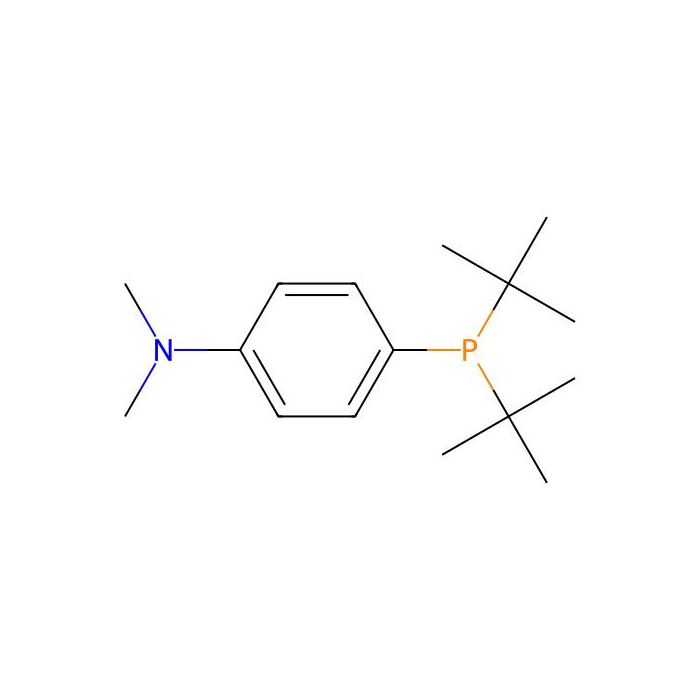
Amphos - Moligand™, 10 mM in DMSO , CAS No.932710-63-9

CAS: 932710-63-9 Cat. No.: A1500310 分子式: C16H28NP 分子量: 265.37 EC番号: 802-197-6
注文可能
グレード&純度 Moligand™ ? Moligand™ — Aladdin's line of ligands and bioactive small molecules. Use for receptor, pathway, and binding studies needing defined small-molecule tools. 10 mM in DMSO
Storage
Protected from light,Argon charged,Store at -80°C
Shipped In
Dry ice packs + Cold packs
★
サイズ
USA
ドイツ (EU)*
価格
個数
1ml
A1500310-1ml
受注生産 · 8~12週間
$27.90
Enter a quantity for the sizes you want to add.

概要

Amphos is a biochemical reagent that can be used as a biological material or organic compound for life science related research.

仕様

仕様と純度
Moligand™, 10 mM in DMSO
保管条件
Protected from light,Argon charged,Store at -80°C
入荷
Dry ice packs + Cold packs
この製品は冷冷この冷このこの製品の運送が必要です。地上およびその他の経済サービスは利用できません。
等級
Moligand™
名前と識別子
異性体SMILES
CC(C)(C)P(C1=CC=C(C=C1)N(C)C)C(C)(C)C
WGKドイツ
3
分子量
265.37
Reaxys
18966382
Reaxys-RN_link_address
https://www.reaxys.com/reaxys/secured/hopinto.do?context=S&query=IDE.XRN=18966382&ln=

詳細データ

証明書(CoA、COO、BSE/TSEと分析図)
C of A & Other Certificates(BSE/TSE, COO):
Analytical Chart:
化学的性質と物理的性質
融点(°C)69 °C
安全と危険(GHS)
ピクトグラム(s)
GHS05,   GHS07
信号
Danger
危険表示

H315:Causes skin irritation

H319:Causes serious eye irritation

H335:May cause respiratory irritation

H314:Causes severe skin burns and eye damage

注意表示

P261:Avoid breathing dust/fume/gas/mist/vapors/spray.

P305+P351+P338:IF IN EYES: Rinse cautiously with water for several minutes. Remove contact lenses if present and easy to do - continue rinsing.

P280:Wear protective gloves/protective clothing/eye protection/face protection.

P302+P352:IF ON SKIN: wash with plenty of water.

P321:Specific treatment (see ... on this label).

P405:Store locked up.

P501:Dispose of contents/container to an approved waste disposal plant.

P264:Wash hands [and …] thoroughly after handling.

P260:Do not breathe dust/fume/gas/mist/vapors/spray.

P271:Use only outdoors or in a well-ventilated area.

P301+P330+P331:IF SWALLOWED: Rinse mouth. Do NOT induce vomiting.

P304+P340:IF INHALED: Remove person to fresh air and keep comfortable for breathing.

P363:Wash contaminated clothing before reuse.

P403+P233:Store in a well-ventilated place. Keep container tightly closed.

P362+P364:Take off contaminated clothing and wash it before reuse.

P264+P265:Wash hands [and …] thoroughly after handling. Do not touch eyes.

P305+P354+P338:IF IN EYES: Immediately rinse with water for several minutes. Remove contact lenses if present and easy to do. Continue rinsing.

P337+P317:If eye irritation persists: Get medical help.

P332+P317:If skin irritation occurs: Get medical help.

P302+P361+P354:IF ON SKIN: Take off Immediately all contaminated clothing. Immediately rinse with water for several minutes.

P316:Get emergency medical help immediately.

P319:Get medical help if you feel unwell.

WGKドイツ
3
Reaxys
18966382
Reaxys-RN_link_address
https://www.reaxys.com/reaxys/secured/hopinto.do?context=S&query=IDE.XRN=18966382&ln=
ソリューション計算機
レビュー

顧客レビュー

Application Protocols
  • Not applicable (no vendor-validated bioassays provided)
    • No tested applications (e.g., WB, IHC, IF, FC) or recommended dilutions are specified for this small-molecule ligand.
    • For synthetic applications, see the Reaction Conditions tab for literature-style starting points.
Biological Roles
  • Item-specific

    • This product is designated for research use only. No biological function, pathway involvement, or bioactivity is specified for Amphos in this listing.
  • General note

    • Amphos-type phosphine ligands are synthetic coordination compounds used to modulate the activity of transition-metal catalysts. They are not endogenous biomolecules and have no known physiological role.
  • Practical guidance for biochemists

    • If used in bioconjugation or late-stage functionalization of complex molecules, ensure complete removal of metal/ligand residues by appropriate scavengers and purification, as phosphines and their oxides can interfere with bioassays.
    • For any work involving biological matrices, validate that residual ligand does not affect assay readouts (e.g., by running matrix blanks and spike–recovery).
Buffer Applications
  • Applicability

    • Amphos is a neutral, hydrophobic phosphine ligand and is not a buffering agent. It has no defined acid–base pair suitable for maintaining pH in aqueous systems.
  • Guidance

    • If catalytic transformations are performed in biphasic or micellar aqueous media, select a compatible buffer (e.g., phosphate, carbonate) based on the coupling chemistry and substrate stability. Amphos itself does not contribute to buffering capacity.
    • Remove Amphos/metal residues prior to biological or analytical assays in buffered media to avoid interferences.
Green Alternatives
  • Context

    • Amphos-type ligands are often deployed with polar aprotic or aromatic solvents and inorganic bases. Greener choices can reduce solvent waste and hazard without sacrificing performance.
  • Greener solvent options (general; verify compatibility experimentally)

    • Replace DMF/DMAc/NMP with 2-MeTHF, CPME, or green alcohols (tAmylOH) when reaction allows.
    • Employ water or aqueous micellar media (e.g., TPGS-750-M) for some cross-couplings using suitable Pd–ligand systems; test ligand stability first.
    • Favor EtOAc or anisole over chlorinated solvents; use toluene in place of xylene to lower boiling point and energy use when feasible.
  • Process intensification

    • Use preformed palladium precatalysts compatible with Amphos-type ligation to reduce metal loading and improve initiation, thereby lowering metal waste.
    • Continuous flow with immobilized bases can minimize solvent volume and improve safety, especially for exothermic aminations.
  • Comparative snapshot (general guidance)

    • Traditional conditions: toluene or dioxane + strong alkoxide base at 90–110 °C.
    • Greener alternative: CPME or 2-MeTHF + K3PO4 or KOAc at 60–90 °C; in certain cases, aqueous micellar media at 40–60 °C.
  • Trade-offs

    • Greener ethers may change catalyst speciation and rate; some bases have lower solubility in greener solvents. Micellar systems can complicate isolation and metal scavenging.
  • Item-specific note

    • No eco-metrics or EHS data are provided for this SKU; consult CoA/SDS and perform small-scale trials before process adoption.
Pharmaceutical Uses
  • Applicability

    • Amphos is supplied for research use only. It is not an active pharmaceutical ingredient (API) or approved excipient per this listing.
  • Process chemistry context (general)

    • Amphos-type ligands are often used in medicinal/process chemistry to enable challenging Pd- or Ni-catalyzed couplings under milder conditions, facilitating route scouting and scale-up. Downstream GMP use would require independent qualification; none is implied here.
  • Quality considerations

    • For any use in drug substance/intermediate synthesis, verify residual ligand and phosphine oxide levels via suitable analytical methods (e.g., LC–MS, 31P NMR). Pharmacopeial status and impurity limits are Not specified for this item; refer to internal specifications and regulatory guidance.
Physical Properties
  • Item-specific (from Product Data)

    • Appearance: Not specified for this item; refer to CoA/Spec Sheet.
    • Molecular weight: Not specified for this item; refer to CoA/Spec Sheet.
  • Literature/general values for Amphos-type biaryl phosphines (illustrative; not specifications for this item)

    • Physical state: typically crystalline solids or waxy solids; color ranges from white to pale yellow depending on substitution and trace oxidation.
    • Solubility profile: good solubility in nonpolar/aromatic and ethereal solvents (e.g., toluene, xylenes, THF, dioxane, CPME); negligible solubility in water. Exact solubility for this item is not specified.
    • Volatility: non-volatile solids; no measurable vapor pressure under ambient lab conditions.
    • Acid–base character: neutral ligand; the phosphine lone pair is basic and coordinative; conjugate acid pKaH varies widely (often >5 in MeCN for dialkylarylphosphines), but a specific pKa is not assigned here.
    • Partitioning: expected lipophilic behavior (high logP) common to dialkylarylphosphines; no item-specific value available.
  • Practical implications

    • Handle as a moisture/air-sensitive solid; many dialkylbiaryl phosphines slowly oxidize to phosphine oxides in air and on silica.
    • For exact constants (mp, purity assays, residual solvents, water/peroxide/metal content, refractive index), see the CoA/Spec Sheet for this lot. No item-specific numeric properties are provided above.
Quality and Grades
  • Item-specific (from Product Data)

    • Grade: Moligand™.
  • What Moligand™ implies (general description of grade; not a guarantee of unstated specifications)

    • Purpose-built ligand grade designed for homogeneous catalysis and organometallic research.
    • Emphasis on high chemical purity and low ligand oxide content to ensure reliable catalytic performance. Typical features of such grades include rigorous packaging under inert gas, low residual solvents, and batch-to-batch reproducibility. Exact impurity limits for this item are Not specified; refer to CoA/Spec Sheet.
    • Packaged under argon and protected from light, with ultra-cold storage to suppress autoxidation.
  • How this benefits practitioners

    • Improved catalyst initiation and reproducibility in Pd- and Ni-catalyzed couplings relative to commodity-grade phosphines.
    • Lower baseline in trace-metal/trace-oxide analyses used for process troubleshooting (actual numeric limits Not specified for this item).
  • Practical notes

    • Allow container to equilibrate to glovebox conditions before opening to avoid moisture condensation.
    • If using silica chromatography on ligand-containing mixtures, expect partial oxidation; analyze by 31P NMR to verify ligand integrity post-workup.
    • For chromatography-grade requirements (e.g., HPLC UV cutoff), this information is Not specified for this item; refer to CoA/Spec Sheet.
Reaction and Applications
  • Item-specific

    • Manufacturer Applications: Not specified beyond “For research use only.” The following reflects literature/general applications of Amphos-type ligands in catalysis.
  • Literature/general applications of Amphos-type biaryl phosphines

    • Palladium-catalyzed C–N coupling (Buchwald–Hartwig amination): enables aryl chloride/bromide amination with primary/secondary amines, anilines, and hindered partners by promoting fast oxidative addition and reductive elimination.
    • C–O coupling: aryl halide (or sulfonate) etherification with phenols/alcohols; bulky electron-rich ligands improve turnover for deactivated electrophiles.
    • C–C cross-couplings: Suzuki–Miyaura, Kumada, Negishi, and Stille reactions—especially with demanding aryl chlorides and sterically hindered substrates.
    • Nickel catalysis: certain biaryl phosphines enable Ni-catalyzed cross-coupling of aryl chlorides/pseudohalides and sp3 electrophiles.
    • Precatalyst formation: combines with Pd(0) or Pd(II) sources (e.g., Pd2(dba)3, Pd(OAc)2) to give active L–Pd species; well-defined (L)2Pd(0) or (L)Pd(Ar)X intermediates are often implicated.
  • Practical tips (general)

    • Air-free technique is essential; preform the catalyst in situ by stirring Pd source with ligand (1.5–3.0 equiv ligand per Pd) before adding substrates/base.
    • Ligand-to-metal ratio tunes speciation; excessive ligand may slow oxidative addition, while insufficient ligand can lead to Pd black.
    • Bases: NaOtBu, KOtBu, K3PO4, Cs2CO3, and NaOMe are common; match base to solvent/substrates.
    • Monitor by GC/LC and 31P NMR to ensure ligand integrity; phosphine oxide resonances indicate oxidation.
  • Applications scope

    • Effective with electronically diverse aryl/vinyl halides, including heteroaryl systems; suitable for late-stage functionalization in discovery chemistry.
Reaction Conditions
  • Item-specific

    • No recommended conditions are specified for this SKU. The following are literature/general guidelines for Amphos-type ligands in Pd-catalyzed couplings.
  • General starting points (optimize per substrate)

    • Buchwald–Hartwig amination
      • Catalyst: Pd2(dba)3 (0.5–1.0 mol% Pd) + Amphos (1.5–3.0 mol%).
      • Base: NaOtBu or K3PO4 (2–3 equiv).
      • Solvent: toluene, dioxane, CPME, or tAmylOH.
      • Temperature/time: 60–110 °C, 2–18 h.
    • Suzuki–Miyaura coupling
      • Catalyst: Pd(OAc)2 (0.5–1.0 mol% Pd) + Amphos (1.5–3.0 mol%); aqueous base (K3PO4·xH2O, K2CO3, Cs2CO3).
      • Solvent: toluene/H2O, 2-MeTHF/H2O, or dioxane/H2O (phase-transfer/additive as needed).
      • Temperature: 40–90 °C.
    • C–O coupling (etherification/carbamate formation)
      • Catalyst: Pd2(dba)3 or Pd(allyl)Cl dimer + Amphos (2–4 mol% ligand).
      • Base: Cs2CO3, K3PO4, or NaOtBu; anhydrous conditions favored.
      • Solvent: dioxane, toluene, or CPME; 70–110 °C.
  • Operational tips

    • Pre-complexation: stir Pd source with Amphos in solvent and base (if compatible) for 10–20 min to form the active species before adding substrates.
    • Oxygen/moisture exclusion: rigorously degas solvents (freeze–pump–thaw or sparging) and use oven-dried glassware.
    • Analysis: monitor by GC/LC; confirm ligand state via 31P NMR when troubleshooting.
  • Disclaimer

    • These are literature-style starting points and not specifications for this product. Substrate-specific optimization is essential.
Safety and Handling
  • Item-specific (from Product Data)

    • Storage: Store at −80 °C, protected from light, under argon (argon charged).
    • Shipping: Dry ice packs + cold packs.
    • GHS signal word, hazard statements, pictograms, classification: Not specified for this item; refer to SDS.
  • General safety guidance for dialkylbiaryl phosphine ligands (literature/general; defer to SDS for this item)

    • Hazards: air- and moisture-sensitive; may form phosphine oxides upon exposure. Dust may be irritating. Some phosphines have unpleasant odors; avoid inhalation. Not for human or animal use.
    • Incompatibilities: strong oxidizers (risk of rapid oxidation), strong acids (salt formation), halogenating agents. Avoid prolonged contact with silica/alumina which can promote oxidation.
    • PPE: lab coat, safety glasses, and chemically resistant gloves (e.g., nitrile). Handle under inert atmosphere (Ar/N2) using a glovebox or Schlenk line. Work in a fume hood.
    • Handling tips: minimize headspace oxygen/moisture; keep containers tightly closed. When weighing, pre-chill containers and work quickly to limit condensation.
    • First aid (overview):
      • Inhalation: move to fresh air; seek medical attention if symptoms persist.
      • Skin/eye contact: rinse with water for ≥15 min; remove contaminated clothing; obtain medical advice if irritation persists.
      • Ingestion: rinse mouth; do not induce vomiting; seek medical care.
    • Fire: use dry powder, CO2; avoid water streams on reactive solids. Combustion may produce phosphorus oxides.
  • Always consult the Aladdin SDS for authoritative hazard, toxicological, and emergency information for SKU A1500310.

Solvent Selection
  • Item-specific

    • No solvent-specific data are provided for this SKU. See CoA for solubility if available.
  • Literature/general considerations for Amphos-type biaryl phosphines

    • Solubility: typically soluble in aromatic hydrocarbons (toluene, xylenes), ethereal solvents (THF, 1,4-dioxane, CPME, 2-MeTHF), and chlorinated solvents (DCM, DCE); poorly soluble in alcohols and alkanes; insoluble in water.
    • Working solutions: 0.05–0.5 M stock solutions in anhydrous toluene or THF are convenient for air-free dosing; store under Ar at low temperature.
    • Choosing solvent for cross-coupling with Pd/Ni:
      • Polar ethers (THF, dioxane, CPME): good for C–N/C–O couplings and when higher dielectric constant aids base solubility.
      • Aromatics (toluene, xylene): favored for high-temperature C–C couplings and when substrates are hydrophobic.
      • Alcoholic media (tBuOH, tAmylOH): can accelerate some aminations with strong bases; ligand must be compatible.
      • Aqueous or mixed media: surfactant-enabled micellar systems may be used when compatible with the ligand–metal complex.
  • Comparison snapshot (general)

    • Toluene vs THF: toluene offers higher thermal stability and often better solubility for hydrophobic substrates; THF improves mass transfer for polar substrates but can coordinate to metal centers.
    • CPME/2-MeTHF: greener ether alternatives with broader temperature range and better water tolerance than THF; often suitable for Amphos-type systems.
  • Note: Exact solubility/miscibility for this item is Not specified; verify experimentally and consult the CoA.

Storage and Reconstitution
  • Item-specific (from Product Data)

    • Storage: Store at −80 °C, protected from light, under argon (argon charged vial).
    • Shipping: Dry ice packs + cold packs.
  • Reconstitution and handling (general guidance for air-sensitive phosphine ligands; verify compatibility with your process)

    • Open only under inert atmosphere (glovebox preferred). If using Schlenk techniques, backfill vial with argon before opening.
    • Prepare stock solutions in anhydrous, degassed solvents such as toluene, THF, 1,4-dioxane, or CPME (typical 0.05–0.5 M). Filter through a PTFE syringe filter if particulates are present (under inert gas).
    • Aliquot into crimped, argon-filled vials or septum-capped vials to minimize headspace oxygen; flash-freeze and store at −80 °C.
    • Avoid repeated freeze–thaw. Use single-use aliquots where possible.
    • Inspect by 31P NMR prior to critical runs; formation of phosphine oxide indicates oxidation—purify or use fresh material.
  • Shelf-life considerations

    • Stability improves with low temperature, exclusion of light/oxygen/moisture. Exact retest/expiry dating and allowable oxide content are Not specified for this item; refer to CoA/Spec Sheet.
  • Disposal

    • Dispose of phosphine-containing wastes as hazardous organic waste per institutional and local regulations; neutralize residual metal via approved scavengers where appropriate.
Structure and Identity
  • Item-specific (from Product Data)

    • Product name: Amphos (SKU: A1500310)
    • CAS: 932710-63-9
    • Grade: Moligand™
    • InChIKey: Not specified for this item; refer to CoA/Spec Sheet.
    • SMILES: Not specified for this item; refer to CoA/Spec Sheet.
    • Molecular formula: Not specified for this item; refer to CoA/Spec Sheet.
    • Molecular weight: Not specified for this item; refer to CoA/Spec Sheet.
  • Literature/general description (for context; not item-specific)

    • “Amphos” is used in the literature to designate a bulky, electron-rich monodentate aryl–dialkylphosphine ligand belonging to the biaryl phosphine family widely employed in palladium-catalyzed cross-coupling.
    • Typical structural features: a biaryl backbone (often ortho-substituted) bearing a dialkylphosphino group (PR2, R = tert-alkyl or cycloalkyl). Such designs enhance sterics (promote reductive elimination) and electron donation (facilitate oxidative addition).
    • 2D description (generic for this class): two fused aryl rings in a twisted biaryl arrangement; a PR2 substituent ortho to the biaryl axis on one ring; optional ortho/para substituents on either ring that tune cone angle and basicity.
  • Notes

    • Exact isomer/functional substituents for this catalog item are not disclosed above. Consult the product CoA/Spec Sheet for definitive identifiers and structural depiction.
Synthetic Utility
  • Functional role

    • Amphos functions as a strong σ-donating, sterically encumbered monodentate ligand that tunes oxidative addition, transmetalation, and reductive elimination steps in cross-coupling cycles.
  • Retrosynthetic value (general)

    • Enables late-stage aryl–N, aryl–O, and aryl–C bond constructions from inexpensive aryl chlorides/pseudohalides, reducing need for preactivated substrates.
    • Facilitates coupling to hindered nucleophiles (e.g., secondary anilines, sterically congested phenols) and deactivated electrophiles.
  • Named transformations (literature/general)

    • Buchwald–Hartwig amination of aryl chlorides/bromides.
    • Suzuki–Miyaura coupling of aryl boronates with aryl/vinyl halides.
    • C–O couplings forming aryl ethers/carbamates.
    • Kumada/Negishi/Stille couplings for challenging substrates.
  • Practical insights

    • Pair with appropriate Pd sources: Pd2(dba)3, Pd(OAc)2, or well-defined precatalysts; typical ligand:Pd ratios 1.5–2.5:1.
    • Bulky, electron-rich ligands like Amphos often favor rapid reductive elimination, improving yields with hindered substrates; however, excessive sterics can slow oxidative addition—optimize loading accordingly.
    • For heteroaryl halides, reduce temperature and consider polar ethers to mitigate catalyst deactivation by heteroatoms.
Target Specificity
  • Not applicable
    • Amphos is a small-molecule ligand, not a biological affinity reagent. There is no antigen/epitope/clone/isotype information for this SKU.
    • No target specificity data are provided in the Product Data.

グレードの選択でお困りですか?

当社のグレード選定ガイドでは、カタログ内のすべてのバリエーションについて、純度、安定剤の状態、用途への適合性を網羅しています。

Moligand™ グレードガイドを見る →

Shall we send you a message when we have discounts available?

Remind me later

Thank you! Please check your email inbox to confirm.

Oops! Notifications are disabled.