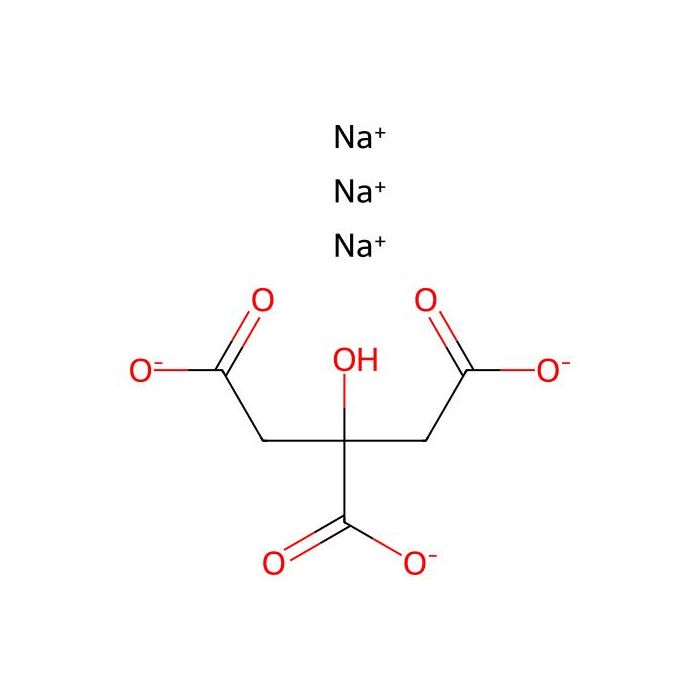
Citrate Concentrated Solution - 1 M in H2O , CAS No.68-04-2

CAS: 68-04-2 Cat. No.: C1501304 分子式: C6H5O7Na3 分子量: 258.07 EC番号: 200-675-3
注文可能
GRADE & PURITY 1 M in H2O
Storage
Room temperature
Shipped In
Normal
★
Size
USA
ドイツ (EU)*
Price
Qty
250ml
C1501304-250ml
3 在庫あり
—
$99.90
Enter a quantity for the sizes you want to add.
🧪
Why this grade

1 M in H2O for sensitive chromatographic and analytical workflows requiring minimal baseline interference.

🌡

Storage & shipping

Room temperature Ships Normal Check lot-specific COA for exact specifications.

📋

Quality documents

SDS, COA, datasheet, and spec sheet available for download. Lot-specific COA accessible via lot number lookup.

📚

Literature proof

Cited in 2092 peer-reviewed publications across chromatography, organic synthesis, and cross-coupling reactions.

Specifications

仕様と純度
1 M in H2O
保管条件
Room temperature
入荷
Normal
名前と識別子
カノニカル・スマイル
C(C(=O)[O-])C(CC(=O)[O-])(C(=O)[O-])O.[Na+].[Na+].[Na+]
IUPAC Name
trisodium;2-hydroxypropane-1,2,3-tricarboxylate
InChIKey
HRXKRNGNAMMEHJ-UHFFFAOYSA-K
INCHI
1S/C6H8O7.3Na/c7-3(8)1-6(13,5(11)12)2-4(9)10;;;/h13H,1-2H2,(H,7,8)(H,9,10)(H,11,12);;;/q;3*+1/p-3
異性体SMILES
C(C(=O)[O-])C(CC(=O)[O-])(C(=O)[O-])O.[Na+].[Na+].[Na+]
分子量
258.07
Reaxy-Rn
3920956
Reaxys-RN_link_address
https://www.reaxys.com/reaxys/secured/hopinto.do?context=S&query=IDE.XRN=3920956&ln=

Documentation

📋 Safety Data Sheet (SDS)

Comprehensive hazard, handling, storage, and regulatory compliance document.

Download SDS →

✅ Certificate of Analysis (COA)

Lot-specific quality data. Enter your lot number to retrieve the exact COA.

Look up COA →

📊 Datasheet

Quick-reference summary of product specifications and applications.

View datasheet →

🔬 Specification Sheet

Full quality attributes and acceptance criteria for this grade.

View spec sheet →

Advanced Data

Taxonomic Classification

Taxonomy Tree

KingdomOrganic compounds
SuperclassOrganic acids and derivatives
分類Carboxylic acids and derivatives
SubclassTricarboxylic acids and derivatives
Intermediate Tree Nodes Not available
Direct ParentTricarboxylic acids and derivatives
Alternative Parents Tertiary alcohols  Carboxylic acid salts  Carboxylic acids  Organic sodium salts  Organic oxides  Hydrocarbon derivatives  Carbonyl compounds  
Molecular FrameworkAliphatic acyclic compounds
Substituents Tricarboxylic acid or derivatives - Tertiary alcohol - Carboxylic acid salt - Organic alkali metal salt - Carboxylic acid - Organic oxygen compound - Organic oxide - Hydrocarbon derivative - Organic sodium salt - Organic salt - Organooxygen compound - Carbonyl group - Alcohol - Aliphatic acyclic compound
説明This compound belongs to the class of organic compounds known as tricarboxylic acids and derivatives. These are carboxylic acids containing exactly three carboxyl groups.
External Descriptors organic sodium salt
3 D構造
インタラクティブ化学構造モデル


証明書(CoA、COO、BSE/TSEと分析図)
C of A & Other Certificates(BSE/TSE, COO):
Analytical Chart:

Find and download the COA for your product by matching the lot number on the packaging.

1 results found

Lot NumberCertificate Type日付商品
A2606609Certificate of AnalysisJan 08, 2026 C1501304
化学的性質と物理的性質
融点(°C)150 °C (decomposition)
分子量258.070 g/mol
XLogP3
Hydrogen Bond Donor Count1
Hydrogen Bond Acceptor Count7
Rotatable Bond Count2
Exact Mass257.973 Da
Monoisotopic Mass257.973 Da
Topological Polar Surface Area141.000 Ų
Heavy Atom Count16
Formal Charge0
Complexity211.000
Isotope Atom Count0
Defined Atom Stereocenter Count0
Undefined Atom Stereocenter Count0
Defined Bond Stereocenter Count0
Undefined Bond Stereocenter Count0
The total count of all stereochemical bonds0
Covalently-Bonded Unit Count4
よくある質問と記事
Differences Among Antibodies for WB/FC/IP/ChIP/IF/IHC
Structural–Functional Characteristics, Production Technologies, and Application Progress of Thrombin
Practical Guide to Sodium Carboxymethyl Cellulose (CMC-Na): Thickening/Stabilizing Mechanisms, Key Controls for Solution Preparation, and Selection Navigation (including Table 1 and Tables A–C)
Systematic Anticoagulant Selection Strategy
Chymosin: A Review of Molecular Features, Coagulation Kinetics, and Activity Evaluation
Hemicellulases: A Review of Substrate Specificity, Catalytic Systems, and Research and Industrial Applications
Why LABSA (Sulfonic Acid) Is Commonly Used in Household Cleaning Formulations: Neutralization Mechanism, Detergency Action, and Formulation Application Points
From Structure to Performance: Conditioning, Film-Forming, Thickening, and Chelating Applications of Functional Ingredients in Personal Care and Home Care
Application of Fatty Acid Methyl Ester Sulfonate (MES) in Household Detergent and Cleaning Formulations: Detergency, Hard-Water Tolerance, and Selection Criteria
Differences, Mechanisms of Action, and Selection of Sodium Metasilicate and Sodium Tripolyphosphate in Detergent and Cleaning Formulations
The Role, Selection, and Validation of Chelating Agents in Daily Chemical Formulations
Differences, Functions, and Selection Guidelines for Sodium Hydroxide Flakes, Granules, Liquid Caustic Soda, and Caustic Soda in Household and Personal Care Product Manufacturing: The Functional and Application Logic of Sodium Hydroxide
Why Daily Chemical Formulations Need Alkaline Ingredients: From pH Adjustment and Saponification to Detergency Boosting and Selection Logic
Xiao Fang Bai, Da Fang Bai, PnB and DPnB: Mechanisms and Selection of Butyl Glycol Ethers in Hard-Surface Cleaning Formulations
Why Limonene Can Soften Greasy Soils Yet Is Difficult to Dissolve in Water: Understanding the Cleaning Mechanism and Formulation Applications of Naturally Derived Solvents from Molecular Structure
Degreasing Agents from a Molecular-Structure Perspective: How AEO, APG, and Related Surfactants Can Replace Nonylphenol Ethoxylates (NPE)
How Can Sodium Tripolyphosphate (STPP) Be Replaced? From Detergency Mechanisms to Formulation Choices for Low-Phosphorus/Phosphorus-Free Builder Systems
Interfacial Mechanism and Formulation Applications of AEO-9 (Fatty Alcohol Polyoxyethylene Ether): An Analysis of Emulsification, Wetting, Oil Soil Removal, and Co-Formulation Compatibility
More Than a pH Adjuster: Mechanisms, Selection Logic, and Alternative Acid Source Analysis of Citric Acid in Home-Care Cleaning
Structural Characteristics, Low-Temperature Flowability, and Home-Care Cleaning Applications of Palm-Derived Isomeric Alcohol Polyoxyethylene Ether PLE-S9
Performance Sources and Formulation Applications of Enzyme-Based Ingredients in Daily Chemical Products: Fermentation Transformation, Enzymatic Reactions, and Application Principles
Dispersants, Anti-Redeposition Agents, and Scale-Control Materials in Household Cleaning Formulations: Mechanisms of Action, Selection Logic, and Representative Products
Mechanism of Kojic Acid in Reducing Hyperpigmentation: From Tyrosinase Inhibition to Melanin Production Regulation
Antioxidant Mechanisms of Ferulic Acid in Skincare, Vitamin C/E Synergy, and Stable Delivery Applications
Potential Mechanisms of Succinic Acid in Acne Care: From Dicarboxylic Acid–Base Equilibria to Metabolic Antagonism Among Skin Microorganisms
Citations of This Product
ソリューション計算機
レビュー

顧客レビュー

Application Protocols

No item-specific, validated application protocols are provided for this product. General guidance (literature) for using citrate solutions:

  • Buffer preparation: Dilute the concentrate to the desired molarity with high-purity water. Adjust pH with citric acid or NaOH. Filter-sterilize if required (0.22 µm).
  • Enzyme assays: Pre-equilibrate buffer to assay temperature; verify that citrate chelation does not inhibit required metalloenzymes; supplement divalent cations if needed.
  • Nanoparticle synthesis: For AuNPs, add citrate to boiling HAuCl4 under vigorous stirring; monitor color change; quench by cooling.

For method-critical work, establish in-house SOPs and consult the CoA/Spec Sheet for any product-specific directions.

Biological Roles

This section provides biochemical context (literature) for the citrate ion; it does not imply biological testing of this specific product.

  • Central metabolism:

    • Citrate is a key intermediate of the tricarboxylic acid (TCA) cycle, formed by condensation of oxaloacetate and acetyl-CoA and subsequently isomerized to isocitrate. It participates in cellular energy metabolism and carbon flux.
  • Metal binding and transport:

    • Citrate chelates Ca2+, Mg2+, Fe3+, and other metals, affecting bioavailability and precipitation (e.g., calcium citrate formation). This underlies its common laboratory use to modulate metal-dependent processes.
  • pH homeostasis:

    • As a polyprotic acid/base system (three dissociation steps), citrate buffers intracellular/extracellular environments in the acidic to near-neutral range in model systems.
  • Macromolecular interactions:

    • Citrate can stabilize proteins and colloids by charge-based interactions and weak coordination, influencing aggregation and oxidation pathways in vitro.

Note: These roles are provided for mechanistic understanding in research settings. This product is designated for research use only (per Product Data).

Buffer Applications

Citrate/citric acid is a versatile buffer system for pH control in the acidic to mildly acidic range.

  • Effective pH range (literature): ~3.0–6.2 (pKa1 ≈ 3.13; pKa2 ≈ 4.76; pKa3 ≈ 6.40 at 25 °C).

  • Preparing working buffers (general guidance):

    • Start from this Citrate Concentrated Solution and dilute with high-purity water to the target molarity/ionic strength. Adjust pH with citric acid (to lower) or NaOH (to raise) as needed.
    • Filter-sterilize (0.22 µm) for sensitive assays or storage; avoid heat sterilization if composition is not verified.
  • Example recipes (literature, for planning only):

    • 50 mM citrate buffer, pH 4.5: Mix appropriate volumes of 50 mM trisodium citrate and 50 mM citric acid to reach pH 4.5 (use Henderson–Hasselbalch), then adjust ionic strength with NaCl if required.
    • 10 mM citrate-phosphate buffer (McIlvaine): Combine 0.2 M disodium phosphate with 0.1 M citric acid stocks to achieve pH 3–7 as needed.
  • Applications:

    • Enzyme assays operating in acidic range (e.g., glycosidases, proteases requiring low pH), protein elution from cation exchangers, pH control in colorimetric assays, and stabilization of metal-sensitive analytes by chelation.
  • Practical notes:

    • Temperature affects pH; document buffer preparation temperature and equilibrate before fine pH adjustment.
    • Citrate’s chelation can sequester Mg2+/Ca2+; supplement metals or choose an alternative buffer if activity loss is observed.
Green Alternatives

Citrate buffers are generally aligned with green chemistry principles: aqueous, non-volatile, and derived from a biogenic acid (citric acid). Nevertheless, buffer choice can impact energy, waste, and toxicity profiles.

  • Comparative view (literature-based):

    | Buffer system | pH range (effective) | Metal chelation | Biodegradability | Notes | | --- | --- | --- | --- | --- | | Citrate/citric acid | ~3.0–6.2 | Moderate | High | Aqueous, low hazard; can inhibit metalloenzymes. | | Acetate/acetic acid | ~3.6–5.6 | Low | High | Minimal metal binding; simple, low toxicity. | | Phosphate (Na/K) | ~6.0–8.0 | Low–moderate (Ca3(PO4)2 ppt) | High | Precipitates with Ca2+; widely used, benign. | | Succinate/succinic acid | ~4.0–6.0 | Low | High | Aliphatic dicarboxylate, low chelation. | | MES/Good’s buffers | ~5.5–6.7 | Very low | Moderate | Low metal binding; synthesized, costlier.

  • Tradeoffs:

    • If metal chelation is undesirable, acetate or Good’s buffers may be greener in context by reducing repeats/waste due to inhibition.
    • For LC–MS, volatile buffers (formate/acetate) reduce salt load and instrument fouling relative to non-volatile citrate.
  • Practical sustainability steps:

    • Use the lowest effective buffer concentration and prepare only needed volumes.
    • Reuse properly stored working solutions when method allows; verify pH before reuse.
    • Opt for room-temperature processes where feasible; this product stores at room temperature (per Product Data), minimizing cold-chain energy.
Pharmaceutical Uses

Provided for formulation context only (literature). This product is for research use only and is not supplied with a pharmacopoeial certification unless explicitly stated on the CoA.

  • Excipient roles (literature):

    • Buffering agent in the acidic to mildly acidic range for liquid formulations (oral, topical, and parenteral), contributing to pH stability and taste-masking in some oral products.
    • Chelating/sequestering agent to modulate metal-catalyzed degradation pathways (e.g., oxidation) in protein and small-molecule formulations, balanced against potential interactions with required metal ions.
    • Tonicity/ionic strength adjustment in conjunction with other salts.
  • Compendial status (literature):

    • Trisodium Citrate Dihydrate and related citrate excipients are covered by USP–NF/Ph. Eur. monographs with specifications for identification, assay, pH, clarity, and impurities.
  • Practical formulation notes:

    • Evaluate compatibility of citrate with active ingredients and packaging (e.g., extractables/leachables at low pH).
    • For injectable prototypes, low bioburden/endotoxin and particulate levels are critical—do not assume suitability without verified grade and CoA.
    • Non-volatile nature can impact drying/lyophilization profiles; consider buffer exchange when volatility is needed (e.g., for LC–MS workflows).
Physical Properties
  • Item-specific properties (solution):

    • Concentration, density, pH, and ionic strength: Not specified for this item; refer to CoA/Spec Sheet.
    • Appearance: Not specified for this item; refer to CoA/Spec Sheet.
  • Literature properties (solute: trisodium citrate):

    • Physical form: White to colorless crystalline solid (dihydrate), highly water-soluble.
    • Solubility (water, 25 °C, literature): High; commonly reported on the order of tens of grams per 100 mL (e.g., ~70–75 g/100 mL for the dihydrate). Actual solubility varies with temperature and hydration.
    • Solubility (organic solvents, literature): Sparingly soluble to insoluble in most nonpolar organics; miscible only with strongly hydrogen-bonding polar solvents when significant water is present.
    • pKa values (citric acid, 25 °C, literature): pKa1 ≈ 3.13, pKa2 ≈ 4.76, pKa3 ≈ 6.40; useful buffering primarily in pH ~3.0–6.2 with appropriate citrate/citric acid ratios.
    • Hygroscopicity: Citrate salts are moderately hygroscopic; water of crystallization is common (dihydrate).
    • Thermal behavior (literature): Trisodium citrate dihydrate loses water on heating and decomposes at elevated temperatures rather than exhibiting a sharp melting point.
    • Partitioning: Effectively non-volatile and non-lipophilic; logP not applicable for inorganic-organic salts; behaves as a strong electrolyte in water.

Note: The measurable properties of this Citrate Concentrated Solution (e.g., refractive index, density) are concentration-dependent and are not specified for this catalog item.

Quality and Grades
  • Item-specific grade/purity: Not specified for this item; refer to CoA/Spec Sheet.

  • Interpreting possible grades (general guidance):

    • Analytical/ACS/AR grade citrate is suitable for routine analytical work with controlled inorganic/organic impurities.
    • Buffer/biological grade emphasizes low UV-absorbing impurities, low bioburden/endotoxin, and reproducible pH for sensitive biochemical assays and chromatography.
    • Injection/Ph. Eur./USP-NF grades (for excipient use) impose pharmacopeial limits on heavy metals, identification, pH, clarity, and assay (literature). This product is for research use only and is not certified for clinical use unless explicitly stated on the CoA.
  • Stabilizers/antimicrobials: None are stated for this product. If sterility or preservative-free status is critical (e.g., enzyme assays, cell culture), verify via CoA/Spec Sheet.

  • What to verify before use:

    • Concentration and pH of the concentrate, bioburden/endotoxin (if relevant), conductivity, and UV background for spectroscopic/LC workflows.
    • Metal content if chelation-sensitive assays are planned; citrate can complex trace metals and alter activity in metalloenzymes.

Note: In the absence of item-specific specifications, users should qualify the solution in their methods or adjust/sterilize by filtration before critical experiments.

Reaction and Applications

Citrate solutions are used broadly as pH buffers and as mild chelating/reducing agents in aqueous chemistry.

  • Buffering and chelation:

    • Effective for maintaining pH ~3–6.2. Citrate anion complexes alkaline earth and transition metal ions; this can inhibit metal-catalyzed side reactions or, conversely, suppress required metallo-enzyme activity. Titrate conditions to balance buffering and chelation.
  • Nanomaterials (literature):

    • Turkevich–Frens synthesis of Au nanoparticles: Boiling aqueous HAuCl4 reduced by trisodium citrate, which serves as both reductant and stabilizer. Particle size is tunable via citrate:Au ratio, temperature, and mixing rates.
    • Ag nanoparticle and metal-oxide colloid stabilization: Citrate adsorbs to particle surfaces, imparting negative charge for electrostatic stabilization.
  • Protein and enzyme workflows:

    • Common in enzyme storage/assay buffers within allowable pH; chelation can reduce adventitious metal-catalyzed oxidation. Verify Mg2+/Ca2+ requirements for polymerases/kinases and adjust metal or switch buffer if inhibition is observed.
  • Sample preparation and analytical chemistry:

    • Useful for pH control in colorimetric/UV assays where low background absorbance in the near-UV is required; confirm with your detection wavelength. Can modulate metal speciation in ICP/ion chromatography samples.
  • Practical tips:

    • Prepare working solutions with high-purity water; degas if air-sensitive analytes are present. Filter (0.22–0.45 µm) to remove particulates before spectroscopy or chromatography.
    • Document temperature, ionic strength, and pH at use, as citrate buffer capacity is temperature dependent (literature).
Reaction Conditions

Representative conditions are provided from literature to guide planning; adjust to your system.

  • Buffering reactions:

    • Temperature: 4–37 °C typical for biochemical assays; ambient for most analytical workflows.
    • Concentration: 5–100 mM common for buffering capacity; ionic strength may be increased with NaCl if needed.
    • pH adjustment: Use citric acid or NaOH; validate after temperature equilibration.
  • Gold nanoparticle synthesis (Turkevich–Frens, literature):

    • Solvent: Water.
    • Reagents: HAuCl4 (e.g., 0.25–1.0 mM) and trisodium citrate (typically 0.5–5 mM, providing molar citrate:Au ratios ~2–10+).
    • Temperature: Reflux (~100 °C) under vigorous stirring.
    • Time: Color change to ruby red within minutes; total 10–30 min typical.
    • Outcome: Particle size tunable (e.g., ~10–50 nm) via citrate:Au ratio, temperature, and addition protocol.
  • Metal ion masking (analytical, literature):

    • Citrate at millimolar concentrations can suppress precipitation or catalysis by complexing Ca2+, Fe3+, etc.; stability constants are pH dependent.
  • Notes:

    • High ionic strength or organic co-solvents may salt out or alter activity; verify compatibility.
    • For enzyme assays requiring Mg2+/Mn2+, titrate metal concentration to offset citrate chelation or switch buffer system.
Safety and Handling
  • GHS classification, signal word, pictograms, H-statements: Not specified for this item; refer to the SDS for authoritative safety information.

  • General safety considerations (literature/good practice):

    • Expected hazards: Citrate buffers are generally regarded as low hazard for laboratory use; may cause mild eye/skin irritation. Avoid inhalation of aerosols and ingestion.
    • PPE: Wear lab coat, safety glasses, and appropriate gloves (e.g., nitrile). For large-volume handling or splash risk, use face shield and apron.
    • Engineering controls: Use in a well-ventilated area; employ splash protection and secondary containment for bulk transfer.
    • Incompatibilities: Strong acids or bases can shift speciation and pH; strong oxidizers may react with organic components; avoid mixing with concentrated Ca2+/Mg2+ solutions if chelation impacts downstream processes.
    • First aid (overview):
      • Skin/eye contact: Rinse with water for several minutes; remove contact lenses if present and easy to do; seek medical advice if irritation persists.
      • Inhalation: Move to fresh air; seek medical attention if symptoms occur.
      • Ingestion: Rinse mouth; do not induce vomiting; seek medical advice.
    • Spill response: Absorb small spills with inert material; collect for disposal. Rinse area with water to remove residues.
    • Waste disposal: Dispose according to institutional and local regulations; citrate solutions are aqueous, but pH and chelating capacity should be considered before drain disposal.

Always consult the product SDS for definitive hazard, exposure limits, and emergency procedures.

Solvent Selection

This product is an aqueous citrate solution; separate solvent selection is typically unnecessary for direct buffer use.

  • Polarity and miscibility (general):

    • The supplied medium is water; the solution is fully miscible with water and other aqueous buffers across the full range.
    • Immiscible with nonpolar organic solvents; phase separation occurs with most organics unless a co-solvent system is used.
  • When to choose citrate buffer vs alternatives:

    • Select citrate in the pH range ~3.0–6.2 (effective buffering around its three pKa values) when mild chelation of divalent cations (Ca2+, Mg2+, Fe3+) is desired or acceptable.
    • Consider alternatives when metal chelation is problematic (e.g., Mg2+-dependent enzymes): use acetate (pH ~3.6–5.6) or MES (pH ~5.5–6.7) with lower metal-binding.
  • Practical notes:

    • Dilution into high-ionic-strength media will reduce buffer capacity per unit volume; adjust concentration accordingly.
    • If mixing with organic modifiers (e.g., MeOH, ACN for LC), verify solubility and salt tolerance to avoid precipitation and ensure detector compatibility.
Storage and Reconstitution
  • Storage conditions (from Product Data): Room temperature. Avoid extreme temperatures; keep container tightly closed to prevent evaporation and concentration drift.

  • Shipping (from Product Data): Shipped under normal conditions.

  • Research use note: For research use only.

  • Handling and preparation:

    • Reconstitution: Not applicable—supplied as a concentrated solution. To prepare working buffer, dilute with high-purity water to the desired concentration and adjust pH if needed.
    • Sterility: If sterility is required, filter through a 0.22 µm membrane into a sterile container. Do not assume asepsis unless specified on the CoA.
    • Stability: Citrate solutions are generally stable at ambient conditions; avoid microbial contamination. For long-term storage after opening, consider aliquoting and refrigeration if compatible with your workflow, and monitor pH over time.
    • Freeze–thaw: Typically unnecessary for aqueous salts; if frozen for convenience, allow to thaw at room temperature and mix thoroughly to re-homogenize.

Note: Exact shelf life, concentration, and pH are not specified for this item; consult the CoA/Spec Sheet for definitive storage limits and any preservatives present.

Structure and Identity

A concentrated, aqueous citrate stock solution intended for laboratory/research workflows. The solute is commonly trisodium citrate (often supplied as the dihydrate) corresponding to the CAS below.

  • Product identity (from Product Data):

    • SKU: C1501304
    • Product name: Citrate Concentrated Solution
    • CAS: 68-04-2 (trisodium citrate dihydrate)
    • CID: 6224 (trisodium citrate, literature)
    • InChIKey: Not specified for this item; refer to CoA/Spec Sheet.
    • SMILES: Not specified for this item; refer to CoA/Spec Sheet.
  • Literature structural details (for trisodium citrate):

    • Common name: Trisodium citrate (typically dihydrate)
    • Molecular formula (literature): C6H5Na3O7·2H2O (dihydrate); C6H5Na3O7 (anhydrous)
    • Molecular weight (literature): ~294.10 g/mol (dihydrate); ~258.07 g/mol (anhydrous)
    • Structural features: Citrate is the trivalent conjugate base of citric acid, a 2-hydroxy-1,2,3-propanetricarboxylate. The anion bears three carboxylate groups (–COO–) and one secondary alcohol (–CHOH–) on a three-carbon backbone. In 2D, it appears as a central carbon bearing a hydroxyl and carboxylate, flanked by terminal carboxylates; sodium cations serve as counterions in the salt.
  • Stereochemistry: The citrate anion is achiral as commonly encountered in salts under ambient conditions.

Note: Exact concentration, counterion hydration state in solution, and any additives for this item are not specified; consult the product CoA/Spec Sheet for definitive identity details of the supplied solution.

Synthetic Utility

Citrate serves as a multifunctional reagent in aqueous synthetic and materials chemistry (literature context):

  • As a buffer: Controls proton activity in acid-catalyzed hydrolyses, condensations, and protection/deprotection schemes requiring pH 3–6.
  • As a ligand/chelating agent: Temporarily binds metal ions, moderating reactivity in solution-phase coordination, precipitation, and redox chemistry. Useful for controlling nucleation and growth in inorganic syntheses.
  • As a reductant/stabilizer: In hot aqueous media, trisodium citrate reduces Au(III) to Au(0) nanoparticles while stabilizing nascent colloids (Turkevich–Frens method). Similar roles extend to AgNPs and some metal oxides.
  • Phase behavior modifier: Enhances aqueous stability of colloids and emulsions by imparting charge and adjusting ionic strength, which can be exploited in separations and catalysis supports preparation.

Practical guidance:

  • Use citrate where buffering and mild chelation are desired simultaneously; avoid where strong, specific ligation is required (use EDTA, NTA, or phosphonates instead).
  • Consider pH-dependent speciation of citrate (tri-, di-, mono-anionic forms) when modeling equilibria or reaction mechanisms.
Target Specificity

Not applicable. This product is a chemical buffer solution and is not an antibody, probe, or biologic with target/epitope specificity.

よくある質問

How should this product be stored?
Store at room temperature.
How is this product shipped?
This product ships under standard ambient conditions. No temperature-controlled packaging is required.
What are the CAS number, molecular formula and molecular weight?
The CAS Number is 68-04-2, the molecular formula is C6H5Na3O7, and the molecular weight is 258.07 g/mol. InChIKey HRXKRNGNAMMEHJ-UHFFFAOYSA-K.
What documentation is provided?
Available product documentation, including Certificates of Analysis (COA), Safety Data Sheets (SDS), and specification sheets, is shown in the product document area. Document availability and access follow the current site policy.

Shall we send you a message when we have discounts available?

Remind me later

Thank you! Please check your email inbox to confirm.

Oops! Notifications are disabled.