Determine the necessary mass, volume, or concentration for preparing a solution.
Taxonomy Tree
| Kingdom | Inorganic compounds |
|---|---|
| Superclass | Mixed metal/non-metal compounds |
| 分類 | Transition metal organides |
| Subclass | Transition metal oxides |
| Intermediate Tree Nodes | Not available |
| Direct Parent | Transition metal oxides |
| Alternative Parents | Inorganic salts Inorganic oxides |
| Molecular Framework | Not available |
| Substituents | Transition metal oxide - Inorganic oxide - Inorganic salt |
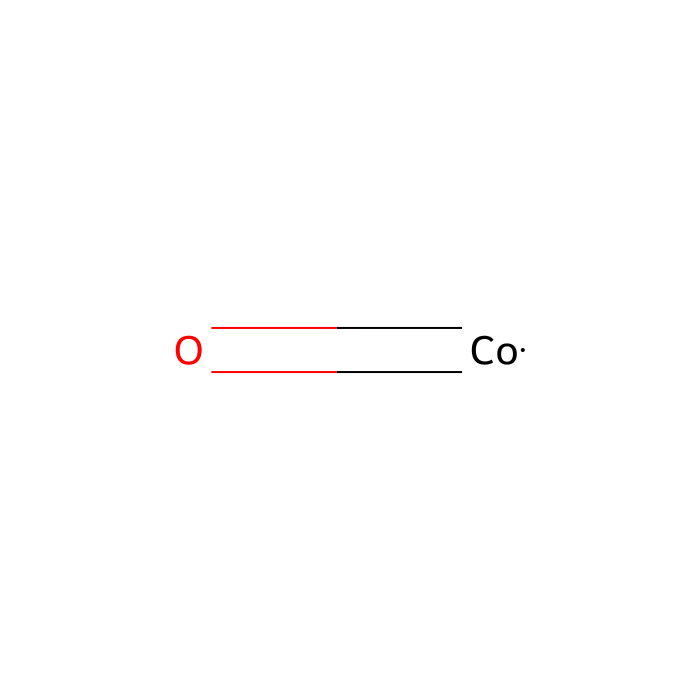
| 説明 | This compound belongs to the class of inorganic compounds known as transition metal oxides. These are inorganic compounds containing an oxygen atom of an oxidation state of -2, in which the heaviest atom bonded to the oxygen is a transition metal. |
| External Descriptors | Not available |
Find and download the COA for your product by matching the lot number on the packaging.
| Lot Number | Certificate Type | 日付 | 商品 |
|---|---|---|---|
| Certificate of Analysis | Jun 24, 2026 | C141461 | |
| Certificate of Analysis | Apr 07, 2026 | C141461 | |
| Certificate of Analysis | Jul 03, 2025 | C141461 | |
| Certificate of Analysis | Dec 07, 2024 | C141461 | |
| Certificate of Analysis | Nov 29, 2024 | C141461 |
| 融点(°C) | 895℃ |
|---|---|
| 分子量 | 74.93 |
| XLogP3 | |
| Hydrogen Bond Donor Count | 0 |
| Hydrogen Bond Acceptor Count | 1 |
| Rotatable Bond Count | 0 |
| Exact Mass | 74.9281 Da |
| Monoisotopic Mass | 74.9281 Da |
| Topological Polar Surface Area | 17.100 Ų |
| Heavy Atom Count | 2 |
| Formal Charge | 0 |
| Complexity | 2.000 |
| Isotope Atom Count | 0 |
| Defined Atom Stereocenter Count | 0 |
| Undefined Atom Stereocenter Count | 0 |
| Defined Bond Stereocenter Count | 0 |
| Undefined Bond Stereocenter Count | 0 |
| The total count of all stereochemical bonds | 0 |
| Covalently-Bonded Unit Count | 1 |
H301:Toxic if swallowed
H317:May cause an allergic skin reaction
H330:Fatal if inhaled
H334:May cause allergy or asthma symptoms or breathing difficulties if inhaled
H350:May cause cancer
H360:May damage fertility or the unborn child
H410:Very toxic to aquatic life with long lasting effects
P201:Obtain special instructions before use.
P202:Do not handle until all safety precautions have been read and understood.
P260:Do not breathe dust/fume/gas/mist/vapors/spray.
P264:Wash hands [and …] thoroughly after handling.
P270:Do not eat, drink or smoke when using this product.
P271:Use only outdoors or in a well-ventilated area.
P272:Contaminated work clothing should not be allowed out of the workplace.
P273:Avoid release to the environment.
P280:Wear protective gloves/protective clothing/eye protection/face protection.
P284:[In case of inadequate ventilation] Wear respiratory protection.
P391:Collect spillage.
P302+P352:IF ON SKIN: wash with plenty of water.
P308+P313:IF exposed or concerned: Get medical advice/attention.
P333+P313:IF SKIN irritation or rash occurs: Get medical advice/attention.
P342+P311:IF experiencing respiratory symptoms: Call a POISON CENTER/doctor/...
P405:Store locked up.
P403+P233:Store in a well-ventilated place. Keep container tightly closed.
P501:Dispose of contents/container to an approved waste disposal plant.
P301+P310+P330:IF SWALLOWED: Rinse mouth.Immediately call a POISON CENTER/doctor/.
P304+P340+P310:IF INHALED: Remove person to fresh air and keep comfortable for breathing. Immediately call a POISON CENTER/ doctor.
No bioassay or immunoassay protocols apply to this inorganic oxide. For materials and analytical workflows, consider the following general, literature-based procedures (not product specifications):
Preparation of a 1000 mg/L Co standard from CoO
Oxidation to Co3O4
Reduction to Co (catalyst activation)
Always adjust conditions to your equipment scale and consult the SDS/CoA for safety and item-specific details.
This product is an inorganic solid for research/materials use; it is not intended for biological systems.
Literature context (not product claims)
Lab guidance
Safety reminder
Cobalt(II) oxide is not a buffering agent and is essentially insoluble in water. It is not used to prepare biochemical buffers.
Cobalt compounds are inherently hazardous and critical metals; “greener” choices focus on safer processing, reduced solvent/energy usage, and closed-loop cobalt handling.
Process-level alternatives (literature; balance benefits vs tradeoffs)
Example comparison (literature; not product specifications)
Practical tips
Cobalt(II) oxide is not employed as a pharmaceutical excipient and has no approved role in drug formulation. It is an inorganic raw material for research and materials manufacturing only.
Manufacturing context (literature)
Compliance note
Reminder
Item-specific (from Product Data)
Literature/Reference values (typical for cobalt(II) oxide; not product specifications)
Not specified for this item; refer to CoA/Spec Sheet
Item-specific (from Product Data)
What this means
Practical implications for users
Related guidance
Materials synthesis
Analytical/elemental chemistry
Mechanistic/practical tips
Named/related processes (literature)
The following are literature/general conditions for common operations involving cobalt(II) oxide; they are not product specifications.
Acid dissolution to prepare cobalt standards/solutions
Oxidation to Co3O4 (spinel)
Reduction to metallic cobalt (catalyst precursor activation)
Solid-state synthesis of cobalt ferrite (example)
Safety/quality notes
Item-specific (from Product Data)
Literature-based safety guidance (general; defer to the product SDS for authoritative information)
Cobalt(II) oxide is a water-insoluble inorganic solid. Solvent selection concerns its dissolution or dispersion for processing or analysis, rather than its use as a solvent.
Item-specific
Literature guidance (general)
When to choose vs alternatives
Item-specific (from Product Data)
General storage guidance (literature/practice)
Reconstitution/Preparation notes
Stability
Documentation
Research Use Note
Brief overview: Cobalt(II) oxide is an inorganic binary oxide of cobalt in the +2 oxidation state, widely used as a cobalt source in materials synthesis, ceramics, catalysis, and analytical chemistry.
Item-specific (from Product Data)
Literature/Computed (for identity/reference; not item specifications)
Notes
Role as cobalt source
Transformations and conversions (literature)
Retrosynthetic value
Practical tips
Not applicable. This product is an inorganic material (cobalt(II) oxide), not a biological targeting reagent (e.g., antibody, ligand, probe). No antigen, epitope, species reactivity, clone, or isotype information applies.
当社のグレード選定ガイドでは、カタログ内のすべてのバリエーションについて、純度、安定剤の状態、用途への適合性を網羅しています。
for Elemental analysis グレードガイドを見る →