
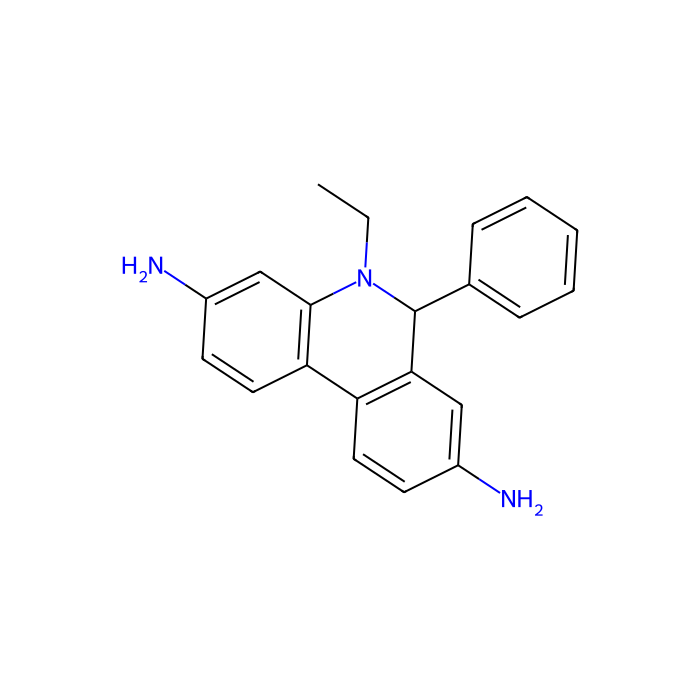
Dihydroethidium - 10mM in DMSO , CAS No.104821-25-2
在庫あり
SKU
D420461
Cell-permeable blue fluorescent dye. Redox indicator.
Cell-permeable blue fluorescent dye. Redox indicator.
Hydroethidine operates effectively as a probe for measurement of reactive oxygen species. The dye enters cells freely and is dehydrogenated to ethidium bromide. The probe has been used extensively with NK cell and as a vital dye for identification of proliferation and hypoxic cells in tumors. Studies have been performed using neutrophils and endothelial cells as well as HL60 cells and macrophages. A major advantage of this probe is its ability to distinguish between superoxide and H2O2. Fluorescence emission occurs at around 600 nm.
Redox indicator. Blue fluorescence until oxidized to ethidium
| CAS | 104821-25-2 |
|---|---|
| 集中 | 10mM in DMSO |
| 同義語 | Hydroethidine | J-100119 | AKOS015915966 | FT-0624954 | PH011085 | Hydroethidine;PD-MY 003 | Dihydroethidium - CAS 38483-26-0 | Enoxacinum (Latin) | NSC-408120 | 5-ethyl-6-phenyl-6H-phenanthridine-3,8-diamine | Q3027884 | BCP15712 | SCHEMBL79004 | 5-ethyl |
| 仕様と純度 | 10mM in DMSO |
| 保管条件 | Protected from light,Store at -80°C |
| 入荷 | Dry ice packs + Cold packs |
| Product Description | Hydroethidine operates effectively as a probe for measurement of reactive oxygen species. The dye enters cells freely and is dehydrogenated to ethidium bromide. The probe has been used extensively with NK cell and as a vital dye for identification of proliferation and hypoxic cells in tumors. Studies have been performed using neutrophils and endothelial cells as well as HL60 cells and macrophages. A major advantage of this probe is its ability to distinguish between superoxide and H2O2. Fluorescence emission occurs at around 600 nm. |
| パブケム・シド | 528769626 |
| 感度 | Air sensitive.Light sensitive. |
| PubChem CID | 128682 |
| 分子式 | C21H21N3 |