Solvent:DMSO, Max Conc. mg/mL: 43.15, Max Conc. mM: 100
感度
Light sensitive
分子量
431.500 g/mol
XLogP3
6.100
Hydrogen Bond Donor Count
1
Hydrogen Bond Acceptor Count
8
Rotatable Bond Count
9
Exact Mass
431.148 Da
Monoisotopic Mass
431.148 Da
Topological Polar Surface Area
82.700 Ų
Heavy Atom Count
30
Formal Charge
0
Complexity
546.000
Isotope Atom Count
0
Defined Atom Stereocenter Count
0
Undefined Atom Stereocenter Count
0
Defined Bond Stereocenter Count
0
Undefined Bond Stereocenter Count
0
The total count of all stereochemical bonds
0
Covalently-Bonded Unit Count
1
ソリューション計算機
Molarity Calculator
Determine the necessary mass, volume, or concentration for preparing a solution.
Dilution Calculator
Determine the dilution needed to prepare a stock solution.
Reconstitution Calculator
レビュー
顧客レビュー
Application Protocols
No validated, item-specific protocols are provided in the Product Data.
General workflow suggestions (for research-only use):
Prepare a sterile DMSO stock at a convenient concentration (e.g., 10–50 mM), confirm solubility and stability under your storage conditions, and dilute into pre-warmed media just before dosing.
Include matched vehicle controls; perform short pilot titrations to identify minimally effective concentrations and exposure times for your cell model.
For microscopy, consider pre-labeling organelle markers and employing time-lapse imaging to capture acute changes following compound addition.
Refer to your institutional SOPs and peer-reviewed literature for detailed, application-specific methods.
Biological Roles
Use-context overview grounded in general literature: Dynarrestin is widely referenced as a small-molecule tool used to perturb cytoplasmic dynein-driven intracellular transport.
Conceptual role (literature context):
Employed to investigate minus-end–directed microtubule transport, organelle positioning (endosomes/lysosomes/Golgi), spindle dynamics, and processes such as ciliogenesis and cargo trafficking.
Enables temporal control in cell systems relative to genetic knockdown/knockout approaches, facilitating acute perturbation experiments.
Experimental readouts (examples from common practice):
Redistribution of endolysosomal compartments, altered perinuclear clustering, and changes in microtubule-based cargo motility as assessed by live-cell imaging or fixed-cell immunofluorescence.
Functional consequences on processes that rely on dynein/dynactin complexes can be quantified by particle tracking, FRAP, and high-content imaging.
Selectivity considerations (general note):
As with many tool compounds, off-target effects can occur depending on concentration, exposure time, and cell type. Optimize dosing windows and include vehicle controls and orthogonal validation (e.g., RNAi/CRISPR or alternative chemical probes).
Item-specific target binding data, Ki/IC50, and off-target profiles are not provided here; consult primary literature and the item’s CoA/Spec Sheet for definitive characterization.
Buffer Applications
This product is not a buffering reagent. Accordingly, conventional buffer formulations (e.g., phosphate, HEPES, Tris) do not apply.
Practical note for biological use:
Dynarrestin is typically prepared as a DMSO stock and then diluted into the desired cell culture medium or assay buffer immediately before use. Maintain consistent vehicle (DMSO) percentages across treated and control samples to ensure valid comparisons.
Sterility and compatibility:
If aseptic technique is required, prepare stocks in a biosafety cabinet using sterile, low-binding tubes. Verify compatibility of any filtration step with the solvent system to avoid analyte loss.
Green Alternatives
Green chemistry considerations are not central for this item since it is a bioactive tool compound, not a solvent or bulk reagent. Nevertheless, you can lower environmental impact during preparation and use.
Practical steps (general guidance):
Prepare concentrated DMSO stocks to minimize solvent volumes and shipping/handling footprint.
Use microscale dosing (acoustic or pin tools) in screening to reduce waste.
Select greener co-solvents where scientifically acceptable (e.g., ethanol instead of DMF) and minimize halogenated waste streams.
Consolidate analytical runs and leverage miniaturized assays to decrease consumables.
Trade-offs:
While ethanol can be greener than DMSO/DMF, it may not achieve required solubility or stability; prioritize data quality and safety, validating any solvent change on assay performance.
Waste management:
Segregate DMSO/organic waste; avoid unnecessary chlorinated solvents for clean-up. Follow institutional and local regulations for disposal of bioactive chemical waste.
Pharmaceutical Uses
No pharmaceutical or clinical-use claims are made for this product. It is supplied strictly for research use only.
Formulation/excipient status:
No pharmacopeial monograph or excipient designation is provided for this item.
Manufacturing and development context (general note):
In preclinical research settings, compounds like Dynarrestin may be formulated in DMSO or other vehicles for in vitro assays. Any in vivo or translational use would require separate qualification not covered by this listing.
Compliance reminder:
This material is not intended for human or veterinary use, diagnostic procedures, or food/cosmetic applications.
Physical Properties
Item-specific properties (from Product Data):
Appearance: Not specified for this item; refer to CoA/Spec Sheet.
Molecular Weight: Not specified for this item; refer to CoA/Spec Sheet.
Molecular Formula: Not specified for this item; refer to CoA/Spec Sheet.
Thermal and spectral properties:
Melting point, boiling point, density, refractive index, UV cutoff, water content, metal/peroxide limits: Not specified for this item; refer to CoA/Spec Sheet.
Solubility and partitioning (general/literature guidance):
Dynarrestin is commonly employed in cell studies from DMSO stock solutions; aqueous solubility is typically limited for many dynein-pathway inhibitors. Confirm solubility and stability in your intended vehicle (DMSO, DMF, ethanol) before use. Final working concentrations in cell culture are often achieved by diluting DMSO stocks into media, keeping DMSO ≤0.1–0.2% v/v as a general best practice.
pKa/logP (general/literature note):
Specific pKa/logP values for this item are not provided here. If these parameters are critical (e.g., for permeability or formulation modeling), consult primary literature or determine experimentally under your lab conditions.
Quality and Grades
Item-specific quality information (from Product Data):
Grade/Purity: Not specified for this item; refer to CoA/Spec Sheet.
Stabilizers/Inhibitors: Not specified for this item; refer to CoA/Spec Sheet.
Interpreting common research grades (general guidance):
Research-grade small molecules are typically supplied at high chemical purity suited for discovery biology, screening, and mechanism studies. If your application is HPLC/LC–MS quantitation or biophysical assays, request or review the CoA for purity basis (area% vs. weight%), residual solvent profile, and identity confirmation (NMR/HRMS).
If “HPLC grade” or “Low UV” is specified for solvents/reagents used with this item, it indicates low background absorbance suitable for chromatographic detection, but no such designation is provided here for the solid compound itself.
Batch documentation:
Rely on the CoA/SDS for lot-specific details: purity assay method, chromatograms, residual solvents, water content, and storage recommendations.
Practical tips:
On receipt, inspect the container and label; verify lot number matches the CoA.
For reproducibility, record exact lot and preparation details (solvent, concentration, storage history) in your ELN.
Reaction and Applications
This product is a bioactive small molecule used as a research tool rather than a general-purpose synthetic reagent.
Applicability to synthetic reactions:
Dynarrestin is not typically employed as a reagent, catalyst, or solvent in named organic reactions. Therefore, guidance on cross-couplings, condensations, or radical chemistry is not generally applicable to this item.
Relevant applications (research use):
Used in cell and biochemical experiments to perturb processes associated with cytoplasmic dynein function (general literature context). Typical workflows include treatment of cultured cells with DMSO stocks followed by microscopy, trafficking assays, or phenotypic readouts.
For users seeking synthetic methodology guidance:
Refer instead to the sections on Biological Roles, Solvent Selection, and Storage & Reconstitution for practical handling in biological studies.
No item-specific reaction conditions or synthetic-use cases are provided in the Product Data.
Reaction Conditions
Not typically applicable. Dynarrestin is used as a bioactive probe rather than as a reagent or catalyst in chemical reactions.
General handling for assay preparation (not a chemical reaction condition):
Dissolve in a suitable organic vehicle (commonly DMSO) to prepare a concentrated stock; dilute into biological media immediately prior to use to the desired final concentration while matching vehicle in controls.
No item-specific reaction temperatures, catalysts, or yields are relevant or provided.
Safety and Handling
Item-specific safety data (from Product Data):
Signal Word / H-Statements / GHS Classification / Pictograms: Not specified for this item; refer to SDS.
General laboratory precautions (best practice):
Handle in a chemical fume hood with appropriate PPE: lab coat, nitrile gloves, and safety glasses.
Avoid inhalation, ingestion, and skin or eye contact. Prevent aerosolization of powders and splashes of concentrated stock solutions.
Because Dynarrestin is a bioactive research tool compound, minimize exposure and implement good hygiene (wash hands, decontaminate benches).
Incompatibilities and stability (general guidance):
Protect from light to mitigate photolysis.
Avoid prolonged exposure to ambient moisture and heat; keep sealed when not in use.
When preparing DMSO stocks, use dry, high-purity solvent and dispense with clean, inert tips to avoid cross-contamination.
First aid (overview; defer to SDS):
Skin/eye contact: Rinse with water for ≥15 min; remove contaminated clothing; seek medical attention as needed.
Inhalation: Move to fresh air; seek medical attention if symptoms persist.
Ingestion: Rinse mouth; do not induce vomiting; seek medical attention.
Always consult the product-specific SDS for authoritative hazard classifications, exposure limits, spill response, and waste disposal instructions.
Solvent Selection
Dynarrestin is commonly handled as a concentrated stock in polar aprotic organic solvents for biological assays.
Primary vehicles (general practice):
DMSO: First-line solvent for many hydrophobic inhibitors; excellent solubilizing power; miscible with water for straightforward dilution into media. Control final DMSO to ≤0.1–0.2% v/v in sensitive cell systems.
DMF or Ethanol: Alternatives if DMSO is incompatible with the assay. Verify solubility and biological tolerability.
Aqueous systems:
Direct dissolution in water or buffer is often limited for hydrophobic tool compounds. Use co-solvents or surfactants only if validated for your biology.
Small comparison (general guidance):
DMSO: maximum solubility and stability; may affect membrane properties at high %.
Ethanol: easier evaporation but lower solubility; tighter tolerance in many cells.
DMF: strong solvent; ensure compatibility and minimize exposure due to toxicity.
Practical tips:
Warm to ambient and vortex/sonicate briefly to accelerate dissolution; avoid prolonged heating.
Filter sterilize stocks (0.2 µm PTFE) only if needed and chemically compatible; many groups instead prepare aseptically to avoid adsorption losses.
Document concentration by gravimetric or volumetric methods; consider verifying by UV/LC if critical.
Item-specific solubility data are not provided; confirm empirically under your conditions.
Storage and Reconstitution
Item-specific (from Product Data):
Storage Conditions: Store at −20°C, protected from light.
Shipping: Ice chest + ice pads (cold shipment).
Reconstitution (general best practice):
Allow vial to equilibrate to room temperature in the dark before opening to minimize moisture condensation.
Prepare concentrated stocks in anhydrous DMSO (or another validated solvent). Typical working stocks for cell assays are 10–50 mM; verify solubility.
Aliquot stocks into amber or foil-wrapped, low-bind microtubes to minimize freeze–thaw and light exposure.
Storage of solutions (general guidance):
Store aliquots at −20°C protected from light. Avoid repeated freeze–thaw cycles; thaw only what is needed for immediate use.
Track preparation date, solvent, and concentration on each aliquot.
Inspect periodically for precipitation, color change, or visible particulates; discard if degradation is suspected.
Aqueous dilutions:
Prepare immediately prior to use; prolonged storage in aqueous media is not recommended unless stability has been verified experimentally.
For lot-specific stability data and recommended shelf life, consult the CoA/Spec Sheet.
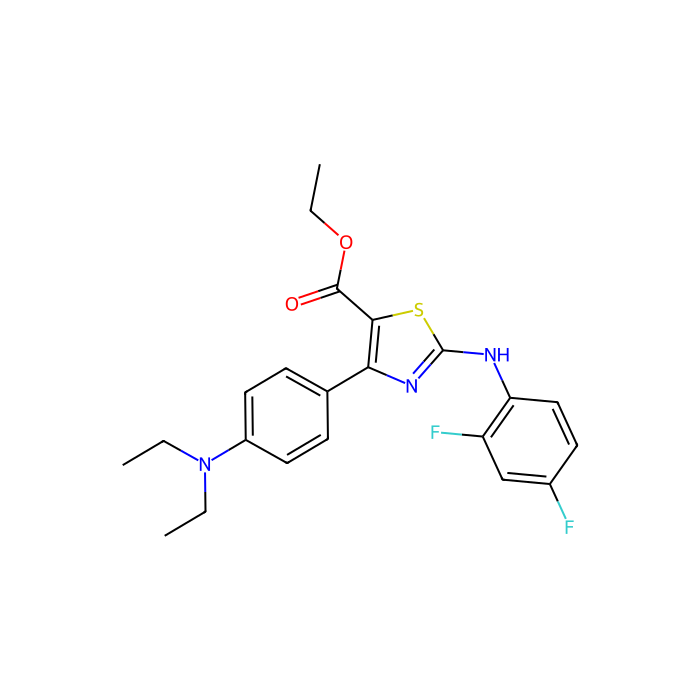
Structure and Identity
Concise identity summary for a research-grade small molecule inhibitor used in cell biology.
Item-specific (from Product Data):
Product Name: Dynarrestin
SKU: D286946
CAS: 2222768-84-3
PubChem CID: 137919864
InChIKey: 373305 (as provided)
SMILES: Not specified for this item; refer to CoA/Spec Sheet.
Molecular Formula: Not specified for this item; refer to CoA/Spec Sheet.
Molecular Weight: Not specified for this item; refer to CoA/Spec Sheet.
Structural features (general/literature context):
Dynarrestin is reported in the literature as a small-molecule inhibitor used to perturb cytoplasmic dynein-dependent processes. Without an item-specific structure provided here, detailed functional-group annotation cannot be confirmed for this specific lot/specification.
2D structure description (general note):
A precise 2D description requires the confirmed SMILES/InChI; please consult the CoA or supplier structure file for exact ring systems, heteroatoms, and stereochemical features.
Cross-referencing:
For unambiguous structure-based informatics (e.g., cheminformatics registration, inventory tracking), use the item’s CoA/Spec Sheet or SDS to obtain definitive SMILES and InChI.
Synthetic Utility
Dynarrestin is a finished small-molecule tool compound and is not commonly used as a building block or reagent in organic synthesis.
Applicability:
No named reactions or functional-group transfer roles are typically associated with this material in the synthetic chemistry context.
Guidance:
If your goal is chemical modification or SAR expansion, consult the primary literature for disclosed analogs and synthetic routes rather than using this specific item as a reagent.
No item-specific synthetic transformations are provided in the Product Data.
Target Specificity
Item-specific target details (e.g., binding constants, on/off-target profile, species selectivity) are not specified in the Product Data for this listing.
Guidance:
For definitive target engagement metrics, consult the CoA/Spec Sheet and primary literature.
As with any small-molecule probe, verify phenotype with orthogonal methods and perform appropriate vehicle and concentration controls.
よくある質問
What is the purity of this product, and how is it determined?
This product is supplied at ≥98% purity, determined by HPLC. Lot-specific values are stated on the Certificate of Analysis.
How should this product be stored?
Store at ?20 °C, protected from light. The material is light-sensitive — keep it in its original opaque or amber container.
How is this product shipped?
This product ships in an insulated container with ice pads. Unpack on arrival and transfer it to the storage condition stated above.
What are the CAS number, molecular formula and molecular weight?
The CAS Number is 2222768-84-3, the molecular formula is C22H23F2N3O2S, and the molecular weight is 431.5 g/mol. InChIKey UZNNDDDSGCMQOQ-UHFFFAOYSA-N.
What documentation is provided?
Available product documentation, including Certificates of Analysis (COA), Safety Data Sheets (SDS), and specification sheets, is shown in the product document area. Document availability and access follow the current site policy.
Products are supplied to verified businesses, institutions, and qualified professionals for research and development use only. Not for use in humans, animals, diagnosis, or therapy.

 B23091252