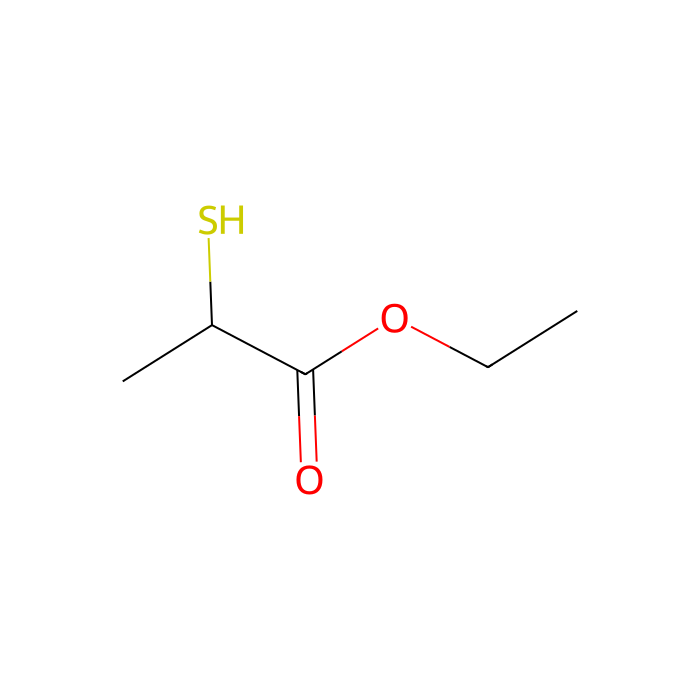
Ethyl 2-Mercaptopropionate - ≥97%(GC) , CAS No.19788-49-9

CAS: 19788-49-9 Cat. No.: E156189 分子式: C5H10O2S 分子量: 134.19 EC番号: 243-314-5
注文可能
グレード&純度 ≥97%(GC)
Synonyms
ethyl 2-sulanylpropanoate|ETHYL .ALPHA.-MERCAPTOPROPIONATE|Propanoic acid, 2-mercapto-, ethyl ester|Ethyl 2-sulfanylpropanoate|Ethyl2-mercaptopropanoate|(+/-)-2-MERCAPTOPROPIONIC ACID ETHYL ESTER|2-MERCAPTOPROPIONIC ACID [FCC]|Ethyl 2-thiolpropanoate|Ethyl 2-mercaptopropionate|ethyl 2-sulfanylpropionate|2-Mercaptopropionic Acid Ethyl Ester|ethyl mercaptopropionate|Ethyl alpha-mercaptopropionate|Ethyl 2-mercaptopropanoate|ETHYL-2-MERCAPTOPROPIONATE|SECOBARBITAL SODIUM [MART.]|Propionic acid, 2-mercapto-, ethyl ester|2-Mercaptopropionic acid, ethyl ester|ETHYL 2-MERCAPTOPROPIONATE [FHFI]
Storage
Argon charged,Room temperature
Shipped In
Normal
★
サイズ
USA
ドイツ (EU)*
価格
個数
1g
E156189-1g
5 在庫あり
3 在庫あり
$15.90
5g
E156189-5g
5 在庫あり
—
$22.90
25g
E156189-25g
2 在庫あり
—
$79.90
100g
E156189-100g
3 在庫あり
—
$269.90
Enter a quantity for the sizes you want to add.

仕様

同義語
ethyl 2-sulanylpropanoate | ETHYL .ALPHA.-MERCAPTOPROPIONATE | Propanoic acid, 2-mercapto-, ethyl ester | Ethyl 2-sulfanylpropanoate | Ethyl2-mercaptopropanoate | (+/-)-2-MERCAPTOPROPIONIC ACID ETHYL ESTER | 2-MERCAPTOPROPIONIC ACID [FCC] | Ethyl 2-thiolpropanoate | Ethyl 2-mercaptopropionate | ethyl 2-sulfanylpropionate | 2-Mercaptopropi もっと見る
仕様と純度
≥97%(GC)
保管条件
Argon charged,Room temperature
入荷
Normal
純度
≥97%(GC)
名前と識別子
パブケム・シド
パブケム・シド・ウル
https://pubchem.ncbi.nlm.nih.gov/substance/488190032
SMILES
CCOC(=O)C(C)S
IUPAC Name
ethyl 2-sulfanylpropanoate
InChIKey
LXXNWCFBZHKFPT-UHFFFAOYSA-N
InChI
1S/C5H10O2S/c1-3-7-5(6)4(2)8/h4,8H,3H2,1-2H3
異性体SMILES
CCOC(=O)C(C)S
UN番号
1993
包装グループ
III
分子量
134.19
Reaxys
1071465
Reaxys-RN_link_address
https://www.reaxys.com/reaxys/secured/hopinto.do?context=S&query=IDE.XRN=1071465&ln=

詳細データ

Taxonomic Classification

Taxonomy Tree

KingdomOrganic compounds
SuperclassOrganic acids and derivatives
分類Carboxylic acids and derivatives
SubclassCarboxylic acid derivatives
Intermediate Tree Nodes Not available
Direct ParentCarboxylic acid esters
Alternative Parents Monocarboxylic acids and derivatives  Alkylthiols  Organic oxides  Hydrocarbon derivatives  Carbonyl compounds  
Molecular FrameworkAliphatic acyclic compounds
Substituents Carboxylic acid ester - Monocarboxylic acid or derivatives - Alkylthiol - Organic oxygen compound - Organic oxide - Hydrocarbon derivative - Organosulfur compound - Organooxygen compound - Carbonyl group - Aliphatic acyclic compound
説明This compound belongs to the class of organic compounds known as carboxylic acid esters. These are carboxylic acid derivatives in which the carbon atom from the carbonyl group is attached to an alkyl or an aryl moiety through an oxygen atom (forming an ester group).
External Descriptors Not available
3 D構造
インタラクティブ化学構造モデル


証明書(CoA、COO、BSE/TSEと分析図)
C of A & Other Certificates(BSE/TSE, COO):
Analytical Chart:

Find and download the COA for your product by matching the lot number on the packaging.

11 results found

Lot NumberCertificate Type日付商品
C2222322C2222322Certificate of AnalysisJan 16, 2026 E156189
C2222345C2222345Certificate of AnalysisJan 16, 2026 E156189
C2222346C2222346Certificate of AnalysisJan 16, 2026 E156189
F2002010F2002010Certificate of AnalysisMar 11, 2024 E156189
D2312203D2312203Certificate of AnalysisFeb 19, 2022 E156189
D2312204D2312204Certificate of AnalysisFeb 19, 2022 E156189
G2311210G2311210Certificate of AnalysisFeb 19, 2022 E156189
G2311212G2311212Certificate of AnalysisFeb 19, 2022 E156189
I2510032I2510032Certificate of AnalysisFeb 19, 2022 E156189
C1807122C1807122Certificate of AnalysisJan 27, 2022 E156189
E2306083E2306083Certificate of AnalysisJan 27, 2022 E156189
化学的性質と物理的性質
感度Air Sensitive,Moisture Sensitive
屈折率1.45
引火点(°F)58°C(lit.)
引火点(°C)58°C(lit.)
沸点(°C)90°C/60mmHg(lit.)
分子量134.2
XLogP31.200
Hydrogen Bond Donor Count1
Hydrogen Bond Acceptor Count3
Rotatable Bond Count3
Exact Mass134.04 Da
Monoisotopic Mass134.04 Da
Topological Polar Surface Area27.300 Ų
Heavy Atom Count8
Formal Charge0
Complexity82.500
Isotope Atom Count0
Defined Atom Stereocenter Count0
Undefined Atom Stereocenter Count1
Defined Bond Stereocenter Count0
Undefined Bond Stereocenter Count0
The total count of all stereochemical bonds0
Covalently-Bonded Unit Count1
安全と危険(GHS)
ピクトグラム(s)
GHS02,   GHS07
信号
Warning
危険表示

H226:Flammable liquid and vapor

H302:Harmful if swallowed

H315:Causes skin irritation

H319:Causes serious eye irritation

H332:Harmful if inhaled

H335:May cause respiratory irritation

注意表示

P210:Keep away from heat, hot surface, sparks, open flames and other ignition sources. - No smoking.

P233:Keep container tightly closed.

P240:Ground/bond container and receiving equipment.

P241:Use explosion-proof [electrical/ventilating/lighting/.../] equipment.

P242:Use only non-sparking tools.

P243:Take precautionary measures against static discharge.

P261:Avoid breathing dust/fume/gas/mist/vapors/spray.

P264:Wash hands [and …] thoroughly after handling.

P270:Do not eat, drink or smoke when using this product.

P271:Use only outdoors or in a well-ventilated area.

P280:Wear protective gloves/protective clothing/eye protection/face protection.

P321:Specific treatment (see ... on this label).

P330:Rinse mouth.

P302+P352:IF ON SKIN: wash with plenty of water.

P303+P361+P353:IF ON SKIN (or hair): Take off Immediately all contaminated clothing. Rinse SKIN with water [or shower].

P304+P340:IF INHALED: Remove person to fresh air and keep comfortable for breathing.

P305+P351+P338:IF IN EYES: Rinse cautiously with water for several minutes. Remove contact lenses if present and easy to do - continue rinsing.

P362+P364:Take off contaminated clothing and wash it before reuse.

P370+P378:In case of fire: Use ... to extinguish.

P405:Store locked up.

P403+P233:Store in a well-ventilated place. Keep container tightly closed.

P403+P235:Store in a well-ventilated place. Keep cool.

P501:Dispose of contents/container to an approved waste disposal plant.

P264+P265:Wash hands [and …] thoroughly after handling. Do not touch eyes.

P301+P317:IF SWALLOWED: Get medical help.

P317:Get emergency medical help.

P337+P317:If eye irritation persists: Get medical help.

P332+P317:If skin irritation occurs: Get medical help.

P319:Get medical help if you feel unwell.

Reaxys
1071465
Reaxys-RN_link_address
https://www.reaxys.com/reaxys/secured/hopinto.do?context=S&query=IDE.XRN=1071465&ln=
分類
3
ソリューション計算機
レビュー

顧客レビュー

Application Protocols

Not applicable

  • No tested bioassay protocols (e.g., WB, IHC, IF, FC) are associated with this small-molecule reagent in the Product Data.

General laboratory guidance (chemistry)

  • For thiol–ene coupling: Charge alkene (1.0 equiv), Ethyl 2‑mercaptopropionate (1.0–1.2 equiv), solvent (e.g., MeCN or EtOAc), photoinitiator (0.5–1 mol%). Degas (argon sparge), irradiate at 365–405 nm, monitor by TLC/GC. Work up and purify as needed.
  • For hydrolysis to 2‑mercaptopropionic acid: Cool to 0–5°C, add 1–2 M NaOH aq. to a solution in MeOH, stir under argon at 0–25°C until complete (TLC/GC), acidify to pH ~2 with HCl at 0°C, extract with EtOAc under low-oxygen conditions, dry, and concentrate.

These are general literature-style procedures and not product-validated protocols.

Biological Roles

Applicability

  • This product is intended strictly for research use. No medical or clinical claims are made.

General biochemical context (literature; not item-specific)

  • Thiols are central in biology for redox regulation and nucleophilic catalysis. While ethyl 2‑mercaptopropionate itself is a synthetic small molecule, hydrolysis would produce 2‑mercaptopropionic acid (thiolactic acid), a sulfur-containing α‑hydroxy/thiol analogue with known roles in synthetic and biochemical chemistry contexts.
  • Free thiol functionality can undergo oxidation to disulfides, a key motif in protein folding and redox signaling. Although this ester is not a biomolecule, its thiol reactivity mirrors many cysteine-like transformations used in bioconjugation and surface functionalization.
  • In chemical biology, thiol–ene coupling provides a bio-orthogonal approach for labeling unsaturated substrates, polymer coatings, or biomaterial surfaces under mild conditions.

Practical considerations for bio-oriented research

  • Residual odor and cytotoxicity risk: neat thiols can be irritating; ensure complete removal or quenching before biological testing in research systems.
  • Hydrolytic lability: esters can be cleaved by esterases in biological media; if the ester is used as a pro-moiety in research tools, expect potential conversion to the corresponding acid under enzyme-rich conditions.
  • Compatibility: For bioconjugation model studies, select aqueous-miscible co-solvents (e.g., MeCN, DMSO at low %), maintain inert atmosphere to preserve thiol state, and buffer near neutral pH to limit ester hydrolysis.
Buffer Applications

Not typically applicable

  • Ethyl 2-mercaptopropionate is not a buffering agent and does not form defined conjugate acid/base pairs at useful pH ranges due to its ester functionality and the weak acidity of the thiol.

Practical note

  • If used in aqueous model systems or bioconjugation research, choose a buffer that minimizes ester hydrolysis and thiol oxidation (e.g., phosphate or HEPES at pH 6.8–7.4), add chelators (EDTA) to limit metal-catalyzed oxidation, and consider inert-atmosphere handling. These are general handling suggestions rather than applications as a buffer component.
Green Alternatives

Context

  • Ethyl 2-mercaptopropionate is a volatile, odorous thiol-bearing ester. Greener practice focuses on solvent choice, process intensification, and use of lower-odor thiol equivalents when feasible. The molecule itself has no direct drop-in “green” substitute for all applications, but alternatives can mitigate hazards and odor.

Greener media and methods (literature)

  • Solvent selection: Prefer greener solvents such as 2‑MeTHF, CPME, EtOAc, dimethyl carbonate, propylene carbonate over chlorinated solvents or acetonitrile where compatible.
  • Solventless/flow: Conduct thiol–ene additions neat or in continuous flow to reduce solvent use and improve vapor/odor containment.
  • Photochemistry: Visible-light photoredox initiation under mild conditions can reduce initiator load and energy consumption vs thermal radical methods.

Masked/alternative thiol strategies

  • Thioacetates or S‑protected precursors (e.g., S‑acetyl‑2‑mercaptopropionate) offer reduced odor and improved handling; they can be deprotected under mild basic or nucleophilic conditions to reveal the thiol in situ.
  • Disulfide surrogates: Symmetric disulfides can sometimes serve as latent thiol sources under reducing conditions, minimizing free thiol inventory.

Trade-offs (balanced view)

  • Masked thiols add steps and may generate additional waste during deprotection.
  • Greener solvents may alter rates/selectivity; optimization is often required.

Quick comparison (general)

  • EtOAc: low toxicity, biodegradable; may co-distill odors.
  • 2‑MeTHF/CPME: biorenewable options; good for radical additions; less miscible with water, aiding workups.
  • Propylene carbonate: high boiling, low volatility; can help control odor but may be too polar/viscous for some systems.
Pharmaceutical Uses

Not an established excipient

  • There is no item-specific information indicating pharmacopeial status or excipient use. This product is sold for research use only.

General formulation context (literature; non-clinical)

  • Reactive thiols are typically avoided in finished dosage forms due to odor and redox liability. However, thiol-bearing esters can serve as synthetic intermediates in the preparation of prodrugs, linkers, or polymer modifiers during process R&D.
  • Surface and materials modification: thiol–ene chemistry is widely used to functionalize medical polymer prototypes and device coatings in research settings; ethyl 2‑mercaptopropionate can act as a small-molecule model for process development.

Manufacturing/handling notes

  • Odor control is critical in GMP-like environments; use closed transfer, carbon filtration on vents, and rigorous purge-and-trap solvent recovery.
  • Residual thiol must be removed or quenched after synthesis steps to avoid carryover. Verify by sensitive analytical methods (GC–MS, SCD detectors).

Compliance reminder

  • No therapeutic or clinical use is implied. For any cGMP application or excipient consideration, detailed impurity profiles, residual solvent content, and stability studies would be required—consult your QA and regulatory teams.
Physical Properties

Item-specific specifications

  • Not specified for this item; refer to CoA/Spec Sheet for appearance, purity/grade, and measured physicochemical data.

Literature/typical properties for Ethyl 2-mercaptopropionate (reference only)

  • Physical state: colorless to pale yellow liquid with characteristic thiol odor.
  • Approx. formula/MW: C5H10O2S, ~134.19 g/mol (computed from atomic weights).
  • Acid/base: contains a thiol (pKa typically ~9–11 for aliphatic thiols; literature range), and an un-ionized ester (no basic sites).
  • Solubility: expected miscibility with many organic solvents (alcohols, ethers, chlorinated solvents); limited solubility in water due to hydrophobic ethyl and methyl groups.
  • Partitioning: aliphatic thiol esters generally exhibit moderate hydrophobicity (logP likely in the 1–2 range; literature analogs).
  • Volatility/odor: odorous; thiols often exhibit low odor thresholds; handle in well-ventilated hoods.
  • Refractive index/density: not specified for this item; consult literature or CoA when method-critical.

General interpretive notes

  • The free thiol is prone to air oxidation (to disulfides), which can slightly increase apparent viscosity/color over time if not protected from oxygen.
  • Hydrolysis: the ester can slowly hydrolyze under acidic or basic aqueous conditions to 2‑mercaptopropionic acid (thiolactic acid); rate increases with heat/base.
  • All quantitative values above are literature/typical and not product specifications.
Quality and Grades

Item-specific quality

  • Grade/purity: Not specified for this item; refer to CoA/Spec Sheet for assay, GC purity, and impurity profile.
  • Stabilizer/antioxidant: Not specified for this item. Some thiols are supplied under inert gas (as here) to limit oxidation; no assumption of added stabilizers should be made without documentation.

How to interpret common grades (general guidance)

  • Analytical reagent (AR) grade: typically high assay suitable for general lab use; not necessarily low-odor or low-UV.
  • Purified/technical grade: acceptable for bulk transformations where minor impurities have limited impact.
  • High-purity or GC-grade: tighter limits on volatile/UV-active impurities; useful for kinetic studies or when odor/off-notes and trace disulfide content must be minimized.

What matters for thiol esters

  • Oxidation state control: Disulfide content can grow during storage; CoA should specify acceptance criteria (e.g., GC area % of disulfide dimer if applicable). Absent item-specific numbers, confirm by in-house QC before sensitive applications.
  • Water content: Moisture accelerates hydrolysis of the ester; Karl Fischer limits (if provided on CoA) are critical for base-catalyzed transformations and moisture-sensitive couplings.
  • Odor/background: For polymerizations or surface modifications, low-residual sulfur contaminants and minimal oxidized species improve reproducibility.

Recommended verification before use

  • Check GC/HPLC chromatogram for single major component.
  • Rapid thiol titer/iodometric assay can confirm free –SH content if process outcomes rely on thiol stoichiometry.
  • If you require trace-metal specifications, UV-cutoff, or inhibitor content, consult the CoA or request a tailored specification.
Reaction and Applications

Representative uses (literature; expand beyond catalog line)

  • Thiol–ene and thiol–yne additions: The free thiol undergoes anti-Markovnikov radical addition to alkenes/alkynes under photochemical or thermal radical conditions (e.g., UV with photoinitiator or AIBN/DTBP). Useful for installing the 2-mercaptopropanoyl-ethyl motif or for polymer end-group modification.
  • Base-catalyzed Michael addition: Adds to activated alkenes (acrylates, maleimides, vinyl sulfones) in the presence of mild base or nucleophilic catalysts (DBU, TMG, DABCO) at ambient temperature, often with high chemoselectivity.
  • Thioether synthesis via SN2: Converts primary halides/mesylates to thioethers through deprotonation of the thiol (NaH, K2CO3, or phase-transfer conditions) followed by substitution.
  • Oxidation/ligations: Controlled oxidation to disulfides; stepwise protection as thioacetate; subsequent elaborations at sulfur.
  • Ester transformations: Hydrolysis to 2‑mercaptopropionic acid (thiolactic acid) or transesterification to other 2‑mercaptopropionate esters for tuning volatility/solubility.
  • Polymer chemistry: Functions as a chain transfer agent in radical polymerizations, imparting sulfur end-groups; used to graft onto unsaturated polymers or surfaces via thiol–ene coupling.

Practical tips

  • Oxygen exclusion: Maintain argon or nitrogen atmosphere to suppress thiol oxidation; Product Data aligns with inert storage.
  • Base choice: Strong base increases risk of ester cleavage; use weak, non-nucleophilic bases for selective S‑deprotonation.
  • Odor control: Work in hood, keep vessels closed, and quench residual thiol with mild oxidants only after product isolation to avoid side reactions.
  • Analysis: Monitor by GC or 1H NMR; –SH resonance (often broad) and disappearance of alkene signals provide kinetic insight in additions.
Reaction Conditions

General conditions (literature guidance; not item-specific specifications)

  • Thiol–ene additions: 0.5–1.2 equiv thiol per alkene; photoinitiation (e.g., 365–405 nm LEDs) with 0.1–2 mol% photoinitiator (DMPA, TPO) at 20–40°C; typical completion in 0.5–4 h. Thermal radical paths use AIBN (1–10 mol%) at 60–80°C.
  • Michael additions: catalytic base (0.5–10 mol% DBU, TMG, TBD, or nucleophilic catalysts like DMAP/DABCO); solvent MeCN, THF, or EtOAc; 0–25°C; minutes to hours. For maleimides, reactions often proceed quantitatively at RT.
  • SN2 thioether formation: Generate thiolate in situ (K2CO3/MeOH, NaH/THF, or Cs2CO3/DMF); add primary halide/mesylate at 0–25°C; 1–16 h. Avoid strong base with labile substrates to limit ester cleavage.
  • Ester hydrolysis: Aqueous NaOH or K2CO3 in MeOH/H2O (or dioxane/H2O) at 0–25°C to obtain 2‑mercaptopropionic acid. Maintain inert atmosphere to keep the thiol reduced.
  • Oxidation to disulfide: I2 or air/O2 with catalytic base; or H2O2 under controlled conditions at 0–25°C; monitor to prevent over-oxidation to sulfinic/sulfonic acids.

Workup and purification

  • Odor control: quench excess thiol with dilute oxidative wash (e.g., NaOCl/NaHCO3) in a separate operation after product isolation to avoid side reactions.
  • Purification by column chromatography on silica can be performed, but pre-treat silica with base or include 0.1–1% Et3N to minimize adsorption/oxidation of thiol functionality.

Analysis

  • Monitor conversions by 1H NMR (loss of alkene signals in thiol–ene) or GC. Verify residual –SH by Ellman’s assay when required.
Safety and Handling

Item-specific hazard data

  • Signal word, H-statements, GHS classification, pictograms: Not specified for this item; refer to the product SDS for authoritative hazard communication.

General safety considerations for thiol-containing esters (literature/industry practice)

  • Primary hazards: strong odor; potential skin/eye irritation and respiratory irritation upon vapor exposure. Many organic esters are flammable liquids; verify flash point on SDS before heating.
  • Oxidation sensitivity: free thiols readily oxidize to disulfides in air, especially with trace metal catalysis. Product Data indicates argon-charged storage, consistent with oxygen-sensitive materials.
  • Incompatibilities: strong oxidizers, bases/acids (promote hydrolysis/oxidation), and transition-metal salts (can catalyze oxidation). Avoid contact with peroxides/bleach.
  • Engineering controls: handle in a certified chemical fume hood; control odors and vapors. Use gas-tight syringes or septa techniques when excluding air/moisture.
  • PPE: chemical-resistant gloves (e.g., nitrile; double-glove for prolonged work), lab coat, splash goggles. For bulk handling, consider face shield and odor cartridges as per risk assessment.
  • First aid (overview; defer to SDS):
    • Inhalation: move to fresh air; seek medical advice if symptoms persist.
    • Skin: wash with soap and water; remove contaminated clothing.
    • Eyes: rinse cautiously with water for several minutes; remove contact lenses if easy.
    • Ingestion: rinse mouth; do not induce vomiting; get medical attention.
  • Spill/cleanup: contain with inert absorbent, ventilate well; decontaminate surfaces with oxidizing odor neutralizers specifically designed for thiols, then rinse. Dispose according to local regulations.
  • Fire: use CO2, dry chemical, or foam; cool containers with water spray.
Solvent Selection

Applicability

  • Ethyl 2-mercaptopropionate is a liquid reagent/building block rather than a process solvent. Solvent selection here refers to choosing media for reactions or formulations involving this thiol-ester.

General solvent behavior (literature)

  • Polarity: moderately polar, but dominated by hydrophobic alkyl groups; dissolves readily in common organic solvents (ethers, esters, chlorinated solvents, aromatics, alcohols). Limited aqueous solubility expected.
  • Odor management: choose low-volatility or high-boiling solvents (e.g., propylene carbonate, NMP, anisole) when odor control is important; ensure strong ventilation.

Typical choices by transformation

  • Thiol–ene/thiol–yne: ethyl acetate, toluene, MeCN, DMF, or bulk (neat). For photoinitiated processes, optically transparent solvents (MeCN, EtOAc) are favored.
  • Base-catalyzed Michael additions (to acrylates/maleimides): MeCN, THF, acetone, MeOH/EtOH mixtures depending on base and substrate.
  • Ester hydrolysis: aqueous MeOH/EtOH or dioxane/water for base hydrolysis; biphasic systems with phase-transfer catalysts when substrates are hydrophobic.
  • Transesterifications: toluene, xylene, or solvent-free with azeotropic water removal when acid-catalyzed.

Small comparison (general)

  • EtOAc: green(er), good solvency, UV-transparent.
  • 2-MeTHF: greener than THF, tolerates water, good for organocatalysis; may retain odor.
  • MeCN: polar aprotic, excellent for photochemistry; consider toxicity and waste stream.

Notes

  • Avoid strongly basic aqueous media when preserving the ester; avoid oxidizing solvents/reagents that may convert thiol to disulfide.
  • Always validate solvent odor retention for downstream handling and EHS considerations.
Storage and Reconstitution

Item-specific conditions (from Product Data)

  • Storage: Room temperature, Argon charged.
  • Shipping: Normal conditions.

Practical guidance for this class of material (general)

  • Atmosphere: Maintain under inert gas (argon or nitrogen) to limit oxidation of the thiol to disulfide. Keep containers tightly closed; minimize headspace oxygen.
  • Light/heat: Store away from direct light and heat sources. Ambient temperature is acceptable per Product Data; cooler storage can further slow oxidation/hydrolysis if compatible with your process.
  • Moisture: Keep dry; moisture can promote ester hydrolysis and odor release. Use desiccant or dry-box storage for long-term stability.
  • Container: Use glass with PTFE-lined caps. Reseal promptly; wipe septa surfaces to prevent odor permeation.
  • In-use handling: For air-sensitive operations, transfer by syringe or cannula through septa under inert gas. If repeated openings are expected, consider aliquoting under inert atmosphere.

Reconstitution

  • Not applicable; supplied as a liquid reagent. If solidification occurs at low temperature, gently warm in a closed container to return to homogeneity; verify by GC/NMR prior to use.

Stability monitoring

  • Check for color change or increased viscosity/odor sharpness as indicators of oxidation. Confirm free –SH content by quick titer if stoichiometry is critical.
  • For any specific shelf-life, impurity limits, or inhibitor content, consult the CoA/Spec Sheet.
Structure and Identity

Item-specific (from Product Data)

  • SKU: E156189
  • Product name: Ethyl 2-Mercaptopropionate
  • CAS: 19788-49-9
  • PubChem CID: 519709
  • InChIKey (as provided): 212088
  • Storage note (Product Data): Room temperature, Argon charged; shipped normal

Literature/computed identifiers and description (not item-specific)

  • Synonyms: Ethyl 2-sulfanylpropanoate; Ethyl thiolactate; Ethyl 2-mercapto-propionate
  • Molecular formula (literature): C5H10O2S
  • Molecular weight (literature): ~134.19 g/mol
  • SMILES (literature): CCOC(=O)C(S)C
  • InChI (literature): InChI=1S/C5H10O2S/c1-3-7-5(6)4(2)8/h4,8H,3H2,1-2H3

Structural features (general chemistry description)

  • Functional groups: a primary thiol (–SH) on the α-carbon of a propionate backbone; an ethyl ester (–C(=O)OCH2CH3).
  • Substitution pattern: the α-carbon is stereogenic when R/S-resolved; commercial material is typically racemic unless specified.
  • 2D structure in words: an ethyl carboxylate connected to a two-carbon chain whose α-carbon bears a methyl group and a thiol (CH3–CH(SH)–C(=O)O–CH2–CH3).
  • Polarity/handles: nucleophilic, easily oxidized thiol; hydrolyzable ester. Suitable for further transformations at sulfur (thioether formation, oxidation, disulfide) or at the ester (saponification, transesterification).

Notes

  • All literature identifiers are provided for reference only and are not item-specific specifications. Refer to the CoA/Spec Sheet for definitive identity parameters (assay, stereochemistry, spectral acceptance).
Synthetic Utility

Key functional handles

  • Thiol (–SH): nucleophilic, readily deprotonated to thiolate; engages in radical additions, conjugate additions, SN2 substitutions, and redox transformations (disulfide formation/cleavage).
  • Ethyl ester: hydrolyzable and transesterifiable; provides orthogonal reactivity to the thiol, enabling chemoselective sequences.

Strategic uses (literature)

  • Bifunctional linchpin: orthogonal manipulation allows installation of sulfur functionality first (e.g., thiol–ene) followed by ester conversion to acid/amides/esters, or vice versa.
  • End-group control: as a chain transfer reagent in free-radical polymerizations, it caps chains with thioether end groups, enabling subsequent click-like conjugations.
  • Modular synthesis: Access to α-thio-substituted carboxyl derivatives via oxidation (to sulfoxide/sulfone) after hydrolysis or amidation opens stereoelectronic control in neighboring-group participation.
  • Chiral chemistry: the α-center is potentially stereogenic; enantioselective transformations or resolution can yield chiral sulfur-containing building blocks.

Protecting-group tactics

  • Temporary S‑protection (thioacetate, trityl, or disulfide formation) can suppress odor and improve handling while allowing later deprotection under mild conditions.

Analytical/QA notes

  • Track –SH content by Ellman’s reagent or iodometry to ensure stoichiometric accuracy in S‑based couplings.
  • Monitor oxidation state by GC/LC; disulfide dimers and oxidized species alter reactivity and can complicate downstream steps.
Target Specificity

Not applicable

  • This product is a small-molecule chemical reagent and does not have biological target specificity (no antigen/epitope, clone, or isotype). No item-specific data provided.

よくある質問

What is the purity of this product, and how is it determined?
This product is supplied at ≥97% purity, determined by gas chromatography (GC). Lot-specific values are stated on the Certificate of Analysis.
How should this product be stored?
Store at room temperature under argon. It is supplied under an argon blanket; reseal under inert gas after each use.
How is this product shipped?
This product ships under standard ambient conditions. No temperature-controlled packaging is required.
What are the CAS number, molecular formula and molecular weight?
The CAS Number is 19788-49-9, the molecular formula is C5H10O2S, and the molecular weight is 134.19 g/mol. InChIKey LXXNWCFBZHKFPT-UHFFFAOYSA-N.
What documentation is provided?
Available product documentation, including Certificates of Analysis (COA), Safety Data Sheets (SDS), and specification sheets, is shown in the product document area. Document availability and access follow the current site policy.

Shall we send you a message when we have discounts available?

Remind me later

Thank you! Please check your email inbox to confirm.

Oops! Notifications are disabled.