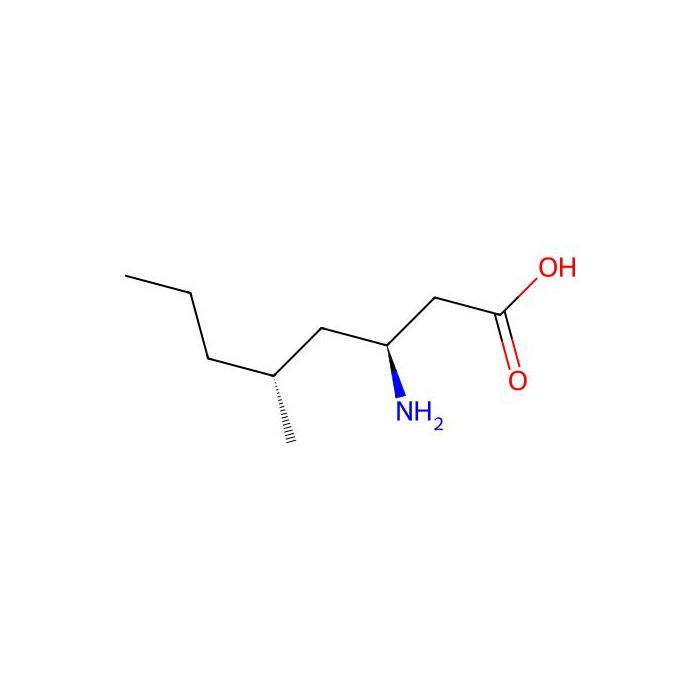
Imagabalin , Voltage-gated calcium channel modulator, CAS No.610300-07-7, Voltage-gated calcium channel modulator

CAS: 610300-07-7 Cat. No.: I671084 分子式: C9H19NO2 分子量: 173.25 PubChem CID: 10236037
注文可能
Synonyms
IMAGABALIN|Imagabalin [USAN:INN]|Imagabalin (USAN/INN)|PD 0332334|(3S,5R)-3-AMINO-5-METHYLOCTANOIC ACID|IMAGABALIN [INN]|(3s,5r)-3-amino-5-methyl-octanoic acid|PF-00195889|Octanoic acid, 3-amino-5-methyl-, (3S,5R)-|Imagabalin [USAN]|PD-0332334|PF 00195889
Storage
Room temperature
★
サイズ
USA
ドイツ (EU)*
価格
個数
1mg
I671084-1mg
受注生産 · 8~12週間
$999.90
Enter a quantity for the sizes you want to add.

仕様

同義語
IMAGABALIN | Imagabalin [USAN:INN] | Imagabalin (USAN/INN) | PD 0332334 | (3S,5R)-3-AMINO-5-METHYLOCTANOIC ACID | IMAGABALIN [INN] | (3s,5r)-3-amino-5-methyl-octanoic acid | PF-00195889 | Octanoic acid, 3-amino-5-methyl-, (3S,5R)- | Imagabalin [USAN] | PD-0332334 | PF 00195889
保管条件
Room temperature
アクションタイプ
MODULATOR
作用メカニズム
Voltage-gated calcium channel modulator
製品の性質
ALogP
-0.7
名前と識別子
SMILES
CCCC(C)CC(CC(=O)O)N
IUPAC Name
(3S,5R)-3-amino-5-methyloctanoic acid
InChIKey
JXEHXYFSIOYTAH-SFYZADRCSA-N
InChI
1S/C9H19NO2/c1-3-4-7(2)5-8(10)6-9(11)12/h7-8H,3-6,10H2,1-2H3,(H,11,12)/t7-,8+/m1/s1
異性体SMILES
CCC[C@@H](C)C[C@@H](CC(=O)O)N
PubChem CID
10236037
分子量
173.25

詳細データ

Taxonomic Classification

Taxonomy Tree

KingdomOrganic compounds
SuperclassOrganic acids and derivatives
分類Carboxylic acids and derivatives
SubclassAmino acids, peptides, and analogues
Intermediate Tree Nodes Amino acids and derivatives
Direct ParentBeta amino acids and derivatives
Alternative Parents Medium-chain fatty acids  Branched fatty acids  Amino fatty acids  Amino acids  Monocarboxylic acids and derivatives  Carboxylic acids  Organopnictogen compounds  Organic oxides  Monoalkylamines  Hydrocarbon derivatives  Carbonyl compounds  
Molecular FrameworkAliphatic acyclic compounds
Substituents Beta amino acid or derivatives - Medium-chain fatty acid - Amino fatty acid - Branched fatty acid - Fatty acyl - Fatty acid - Amino acid - Carboxylic acid - Monocarboxylic acid or derivatives - Amine - Primary amine - Organooxygen compound - Organonitrogen compound - Hydrocarbon derivative - Primary aliphatic amine - Organic oxide - Carbonyl group - Organopnictogen compound - Organic oxygen compound - Organic nitrogen compound - Aliphatic acyclic compound
説明This compound belongs to the class of organic compounds known as beta amino acids and derivatives. These are amino acids having a (-NH2) group attached to the beta carbon atom.
External Descriptors Not available
3 D構造
インタラクティブ化学構造モデル


証明書(CoA、COO、BSE/TSEと分析図)
C of A & Other Certificates(BSE/TSE, COO):
Analytical Chart:
化学的性質と物理的性質
分子量173.25
XLogP3-0.700
Hydrogen Bond Donor Count2
Hydrogen Bond Acceptor Count3
Rotatable Bond Count6
Exact Mass173.142 Da
Monoisotopic Mass173.142 Da
Topological Polar Surface Area63.300 Ų
Heavy Atom Count12
Formal Charge0
Complexity136.000
Isotope Atom Count0
Defined Atom Stereocenter Count2
Undefined Atom Stereocenter Count0
Defined Bond Stereocenter Count0
Undefined Bond Stereocenter Count0
The total count of all stereochemical bonds0
Covalently-Bonded Unit Count1
ソリューション計算機
レビュー

顧客レビュー

Application Protocols

There are no vendor-validated application protocols provided for this item.

General guidance for small-molecule tool compounds (adapt to your lab SOPs):

  • Stock preparation: Prepare a fresh stock in water, buffer, or DMSO depending on solubility (verify with your lot). Filter (0.22 µm) for analytical or cell-based assays to remove particulates.
  • Storage of stocks: Aliquot to avoid repeated freeze–thaw (see Storage & Reconstitution). Label with concentration, solvent, pH (if aqueous), and date.
  • Assay dosing: Add compound stocks to assay media gradually with mixing to avoid local supersaturation and precipitation. Keep final DMSO ≤1–2% v/v unless your assay tolerates more.
  • Controls: Include vehicle controls (matching solvent/pH) and concentration-response series (e.g., 8–12 points, half-log spacing) to establish potency curves.

Because no item-specific protocols are provided, users should pilot small-scale tests to establish solubility limits, stability over the assay window, and non-specific binding to plastics (test low-adhesion plates or add minimal inert carrier protein if compatible). Always consult your institutional safety procedures and the product SDS.

Biological Roles

Biological/biochemical context (literature/background; no clinical claims):

  • Imagabalin has been described in the literature as part of the gabapentinoid class, which are GABA analogs that do not act on GABA receptors directly but instead are studied for their interaction with the α2δ auxiliary subunits (α2δ-1/α2δ-2) of voltage-gated calcium channels. This interaction can modulate presynaptic calcium influx and neurotransmitter release in neuronal systems.
  • Typical research use cases include: binding affinity assays to α2δ subunits, electrophysiological evaluations in heterologous expression systems (e.g., HEK293 cells expressing Cav2.x + α2δ), and phenotypic studies in neuronal cultures to explore synaptic transmission modulation.
  • Physicochemical attributes of gabapentinoids (small, polar, amino acid–like) often translate to active transport or carrier-mediated uptake studies (e.g., LAT1/neutral amino acid transporters) in in vitro models; whether this specific item engages particular transporters must be confirmed experimentally—no item-specific data are provided here.

Caveats:

  • Target engagement, binding constants (Kd/Ki), and functional potency (EC50/IC50) are not specified for this item and should be determined under your exact assay conditions.
  • For omics or systems-biology experiments, document the salt form, concentration, exposure time, and medium composition, as these strongly influence outcome measures.
Buffer Applications

This product is a small-molecule research compound and is not typically used as a buffering agent or pH calibrant.

  • No item-specific pKa data or buffer capacity ranges are provided; therefore, formulation as a buffer is not recommended.
  • For preparing assay solutions, use established biological buffers (e.g., PBS, HEPES, MOPS) and dissolve Imagabalin as a solute, adjusting pH only to improve solubility if compatible with your assay.

Refer to the CoA/SDS for any constraints on pH or ionic strength, and verify solubility/compatibility at the intended working concentrations.

Green Alternatives

This product is a research reference compound rather than a process solvent or auxiliary reagent, so substitution with a “green alternative” is generally not applicable.

Guidance for greener practice when handling small-molecule tool compounds:

  • Prefer aqueous media where feasible; minimize DMSO and acetonitrile volumes by preparing more concentrated stocks and performing on-plate dilutions.
  • Use microscale assay formats (96/384/1536-well) to reduce solvent and compound consumption.
  • Implement solvent recycling for analytical HPLC/LC–MS when possible (e.g., ACN/H2O streams with proper purification).
  • Choose lower-toxicity, biodegradable surfactants or co-solvents (e.g., ethanol) during method development when performance allows.

If Imagabalin is employed in synthetic method exploration (uncommon), consider:

  • Replacing chlorinated solvents with alcohols, esters (EtOAc), or water-compatible conditions when compatible with the compound’s stability.
  • Applying flow chemistry or high-throughput experimentation to minimize waste and improve mass intensity.

Overall, the principal green-impact lever for this item is minimizing the scale and solvent usage in analytical and bioassay workflows, as there is no direct functional equivalent “alternative compound” serving the same reference role.

Pharmaceutical Uses

No formulation or pharmacopeial grade information is provided for this catalog item, and it is supplied strictly for research use only (Product Data). Accordingly, it is not intended for human or veterinary use, clinical administration, or compounding.

General formulation context for small polar amino-acid–like compounds (background only):

  • When studied in preclinical settings, gabapentinoid-class compounds have been formulated as aqueous solutions or capsules/tablets in salt forms to enhance dissolution. However, no such use or specification applies to this item.
  • Excipients commonly explored for similar scaffolds include pH adjusters (e.g., HCl/NaOH), simple fillers (e.g., lactose, MCC), and disintegrants; none are relevant to this research-use listing and no excipient compatibility is specified for this product.

For any laboratory formulation or dosing in nonclinical research models, independently establish stability, solubility, and sterility as appropriate to your protocol and institutional approvals. Always consult and rely on the item’s CoA/SDS for constraints and avoid any implication of therapeutic application.

Physical Properties

Item-specific physicochemical parameters were not supplied in the Product Data.

  • Appearance: Not specified for this item; refer to CoA/Spec Sheet.
  • Melting point: Not specified for this item; refer to CoA/Spec Sheet.
  • Boiling point: Not applicable/Not informative for typical gabapentinoids (they usually decompose before boiling); item-specific value Not specified.
  • Density: Not specified for this item; refer to CoA/Spec Sheet.
  • Solubility: Not specified for this item; refer to CoA/Spec Sheet.
  • LogP/logD: Not specified for this item; refer to CoA/Spec Sheet.
  • pKa(s): Not specified for this item; refer to CoA/Spec Sheet.
  • Refractive index: Not applicable (solid) or Not specified; refer to CoA/Spec Sheet.

General context (literature/background, not item specifications):

  • Gabapentinoid analogs are often crystalline solids, frequently water-soluble (especially as salts) due to amino/carboxyl functional groups, and may exhibit zwitterionic character near neutral pH.
  • They typically display low UV absorption above 220–230 nm due to lack of extended chromophores; however, definitive UV cutoff for this item is Not specified.

Note: For method development (e.g., LC, LC–MS), determine actual solubility and ionization behavior from the CoA and conduct small-scale solubility and pH scouting. Always prioritize item-specific data on the CoA/SDS for numerical values.

Quality and Grades
  • Grade/Purity: Not specified for this item; refer to CoA/Spec Sheet for assay, related substances profile, and residual solvent limits.

Interpreting typical quality information (general guidance):

  • Assay (by HPLC or qNMR) indicates material purity; impurity thresholds and identification (e.g., process-related, degradants) should be verified on the CoA.
  • Water content (e.g., by KF), residual solvents (by GC), and inorganic residue (sulfated ash) are common release tests; values are Not specified for this item.
  • If supplied as a specific salt form (e.g., hydrochloride), counter-ion content and equivalency (free base/free acid) are often reported; salt form is Not specified here.
  • Chromatographic suitability (e.g., UV transparency for HPLC) is not specified for this item; users should qualify the lot for intended analytical methods.

Stabilizers/antioxidants: Not specified for this item; refer to CoA. If no stabilizers are listed, material is typically supplied neat.

Lot-specific traceables: Retain the lot number and request the CoA to confirm identity (assay, IR/NMR/MS) and exact specifications applicable to your received material. For regulated workflows or method validation, qualify a single lot and retain retain-samples under recommended storage (room temperature per Product Data).

Reaction and Applications

Manufacturer Applications: Not specified beyond listing in a small-molecule compound library. For research use only (Product Data).

Applicational context (literature/background, not item-specific claims):

  • Imagabalin is cited in the literature as a gabapentinoid-class small molecule used to interrogate mechanisms involving the α2δ subunits of voltage-gated calcium channels in neurochemical research. Such compounds are often deployed in receptor binding assays, ion-channel modulation studies, and structure–activity relationship (SAR) campaigns.
  • Analytical applications may include development of LC–MS/MS quantitation methods in complex matrices, stability-indicating HPLC, and solid-state characterization (XRPD, DSC) for polymorph assessment when form and crystallinity are relevant.

Practical tips:

  • For biochemical assays, confirm salt form and pH of solutions to ensure consistent ionization state. Perform minimal freeze–thaw cycles to preserve integrity of reference solutions.
  • For SAR/medchem work, maintain rigorous documentation of stereochemistry (if applicable), salt/counter-ion, and hydration state, as these can affect potency readouts and physical properties.

Note: Imagabalin is not commonly used as a synthetic reagent or catalyst; its value is primarily as a research reference/tool compound. No specific reaction chemistry (e.g., as a coupling partner) is typically associated with this molecule.

Reaction Conditions

This item is not primarily intended for use as a reagent in chemical reactions; therefore, no canonical “reaction conditions” are associated with it.

General handling conditions for small polar amine/acid–containing compounds (background guidance):

  • Solution preparation: dissolve in water or aqueous-organic mixtures as needed; adjust pH cautiously to improve solubility. Filter through 0.22 µm membranes for analytical work.
  • Stability screening: perform forced degradation studies (acidic, basic, oxidative, thermal, photolytic) on small aliquots to set storage and analytical method parameters.
  • Analytical methods: LC–MS with aqueous buffered mobile phases (e.g., ammonium formate/acetate, pH 3–6) and modest organic modifiers (ACN/MeOH). Derivatization may be used to enhance retention/UV response for very polar analytes.

If employing the compound in biological assays:

  • Typical stock concentrations (background) range 1–100 mM depending on solubility; verify with actual material.
  • Control precipitation upon dilution by matching pH/ionic strength and by adding the stock slowly with mixing.

No yield, catalyst, or temperature data are applicable because Imagabalin is not used as a substrate or catalyst in standard synthetic transformations.

Safety and Handling

Safety details specific to this item were not provided in the Product Data. Handle as a research chemical with standard laboratory precautions.

  • GHS classification: Not specified for this item; refer to SDS.
  • Signal word / H-statements / pictograms: Not specified for this item; refer to SDS.

General laboratory guidance (good practice; defer to SDS for authoritative instructions):

  • PPE: lab coat, nitrile gloves, safety glasses; use a fume hood when weighing or preparing solutions to avoid dust/aerosol exposure.
  • Avoid inhalation of dust and contact with skin/eyes. Wash thoroughly after handling.
  • Incompatibilities (general for amino acid–like zwitterions): strong oxidizers and strong acids/bases may promote degradation or salt exchange; keep away from reactive acylating/alkylating agents.
  • Spill response: Avoid dust generation; collect solids with damp disposable towels or HEPA vacuum; dispose per institutional guidelines.
  • First aid (general): If inhaled—fresh air, medical attention if symptoms persist. Skin/eye contact—rinse with water for 15 minutes, remove contaminated clothing, seek medical advice as needed. If ingested—rinse mouth, do not induce vomiting, seek medical attention.

Storage per Product Data: store at room temperature. Maintain tightly closed, in a dry, well-ventilated place. Protect from moisture and cross-contamination. Always consult the product SDS for hazard classification and response measures before use.

Solvent Selection

Item-specific solubility data are not provided. The following guidance is general for small, polar, amine/carboxylate–bearing molecules (gabapentinoid class) and should be verified empirically for this item.

  • Likely solvent classes for screening: water (adjust pH), aqueous buffers, methanol, ethanol, isopropanol. For stock solutions in biochemical assays, water or buffered saline at slightly acidic pH may improve dissolution for free base forms; basic pH may improve dissolution for free acid forms—confirm the actual form on the CoA.
  • Less suitable solvents: nonpolar hydrocarbons (hexanes) typically provide negligible solubility for zwitterionic species.
  • DMSO: commonly used as a universal cosolvent for small molecules; confirm stability and assay compatibility. Prepare concentrated stocks (e.g., 10–100 mM) and dilute into buffered media; watch for precipitation upon dilution due to pH/ionic strength shifts.

Practical tips:

  • Perform a small solubility screen across pH 2–9 (e.g., citrate, phosphate, borate buffers) to map ionization-driven solubility changes.
  • Filter stock solutions (0.22 µm PES/RC) to remove particulates before bioassays.

Comparison (general):

  • Water/buffer: highest biocompatibility; solubility depends on ionization.
  • Alcohols (MeOH/EtOH): useful for analytical sample prep; may interfere with some bioassays.
  • DMSO: broad solubilizer; ensure <1–2% v/v in final assays to limit cytotoxicity.
Storage and Reconstitution
  • Storage conditions (Product Data): Room temperature. Keep container tightly closed in a dry, well-ventilated place. Protect from moisture and contaminant ingress.
  • Shipped in: Not specified for this item; refer to CoA/Spec Sheet.
  • Appearance: Not specified for this item; refer to CoA/Spec Sheet.

Reconstitution (general guidance to be verified experimentally):

  • Solvent selection: Begin with water or buffer for presumed polar compounds; consider DMSO for concentrated stock solutions if aqueous solubility is limited. Confirm the salt/form on the CoA to choose pH conditions appropriately.
  • Technique: Add solvent incrementally with gentle stirring or vortexing. If necessary, adjust pH slightly to aid dissolution, then readjust to assay pH after dilution.
  • Filtration: For analytical and cell-based applications, pass solutions through a 0.22 µm filter to ensure clarity.

Aliquoting and stability:

  • Prepare single-use aliquots to minimize headspace and avoid repeated opening. If refrigerated or frozen stocks are prepared for convenience, document storage temperature and avoid multiple freeze–thaw cycles.
  • Record concentration, solvent, pH (if aqueous), and preparation date on each aliquot.

Disposal: Follow institutional and local regulations for disposal of organic chemical waste and aqueous solutions containing research compounds.

Note: In the absence of item-specific stability data, prepare fresh solutions on the day of use whenever feasible and verify stability by analytical methods (e.g., HPLC).

Structure and Identity

Imagabalin is a research-use small molecule listed in our compound library. Item-specific structural identifiers are limited in the provided data; consult the CoA/SDS for definitive identifiers.

  • Product name: Imagabalin (SKU: I671084)
  • CAS: 610300-07-7 (Product Data)
  • PubChem CID: 10236037 (Product Data)
  • InChIKey: 172488 (Product Data; note: format appears non-standard; verify against CoA/SDS)
  • SMILES: Not specified for this item; refer to CoA/Spec Sheet.
  • Molecular formula: Not specified for this item; refer to CoA/Spec Sheet.
  • Molecular weight: Not specified for this item; refer to CoA/Spec Sheet.

General structural context (literature/background, not item-specific specifications):

  • Imagabalin is referenced in the literature as a gabapentinoid-class small molecule designed as an analog of γ-aminobutyric acid (GABA), typically featuring an aliphatic backbone bearing a primary amine and a carboxylic acid in β/γ relationship. Such scaffolds are commonly zwitterionic near physiological pH and lack classical aromatic ring systems.
  • Functional group motifs expected for gabapentinoids include: primary amine (–NH2) and carboxylic acid (–CO2H); no chiral center details are provided here for this specific lot/item.

2D structure description (general, literature): small, saturated, non-aromatic carbon chain with a pendant aminomethyl-like moiety and a terminal carboxylate, typically arranged to mimic the spatial separation present in GABA analogs.

Important: The above structural notes are contextual and should not be treated as item-specific specifications without confirmation from the CoA.

Synthetic Utility

Imagabalin is offered as a research small molecule and is not typically used as a synthetic reagent or catalyst.

General retrosynthetic/medchem context (literature/background for gabapentinoid-class analogs):

  • Core scaffold construction often involves elaboration of an aliphatic backbone bearing a primary amine and a carboxyl function. Strategies include: (a) alkylation of protected amino acids followed by deprotection; (b) Strecker or nitrile-hydrolysis sequences to introduce the aminomethyl motif; (c) asymmetric routes (e.g., chiral auxiliary/catalyst or resolution) when a stereocenter is present.
  • Functional handling frequently requires orthogonal protection of amine and acid (e.g., Boc, Cbz, benzyl esters, silyl esters) and careful control of hydrogenation/debenzylation steps to avoid over-reduction.
  • Purification commonly employs ion-exchange chromatography or pH-swing crystallizations due to zwitterionic character in the free base/acid form.

While the above informs synthetic planning, no specific transformations using Imagabalin as a reagent are standard. If the compound is to be derivatized (e.g., for probe development), consider:

  • Amide coupling at the carboxyl group (EDC/HOBt, HATU) after appropriate protection of the amine.
  • Reductive amination at an aminomethyl locus if present, subject to protecting-group strategy and stereochemical integrity.

All item-specific functional group details must be confirmed from the CoA before attempting derivatization.

Target Specificity

No antibody/biologic “target specificity” data are applicable to this small-molecule listing, and none are provided in the Product Data.

Background (literature; not item-specific claims):

  • Gabapentinoid-class molecules are commonly studied for binding to the α2δ auxiliary subunits of voltage-gated calcium channels (notably α2δ-1 and α2δ-2). Binding constants and selectivity profiles are highly assay- and compound-dependent and are not specified here for this item.

For your research, determine target engagement empirically (e.g., radioligand displacement, SPR, MST, patch-clamp readouts) and document the exact salt form, concentration, and assay conditions used. No target epitope, clone, isotype, or species cross-reactivity data apply to this small molecule.

よくある質問

How should this product be stored?
Store at room temperature.
What are the CAS number, molecular formula and molecular weight?
The CAS Number is 610300-07-7, the molecular formula is C9H19NO2, and the molecular weight is 173.25 g/mol. InChIKey JXEHXYFSIOYTAH-SFYZADRCSA-N.
What documentation is provided?
Available product documentation, including Certificates of Analysis (COA), Safety Data Sheets (SDS), and specification sheets, is shown in the product document area. Document availability and access follow the current site policy.

Shall we send you a message when we have discounts available?

Remind me later

Thank you! Please check your email inbox to confirm.

Oops! Notifications are disabled.