グレード&純度Moligand™?Moligand™ — Aladdin's line of ligands and bioactive small molecules. Use for receptor, pathway, and binding studies needing defined small-molecule tools.10 mM in DMSO
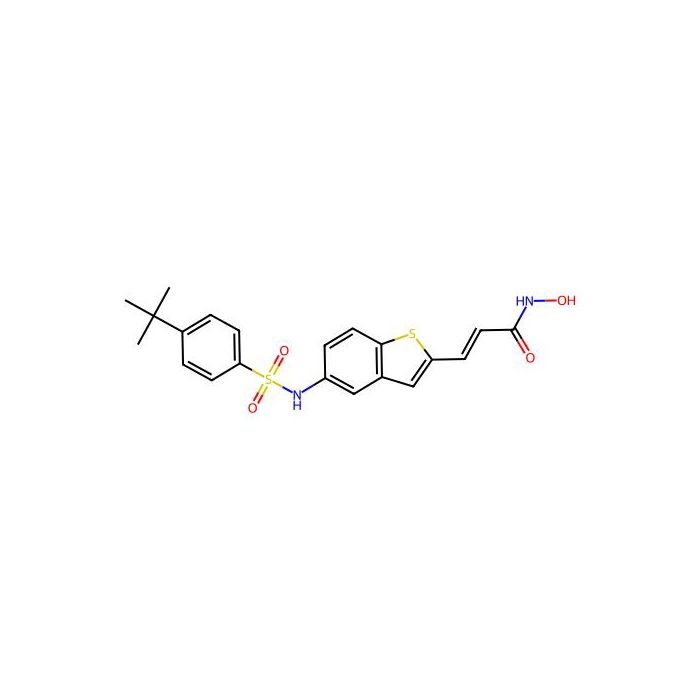
KH-3 is a potent RNA-binding protein Hu antigen R ( HuR ) inhibitor with an IC 50 value of 0.35 μM. KH-3 has anti-proliferative activity. KH-3 suppresses breast cancer cell invasion as well as delays the initiation of lung colonies by disrupting HuR-FOXQ1 mRNA interaction.
Determine the necessary mass, volume, or concentration for preparing a solution.
Dilution Calculator
Determine the dilution needed to prepare a stock solution.
Reconstitution Calculator
レビュー
顧客レビュー
Application Protocols
No vendor-tested application protocols are specified in the Product Data for KH-3.
General small-molecule handling protocol (non-item-specific):
Stock preparation: Bring vial to room temperature in a desiccator, then open under inert gas if possible. Dissolve in dry DMSO to 10–50 mM. Vortex and, if needed, gently warm (≤37°C) in the dark. Filter through 0.2 µm PTFE if particulates persist.
Aliquoting: Dispense single-use aliquots (e.g., 10–50 µL) in amber vials or plates under inert gas. Immediately cap and return to cold storage.
Working dilutions: Prepare fresh dilutions into assay buffer maintaining a constant final vehicle (e.g., 0.1–1% DMSO). Pre-wet plasticware to minimize adsorption for hydrophobic compounds.
Plate handling: Limit light exposure (foil-wrap plates) and minimize time at ambient conditions. Include vehicle controls matched to the highest compound concentration.
QC check: Verify concentration by UV–Vis (if chromophore known) or LC–MS/LC–UV when possible.
For target-specific protocols (e.g., binding assays, cell treatments), consult internal SOPs and adapt based on solubility, stability, and assay tolerance to DMSO.
Biological Roles
Biological function, targets, and pathways for KH-3 are not specified in the Product Data. As supplied, KH-3 is a Moligand™ small-molecule intended for research use only.
General considerations for small-molecule ligands:
Target deconvolution: If the putative target is unknown or literature-derived, employ chemoproteomics (affinity capture, thermal profiling) or genetic interaction mapping to support on-target activity.
Mechanistic validation: Combine biochemical potency with cell-based efficacy and orthogonal assays to exclude artifacts such as redox cycling, colloidal aggregation, or fluorescence interference.
ADME profiling (discovery stage): Solubility, permeability (PAMPA/MDCK), microsomal stability, and plasma protein binding can contextualize cellular potency and guide dosing in ex vivo studies.
Controls and references:
Include negative controls (structural analogs lacking activity) and positive reference ligands where available.
Verify absence of pan-assay interference behavior (PAINS) using orthogonal counterscreens.
Reminder: No medical or clinical claims are made for KH-3. All uses are confined to laboratory research. For target-specific statements, consult peer-reviewed literature using the CAS or CID provided, and confirm against the Aladdin CoA for the exact structure/lot.
Buffer Applications
KH-3 is a small-molecule ligand and not a buffering reagent. Therefore, it does not define buffer capacity or pH ranges.
Practical notes for buffer use with small molecules (general):
Choose assay buffers that maintain compound solubility and stability: common systems include HEPES (pH 7.2–7.6), PBS (pH 7.2–7.4), or Tris (pH 7.4–8.0). Avoid primary amines or nucleophiles if the compound contains labile electrophiles (confirm via structure/CoA).
Maintain DMSO carryover at or below the assay’s validated tolerance (often 0.1–1% v/v). Pre-equilibrate controls to the same vehicle concentration.
Protect light-sensitive compounds by using amber plates/tubes and minimizing exposure during incubations.
For specific buffer incompatibilities or pKa-dependent behavior, consult the KH-3 CoA/Spec Sheet once structural details are confirmed.
Green Alternatives
As KH-3 is a research ligand (not a solvent or bulk reagent), “green alternatives” focus on greener handling and assay vehicles rather than replacing the compound itself.
Greener vehicle choices (general guidance):
Prefer aqueous buffers with minimal DMSO (≤0.5–1% v/v) where assay performance allows.
Consider ethanol or propylene glycol as co-solvents when biologically compatible, in place of DMF/NMP.
Use miniaturized assay formats (e.g., 384/1536-well) to reduce compound and solvent use.
Comparison of common vehicles (general):
DMSO: high solvency, widely accepted in screening; environmental burden moderate; typically required for hydrophobic ligands.
PEG400: improves apparent solubility; viscosity can affect liquid handling and mass transfer.
Operational greening:
Store concentrated DMSO stocks to minimize waste; prepare only the aliquots needed for an assay campaign.
Employ closed, inert dispensing to limit volatilization and oxidation.
Implement plate-level waste segregation and solvent capture for proper recycling/disposal.
Note: No compound-specific greener substitute is applicable; KH-3 composition and function are unique to its intended research use.
Pharmaceutical Uses
KH-3 is supplied strictly for research use only. It is not approved as a drug substance, excipient, or for any clinical application.
Discovery/formulation context (general guidance):
Early discovery: Prepare DMSO stock solutions (e.g., 10–50 mM) for screening. Evaluate solubility in biocompatible vehicles for ex vivo studies if applicable.
Pre-formulation studies: If advancing as a chemical probe, assess solid-state form, hygroscopicity, and stability to light/oxygen (indicated by storage guidance) to inform material handling.
Regulatory note: No pharmacopoeial monograph is implied. Any use beyond basic research requires new qualification and regulatory pathways.
Documentation:
Cite grade (Moligand™), lot number, and CoA analytics in internal reports. Do not infer suitability for human or veterinary use.
Conclusion: No pharmaceutical applications or statuses are specified for this item; it is intended solely for laboratory research.
Physical Properties
Item-specific physico-chemical data are not listed in the Product Data for KH-3.
Provided/Item-specific:
Appearance: Not specified for this item; refer to CoA/Spec Sheet.
Molecular weight: Not specified for this item; refer to CoA/Spec Sheet.
Typical properties to consult (literature or computed; confirm against CoA before use):
Melting point, logP/logD, pKa, aqueous and organic solubility, UV–Vis profile, and stability to light/air.
Practical guidance for early handling (general, not item-specific):
Initial solubility screening: Test DMSO at 10–50 mg/mL, then aqueous buffers with co-solvent (e.g., 0.5–2% DMSO, 10–20% PEG400, or 5–20% ethanol) as permitted by your assay.
If solid: Determine moisture uptake and polymorphism by DSC/TGA and PXRD if needed for materials work.
If supplied as an oil or low-melting solid: Pre-cool work surfaces and use pre-chilled spatulas; dispense by mass into pre-weighed vials inside a dry box or desiccated environment when possible.
Light sensitivity is indicated in storage instructions; avoid ambient light during weighing and solution prep.
Reporting reminder:
When publishing or transferring data, cite lot, solvent, concentration, and any measured pH/ionic strength, and attach chromatographic purity and identity traces.
Quality and Grades
Grade/Purity listing: Moligand™.
What Moligand™ signifies (general description):
Moligand™ designates compounds curated for small-molecule screening and ligand discovery workflows. Such items are typically intended for biochemical, biophysical, or cell-based assays where identity confirmation and chromatographic purity are critical for reliable SAR.
What to expect and verify for this item:
Identity and purity: Specific numeric purity, residual solvents, water content, or metal limits are not provided in the Product Data. Not specified for this item; refer to CoA/Spec Sheet for lot-specific HPLC purity, LC–MS/NMR identity confirmation, and any residual solvent/moisture data.
Stabilizers: Not specified for this item; refer to CoA/Spec Sheet. If stabilizers are present, they will be declared on the CoA and SDS and may affect UV/biological readouts.
Implications for use:
For screening: Confirm purity and identity before primary or secondary assays; minor impurities can confound readouts.
For quantitative work: Record exact purity and correct concentrations accordingly (e.g., purity-adjusted stock solutions).
For orthogonal assays: Retain and reference the CoA analytics when translating from biochemical to cellular or biophysical formats.
Documentation:
Always cite the grade and lot in publications and internal reports. Attach the CoA chromatograms/spectra for traceability.
Reaction and Applications
KH-3 is supplied as a research ligand within a small-molecule library rather than as a general synthetic reagent. Accordingly, its primary applications are in discovery biology and chemistry, including:
Use domains (general, not item-specific):
Biochemical and biophysical assays: target engagement, affinity determination, or mechanism-of-action studies.
Cell-based assays: phenotype screening, pathway modulation, and SAR development when analog series are available.
Analytical reference: internal standards or retention-time markers once identity/purity are verified.
Practical guidance:
Begin with orthogonal readouts (e.g., enzymatic vs. biophysical) to rule out assay interference (fluorescence, redox activity, aggregation). Incorporate counter-screens such as detergent controls and redox quenchers where appropriate.
Evaluate compound behavior under assay conditions: solubility limits, precipitation on dilution, adsorption to plastic, and light sensitivity.
For mechanistic follow-up, confirm identity and purity via LC–MS and 1H NMR from the working lot.
Note: If you intend to use KH-3 as a reagent in a chemical reaction, consult the item’s CoA/structure first to assess functional group compatibility and reactive handles. No reaction-specific behavior is specified for this item.
Reaction Conditions
Not typically applicable. KH-3 is supplied as a research ligand for screening rather than as a reagent in synthetic transformations.
If you plan to subject KH-3 to chemical reactions (e.g., to make analogs), proceed only after obtaining the structure from the CoA/Spec Sheet. General guidance (non-item specific):
Solvents: Anhydrous DMSO, DMF, acetonitrile, THF, or alcohols as compatible with the confirmed functional groups.
Atmosphere: Given the storage guidance (argon, protect from light), favor inert-atmosphere techniques and subdued light for any transformations.
Temperature: Begin at ambient temperature; escalate carefully while monitoring by TLC/LC–MS for decomposition.
Workup: Use minimal light/air exposure; consider antioxidant additives if the scaffold is redox-sensitive.
No yields, catalysts, or named-reaction conditions are provided or implied for this item.
Safety and Handling
Hazard information provided in the Product Data:
Signal word: Not specified; refer to SDS.
H-statements: Not specified; refer to SDS.
GHS classification/pictograms: Not specified; refer to SDS.
General laboratory safety for small-molecule research ligands (defer to SDS as authoritative):
PPE: Safety glasses, lab coat, and appropriate chemically resistant gloves (e.g., disposable nitrile). Handle in a certified fume hood.
Avoid inhalation of dust/aerosols and skin/eye contact. Use closed transfers for solutions where feasible.
Incompatibilities: Until specific functional groups are confirmed, segregate from strong oxidizers and acids/bases. Avoid prolonged exposure to air/light given the “protect from light/argon charged” directive.
Light and oxygen sensitivity: Prepare and store solutions under inert gas (argon/nitrogen). Wrap vials in foil or use amber vials.
First aid (overview; consult SDS): If skin contact occurs, wash with soap and water. For eye exposure, rinse cautiously with water for several minutes and seek medical advice. If inhaled, move to fresh air; if swallowed, rinse mouth and seek medical attention.
Spill response: Absorb small spills with inert material (e.g., silica or vermiculite); dispose of waste in accordance with institutional and regulatory guidelines.
Always consult the Aladdin SDS for KH-3 for definitive hazard, exposure limits, and emergency procedures.
Solvent Selection
Because detailed solubility and functional groups for KH-3 are not disclosed in the Product Data, choose solvents empirically with assay compatibility in mind.
General solvent strategy for small-molecule screening compounds:
Primary vehicle: DMSO is the standard for discovery assays due to broad solvating power and assay compatibility at 0.1–1% v/v.
Secondary vehicles: DMF or NMP for challenging compounds (use sparingly given assay toxicity); ethanol, isopropanol, or acetonitrile as co-solvents for analytical work.
Aqueous formulations: For kinetic or binding assays, consider 0.5–2% DMSO in buffer; add co-solvents such as PEG400 (5–20%) or mild surfactants (e.g., 0.01–0.05% Tween-20) if permitted.
Analytical compatibility: Use HPLC-grade solvents; degas for LC–UV/MS.
Small comparison (general):
DMSO: maximal solubility, good chemical stability; assay tolerance typically ≤1%.
Ethanol: greener, volatile; lower solvating power; assay tolerance typically ≤2% but varies.
Acetonitrile: good for analytics; limited in live-cell assays.
Practical tips:
Aim for 10–50 mM DMSO stocks; verify clarity and stability at room temperature and at intended storage temperature.
Filter through 0.2 µm PTFE/RC if particulates are observed; avoid adsorption by using low-bind plastics or glass vials.
Respect light/oxygen sensitivity: prepare and store stocks under inert gas in amber vials.
Keep vial sealed and under inert atmosphere at all times when not in use. After opening, promptly re-establish an inert headspace (argon) before returning to storage.
Minimize freeze–thaw cycles by preparing single-use aliquots in amber vials or low-bind tubes.
Allow vials to equilibrate to room temperature in a desiccator before opening to prevent moisture condensation.
Reconstitution guidance (general; not item-specific):
Solvent: Use anhydrous DMSO for initial stocks unless the CoA/Spec Sheet specifies otherwise. Start at 10–50 mM based on anticipated solubility.
Technique: Vortex to dissolve; if needed, brief sonication or gentle warming (≤37°C) in the dark. Maintain inert atmosphere during preparation.
Storage of solutions: Store concentrated DMSO stocks at −80°C protected from light under inert gas. Avoid repeated thawing; discard if precipitation, discoloration, or degradation is observed by LC–MS/LC–UV.
Documentation:
Record preparation date, concentration, solvent, and lot. Attach CoA to inventory records. Research use only.
Structure and Identity
KH-3 (SKU: K1496326) is supplied as a discrete small-molecule research ligand in our Moligand™ collection.
Item-specific identifiers (from Product Data):
CAS: 1215115-03-9
PubChem CID: 45138018
InChIKey: Not specified for this item; refer to CoA/Spec Sheet.
SMILES: Not specified for this item; refer to CoA/Spec Sheet.
Molecular formula: Not specified for this item; refer to CoA/Spec Sheet.
Molecular weight: Not specified for this item; refer to CoA/Spec Sheet.
Notes for users:
Without an explicit structure in the listing, please consult the item’s CoA/Spec Sheet for the definitive structure representation (SMILES/InChI) and exact elemental formula.
PubChem CID and CAS provided above can be used to cross-reference external databases for literature context; however, only the Aladdin CoA/Spec Sheet should be considered authoritative for batch-specific identity and specifications.
Structural description (general): As a small-molecule library member, KH-3 is intended for target/phenotypic screening. Functional groups, ring systems, and stereochemistry are not disclosed here; verify via spectral data in the CoA (e.g., 1H/13C NMR, LC–MS).
Best practice:
Record the lot number and attach the CoA to your ELN entry so that any downstream SAR, bioassay, or analytical conclusions are traceable to a specific structure and purity statement.
Synthetic Utility
This product is provided as a screening ligand rather than a general-purpose synthetic reagent or building block. Without disclosed structural features, specific reactivity patterns or transformations cannot be recommended.
General considerations if derivatization is intended:
Confirm structure and functional groups from the CoA/Spec Sheet before planning any synthesis.
Assess stability under common reaction conditions (acid/base, redox, thermal) on a small scale first.
If late-stage functionalization is desired (e.g., to generate analogs for SAR), consider mild C–H activation, amide coupling, or cross-coupling conditions only after establishing the presence of compatible handles.
Maintain an identity/purity baseline (LC–MS, 1H NMR) prior to and following transformations to ensure the parent scaffold is understood.
If KH-3 is to be used purely as received for screening, this section is typically not applicable. Focus instead on assay design and solution handling described elsewhere.
Target Specificity
Target, epitope, and selectivity information are not provided in the Product Data for KH-3.
No target specificity, binding constants, or selectivity profiles are specified for this item; refer to CoA/Spec Sheet and primary literature that corresponds to the CAS (1215115-03-9) or CID (45138018) if needed for background context.
For internal use, establish target engagement with orthogonal assays (biochemical and biophysical) and include appropriate negative and positive controls.
All statements regarding biological activity must be validated experimentally with the lot in hand. Research use only.
よくある質問
What is Moligand??
Moligand? is one of Aladdin Scientific's premium product lines, formulated for high-purity applications across multiple workflows. Compared to standard grades in the same workflow, Moligand? products typically offer tighter specifications, more rigorous QC, and stronger lot-to-lot consistency.
How should this product be stored?
Store at ?80 °C, protected from light, under argon. It is supplied under an argon blanket; reseal under inert gas after each use.
How is this product shipped?
This product ships frozen with dry ice and cold packs. Unpack on arrival and transfer it to the storage condition stated above; handle dry ice with insulated gloves in a ventilated area.
What are the CAS number, molecular formula and molecular weight?
The CAS Number is 1215115-03-9, the molecular formula is C21H22N2O4S2, and the molecular weight is 430.54 g/mol.
What documentation is provided?
Available product documentation, including Certificates of Analysis (COA), Safety Data Sheets (SDS), and specification sheets, is shown in the product document area. Document availability and access follow the current site policy.
Products are supplied to verified businesses, institutions, and qualified professionals for research and development use only. Not for use in humans, animals, diagnosis, or therapy.