GRADE & PURITYMoligand™?Moligand™ — Aladdin's line of ligands and bioactive small molecules. Use for receptor, pathway, and binding studies needing defined small-molecule tools.10 mM in DMSO
Moligand™, 10 mM in DMSO Moligand™ for sensitive chromatographic and analytical workflows requiring minimal baseline interference.
🌡
Storage & shipping
Store at -80°C Ships Dry ice packs + Cold packs Check lot-specific COA for exact specifications.
📋
Quality documents
SDS, COA, datasheet, and spec sheet available for download. Lot-specific COA accessible via lot number lookup.
📚
Literature proof
Cited in 0 peer-reviewed publications across chromatography, organic synthesis, and cross-coupling reactions.
概要
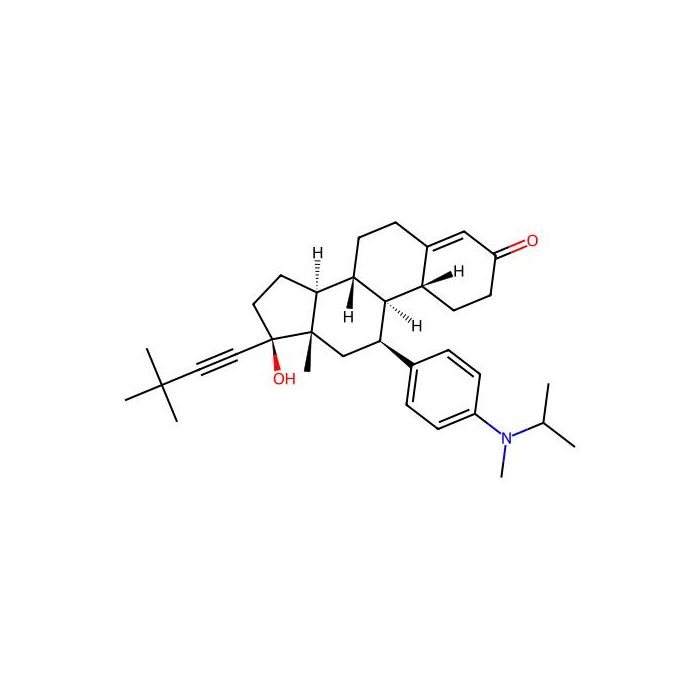
ORIC-101 is a highly potent and selective glucocorticoid receptor antagonist, with an EC 50 of 5.6 nM. Anti-cancer activity. ORIC-101 is a click chemistry reagent, it contains an Alkyne group and can undergo copper-catalyzed azide-alkyne cycloaddition (CuAAc) with molecules containing Azide groups.
Specifications
仕様と純度
Moligand™, 10 mM in DMSO
保管条件
Store at -80°C
入荷
Dry ice packs + Cold packs
この製品は冷冷この冷このこの製品の運送が必要です。地上およびその他の経済サービスは利用できません。
等級
Moligand™
アクションタイプ
ANTAGONIST
名前と識別子
PubChem CID
134817248
分子量
501.74
Documentation
📋 Safety Data Sheet (SDS)
Comprehensive hazard, handling, storage, and regulatory compliance document.
Determine the necessary mass, volume, or concentration for preparing a solution.
Dilution Calculator
Determine the dilution needed to prepare a stock solution.
Reconstitution Calculator
レビュー
顧客レビュー
Application Protocols
Manufacturer-tested applications and recommended protocols are not provided for this item.
General protocol framework for small-molecule ligands
Stock preparation: Dissolve at 10–50 mM in dry DMSO. Divide into single-use aliquots (e.g., 10–50 µL) and store at –80°C.
Dose–response in cells: Prepare serial 1:3 or 1:2 dilutions in assay medium with matched vehicle controls; typical exposure 2–72 h depending on mechanism and readout. Confirm compound solubility at the top dose.
Biochemical assays: Include detergent (0.01–0.05% nonionic) where compatible to mitigate aggregation; ensure enzyme and substrate concentrations support robust dynamic range.
Data quality: Incorporate positive/negative controls, a minimum of triplicate wells, and plate-mapped edge controls. Assess Hill slope and maximum effect for curve quality.
Counterscreens: Evaluate fluorescence, absorbance, or redox interference by running orthogonal readouts or enzyme-free controls.
Refer to the CoA/Spec Sheet for any item-specific recommendations when available.
Biological Roles
Item-specific target, mode of action, and pathway engagement for ORIC-101 are not provided in the product data. Please consult primary literature by CAS (2222344-98-9) or CID (134817248) for detailed mechanistic reports (literature research).
General notes for small-molecule research ligands (literature/general)
Such compounds are typically used to modulate protein function (enzymes, receptors, transporters) in biochemical and cellular systems to interrogate signaling pathways, transcriptional programs, or metabolic flux.
They can serve as chemical probes for target validation, enabling time-resolved and reversible perturbations complementary to genetic methods.
Off-target activity and assay interference are common risks; comprehensive counterscreening and selectivity profiling are recommended before drawing biological conclusions.
Physicochemical properties (logD, pKa, TPSA) determine cellular uptake, subcellular localization, and nonspecific binding; measure or compute these parameters to inform assay design.
Important
No clinical or therapeutic claims are made. This material is provided strictly for research use. For authoritative, item-specific biological information, refer to peer-reviewed sources and the CoA/Spec Sheet.
Buffer Applications
This product is a small-molecule research ligand rather than a buffering agent. It does not serve as a pH buffer and is not part of standard buffer systems.
Practical guidance for use in buffers (general)
When dosing into biological buffers, deliver from a high-concentration DMSO stock to the target buffer (e.g., PBS, HEPES, Tris) while maintaining a low final organic content (typically 0.1–1% DMSO).
Pre-warm buffer to 25–37°C to minimize precipitation for hydrophobic compounds. Gentle vortexing and short sonication can help achieve clarity.
If non-specific adsorption is suspected, include 0.01–0.05% nonionic surfactant (e.g., Tween-20) where compatible with the assay, and use low-bind plastics or silanized glassware.
Item-specific buffer compatibility/pH stability: Not specified for this item; refer to CoA/Spec Sheet.
Green Alternatives
Because this item is a discovery-stage small molecule rather than a process solvent or bulk reagent, “green alternatives” primarily concern the choice of formulation solvent and assay conditions.
Greener formulation choices (general guidance)
Prefer aqueous-compatible systems with minimal DMSO where feasible (e.g., ≤0.1–0.5% DMSO in final assays) to reduce solvent burden and waste.
Use acetonitrile over DMF/NMP for LC–MS sample prep when compatible with solubility and detection—acetonitrile is generally considered less hazardous than DMF/NMP.
Employ microplate formats and low-volume dispensing (acoustic/inkjet) to minimize solvent consumption.
DMF/NMP: Very strong solvency; reproductive toxicity concerns; avoid if possible.
Ethanol/Isopropanol: Renewable feedstock options available; higher volatility; may disrupt membranes in cell assays.
Operational green tips
Consolidate screening batches to maximize plate density and minimize defrost cycles and waste.
Treat solvent waste streams by segregation (DMSO-rich vs acetonitrile/water) to enable efficient disposal or recycling.
Item-specific greener alternatives are not applicable; no synthetic-process substitution is relevant for this SKU.
Pharmaceutical Uses
This material is supplied strictly for research use and library screening. No therapeutic, diagnostic, or clinical applications are supported or implied.
In preclinical research settings, small molecules are often formulated for in vitro dosing as DMSO stocks and for in vivo method development using vehicles such as PEG400, Captisol®, aqueous Tween/CMC suspensions, or mixed cosolvent systems. Any such use requires independent development and validation.
For analytical method development (e.g., stability-indicating HPLC), selection of mobile phases with low UV background and appropriate pH can improve detection; item-specific UV cutoff or chromophore data are not provided for this SKU.
Regulatory/pharmacopeial status
Not a pharmacopeial or GMP-grade material. No excipient or API status is claimed.
Item-specific excipient compatibility, dosage form feasibility, and impurity profiles: Not specified for this item; refer to CoA/Spec Sheet.
Physical Properties
Item-specific values
Appearance: Not specified for this item; refer to CoA/Spec Sheet.
Melting point: Not specified for this item; refer to CoA/Spec Sheet.
Boiling point: Not specified for this item; refer to CoA/Spec Sheet.
Density: Not specified for this item; refer to CoA/Spec Sheet.
Refractive index: Not specified for this item; refer to CoA/Spec Sheet.
Solubility (water/organic): Not specified for this item; refer to CoA/Spec Sheet.
LogP/logD, pKa: Not specified for this item; refer to CoA/Spec Sheet.
General guidance (literature/practice for library compounds)
Small-molecule screening ligands are commonly formulated as 10–50 mM DMSO stocks due to broad solubilizing power and chemical stability.
If aqueous use is required, typical cosolvent systems include 0.1–2% DMSO or DMF in assay buffer with surfactant (e.g., 0.01–0.05% Tween-20) to reduce compound aggregation (literature best practice).
Evaluate solubility and aggregation by serial dilution with visual inspection and, where possible, nephelometry or light scattering.
Thermal/photostability varies by scaffold; protect from light and heat until item-specific data are available.
Do not treat the above as product specifications. For exact values for this SKU, refer to the CoA/Spec Sheet.
Quality and Grades
Supplied grade: Moligand™ — Aladdin’s screening/ligand discovery grade intended for medicinal chemistry, target validation, and assay development workflows.
What Moligand™ typically implies (general description)
Purity is optimized for bioassay reliability (commonly ≥95% by HPLC/LC–MS in library practice), low residual solvents/metals sufficient for in vitro screening, and identity confirmed by orthogonal methods (e.g., LC–MS ± 1H NMR). Exact acceptance criteria for this SKU are item-specific and provided on the CoA.
UV profile/fluorescence background and salt form can influence assay readouts; see CoA for details relevant to spectroscopic assays.
Stabilizers/additives: Not specified for this item; refer to CoA/Spec Sheet. If present, they will be listed explicitly.
What is specific to this item
Assay-intended, research-use-only material. No medical, diagnostic, or clinical use.
For any regulated uses or analytical method development (e.g., quantitative bioanalysis), verify specifications (purity method, water, residual solvents) from the CoA/Spec Sheet before deployment.
Recommendations
Record the lot number in all reports to ensure traceability.
For sensitive assays, pre-clarify solutions by 0.2 µm filtration to remove particulates that may scatter light or foul injectors.
Reaction and Applications
This product is offered as a research small molecule (ligand/screening compound). It is not primarily intended as a synthetic reagent; nonetheless, it has several common research applications.
Applications (general for screening ligands)
Target and pathway studies in biochemical or cell-based assays (e.g., dose–response, time-course, mechanism-of-action hypotheses). Specific target information for this SKU is not provided; consult primary literature by CAS 2222344-98-9 if needed (literature research).
Assay development: positive/negative control benchmarking, solvent tolerance studies, counterscreens for off-target effects, and signal window optimization.
ADME profiling: solubility, permeability, protein binding, metabolic stability, and microsomal turnover characterization as part of hit evaluation.
Orthogonal readouts: use in complementary assay formats (enzymatic, binding, reporter gene) to deconvolute assay interference versus true activity.
Practical tips
Prepare fresh DMSO stock aliquots and avoid >3 freeze–thaw cycles to limit degradation and water uptake.
Include vehicle controls matched to the highest solvent concentration used.
Assess compound aggregation using detergent controls or dynamic light scattering; aggregate-driven inhibition can confound results (literature guidance).
Where photoreactivity is possible, conduct parallel, foil-wrapped assays.
Item-specific application notes from the manufacturer: Not specified for this item; if available, they will appear on the product CoA/Spec Sheet.
Reaction Conditions
This SKU is offered as a research ligand/screening compound rather than a reagent for named synthetic reactions. Item-specific reactivity, stability windows, and transformation conditions are not provided.
General handling and solution preparation (applicable to assay use)
Stock solutions: Prepare at 10–50 mM in dry DMSO; vortex and, if necessary, brief bath sonication. Filter if particulates persist.
Working solutions: Dilute into assay buffer to the desired concentration, keeping final DMSO at 0.1–1% v/v. Mix thoroughly to avoid local supersaturation and precipitation.
Temperature: Most assays are conducted at ambient temperature or 37°C. Confirm thermal stability by short-term stress testing (e.g., LC–MS after 24–48 h at 25–40°C in intended media).
Light/oxygen: When uncertain, protect from light and minimize headspace to limit oxidative degradation.
If synthetic modification is intended, consult structural literature (CAS 2222344-98-9) for scaffold-specific conditions (literature). No yields or catalysts can be recommended without item-specific structure.
Safety and Handling
Authoritative safety information is provided in the Safety Data Sheet (SDS). The following are general laboratory precautions for small-molecule research compounds.
Item-specific hazard data
GHS classification: Not specified for this item; refer to SDS.
Signal word: Not specified for this item; refer to SDS.
Hazard statements (H-phrases): Not specified for this item; refer to SDS.
Pictograms: Not specified for this item; refer to SDS.
General precautions (good laboratory practice)
Personal protective equipment: lab coat, nitrile gloves, and splash goggles. Handle in a fume hood to avoid inhalation of dust or aerosols.
Avoid ingestion, inhalation, skin and eye contact. Wash thoroughly after handling. Do not pipette by mouth.
Incompatibilities: Until specific data are available, segregate from strong oxidizers, strong acids/bases, and reducing agents. Avoid prolonged exposure to light and elevated temperatures.
First aid (overview; consult SDS): In case of contact, rinse affected area with water for ≥15 min; remove contaminated clothing. If inhaled, move to fresh air. If ingested, rinse mouth; seek medical attention.
Spill/leak response: Absorb small spills with inert material (vermiculite), collect in suitable container for disposal. Prevent release to drains.
Waste: Dispose of in accordance with institutional, local, and national regulations for organic laboratory chemicals.
Special notes
Many discovery ligands exhibit unknown toxicological profiles. Minimize exposure and prepare small working aliquots to limit repeated freeze–thaw.
Solvent Selection
Item-specific solubility data: Not specified for this item; refer to CoA/Spec Sheet.
General selection strategy for discovery compounds
Primary solvent: DMSO is preferred for preparing 10–50 mM stocks due to broad solubility and chemical inertness toward many scaffolds.
Alternative polar aprotics (if DMSO is unsuitable): DMF or NMP can increase solubility but may interfere with some assays; validate background effects.
Cosolvent approach for aqueous assays: Dilute DMSO stocks into buffer to a final DMSO content of 0.1–1% v/v to balance solubility and assay compatibility.
Less polar options: If the scaffold is highly lipophilic, consider acetone, acetonitrile, ethanol, or isopropanol as intermediate diluents prior to buffer addition. Verify precipitation visually.
Avoid: Neat water addition to concentrated hydrophobic stocks (precipitation and amorphous aggregation). Avoid strong acids/bases unless pKa information supports salt formation.
Practical tips
Conduct a quick solubility screen in DMSO, DMF, MeCN, EtOH, and PBS (with 0.01–0.05% nonionic surfactant if permitted) at room temperature and 37°C.
For LC–MS sample prep, acetonitrile/water (with 0.1% formic acid) post-dilution from a DMSO stock minimizes peak broadening.
Filter or centrifuge cloudy working solutions before use to reduce assay variability.
Storage and Reconstitution
Item-specific storage/shipping
Storage conditions: Store at -80°C (per product data). Protect from light and moisture.
Shipped in: Dry ice packs + Cold packs (per product data). Inspect upon receipt; if thawing occurred, re-freeze promptly and check integrity before use.
Reconstitution and handling (general best practice)
Solvent: Prepare concentrated stocks in dry, oxygen-poor DMSO unless item-specific solubility dictates otherwise. Item-specific solubility: Not specified for this item; refer to CoA/Spec Sheet.
Aliquoting: Divide into single-use aliquots to avoid repeated freeze–thaw. Target ≤3 freeze–thaw cycles total.
Working solutions: Dilute into assay buffer immediately before use. Keep final DMSO content low (typically 0.1–1% v/v) and verify solution clarity.
Stability: Short-term bench handling should be minimized. For extended experiments, keep solutions on ice or at 4°C and shield from light. Long-term solution stability data: Not specified for this item; refer to CoA/Spec Sheet.
Shelf life and specifications
Retest date/expiry, purity mode, water content, and residual solvents: Not specified for this item; refer to CoA/Spec Sheet.
Research Use Only. Not for human or veterinary use.
Structure and Identity
Product name: ORIC-101 (screening compound)
CAS: 2222344-98-9
CID: 134817248
SKU: O1494666
Grade: Moligand™
Molecular formula: Not specified for this item; refer to CoA/Spec Sheet.
Molecular weight: Not specified for this item; refer to CoA/Spec Sheet.
SMILES: Not specified for this item; refer to CoA/Spec Sheet.
InChIKey: Not specified for this item; refer to CoA/Spec Sheet.
Structural description
Item-specific functional groups, ring systems, heteroatoms, and stereochemistry: Not specified for this item; refer to CoA/Spec Sheet.
2D structure (verbal): Not specified for this item; refer to CoA/Spec Sheet.
Notes
ORIC-101 is supplied as a research-use small molecule in Aladdin’s Moligand™ compound library. In the absence of disclosed structural identifiers, please consult the Certificate of Analysis (CoA) for definitive identity attributes (exact mass, purity mode, NMR/LC–MS ID).
Synthetic Utility
Given the absence of a disclosed structure for this SKU in the product data, no item-specific retrosynthetic or functional group guidance can be provided.
General comments
Library compounds like this are typically final targets rather than synthetic intermediates. They may contain multiple functional groups (e.g., heteroaryl cores, amide/urea linkages, tertiary amines) common in medicinal chemistry; reactivity and compatibility will be scaffold-dependent (literature/general).
If derivatization or bioconjugation is intended, first confirm the presence and accessibility of functional handles (amines, alcohols, carboxylates, halides) by consulting the CoA and structural references (CAS/CID literature) and performing confirmatory NMR/LC–MS.
Protecting-group strategies, cross-coupling feasibility, and late-stage functionalization options (e.g., C–H activation, Mitsunobu, amide coupling) should be assessed only after establishing the exact scaffold.
Item-specific functional groups, leaving groups, or handles for diversification: Not specified for this item; refer to CoA/Spec Sheet.
Target Specificity
Item-specific target, selectivity profile, potency (IC50/Ki/EC50), and off-target panels are not provided in the product data for this SKU.
Target/Pathway: Not specified for this item; refer to CoA/Spec Sheet and primary literature by CAS (2222344-98-9) or CID (134817248).
Species reactivity or cell line suitability: Not specified for this item; refer to CoA/Spec Sheet.
Assay interference flags (PAINS/fluorescence/RedOx): Not specified for this item; users should perform appropriate counterscreens.
For definitive specificity information, consult peer-reviewed publications and your internal profiling data. Record lot numbers alongside biological results to ensure traceability.
Need help choosing the grade?
Our grade selection guide covers purity, stabilizer status, and application suitability for all variants in our catalog.
We use cookies to ensure the website functions properly and, where permitted, to improve your experience. You can manage your preferences at any time in Settings. Learn more in our Cookie Policy.
Shall we send you a message when we have discounts available?
Remind me later
Thank you! Please check your email inbox to confirm.
Products are supplied to verified businesses, institutions, and qualified professionals for research and development use only. Not for use in humans, animals, diagnosis, or therapy.