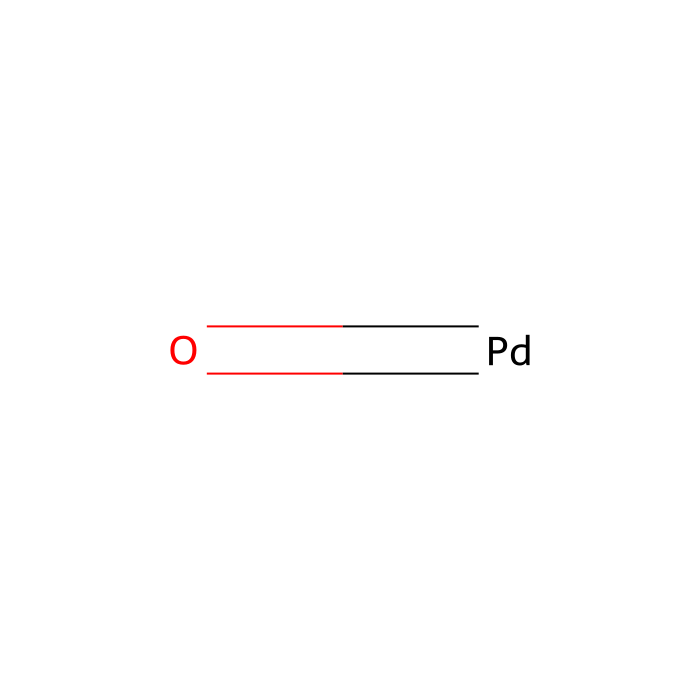
Transition metal oxide - Inorganic oxide - Inorganic salt
説明
This compound belongs to the class of inorganic compounds known as transition metal oxides. These are inorganic compounds containing an oxygen atom of an oxidation state of -2, in which the heaviest atom bonded to the oxygen is a transition metal.
External Descriptors
Not available
1. Djoumbou Feunang Y, Eisner R, Knox C, Chepelev L, Hastings J, Owen G, Fahy E, Steinbeck C, Subramanian S, Bolton E, Greiner R, and Wishart DS. ClassyFire: Automated Chemical Classification With A Comprehensive, Computable Taxonomy. Journal of Cheminformatics, 2016, 8:61.
Determine the necessary mass, volume, or concentration for preparing a solution.
Dilution Calculator
Determine the dilution needed to prepare a stock solution.
Reconstitution Calculator
レビュー
顧客レビュー
Application Protocols
No assay-specific protocols (WB, IHC, IF, FC) apply to this inorganic solid. For catalytic applications, refer to the Reaction Conditions tab for representative procedures and adjust to your substrates, reactor geometry, and mass-transfer requirements.
Biological Roles
Palladium(II) oxide does not have intrinsic biological roles. It is an inorganic solid not found in biological systems.
General notes (literature/general):
Palladium is not an essential element for living organisms. PdO is insoluble under physiological conditions and is not used as a biochemical reagent in its native form.
Any biological interactions would stem from released Pd(II) ions under strongly acidic conditions, which is not typical in biological media.
Pd-based nanoparticles have been explored in research contexts (e.g., catalysis in bio-orthogonal settings), but such applications involve engineered materials distinct from bulk PdO.
For life-science workflows, PdO is generally irrelevant except as an industrial catalyst for manufacturing fine chemicals that may later be used in biological studies. No biomolecular binding specificity or metabolic pathway relevance is ascribed to PdO.
Buffer Applications
PdO is an insoluble inorganic oxide and is not used to prepare analytical buffers or as a buffering agent. It has no defined pKa and does not contribute to controlled pH systems.
If catalysis is conducted in buffered aqueous media, consider potential interactions of buffer components (e.g., chloride, phosphate, acetate) with palladium surfaces or dissolved Pd(II) species, which can influence activity and leaching.
For buffer formulation guidance, refer instead to standard buffering agents (phosphate, acetate, TRIS, etc.).
Green Alternatives
Sustainability considerations focus on solvent/media choices, catalyst recovery, and replacement of homogeneous palladium salts with recyclable heterogeneous systems.
Greener choices within palladium catalysis:
Use PdO as a recoverable heterogeneous source instead of soluble Pd(OAc)2 to reduce metal contamination in products and facilitate recycling.
Operate oxidations under air/O2 without stoichiometric inorganic oxidants (e.g., avoid Cr(VI), Mn(VII)).
Employ water or bio-derived solvents (e.g., 2-MeTHF, Cyrene) when substrate solubility permits.
Alternatives to palladium (when feasible):
Nickel, copper, or iron catalysts for certain cross-couplings and oxidations can lower critical-metal footprint, albeit with different selectivity and operational windows.
Comparison snapshot (literature/general):
Greener dimension | PdO (heterogeneous) | Pd(OAc)2 (homogeneous) | Base-metal alternative
--- | --- | --- | ---
Metal recovery | High (filtration) | Low–moderate (ligand-bound) | High–moderate
Product metal residues | Low | Higher | Variable
Solvent flexibility | Broad; heterogeneous | Driven by solubility/ligand | Broad but substrate-specific
Performance | High, reaction-dependent | High, tunable with ligands | Case-dependent; may need harsher conditions
Trade-offs:
Heterogeneous PdO may require higher temperatures and careful control to avoid leaching.
Base-metal routes may reduce sustainability if yields drop or if stoichiometric additives are needed.
Recommendation: Evaluate life-cycle impacts including metal recycling, solvent selection, and energy input; validate metal scavenging and catalyst reuse protocols.
Pharmaceutical Uses
No therapeutic or clinical uses are claimed. In the pharmaceutical manufacturing context (literature/general):
Role as catalyst/precursor:
PdO can serve as a heterogeneous source of palladium for cross-couplings and hydrogenations in API/intermediate synthesis, with advantages in recovery and low residual Pd in product.
Aerobic oxidations using PdO under O2/air provide greener routes compared with stoichiometric oxidants.
Regulatory considerations:
Palladium is a Class 2 residual metal per ICH Q3D; tight control of residual Pd in drug substances is required. Using heterogeneous PdO can aid in meeting elemental impurity limits alongside metal scavenging and validated filtration.
Process practicality:
Catalyst recycling and spent-catalyst metal reclaim programs reduce cost and environmental impact.
Choice of solvent (e.g., EtOAc, 2-MeTHF, water/EtOH) and ligands/additives should be aligned with green chemistry and regulatory expectations.
Any use is strictly for research and process development. Ensure validation of removal of palladium residues and compliance with applicable pharmacopeial/ICH guidelines.
Physical Properties
Item-specific specifications are not provided in the Product Data; consult the CoA/Spec Sheet for certified values. The following are general literature properties of PdO (not item-specific):
Appearance (literature): Dark green to black crystalline powder; semiconductor-type oxide.
Density (literature): ~8.3 g/cm³.
Thermal behavior (literature): Decomposes at elevated temperature to Pd(0) and O2; melting point not typically observed for the bulk oxide. Reported decomposition onset commonly >800 °C under inert/vacuum; lower under reducing atmospheres.
Solubility (literature): Insoluble in water and most organic solvents; slowly dissolves in concentrated acids (e.g., HCl with oxidants, aqua regia) forming Pd(II) complexes. Resistant to alkalis.
Electrical/optical (literature): p-type semiconductor; reported band gap ~2.0–2.2 eV depending on preparation.
Particle size/surface area: Not specified for this item; refer to CoA/Spec Sheet.
Refractive index, pKa, logP: Not applicable to an extended inorganic solid; not typically reported.
UV cutoff: Not applicable; insoluble and strongly absorbing as a solid.
Notes for use:
For heterogeneous catalysis, accessible surface area and dispersion dominate reactivity; verify vendor-specific surface area or particle metrics on the CoA when process outcomes are sensitive to these parameters.
Quality and Grades
Item-specific grade/purity: Not specified for this item; refer to CoA/Spec Sheet.
Interpretation and guidance (general):
For heterogeneous catalysts and catalyst precursors like PdO, critical quality attributes include:
Metal content and oxidation state distribution (Pd(II) vs Pd(0)).
Impurity profile: base metals, halides, sulfur, carbon, and residual nitrates/chlorides from synthesis.
Particle size, morphology, and specific surface area (affecting catalytic activity and reduction behavior).
Moisture/volatiles content, which can influence dosing by weight and reduction kinetics.
Common research grades:
“Reagent grade” PdO targets general laboratory synthesis and catalysis; suitable when trace-metal impurities are not critical.
“High-purity” or “trace metal basis” materials control Fe, Cu, Ni, etc., often preferred for sensitive cross-couplings or electronic applications.
Stabilizers: None are typically added to PdO; if supported (e.g., on Al2O3, SiO2, C), the support and loading should be specified. This listing appears to be unsupported PdO; verify on the CoA.
Analytical verification:
XRD to confirm PdO phase and absence of Pd metal.
TGA/TPR to assess reducibility and oxygen content.
ICP-OES/MS for bulk impurities and assay of Pd.
Recommendation: Match the grade to application sensitivity. For quantitative kinetic studies or pharma process development, request detailed CoA including phase analysis and metals impurity panel.
Reaction and Applications
PdO serves as a versatile heterogeneous catalyst and precursor to active Pd(0) species. Key application domains (literature/general):
Aerobic oxidation and dehydrogenation:
Oxidation of primary/secondary alcohols to aldehydes/ketones under O2 or air, often in acetic acid, MeCN, or toluene. Can operate with cocatalysts (e.g., TEMPO) or without, depending on substrate.
Dehydrogenation of cyclohexanone oximes to caprolactam intermediates and other substrate-specific transformations.
Hydrogenation precursor:
PdO is readily reduced by H2 or hydrogen donors to form finely dispersed Pd(0), which then catalyzes hydrogenations (e.g., C=C, C≡C, nitro compounds). This in situ activation is leveraged in flow and batch.
Carbon–carbon/heteroatom couplings (indirect):
While PdO itself is heterogeneous, it can act as a reservoir for soluble Pd(II)/Pd(0) species under reaction conditions, enabling Suzuki–Miyaura, Heck, Sonogashira, and Buchwald–Hartwig reactions after partial reduction or leaching ("catch-and-release" catalysis). Reaction outcomes depend on base, ligand, and solvent.
Oxidative coupling/C–H activation:
PdO under O2 can mediate oxidative couplings (e.g., Wacker-type oxidations of alkenes to ketones in specific solvent systems) when chloride/acetic acid are present to form active Pd(II) complexes.
Environmental catalysis:
Oxidation of CO and volatile organics; methane combustion on supported PdO is a classic application in emissions control.
Practical notes:
Pretreatment: Calcination in air can restore surface Pd(II)/oxide; reduction in H2 generates active Pd(0).
Poison sensitivity: Sulfur, nitrogen bases, and halides may poison or restructure PdO/Pd surfaces. Employ scrubbing/purification of feeds to prolong activity.
Reaction Conditions
General literature guidance (not item-specific). Optimize conditions per substrate and scale.
Aerobic oxidation of alcohols:
Catalyst: PdO (1–10 mol% Pd relative to substrate) optionally with TEMPO (5–10 mol%) and base (e.g., NaOAc).
Solvent: AcOH, MeCN, toluene, or mixed aqueous/organic.
Atmosphere: O2 or air; maintain effective gas–liquid–solid contact (sparging or headspace pressure 1–5 bar for O2-enhanced rates).
Temperature: 40–100 °C; higher for less activated substrates.
Notes: Monitor for induction periods; avoid chloride if over-oxidation or leaching is observed.
Hydrogenation via in situ reduction:
Pre-reduction: Expose PdO slurry to H2 (1–10 bar) at 20–60 °C to form Pd(0).
Reaction: Continue hydrogenation of substrate (alkenes, nitroarenes) under 1–30 bar H2, solvent such as EtOH, iPrOH, EtOAc, or MeOH, with vigorous stirring.
Cautions: Heat release during reduction; control temperature and H2 uptake.
Cross-coupling (indirect, via leached/formed Pd species):
Bases: K2CO3, Cs2CO3, NaOtBu depending on system.
Solvents: Toluene, dioxane, DMF, MeCN; 60–110 °C.
Ligands: Phosphines or NHCs may be added to capture Pd and enhance activity/selectivity.
Regeneration/conditioning:
After use in reducing environments, reoxidize by calcining at 300–500 °C in air to restore PdO (for supported systems) or by controlled air treatment for bulk powders.
These parameters are representative from literature; tailor to your substrate and safety constraints.
Safety and Handling
Item-specific GHS classification and H-statements are not provided here; consult the SDS for authoritative safety information. General guidance for palladium oxides (literature/general):
Likely hazards (general): May cause irritation to eyes, skin, and respiratory tract if dust is generated. Palladium compounds can be harmful if inhaled or ingested; environmental hazard to aquatic life is possible for palladium species. Avoid dust generation and inhalation.
Special risks: Finely divided PdO can be reduced exothermically by hydrogen or organic reductants to Pd metal; manage heat release and potential gas evolution (H2/O2) in process equipment. Avoid mixing with strong reducing agents unless controlled.
Incompatibilities (general): Strong reducing agents, combustible materials in presence of strong oxidizers, strong acids (dissolution with oxidants), cyanides (complex formation). Avoid contact with halogenating agents that may form volatile Pd species.
Handling/PPE: Use in a fume hood. Wear lab coat, safety glasses or face shield, and appropriate chemical-resistant gloves (e.g., nitrile). Use dust control (closed handling, HEPA local exhaust) if transferring powders.
First aid (overview): If inhaled, move to fresh air; seek medical attention if symptoms persist. Skin/eye contact: rinse with water for at least 15 minutes; remove contaminated clothing; seek medical advice. If ingested, rinse mouth; do not induce vomiting; obtain medical attention.
Fire: Substance is non-combustible, but packaging may burn. For metal-oxide powders, use appropriate extinguishing media for surrounding fire; avoid generating airborne dust.
Spill response: Avoid dust; collect mechanically and place in appropriate container for metal recovery or hazardous waste disposal.
Always defer to the product SDS for definitive hazard classification and controls.
Solvent Selection
As an insoluble inorganic oxide, PdO is typically employed as a heterogeneous catalyst or precursor; solvent choice targets reaction kinetics, mass transfer, and compatibility rather than solubility.
Polarity/miscibility considerations (general):
Water/aqueous media: Useful for oxidations under O2/air; PdO remains as a solid phase. Buffer components and chloride can alter surface chemistry and speciation upon partial dissolution.
Polar organics (e.g., acetonitrile, DMF, DMSO, acetone): Often suitable for aerobic oxidations of alcohols and amines; can aid wetting/dispersion of PdO.
Protic solvents (methanol, ethanol, acetic acid): Common in dehydrogenations/oxidations; acetic acid is frequently used as it stabilizes Pd(II) species if partial dissolution occurs.
Nonpolar solvents (toluene, heptane): Applicable when substrates are hydrophobic; ensure adequate agitation to suspend PdO.
Practical tips:
Maintain efficient stirring to avoid mass-transfer limitations.
Surfactants or dispersants (when compatible) can improve contact with hydrophobic substrates.
Avoid strong reducing environments unless the intent is in situ reduction to Pd(0); alcohols at elevated temperature under H2 may rapidly reduce PdO.
Comparison (general):
Pd(OAc)2 is soluble in many organics enabling homogeneous catalysis; PdO supports robust heterogeneous operations and facile separation but may require higher temperatures or O2 to maintain Pd(II).
Hygroscopicity: Bulk PdO is not strongly hygroscopic, but surface-adsorbed water can affect accurate weighing and catalytic behavior; store in a dry desiccator.
Light sensitivity: Extended light exposure is not typically destructive, but protection from light helps prevent unintended photochemical surface changes.
Reconstitution: Not applicable; PdO is a solid inorganic powder used as-is. For slurry preparation, disperse in the chosen solvent under inert gas if reduction to Pd(0) is not desired; avoid strong reductants.
Shelf life: Metal oxides are generally stable. However, prolonged storage in reducing atmospheres or contaminated environments can partially reduce PdO to Pd; if activity changes are observed, re-oxidize by gentle air treatment as appropriate for your process setup (observe safety protocols).
Always consult the product CoA and SDS for container-specific instructions and any additional storage notes.
Structure and Identity
Brief overview: Palladium(II) oxide (PdO) is an inorganic binary metal oxide and a common heterogeneous palladium source/catalyst precursor.
Item-specific identifiers (from Product Data):
CAS: 1314-08-5
CID: 5083724
InChIKey: Not specified for this item; refer to CoA/Spec Sheet.
SMILES: Not specified for this item; refer to CoA/Spec Sheet.
Literature/computed identity (general reference values, not item-specific):
Chemical formula: PdO (literature)
Molecular weight: ~122.42 g/mol (literature)
Oxidation state: Pd(II) with O2− (literature)
Structure: Infinite lattice of edge-sharing PdO4 squares (distorted square-planar Pd2+ centers) forming a tetragonal/monoclinic-type oxide lattice (literature). No discrete molecules; a 2D/3D extended solid.
Functional motif: Metal–oxygen lattice; no classical organic functional groups.
2D description in words (literature):
Each Pd center is coordinated approximately square-planar by four oxide ions; oxide ions bridge between palladium centers to generate an extended inorganic network. No stereochemistry applicable to an extended solid.
Synthetic Utility
PdO provides two complementary modes of synthetic value (literature/general):
As an oxidant/oxygen-transfer catalyst:
Promotes aerobic oxidation of alcohols, allylic/benzylic substrates, and amines under O2/air. Acetic acid or nitrile solvents often enhance rates. Can be paired with nitroxyl radicals (TEMPO) for selective alcohol oxidation.
Facilitates dehydrogenation transformations where Pd(II)/Pd(0) redox cycling is operative.
As a precursor to Pd(0) for catalysis:
In situ reduction of PdO affords highly dispersed Pd(0) that catalyzes hydrogenations and serves as the active species for cross-couplings (Suzuki–Miyaura, Heck, Sonogashira, Buchwald–Hartwig). Heterogeneous-to-homogeneous shuttling via leached Pd can enable reactivity without added soluble salts.
Retrosynthetic implications:
Access to oxidized carbonyl intermediates from alcohols streamlines protecting-group schemes.
Heterogeneous operations simplify workup and minimize product metal content, beneficial for late-stage functionalization in complex molecule syntheses.
Practical guidance:
Preactivation by calcining in air (to re-form PdO) or by controlled reduction (to generate active Pd) tunes selectivity.
Avoid sulfur- or nitrogen-rich poisons; purify feeds or include sacrificial scavengers.
Combine with phase-transfer agents or optimized agitation to mitigate mass-transfer limits in biphasic systems.
Target Specificity
Not applicable. PdO is an inorganic catalyst/precursor and does not have targets, epitopes, or biological binding specificity. This section is relevant to biomolecules (e.g., antibodies), not to metal oxides.
We use cookies to ensure the website functions properly and, where permitted, to improve your experience. You can manage your preferences at any time in Settings. Learn more in our Cookie Policy.
Shall we send you a message when we have discounts available?
Remind me later
Thank you! Please check your email inbox to confirm.
Products are supplied to verified businesses, institutions, and qualified professionals for research and development use only. Not for use in humans, animals, diagnosis, or therapy.