GRADE & PURITYMoligand™?Moligand™ — Aladdin's line of ligands and bioactive small molecules. Use for receptor, pathway, and binding studies needing defined small-molecule tools.10 mM in DMSO
Determine the necessary mass, volume, or concentration for preparing a solution.
Dilution Calculator
Determine the dilution needed to prepare a stock solution.
Reconstitution Calculator
レビュー
顧客レビュー
Application Protocols
No vendor‑validated protocols are provided for PW0787. The following general procedures are commonly applied to small‑molecule screening compounds and should be adapted to your assay and institutional SOPs.
Stock solution preparation: Bring vial to low temperature to reduce condensation. Open quickly, protect from light. Dissolve at 10–50 mM in anhydrous DMSO. Vortex and, if needed, sonicate briefly. Record exact concentration by weight‑in or UV/LC–MS if chromophore/response permits.
Plating: Dispense to source plates (e.g., 384‑well PP) under low light. Seal with gas‑impermeable foil. Store at −80 °C. Avoid repeated freeze–thaw; use single‑use aliquots.
Assay setup: Transfer nanoliter‑to‑microliter volumes by acoustic or pin tools to maintain final DMSO ≤0.5–1% v/v. Include vehicle controls matched to the highest DMSO percentage.
Serial dilutions: Prepare half‑log or 3‑fold series in DMSO, then back‑dilute into assay buffer. Confirm absence of precipitate visually and, when possible, by light scattering.
Data quality: Include positive/negative controls to compute Z′; repeat CR curves in at least duplicate.
Item‑specific tested applications (e.g., WB, IHC, IF, FC) and recommended dilutions: Not specified for this item.
Biological Roles
Item‑specific biological function, target class, or pathway association for PW0787 is not provided in the product data. As a Moligand™ library compound, it is intended for hypothesis‑free or target‑directed screening in research settings only.
General considerations for biological evaluation (non‑clinical):
Mechanistic annotation: Following acquisition of structural information from the CoA, use chemoinformatics to suggest putative target classes and evaluate similarity to annotated ligands.
ADME‑relevant properties: If needed for advanced studies, compute physicochemical descriptors (cLogP, TPSA, pKa) and assess in vitro stability (microsomes, plasma) and permeability (PAMPA/Cell lines). These are not specified here and must be generated experimentally or in silico.
Artifact mitigation: Screen for aggregation (detergent sensitivity), redox cycling (HRP‑resazurin), and assay interference (fluorescence quenchers/enhancers) before assigning biological roles.
Selectivity profiling: Run counter‑screens against off‑targets to contextualize preliminary activity and reduce false positives.
No claims are made regarding therapeutic relevance or efficacy. This product is for research use only and not for human or animal diagnostic or therapeutic applications.
Buffer Applications
PW0787 is a small organic screening compound and is not a buffering agent. Therefore, buffer preparation guidelines are generally not applicable to the compound itself.
Assay buffer integration (general guidance):
DMSO carryover: Maintain final DMSO at ≤0.5–1% v/v in most biochemical/cell assays to minimize solvent effects on buffer pH, enzyme activity, and membrane integrity.
Common buffers: Use target‑appropriate systems (e.g., HEPES pH 7.4, PBS pH 7.2–7.6, Tris pH 7.5–8.0) validated for your assay readout. Ensure compatibility with any metal ions, cofactors, or surfactants.
Additive effects: If compound solubility requires co‑solvents or surfactants (e.g., 0.01–0.05% Tween‑20), verify that the buffer composition does not alter target behavior or detection chemistry.
Precipitation control: When diluting from organic stock, add slowly to rapidly stirred buffer or pre‑mix with a small aliquot of buffer to avoid local supersaturation.
Item‑specific pKa or solubility data that would guide buffer choice: Not specified for this item; refer to CoA/Spec Sheet or determine experimentally.
Green Alternatives
As a screening library member, environmental impact considerations chiefly involve solvent choice and waste minimization during dissolution, plating, and assay execution.
Greener handling strategies (general guidance):
Prefer greener solvents for sample preparation and cleaning where feasible: ethanol and isopropanol can replace acetonitrile or dichloromethane for many wash steps; water/ethanol mixtures for plate cleaning.
Optimize DMSO usage: Prepare the highest practical stock concentration to minimize DMSO volume carried into assays, reducing solvent waste.
Miniaturize assays: Move to 384/1536‑well formats to cut overall solvent and consumable usage.
Closed‑loop nitrogen/argon: If inert handling is necessary (unknown here), use reusable manifolds to avoid single‑use gas cartridges.
Illustrative comparison (general, not item‑specific):
DMSO vs DMF: DMSO has a more favorable environmental and toxicity profile than DMF for stock solutions.
Acetonitrile vs ethanol: Ethanol is greener but may not dissolve highly hydrophobic compounds; acetonitrile may be reserved for analytics.
Note: No item‑specific hazardous constituents or stabilizers are reported. Always collect organic solutions and rinses as hazardous waste and segregate halogenated from non‑halogenated streams per institutional EHS guidance.
Pharmaceutical Uses
No pharmacopeial status, excipient role, or clinical formulation use is provided for PW0787. This product is offered strictly for research use as part of a discovery screening library (Moligand™) and is not intended for human or veterinary use.
Research and pre‑development contexts (general, non‑clinical):
Hit identification and optimization workflows: Use PW0787 in screening cascades and, if activity is observed, as a starting point for SAR and medicinal chemistry campaigns.
Developability heuristics: After structure confirmation (via CoA), evaluate in vitro solubility, chemical stability, and basic DMPK properties to inform whether the chemotype merits further research.
Reference standard: May serve as a reference analyte for developing stability‑indicating HPLC/LC–MS methods in discovery settings.
Regulatory note:
Not an approved drug substance or excipient. No claims are made regarding safety, efficacy, or suitability for therapeutic use. Handle under institutional research compound handling policies.
Physical Properties
Item-specific physicochemical data are not provided in the current listing.
Appearance: Not specified for this item; refer to CoA/Spec Sheet.
Melting point (MP): Not specified for this item; refer to CoA/Spec Sheet.
Boiling point (BP): Not specified for this item; refer to CoA/Spec Sheet.
Density: Not specified for this item; refer to CoA/Spec Sheet.
Refractive index: Not applicable/unknown for solid samples; if liquid, not specified for this item; refer to CoA/Spec Sheet.
Solubility: Not specified for this item; refer to CoA/Spec Sheet. General practice for library compounds is to prepare concentrated stocks in anhydrous DMSO (e.g., 10–50 mM), then dilute into assay buffers maintaining a final DMSO content typically ≤0.5–1% v/v.
LogP, pKa, UV-Vis λmax/ε: Not specified for this item; refer to CoA/Spec Sheet. Compute from a verified structure only if needed for method development.
Practical notes (general guidance):
If the compound is hygroscopic or photosensitive (unknown here), minimize ambient exposure and use amber vials; protect from light per Storage section.
Assess solution stability empirically by LC–MS or HPLC at planned storage conditions (e.g., −20 °C vs −80 °C) and planned assay temperature/time.
For analytical method development, start with reversed‑phase LC using a C18 column and a water/acetonitrile + 0.1% formic acid gradient; refine based on observed retention and ionization (ESI±) behavior.
Quality and Grades
Grade/Purity: Moligand™ (provided). This designation indicates inclusion in Aladdin’s small‑molecule/ligand discovery library intended for biochemical, cellular, and target‑based screening workflows.
What Moligand™ typically entails (general description):
Library compounds are commonly provided at research grade with identity verification (e.g., LC–MS and/or NMR) and a supplier specification on purity suitable for screening. Item‑specific assay purity, residual solvent content, water, or metal limits are not specified here; refer to the CoA/Spec Sheet for the lot supplied.
Materials are prepared and handled to minimize photodegradation and thermal stress; this item specifies protection from light and ultra‑low‑temperature storage.
Implications for users:
Analytical confirmation: For critical studies, confirm identity and purity in‑house (e.g., LC–MS purity at assay wavelength, qNMR) especially prior to SAR or hit nomination.
Assay readiness: If using in high‑throughput screening, consider pre‑plating under inert atmosphere and low‑light conditions to preserve integrity.
Traceability: Record SKU, CAS, and CID along with lot/batch number in ELNs and data files to ensure future reproducibility.
Item‑specific specifications such as exact purity %, residual solvent ppm, water content (KF), UV cutoffs, or stabilizers: Not specified for this item; refer to CoA/Spec Sheet.
Reaction and Applications
This product is supplied as a discovery library member (Moligand™) and is primarily intended for biochemical or cellular screening rather than as a synthetic reagent. No manufacturer reaction applications are provided for this item.
Research uses (general, non-clinical):
Primary screening/HTS: Evaluate PW0787 against enzymatic or receptor‑based assays to identify preliminary activity. Track concentration–response behavior and Hill slope; document assay conditions and final DMSO %.
Orthogonal assays: Confirm hits using alternate readouts (e.g., switch from fluorescence to MS‑based turnover) to rule out artifacts such as fluorescence interference or aggregation.
Counter‑screening: Assess selectivity across related targets and nuisance panels (e.g., redox cycling, PAINS filters, detergent sensitivity) before advancing.
Cheminformatics triage: Once the structure is confirmed from CoA, evaluate substructure alerts, reactive motifs, or metal‑binding moieties.
Analytical reference: Use as a reference analyte for LC–MS method development or stability‑indicating assays within the campaign.
If you intend to use PW0787 as a building block or reagent in chemical synthesis, please confirm the structure and functional groups from the CoA. In the absence of structural information here, no specific reaction families can be recommended. Always verify reactivity and stability experimentally on a small scale.
Reaction Conditions
No reaction conditions are provided for PW0787, and the compound is not positioned as a reagent or catalyst. If you plan to perform chemical transformations on PW0787, first obtain the verified structure from the CoA and determine functional group compatibility.
General best practices for small‑molecule manipulation (non‑item‑specific):
Solution preparation: Use anhydrous solvents (e.g., DMSO‑d6/DMF/MeCN) as appropriate; filter solutions through PTFE (0.2 µm) if particulate is present.
Temperature and atmosphere: Start at ambient temperature under inert gas for moisture/oxygen‑sensitive motifs; adjust per observed stability.
Time/course monitoring: Track by LC–MS or TLC with orthogonal detection (UV and MS/ELSD) to catch decompositions or side products.
Yields: Expected yields are wholly structure‑dependent and cannot be generalized for this item.
Item‑specific solvent systems, catalysts, and temperature ranges: Not specified for this item; refer to CoA/Spec Sheet and pilot experiments.
Safety and Handling
GHS classification and detailed hazard information are not provided for this specific item. Always consult the product SDS and lot-specific CoA before use.
Signal Word: Not specified for this item; refer to SDS.
Hazard Statements (H‑statements): Not specified for this item; refer to SDS.
GHS Classification & Pictograms: Not specified for this item; refer to SDS.
General laboratory precautions for small‑molecule screening compounds:
PPE: Lab coat, safety glasses, and appropriate chemical‑resistant gloves (e.g., nitrile). Use in a fume hood to avoid inhalation of dusts or solvent vapors.
Avoid exposure: Do not ingest, inhale, or allow skin/eye contact. Prevent aerosolization of powders and splashes of DMSO solutions (which can enhance dermal absorption).
Handling: Open vials at low temperature when possible to minimize moisture uptake and volatilization. Protect from light as indicated. Use clean, dry tools to prevent cross‑contamination between library members.
Incompatibilities: Unknown for this item; as a precaution, keep away from strong oxidizers, strong acids/bases, and ignition sources until specific data are available.
First aid overview: In case of skin/eye contact, rinse with water for at least 15 minutes and seek medical advice. If inhaled, move to fresh air. If swallowed, rinse mouth; do not induce vomiting; seek medical attention. Defer to SDS for authoritative guidance.
Waste: Collect solutions and rinses as organic hazardous waste. Label clearly with solvent and compound identifiers.
Solvent Selection
Because structure and solubility parameters are not provided, select solvents using a conservative screening approach focused on DMSO stock solutions and compatibility with your assay matrix.
Primary stock solvent (general best‑practice): Anhydrous DMSO. Start at 10–50 mM, depending on solubility. If precipitation is observed upon dilution into aqueous buffer, increase the DMSO fraction or introduce a co‑solvent.
Secondary options: DMF or ethanol for stock preparation when DMSO is unsuitable for the assay. For purely nonpolar compounds, isopropanol or acetonitrile may assist as co‑solvents.
Aqueous dilution: Add compound stock to vigorously mixed buffer to reach a final DMSO content ≤0.5–1% v/v (typical for cells/enzymes). Consider adding 0.01–0.05% nonionic surfactant (e.g., Tween‑20) to mitigate adsorption/aggregation if compatible with the assay.
Miscibility and precipitation checks: After dilution, visually inspect and, if possible, verify clarity by light scattering or quick UV scan; filter through 0.22 µm only if adsorption losses are acceptable.
Comparison (general guidance):
DMSO: maximal solvating power; potential biological interference at >1–2%.
DMF: similar solvency; higher toxicity; less favored for live cells.
Ethanol: biocompatible up to a few %; lower solvating power for hydrophobes.
Acetonitrile: excellent for analytical prep; can destabilize some proteins.
Note: Item‑specific solubility and logP are not specified; consult the CoA or measure experimentally.
Storage and Reconstitution
Storage conditions (provided): Store at −80 °C, protected from light.
Shipping (provided): Shipped on dry ice packs + cold packs to maintain low temperature.
Best practices (general guidance):
Light protection: Keep in amber vials or wrap containers in aluminum foil. Minimize exposure during weighing and solution prep.
Moisture/air control: Work quickly with desiccated materials. If the compound is moisture‑sensitive (unknown here), handle under inert atmosphere.
Aliquoting: Immediately subdivide into single‑use DMSO stock aliquots (e.g., 10–100 µL at 10–50 mM) to avoid repeated freeze–thaw. Store aliquots at −80 °C in tightly sealed, low‑permeability containers.
Thawing: Thaw on ice or at 4 °C, spin down condensation, and use promptly. Avoid prolonged exposure at room temperature.
Reconstitution solvent: Not specified for this item; DMSO is commonly used for library compounds. Verify solubility empirically and consult CoA if guidance is provided.
Stability: Item‑specific shelf life and solution stability are not specified; assess by LC–MS/HPLC at defined intervals. Discard solutions showing degradation or precipitation that cannot be reversed safely.
Research Use: For research use only. Not for human or animal therapeutic or diagnostic use.
Structure and Identity
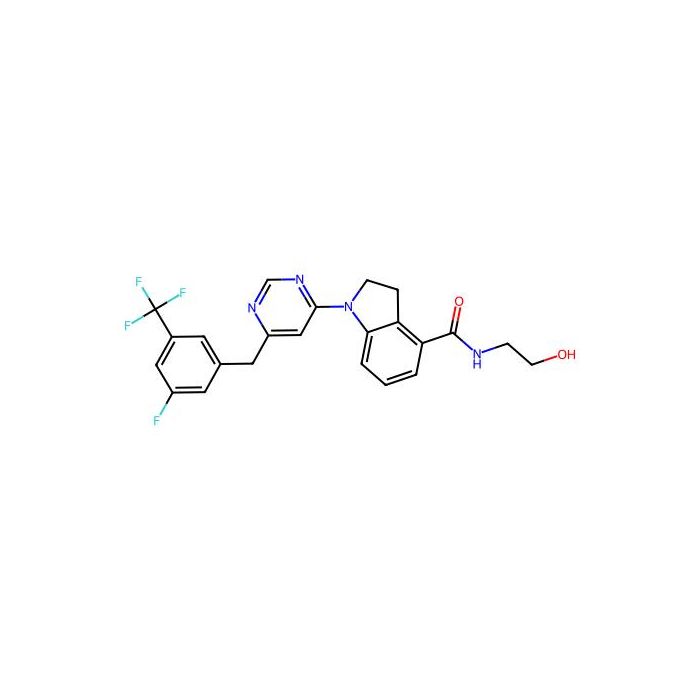
Overview: PW0787 (SKU: P1496710) is supplied as part of Aladdin’s Moligand™ small‑molecule library collection for discovery screening.
CAS: 2624131-45-7 (provided)
PubChem CID: 155977949 (provided)
InChIKey: Not specified for this item; refer to CoA/Spec Sheet.
SMILES: Not specified for this item; refer to CoA/Spec Sheet.
Molecular Formula: Not specified for this item; refer to CoA/Spec Sheet.
Molecular Weight: Not specified for this item; refer to CoA/Spec Sheet.
Structural features and 2D description:
Item-specific structural features (ring systems, heteroatoms, stereochemistry) are not provided in the current product data. For structural elucidation or cheminformatics workflows, please retrieve the canonical structure from the Certificate of Analysis (CoA) or the PubChem CID listed above and confirm against the lot-specific CoA.
Notes for informatics and QC workflows (general guidance):
When incorporating PW0787 into screening databases, index by CAS and CID and attach the vendor SKU for traceability.
Verify the connectivity and stereochemistry from the authoritative lot CoA prior to calculations (e.g., logP, TPSA) or substructure queries.
If deploying for docking/virtual screening, generate multiple protonation/tautomer states from the verified structure and energy‑minimize with your preferred force field; archive the exact input structure alongside assay data for reproducibility.
Research Use: For research use only.
Synthetic Utility
PW0787 is supplied as a screening library member rather than a designated synthetic building block, and the functional groups/handles are not disclosed in this listing. Consequently, specific synthetic transformations cannot be recommended without the verified structure from the CoA.
General guidance if synthetic derivatization is intended:
Obtain structure-confirmed material: Verify the exact structure (including stereochemistry) via CoA and, as needed, confirm in‑house (NMR/HRMS). This enables planning of protecting‑group strategies and compatibility maps.
Assess liabilities: Identify potentially labile motifs (e.g., aldehydes, acyl chlorides, Michael acceptors) or interference scaffolds prior to derivatization.
Retrosynthetic planning: Once functional groups are known, select convergent disconnections and evaluate availability of close analogs to support SAR.
Analytics: Establish LC–MS/HPLC methods and, if chiral, chiral SFC/UPC2 to track reactions and purifications.
Item‑specific reactivity, named reactions, and protecting‑group strategies: Not specified for this item; refer to CoA/Spec Sheet and your internal route design.
Target Specificity
No target, enzyme, receptor, or pathway specificity is provided for PW0787 in the current product data. As a Moligand™ library member, PW0787 is supplied without assigned biological target and is intended for exploratory screening.
Any claims of selectivity, potency, or mechanism would require new experimental data under your assay conditions.
If preliminary activity is observed, perform orthogonal assays and counter‑screens to confirm on‑target effects and rule out assay interference.
Item‑specific binding constants (Kd, Ki), IC50/EC50 values, and target panels: Not specified for this item; refer to your in‑house screening results.
Need help choosing the grade?
Our grade selection guide covers purity, stabilizer status, and application suitability for all variants in our catalog.
We use cookies to ensure the website functions properly and, where permitted, to improve your experience. You can manage your preferences at any time in Settings. Learn more in our Cookie Policy.
Shall we send you a message when we have discounts available?
Remind me later
Thank you! Please check your email inbox to confirm.
Products are supplied to verified businesses, institutions, and qualified professionals for research and development use only. Not for use in humans, animals, diagnosis, or therapy.