GRADE & PURITYMoligand™?Moligand™ — Aladdin's line of ligands and bioactive small molecules. Use for receptor, pathway, and binding studies needing defined small-molecule tools.10 mM in DMSO
Moligand™, 10 mM in DMSO Moligand™ for sensitive chromatographic and analytical workflows requiring minimal baseline interference.
🌡
Storage & shipping
Protected from light,Store at -80°C Ships Dry ice packs + Cold packs Check lot-specific COA for exact specifications.
📋
Quality documents
SDS, COA, datasheet, and spec sheet available for download. Lot-specific COA accessible via lot number lookup.
📚
Literature proof
Cited in 0 peer-reviewed publications across chromatography, organic synthesis, and cross-coupling reactions.
概要
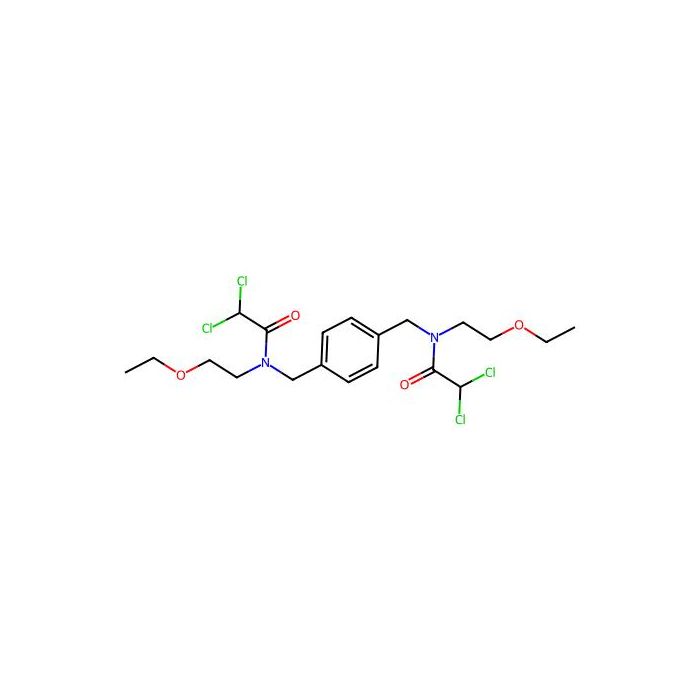
Teclozan (WIN 13146) is an antiprotozoal agent, class in benzylamine derivatives. Teclozan intervenes in the phospholipid metabolism preventes the formation of arachidonic acid. Teclozan acts in the intestinal lumen being effective in Anti- G. intestinalis . Teclozan can be used for the research of protozoan infections .
Determine the necessary mass, volume, or concentration for preparing a solution.
Dilution Calculator
Determine the dilution needed to prepare a stock solution.
Reconstitution Calculator
レビュー
顧客レビュー
Application Protocols
Validated application-specific protocols are not provided for this listing. The following generic guidance supports common screening workflows. Adapt to your assay’s requirements.
Stock preparation:
Dissolve in anhydrous DMSO to 10–50 mM under low light. Vortex, sonicate briefly if needed. Filter if clarity is essential (0.22 µm PTFE/PVDF).
Aliquot into amber vials or 96/384-well plates compatible with low-temperature storage to minimize freeze–thaw.
Dose–response setup:
Prepare serial dilutions in DMSO, then back-dilute into assay buffer or media maintaining a constant final DMSO percentage (commonly 0.1–1% v/v). Include vehicle controls.
Assay execution:
Protect plates from light during incubation. For cell assays, confirm non-cytotoxic vehicle levels and monitor precipitation microscopically.
For biophysical assays (DSF/thermal shift, SPR), confirm absence of particulates and equilibrate solutions to assay temperature.
Data quality:
Incorporate replicates, positive/negative controls, and counter-screens to detect interference (fluorescence quench/emit, redox, aggregation). Archive raw data with batch identifiers.
Note: No WB/IHC/IF/FC or antibody-specific parameters apply here, as this is a small-molecule compound.
Biological Roles
No target or pathway-specific biological role is provided in this listing. Avoid inferring pharmacology without authoritative references. All uses are for research only.
General context for small-molecule library members:
Potential roles may include acting as ligands or modulators of enzyme active sites, receptors, ion channels, transporters, or protein–protein interactions, depending on the confirmed structure and context of use.
In chemical biology, library compounds can be leveraged to perturb pathways transiently, enabling hypothesis testing and phenotypic screening. Follow with target deconvolution methods (chemoproteomics, CRISPR modifier screens, thermal proteome profiling) as appropriate.
If Teclozan has literature-reported activity, corroborate with peer-reviewed sources and validate in your system (orthogonal assays, dose–response, time-course, selectivity/counter-screen panels).
Practical recommendations:
Define acceptable DMSO ceilings and vehicle controls in every assay.
Verify compound integrity in biological matrices (protein binding, metabolic stability, photolability), especially since this item is specified to be light-sensitive and stored at −80 °C.
For omics readouts, pre-qualify the compound for assay interference (e.g., redox reactivity, fluorescence, aggregation). Utilize PAINS and aggregation filters as preliminary checkpoints while recognizing their limitations.
Note: No clinical, diagnostic, or therapeutic claims are made or implied.
Buffer Applications
This product is a small organic molecule, not a buffering agent. Consequently, classical buffer system guidance (pKa selection, capacity, and recipe tables) does not apply directly.
Practical notes for assay buffers (general):
Prepare concentrated stocks in DMSO, then dilute into your working buffer (e.g., HEPES, PBS, Tris) keeping the final DMSO fraction typically ≤0.5–1% v/v unless your system tolerates more.
Pre-equilibrate buffered media to assay temperature and protect from light during dosing due to the product’s light sensitivity.
To mitigate precipitation upon dilution, add the DMSO stock slowly with vigorous mixing or use intermediate cosolvent spiking (e.g., 1–5% DMF or ethanol) if compatible with the assay.
If buffer interactions are critical (e.g., metal-binding, redox-sensitive assays), first confirm Teclozan’s structure and functional groups from the CoA and evaluate compatibility empirically.
Green Alternatives
Green chemistry considerations are generally framed around solvent use and handling rather than the small-molecule analyte itself. Since Teclozan is a screening compound, greener choices focus on dissolution, dilution, and cleaning steps.
Prefer greener solvents for auxiliary operations:
Replace DMF/NMP where feasible with ethanol, isopropanol, or water co-solvent systems (if compound solubility permits and assay is compatible).
Use 2-methyl-THF or cyclopentyl methyl ether (CPME) instead of chlorinated solvents for any optional sample preparation steps; verify solubility first.
Comparison (general):
DMSO vs DMF/NMP: DMSO offers lower toxicity and better biodegradability profiles; it is the preferred stock solvent in HTS workflows.
Alcoholic cosolvents (EtOH/i-PrOH) vs acetonitrile: Alcohols may be preferable for waste minimization and safety; however, acetonitrile affords lower UV background for LC—choose based on analytical needs.
Operational best practices:
Minimize solvent volumes through concentrated master stocks and acoustic/low-volume dispensing.
Employ closed, amber microvials to reduce evaporative losses and light exposure, lowering repeat handling and waste.
Implement solvent recycling for HPLC-grade acetonitrile or alcohols where institutional infrastructure exists.
Trade-offs:
Greener solvents can reduce solubility for hydrophobic analytes and may introduce higher UV backgrounds; confirm method suitability with small-scale pilots before full deployment.
Pharmaceutical Uses
No excipient role, pharmacopeial status, or formulation specifications are provided for this item. This product is sold strictly for research use only and is not intended for human or veterinary use, clinical diagnostics, or as an active pharmaceutical ingredient.
Research and development context (non-clinical):
May be used as a reference material, screening hit, or starting point for medicinal chemistry exploration in discovery settings.
Potential roles in pre-formulation research include assessing solubility, stability, and compatibility with common vehicles (e.g., PEG 400, Captisol) strictly in a research context.
If used as an analytical reference, establish identity and purity via orthogonal methods (LC–MS, 1H/13C NMR, HRMS) and document traceability (batch number, CoA, storage records). Calibrate quantitative assays using independently verified standards when possible.
Important limitations:
Do not use in humans or animals. Do not describe or imply therapeutic benefits. Follow institutional and regulatory frameworks governing research chemicals.
Any discussion of dosage forms, bioavailability, or toxicology must be restricted to in vitro/in vivo research method development and should be supported by primary literature and internal approvals.
Physical Properties
Item-specific physicochemical properties are not included in this listing. Where critical to your workflow, confirm with the CoA/SDS or primary literature.
Appearance: Not specified for this item; refer to CoA/Spec Sheet.
Melting point: Not specified for this item; refer to CoA/Spec Sheet.
Boiling point: Not specified for this item; refer to CoA/Spec Sheet.
Density: Not specified for this item; refer to CoA/Spec Sheet.
Refractive index: Not applicable/not specified for solids; refer to CoA/Spec Sheet.
pKa(s): Not specified for this item; refer to CoA/Spec Sheet.
LogP/LogD: Not specified for this item; refer to CoA/Spec Sheet.
Aqueous solubility: Not specified for this item; refer to CoA/Spec Sheet.
Solubility in common organic solvents (DMSO, DMF, MeOH, EtOH): Not specified for this item; refer to CoA/Spec Sheet.
UV/Vis λmax and cutoff: Not specified for this item; refer to CoA/Spec Sheet.
General guidance (non-item-specific):
For small-molecule library members, initial dissolution is commonly attempted in anhydrous DMSO (analytical grade) at 10–50 mM, then diluted into assay buffers with careful control of final DMSO content (typically ≤1% v/v).
If crystallinity or limited wettability impedes dissolution, gentle warming (≤40 °C), brief sonication, or co-solvent spiking (e.g., DMF 5–10% v/v into DMSO) may help. Filter using low-protein-binding membranes (0.22 µm) where clarity is essential.
Always verify solubility and stability empirically under your assay conditions.
Quality and Grades
Grade/Purity: Moligand™ (Aladdin). Moligand™ denotes inclusion in a curated small-molecule/ligand screening collection intended for discovery chemistry and probe development. Compounds are supplied for research use, typically with suitability for hit finding, SAR exploration, and biochemical or cell-based screening.
What Moligand™ implies (general):
Focus on identity and integrity: Compounds are intended to meet structural identity requirements appropriate for screening libraries. Confirm exact acceptance criteria and purity thresholds on the item’s CoA/Spec Sheet.
Practical screening utility: Packaged and shipped to preserve stability (here: protected from light; shipped on dry ice/cold packs; store at −80 °C), supporting long-term library storage and minimized freeze–thaw.
Item-specific notes:
Purity percentage, residual solvent levels, water content, stabilizers, and metal/UV specifications: Not specified for this item; refer to CoA/Spec Sheet.
Appearance and form (solid/oil), particle size, or salt form: Not specified for this item; refer to CoA/Spec Sheet.
Recommendations for users:
Record exact batch-level specifications (purity, identity confirmation method) from the CoA to align with internal QC thresholds for HTS or lead optimization.
If employing analytical methods sensitive to UV background or trace metals, verify relevant limits on the CoA and perform in-house suitability tests as required.
Reaction and Applications
This product is supplied as a research-use small molecule (Moligand™) rather than a synthetic reagent. Consequently, it is not typically employed as a stoichiometric reagent or catalyst in preparative organic synthesis.
Relevant applications (discovery and assay context):
Ligand/probe exploration: Use in primary and secondary screening assays (biochemical, biophysical, or cell-based) to evaluate target engagement and phenotypic responses.
SAR and profiling: Support structure–activity relationship studies, orthogonal confirmation (e.g., thermal shift assays, SPR, DSF), and counter-screening against off-target panels.
Reference control: May serve as a comparator or internal control in mechanistic studies where Teclozan is a literature-referenced chemotype. Verify identity and concentration by LC/MS or qNMR prior to use.
Practical guidance:
Prepare concentrated DMSO stocks, quantify by UV or qNMR if molar absorptivity is unknown, and track freeze–thaw cycles.
For cell-based work, confirm DMSO tolerance (commonly ≤0.1–0.5% v/v final) and assess compound stability in culture medium (adsorption to plastic, serum binding).
If pursuing chemical biology derivatization (e.g., biotinylation, photoaffinity tags), obtain the definitive structure first to design attachment points without perturbing activity.
Note: If you intend to use Teclozan as a synthetic intermediate, consult primary structural data; no named reactions or functional group-based reactivity can be specified here without confirmed structure.
Reaction Conditions
Not typically applicable. Teclozan is supplied as a finished small molecule for screening and research rather than as a reagent or catalyst; therefore, standard synthetic reaction conditions are not defined for this item.
General guidance for solution preparation and handling (assay context):
Stock solutions: Prepare 10–50 mM in anhydrous DMSO under low light. If dissolution is slow, use brief sonication or gentle warming (≤40 °C). Avoid prolonged heating.
Working concentrations: Determine empirically for your assay (e.g., multi-point dose–response). Include vehicle controls at matching DMSO content.
Stability checks: Periodically assess integrity by LC–MS after storage or multiple freeze–thaw cycles. Maintain aliquots to limit thaw events.
Adsorption and carryover: Use low-bind plastics or silanized glass for low-nanomole transfers; validate for adsorption losses.
If you intend to employ Teclozan in a chemical reaction, first obtain the verified structure and consult the primary literature for suitable conditions; no reliable function-specific guidance can be provided from the current listing.
Safety and Handling
Safety information specific to this item is not fully specified in the listing. Always consult the SDS for authoritative guidance before use.
GHS classification: Not specified for this item; refer to SDS.
Signal word / Hazard statements / Pictograms: Not specified for this item; refer to SDS.
Research use note: For research use only.
General laboratory precautions (good practice for small organic molecules):
PPE: lab coat, safety glasses, and appropriate chemically resistant gloves (e.g., nitrile). Use in a certified chemical fume hood to avoid inhalation of dust or vapors.
Avoid exposure to light as indicated; keep containers tightly closed to limit moisture/air ingress.
Incompatibilities: Until specific reactivity is known, segregate from strong oxidizers/reducers and strong acids/bases. Avoid contact with reactive metals if halogenated functionalities are suspected from literature.
First aid (overview; defer to SDS): If inhaled—move to fresh air; if skin contact—wash with soap/water; if eye contact—rinse cautiously with water for several minutes; if ingested—seek medical attention. Provide the SDS to healthcare personnel.
Spill response: Avoid dust generation; contain and collect with inert absorbent. Dispose of in accordance with institutional and local regulations.
Thermal/light sensitivity: Store protected from light at −80 °C per product data to mitigate degradation.
Solvent Selection
Because item-specific solubility data are not provided, select solvents empirically beginning with high-permissivity, polar aprotic media commonly used for screening compounds.
Primary stock solvent (typical practice):
DMSO (anhydrous) for 10–50 mM master stocks. Advantages: broad solvency for diverse scaffolds, miscible with water and most assay buffers; compatible with acoustic dispensing.
Alternative solvents for challenging solubility:
DMF or NMP (anhydrous) as intermediate vehicles; subsequently back-dilute into DMSO to create standardized stocks.
EtOH or MeOH for less polar compounds (validate assay tolerance to alcohols).
Aqueous buffers:
Direct dissolution in water/buffer is generally not recommended unless high polarity/ionizability is known. Instead, prepare DMSO stocks and dilute into buffer keeping final DMSO ≤0.5–1% v/v (assay-dependent).
Selection heuristics (general):
If the compound exhibits hydrophobic behavior (visible bead formation, slow wetting), pre-wet with a small volume of DMSO or DMF before bulk solvent addition.
For light-sensitive materials (this item), minimize exposure during dissolution and handling (amber vials, foil wrap).
Filtration: Use 0.22 µm PTFE or PVDF for organic-rich solutions; use PES or PTFE for mixed aqueous/organic systems.
Comparative note:
DMSO vs DMF: DMSO is preferred for HTS compatibility and lower volatility; DMF may rescue solubility in select cases but has higher toxicity and absorbance concerns.
Storage and Reconstitution
From Product Data (item-specific):
Storage conditions: Protected from light; store at −80 °C.
Shipping: Dry ice packs + cold packs.
General best practices for small-molecule library compounds:
Containerization: Store in amber glass vials or foil-wrapped microplates to minimize photodegradation.
Atmosphere: If the compound is air/moisture sensitive (not specified here), consider storing under inert gas (argon or nitrogen) with desiccant.
Aliquoting: Prepare single-use or limited-use aliquots (e.g., 10–100 µL at 10–50 mM in DMSO) to avoid repeated freeze–thaw. Record the number of thaws.
Freeze–thaw control: Thaw on ice or at ambient temperature protected from light. Refreeze promptly after use. Discard aliquots showing precipitation or degradation by LC–MS.
Reconstitution:
Initial dissolution solvent: DMSO is recommended as a first-line solvent for small molecules when item-specific solubility is unknown.
Gentle warming (≤40 °C) and/or brief sonication may assist dissolution. Do not overheat or expose to strong light.
Stability verification: Confirm concentration by UV or qNMR if needed, and monitor purity/stability over time, especially after opening.
Note: Appearance, exact solubility, and stabilizers are not specified for this item; refer to the CoA/Spec Sheet and SDS for definitive guidance.
Structure and Identity
Brief overview: Teclozan is provided as a research-use small molecule in Aladdin’s Moligand™ collection. Item-specific identifiers are limited in this listing; consult the CoA for definitive structure data.
Product name: Teclozan (research chemical)
CAS: 5560-78-1 (literature identifier for Teclozan)
PubChem CID: 21723 (literature)
Molecular formula: Not specified for this item; refer to CoA/Spec Sheet.
Molecular weight: Not specified for this item; refer to CoA/Spec Sheet.
SMILES: Not specified for this item; refer to CoA/Spec Sheet.
InChIKey: Not specified for this item; refer to CoA/Spec Sheet.
Structural features (general, literature context):
Teclozan is reported in the literature as a small, non-peptidic organic compound; specific ring systems and functional groups should be verified from the primary structure record (CoA/SDS or trusted databases).
Stereochemistry: Not specified for this item; refer to CoA/Spec Sheet.
2D structure description (general guidance):
Without an explicit SMILES/InChI in this listing, a detailed 2D description cannot be authoritatively provided here. Users should retrieve the exact atom connectivity, ring topology, and substitution pattern from the CoA or a validated structure database before cheminformatics use (e.g., QSAR, docking, enumeration).
Synthetic Utility
This item is offered as a discrete small molecule for screening and research, not as a general-purpose synthetic reagent. Without the explicit structure in this listing, it is not appropriate to ascribe functional-group reactivity or named-reaction compatibility.
General considerations if derivatization is desired in chemical biology or SAR:
Obtain the definitive structure (CoA/SDS or validated database) to identify potential vectors for modification that minimally perturb activity (e.g., para-substituent on an aryl ring, terminal alkyl positions, or non-essential heteroatoms if present).
Prioritize modular handles (amines, phenols, carboxylates, halogens) for conjugation to tags (biotin, fluorophores) or linkers while retaining the parent pharmacophore.
For photoaffinity or pull-down probe development, consider installation of diazirines/benzophenones and terminal alkynes (for CuAAC) at positions predicted to face solvent in docking models—after confirming structure.
Analytical support:
Track derivatization by LC–MS and NMR; if multiple tautomers/stereoisomers are plausible based on the structure, use chiral/2D NMR as needed.
Caveat:
No specific synthetic routes, reagents, or conditions are recommended here due to the absence of item-level structural disclosure in the product data.
Target Specificity
No target, binding profile, or selectivity data are provided for this product.
Target(s): Not specified for this item; refer to CoA/Spec Sheet and primary literature.
Mechanism of action: Not specified for this item; refer to CoA/Spec Sheet and primary literature.
Off-target/counter-screen panels: Not specified for this item; user-defined per program needs.
Recommendations:
Establish a target engagement framework appropriate to your modality (e.g., biochemical IC50/Ki, CETSA/thermal shift, SPR, ITC, NanoBRET). Use orthogonal methods to confirm on-target activity and exclude assay interference.
Build a selectivity matrix tailored to the target class (kinase paneling, GPCR binding, ion channel profiling, etc.) once a putative target is implicated.
Document provenance (batch, purity, storage) alongside biological readouts to ensure data reproducibility.
よくある質問
How should this product be stored?
Store at ?80 °C, protected from light. The material is light-sensitive — keep it in its original opaque or amber container.
What is Moligand??
Moligand? is one of Aladdin Scientific's premium product lines, formulated for high-purity applications across multiple workflows. Compared to standard grades in the same workflow, Moligand? products typically offer tighter specifications, more rigorous QC, and stronger lot-to-lot consistency.
How is this product shipped?
This product ships frozen with dry ice and cold packs. Unpack on arrival and transfer it to the storage condition stated above; handle dry ice with insulated gloves in a ventilated area.
What are the CAS number, molecular formula and molecular weight?
The CAS Number is 5560-78-1, the molecular formula is C20H28Cl4N2O4, and the molecular weight is 502.26 g/mol.
What documentation is provided?
Available product documentation, including Certificates of Analysis (COA), Safety Data Sheets (SDS), and specification sheets, is shown in the product document area. Document availability and access follow the current site policy.
Need help choosing the grade?
Our grade selection guide covers purity, stabilizer status, and application suitability for all variants in our catalog.
Products are supplied to verified businesses, institutions, and qualified professionals for research and development use only. Not for use in humans, animals, diagnosis, or therapy.