
Determine the necessary mass, volume, or concentration for preparing a solution.
| Activity Type | Activity Value -log(M) | Mechanism of Action | Activity Reference | Publications (PubMed IDs) |
|---|
Moligand™, 10mM in DMSO Moligand™ for sensitive chromatographic and analytical workflows requiring minimal baseline interference.
Store at -80°C Ships Dry ice packs + Cold packs Check lot-specific COA for exact specifications.
SDS, COA, datasheet, and spec sheet available for download. Lot-specific COA accessible via lot number lookup.
Cited in 0 peer-reviewed publications across chromatography, organic synthesis, and cross-coupling reactions.
Information
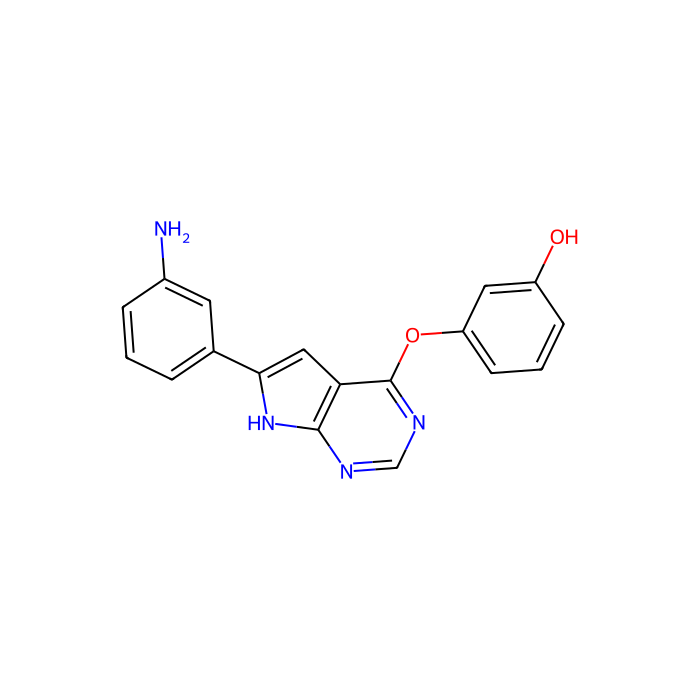
TWS119 is aGSK-3βinhibitor withIC50of 30 nM in a cell-free assay; capable of inducing neuronal differentiation and may be useful to stem cell biology. GSK-3β inhibition triggersautophagy.
In vitro
Treatment of a monolayer of P19 cells with 1 μM TWS119 causes 30–40% cells to differentiate specifically into neuronal lineages based on countingof TuJ1 positive cells with correct neuronal morphology (up to 60% neuronal differentiation occurred through the standard EB formation protocol with concomitant TWS119 treatment). TWS119 tightly binds to GSK-3β (K D = 126 nM) which is quantified by surface plasmon resonance (SPR) and further demonstrates an IC50 of 30 nM. TWS119 is found to potently induces neuronal differentiation in both mouse embryonal carcinoma and ES cells. TWS119 treatment towards hepatic stellate cells (HSC) leads to reduced b-catenin phosphorylation, induces nuclear translocation of b-catenin, elevates glutamine synthetase production, impedes synthesis of smooth muscle actin and Wnt5a, but promotes the expression of glial fibrillary acidic protein, Wnt10b, and paired-like homeodomain transcription factor 2c. TWS119 triggers a rapid accumulation of β-catenin (mean 6.8 -fold increase by densitometry), augments nuclear protein interaction with oligonucleotide containing the DNA sequences to which Tcf and Lef bind and sharply up-regulates the expression of Tcf7, Lef1 and other Wnt target genes including Jun, Ezd7 (encoding Frizzled-7), Nlk (encoding Nemo-like kinase). TWS119 induces a dose-dependent decrease in T cell-specific killing and IFN-g release associated with the preservation of the ability to produce IL-2. A recent study indicates Wnt signaling is induced in polyclonally activated human T cells by treatment with TWS119. These T cells preserve a native CD45RA(+)CD62L(+) phenotype compared with control-activated T cells that progresses to a CD45RO(+)CD62L(-) effector phenotype and this occurs in a TWS119 dose-dependent manner. TWS119-induced Wnt signaling reduces T cell expansion as a result of a block in cell division, and impairs acquisition of T cell effector function as measured by degranulation and IFN-γ production in response to T cell activation. The block in T cell division may be attributed to reduced IL-2Rα expression in TWS119-treated T cells that lowers their capacity to use autocrine IL-2 for expansion.
In vivo
A cell population that expressed low levels of CD44 and high levels of CD62L on the cell surface when 30 mg/kg of TWS119 is administered.
Cell Data
cell lines:CLL cells
Concentrations:
Incubation Time:
Powder Purity:≥95%
| 異性体SMILES | C1=CC(=CC(=C1)N)C2=CC3=C(N2)N=CN=C3OC4=CC=CC(=C4)O |
|---|---|
| PubChem CID | 9549289 |
| 分子量 | 318.33 |
Comprehensive hazard, handling, storage, and regulatory compliance document.
Download SDS →Lot-specific quality data. Enter your lot number to retrieve the exact COA.
Look up COA →Full quality attributes and acceptance criteria for this grade.
View spec sheet →| Activity Type | Activity Value -log(M) | Mechanism of Action | Activity Reference | Publications (PubMed IDs) |
|---|
| 溶解度 | Solubility (25°C) In vitro Water: 45 mg/mL (197.13 mM); DMSO: Insoluble; |
|---|---|
| 融点(°C) | 249 °C |
Our grade selection guide covers purity, stabilizer status, and application suitability for all variants in our catalog.
View Moligand™ grade guide →