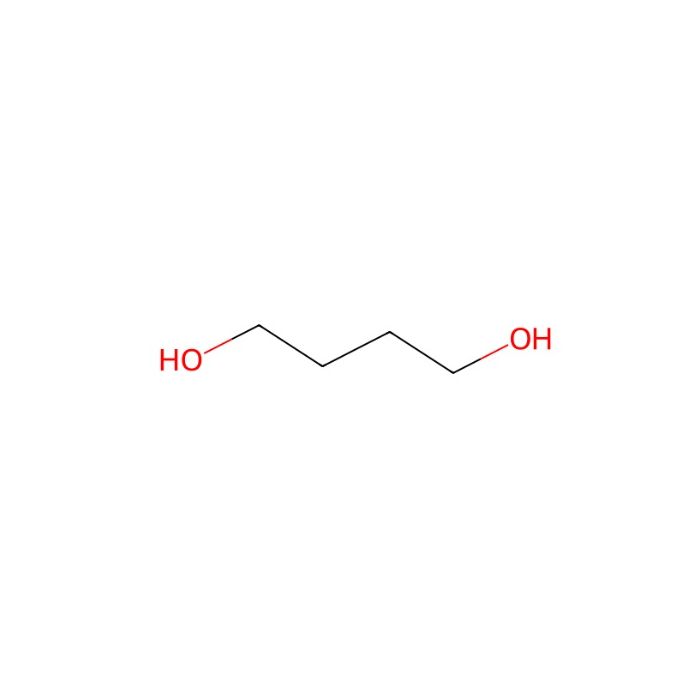
1,4-Butanediol(BDO) - Anhydrous Grade, ≥99%, used for 1,4-Butanediol can be used as a reactant to prepare: Homoallyl alcohol (3-buten-1-ol) and tetrahydrofuran via vapor-phase dehydration using ZrO2 as a catalyst. Poly(1,4-butanediol succinate) polymer by

CAS: 110-63-4 Cat. No.: B1508458 Formula: C4H10O2 Molecular Weight: 90.12 Beilstein Registry Number: 1633445 EC Number: 203-786-5
AVAILABLE TO ORDER
GRADE & PURITY Anhydrous Grade ? Anhydrous grade — water removed and packaged dry for moisture-sensitive chemistry. Use in reactions where even trace water would interfere or quench. ≥99%
Synonyms
1,4-Butylene Glycol|1,4-Dihydroxybutane|Tetramethylene Glycol
Storage
Room temperature,Argon charged
Shipped In
Normal
★
Size
Germany (EU)
USA*
Price
Qty
25g
B1508458-25g
Made to order · 8–12 wks
€17.27
100g
B1508458-100g
Made to order · 8–12 wks
€43.30
500g
B1508458-500g
Made to order · 8–12 wks
€112.72
Enter a quantity for the sizes you want to add.

Specifications

Synonyms
1,4-Butylene Glycol | 1,4-Dihydroxybutane | Tetramethylene Glycol
Specifications & Purity
Anhydrous Grade, ≥99%
Application
1,4-Butanediol can be used as a reactant to prepare: Homoallyl alcohol (3-buten-1-ol) and tetrahydrofuran via vapor-phase dehydration using ZrO2 as a catalyst. Poly(1,4-butanediol succinate) polymer by reacting with succinic anhydride. Biodegradable homop
Storage
Room temperature,Argon charged
Shipped In
Normal
Grade
Anhydrous Grade
Purity
≥99%
Names and Identifiers
SMILES
C(CCO)CO
IUPAC Name
butane-1,4-diol
InChIKey
WERYXYBDKMZEQL-UHFFFAOYSA-N
InChI
1S/C4H10O2/c5-3-1-2-4-6/h5-6H,1-4H2
Isomeric SMILES
C(CCO)CO
WGK Germany
1
RTECS
EK0525000
Molecular Weight
90.12
Beilstein
1633445
Reaxys
1633445
Reaxys-RN_link_address
https://www.reaxys.com/reaxys/secured/hopinto.do?context=S&query=IDE.XRN=1633445&ln=

Advanced Data

Taxonomic Classification

Taxonomy Tree

KingdomOrganic compounds
SuperclassOrganic oxygen compounds
ClassOrganooxygen compounds
SubclassAlcohols and polyols
Intermediate Tree Nodes Not available
Direct ParentPrimary alcohols
Alternative Parents Hydrocarbon derivatives  
Molecular FrameworkAliphatic acyclic compounds
Substituents Hydrocarbon derivative - Primary alcohol - Aliphatic acyclic compound
DescriptionThis compound belongs to the class of organic compounds known as primary alcohols. These are compounds comprising the primary alcohol functional group, with the general structure RCOH (R=alkyl, aryl).
External Descriptors a glycol
3D Structure
Interactive Chemical Structure Model


Certificates (CoA,COO,BSE/TSE and Analysis Chart)
C of A & Other Certificates(BSE/TSE, COO):
Analytical Chart:

Find and download the COA for your product by matching the lot number on the packaging.

14 results found

Lot NumberCertificate TypeDateItem
K2618257K2618257Certificate of AnalysisNov 04, 2026 B1508458
K2618258K2618258Certificate of AnalysisNov 04, 2026 B1508458
F2630211F2630211Certificate of AnalysisJul 07, 2026 B1508458
J2608152J2608152Certificate of AnalysisJul 07, 2026 B1508458
J2609080J2609080Certificate of AnalysisJul 07, 2026 B1508458
F2630208F2630208Certificate of AnalysisJul 03, 2026 B1508458
F2630209F2630209Certificate of AnalysisJul 03, 2026 B1508458
F2630210F2630210Certificate of AnalysisJul 03, 2026 B1508458
A2630265A2630265Certificate of AnalysisJan 20, 2026 B1508458
A2630266A2630266Certificate of AnalysisJan 20, 2026 B1508458
A2630267A2630267Certificate of AnalysisJan 20, 2026 B1508458
D2627077D2627077Certificate of AnalysisJan 20, 2026 B1508458
D2627078D2627078Certificate of AnalysisJan 20, 2026 B1508458
E2622159E2622159Certificate of AnalysisJan 20, 2026 B1508458
Chemical and Physical Properties
SolubilitySlightly soluble in ether, miscible with water, soluble in ethanol, etc.
SensitivityHygroscopic
x_freezing_point20 °C
x_refractive_index1.442-1.448
x_flash_point_drop_fahrenheit273.2 °F
x_flash_point_drop_centigrade134℃
x_boil_point_char230°C
x_melt_point_char16°C
Molecular Weight90.12
XLogP3-0.800
Hydrogen Bond Donor Count2
Hydrogen Bond Acceptor Count2
Rotatable Bond Count3
Exact Mass90.0681 Da
Monoisotopic Mass90.0681 Da
Topological Polar Surface Area40.500 Ų
Heavy Atom Count6
Formal Charge0
Complexity17.500
Isotope Atom Count0
Defined Atom Stereocenter Count0
Undefined Atom Stereocenter Count0
Defined Bond Stereocenter Count0
Undefined Bond Stereocenter Count0
The total count of all stereochemical bonds0
Covalently-Bonded Unit Count1
Safety and Hazards(GHS)
x_symbol
x_signal_word
Warning
x_hazard_statements

H302:Harmful if swallowed

H336:May cause drowsiness or dizziness

x_precautionary_statements

P261:Avoid breathing dust/fume/gas/mist/vapors/spray.

P264:Wash hands [and …] thoroughly after handling.

P270:Do not eat, drink or smoke when using this product.

P271:Use only outdoors or in a well-ventilated area.

P405:Store locked up.

P403+P233:Store in a well-ventilated place. Keep container tightly closed.

P501:Dispose of contents/container to an approved waste disposal plant.

P301+P312+P330:IF SWALLOWED: Call a POISON CENTER/ doctor if you feel unwell. Rinse mouth.

P304+P340+P312:IF INHALED: Remove person to fresh air and keep comfortable for breathing.Call a POISON CENTER or doctor. if you feel unwell.

x_wgk_germany
1
x_rtecs
EK0525000
x_reaxy_rn
1633445
x_reaxys_rn_link_address
https://www.reaxys.com/reaxys/secured/hopinto.do?context=S&query=IDE.XRN=1633445&ln=
FAQs and Articles
4-[(tert-Butyldimethylsilyl)oxy]butan-1-ol: Experimental Selection Logic as a Monoprotected 1,4-Butanediol Building Block and a Protected C4 Linker
Adding a Temperature-Triggered Switch to NCO: How Blocked Isocyanates Affect the Storage, Curing, and Film Performance of 1K Baking Coatings
How Do Isocyanates and Polyols Affect the Performance of Polyurethane Coating Films: Structure, Raw Material Selection, and Performance Design Essentials
Comprehensive Performance Analysis of Polyurethane Coating Films: Soft/Hard Segment Structure, Microphase Separation, Crosslinking and Curing, and Selection of Representative Chemicals
When Should You Choose Silicone Resin? Selection Comparison with Epoxy, Acrylic, Polyurethane, Fluororesin, and Other Coating Resins
Understanding Polyester Resins for Coatings: Structure Design, Key Indicators, and Coating Film Performance
Polyurethane Coating Resins: Not a Single Resin, but a Designable High-Performance System
Cashew Nut Shell Liquid (CNSL): From Cashew Processing By-Product to Reactive Bio-Based Raw Material for Coating Resins
Waterborne Resin Technology Explained: Waterborne Forms, Performance Balance, and a Technology Map
Guide to Common Waterborne Resin Types and Application-Based Selection: How to Choose Acrylics, PUD, Waterborne Epoxy, Waterborne Alkyd, VAE, and Related Chemicals
Mechanisms and Control of Coating Yellowing: From Chromophoric Structure Formation to Source Diagnosis and Formulation Optimization
Bis-Oxazolidine Latent Curing Agents: Turning Moisture from a Foaming Risk into a Trigger for Moisture Curing
Structure, Degradation Behavior, and Applications of Poly(trimethylene carbonate) (PTMC) in Flexible Absorbable Materials
Differences Between Cast CPU and Thermoplastic TPU in Structure, Processing, Performance, and Applications
Rotary-Evaporation-Assisted Reversible Dehydration Reactions: Reduced-Pressure Evaporation, Removal of Volatile Components, and Equilibrium Response
Citations of This Product
Solution Calculators
Reviews

Customer Reviews

Shall we send you a message when we have discounts available?

Remind me later

Thank you! Please check your email inbox to confirm.

Oops! Notifications are disabled.