
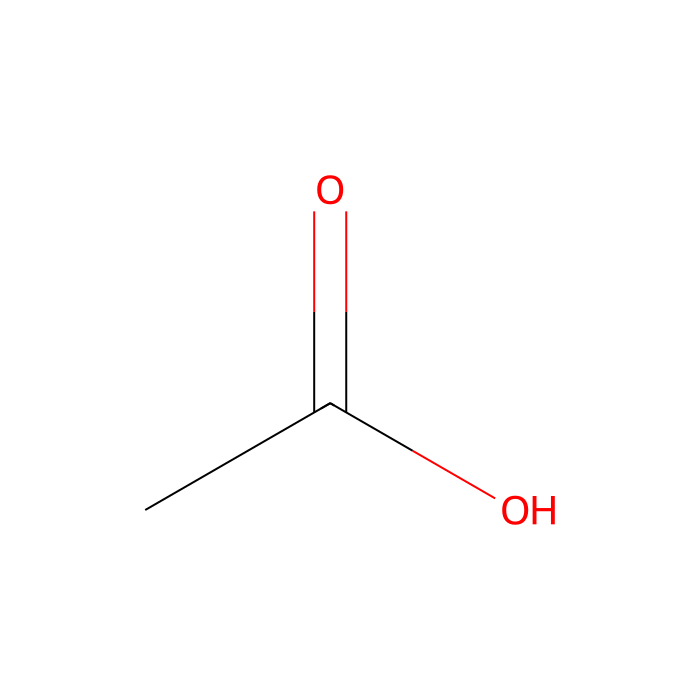
 J2613002
Determine the necessary mass, volume, or concentration for preparing a solution.
| Activity Type | Activity Value -log(M) | Mechanism of Action | Activity Reference | Publications (PubMed IDs) |
|---|
| Activity Type | Activity Value -log(M) | Mechanism of Action | Activity Reference | Publications (PubMed IDs) |
|---|
| Activity Type | Activity Value -log(M) | Mechanism of Action | Activity Reference | Publications (PubMed IDs) |
|---|
| x_refractive_index | 1.37-1.373 |
|---|---|
| x_flash_point_drop_centigrade | 40℃ |
| x_boil_point_char | 117-118°C |
| x_melt_point_char | 16-16.5°C |
H303:May be harmful if swallowed
H314:Causes severe skin burns and eye damage
P264:Wash hands [and …] thoroughly after handling.
P280:Wear protective gloves/protective clothing/eye protection/face protection.
P363:Wash contaminated clothing before reuse.
P301+P330+P331:IF SWALLOWED: Rinse mouth. Do NOT induce vomiting.
P303+P361+P353:IF ON SKIN (or hair): Take off Immediately all contaminated clothing. Rinse SKIN with water [or shower].
P405:Store locked up.
P501:Dispose of contents/container to an approved waste disposal plant.
P304+P340+P310:IF INHALED: Remove person to fresh air and keep comfortable for breathing. Immediately call a POISON CENTER/ doctor.
P305+P351+P338+P310:IF IN EYES: Rinse cautiously with water for several minutes. If contact lenses are worn and can be easily removed, remove Contact lenses. Continue rinsing. Immediately call an emergency center/doctor.
Not applicable. This listing is a chemical reagent rather than an antibody or assay kit. No validated protocols for WB, IHC, IF, or FC are associated. For practical use cases, consult the Reaction & Applications, Buffer Applications, and Reaction Conditions sections.
General biochemistry context (no clinical claims):
Central metabolite (literature)
Signaling aspects (literature)
Buffering (literature)
Practical laboratory use (general)
Note: These are general roles of acetic acid/acetate; they do not reflect item-specific biological testing. This product is for research use only (per Product Data).
Acetate buffers are widely used for pH control in the mildly acidic range.
Effective pH range (literature)
Typical recipes (literature examples)
Practical considerations
Item-specific specifications (purity, UV cutoff, metal content) are not provided; if using for analytical buffers, confirm suitability on the CoA or consider a dedicated LC/MS grade acid.
Selecting greener acids/solvents depends on volatility, toxicity, persistence, and performance.
Relative greenness (literature-based, general)
Comparisons
| Option | Strength/Volatility | MS compatibility | Environmental profile | Tradeoffs | |---|---|---|---|---| | Acetic acid | Moderate acid (pKa 4.76), moderate volatility | Good (low adducting) | Biodegradable, renewable routes | Corrosive; odor; fp ~39 °C | | Formic acid | Stronger, more volatile | Excellent | Biodegradable | Stronger corrosivity; potential over-reduction contexts | | Lactic acid (aq) | Weaker, low volatility | Limited (nonvolatile) | Bio-based, low toxicity | Water-bound; limited organic solvation | | CO2 (scCO2) | Non-acidic unless with cosolvents | Excellent | Benign | Requires pressure equipment; different chemistry | | Ethyl acetate | Neutral solvent alternative | Excellent | Low toxicity, biodegradable | No acid catalysis; different polarity |
Greener practice tips (general)
General, non-clinical information (no therapeutic claims):
Role in formulations (literature)
Compendial context (general)
Analytical use in manufacturing (literature)
Materials compatibility and safety
Item-specific claims and pharmacopeial grade are Not specified for this item; refer to CoA/Spec Sheet. Use is restricted to research and laboratory development per Product Data.
Item-specific specifications are not provided in the Product Data; consult the CoA/Spec Sheet for verified lot data. The following are literature/reference values for neat acetic acid (glacial grade unless noted):
Practical implications (general):
Item-specific details (from Product Data)
About Moligand™ (program context; general, not item-specific specifications)
What is NOT specified for this item
Interpreting “grade” in use (general guidance)
This reagent serves as both solvent and reagent across classical organic synthesis and catalysis.
As reagent (literature)
As solvent (literature)
Purification/processing (literature)
Practical tips
General literature guidance (verify experimentally for your system):
Fischer esterification (ROH + HOAc ⇌ ROAc + H2O)
Benzylic/allylic acetoxylation
Oxidations in acetic acid
Drying/purification (general)
Safety notes
Item-specific hazard fields in Product Data are not populated. Refer to the SDS accompanying your shipment for authoritative safety details. The following are general, literature-based GHS hazards for acetic acid (concentrated/glacial):
Handling and PPE (general best practice):
Shipping/storage notes (from Product Data):
Acetic acid functions as a polar protic solvent and Brønsted acid with moderate hydrogen-bond donating ability.
Polarity/miscibility (literature)
When to choose acetic acid (general)
When to avoid
Quick comparison (literature)
Confirm compatibility with substrates/catalysts and any equipment elastomers (acids can swell/damage certain seals).
Item-specific storage/shipping (from Product Data)
General storage guidance (literature/best practice)
Reconstitution
Stability
Always consult the product CoA/SDS for lot-specific guidance (e.g., assay, water content) prior to use in moisture- or UV-critical applications.
Acetic acid is a simple monocarboxylic acid widely used as a reagent, solvent, and buffer component.
Item-specific identifiers (from Product Data)
Literature/computed identifiers (general reference; not item-specific specs)
Structural features (general chemistry knowledge)
Notes
Acetic acid’s carboxylic acid functionality enables numerous transformations while its acidity provides catalytic utility.
Functional group transformations (literature)
Medium effects (literature)
Workup and protection (general)
For highly water-sensitive steps, dry or distill acetic acid prior to use. Confirm catalyst compatibility, as carboxylates can bind metal centers and alter activity/selectivity.
Not applicable. This product is a small-molecule reagent (acetic acid), not a biological affinity reagent. No antigen/epitope specificity, clone, isotype, or species reactivity applies.
Our grade selection guide covers purity, stabilizer status, and application suitability for all variants in our catalog.
View Moligand™ grade guide →