GRADE & PURITYCarrier Free?Carrier-free — supplied without added carrier protein/stabilizer. Use when carriers (e.g. BSA) would interfere with conjugation or sensitive assays.ExactAb™?ExactAb™ — Aladdin's antibody line emphasizing precision and validated quality. Use for reliable, specificity-validated antibody applications.Validated?Validated grade — performance confirmed in defined applications before release. Use when you want documented assurance the reagent works as stated.1.0 mg/mL
ExactAb™, Validated, Carrier Free, 1.0 mg/mL Carrier Free,ExactAb™,Validated for sensitive chromatographic and analytical workflows requiring minimal baseline interference.
🌡
Storage & shipping
Store at -20°C,Avoid repeated freezing and thawing Ships Ice chest + Ice pads Check lot-specific COA for exact specifications.
📋
Quality documents
SDS, COA, datasheet, and spec sheet available for download. Lot-specific COA accessible via lot number lookup.
📚
Literature proof
Cited in 0 peer-reviewed publications across chromatography, organic synthesis, and cross-coupling reactions.
Overview
Rabbit anti Human FIP Antibody, Polyclonal, could be used for WB, IHC and so on. Application WB: 1/500-1/1000 IHC: 1/100-1/200 Protein Function Transcription factor that binds to a symmetrical DNA sequence (E-boxes) (5'-CACGTG-3') that is found in a variety of viral and cellular promoters.
Specifications
Product Name
FIP Antibody - Primary antibody, specific to FIP, Rabbit IgG
Synonyms
Class B basic helix-loop-helix protein 12 antibody | bHLHb12 antibody | FIP antibody | FOS interacting protein antibody | FOS-interacting protein antibody | Major late transcription factor 2 antibody | Upstream stimulatory factor 2 antibody | Upstream tra
Specifications & Purity
ExactAb™, Validated, Carrier Free, 1.0 mg/mL
Host species
Rabbit
Specificity
FIP
Immunogen
KLH-conjugated synthetic peptide encompassing a sequence within the center region of human USF2.
Positive Control
WB: HeLa cell lysate. IHC: Human breast cancer tissue.
Conjugation
Unconjugated
Grade
Carrier Free, ExactAb™, Validated
Isotype
Rabbit IgG
SDS-PAGE
150 kDa
Purification Method
Immunogen affinity purified
Concentration
1.0 mg/mL
Product Line
biological_products
Storage and Shipping
Shape
Liquid
Storage
Store at -20°C,Avoid repeated freezing and thawing
Shipped In
Ice chest + Ice pads
Stability And Storage
Store at 4℃ short term (1-2 weeks). Store at -20℃ long term (12 months). Upon receipt, it is recommended to aliquot. Avoid freeze/thaw cycle.
Images
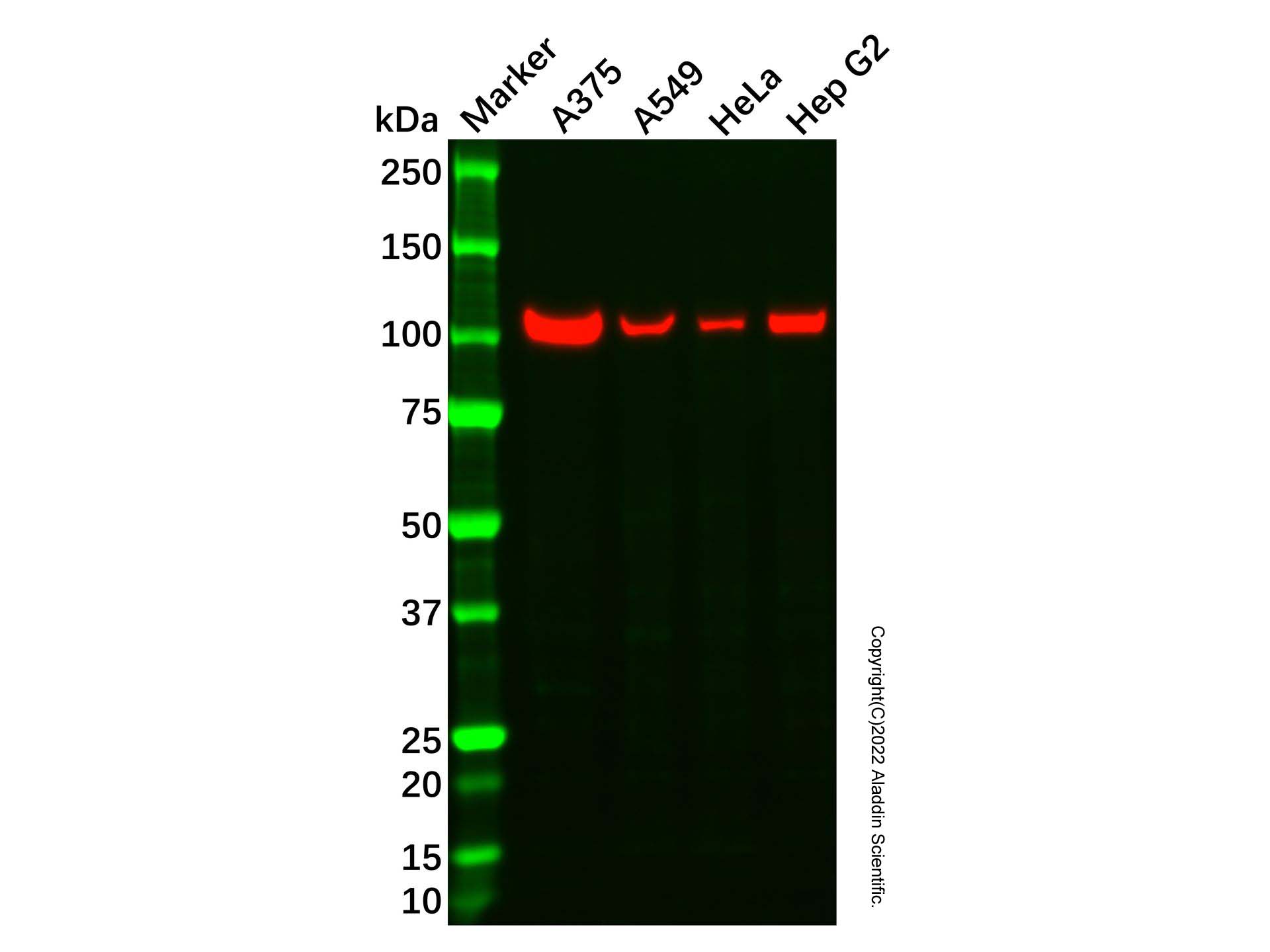
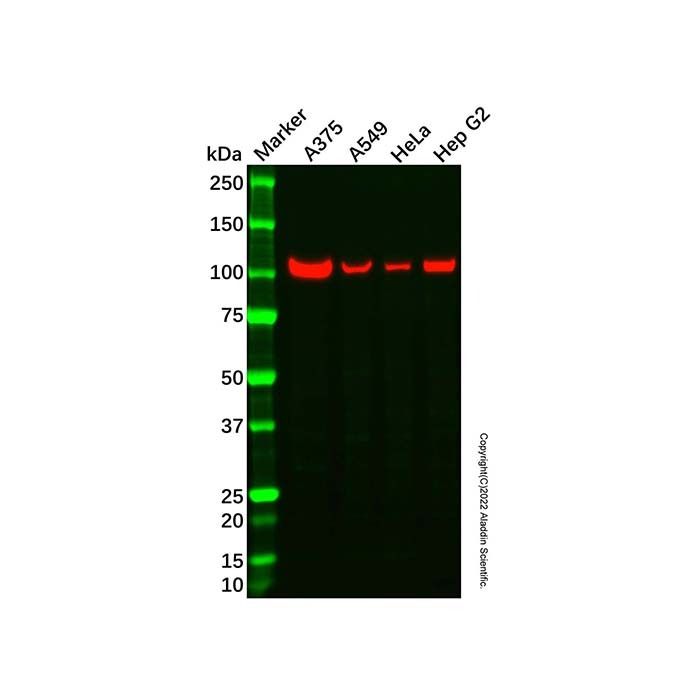
Hsp105/HSP110 Antibody (Ab108805) - Western Blot All lanes: Hsp105/HSP110 Antibody (Ab108805) at 1/1000 dilution Samples: Lysates at 20 µg per lane Secondary: Goat Anti-Rabbit IgG H&L (HRP) (Ab170144) at 1/20000 dilution Predicted band size: 96 kDa Observed band size: 103 kDa Exposure time: 61.0 s
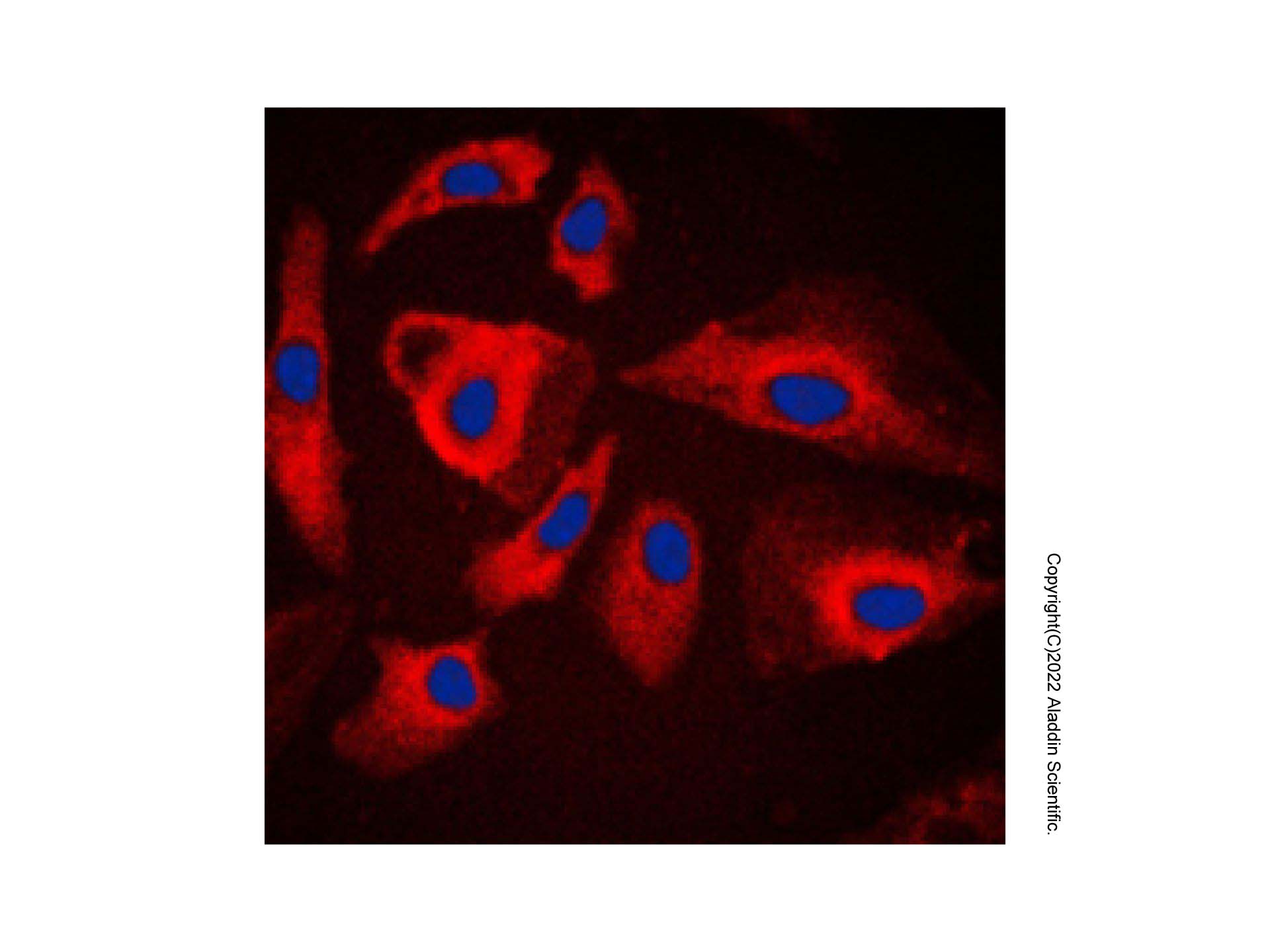
Hsp105/HSP110 Antibody (Ab108805) - IF/ICC Immunofluorescent analysis of Hsp105/HSP110 Antibody (Ab108805) staining in HeLa cells. Formalin-fixed cells were permeabilized with 0.1% Triton X-100 in TBS for 5-10 minutes and blocked with 3% BSA-PBS for 30 minutes at room temperature. Cells were probed with the Hsp105/HSP110 Antibody (Ab108805) in 3% BSA-PBS and incubated overnight at 4 °C in a humidified chamber. Cells were washed with PBST and incubated with a DyLight 594-conjugated secondary antibody (red) in PBS at room temperature in the dark. DAPI was used to stain the cell nuclei (blue).
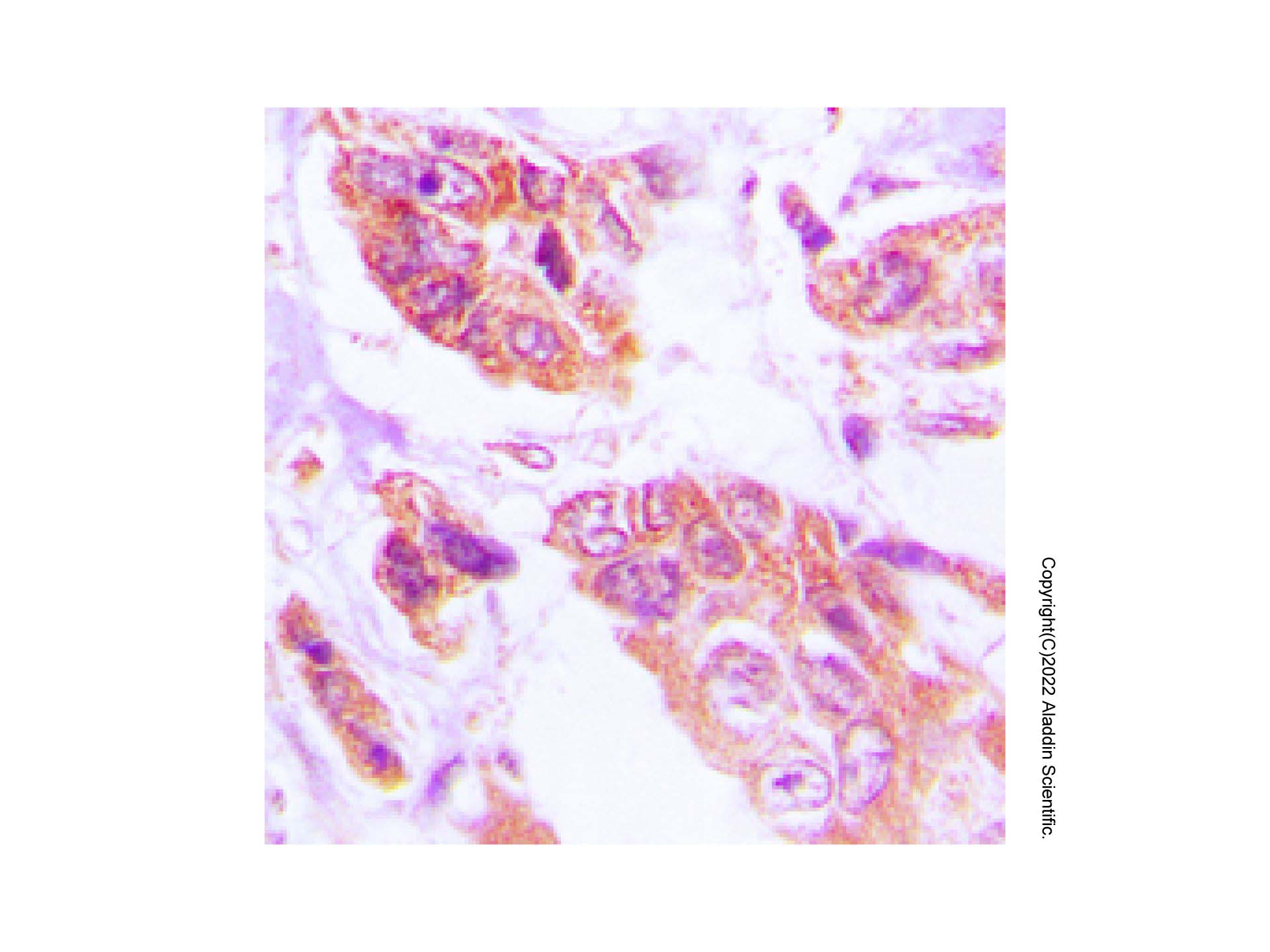
Hsp105/HSP110 Antibody (Ab108805) - IHC Immunohistochemical analysis of Hsp105/HSP110 Antibody (Ab108805) staining in human lung cancer formalin fixed paraffin embedded tissue section. The section was pre-treated using heat mediated antigen retrieval with sodium citrate buffer (pH 6.0). The section was then incubated with the antibody at room temperature and detected using an HRP conjugated compact polymer system. DAB was used as the chromogen. The section was then counterstained with haematoxylin and mounted with DPX.
Application
Application
Dilution info
WB
1/500-1/1000
IHC
1/100-1/200
Documentation
📋 Safety Data Sheet (SDS)
Comprehensive hazard, handling, storage, and regulatory compliance document.
Secondary antibody recommendations and detection systems
General guidance (literature/practice)
Start with a small dilution range (e.g., 1:200–1:2000 for WB; 1:50–1:500 for IF/IHC), then titrate to optimize signal-to-noise.
Include isotype and no-primary controls to assess background. Validate specificity via knockdown/knockout controls where possible.
Maintain consistent blocking and washing protocols to enhance reproducibility across experiments and lots.
Note: This SKU is listed as “Validated,” but exact validation scope and images should be obtained from the CoA/Spec Sheet.
Biological Roles
Item-specific target biology
The specific antigen designated by “FIP” is not defined in the Product Data. Therefore, biological function, pathway involvement, and cellular localization of the target are Not specified for this item; refer to CoA/Spec Sheet and primary literature for the intended antigen.
General role of antibodies in research (literature/general)
Antibodies are high-affinity binding proteins that enable selective detection, quantitation, and capture of biomolecules in complex matrices. They recognize conformational or linear epitopes via their variable regions.
Research applications span proteomics, cell signaling studies, biomarker validation, and quality control of biologics. Antibody–antigen interactions underpin many immunoassays (ELISA, WB, IF) and separation techniques (IP, affinity chromatography).
Epitope context, fixation, and sample processing can dramatically influence apparent binding; clone- and isotype-specific characteristics (avidity, cross-reactivity) must be verified for each system.
Recommendations
Until the precise definition of “FIP” is confirmed for this SKU, consult the product CoA/Spec Sheet for the antigen name, species reactivity, and recommended applications, and review peer-reviewed literature on that target to design appropriate controls and interpret results accurately.
Buffer Applications
Applicability
Highly relevant for antibody reagents. The buffer system strongly influences stability, background, and epitope recognition.
General guidance (literature/practice)
Storage/handling: Near-neutral pH buffers (PBS or TBS, pH 7.2–7.6). For long-term storage at −20°C, many labs add 40–50% glycerol (application-dependent) to permit storage without freezing. This item is carrier-free; any stabilizers must be user-added if needed and compatible with downstream use.
Working solutions: Dilute into assay-appropriate buffer with blockers/detergents to minimize nonspecific binding (e.g., PBS + 0.05% Tween-20 + 1–5% BSA or nonanimal blockers). For biotin/streptavidin systems, use biotin-free blockers.
Enzyme-based detection: Maintain appropriate salt and pH to support HRP/AP activity (avoid azide with HRP). Preservative presence for this item is Not specified.
Sample preparation: For WB, include protease/phosphatase inhibitors in lysis buffers as needed. For IF/IHC, antigen retrieval (citrate pH 6.0 or Tris-EDTA pH 9.0) may enhance epitope exposure—epitope dependence varies by target.
Not specified for this item
Lot-specific buffer composition, pH, and any preservatives are Not specified; refer to CoA/Spec Sheet for exact formulation details and adjust protocols accordingly.
Green Alternatives
Sustainability considerations for antibody workflows (general)
Solvent profile: Antibody assays are aqueous; avoid unnecessary organic solvents and hazardous preservatives when feasible. Use PBS/TBS and water for rinsing and cleanup to minimize VOC emissions.
Waste minimization: Optimize assay volumes and microplate formats to reduce consumable and buffer waste. Consolidate wash steps and use reusable, validated reservoirs where compatible with sterility needs.
Cold-chain efficiency: This product ships on ice; coordinate deliveries to minimize re-icing and reduce dry-ice/ice-pack waste. Reuse gel packs where possible.
Process substitutions and tradeoffs
Replace methanol-based fixation with formaldehyde/paraformaldehyde aqueous fixation where compatible with epitope exposure to reduce flammable solvent use (assay-dependent).
Consider fluorescent dyes with higher quantum yields and lower loading requirements to reduce reagent consumption; balance against photostability and instrument sensitivity.
For membrane blocking, plant-derived or synthetic blockers can reduce reliance on animal-derived serum; verify background and compatibility.
Small comparison (general)
Traditional: High volumes of PBS/TBST, single-use plastics, sodium azide–preserved buffers.
Greener approach: Miniaturized assays (microfluidic/96–384 well), low-bind but reusable reservoirs, azide-free buffers with refrigeration and sterile technique for short-term storage.
Note: No item-specific green certifications are provided. Implement lab-level best practices without compromising data quality.
Pharmaceutical Uses
Scope
This product is for research use only (as stated in Product Data). It is not intended for diagnostic or therapeutic use.
Potential roles in pharmaceutical R&D and manufacturing (general)
Analytical reagent: Fit-for-purpose antibodies can serve as capture/detection reagents in ELISA or ligand-binding assays to quantify biologics, impurities, or biomarkers during preclinical development and quality control.
Process analytics: In-process monitoring of product- or process-related impurities (e.g., host-cell proteins) and stability-indicating assays.
Mechanistic studies: Target validation, pathway interrogation, and MoA studies in discovery research using WB/IF/IHC/IP.
Conjugation to labels: Generation of antibody–drug conjugate (ADC) surrogates for method development, or fluorescent/biotinylated conjugates for assay readouts.
Regulatory considerations (general)
For regulated workflows, define and document critical reagent attributes (CRA): identity, purity, concentration, stability, and lot traceability. Establish bridging studies when changing lots.
Item-specific note
No pharmacopeial status, endotoxin levels, or residuals are provided. Any claims about diagnostic or clinical applicability are outside the scope of this product. Refer to the CoA/Spec Sheet for available QC attributes supporting use in nonclinical research assays.
Physical Properties
Item-specific physical data
Appearance: Not specified for this item; refer to CoA/Spec Sheet.
Concentration and buffer composition: Not specified for this item; refer to CoA/Spec Sheet.
pH, osmolality, excipients (e.g., BSA, glycerol, azide): Not specified for this item; refer to CoA/Spec Sheet.
Extinction coefficient (ε280) for this specific antibody: Not specified for this item; refer to CoA/Spec Sheet.
General/literature values for IgG-class antibodies (for planning purposes only)
Approximate molecular mass: ~150 kDa for full-length IgG; ~50 kDa (heavy) and ~25 kDa (light) under reducing SDS-PAGE. Actual mass varies by isotype and glycosylation.
Isoelectric point (pI): Typically ~6–9 depending on sequence and glycosylation.
Solubility: Readily soluble in aqueous buffers (PBS, TBS) at 0.1–10 mg/mL; avoid extreme pH and high shear.
Stability: Enhanced by neutral pH (≈7.2–7.6), low ionic strength, presence of stabilizers (sugars, polyols, proteins) and storage at ≤ −20°C; repeated freeze–thaw cycles can cause aggregation.
UV detection: A 1 mg/mL IgG solution typically gives A280 ≈ 1.3–1.5 (literature), but sequence-specific ε should be used when available.
Note: Treat any physical property not explicitly listed in the Product Data as not specified for this item. Consult the CoA/Spec Sheet for authoritative, lot-specific details.
Quality and Grades
Item-specific grade information
Grade/Purity: Carrier Free, ExactAb™, Validated (as listed in Product Data).
What these designations generally imply (general/grade guidance)
Carrier Free: Supplied without protein carriers such as BSA or gelatin. Advantages include reduced background in immunoassays, compatibility with conjugation chemistries (e.g., NHS-ester, maleimide), and precise mass measurements. Practical consideration: carrier-free proteins may adsorb to plastics; use low-bind consumables and consider adding an appropriate stabilizer in your own lab if compatible with the application.
ExactAb™: Branding typically denotes sequence-defined, highly consistent antibody production aimed at minimizing lot-to-lot variability. This facilitates reproducible assay performance and reliable quantitation. Specific production method (hybridoma vs recombinant) is Not specified for this item; refer to CoA/Spec Sheet.
Validated: Indicates that the antibody has undergone application-specific checks (e.g., WB, IHC, IF, ELISA) against defined criteria. Exact validation scope, test systems, and reference controls are Not specified for this item; refer to CoA/Spec Sheet.
Quality control considerations (general)
Lot release often includes purity by SDS-PAGE, concentration by A280, verification of binding by immunoassay, and sterility/bioburden checks. The precise QC panel for this SKU is Not specified for this item; refer to CoA/Spec Sheet.
Documentation
For traceability and regulatory documentation within research settings, consult the lot-specific CoA/Spec Sheet for acceptance criteria, validated applications, and any residual host-cell proteins/DNA testing (if applicable).
Reaction and Applications
Scope
Antibodies function as affinity reagents rather than small-molecule reactants. “Reactions” here refer to biochemical conjugations and assay workflows.
Common application families (general)
Immunodetection: Western blot (WB), immunohistochemistry (IHC), immunofluorescence (IF/ICC), and ELISA—used to detect specific antigens in complex samples.
Capture and enrichment: Immunoprecipitation (IP), chromatin immunoprecipitation (ChIP), and proximity-based assays.
Conjugation chemistry: Site-nonspecific labeling via NHS-esters (lysines) or maleimides (engineered/reduced cysteines); click-chemistry strategies (azide/alkyne handles) for fluorophores, biotin, or enzymes.
Practical tips (general)
Titer optimization: Perform serial dilutions to determine the optimal working concentration per assay format and tissue/cell type. Lot- and target-dependent.
Blocking and washing: Select blockers compatible with carrier-free antibodies and detection system (e.g., serum-free blockers for biotin/streptavidin workflows); include gentle detergents (0.05% Tween-20) to minimize background.
Controls: Include isotype controls and positive/negative biological controls to confirm specificity.
Item-specific note
The Product Data lists this SKU as “Validated,” but does not specify which applications and conditions were tested. Application scope, tested dilutions, and positive controls are Not specified for this item; refer to CoA/Spec Sheet.
All uses are for research use only.
Reaction Conditions
Context
For antibodies, “reaction conditions” generally concern bioconjugation and assay incubation parameters rather than synthetic organic conditions.
General conditions for common antibody modifications (literature/practice)
NHS-ester labeling (amines): Buffer without primary amines (e.g., 50–100 mM phosphate or bicarbonate, pH 7.8–8.5). Typical molar ratios 3–10× dye/biotin per antibody; 30–60 min at room temperature. Quench with Tris or ethanolamine post-reaction. Purify by desalting or size-exclusion.
Maleimide labeling (thiols): Generate free cysteines by mild reduction (e.g., TCEP) or use engineered cysteines. Buffer pH 6.5–7.0, ≤1 mM EDTA to protect thiols; 30–120 min at room temperature. Avoid excess reductant during coupling.
Click chemistry: Introduce azide/alkyne handles via NHS esters or enzymatic tagging; perform CuAAC with copper-chelating ligands or SPAAC for copper-free conditions.
Assay incubation guidelines (general)
WB primary incubation: 1–16 h at 4–25°C; blocking and wash buffers with 0.05% Tween-20 to reduce background.
IF/IHC: Optimize antigen retrieval and permeabilization; primary 1–16 h at 4–25°C depending on epitope and tissue.
Item-specific note
Validated applications and exact conditions for this SKU are Not specified for this item; consult the CoA/Spec Sheet for recommended dilutions, incubation times, and controls.
Safety and Handling
GHS and hazard information (item-specific)
Signal word: Not specified for this item; refer to SDS.
Hazard statements (H-phrases): Not specified for this item; refer to SDS.
GHS classification and pictograms: Not specified for this item; refer to SDS.
General safety guidance for antibody reagents (literature/practice)
Antibody preparations are typically low hazard protein solutions but should be handled following good laboratory practice (GLP). Avoid ingestion, inhalation of aerosols, and contact with eyes/skin. Use appropriate PPE: lab coat, gloves, and safety glasses.
If preservatives (e.g., sodium azide) are present, avoid contact with acids and heavy metals; however, preservative content is Not specified for this item.
Use sterile technique to prevent microbial contamination. Work on ice when preparing aliquots to minimize proteolysis and aggregation.
Incompatibilities: Avoid strong oxidants, extreme pH (<5 or >9 unless specifically formulated), and repeated freeze–thaw. Adsorption losses can occur on untreated plastics; low-bind tubes and addition of protein carrier (if compatible with your downstream assay) can mitigate losses.
First-aid overview (general)
Skin/eye contact: Rinse with water for several minutes; remove contaminated clothing. Seek medical attention if irritation persists.
Inhalation: Move to fresh air; seek medical advice if symptoms occur.
Ingestion: Rinse mouth; do not induce vomiting; seek medical attention.
Always consult the product’s SDS and CoA for definitive hazard and handling details.
Solvent Selection
Applicability
As a protein reagent, this antibody is formulated for aqueous use. Organic solvent selection is generally not applicable; instead, focus on buffer choice and additives.
General buffer/diluent guidance (literature/practice)
Preferred buffers: PBS (10–50 mM phosphate, 150 mM NaCl, pH 7.2–7.6) or TBS (20–50 mM Tris, 150 mM NaCl, pH 7.4–7.6). Maintain near-neutral pH to preserve structure.
Additives to consider: 0.01–0.05% Tween-20 to reduce nonspecific adsorption; 0.1–1% inert protein (e.g., BSA) or 5–10% trehalose for stabilization if compatible with carrier-free workflows and downstream assays. Note: This product is supplied carrier-free; any addition of carriers is user-implemented and application-dependent.
Avoid: High concentrations of chaotropes, strong reducing agents (unless using fragment/conjugation workflows), and >20–30% organic cosolvents which can denature antibodies.
When to choose alternatives
For enhanced stability at −20°C, laboratories often supplement glycerol to 40–50% v/v to avoid freeze–thaw (general practice). Confirm compatibility with your application.
For conjugation, use amine-free buffers (e.g., PBS lacking Tris) during NHS-ester labeling; for maleimide chemistry, buffer at pH ~6.5–7.0 and avoid primary amines.
Note: Buffer composition for this item is Not specified; adjust selection to your assay requirements and consult the CoA/Spec Sheet.
Upon receipt, inspect the shipment temperature and product integrity. If the antibody is in liquid format, immediately aliquot into low-bind, sterile tubes to single-use volumes to prevent freeze–thaw stress. If lyophilized, briefly centrifuge the vial before opening.
Reconstitution (if lyophilized; item status Not specified): Use sterile, neutral pH buffer (e.g., PBS or water followed by buffer exchange) to the desired concentration. Allow gentle mixing without vortexing to minimize aggregation. Let sit on ice for complete dissolution.
Stabilization: For storage at −20°C without freezing, many labs add sterile glycerol to 40–50% v/v (assay-dependent). For carrier-free formats, consider adding a compatible stabilizer (e.g., trehalose) only if it will not interfere with downstream assays.
Short-term storage: 2–8°C for days to a week may be acceptable if formulation supports it; monitor for microbial growth if preservative-free (preservatives for this item are Not specified).
Documentation
Record aliquot IDs, concentrations, and dates. Consult the CoA/Spec Sheet for any item-specific buffer composition, recommended storage temperatures beyond −20°C, and reconstitution volumes if applicable.
Research use only.
Structure and Identity
Overview: This product is an antibody reagent supplied under Aladdin’s ExactAb™ line.
Item-specific identifiers
Molecular formula: Not specified for this item; refer to CoA/Spec Sheet.
Molecular weight: Not specified for this item; refer to CoA/Spec Sheet.
CAS: Not specified for this item; refer to CoA/Spec Sheet.
InChIKey: Not applicable to macromolecular antibodies.
SMILES: Not applicable to macromolecular antibodies.
General structural features (literature/general)
Antibodies are Y-shaped glycoproteins composed of two heavy chains and two light chains, forming Fab (antigen-binding) and Fc (effector) regions stabilized by disulfide bonds.
Typical IgG domain architecture includes variable (V) regions that determine specificity and constant (C) domains that dictate isotype-dependent properties.
Post-translational modifications (e.g., N-linked glycosylation on the Fc) may be present and can influence stability and interactions; exact glycoform is item-specific and not provided here.
If this reagent is monoclonal and recombinant (common for ExactAb™ branding), the sequence is defined; however, monoclonality, clonality, and isotype are Not specified for this item; refer to CoA/Spec Sheet.
2D description in words (general)
A modular protein with two identical antigen-binding arms (each comprising one light-chain variable domain and one heavy-chain variable domain) connected to an Fc stem that mediates interactions with protein A/G and Fc receptors. The paratope resides in the complementarity-determining regions (CDRs) within the Fab arms.
Note: The precise antigen (“FIP”), isotype, clonality, and sequence are not provided in the Product Data and should be confirmed from the product CoA/Spec Sheet.
Synthetic Utility
Not typically applicable.
Rationale
As a macromolecular affinity reagent, this antibody is not a building block for small-molecule synthesis and does not participate in classical organic transformations (e.g., cross-couplings, condensations) in a synthetic sense.
Where it is relevant (general)
Bioconjugation workflows: Chemical modification of lysines, cysteines, or engineered tags to create fluorescent, enzymatic, or affinity conjugates used in analytical assays.
Immobilization: Covalent coupling to activated supports (e.g., NHS-activated agarose, epoxy or aldehyde-functionalized beads) to prepare affinity matrices for target capture or depletion.
For practical laboratory use, prioritize the sections on Reaction & Applications, Buffer Applications, and Application Protocols (once obtained from the CoA) rather than synthetic chemistry utility.
Target Specificity
Item-specific details required for this section are not provided in the Product Data.
Antigen/Target name ("FIP" expansion), species reactivity, epitope/peptide sequence, clone ID, immunogen, isotype, host species, cross-reactivity, and validation matrix: Not specified for this item; refer to CoA/Spec Sheet.
General note
For rigorous experiments, confirm the target identity and species reactivity, review validation images and controls, and verify absence/presence of known off-target recognition as documented in the datasheet and independent literature before use.
Frequently Asked Questions
What does ExactAb? mean?
ExactAb? indicates the product has been validated for use in rigorous antibody validation workflows. Validation may include positive/negative control samples, signal-to-noise testing, and protocol-specific QC. Lot-specific test data is published on the Certificate of Analysis where available.
What does Carrier Free mean?
Carrier Free indicates that the material has been processed and tested for specialty industrial processing. Specifications focus on the impurities that affect performance in that application — for example, metal content for electronics, particle size for batteries, refractive index for optics, or moisture content for moisture-sensitive processes.
How should this product be stored?
Store at ?20 °C. Avoid repeated freeze–thaw cycles. Aliquot into single-use volumes before freezing.
How is this product shipped?
This product ships in an insulated container with ice pads. Unpack on arrival and transfer it to the storage condition stated above.
What documentation is provided?
Available product documentation, including Certificates of Analysis (COA), Safety Data Sheets (SDS), and specification sheets, is shown in the product document area. Document availability and access follow the current site policy.
Which species reactivity has this antibody been validated against?
Validated reactivity is listed on the PDP and on each lot's datasheet. We validate against the most commonly tested species for the target (FIP Antibody); cross-reactivity in untested species may exist but is not guaranteed. Contact technical support for specific species inquiries.
Need help choosing the grade?
Our grade selection guide covers purity, stabilizer status, and application suitability for all variants in our catalog.
We use cookies to ensure the website functions properly and, where permitted, to improve your experience. You can manage your preferences at any time in Settings. Learn more in our Cookie Policy.
Shall we send you a message when we have discounts available?
Remind me later
Thank you! Please check your email inbox to confirm.
Products are supplied to verified businesses, institutions, and qualified professionals for research and development use only. Not for use in humans, animals, diagnosis, or therapy.

 ZJ24F1013168