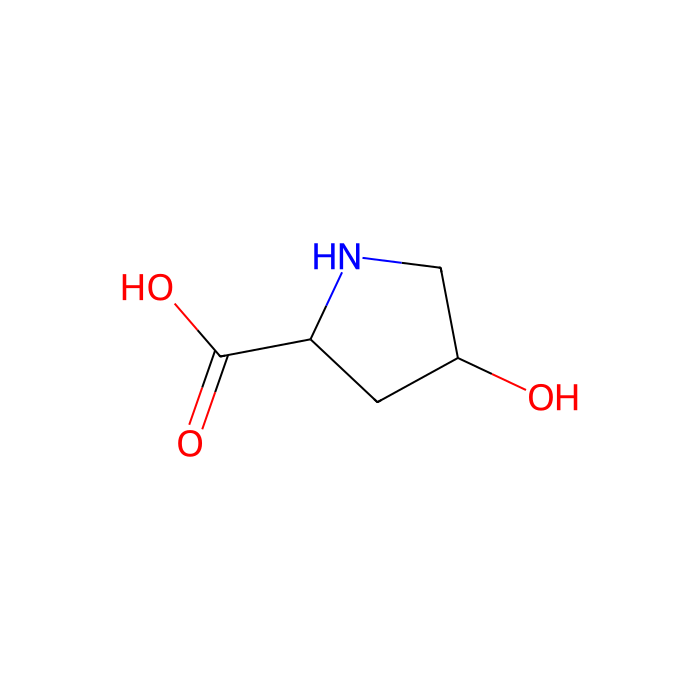
trans-4-Hydroxy-L-proline - Moligand™, ≥99% , CAS No.51-35-4

CAS: 51-35-4 Cat. No.: H111005 Formula: C5H9NO3 Molecular Weight: 131.13 Beilstein Registry Number: 81441 EC Number: 200-091-9
AVAILABLE TO ORDER
GRADE & PURITY Moligand™ ? Moligand™ — Aladdin's line of ligands and bioactive small molecules. Use for receptor, pathway, and binding studies needing defined small-molecule tools. ≥99%
Synonyms
Hyp|L-Hydroxyproline,(S)|.delta.-Hydroxyproline|L-Hydroxyproline;trans-4-Hydroxy-L-Proline|(2s,4r)-4-hydroxy-l-proline|hydroxy-L-proline|trans-L-Hydroxyproline|L-Proline, 4-hydroxy-, trans-|trans-4-D-Hydroxyproline|L-Hydroxyproline|4-hydroxyproline|Ohui Wrinkle Science Wrinkle Repair Eye|Proline, 4-hydroxy-|4-Hydroxy-L-proline|4-L-Hydroxyproline|Hydroxyproline,(l)|trans-4-Hydroxyproline|trans-4-hydroxy-proline|4-(R)-hydroxy-pyrrolidine-2-(S)-carboxylic acid|L-Proline, 4-hydroxy-|NMH-Pro|trans-Hydroxyproline|(2S,4R)-trans-4-hydroxyproline|hydroxyproline|hydroxy-proline|trans-4-Hydroxy-L-proline|trans-4-hydroxyL-proline|Trans4-hydroxy-L-proline|trans-oxyproline|(4r)-hydroxyproline|(2S,4R)-4-Hydroxypyrrolidine-2-carboxylic acid|trans-hydroxy-L-proline|(2S,4R)-4-hydroxy-2-pyrrolidinecarboxylic acid|L-Proline, trans-|HYDROXYPROLINE [WHO-DD]|Proline, 4-hydroxy-, L-|Hydroxyproline (VAN)|L-Proline, 4-hydroxy-, trans- (9CI)|(2S, 4R)-4-hydroxy-proline|(2S,4R)-2-carboxy-4-hydroxypyrrolidine|Proline, 4-hydroxy- (VAN)|H-Hyp-OH|oxyproline|(2S,4R)-rel-4-Hydroxypyrrolidine-2-carboxylic acid|(2S,4R)-4-hydroxyproline|HYDROXYPROLINE [MI]|(4R)-4-hydroxy-L-proline|HYDROXYPROLINE [INCI]|L-trans-4-hydroxy-proline|trans-4-hydroxy(L)proline|trans-4-hydroxy-(L)-proline|L-Proline, 4-hydroxy-, (4R)-|trans-L-4-hydroxy-proline|LUMISTOR|trans-4-hydroxyl-l-proline|4-Hydroxy-2-pyrrolidinecarboxylic acid|H-7290|L-4-transhydroxyproline|L-threo-4-hydroxyproline|4(R)-hydroxyproline|delta-Hydroxyproline|(2S,4R)-(-)-4-Hydroxy-2-Pyrrolidinecarboxylic Acid|L-Hydroxyprolin|O Hui Wrinkle Science Wrinkle Repair|hydroxiproline|(2S, 4R)-4-hydroxy-2-pyrrolidinecarboxylic acid|(2S, 4R)-4-hydroxy-2-pyrrolidine-carboxylic acid|H-trans-Hyp-OH|L-4-hydroxyproline|L-Hydroxyproline;
Storage
Room temperature,Argon charged
Shipped In
Normal
★
Size
Germany (EU)
USA*
Price
Qty
5g
H111005-5g
—
3 In stock
€8.59
10g
H111005-10g
—
In stock ≥10

€8.59

€11.19
Save €2.60 (23.26%)
25g
H111005-25g
—
8 In stock

€12.06

€17.27
Save €5.21 (30.15%)
100g
H111005-100g
—
5 In stock

€22.47

€34.62
Save €12.15 (35.09%)
250g
H111005-250g
1 In stock
2 In stock
€43.30
500g
H111005-500g
1 In stock
3 In stock
€51.98
Enter a quantity for the sizes you want to add.

Overview

Trans-4-Hydroxy-L-proline is a versatile reagent for the synthesis of neuroexcitatory kainoids and antifungal echinocandins. Also employed in the synthesis of chiral ligands for enantioselective ethylation of aldehydes. trans-4-Hydroxy-L-proline is a natural constituent of animal structural proteins such as collagen and elastin.
 

Specifications

Synonyms
Hyp | L-Hydroxyproline,(S) | .delta.-Hydroxyproline | L-Hydroxyproline;trans-4-Hydroxy-L-Proline | (2s,4r)-4-hydroxy-l-proline | hydroxy-L-proline | trans-L-Hydroxyproline | L-Proline, 4-hydroxy-, trans- | trans-4-D-Hydroxyproline | L-Hydroxyproline | 4-hydroxyproline | Ohui Wrinkle Science Wrinkle Repair Eye | Proline, 4-hydroxy- | 4-Hyd Show more
Specifications & Purity
Moligand™, ≥99%
Storage
Room temperature,Argon charged
Shipped In
Normal
Grade
Moligand™
Purity
≥99%
Names and Identifiers
Pubchem Sid
Pubchem Sid Url
https://pubchem.ncbi.nlm.nih.gov/substance/488179943
SMILES
C1C(CNC1C(=O)O)O
IUPAC Name
(2S,4R)-4-hydroxypyrrolidine-2-carboxylic acid
InChIKey
PMMYEEVYMWASQN-DMTCNVIQSA-N
InChI
1S/C5H9NO3/c7-3-1-4(5(8)9)6-2-3/h3-4,6-7H,1-2H2,(H,8,9)/t3-,4+/m1/s1
Isomeric SMILES
C1[C@H](CN[C@@H]1C(=O)O)O
WGK Germany
3
Molecular Weight
131.13
Beilstein
81441
Reaxys
81437
Reaxys-RN_link_address
https://www.reaxys.com/reaxys/secured/hopinto.do?context=S&query=IDE.XRN=81437&ln=

Advanced Data

Taxonomic Classification

Taxonomy Tree

KingdomOrganic compounds
SuperclassOrganic acids and derivatives
ClassCarboxylic acids and derivatives
SubclassAmino acids, peptides, and analogues
Intermediate Tree Nodes Amino acids and derivatives - Alpha amino acids and derivatives
Direct ParentProline and derivatives
Alternative Parents L-alpha-amino acids  Pyrrolidine carboxylic acids  Secondary alcohols  Amino acids  1,2-aminoalcohols  Monocarboxylic acids and derivatives  Dialkylamines  Carboxylic acids  Azacyclic compounds  Organopnictogen compounds  Organic oxides  Hydrocarbon derivatives  Carbonyl compounds  
Molecular FrameworkAliphatic heteromonocyclic compounds
Substituents Proline or derivatives - Alpha-amino acid - L-alpha-amino acid - Pyrrolidine carboxylic acid - Pyrrolidine carboxylic acid or derivatives - Pyrrolidine - 1,2-aminoalcohol - Amino acid - Secondary alcohol - Carboxylic acid - Secondary aliphatic amine - Monocarboxylic acid or derivatives - Azacycle - Secondary amine - Organoheterocyclic compound - Organooxygen compound - Organonitrogen compound - Alcohol - Organic nitrogen compound - Organopnictogen compound - Organic oxide - Hydrocarbon derivative - Organic oxygen compound - Amine - Carbonyl group - Aliphatic heteromonocyclic compound
DescriptionThis compound belongs to the class of organic compounds known as proline and derivatives. These are compounds containing proline or a derivative thereof resulting from reaction of proline at the amino group or the carboxy group, or from the replacement of any hydrogen of glycine by a heteroatom.
External Descriptors Other amino acids
3D Structure
Interactive Chemical Structure Model


Associated Targets(Human)
F2 Tclin Thrombin (11687 Activities)
Activity TypeRelationActivity valueUnitsAction TypeJournalPubMed IddoiAssay Aladdin ID
ESR1 Tclin Estrogen receptor alpha (17718 Activities)
Activity TypeRelationActivity valueUnitsAction TypeJournalPubMed IddoiAssay Aladdin ID
PGR Tclin Progesterone receptor (8562 Activities)
Activity TypeRelationActivity valueUnitsAction TypeJournalPubMed IddoiAssay Aladdin ID
CHRM2 Tclin Muscarinic acetylcholine receptor M2 (10671 Activities)
Activity TypeRelationActivity valueUnitsAction TypeJournalPubMed IddoiAssay Aladdin ID
HTR1A Tclin Serotonin 1a (5-HT1a) receptor (14969 Activities)
Activity TypeRelationActivity valueUnitsAction TypeJournalPubMed IddoiAssay Aladdin ID
ADRA2A Tclin Alpha-2a adrenergic receptor (9450 Activities)
Activity TypeRelationActivity valueUnitsAction TypeJournalPubMed IddoiAssay Aladdin ID
AR Tclin Androgen Receptor (11781 Activities)
Activity TypeRelationActivity valueUnitsAction TypeJournalPubMed IddoiAssay Aladdin ID
CHRM1 Tclin Muscarinic acetylcholine receptor M1 (12690 Activities)
Activity TypeRelationActivity valueUnitsAction TypeJournalPubMed IddoiAssay Aladdin ID
GABRA1 Tclin GABA receptor alpha-1 subunit (399 Activities)
Activity TypeRelationActivity valueUnitsAction TypeJournalPubMed IddoiAssay Aladdin ID
MAOA Tclin Monoamine oxidase A (11911 Activities)
Activity TypeRelationActivity valueUnitsAction TypeJournalPubMed IddoiAssay Aladdin ID
DRD1 Tclin Dopamine D1 receptor (9720 Activities)
Activity TypeRelationActivity valueUnitsAction TypeJournalPubMed IddoiAssay Aladdin ID
ACHE Tclin Acetylcholinesterase (18204 Activities)
Activity TypeRelationActivity valueUnitsAction TypeJournalPubMed IddoiAssay Aladdin ID
PTGS1 Tclin Cyclooxygenase-1 (9233 Activities)
Activity TypeRelationActivity valueUnitsAction TypeJournalPubMed IddoiAssay Aladdin ID
SLC6A2 Tclin Norepinephrine transporter (10102 Activities)
Activity TypeRelationActivity valueUnitsAction TypeJournalPubMed IddoiAssay Aladdin ID
SLC6A4 Tclin Serotonin transporter (12625 Activities)
Activity TypeRelationActivity valueUnitsAction TypeJournalPubMed IddoiAssay Aladdin ID
ADRA1A Tclin Alpha-1a adrenergic receptor (8359 Activities)
Activity TypeRelationActivity valueUnitsAction TypeJournalPubMed IddoiAssay Aladdin ID
OPRM1 Tclin Mu opioid receptor (19785 Activities)
Activity TypeRelationActivity valueUnitsAction TypeJournalPubMed IddoiAssay Aladdin ID
SLC6A3 Tclin Dopamine transporter (10535 Activities)
Activity TypeRelationActivity valueUnitsAction TypeJournalPubMed IddoiAssay Aladdin ID
KCNH2 Tclin HERG (29587 Activities)
Activity TypeRelationActivity valueUnitsAction TypeJournalPubMed IddoiAssay Aladdin ID
PDE3A Tclin Phosphodiesterase 3A (3309 Activities)
Activity TypeRelationActivity valueUnitsAction TypeJournalPubMed IddoiAssay Aladdin ID
HTR2B Tclin Serotonin 2b (5-HT2b) receptor (10323 Activities)
Activity TypeRelationActivity valueUnitsAction TypeJournalPubMed IddoiAssay Aladdin ID
TBXA2R Tclin Thromboxane A2 receptor (5717 Activities)
Activity TypeRelationActivity valueUnitsAction TypeJournalPubMed IddoiAssay Aladdin ID
PDE4A Tclin Phosphodiesterase 4A (1943 Activities)
Activity TypeRelationActivity valueUnitsAction TypeJournalPubMed IddoiAssay Aladdin ID
ADORA3 Tchem Adenosine A3 receptor (15931 Activities)
Activity TypeRelationActivity valueUnitsAction TypeJournalPubMed IddoiAssay Aladdin ID
HRH3 Tclin Histamine H3 receptor (10389 Activities)
Activity TypeRelationActivity valueUnitsAction TypeJournalPubMed IddoiAssay Aladdin ID
KDR Tclin Vascular endothelial growth factor receptor 2 (20924 Activities)
Activity TypeRelationActivity valueUnitsAction TypeJournalPubMed IddoiAssay Aladdin ID
SLC1A4 Tbio Neutral amino acid transporter A (18 Activities)
Activity TypeRelationActivity valueUnitsAction TypeJournalPubMed IddoiAssay Aladdin ID
A498 (42825 Activities)
Activity TypeRelationActivity valueUnitsAction TypeJournalPubMed IddoiAssay Aladdin ID
ACHN (49357 Activities)
Activity TypeRelationActivity valueUnitsAction TypeJournalPubMed IddoiAssay Aladdin ID
CAKI-1 (44928 Activities)
Activity TypeRelationActivity valueUnitsAction TypeJournalPubMed IddoiAssay Aladdin ID
CCRF-CEM (65223 Activities)
Activity TypeRelationActivity valueUnitsAction TypeJournalPubMed IddoiAssay Aladdin ID
COLO 205 (50209 Activities)
Activity TypeRelationActivity valueUnitsAction TypeJournalPubMed IddoiAssay Aladdin ID
DU-145 (51482 Activities)
Activity TypeRelationActivity valueUnitsAction TypeJournalPubMed IddoiAssay Aladdin ID
HL-60 (67320 Activities)
Activity TypeRelationActivity valueUnitsAction TypeJournalPubMed IddoiAssay Aladdin ID
HT-29 (80576 Activities)
Activity TypeRelationActivity valueUnitsAction TypeJournalPubMed IddoiAssay Aladdin ID
K562 (73714 Activities)
Activity TypeRelationActivity valueUnitsAction TypeJournalPubMed IddoiAssay Aladdin ID
KM12 (47707 Activities)
Activity TypeRelationActivity valueUnitsAction TypeJournalPubMed IddoiAssay Aladdin ID
M14 (47487 Activities)
Activity TypeRelationActivity valueUnitsAction TypeJournalPubMed IddoiAssay Aladdin ID
MCF7 (126967 Activities)
Activity TypeRelationActivity valueUnitsAction TypeJournalPubMed IddoiAssay Aladdin ID
MOLT-4 (49676 Activities)
Activity TypeRelationActivity valueUnitsAction TypeJournalPubMed IddoiAssay Aladdin ID
OVCAR-3 (48710 Activities)
Activity TypeRelationActivity valueUnitsAction TypeJournalPubMed IddoiAssay Aladdin ID
OVCAR-4 (44535 Activities)
Activity TypeRelationActivity valueUnitsAction TypeJournalPubMed IddoiAssay Aladdin ID
OVCAR-5 (45555 Activities)
Activity TypeRelationActivity valueUnitsAction TypeJournalPubMed IddoiAssay Aladdin ID
OVCAR-8 (47708 Activities)
Activity TypeRelationActivity valueUnitsAction TypeJournalPubMed IddoiAssay Aladdin ID
PC-3 (62116 Activities)
Activity TypeRelationActivity valueUnitsAction TypeJournalPubMed IddoiAssay Aladdin ID
RPMI-8226 (44974 Activities)
Activity TypeRelationActivity valueUnitsAction TypeJournalPubMed IddoiAssay Aladdin ID
RXF 393 (41971 Activities)
Activity TypeRelationActivity valueUnitsAction TypeJournalPubMed IddoiAssay Aladdin ID
SF-295 (48000 Activities)
Activity TypeRelationActivity valueUnitsAction TypeJournalPubMed IddoiAssay Aladdin ID
SK-MEL-2 (46422 Activities)
Activity TypeRelationActivity valueUnitsAction TypeJournalPubMed IddoiAssay Aladdin ID
SK-MEL-28 (48833 Activities)
Activity TypeRelationActivity valueUnitsAction TypeJournalPubMed IddoiAssay Aladdin ID
Associated Targets(non-human)
Slc25a20 Carnitine/acylcarnitine translocase (26 Activities)
Activity TypeRelationActivity valueUnitsAction TypeJournalPubMed IddoiAssay Aladdin ID
Hdac6 Histone deacetylase 6 (222 Activities)
Activity TypeRelationActivity valueUnitsAction TypeJournalPubMed IddoiAssay Aladdin ID
rep Replicase polyprotein 1ab (378 Activities)
Activity TypeRelationActivity valueUnitsAction TypeJournalPubMed IddoiAssay Aladdin ID
Grin1 Glutamate NMDA receptor (6467 Activities)
Activity TypeRelationActivity valueUnitsAction TypeJournalPubMed IddoiAssay Aladdin ID
Slc1a5 Amino acid transporter (271 Activities)
Activity TypeRelationActivity valueUnitsAction TypeJournalPubMed IddoiAssay Aladdin ID
Slc7a10 Asc-type amino acid transporter 1 (14 Activities)
Activity TypeRelationActivity valueUnitsAction TypeJournalPubMed IddoiAssay Aladdin ID
Mechanisms of Action
Certificates (CoA,COO,BSE/TSE and Analysis Chart)
C of A & Other Certificates(BSE/TSE, COO):
Analytical Chart:

Find and download the COA for your product by matching the lot number on the packaging.

69 results found

Lot NumberCertificate TypeDateItem
L2213453L2213453Certificate of AnalysisSep 07, 2026 H111005
L2213452L2213452Certificate of AnalysisSep 07, 2026 H111005
L2213451L2213451Certificate of AnalysisSep 07, 2026 H111005
L2213448L2213448Certificate of AnalysisSep 07, 2026 H111005
G2601654G2601654Certificate of AnalysisJul 17, 2026 H111005
G2601630G2601630Certificate of AnalysisJul 17, 2026 H111005
G2601629G2601629Certificate of AnalysisJul 17, 2026 H111005
G2601625G2601625Certificate of AnalysisJul 07, 2026 H111005
G2601632G2601632Certificate of AnalysisJul 07, 2026 H111005
G2601631G2601631Certificate of AnalysisJul 07, 2026 H111005
G2601628G2601628Certificate of AnalysisJul 07, 2026 H111005
G2601627G2601627Certificate of AnalysisJul 07, 2026 H111005
G2601626G2601626Certificate of AnalysisJul 07, 2026 H111005
C2606519C2606519Certificate of AnalysisMar 25, 2026 H111005
C2606524C2606524Certificate of AnalysisMar 25, 2026 H111005
C2606518C2606518Certificate of AnalysisMar 25, 2026 H111005
C2606515C2606515Certificate of AnalysisMar 25, 2026 H111005
C2606520C2606520Certificate of AnalysisMar 25, 2026 H111005
C2606521C2606521Certificate of AnalysisMar 25, 2026 H111005
C2606525C2606525Certificate of AnalysisMar 25, 2026 H111005
C2606516C2606516Certificate of AnalysisMar 25, 2026 H111005
C2606522C2606522Certificate of AnalysisMar 25, 2026 H111005
C2606523C2606523Certificate of AnalysisMar 25, 2026 H111005
C2606526C2606526Certificate of AnalysisMar 25, 2026 H111005
C2606517C2606517Certificate of AnalysisMar 25, 2026 H111005
B2626421B2626421Certificate of AnalysisMar 04, 2026 H111005
B2626490B2626490Certificate of AnalysisMar 04, 2026 H111005
B2626422B2626422Certificate of AnalysisMar 04, 2026 H111005
C2215300C2215300Certificate of AnalysisDec 10, 2025 H111005
K2130730K2130730Certificate of AnalysisSep 09, 2025 H111005
K2130752K2130752Certificate of AnalysisSep 09, 2025 H111005
I2124271I2124271Certificate of AnalysisJul 15, 2025 H111005
I2124234I2124234Certificate of AnalysisJul 15, 2025 H111005
E2529252E2529252Certificate of AnalysisMay 19, 2025 H111005
G2123153G2123153Certificate of AnalysisMay 09, 2025 H111005
F2118067F2118067Certificate of AnalysisApr 03, 2025 H111005
F2118066F2118066Certificate of AnalysisApr 03, 2025 H111005
I2404400I2404400Certificate of AnalysisSep 07, 2024 H111005
I2404401I2404401Certificate of AnalysisSep 07, 2024 H111005
I2404402I2404402Certificate of AnalysisSep 07, 2024 H111005
I2404403I2404403Certificate of AnalysisSep 07, 2024 H111005
E2608131E2608131Certificate of AnalysisSep 07, 2024 H111005
I2404399I2404399Certificate of AnalysisSep 07, 2024 H111005
E2513284E2513284Certificate of AnalysisJul 01, 2024 H111005
E2513273E2513273Certificate of AnalysisJul 01, 2024 H111005
E2513285E2513285Certificate of AnalysisJul 01, 2024 H111005
E2513286E2513286Certificate of AnalysisJul 01, 2024 H111005
L2213450L2213450Certificate of AnalysisJul 08, 2022 H111005
H2308217H2308217Certificate of AnalysisJul 04, 2022 H111005
H2308218H2308218Certificate of AnalysisJul 04, 2022 H111005
C2526089C2526089Certificate of AnalysisJul 04, 2022 H111005
K2404062K2404062Certificate of AnalysisJul 04, 2022 H111005
J2423306J2423306Certificate of AnalysisJul 04, 2022 H111005
I2216267I2216267Certificate of AnalysisJul 04, 2022 H111005
G2208255G2208255Certificate of AnalysisJun 30, 2022 H111005
G2208247G2208247Certificate of AnalysisJun 30, 2022 H111005
I2216263I2216263Certificate of AnalysisJun 27, 2022 H111005
I2216281I2216281Certificate of AnalysisJun 27, 2022 H111005
I2216280I2216280Certificate of AnalysisJun 27, 2022 H111005
I2216268I2216268Certificate of AnalysisJun 27, 2022 H111005
I2216266I2216266Certificate of AnalysisJun 27, 2022 H111005
I2216264I2216264Certificate of AnalysisJun 27, 2022 H111005
I2216262I2216262Certificate of AnalysisJun 27, 2022 H111005
G2426149G2426149Certificate of AnalysisJun 27, 2022 H111005
B2225379B2225379Certificate of AnalysisDec 18, 2021 H111005
B2225423B2225423Certificate of AnalysisDec 18, 2021 H111005
B2225417B2225417Certificate of AnalysisDec 18, 2021 H111005
B2225385B2225385Certificate of AnalysisDec 18, 2021 H111005
B2301560B2301560Certificate of AnalysisSep 16, 2021 H111005
Chemical and Physical Properties
SolubilitySoluble in water.
SensitivityAir Sensitive
x_specific_rotation-74.0 to -77.0 deg(C=4, H2O)
x_melt_point_char273°C
Molecular Weight131.13
XLogP3-3.300
Hydrogen Bond Donor Count3
Hydrogen Bond Acceptor Count4
Rotatable Bond Count1
Exact Mass131.058 Da
Monoisotopic Mass131.058 Da
Topological Polar Surface Area69.600 Ų
Heavy Atom Count9
Formal Charge0
Complexity125.000
Isotope Atom Count0
Defined Atom Stereocenter Count2
Undefined Atom Stereocenter Count0
Defined Bond Stereocenter Count0
Undefined Bond Stereocenter Count0
The total count of all stereochemical bonds0
Covalently-Bonded Unit Count1
Safety and Hazards(GHS)
x_signal_word
Warning
x_hazard_statements

H315:Causes skin irritation

H319:Causes serious eye irritation

H335:May cause respiratory irritation

x_precautionary_statements

P261:Avoid breathing dust/fume/gas/mist/vapors/spray.

P305+P351+P338:IF IN EYES: Rinse cautiously with water for several minutes. Remove contact lenses if present and easy to do - continue rinsing.

x_wgk_germany
3
x_reaxy_rn
81437
x_reaxys_rn_link_address
https://www.reaxys.com/reaxys/secured/hopinto.do?context=S&query=IDE.XRN=81437&ln=
x_merck_index
4840
FAQs and Articles
Pyrrolidine and Its Derivative Systems: How a Five-Membered N-Heterocycle Tunes Properties and Use Cases via “Charge State–Conformation–Functional-Group Switching” (with Tables 1–4 for Selection Navigation)
What Do Unnatural Amino Acids Really Change? Site-Specific Observation, Functional Engineering, and Property Optimization in Proteins and Peptides
Technical Comparison and Method Selection for Hydroxyproline Determination
Why Small Molecules Can Also Serve as Catalysts: Judging Organocatalytic Systems from Reaction Objectives and Activatable Structural Sites
How Do Collagen Peptides Act on the Skin? From Surface Hydration and Percutaneous Delivery to Fibroblasts and Collagen Homeostasis
Anti-Photoaging Potential of Artemia Extract: UV-Induced Damage Cascades, HSP70-Related Stress Protection, and GP4G Metabolic Insights
Acetyl Tetrapeptide-2 and Elastic Fiber Formation: Research on Fibulin-5, LOXL1, and Skin Firmness
How Palmitoyl Pentapeptide-4 Acts on the Skin: From the KTTKS Sequence and Skin Delivery to Collagen Matrix Responses
How Does Collagen Tripeptide Act on the Skin: Stratum Corneum Delivery, Matrix Protection, and Regulation of Collagen Homeostasis
What Determines Collagen Function: From Triple-Helix Formation to Hierarchical Assembly, Crosslink Maturation, and Dynamic Remodeling
Mechanisms of Retinol Action in the Skin: From Metabolic Activation and RAR/RXR-Mediated Transcriptional Regulation to Epidermal Renewal and Collagen Homeostasis
Mechanisms by Which PDRN Participates in Skin Repair: A2A Receptor-Related Signaling, Nucleotide Salvage, and Extracellular Matrix Remodeling
What Is “Plant Collagen”? Distinguishing Ingredient Types, Structural Differences, Production Methods, and Skincare Effects
The Combination Logic of Palmitoyl Tripeptide-1 and Palmitoyl Pentapeptide-4: Skin Delivery, Matrix Signaling, and Regulation of Collagen Homeostasis
Differences Between Animal-Derived Collagen and Recombinant Collagen in Skincare: Sequence and Structure, Safety, Skin Effects, and Evidence Evaluation
Conformational Control by Proline Derivatives and Their Medicinal Chemistry Effects: Ring Puckering, Amide Cis–Trans Isomerization, and Drug Properties
Citations of This Product
Solution Calculators
Reviews

Customer Reviews

Application Protocols

No tested biological assay protocols are specified for this item. Typical research uses include:

  • Preparation of aqueous stock solutions: weigh accurately, dissolve in water or buffer with pH adjustment as needed; filter sterilize for cell-free biochemical assays.
  • SPPS workflows (protected derivatives): standard Fmoc protocols on solid supports with HBTU/HATU or DIC/Oxyma coupling. For this unprotected listing, first derivatize to appropriate protected forms.

Item-specific, validated protocols and recommended concentrations are Not specified for this item; refer to CoA/Spec Sheet or relevant literature for application-specific procedures.

Biological Roles

General knowledge (no medical claims):

  • Collagen biochemistry: trans-4-hydroxy-L-proline is a hallmark post-translationally modified residue in collagen, arising from the hydroxylation of L-proline at C-4 (prolyl-4-hydroxylase). Its presence stabilizes the collagen triple helix by favoring the Cγ-exo ring pucker and through stereoelectronic effects that strengthen interchain hydrogen bonding.
  • Structural effects: the trans-4-OH biases pyrrolidine ring conformation and backbone φ/ψ angles, influencing peptide secondary structure. Incorporation into model peptides modulates thermal stability and receptor interactions (as studied in vitro).
  • Metabolism: hydroxyproline is catabolized primarily in liver/kidney via hydroxyproline dehydrogenase to Δ1-pyrroline-3-hydroxy-5-carboxylate, eventually entering central carbon metabolism (literature). Excretion/turnover reflects collagen degradation in many organisms.
  • Osmolyte/compatibility solute roles: like many amino acids and derivatives, hydroxyproline can act as a compatible solute in certain biological systems; its hydroxyl group enhances hydrophilicity and hydrogen-bonding capacity.

Research relevance:

  • Collagen mimetics, triple-helix stability studies, and matrix biology commonly employ trans-4-hydroxy-L-proline as a defined monomer or as part of peptides.
  • Enzyme studies: substrate/ligand for proline and hydroxyproline transporters, oxidases, and dehydrogenases in biochemical assays.

Note: The above pertains to general biochemistry; for this product’s specific analytical/quality details, consult the CoA.

Buffer Applications

This compound is not a standard biological buffer. However, as a zwitterionic amino acid, it can provide limited buffering capacity near its pKa values.

  • Literature acid–base properties (reference only):
    • pKa1 (carboxyl): ~1.8–2.1
    • pKa2 (ammonium): ~9.3–9.8
  • Practical implications:
    • Weak buffering around pH ~2 and ~9–10. This makes it unsuitable as a primary buffer in most biochemical assays but it can modestly stabilize pH in these regions when present at sufficient concentration.
  • Preparation tips (if used in solution work):
    • Dissolve in deionized water; adjust pH with dilute NaOH or HCl to target range.
    • For sterile applications, filter through 0.22 µm. Document ionic strength, as solubility and activity coefficients affect effective buffering.

Recommendation: For dedicated buffer systems, use established buffers (e.g., citrate pH 3–6, phosphate pH 6–8, Tris pH 7–9, CAPS pH 9–11). Employ trans-4-hydroxy-L-proline primarily as a reagent/monomer rather than a buffer component.

Green Alternatives

Although this product is a solid building block rather than a solvent, greener choices center on solvent selection and process design.

  • Solvent substitution (literature guidance):
    • Replace DMF/NMP in SPPS or couplings with greener polar aprotics when feasible (e.g., dimethyl carbonate, propylene carbonate, Cyrene, PolarClean) or with water/EtOH co-solvent systems leveraging water-compatible coupling reagents (EDC, DMTMM).
    • Favor ethanol or water for simple dissolution when possible; adjust pH to enhance solubility.
  • Reagent choices:
    • Use Oxyma Pure instead of HOBt/HOAt to reduce explosive hazard.
    • Explore enzymatic couplings (proteases/peptiligases) in aqueous media for certain peptide segments.
  • Process intensification:
    • Microwaves or flow methods can reduce solvent volumes and reaction times in protected-derivative chemistry.

Comparative overview (qualitative):

  • DMF (benchmark): excellent solvation for protected derivatives; toxic and regulatory burden.
  • Water (alternative): safest, minimal environmental impact; often requires pH control and water-compatible reagents.
  • EtOH/i-PrOH: greener than DMF; moderate solubility for hydroxyproline; viable for recrystallizations or co-solvent roles.

Trade-offs:

  • Greener solvents may change kinetics/selectivity and demand modified bases/reagents.
  • High water content can favor lactamization or hydrolysis of activated species; time and temperature must be tuned accordingly.
Pharmaceutical Uses

No therapeutic or clinical claims are made. For research and development context only.

  • Excipient/formulation context (literature/general): amino acids and their derivatives are sometimes used as stabilizing excipients, tonicity agents, or pH adjusters in experimental formulations. Hydroxylated prolines can modulate solubility and hydrogen bonding relative to proline.
  • Process chemistry context: trans-4-hydroxy-L-proline is a chiral-pool starting material for synthesizing proline-derived fragments in medicinal chemistry campaigns, including constrained peptidomimetics and PPII-helix inducers.
  • Salt/derivative forms: protecting-group derivatives (e.g., Boc-/Fmoc-trans-4-hydroxy-L-proline; O-benzyl/O-silyl variants) are common intermediates in API intermediate synthesis.

Regulatory note:

  • Pharmacopeial monographs may exist for L-hydroxyproline (check current USP/EP/JP); however, compliance for this specific item is Not specified for this item; refer to CoA/Spec Sheet.
  • For any use in regulated environments, confirm grade, impurity profile, residual solvents, and optical purity against internal specifications and applicable pharmacopeial/ICH guidelines.
Physical Properties

Item-specific physical properties: Not specified for this item; refer to CoA/Spec Sheet.

Representative literature values (for reference; not product specifications):

  • Appearance (typical): white to off-white crystalline solid.
  • Ionization/acid-base: zwitterionic near neutral pH. Reported pKa values for closely related 4-hydroxy-L-proline: pKa1 (carboxyl) ~1.8–2.1; pKa2 (ammonium) ~9.3–9.8 (literature).
  • Solubility: freely soluble in water; sparingly soluble in lower alcohols; practically insoluble in nonpolar solvents (literature). Aqueous solubility commonly reported at tens of mg/mL depending on pH and ionic strength.
  • LogP/logD: highly hydrophilic; cLogP negative (literature/estimates for hydroxyproline analogs).
  • Melting/decomposition: many amino acids decompose on melting; literature notes for hydroxyproline indicate decomposition rather than a sharp melt. Use DSC/TGA for exact behavior.
  • Optical rotation: specific rotation varies with solvent, concentration, and salt form; consult the CoA for item-specific [α]D.

Measurement notes for users:

  • Solubility and pKa shift with temperature and ionic strength; define buffer composition when reporting values.
  • For peptide synthesis, measure water content by Karl Fischer if needed for moisture-sensitive steps; otherwise, hydrate state may be present. Always verify with the supplied CoA.
Quality and Grades
  • Item-specific grade: Moligand™ (as provided in Product Data).
  • What this implies: Moligand™ is positioned for research applications where consistent, well-characterized small-molecule building blocks are required (e.g., ligands, chiral pool synthons, peptide fragments). Exact acceptance criteria (assay, residual solvents, water, metals, optical rotation) are Not specified for this item; refer to CoA/Spec Sheet.

Comparison to common research grades (general guidance):

  • Peptide/biomonomer quality: emphasizes stereochemical integrity (L-configuration, defined trans-4-OH), low racemization, and low inorganic/organic impurities to support coupling efficiency and reproducibility.
  • Analytical expectations: batch-specific CoA typically includes assay/purity (e.g., HPLC), identity (NMR/IR/MS), and optical rotation; UV cutoff is generally not critical for non-chromophoric amino acids. For this catalog entry, consult the supplied CoA for definitive data.

Stabilizers/additives: None indicated. If present, any stabilizer, salt form, or hydration state would be listed on the CoA; absent such indication, handle as the free amino acid.

Suitability notes:

  • For aqueous biological work, confirm endotoxin/bioburden only if required (not routinely provided for research-grade reagents).
  • For peptide synthesis, confirm residual solvent and water content if using highly moisture-sensitive coupling strategies.
Reaction and Applications

Use cases span peptide chemistry, chiral-pool synthesis, and materials/biochemistry research.

  • Peptide chemistry:
    • Building block for collagen-mimetic peptides; the trans-4-OH promotes triple-helix stability via stereoelectronic and H-bond effects (literature).
    • Standard N-protection (Boc or Fmoc) and O-protection (e.g., benzyl or silyl) enable solid-phase peptide synthesis (SPPS) using HATU/HOAt or DIC/Oxyma.
  • Chiral pool and derivatization:
    • Stereodefined precursor to 4-substituted proline derivatives via O-activation (tosylate/mesylate) followed by substitution.
    • Oxidation at C-4 (e.g., Dess–Martin or TEMPO-related protocols on protected substrates) to 4-ketoproline, enabling subsequent stereocontrolled reductions.
    • Mitsunobu-mediated inversion at C-4 converts trans- to cis-4-substituted patterns on protected derivatives.
  • Organocatalysis and ligands:
    • Proline-type scaffolds (including hydroxyproline derivatives) serve as organocatalysts/ligands in aldol, Mannich, and Michael reactions; trans-4-hydroxyl can be leveraged for secondary coordination or H-bonding (literature).
  • Materials/biochemistry:
    • Collagen crosslink models, hydrogel modifiers, and surface-immobilized peptides benefiting from the hydrophilicity and H-bonding of the 4-OH group.

Practical tips:

  • Control pH during coupling to minimize racemization; use Oxyma or HOAt additives.
  • Protect the 4-OH to prevent side reactions during peptide elongation.
  • For O-alkylation, preform the alkoxide under non-aqueous conditions (e.g., NaH in dry DMF), then trap with an electrophile; work under inert atmosphere as needed.
Reaction Conditions

General literature guidance (illustrative; adjust to your system):

  • Amide coupling (solution or SPPS, protected N/O):
    • Solvent: DMF or NMP (or greener alternatives); 0.05–0.2 M.
    • Reagents: HATU (1.0–1.2 eq), Oxyma/HOAt (0.5–1.0 eq), base (DIPEA 2–4 eq), 20–25 °C, 0.5–2 h. For aqueous conditions, EDC (1.1–1.5 eq) with NHS or DMTMM (1.1 eq) in water/MeCN, pH 6–7.
  • O-alkylation (on N-protected substrate):
    • Solvent: dry DMF; base: NaH (1.2–2.0 eq) at 0–5 °C then electrophile (1.2–1.5 eq), 0–25 °C, 1–6 h. Quench cautiously; monitor by LC/MS.
  • Mitsunobu inversion at C-4 (on O–H):
    • Solvent: dry THF or toluene; DIAD/DEAD (1.2–1.5 eq), PPh3 (1.2–1.5 eq), nucleophile (carboxylic acid/PhCO2H), 0–25 °C, 2–6 h. Follow with hydrolysis to reveal inverted OH as needed.
  • Oxidation to 4-keto derivative:
    • Solvent: DCM or acetonitrile; Dess–Martin periodinane (1.3 eq) at 0–25 °C, 0.5–2 h. Alternatively, TEMPO/BAIB in MeCN/H2O.
  • Esterification (CO2H protection):
    • HCl(g)/MeOH or SOCl2 (0.5–1.0 eq) in MeOH, 0–25 °C, 1–3 h; or carbodiimide-mediated benzylation.

Notes:

  • Maintain inert atmosphere for moisture-sensitive bases/reagents.
  • Verify stereochemical integrity by chiral HPLC or optical rotation after multi-step manipulations.
  • Typical isolated yields vary widely (50–90%) depending on protection strategy and substrate; optimize stoichiometry and temperature to minimize side reactions (lactamization, over-acylation).
Safety and Handling

Item-specific hazard classification (GHS, H/P statements, pictograms): Not specified for this item; refer to SDS for authoritative safety information.

General laboratory guidance for amino acid solids (literature/practice):

  • Expected hazards: low volatility; dust may cause mechanical irritation to eyes/respiratory tract. Avoid inhalation of dusts and prolonged skin contact.
  • Personal protective equipment (PPE): lab coat, safety glasses, and suitable gloves (e.g., nitrile). Use a dust mask or work in a fume hood if handling powders extensively.
  • Handling: minimize dust generation. Use clean, dry tools. For peptide-coupling operations, manage coupling reagents (e.g., HATU/HOAt/EDC) per their own SDS—they often present higher hazards than the amino acid.
  • Incompatibilities: strong oxidizers and strong acids/bases may cause degradation. Avoid mixing with nitrosating agents (secondary amines can be nitrosated under strong nitrosative conditions).
  • First aid (overview; consult SDS):
    • Eyes: rinse cautiously with water for several minutes; remove contact lenses if present.
    • Skin: wash with soap and water.
    • Inhalation: move to fresh air; seek medical attention if symptoms persist.
    • Ingestion: rinse mouth; seek medical advice if unwell.
  • Spill/cleanup: avoid raising dust; sweep up and collect for disposal in accordance with institutional and local regulations.
  • Fire: combustible dust risk is generally low but present for organic powders; use water spray, CO2, dry chemical as appropriate. Product is typically stable under normal lab conditions.
Solvent Selection

As a polar, zwitterionic amino acid, trans-4-hydroxy-L-proline is best handled in aqueous media or mixed polar protic systems.

  • Polarity/miscibility (literature):
    • Water: freely soluble; adjust pH (7–9) to maximize dissolution of the carboxylate while avoiding amine deprotonation if needed.
    • Alcohols (MeOH/EtOH): limited to moderate solubility; can assist in co-solvent systems.
    • Polar aprotics (DMF/DMSO): significantly improved solubility compared to alcohols; often used for peptide coupling after appropriate protection.
    • Nonpolar solvents (Et2O, hexanes, toluene): essentially insoluble.
  • Practical choices by task:
    • Biochemical assays: water or buffered saline (PBS) with pH control.
    • Peptide coupling (unprotected): aqueous or mixed aqueous-organic with water-compatible coupling reagents (e.g., EDC). For protected derivatives (Boc-/Fmoc-), DMF, NMP, or DCM/DMF mixtures are typical.
    • O-alkylation/O-acylation: DMF/DMSO/MeCN favored, often with base.

Brief comparison (literature-based, qualitative):

  • Water: green, biocompatible; may need pH control to avoid lactamization.
  • DMF/NMP: excellent solvent power for protected forms; consider toxicity and replacement strategies (e.g., PC/GC, CPME, or green DMF alternatives) when possible.
  • MeOH/EtOH: safer than DMF; solubility may be limiting without salt formation.
Storage and Reconstitution
  • Item-specific storage (from Product Data):
    • Storage Conditions: Room temperature, Argon charged.
    • Shipped In: Normal.
  • General handling:
    • Keep tightly closed under an inert atmosphere as supplied (argon) to minimize oxidative or moisture-related changes. Store in a dry place away from incompatible reagents (strong oxidizers, strong acids/bases).
    • If frequent access is expected, aliquot into small containers to limit headspace exposure and repeated opening.
  • Reconstitution/preparation (general guidance):
    • Aqueous solutions: dissolve in deionized water; adjust pH (e.g., 7–9) to aid dissolution if needed. Filter through 0.22 µm for sterile, particle-free solutions. Record final pH and ionic strength.
    • Organic media: for derivatization or protection steps, dissolve in DMF/DMSO or alcohol/water mixtures as appropriate.
  • Solution stability (general):
    • Amino acid solutions are typically most stable refrigerated (2–8 °C); prepare fresh when possible. For longer-term storage, freeze at −20 °C in aliquots to avoid repeated freeze–thaw. Protect from light if chromophoric protecting groups are present (not applicable to the free amino acid).

Note: Any item-specific limits on water content, metals, or optical rotation are Not specified for this item; refer to CoA/Spec Sheet. Always consult the product SDS for detailed safety and handling.

Structure and Identity

A collagen-derived, cyclic amino acid building block featuring a secondary amine and a trans-4-hydroxyl substituent on a five-membered pyrrolidine ring.

  • Item-specific identifiers (from Product Data):
    • CAS: 51-35-4
    • CID: 5810
    • InChIKey: 281398 (as provided)
    • SMILES: Not specified for this item; refer to CoA/Spec Sheet.
  • Composition (item-specific):
    • Molecular Formula: Not specified for this item; refer to CoA/Spec Sheet.
    • Molecular Weight: Not specified for this item; refer to CoA/Spec Sheet.
  • Literature identity (for reference only):
    • Common name: trans-4-Hydroxy-L-proline (L-4-Hyp, L-Hyp, L-threo-4-hydroxyproline)
    • Typical molecular formula (literature): C5H9NO3
    • Typical molecular weight (literature): ~131.13 g/mol
  • Structural features (general description):
    • Ring system: saturated 5-membered pyrrolidine ring (proline scaffold).
    • Functional groups: secondary amine (α-amino), carboxylic acid (α-carboxyl), and a hydroxyl group at C-4 positioned trans to the carboxylate in the L-configuration.
    • Stereochemistry: L-α center at C-2; trans-4-OH relative to the carboxyl group; multiple stereocenters (α-carbon and C-4). The molecule is typically present as a zwitterion near neutral pH.
    • 2D depiction in words: a five-membered ring bearing at the α-carbon a carboxylate, with the ring nitrogen as a secondary amine; the C-4 carbon carries an OH group oriented trans to the carboxyl substituent.
Synthetic Utility

Key reactive elements and strategies:

  • Functional groups: secondary amine (α-NH), carboxylic acid (α-CO2H), and a secondary alcohol at C-4. The combination enables orthogonal protection and diverse downstream chemistry.

Orthogonal protection schemes (literature):

  • N-protection: Boc or Fmoc to enable SPPS or solution-phase coupling.
  • O-protection: benzyl (Bn), silyl (TBS), or acyl groups to mask the 4-OH during couplings/derivatizations.
  • CO2H protection: methyl/benzyl esters for solution-phase transformations; HCl/MeOH or SOCl2/MeOH for esterification.

Transformations:

  • Peptide coupling: HATU/HOAt or DIC/Oxyma in DMF/NMP (protected forms) or EDC/DMTMM in aqueous or mixed media (unprotected), furnishing amide bonds with low racemization.
  • C-4 chemistry: oxidation to 4-keto followed by stereoselective reduction; Mitsunobu inversion to access cis-4-substituted motifs; O-alkylation/acylation via alkoxide formation; conversion to leaving groups (mesylate/tosylate) for SN2 substitutions.
  • Ring modifications: intramolecular cyclizations to diketopiperazines; elaboration to bicyclic proline analogs.

Retrosynthetic value:

  • Provides a stereochemically rich, conformationally biased node in peptidomimetics, facilitating control over backbone geometry and hydrogen-bonding arrays. Serves as a versatile chiral synthon for ligand scaffolds and small-molecule libraries.
Target Specificity

Not applicable. This product is a small-molecule amino acid, not an antibody, enzyme, or affinity reagent. No target/epitope specificity is defined in the Product Data.

Frequently Asked Questions

What is the purity of this product?
This product is supplied at ≥99% purity (chemical assay). Lot-specific values are stated on the Certificate of Analysis.
What is Moligand??
Moligand? is one of Aladdin Scientific's premium product lines, formulated for high-purity applications across multiple workflows. Compared to standard grades in the same workflow, Moligand? products typically offer tighter specifications, more rigorous QC, and stronger lot-to-lot consistency.
How should this product be stored?
Store at room temperature under argon. It is supplied under an argon blanket; reseal under inert gas after each use.
How is this product shipped?
This product ships under standard ambient conditions. No temperature-controlled packaging is required.
What are the CAS number, molecular formula and molecular weight?
The CAS Number is 51-35-4, the molecular formula is C5H9NO3, and the molecular weight is 131.13 g/mol. InChIKey PMMYEEVYMWASQN-DMTCNVIQSA-N.
What documentation is provided?
Available product documentation, including Certificates of Analysis (COA), Safety Data Sheets (SDS), and specification sheets, is shown in the product document area. Document availability and access follow the current site policy.

Shall we send you a message when we have discounts available?

Remind me later

Thank you! Please check your email inbox to confirm.

Oops! Notifications are disabled.