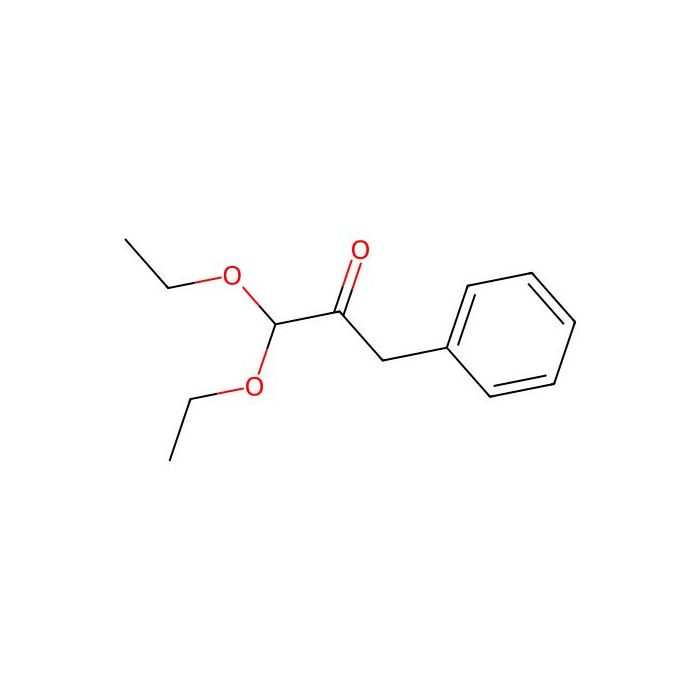
This compound belongs to the class of organic compounds known as benzene and substituted derivatives. These are aromatic compounds containing one monocyclic ring system consisting of benzene.
External Descriptors
Not available
1. Djoumbou Feunang Y, Eisner R, Knox C, Chepelev L, Hastings J, Owen G, Fahy E, Steinbeck C, Subramanian S, Bolton E, Greiner R, and Wishart DS. ClassyFire: Automated Chemical Classification With A Comprehensive, Computable Taxonomy. Journal of Cheminformatics, 2016, 8:61.
Certificati (CoA, COO, BSE/TSE e tabella di analisi)
C of A & Other Certificates(BSE/TSE, COO):
Analytical Chart:
Proprietà chimiche e fisiche
Peso molecolare
222.280 g/mol
XLogP3
2.100
Hydrogen Bond Donor Count
0
Hydrogen Bond Acceptor Count
3
Rotatable Bond Count
7
Exact Mass
222.126 Da
Monoisotopic Mass
222.126 Da
Topological Polar Surface Area
35.500 Ų
Heavy Atom Count
16
Formal Charge
0
Complexity
191.000
Isotope Atom Count
0
Defined Atom Stereocenter Count
0
Undefined Atom Stereocenter Count
0
Defined Bond Stereocenter Count
0
Undefined Bond Stereocenter Count
0
The total count of all stereochemical bonds
0
Covalently-Bonded Unit Count
1
Calcolatori di soluzioni
Molarity Calculator
Determine the necessary mass, volume, or concentration for preparing a solution.
Dilution Calculator
Determine the dilution needed to prepare a stock solution.
Reconstitution Calculator
Recensioni
Recensioni dei clienti
Application Protocols
Not applicable. This is not an antibody/assay reagent. No WB/IHC/IF/FC protocols or dilutions apply. For chemical use, see Reaction Conditions and Application notes provided in other sections.
Biological Roles
This compound is a synthetic organic building block (acetalized aryl ketone) without a defined biological role. It is not a metabolite, cofactor, or biopolymer component under physiological conditions. Any interactions with biological systems would stem from general organic solvent/reagent properties (e.g., hydrophobicity) and are not typically leveraged in biochemistry.
No known endogenous roles (general)
Not a recognized metabolite in primary metabolic pathways.
Not used as a buffer or pH-modulating species.
Laboratory context
Employed in chemical synthesis to access α‑keto aldehydes and related motifs relevant to medicinal chemistry scaffolds, but use is confined to research/synthetic settings.
Note: For research use only; not for diagnostic or therapeutic applications.
Buffer Applications
Not typically applicable. 1,1-Diethoxy-3-phenylpropan-2-one is a neutral, hydrophobic organic reagent and does not function as a buffering agent. For relevant use information, see Reaction & Applications, Synthetic Utility, and Reaction Conditions sections.
Green Alternatives
This product is a reagent rather than a bulk solvent; “greener” considerations focus on reaction media and deprotection conditions used with it.
Greener media for transformations (general guidance)
Use of 2‑MeTHF or CPME instead of THF/Et2O for base-mediated steps can reduce peroxide concerns and improve safety; both are biorenewable/blend-friendly.
For acid-catalyzed acetal hydrolysis, aqueous ethanol or water-rich MeOH under catalytic Brønsted acid minimizes chlorinated solvent use.
Replace DCM with EtOAc or Me‑t‑Bu ether for extractions where feasible.
Trade-offs
2‑MeTHF/CPME may alter enolate reactivity and selectivity; temperature and base choice might need optimization.
Aqueous alcohols can accelerate hydrolysis but may complicate phase separations; consider biphasic acid catalysis with greener organic phases (EtOAc) and phase-transfer acids.
Small comparison (general)
THF → 2‑MeTHF: similar polarity; greener source and better safety profile.
DCM → EtOAc: reduced toxicity and environmental impact; may require longer reaction times for certain acid-catalyzed steps.
Strong mineral acids → solid acid resins (e.g., Amberlyst 15) for recyclable, lower-waste acetal deprotection in alcoholic media.
Pharmaceutical Uses
As a small-molecule synthetic building block, this material is not an excipient of common pharmacopeial status, nor is it intended for direct formulation. In medicinal chemistry workflows, acetal-protected carbonyls like this may be used in route scouting to assemble candidate scaffolds that are later deprotected or transformed. Any use in GMP or clinical manufacturing would require dedicated qualification and compliance not covered by this catalog item.
Excipient status: Not specified for this item; refer to CoA/Spec Sheet.
Recommended context: research-scale synthesis and lead optimization in the laboratory.
Regulatory note: For research use only; not for human or veterinary use.
Physical Properties
Item-specific specifications
Appearance: Not specified for this item; refer to CoA/Spec Sheet.
Grade/Purity: Not specified for this item; refer to CoA/Spec Sheet.
Molecular weight (Product Data field): Not specified for this item; refer to CoA/Spec Sheet.
Computed/literature (general reference values; not item-specific specifications)
Empirical formula: C13H18O3 (computed from structure)
Formula weight: 222.28 g/mol (calculated)
Physical state: typically a colorless to pale yellow liquid for analogous acetalized aryl ketones (literature/general observation)
Solubility profile: expected to be miscible with common organic solvents (Et2O, THF, DCM, toluene, EtOAc); low water solubility; acetal hydrolyzes in aqueous acid (general acetal behavior, literature)
Volatility: moderate (qualitative, based on structural class)
Acetal stability: stable under neutral/basic conditions; cleaved by aqueous acid to the corresponding aldehyde (general, literature)
Not provided for this specific item (consult CoA/SDS or literature):
Boiling point, melting point, density, refractive index, pKa, logP/logD, UV cutoff.
Quality and Grades
Item-specific details
Grade/Purity: Not specified for this item; refer to CoA/Spec Sheet.
Stabilizers/additives: Not specified for this item; refer to CoA/Spec Sheet.
Guidance on interpreting grades (general)
Research-grade reagents are suitable for most synthetic applications. When chromatographic detection (UV) or sensitive catalysis is planned, specialized grades (e.g., HPLC grade solvents or metal-scavenged reagents) may be preferred.
For acetalized carbonyls, low water content is useful to minimize background hydrolysis; Karl Fischer moisture specifications, when provided, indicate suitability for moisture-sensitive steps.
Trace acid can promote slow acetal cleavage; neutral or base-washed packaging and inhibitor-free status can be relevant. If inhibitor or stabilizer is used, it will be listed on the CoA.
What to check on the CoA for this item
Identity confirmation (1H/13C NMR, GC/MS or HPLC retention).
Assay or purity method and result.
Water content (KF), acidity/alkalinity, and any residual solvents.
Appearance and color specification range.
Storage and retest/expiry date.
Reaction and Applications
Role in synthesis (general/literature)
Masked aldehyde equivalent: the 1,1-diethoxy unit is an acetal that can be unveiled (acidic hydrolysis) to the corresponding α-keto aldehyde (3‑phenyl‑2‑oxopropanal). This enables late-stage introduction of an aldehyde adjacent to a ketone.
Benzyl enolate chemistry: the benzyl methylene adjacent to the carbonyl is activated; under basic conditions, it undergoes alkylation, aldol, and Michael-type additions while the acetal remains intact.
Aldol condensations: formation of β‑hydroxyketones or enones after enolate generation (e.g., LDA, NaHMDS; −78 to 0 °C; THF).
Oxidations/reductions: selective reduction of the ketone to secondary alcohols (NaBH4, MeOH) can be performed with the acetal intact; subsequent acetal hydrolysis reveals hydroxy‑aldehydes.
Heterocycle formation: the derived α‑keto aldehyde is a versatile partner in Hantzsch dihydropyridine, Biginelli (as 1,2‑dicarbonyl equivalent), and imidazole/thiazole syntheses.
Practical tips
Sequence planning: perform base-mediated C–C bond formation first, then unmask the aldehyde under mild acid to avoid overreaction of the carbonyls.
Acid sensitivity: even weak acids can slowly hydrolyze the acetal; add a base scavenger (e.g., Et3N) during chromatographic purification if acidic silica causes decomposition.
Workup: quench basic reactions with buffered conditions to prevent inadvertent hydrolysis; remove residual acid after deprotection to avoid further side reactions.
Reaction Conditions
General, literature-informed guidance for this reagent class; adjust to your substrate and scale. These are not item-specific specifications.
Enolate generation and C–C bond formation
Base: LDA or NaHMDS (1.0–1.5 equiv) in dry THF or 2‑MeTHF at −78 to −20 °C, then add electrophile (alkyl halide, aldehyde, imine). The acetal is typically stable under these conditions.
Alternatives: K2CO3 or Cs2CO3 in DMF/MeCN for SN2 alkylations with benzylic or allylic halides at 0–25 °C.
Selective ketone reduction
NaBH4 (1–2 equiv) in MeOH/THF at 0–25 °C affords secondary alcohols while leaving the acetal intact; quench with NH4Cl and keep acidic exposure minimal to avoid hydrolysis.
Acetal deprotection to α‑keto aldehyde
Conditions: 0.1–1.0 M substrate in EtOH/H2O (9:1 to 1:1) with catalytic HCl or p‑TsOH (1–10 mol%), 0–40 °C. Monitor by TLC/LC–MS; typical times range 0.5–6 h depending on acidity and temperature.
Heterogeneous catalysts: sulfonic acid resins (Amberlyst 15) in alcoholic media for easier workup and reduced waste.
Oxidation/state interconversions
After deprotection, the α‑keto aldehyde can be trapped immediately (e.g., with amines or 1,3‑dicarbonyls) to prevent self-condensation or overoxidation.
Remove residual acids from glassware/solvents prior to base-mediated steps.
Use buffered aqueous workups to control pH during quench.
Safety and Handling
Item-specific GHS/label information
Signal word: Not specified for this item; refer to SDS.
H-statements: Not specified for this item; refer to SDS.
GHS classification/pictograms: Not specified for this item; refer to SDS.
General safety considerations for acetalized aryl ketones (literature/general guidance)
Hazards: May cause irritation to skin/eyes/respiratory tract. Organic liquids may present combustible/flammable risks depending on boiling range; handle away from ignition sources until SDS confirms classification.
Incompatibilities: Strong acids (promote acetal hydrolysis to the corresponding aldehyde), strong oxidizers. Avoid prolonged exposure to moisture and mineral acids if acetal integrity must be retained.
PPE: Lab coat, safety glasses/goggles, and appropriate chemical-resistant gloves (e.g., nitrile). Work in a functioning chemical fume hood.
First aid overview: In case of skin/eye contact, rinse with water for at least 15 minutes; remove contaminated clothing. If inhaled, move to fresh air. If ingested or upon concerning exposure, seek medical attention. Always follow your institutional EHS procedures and the SDS.
Spill/cleanup: Contain with inert absorbent; collect in appropriate waste container. Ventilate area. Prevent entry into drains.
Waste: Dispose of as organic solvent waste per local regulations. Segregate from oxidizers and acids if acetal stability is desired.
Special notes
Acetals can liberate ethanol during acid-catalyzed hydrolysis; provide ventilation when conducting deprotections.
Always defer to the product’s SDS for authoritative safety and regulatory details.
Solvent Selection
This reagent is a neutral, moderately lipophilic acetalized aryl ketone. Solvent choice depends on whether you intend to preserve the acetal or hydrolyze it.
Polarity and miscibility (general/literature)
Expected to dissolve well in ethers (THF, diethyl ether), chlorinated solvents (DCM, DCE), esters (EtOAc), and aromatic hydrocarbons (toluene). Limited water solubility.
Dielectric constant selection: medium-polar aprotic media (THF, DCM, MeCN) support enolate formation and many C–C bond-forming steps; nonpolar toluene or hexanes useful for extractions and crystallizations of downstream products.
Choosing conditions by objective
To retain the acetal: avoid protic/acidic media; use dry, neutral/aprotic solvents. Bases (e.g., LDA, NaH) in THF or DME are compatible for enolate chemistry at the benzyl position.
To deprotect to the aldehyde: employ aqueous alcoholic solvent systems with catalytic mineral acid (e.g., EtOH/H2O, acetone/H2O) or neat AcOH; control temperature for selectivity.
Small comparison (general)
THF: good for low-temperature base-mediated steps; may require peroxide testing if stored long-term (solvent-level concern).
DCM: excellent for acid-catalyzed acetal hydrolysis at ambient temperatures; easy workup.
MeCN: supports both acid- and base-catalyzed reactions; higher polarity can accelerate ionic processes.
Practical notes
Dry solvents and glassware prolong acetal integrity.
Avoid strong acids in protic solvents if the acetal must remain intact.
Storage and Reconstitution
Item-specific storage
Storage conditions: Room temperature (per Product Data). For best longevity, store tightly capped under inert atmosphere (e.g., nitrogen) in a dry place to minimize moisture and acid exposure that can hydrolyze the acetal.
Shipped in: Not specified for this item; refer to CoA/Spec Sheet.
Handling guidance (general)
Keep container tightly closed when not in use. Use dry syringes/pipettes; avoid contact with acidic materials or silica that can promote hydrolysis.
If solid impurities or phase separation are observed, warm gently and mix; analyze by NMR/GC before use if critical.
Reconstitution
Not applicable; supplied as a neat reagent. If dilution is required for dosing or stock preparation, prepare solutions in dry, neutral aprotic solvents (e.g., THF, DCM, MeCN, toluene) and use promptly.
Stability notes
Acetals are generally stable to base but can hydrolyze under acidic, moist conditions to the corresponding α‑keto aldehyde. Avoid prolonged exposure to moisture and acids during storage.
For long-term storage, consider refrigeration (2–8 °C) as a precaution if local practice indicates, though room-temperature storage is acceptable per Product Data.
Structure and Identity
A protected carbonyl building block: a 1,1-diethoxy (acetal) substituted analogue of 1‑phenyl‑2‑propanone (P2P), featuring a benzyl methylene adjacent to a ketone and an acetalized terminal carbon.
Item-specific (from Product Data)
SKU: D694958
Product name: 1,1-Diethoxy-3-phenylpropan-2-one
CAS: 19256-31-6
CID: 87992
InChIKey: 198516 (as provided)
Storage conditions: Room temperature
Research use: For research use only
Computed/literature identity (general reference values; not item-specific specifications)
Preferred IUPAC name (literature): 1,1-diethoxy-3-phenylpropan-2-one
Molecular formula (computed): C13H18O3
Molecular weight (computed): 222.28 g/mol
SMILES (literature): CCOC(C)(OCC)C(=O)CH2c1ccccc1
Structural features (description)
Functional groups: one ketone (propan-2-one), one acetal carbon bearing two ethoxy substituents, benzyl methylene (–CH2–Ph).
Ring systems: one monosubstituted phenyl ring.
Stereochemistry: acetal carbon is tetrahedral and achiral in this substitution pattern (bearing two identical ethoxy groups); no defined stereocenters expected.
2D description: phenyl–CH2–CO–C(H)(OEt)2; the carbonyl carbon is flanked by a benzyl methylene on one side and a tertiary acetal carbon on the other.
Synthetic Utility
Functional group logic
The 1,1-diethoxy group serves as a protected aldehyde equivalent that is orthogonal to base; it survives strong bases used to generate the benzyl enolate, enabling C–C bond formations prior to unveiling the aldehyde.
The benzyl position (–CH2–Ph) adjacent to the ketone is activated for alkylation, acylation (Claisen-type), and aldol reactions.
Retrosynthetic value (literature/general)
Provides convergent access to α‑keto aldehydes after acid hydrolysis, unlocking multicomponent condensations (e.g., Biginelli, Hantzsch) and heterocycle construction.
Can be elaborated to β‑amino alcohols, α‑hydroxy ketones, or 1,3‑dicarbonyl derivatives depending on the sequence (reduction/oxidation, aldolization, Michael addition) executed prior to deprotection.
Orthogonality and protection strategy
Stable to bases (LDA, NaH, K2CO3), nucleophiles of moderate strength, and many reducing agents (NaBH4 to selectively reduce the ketone if desired).
Sensitive to protic/Brønsted acids; deprotect under controlled, catalytic conditions to avoid over-oxidation or polymerization of the liberated α‑keto aldehyde.
Workup and purification
Neutral/basic silica or addition of 0.1–1% Et3N during flash chromatography can mitigate acetal cleavage on acidic silica.
Keep temperatures moderate during rotavap when acid is present to avoid premature deprotection.
Target Specificity
Not applicable. This product is a small-molecule reagent and does not possess biological target specificity (no antigen/epitope, clone, isotype, or species reactivity).
Utilizziamo i cookie per garantire il corretto funzionamento del sito web e, ove consentito, per migliorare la tua esperienza. Puoi gestire le tue preferenze in qualsiasi momento nelle Impostazioni. Per saperne di più, consulta la nostra Cookie Policy.
Desidera che le inviamo un messaggio quando avremo sconti disponibili?
Ricordamelo più tardi
Grazie! Controlli la sua casella di posta per confermare.
Products are supplied to verified businesses, institutions, and qualified professionals for research and development use only. Not for use in humans, animals, diagnosis, or therapy.