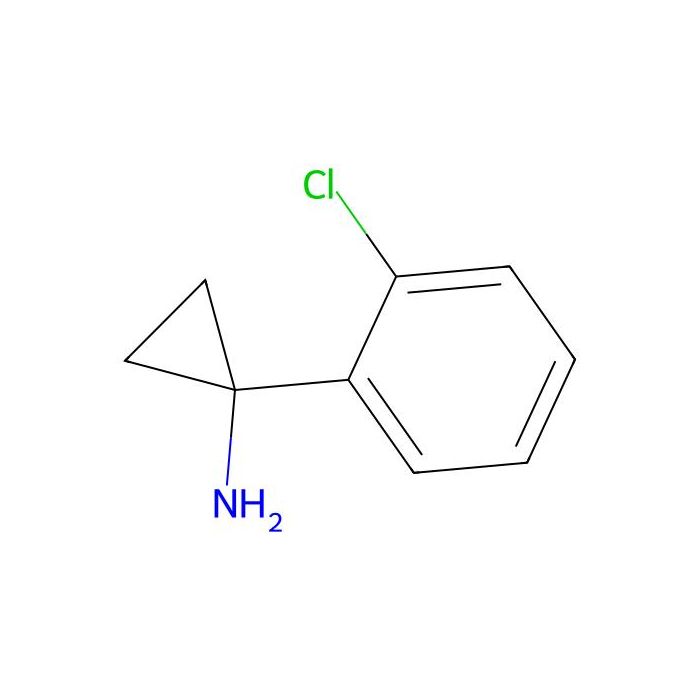
This compound belongs to the class of organic compounds known as chlorobenzenes. These are compounds containing one or more chlorine atoms attached to a benzene moiety.
External Descriptors
Not available
1. Djoumbou Feunang Y, Eisner R, Knox C, Chepelev L, Hastings J, Owen G, Fahy E, Steinbeck C, Subramanian S, Bolton E, Greiner R, and Wishart DS. ClassyFire: Automated Chemical Classification With A Comprehensive, Computable Taxonomy. Journal of Cheminformatics, 2016, 8:61.
Certificati (CoA, COO, BSE/TSE e tabella di analisi)
C of A & Other Certificates(BSE/TSE, COO):
Analytical Chart:
Proprietà chimiche e fisiche
Peso molecolare
167.630 g/mol
XLogP3
1.800
Hydrogen Bond Donor Count
1
Hydrogen Bond Acceptor Count
1
Rotatable Bond Count
1
Exact Mass
167.05 Da
Monoisotopic Mass
167.05 Da
Topological Polar Surface Area
26.000 Ų
Heavy Atom Count
11
Formal Charge
0
Complexity
154.000
Isotope Atom Count
0
Defined Atom Stereocenter Count
0
Undefined Atom Stereocenter Count
0
Defined Bond Stereocenter Count
0
Undefined Bond Stereocenter Count
0
The total count of all stereochemical bonds
0
Covalently-Bonded Unit Count
1
Calcolatori di soluzioni
Molarity Calculator
Determine the necessary mass, volume, or concentration for preparing a solution.
Dilution Calculator
Determine the dilution needed to prepare a stock solution.
Reconstitution Calculator
Recensioni
Recensioni dei clienti
Application Protocols
Not applicable. No tested bioassay protocols (e.g., WB, IHC, IF, FC) are associated with this small-molecule building block. For synthetic use, refer to the Reaction Conditions and Synthetic Utility sections for generalized procedures.
Biological Roles
Item-specific note: For research use only (Product Data). No clinical or diagnostic use is implied.
General chemistry/biochemistry context (no medical claims)
1-Arylcyclopropan-1-amines are structural motifs explored in medicinal and agrochemical discovery due to the cyclopropyl group’s conformational constraint and lipophilicity. The present compound offers an ortho-chloro substituent enabling further diversification.
As a small primary amine, it can form salts with physiological acids (e.g., HCl), but there is no established endogenous biological role.
Metabolic expectations (by analogy): Primary aliphatic amines often undergo N-acylation, N-oxidation (to hydroxylamine/NO species), and phase II conjugation; aryl chlorides can be metabolically inert or undergo oxidative dechlorination under specific contexts. Such considerations are relevant only for in vitro enzyme studies and should not be construed as therapeutic information.
Laboratory use cases (biochemical research)
Potential probe precursor: Can be derivatized to amide/urea conjugates for target engagement studies or for immobilization on solid supports.
Physicochemical tuning: Ortho-chloro substitution may influence permeability and binding in SAR campaigns when incorporated into screening libraries.
Buffer Applications
This compound is not a dedicated buffering agent. As a primary amine, its conjugate acid has pKaH in the approximate 9.5–10.5 range (literature for analogous amines), but it is not typically used to prepare defined laboratory buffers.
Practical guidance
For aqueous work, convert to a defined salt (e.g., HCl) to improve solubility and pH control, but use standard biological buffers (HEPES, Tris, phosphate) to control pH.
If included in assay media, verify compatibility with buffer components and avoid high concentrations that could cause nonspecific interactions or pH drift.
Green Alternatives
Because this item is a multifunctional building block rather than a solvent or reagent used stoichiometrically, greener practice centers on solvent choice and coupling reagent selection.
Greener solvent swaps (general guidance)
Replace DCM/THF with 2-MeTHF or EtOAc where feasible (amide couplings, protections, extractions).
Use aqueous ethanol/iPrOH or MeCN when possible in Pd-catalyzed couplings; consider micellar catalysis for Suzuki/Buchwald reactions.
Coupling reagent choices
Prefer carbodiimides with catalytic additives (EDC·HCl + HOBt/HOAt replacement such as Oxyma) or greenish peptide couplings (COMU) over highly hazardous reagents.
Comparison snapshot (literature/general)
Dioxane vs 2-MeTHF: 2-MeTHF is bio-derived, higher boiling, and often supports similar Pd-catalyzed couplings with lower toxicity.
Chlorinated workups vs EtOAc/MTBE: Switch to EtOAc/MTBE to reduce halogenated waste streams.
Waste minimization
Protect the amine only when necessary; direct coupling under catalyst systems tolerant of free amines avoids extra steps.
Telescoping acylation → salt formation can reduce solvent exchanges and crystallizations.
Note: These are general sustainability practices; they are not item-specific specifications.
Pharmaceutical Uses
No excipient or pharmacopoeial status is specified for this item; refer to CoA/Spec Sheet if needed. For research use only.
Role in pharmaceutical R&D/manufacturing (general)
Versatile intermediate: The primary amine allows rapid generation of amides, sulfonamides, ureas, and carbamates; the aryl chloride enables Pd/Ni-catalyzed diversification. This dual functionality makes it valuable for medicinal chemistry SAR campaigns.
Salt screening: Formation of pharmaceutically acceptable salts (e.g., HCl, mesylate) is commonly employed during lead optimization to modulate solubility and crystallinity for in vitro testing—strictly within research.
Conjugation chemistry: Can be linked to tags/handles (biotin, fluorophores) via amide/carbamate formation for assay development.
Process considerations (general)
Protect the amine during cross-coupling to minimize catalyst inhibition.
Choose greener solvents (2-MeTHF, EtOAc) and catalytic couplings where possible to improve sustainability profiles.
Physical Properties
Item-specific (Product Data)
Appearance: Not specified for this item; refer to CoA/Spec Sheet.
Grade/Purity: Not specified for this item; refer to CoA/Spec Sheet.
Literature/estimated properties for guidance (not item-specific specs)
Molecular formula: C9H11ClN (structure-derived)
Molecular weight: ~169 g/mol (structure-derived)
Physical state: Typically an organic base; primary arylcyclopropanamines of this size are often liquids or low-melting solids. Exact MP/BP: Not widely reported.
Basicity: Conjugate acid pKaH expected in the ~9.5–10.5 range for primary benzylic/aryl-adjacent aliphatic amines (literature, analogous systems). Actual pKa for this exact compound is not located here.
Solubility (qualitative, general):
Free base: Expected to be miscible or highly soluble in common organic solvents (EtOAc, THF, DCM, MeOH, toluene). Limited solubility in water as free base.
Protonated salts (e.g., HCl): Freely soluble in water and polar protic solvents.
LogP/logD: Not specified for this item; refer to CoA/Spec Sheet. For similar arylcyclopropanamines, moderate lipophilicity is typical.
Density, refractive index, UV cutoff: Not specified for this item; refer to CoA/Spec Sheet.
Practical notes (general)
Forms stable crystalline salts with HCl/HBr that can aid purification and handling.
Free base may absorb CO2/H2O and darken on air exposure; inert-atmosphere storage in the Product Data aligns with best practices.
Quality and Grades
Item-specific (Product Data)
Grade/purity: Not specified for this item; refer to CoA/Spec Sheet.
Interpreting grade (general guidance)
If provided as “research grade,” material is intended for laboratory R&D and not for clinical or food use.
High-purity organics for synthesis are commonly assessed by NMR, HPLC/GC, and HRMS; UV-Vis background and trace metals are generally less critical for small-molecule building blocks than for chromatography solvents.
Stabilizers: None indicated. Given the amine functionality, the manufacturer’s recommendation to store under argon, protected from light, and desiccated suggests sensitivity to moisture/oxygen that can lead to discoloration or trace impurity growth over time.
What to check on the CoA/Spec Sheet
Assay/purity method (% area by GC or HPLC; NMR purity).
Residual solvents and water (Karl Fischer), if reported.
Identity confirmation (1H/13C NMR, MS, IR) and appearance.
If supplied as free base vs. salt (and corresponding stoichiometry), as this affects assay and handling.
Practical QC tips (general)
For free bases, record immediate 1H NMR on receipt; re-check after storage to confirm stability.
If needed, convert a portion to its HCl salt to benchmark purity by MP and for alternative storage.
Reaction and Applications
Functional handles
Primary amine: Nucleophilic; forms amides, ureas, sulfonamides, carbamates; suitable for reductive amination and N-alkylation.
Aryl chloride (ortho to cyclopropyl substituent): Cross-coupling handle (Suzuki–Miyaura, Buchwald–Hartwig amination, Ullmann-type), though aryl chlorides generally require more active catalysts/ligands than bromides/iodides.
Representative applications (literature/general)
Library synthesis in medicinal chemistry: 1-arylcyclopropan-1-amines are common motifs; rapid parallel diversification via (a) amide couplings and (b) aryl chloride cross-coupling enables 2D SAR.
Protect/deprotect strategies: Boc or CBz protection prior to Pd-catalyzed couplings can avoid catalyst poisoning by the free amine.
Electrophile pairing: Acyl chlorides/anhydrides for amides; sulfonyl chlorides for sulfonamides; isocyanates for ureas; chloroformates for carbamates.
Orthogonal reactivity: The strained cyclopropane typically survives many Pd-catalyzed couplings and acylations but can undergo ring-opening under strongly acidic, strongly Lewis acidic, or radical conditions—plan conditions accordingly.
Practical tips
For cross-coupling on the aryl chloride, use Pd precatalysts with bulky, electron-rich ligands (e.g., XPhos/BrettPhos-type) or Ni catalysts for challenging aryl chlorides; base such as K3PO4, Cs2CO3; solvents like dioxane/2-MeTHF/toluene; 60–110 °C.
Dry, oxygen-free conditions help maintain color and reduce oxidative byproducts; align with the Product Data’s argon/desiccation guidance.
Forming crystalline salts (e.g., HCl) can simplify isolation and purification after acylation/coupling steps.
Reaction Conditions
General literature guidance (not item-specific specs). Optimize per substrate and scale.
Amide coupling (to carboxylic acids)
Reagents: HATU or EDC·HCl + Oxyma; base DIPEA or NMM.
Solvent: DMF, DCM, MeCN, or 2-MeTHF/EtOAc.
Temperature/time: 0–25 °C, 1–16 h. Typical isolated yields: 70–95% for hindered-to-moderate substrates.
Temperature/time: 0–25 °C, 1–4 h. Quench and wash with aqueous acid/base as appropriate.
Suzuki–Miyaura on the aryl chloride
Catalyst: Pd2(dba)3 (1–2 mol%) with XPhos/SPhos (2–4 mol%) or precatalyst; base: K3PO4 or Cs2CO3 (2–3 equiv).
Solvent: 1,4-dioxane/H2O, toluene/H2O, or 2-MeTHF/H2O.
Temperature: 80–110 °C; time: 4–24 h. Aryl chlorides generally require more forcing conditions.
Buchwald–Hartwig amination (on aryl chloride)
Catalyst: Pd-PEPPSI or Pd/XPhos-type systems (1–5 mol% Pd); base: NaOtBu or Cs2CO3.
Solvent: Toluene, dioxane, or 2-MeTHF.
Temperature: 80–110 °C; time: 6–20 h.
Reductive amination (at the amine partner’s counterpart)
Carbonyl partner: Ketone/aldehyde; reductant: NaBH3CN or NaBH(OAc)3.
Solvent: MeOH, DCE, or MeCN with AcOH as promoter.
Temperature: 0–25 °C; time: 2–16 h.
Notes
Protect the amine during Pd catalysis if catalyst inhibition is observed.
Maintain inert atmosphere and dryness as per Product Data to reduce side reactions.
Safety and Handling
Item-specific (Product Data)
Storage: Store at 2–8 °C, protected from light, argon charged, desiccated. Shipped on wet ice.
GHS/SDS fields (signal word, H-statements, pictograms, classification): Not specified for this item; refer to SDS for authoritative information.
General hazards of primary aliphatic amines (informational; consult SDS for this item)
May be harmful if swallowed, inhaled, or in contact with skin; can be irritating to skin, eyes, and respiratory tract.
Corrosivity: Many low-MW amines can be corrosive/irritant at higher concentrations; neutralize spills cautiously.
Reactivity/incompatibilities: Strong oxidizers, acyl/alkyl halides, acid anhydrides, isocyanates (exothermic reactions); CO2 absorption forms carbamates; reacts with mineral acids to form salts.
Handling recommendations
Engineering controls: Work in a fume hood; minimize exposure to air and moisture per Product Data.
Inert handling: Keep container tightly closed under argon; use dry, oxygen-free solvents when high purity is critical.
Light sensitivity: Store/handle away from light to minimize discoloration/oxidation as directed in Product Data.
First-aid overview (general)
Inhalation: Move to fresh air; seek medical attention if symptoms persist.
Skin/eye contact: Rinse with plenty of water for at least 15 minutes; remove contaminated clothing; obtain medical advice.
Ingestion: Rinse mouth; do not induce vomiting; seek medical attention.
Always defer to the product-specific SDS for definitive hazard classification and response guidance.
Solvent Selection
This compound is a small, primary amine with an aryl chloride handle; solvent choice is typically driven by the intended transformation (coupling, acylation, protection) and by handling as free base vs. salt.
General polarity/miscibility (general knowledge)
Free base: Highly soluble in polar aprotic and many nonpolar organic solvents (THF, DCM, EtOAc, MeOH, toluene). Poor water solubility in free-base form.
Protonated salts: Water- and alcohol-soluble; less soluble in hydrocarbons and ethers.
Typical selections by task
Amide coupling: DMF, NMP, DCM, MeCN, or greener alternatives like 2-MeTHF/EtOAc with modern coupling reagents.
Carbamate (Boc/CBz) protection: DCM, MeCN, THF; for greener options, 2-MeTHF or EtOAc often perform well.
N-alkylation: Polar aprotic solvents (DMF, DMSO, MeCN) or alcohols; use base and phase-transfer conditions as needed.
Cross-coupling (on aryl chloride): Dioxane, THF, toluene, or mixed aqueous alcohols; consider 2-MeTHF as a greener replacement for dioxane/THF.
Comparison (general)
DCM vs 2-MeTHF: DCM gives rapid mixing and easy workup; 2-MeTHF reduces chlorinated solvent use and can support many couplings and protections with comparable rates.
DMF/NMP vs MeCN/EtOAc: DMF/NMP enhance solubility of salts and reagents but pose worker exposure concerns; MeCN/EtOAc are easier to remove and generally safer, though sometimes less solvating.
Storage and Reconstitution
Item-specific (Product Data)
Storage conditions: Store at 2–8 °C, protected from light, argon charged, desiccated.
Shipping: Shipped on wet ice.
Practical handling (general guidance aligned with Product Data)
Upon receipt: Allow the sealed container to equilibrate to room temperature before opening to avoid moisture condensation. Open under inert atmosphere if possible.
Inert storage: Backfill headspace with argon or nitrogen after each use. Keep tightly closed with a PTFE-lined cap.
Light/moisture sensitivity: Minimize light exposure; store with desiccant. The free base may slowly discolor on air exposure.
Solution preparation: Prepare stock solutions in dry, oxygen-free solvents (e.g., anhydrous DCM, THF, 2-MeTHF, MeCN). For aqueous applications, consider forming a defined salt (e.g., HCl) immediately before use.
Freeze–thaw: Not typically necessary at 2–8 °C for the neat material; if stored as solutions, aliquot to avoid repeated thawing and to limit air/moisture uptake.
Shelf-life monitoring
Periodically verify integrity by 1H NMR/LC as needed, especially if color changes are observed.
Disposal: Follow institutional and local regulations for amine-containing organic waste.
For definitive storage specifications and retest dates, consult the product’s CoA/Spec Sheet.
Structure and Identity
Brief description: 1-(2-Chlorophenyl)cyclopropanamine is an arylcyclopropane bearing a primary amine on the bridgehead carbon and a 2-chlorophenyl substituent, offering both a nucleophilic amine and an aryl chloride handle for further derivatization.
Item-specific (Product Data)
CAS: 870708-39-7
InChIKey: Not specified for this item; refer to CoA/Spec Sheet. (Product Data shows “432762”, which is not a complete InChIKey.)
SMILES: Not specified for this item; refer to CoA/Spec Sheet.
Molecular formula (derived from structure): C9H11ClN (literature/structure-derived)
Molecular weight: ~169 g/mol (literature/structure-derived; calc. using C9H11ClN ≈ 169)
2D structural features (descriptive)
Ring system: 3-membered cyclopropane ring.
Substitution pattern: The cyclopropane C1 is substituted by a primary amino group (–NH2) and a 2-chlorophenyl group; the remaining two bonds complete the cyclopropane ring.
Functional groups: Primary aliphatic amine; aryl chloride (ortho-chloro on phenyl).
Stereochemistry: The substituted cyclopropane carbon bears –NH2 and aryl substituents; the two ring bonds at C1 are symmetry-equivalent in the parent cyclopropane framework, so no fixed stereocenter is implied by the name (achiral as named).
General chemistry notes
The juxtaposition of a strained cyclopropane and a nucleophilic amine often results in distinct reactivity versus linear analogs, while the aryl chloride enables cross-coupling diversification.
Aryl chloride enables: Pd- or Ni-catalyzed cross-couplings (Suzuki–Miyaura with boronic acids/esters; Buchwald–Hartwig for C–N couplings; Kumada/Negishi under optimized conditions); nucleophilic aromatic substitution is generally limited on simple 2-chloroarenes unless strongly activated.
Retrosynthetic value
From 2-chlorobenzaldehyde/2-chlorophenyl precursors via cyclopropanation and subsequent amination; or via addition of aminating agents to preformed 1-(2-chlorophenyl)cyclopropyl electrophiles.
Orthogonal derivatization: Install amide/urea first, then couple the aryl chloride; or perform cross-coupling on the aryl chloride after Boc protection of the amine.
Stability/reactivity notes (general)
Cyclopropane ring is strain-sensitive: avoid strong Brønsted acids, aggressive Lewis acids, or radical conditions that may induce ring opening.
Free-base amine can coordinate to Pd/Ni; amine protection or use of catalyst systems tolerant to free amines is recommended.
Purification strategies
Acid–base extraction leveraging amine basicity.
Crystallization as HCl salt, followed by basification to regenerate free base if required.
Target Specificity
Not applicable. This product is a small-molecule building block, not a biological macromolecule or affinity reagent. No antigen, epitope, clone, isotype, or species reactivity data are relevant.
We use cookies to ensure the website functions properly and, where permitted, to improve your experience. You can manage your preferences at any time in Settings. Learn more in our Cookie Policy.
Shall we send you a message when we have discounts available?
Remind me later
Thank you! Please check your email inbox to confirm.
Products are supplied to verified businesses, institutions, and qualified professionals for research and development use only. Not for use in humans, animals, diagnosis, or therapy.