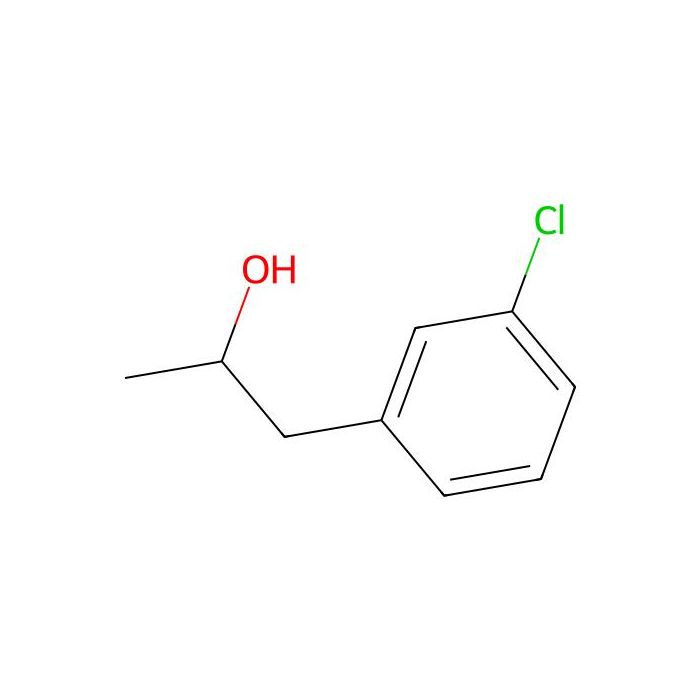
This compound belongs to the class of organic compounds known as phenylpropanes. These are organic compounds containing a phenylpropane moiety.
External Descriptors
Not available
1. Djoumbou Feunang Y, Eisner R, Knox C, Chepelev L, Hastings J, Owen G, Fahy E, Steinbeck C, Subramanian S, Bolton E, Greiner R, and Wishart DS. ClassyFire: Automated Chemical Classification With A Comprehensive, Computable Taxonomy. Journal of Cheminformatics, 2016, 8:61.
Certificati (CoA, COO, BSE/TSE e tabella di analisi)
C of A & Other Certificates(BSE/TSE, COO):
Analytical Chart:
Proprietà chimiche e fisiche
Peso molecolare
170.630 g/mol
XLogP3
2.900
Hydrogen Bond Donor Count
1
Hydrogen Bond Acceptor Count
1
Rotatable Bond Count
2
Exact Mass
170.05 Da
Monoisotopic Mass
170.05 Da
Topological Polar Surface Area
20.200 Ų
Heavy Atom Count
11
Formal Charge
0
Complexity
116.000
Isotope Atom Count
0
Defined Atom Stereocenter Count
0
Undefined Atom Stereocenter Count
1
Defined Bond Stereocenter Count
0
Undefined Bond Stereocenter Count
0
The total count of all stereochemical bonds
0
Covalently-Bonded Unit Count
1
Calcolatori di soluzioni
Molarity Calculator
Determine the necessary mass, volume, or concentration for preparing a solution.
Dilution Calculator
Determine the dilution needed to prepare a stock solution.
Reconstitution Calculator
Recensioni
Recensioni dei clienti
Application Protocols
Not applicable. No validated bioassay or analytical protocols are provided for this item. For synthetic use, follow standard organic chemistry procedures appropriate to the chosen transformation (see Reaction Conditions tab) and consult primary literature for optimization.
Biological Roles
This material is intended as a synthetic building block and research chemical. No organismal biological function is assigned to 1-(3-chlorophenyl)propan-2-ol.
General chemistry context (informational):
Aryl secondary alcohols are common motifs in xenobiotic metabolism studies; benzylic alcohols can undergo oxidation to ketones/acids in microsomal systems (literature). The presence of a chloro substituent can influence lipophilicity and metabolic stability.
Applicability note:
Not typically used as a biochemical reagent or probe with defined endogenous targets. For target-based studies, derivatization into more specialized ligands is generally required.
Buffer Applications
Not typically applicable. 1-(3-Chlorophenyl)propan-2-ol is a hydrophobic small-molecule building block, not a buffering agent. If used in bioassays, it would be dissolved in a compatible co‑solvent (e.g., DMSO, ethanol) and then diluted into the assay buffer, maintaining low final organic percentages to avoid perturbing the system.
Green Alternatives
While the compound itself is a substrate/building block, greener choices can be made for solvents and reagents during its use.
Greener solvent swaps (general guidance):
Replace DCM/chloroform with EtOAc, MeTHF, cyclopentyl methyl ether (CPME), or toluene where feasible.
Use 2‑methyltetrahydrofuran (2‑MeTHF) or dimethyl carbonate (DMC) in protection/esterification chemistry in place of THF/DCM.
Consider propylene carbonate or ethyl lactate for certain polar transformations if compatibility allows.
Greener oxidations (alcohol → ketone):
Catalytic TEMPO/NaOCl (bleach) in biphasic water/EtOAc systems; or Oxone/TEMPO.
Aerobic oxidations with nitroxyl catalysts and copper/manganese co‑catalysts in greener media (AcOEt, MeOH) under O2; avoid stoichiometric Cr(VI).
Greener activations/derivatizations:
Enzymatic acylation (lipases) for kinetic resolution under mild conditions in green solvents (2‑MeTHF, EtOAc).
Solid-supported reagents to reduce waste and simplify workup.
Tradeoffs:
Greener solvents may alter solubility/kinetics; verify substrate solubility and adjust temperature or concentration.
Aqueous oxidations can lead to emulsions; include salt or phase-transfer strategies to improve separations.
Pharmaceutical Uses
No pharmacopeial or excipient status is specified for this item. It is supplied for research use only.
General formulation context (informational):
Aryl alcohols may serve as intermediates during API synthesis or as synthetic handles to access esters/ethers and subsequently more polar or protected derivatives. If incorporated into medicinal chemistry programs, compound handling typically involves dissolution in DMSO or PEGylated vehicles for screening.
Compliance note:
For any GMP or clinical use, dedicated qualification and pharmacopeial conformance would be required; this product is not supplied for such purposes.
Physical Properties
Item-specific specifications (this lot):
Appearance: Not specified for this item; refer to CoA/Spec Sheet.
Purity/grade: Not specified for this item; refer to CoA/Spec Sheet.
Water/peroxide/metal limits, UV cutoff: Not specified for this item; refer to CoA/Spec Sheet.
Literature/typical physicochemical characteristics for 1-(3-chlorophenyl)propan-2-ol (reference only; not product specs):
Physical state: typically a colorless to pale liquid or low‑melting solid depending on purity and temperature.
Polarity/functional groups: secondary alcohol (H‑bond donor/acceptor) appended to a lipophilic aryl scaffold; overall amphiphilic character with moderate hydrophobicity.
Solubility: expected to be miscible with many organic solvents (e.g., ethers, chlorinated solvents, aromatics, alcohols); low to moderate solubility in water due to the hydrophobic ring and only one OH group.
Acid–base: neutral alcohol (pKa of conjugate acid in strong acid; OH pKa for related benzylic secondary alcohols typically ~16–18 in water, literature).
Partitioning: benzylic secondary alcohols bearing chloroaryl groups generally show positive logP (>2, literature), reflecting predominant organic phase affinity.
Practical handling implications:
The benzylic –CH2– group can slightly increase susceptibility to oxidation compared with purely aliphatic alcohols; protect from prolonged air/heat exposure when high purity is critical.
Viscosity is modest; compound is readily pipettable when liquid and dissolves quickly in common organic media.
Quality and Grades
Item-specific grade/purity: Not specified for this item; refer to CoA/Spec Sheet.
How to interpret common grades for this compound class (general guidance):
Analytical/Reagent grade: suitable for quantitative work; tighter limits on nonvolatile residue, acidity/alkalinity, and GC purity.
Synthesis grade: acceptable for most transformations; may contain minor isomers or residual solvents.
Chiral quality note: this secondary alcohol has a stereocenter at C2 of the propyl chain. Unless labeled as (R), (S), or enantiomeric/enantiopure, assume racemic. Chiral purity can impact asymmetric catalysis outcomes and downstream optical rotation—verify with chiral HPLC if relevant.
Stabilizers: not typically required for simple benzylic alcohols; any added stabilizer would be listed on the CoA. Absence/presence of stabilizer affects suitability for sensitive catalysis or polymerizations.
Documentation:
Request CoA/SDS specific to the lot for exact purity assay (GC/HPLC), residual solvent profile, water content, and any titratable impurities. These are essential for planning sensitive reactions (e.g., organometallics, enzymatic steps).
Reaction and Applications
Role in synthesis:
Benzylic secondary alcohol precursor for 3‑chloropropiophenone via oxidation (e.g., Dess–Martin periodinane, Swern, PCC, or catalytic TEMPO/oxone systems; literature). The resulting ketone is a versatile handle for further elaboration (e.g., α‑functionalization, reductive amination).
Intermediate for carbonate/ester/ether formation (e.g., Mitsunobu inversion/etherification, Steglich esterification, tosylation followed by displacement to access 3‑chlorophenethyl derivatives).
Protectable as silyl ethers (TBS, TBDPS) for multistep sequences where orthogonality is required.
Functional group behavior:
The secondary benzylic alcohol undergoes selective oxidations to the corresponding ketone under mild conditions; benzylic activation often improves rates.
Under acidic conditions, dehydration to alkenes (styrenyl derivatives) can occur; regioselectivity may favor formation of 1‑(3‑chlorophenyl)propene isomers.
Can be converted to halides (SOCl2, PBr3) or activated sulfonates (TsCl, MsCl) for SN1/SN2 transformations. Benzylic positions commonly favor SN1 pathways; neighboring group participation and solvent choice control outcomes.
Use-cases in discovery chemistry:
Scaffolding for SAR around 3‑chloroaryl fragments; the secondary alcohol is a modifiable polarity anchor to tune lipophilicity, HBD/HBA counts, and metabolic soft spots.
Entry to chiral series via kinetic resolution (enzymatic acylation with lipases) or asymmetric oxidation/reduction to enrich (R)/(S) configurations.
Practical tips:
Dry before moisture-sensitive steps (e.g., use molecular sieves or azeotropic drying). Benzylic alcohols are prone to mild air oxidation; minimize prolonged heating in air when high purity is critical.
For chiral work, establish enantiomeric ratio by chiral HPLC or Mosher ester analysis.
Reaction Conditions
General literature guidance for this substrate class (verify experimentally; not product specifications):
Oxidation (alcohol → ketone):
Dess–Martin periodinane (1.3–1.5 equiv) in DCM, 0 °C to rt, 1–3 h; typical yields high for benzylic alcohols.
TEMPO/NaOCl (0.05–0.1 equiv TEMPO, pH ~8.6 buffer), biphasic H2O/EtOAc, 0–5 °C then rt; efficient and greener.
Swern oxidation (DMSO, oxalyl chloride, Et3N) in DCM, −78 °C to 0 °C; clean conversions with minimal over-oxidation.
Activation/derivatization:
Tosylation: TsCl (1.1–1.5 equiv), pyridine or DCM/DMAP, 0 °C to rt, 2–12 h; subsequent SN1/SN2 depends on nucleophile/solvent.
Mitsunobu etherification/esterification: DEAD or DIAD, PPh3, THF/THF alternatives (2‑MeTHF); inversion at the stereocenter.
Protection:
Silylation: TBSCl (1.2–1.5 equiv), imidazole in DMF or DCM, rt to 40 °C; rapid and high-yielding; deprotect with TBAF or mild acid.
Kinetic resolution (enzymatic):
Lipase-catalyzed acylation (vinyl acetate or isopropenyl acetate) in MTBE or 2‑MeTHF at rt; enantioenriched alcohol and acetate obtained (optimize E value).
Notes:
Ensure rigorously anhydrous conditions for acid chloride/sulfonyl chloride steps.
The meta‑chloro aryl ring is relatively stable under many conditions but can undergo metal-catalyzed cross-coupling if desired; protect or avoid conditions that promote aryl–Cl activation unless intended.
Monitor by GC or HPLC; benzylic alcohols show distinct UV absorbance near 200–230 nm due to the aryl chromophore.
Safety and Handling
Item-specific hazard information (from Product Data):
Signal word: Not specified for this item; refer to SDS.
H-statements: Not specified for this item; refer to SDS.
GHS classification: Not specified for this item; refer to SDS.
Pictograms: Not specified for this item; refer to SDS.
General safety guidance for aryl secondary alcohols (informational; always defer to the SDS):
Likely hazards: eye and skin irritation; may cause respiratory irritation if aerosolized or heated (literature patterns for benzylic alcohols). Avoid inhalation of vapors/mists and contact with skin/eyes.
PPE: lab coat, safety glasses or splash goggles, and appropriate chemical-resistant gloves (e.g., nitrile). Handle in a fume hood to control vapors and during transfers.
Incompatibilities: strong oxidizers (risk of exothermic reaction/oxidation to ketone or acids), strong acids/bases (can promote dehydration, substitution, or oxidation), and reactive acylating/chlorinating agents.
First aid overview: rinse skin with soap/water on contact; flush eyes with water for 15+ minutes and seek medical attention; move to fresh air if inhaled; if swallowed, rinse mouth and seek medical advice. Provide SDS to responders.
Fire safety: treat as combustible organic. Use CO2, dry chemical, or foam. Thermal decomposition may produce HCl and other irritants from the chloroaryl moiety.
Waste: collect as halogenated organic waste where required by local regulations.
Research use only: per Product Data, for research use only.
Solvent Selection
This product is a small-molecule building block rather than a process solvent; however, solvent choice influences its handling and reactivity.
Polarity and miscibility profile (literature/general):
Amphiphilic: aromatic ring (nonpolar) plus one OH (polar). Readily soluble in ethers (THF, MTBE), chlorinated solvents (DCM, CHCl3), aromatics (toluene), and higher alcohols; limited water solubility.
Hydrogen bonding: can act as H‑bond donor/acceptor; forms strong interactions in protic solvents (MeOH, EtOH), which can alter reaction rates/selectivity.
Selection guidance by task:
Nucleophilic substitutions/esterifications: use aprotic solvents (DCM, toluene, acetonitrile) to limit competing H‑bonding; remove traces of water.
Oxidation to ketone: acetonitrile, DCM, EtOAc, or greener MeTHF/2‑MeOx depending on oxidant; maintain good oxygen control if aerobic catalysts are used.
Protection (silylation, acylation): DCM or THF with a base (imidazole, pyridine, or amine); ensure anhydrous conditions.
As a substrate in transfer hydrogenation/dehydrogenation: isopropanol or cyclohexane/toluene blends as medium; catalyst compatibility dictates choice.
Quick comparison (general):
DCM: excellent solubility and fast kinetics; not green, use with containment.
THF: broad solubility; peroxide former; consider 2‑MeTHF as greener.
Toluene/EtOAc: good balance of solvency and greener profile; useful for crystallizations of derivatives.
Storage and Reconstitution
Storage (from Product Data):
Store at room temperature.
Additional handling guidance (general):
Keep container tightly closed in a dry, well‑ventilated place. Minimize exposure to strong light and air to reduce potential slow oxidation of benzylic sites.
If long-term storage is planned, consider aliquoting to limit headspace exposure; flushing with inert gas can be beneficial for sensitive applications.
Reconstitution:
Supplied neat (appearance not specified). For solution preparation, dissolve in a suitable anhydrous organic solvent (e.g., DCM, toluene, THF, EtOAc, or alcohols) as dictated by the intended application. Filter if particulate is observed.
Shipping: Not specified for this item; refer to CoA/Spec Sheet.
Freeze–thaw: Not applicable to neat liquids/solids; if stored as a solution, avoid repeated freeze–thaw cycles and use dry, oxygen-poor conditions for sensitive work.
Structure and Identity
A meta-chloro substituted aryl–alcohol building block featuring a benzylic secondary alcohol on a three‑carbon side chain.
Item-specific (from Product Data):
Product name: 1-(3-Chlorophenyl)propan-2-ol
CAS: 343270-59-7
CID: 10953969
InChIKey: 91732 (as provided)
SMILES: Not specified for this item; refer to CoA/Spec Sheet.
Molecular formula: Not specified for this item; refer to CoA/Spec Sheet.
Molecular weight: Not specified for this item; refer to CoA/Spec Sheet.
Literature/computed identifiers and features (for reference only; verify against CoA/SDS):
Expected molecular formula (literature): C9H11ClO
Approx. formula mass (literature): ~170.63 g/mol
Representative SMILES (literature): CC(O)CH2c1cccc(Cl)c1 (depicts a 3‑chlorophenyl attached at the terminal carbon of propan‑2‑ol)
Key structural features: 3‑chlorophenyl ring (meta‑Cl), benzylic methylene (–CH2–) adjacent to the ring, and a secondary alcohol at C2 of the propyl chain (–CH(OH)CH3). No defined stereochemistry (typically supplied as racemate unless otherwise specified).
2D description in words:
A benzene ring bearing a chlorine substituent at the meta position relative to the side chain. The ring is bonded to a –CH2–CH(OH)–CH3 fragment, where the central carbon carries the hydroxyl group (secondary alcohol).
Synthetic Utility
Transformations from the alcohol:
Oxidation to the ketone (3‑chloropropiophenone) for α‑functionalization (e.g., enolate alkylation/halogenation), reductive amination, or Baeyer–Villiger oxidation to esters.
Conversion to leaving groups (tosylate/mesylate) followed by substitution to introduce heteroatoms (N, O, S) or carbon nucleophiles; potential routes to 3‑chlorophenethyl scaffolds.
Protection as TBS/TBDPS ethers for multistep synthesis with orthogonal deprotection.
Formation of carbonates/urethanes for prodrug-like derivatives in discovery chemistry.
Accessing the alcohol:
From 3‑chlorohydrocinnamaldehyde via nucleophilic addition and subsequent functional group manipulation (literature strategies).
Reduction of the corresponding ketone precursor bearing a terminal ethyl chain on the carbonyl (to give the secondary alcohol at C2) using NaBH4 or catalytic hydrogenation.
Enantioselective routes: asymmetric transfer hydrogenation (ATH) of the ketone, Noyori-type Ru catalysts; or biocatalytic ketoreductases to set stereochemistry.
Retrosynthetic value:
The benzylic CH2 provides a handle for further oxidation to aldehydes/acids under controlled conditions, enabling divergent synthesis.
The meta‑chloro allows cross-coupling diversification (e.g., Buchwald–Hartwig, Suzuki–Miyaura) after conversion to the aryl halide partner on related frameworks; for this substrate, the aryl chloride is inherently present and can be employed if the alcohol is masked or tolerated.
Target Specificity
Not applicable. This product is a small-molecule chemical building block with no antibody, enzyme, or biological target specificity data provided for this item.
We use cookies to ensure the website functions properly and, where permitted, to improve your experience. You can manage your preferences at any time in Settings. Learn more in our Cookie Policy.
Shall we send you a message when we have discounts available?
Remind me later
Thank you! Please check your email inbox to confirm.
Products are supplied to verified businesses, institutions, and qualified professionals for research and development use only. Not for use in humans, animals, diagnosis, or therapy.