This compound belongs to the class of organic compounds known as benzene and substituted derivatives. These are aromatic compounds containing one monocyclic ring system consisting of benzene.
External Descriptors
Not available
1. Djoumbou Feunang Y, Eisner R, Knox C, Chepelev L, Hastings J, Owen G, Fahy E, Steinbeck C, Subramanian S, Bolton E, Greiner R, and Wishart DS. ClassyFire: Automated Chemical Classification With A Comprehensive, Computable Taxonomy. Journal of Cheminformatics, 2016, 8:61.
Determine the necessary mass, volume, or concentration for preparing a solution.
Dilution Calculator
Determine the dilution needed to prepare a stock solution.
Reconstitution Calculator
Recensioni
Recensioni dei clienti
Application Protocols
No application protocols are provided for this small-molecule reagent in the Product Data. Typical laboratory uses are described under Reaction & Applications, Synthetic Utility, and Reaction Conditions.
For analytical use, general guidance (literature):
GC/GC–MS: Dilute in an appropriate solvent (e.g., DCM, EtOAc, hexane), use non-polar columns (5% phenyl-methylpolysiloxane); monitor for purity and residual solvents.
NMR: Record spectra in CDCl3 or DMSO-d6; expect benzylic signals near 3–4 ppm and carbonyl carbon around 200 ppm in 13C NMR.
Refer to your internal methods and validation requirements for any regulated or critical applications.
Biological Roles
This product is a synthetic organic reagent/building block. No intrinsic biological role is assigned in the Product Data.
General note (literature): Aryl–alkyl ketones can interact with biological membranes due to hydrophobicity, but 1-Phenyl-2-pentanone is intended for research and chemical synthesis, not for biological pathway interrogation.
Any discussion of metabolism, transport, or bioactivity would be system-dependent and beyond the scope of this catalog entry. Researchers should design appropriate controls and safety assessments if the compound is introduced to biological assays.
For research use only. Not intended for human or animal diagnostic or therapeutic applications.
Buffer Applications
Not typically applicable. 1-Phenyl-2-pentanone is a hydrophobic organic reagent, not a buffering agent. It does not participate in classical aqueous buffer systems.
Practical tip: If using in aqueous/biological contexts (e.g., bioconjugation model studies), dissolve first in a suitable water-miscible organic co-solvent (e.g., DMSO, MeCN, EtOH) and keep the organic cosolvent content consistent across controls.
Green Alternatives
This product is a reagent rather than a bulk solvent, so “greener” considerations focus on the choice of media and reagents used with it, and on process design.
Greener solvent choices when working with aryl–alkyl ketones (literature/guideline-based):
Prefer 2-MeTHF or CPME over THF/Et2O for many enolate and reduction reactions (higher boiling point, lower peroxide tendency for CPME, better process safety, renewable origin for 2-MeTHF).
Use EtOAc or MeCN as alternatives to DCM/toluene when feasible, balancing polarity and safety. Avoid chlorinated solvents where possible.
For reductions, consider catalytic hydrogenation in ethanol/i-PrOH under mild conditions rather than stoichiometric metal hydrides to reduce waste.
Small comparison (general):
THF vs 2-MeTHF: Similar solvating power for organometallic/enolate chemistry; 2-MeTHF is partially bio-based and easier phase separation in workups.
DCM vs EtOAc: EtOAc has lower toxicity and is biodegradable; may require temperature control due to higher boiling point and different polarity.
DMF/DMSO vs MeCN/green amides: Where high-polarity aprotics are necessary, explore safer amide alternatives (e.g., Cyrene for some transformations) recognizing current limitations in scope and availability.
Process intensification:
Employ continuous-flow photochemistry or hydrogenations to improve safety and reduce solvent/energy usage.
Utilize solvent recycling, in-process controls to minimize over-reaction, and catalytic over stoichiometric reagents where viable.
Pharmaceutical Uses
No pharmacopeial grade or excipient designation is provided for this item; refer to CoA/Spec Sheet.
In pharmaceutical R&D, aryl–alkyl ketones like 1-Phenyl-2-pentanone may be used as synthetic intermediates in route scouting and impurity/reference standards work. Any such use requires internal qualification of identity and purity.
Formulation role: None typical as an excipient due to hydrophobicity and odor; when present, it would be as a process intermediate only.
For research use only. No clinical or therapeutic claims are made or implied.
Physical Properties
Item-specific properties from Product Data:
Appearance: Not specified for this item; refer to CoA/Spec Sheet.
Grade/Purity: Not specified for this item; refer to CoA/Spec Sheet.
Storage Conditions: Store at 2–8 °C, desiccated (item-specific).
Shipped In: Wet ice (item-specific).
Literature/typical properties for aryl–alkyl ketones of this chain length (informational, not item specifications):
Physical state: Typically colorless to pale yellow liquid with aromatic odor.
Boiling point: Expect moderately high BP in the 230–260 °C range (literature, for C11 aryl–alkyl ketones of comparable structure). Exact value for CAS 6683-92-7 should be verified from primary literature or SDS.
Melting point: Generally below 0 °C for analogous liquids (literature).
Density: Around 0.98–1.03 g/mL at 20–25 °C for similar aryl ketones (literature).
Refractive index (nD20): Often in the 1.52–1.54 range for comparable aryl ketones (literature).
LogP: Aryl–alkyl ketones typically exhibit logP ~2.5–3.5, indicating hydrophobic character (literature/estimated for class).
Solubility: Poorly soluble in water; miscible with common organic solvents (Et2O, DCM, EtOAc, toluene, THF, alcohols) (literature, class behavior).
UV characteristics: Benzophenone-like chromophore gives strong absorption in near-UV; exact λmax depends on substitution (literature for aryl ketones).
Note: When precise numerical values are critical, consult the product’s CoA/Spec Sheet or SDS. No item-specific numerical specs are provided here.
Quality and Grades
Item-specific grade/purity: Not specified for this item; refer to CoA/Spec Sheet.
Practical implications:
Without a stated grade (e.g., ACS, AR, HPLC, GC, anhydrous), users should verify suitability for sensitive applications by consulting the CoA (look for assay, GC purity, residual solvents, and specific impurity profiles).
If low-UV applications (e.g., HPLC mobile phase additive) are contemplated, an HPLC or LC-MS grade would typically ensure low background absorbance and particulate content; absent such designation, pre-qualification is advisable.
Stabilizers: None specified for this item; refer to CoA/Spec Sheet. Aryl–alkyl ketones generally do not require stabilizers, but storage away from light and moisture is routine to minimize peroxide or photoproduct formation.
Typical quality checks for this class (general guidance):
Identity: 1H/13C NMR (confirmation of aryl, benzylic, and carbonyl resonances), IR (sharp C=O near 1680–1715 cm−1), MS (M+ consistent with MW).
Purity: GC or GC–MS area% assay with reporting of alkylated/oxidized congeners; water by Karl Fischer where relevant to moisture-sensitive use.
Acidity/basicity: Residual acids/bases can affect enolization/condensation behavior; check acid number if process performance is sensitive.
Reaction and Applications
As a benzylic aryl–alkyl ketone, 1-Phenyl-2-pentanone is a versatile building block and photochemically active chromophore. Typical research uses (literature/general):
Reductions to secondary alcohols: Chemoselective reduction of the ketone to the corresponding benzylic secondary alcohol using NaBH4, DIBAL-H, or catalytic hydrogenation (Raney Ni, Pd/C). Subsequent functionalization (esterification, Mitsunobu) enables scaffold diversification.
Enolate chemistry: Deprotonation alpha to the carbonyl (LDA, LiHMDS) followed by alkylation, acylation, or Michael addition. The benzylic stabilization facilitates formation of the kinetic enolate at low temperature.
Oxime/hydrazone/semicarbazone formation: Useful for characterization, protection of the carbonyl, or downstream Beckmann/rearrangement chemistry.
Reductive amination: Conversion to benzylic secondary or tertiary amines using amine nucleophiles and reducing agents (e.g., NaBH3CN, NaBH(OAc)3), useful in library synthesis of arylalkylamines for SAR exploration. For research use only.
Halogenation at the alpha-position: NBS or Br2 under radical or acidic conditions affords alpha-haloketones (phenacyl-type intermediates) useful in SN2 couplings with heteroatom nucleophiles.
Photochemistry (benzophenone-like behavior): Aryl ketones can undergo n→π* triplet excitation leading to hydrogen abstraction and Norrish Type I/II pathways; conditions must be tuned to avoid undesired side reactions during UV exposure.
Cross-coupling after alpha-functionalization: Alpha-halo or alpha-oxy derivatives serve as substrates in Pd-catalyzed couplings (e.g., alpha-arylation/alkylation via enol triflates).
Applications in synthesis span fragrance intermediates, fine chemical scaffolds, and method-development studies requiring a representative benzylic ketone handle.
Reaction Conditions
Representative conditions for common transformations of benzylic aryl–alkyl ketones (literature examples; general guidance, not item specifications):
Carbonyl reduction to secondary alcohol:
NaBH4 (1.2–2.0 eq) in MeOH or EtOH, 0–25 °C, 0.5–2 h; typical isolated yields 80–95% after aqueous workup.
Catalytic hydrogenation (5–10 wt% Pd/C, 1–5 mol% Pd) in EtOH/i-PrOH, 1–5 bar H2, 20–40 °C, 2–6 h.
Reductive amination:
Amine (1.2–2.0 eq), NaBH3CN (1.5–2.0 eq) or NaBH(OAc)3 (2.0–3.0 eq), AcOH (cat.) in MeOH/DCM/MeCN, 20–25 °C, 2–18 h; typical yields 60–90% depending on amine.
Enolate formation/alkylation:
LDA (1.1–1.5 eq) in dry THF, −78 to −40 °C, then electrophile (alkyl halide); quench at low temperature; yields vary (50–85%) with electrophile.
Alpha-bromination:
NBS (1.1 eq) with AIBN/UV or trace acid in CCl4/DCM or MeCN, 0–25 °C; reaction times 0.5–4 h.
Oxime formation:
Hydroxylamine HCl (1.5 eq), pyridine or NaOAc in EtOH or MeOH, reflux 1–3 h; oxime yields typically >80%.
Photochemical H-abstraction/Norrish reactions:
UV-A/UV-B irradiation in acetonitrile or cyclohexane, 0–25 °C, inert atmosphere; monitor by GC/LC due to potential side reactions.
Always optimize on small scale. Rigorous exclusion of water/oxygen and temperature control improve selectivity in enolate and photochemical protocols.
Safety and Handling
Item-specific hazard data provided: None. GHS classification, signal word, pictograms, and H-statements: Not specified for this item; refer to SDS.
General safety considerations for aryl–alkyl ketones (literature/good practice; not item-specific classification):
Likely hazards: May cause skin/eye irritation and respiratory irritation upon vapor exposure; many ketones are combustible liquids. Avoid ignition sources and inhalation of vapors.
PPE: Use lab coat, safety glasses or chemical splash goggles, and appropriate chemically resistant gloves (e.g., nitrile). Handle in a fume hood to minimize vapor exposure.
Incompatibilities: Strong oxidizers (risk of exotherm/oxidation), strong bases (may catalyze aldol/self-condensation under certain conditions), strong reducing agents (may convert to alcohol). Avoid alkali metals and peroxides.
Spill/response: Absorb with inert material (vermiculite, sand), collect for disposal. Ventilate area. Prevent entry to drains.
First aid (overview):
Inhalation: Move to fresh air; seek medical attention if symptoms persist.
Skin: Wash with soap and water; remove contaminated clothing.
Eyes: Rinse cautiously with water for several minutes; remove contact lenses if present and easy to do; continue rinsing.
Ingestion: Rinse mouth; seek medical advice. Do not induce vomiting unless directed by medical personnel.
Firefighting: Use dry chemical, CO2, alcohol-resistant foam. Cool containers with water spray. Combustion may produce CO/CO2 and irritating fumes.
Always defer to the product SDS for authoritative hazard classification, exposure limits, and detailed response procedures.
Solvent Selection
This product is a reagent/building block rather than a routine laboratory solvent. However, appropriate solvent choice is important when using aryl–alkyl ketones in synthesis and analysis.
General solvent behavior (literature/class):
Polarity: Moderately polar, aprotic solute; exhibits good solubility in many organic solvents (Et2O, THF, DCM, toluene, MeCN, EtOAc, alcohols). Poor water solubility.
Dielectric environment: Reaction rates for enolization/alkylation and imine formation are sensitive to solvent polarity and basicity; polar aprotics (DMF, DMSO, MeCN, THF) often enhance rates of base-mediated steps.
Chromatography: Normal-phase silica with hexanes/EtOAc or toluene/EtOAc mixtures typically provide good separation from nonpolar aromatics and alcohol byproducts; reverse-phase C18 with MeOH/H2O or MeCN/H2O separates based on hydrophobicity.
When to choose specific media (general tips):
Enolate chemistry/alkylation: THF, DME, or toluene with strong base (LDA, LiHMDS) for low-temperature control; HMPA-free protocols preferred for safety/green considerations.
Reductive transformations (NaBH4, catalytic hydrogenation): Protic solvents (MeOH, EtOH, i-PrOH) or biphasic conditions (EtOAc/alcohol) balancing solubility and reactivity.
Oxime/imine formation: Toluene or MeOH with Dean–Stark or molecular sieves to remove water.
Photochemistry: Non-protic, UV-transparent solvents (e.g., acetonitrile, cyclohexane) to avoid quenching and minimize background absorption.
Storage and Reconstitution
Storage (item-specific): Store at 2–8 °C, desiccated. Protect from moisture and prolonged light exposure to minimize degradation or photochemical byproducts.
Shipping (item-specific): Shipped on wet ice.
Container recommendations (general): Keep tightly closed in amber glass under inert headspace if possible for long-term stability.
Handling/preparation (general):
If solidification occurs at low temperature (common for some aryl ketones), allow to warm to ambient in a sealed container and mix thoroughly before use.
For moisture-sensitive transformations (enolate chemistry), dry the reagent by passing through a short plug of basic alumina or by co-evaporation with dry toluene/benzene if appropriate, then store under inert gas.
Stability considerations (general): Avoid strong bases/acids during storage. Limit repeated freeze–thaw or temperature cycling; aliquot if frequent small-scale use is anticipated.
Always refer to the product’s CoA/Spec Sheet and SDS for definitive storage limits and stability information.
InChIKey: 237136 (as provided; note that standard InChIKeys are typically 27-character hashes)
SMILES: Not specified for this item; refer to CoA/Spec Sheet.
Composition (item-specific):
Molecular formula: Not specified for this item; refer to CoA/Spec Sheet.
Molecular weight: Not specified for this item; refer to CoA/Spec Sheet.
Structural features (general description, literature):
Functional groups: One aryl–alkyl ketone (benzyl/phenethyl side chain adjacent to a carbonyl).
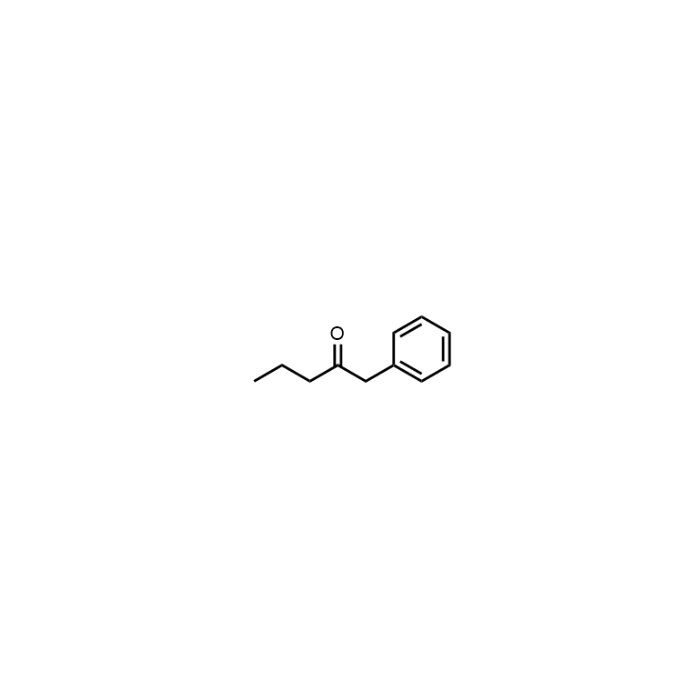
Ring systems: Single benzene ring directly connected to an aliphatic chain bearing a carbonyl at the 2-position of pentane.
Key motifs: The carbonyl carbon is flanked by a benzylic/alpha-methylene on one side and an alkyl fragment on the other, enabling enolization and typical aryl-alkyl ketone chemistry.
Stereochemistry: None inherent; the molecule is achiral unless derivatized (e.g., formation of chiral imines/enamines or reduction to secondary alcohols can generate stereocenters).
2D structure in words (literature): A benzene ring bonded to a –CH2–CO– fragment, followed by a linear alkyl chain to complete a pentan-2-one backbone (aryl on the terminal end, carbonyl at C-2 of the pentyl chain).
Synthetic Utility
Key functional features and reactivity (literature/general):
Carbonyl electrophilicity: Undergoes nucleophilic addition (hydride, organometallics) to give benzylic secondary alcohols; subsequent oxidations/derivatizations are well established.
Alpha-functionality: The alpha-CH2 adjacent to the carbonyl is activated (especially benzylic side), enabling:
Enolate generation (LDA/LiHMDS/NaHMDS) for C–C bond formation (alkylation, acylation, Michael).
Alpha-halogenation (NBS/Br2) to phenacyl-like intermediates that are versatile for SN2 substitutions with O/N/S nucleophiles.
Formation of enamines/imines for indirect alpha-functionalization.
Protecting/derivatization chemistry:
Oximes/hydrazones/semicarbazones as carbonyl-protected forms and for crystallinity/purity enhancement.
Ketals/acetonides under acid-catalyzed conditions where carbonyl protection is required.
Photochemical behavior: Aryl ketone chromophore can enter triplet states enabling hydrogen abstraction and Norrish chemistry—useful in mechanistic studies or to drive specific radical transformations.
Retrosynthetic value: Serves as a benzylic ketone node; disconnects to benzyl/phenethyl halides and acyl equivalents (e.g., Weinreb amides/acid chlorides) or via acylation of benzyl organometallics with propionyl/butyryl equivalents, depending on precise substitution pattern.
Overall, it provides a robust aryl–alkyl ketone handle for diversification toward alcohols, amines (via reductive amination), and alpha-substituted derivatives.
Target Specificity
Not applicable. This product is a small-molecule reagent and is not an antibody, probe, or biological targeting agent. No antigen/epitope, species reactivity, clone, or isotype information applies.
We use cookies to ensure the website functions properly and, where permitted, to improve your experience. You can manage your preferences at any time in Settings. Learn more in our Cookie Policy.
Shall we send you a message when we have discounts available?
Remind me later
Thank you! Please check your email inbox to confirm.
Products are supplied to verified businesses, institutions, and qualified professionals for research and development use only. Not for use in humans, animals, diagnosis, or therapy.
 C2616313
