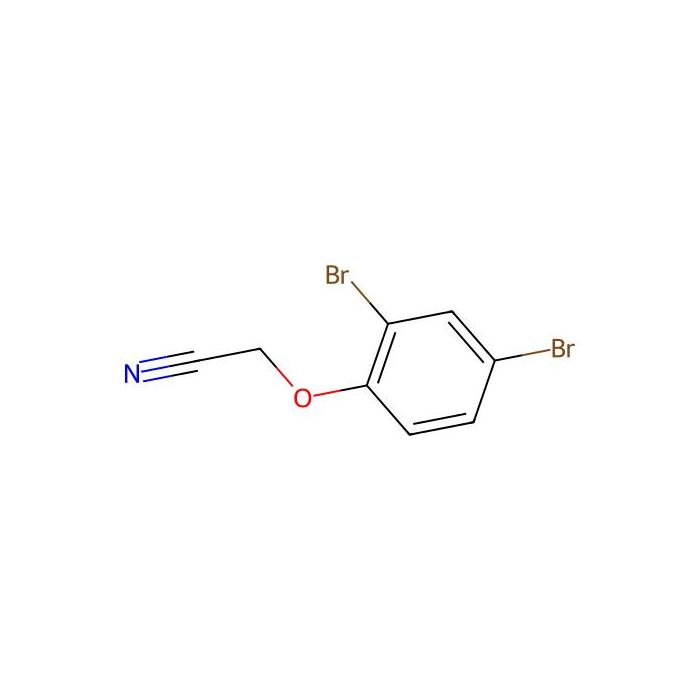
This compound belongs to the class of organic compounds known as phenol ethers. These are aromatic compounds containing an ether group substituted with a benzene ring.
External Descriptors
Not available
1. Djoumbou Feunang Y, Eisner R, Knox C, Chepelev L, Hastings J, Owen G, Fahy E, Steinbeck C, Subramanian S, Bolton E, Greiner R, and Wishart DS. ClassyFire: Automated Chemical Classification With A Comprehensive, Computable Taxonomy. Journal of Cheminformatics, 2016, 8:61.
Certificati (CoA, COO, BSE/TSE e tabella di analisi)
C of A & Other Certificates(BSE/TSE, COO):
Analytical Chart:
Proprietà chimiche e fisiche
Peso molecolare
290.940 g/mol
XLogP3
3.100
Hydrogen Bond Donor Count
0
Hydrogen Bond Acceptor Count
2
Rotatable Bond Count
2
Exact Mass
290.872 Da
Monoisotopic Mass
288.874 Da
Topological Polar Surface Area
33.000 Ų
Heavy Atom Count
12
Formal Charge
0
Complexity
189.000
Isotope Atom Count
0
Defined Atom Stereocenter Count
0
Undefined Atom Stereocenter Count
0
Defined Bond Stereocenter Count
0
Undefined Bond Stereocenter Count
0
The total count of all stereochemical bonds
0
Covalently-Bonded Unit Count
1
Calcolatori di soluzioni
Molarity Calculator
Determine the necessary mass, volume, or concentration for preparing a solution.
Dilution Calculator
Determine the dilution needed to prepare a stock solution.
Reconstitution Calculator
Recensioni
Recensioni dei clienti
Application Protocols
Not applicable. No validated bioassay protocols (e.g., WB, IHC, IF, FC) pertain to this chemical building block. For synthetic use, follow reaction protocols under Reaction Conditions and Synthetic Utility.
Biological Roles
This product is a synthetic organic building block and is not known as a natural metabolite or biochemical cofactor.
No intrinsic biological role is recognized for 2-(2,4-dibromophenoxy)acetonitrile in cellular metabolism or signaling (literature consensus).
The nitrile group can engage in interactions with enzymes or receptors in designed small molecules; however, any such activity would be context-dependent on the final derivative and is outside the scope of this reagent listing.
For laboratory biology workflows, it may serve as a precursor to libraries of aryl ether derivatives for SAR exploration, but the compound itself is intended strictly for research and chemical synthesis.
Research Use Note: For research use only. Not for human or veterinary use.
Buffer Applications
Not typically applicable. 2-(2,4-Dibromophenoxy)acetonitrile is a hydrophobic synthetic intermediate, not a buffering agent.
It does not provide acid/base pairs in the physiological pH range suitable for buffer preparation.
For aqueous work, focus on extraction/solubilization strategies (e.g., co-solvents such as DMSO or ethanol) rather than buffer formulation.
Green Alternatives
While the compound itself is a halogenated building block, greener choices can be made around its use, primarily in solvent and catalyst selection.
Preferred solvents (relative to DMF/THF/dioxane): 2-methyltetrahydrofuran (2-MeTHF) from renewable sources, cyclopentyl methyl ether (CPME), propylene carbonate, and water/ethanol mixtures where compatible with catalysis.
Ligand/catalyst systems enabling greener media: modern Pd catalysts (e.g., micellar catalysis with designer surfactants) can allow cross-couplings in aqueous media, reducing VOC emissions.
Base and workup: replace inorganic phosphate/carbonate slurries with organic-soluble bases (e.g., BTMG, DBU) or milder inorganic bases (K3PO4) to ease aqueous waste treatment; employ continuous-flow for heat/mass efficiency.
Comparison (general guidance; not item-specific specs):
2-MeTHF vs THF: similar polarity and organometallic compatibility; 2-MeTHF has higher boiling point, lower peroxide tendency, and bio-based origin, but can be less miscible with water, affecting biphasic workups.
CPME vs dioxane: CPME offers wider liquid range and lower toxicity concerns; however, some Pd couplings show slower rates versus dioxane.
Aqueous micellar systems vs traditional organic solvents: substantial solvent replacement and simplified isolation (direct filtration), but may require tailored ligands and careful substrate solubility management.
Adopt solvent selection guides (e.g., CHEM21, ACS GCI) to prioritize greener classes without compromising yield or selectivity.
Pharmaceutical Uses
No direct excipient or formulation role is established for 2-(2,4-dibromophenoxy)acetonitrile.
Typical role: synthetic intermediate in medicinal chemistry and process development, enabling installation of two diverse substituents onto a phenoxyacetonitrile core via the aryl bromides, with the nitrile enabling further late-stage transformations.
Pharmacopeia status: not a listed excipient monograph to our knowledge (literature/general knowledge).
Handling in discovery workflows: prepare DMSO stock solutions for high-throughput synthesis or screening reactions; ensure compatibility of residual halides with downstream steps.
No medical or therapeutic claims are made. For research and manufacturing development use only.
Physical Properties
Item-specific specifications
Appearance: Not specified for this item; refer to CoA/Spec Sheet.
Grade/Purity: Not specified for this item; refer to CoA/Spec Sheet.
Literature/estimated general properties (not item specifications)
Molecular weight: ~290.94 g/mol (from formula C8H5Br2NO).
Physical state: typically a crystalline solid for analogous dibrominated aryl ether nitriles (literature/analogy).
Solubility: expected low solubility in water; good solubility in chlorinated solvents (DCM, chloroform), aromatics (toluene), ethers (THF, dioxane), and polar aprotic solvents (DMF, DMSO) (literature/structure-based expectation).
Volatility: low; high halogen content reduces vapor pressure (general trend).
Partitioning: lipophilic due to two bromine atoms and aryl ether; logP anticipated to be moderately high (literature expectation; not a specification).
Thermal behavior: aryl bromides and nitriles are generally thermally robust; decomposition may occur at elevated temperatures with HBr/Br2 release (general observation).
Note: Exact BP/MP, density, refractive index, UV cutoff, and spectroscopic purity metrics are not specified for this item; refer to CoA/Spec Sheet and SDS for authoritative values.
Quality and Grades
Item-specific grade/purity
Grade/Purity: Not specified for this item; refer to CoA/Spec Sheet.
Guidance on grades (general information)
Research grade: typical for building-block reagents used in synthesis; focuses on assay purity and controlled impurities relevant to coupling or substitution chemistry (e.g., hydrolyzed phenols, debrominated aromatics).
HPLC vs. GC suitability: If used in analytical or medicinal chemistry workflows, low UV background and defined residual solvent/metals profiles are beneficial. Low UV-absorbing solvent residues improve quantitation in LC-UV.
Metal content: For cross-coupling applications, trace Pd, Ni, Cu specifications may be important. If not listed, users should evaluate via ICP-MS when ppm levels matter.
Stabilizers: None are typically required for aryl bromide nitriles. If any stabilizer is used, it will be disclosed on the CoA; absence of such a note generally indicates “neat.”
For exact assay, water content (Karl Fischer), residual solvents, metal limits, and chromatographic purity for this SKU, please refer to the item-specific CoA/Spec Sheet.
Reaction and Applications
This dibrominated aryl ether nitrile is a versatile bifunctional building block offering two orthogonal reactive handles on the aryl ring (two C–Br sites) and a transformable benzylic nitrile side chain.
Cross-coupling platform (literature): the 2- and 4-bromo positions undergo Pd-catalyzed Suzuki–Miyaura, Buchwald–Hartwig amination, Sonogashira, and Negishi couplings, enabling stepwise or one-pot difunctionalization. Ortho vs para reactivity can be tuned via ligand/catalyst choice and temperature.
Halogen–lithium exchange: the aryl bromides can be converted to aryllithiums at low temperature (e.g., n-BuLi, −78 °C) for electrophile trapping (formylation, acylation, borylation). Protect the nitrile if conditions risk addition; or employ halogen–magnesium exchange (i-PrMgCl·LiCl) as a milder alternative.
Benzylic nitrile chemistry: the –CH2–CN is deprotonatable (strong base, e.g., LDA/NaHMDS) to generate an anion for alkylation or aldol-like conjugate additions. The nitrile can be transformed into amides (hydration), carboxylic acids (oxidation/hydrolysis), amines (LiAlH4, catalytic hydrogenation), or tetrazoles (azide [2+3] cycloaddition via imidoyl intermediates).
O–aryl stability: the aryl–O–CH2 linkage is generally stable to typical cross-coupling conditions; avoid harsh Lewis acids or strong nucleophiles that could cleave aryl ethers.
Applications: synthesis of ligand frameworks, agrochemical and materials precursors, and late-stage diversification where orthogonal installation of two substituents onto a phenoxyacetonitrile core is desired.
Dry, oxygen-free techniques (Schlenk/Glovebox) are recommended for metal-catalyzed couplings and organometallic halogen exchange.
Reaction Conditions
General literature guidance for typical transformations (not item-specific specifications):
Suzuki–Miyaura coupling: Pd2(dba)3 (1–2 mol%) with SPhos/XPhos (2–4 mol%), K3PO4 (2–3 equiv), toluene/H2O or 1,4-dioxane, 80–110 °C, 2–12 h. Ortho site may require higher temperature/ligand optimization. Aryl-B(OH)2 or BPin partners commonly give 70–95% yields under optimized conditions.
Buchwald–Hartwig amination: Pd(OAc)2 (2 mol%), BrettPhos or RuPhos (4–6 mol%), NaOtBu (2 equiv), toluene or dioxane, 80–110 °C, 6–16 h. For demanding anilines, use t-BuXPhos and higher base loadings.
Sonogashira coupling: Pd(PPh3)2Cl2 (1–2 mol%) + CuI (2–5 mol%), Et3N or i-Pr2NH, THF/Et3N or DMF, 50–80 °C, 2–8 h. Copper-free systems with biaryl phosphines reduce Glaser byproducts.
Halogen–lithium exchange: n-BuLi (1.1–1.5 equiv) in dry THF at −78 to −40 °C, then electrophile quench (e.g., DMF for formylation, B(OMe)3 for borylation). Consider i-PrMgCl·LiCl for milder conditions that better tolerate nitriles.
Nitrile reduction: LiAlH4 in THF (0–25 °C) to primary amine; or hydrogenation (Raney Ni, Pd/C) in EtOH/THF at 1–10 bar H2, 25–60 °C.
Nitrile hydration/hydrolysis: catalytic systems (e.g., Ru, Cu, or enzyme-catalyzed) in aqueous-organic media at 50–100 °C to amide/acid; classical acid/base hydrolysis if compatible with aryl bromides.
Always dry solvents and exclude air/moisture for organometallic steps; monitor by TLC/UPLC and quench cautiously due to potential HBr or metal residues.
Safety and Handling
Regulatory/GHS (item-specific)
Signal word: Not specified for this item; refer to SDS.
Hazard statements, pictograms, classification: Not specified for this item; refer to SDS.
General safety guidance for aryl bromide nitriles (literature-based; not item-specific)
Likely hazards: harmful if swallowed or inhaled; skin/eye irritation possible. Combustion/thermal decomposition can release HBr, NOx, and other irritant fumes.
PPE: lab coat, safety goggles, and appropriate chemically resistant gloves (e.g., nitrile). Handle in a fume hood to avoid inhalation of vapors/dust.
Avoid: strong bases and strong nucleophiles when unwanted substitution could occur; strong oxidizers; prolonged exposure to light/heat that may promote debromination or discoloration.
First aid (overview): move to fresh air upon inhalation; rinse skin/eyes with water for ≥15 min upon contact; seek medical attention if symptoms persist. If ingested, rinse mouth—do not induce vomiting; obtain medical attention.
Spill response: avoid dust generation; collect with inert absorbent; dispose in accordance with local regulations.
Fire-fighting: use dry chemical, CO2, or foam; firefighters should wear self-contained breathing apparatus due to possible HBr/HCN/NOx in smoke.
Always consult the product’s SDS for definitive hazard classification, exposure limits, and emergency measures.
Solvent Selection
Solubility/miscibility profile (literature-based)
Expected to dissolve well in: dichloromethane, chloroform, toluene, THF, 1,4-dioxane, ethyl acetate, DMF, DMSO, acetonitrile.
Poorly soluble in: water and very nonpolar alkanes at room temperature (qualitative expectation).
Polarity and handling
Neutral, moderately lipophilic aryl ether bearing a polar nitrile moiety; behaves as an organic substrate rather than a solvent.
Appropriate for homogeneous catalysis media common to cross-coupling (toluene, dioxane, DMA/DMF) and for nucleophilic substitutions/deprotonations (THF, DMF, DMSO).
When to choose specific solvents
Pd-catalyzed cross-coupling of the aryl bromides: toluene or dioxane often give cleaner profiles; polar cosolvents (DMF, DMA) can accelerate difficult couplings.
Anion chemistry at the methylene (–O–CH2–CN): dry THF or DME with LDA/NaHMDS at −78 to 0 °C for controlled deprotonation/alkylation.
Nitrile functional group interconversions (hydration, reduction): protic or mixed solvents (MeOH/THF, EtOH/THF) may be employed depending on catalyst.
If analytical quantitation is planned, pre-screen solubility and UV transparency of the chosen solvent and filter (0.2 µm PTFE) to remove particulates.
Storage and Reconstitution
Item-specific storage
Storage conditions: Room temperature (per Product Data). Keep container tightly closed in a dry, well-ventilated place.
General handling and stability (literature-based)
Protect from prolonged exposure to heat and strong light to minimize potential debromination or discoloration.
Store under inert atmosphere (nitrogen/argon) after opening if frequent glovebox/Schlenk use is anticipated; include desiccant to control moisture.
Reconstitution and solution preparation (general guidance)
Prepare stock solutions in dry organic solvents such as DMSO, DMF, THF, toluene, or dichloromethane, depending on the intended application.
Typical stock concentrations: 10–100 mM in DMSO or 10–50 mg/mL in chlorinated/aromatic solvents; filter through 0.2 µm PTFE if needed.
Solution stability: aryl bromide solutions are generally stable for days to weeks at 2–8 °C when protected from moisture and light; prepare fresh for air/moisture-sensitive reactions.
Shipping container/environment: Not specified for this item; refer to CoA/Spec Sheet. Always consult the SDS for detailed storage incompatibilities and shelf-life information.
Core scaffold: a phenyl ring bearing an ether linkage to a –CH2–CN side chain (phenoxyacetonitrile motif).
Ring substitution: two bromine atoms at the 2- and 4-positions of the aryl ring relative to the phenoxy oxygen (ortho and para to the O-linkage).
Functional groups: aryl bromides (two independent C(sp2)–Br handles), aryl ether (Ar–O–CH2–), and a terminal nitrile (–C≡N) on a benzylic methylene.
Stereochemistry: achiral; no stereogenic centers.
2D description in words: a 1,3,5-substituted benzene where position-1 is connected through oxygen to a –CH2–C≡N arm, with bromine substituents at positions-2 and -4 on the ring.
Synthetic Utility
Key reactive elements and their value in synthesis:
Dual aryl bromides (2,4-positions): provide two programmable coupling sites. Orthogonal selectivity can be leveraged by catalyst/ligand tuning—commonly, para-bromide couples faster than ortho; bulky ligands can accentuate selectivity. Enables sequential Suzuki (Ar–B(OH)2), Buchwald–Hartwig (amines), and Sonogashira (alkynes) installations.
Benzylic nitrile (–CH2–CN): serves as an electrophile precursor (via imidate/amide/acid), a masked carboxyl group, or a handle for reductive amination after partial/complete reduction. The adjacent methylene is acidifiable (strong base) for alkylation, enabling side-chain diversification without disturbing aryl C–Br.
Ether linkage (Ar–O–CH2–): imparts electron donation to the ring, modulating coupling rates and directing effects for further functionalization.
Retrosynthetic perspective:
Target molecules bearing 2,4-disubstituted phenoxyacetonitriles can be accessed by divergent coupling from this substrate. The nitrile can be unmasked late to acids/amides (one-pot hydration or oxidative protocols), aiding protecting-group minimization.
Compatibility notes:
Protect the nitrile under strongly nucleophilic organometallic additions (e.g., RMgX, RLi) unless it is the intended reaction site.
The aryl ether is robust under Pd catalysis but avoid strong Lewis acids or demethylative/ether-cleaving conditions.
Target Specificity
Not applicable. This product is a small-molecule building block, not a biological macromolecule or affinity reagent. No antigen/epitope or species reactivity data are relevant.
We use cookies to ensure the website functions properly and, where permitted, to improve your experience. You can manage your preferences at any time in Settings. Learn more in our Cookie Policy.
Shall we send you a message when we have discounts available?
Remind me later
Thank you! Please check your email inbox to confirm.
Products are supplied to verified businesses, institutions, and qualified professionals for research and development use only. Not for use in humans, animals, diagnosis, or therapy.