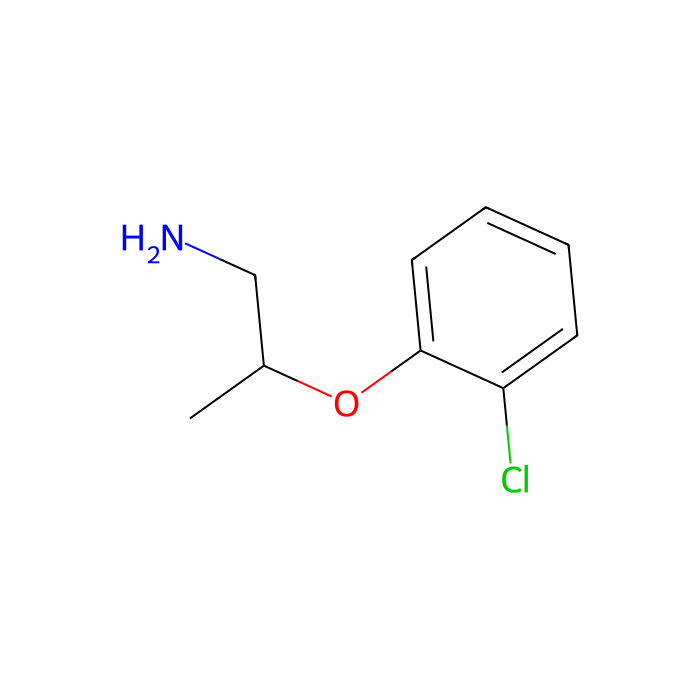
This compound belongs to the class of organic compounds known as phenol ethers. These are aromatic compounds containing an ether group substituted with a benzene ring.
External Descriptors
Not available
1. Djoumbou Feunang Y, Eisner R, Knox C, Chepelev L, Hastings J, Owen G, Fahy E, Steinbeck C, Subramanian S, Bolton E, Greiner R, and Wishart DS. ClassyFire: Automated Chemical Classification With A Comprehensive, Computable Taxonomy. Journal of Cheminformatics, 2016, 8:61.
Certificati (CoA, COO, BSE/TSE e tabella di analisi)
C of A & Other Certificates(BSE/TSE, COO):
Analytical Chart:
Proprietà chimiche e fisiche
Peso molecolare
185.650 g/mol
XLogP3
2.200
Hydrogen Bond Donor Count
1
Hydrogen Bond Acceptor Count
2
Rotatable Bond Count
3
Exact Mass
185.061 Da
Monoisotopic Mass
185.061 Da
Topological Polar Surface Area
35.300 Ų
Heavy Atom Count
12
Formal Charge
0
Complexity
132.000
Isotope Atom Count
0
Defined Atom Stereocenter Count
0
Undefined Atom Stereocenter Count
1
Defined Bond Stereocenter Count
0
Undefined Bond Stereocenter Count
0
The total count of all stereochemical bonds
0
Covalently-Bonded Unit Count
1
Calcolatori di soluzioni
Molarity Calculator
Determine the necessary mass, volume, or concentration for preparing a solution.
Dilution Calculator
Determine the dilution needed to prepare a stock solution.
Reconstitution Calculator
Recensioni
Recensioni dei clienti
Application Protocols
No assay protocols are provided for this small-molecule building block. Typical laboratory uses involve organic synthesis operations (e.g., amide couplings, reductive aminations, salt formation) following standard organic chemistry procedures.
For synthetic operations, see Reaction Conditions and Synthetic Utility tabs for general starting points.
If using in biochemical assays, develop and validate in-house protocols for solubilization (often DMSO or alcohol stock solutions) and dosing; confirm stability and compatibility under assay conditions.
Item-specific tested applications, recommended dilutions, and positive controls are not specified for this product.
Biological Roles
Item-specific biological/biochemical roles: Not specified for this item; no biological activity claims are made. For research use only.
Literature context (general, non-clinical):
Aryloxypropylamines are a widely used chemotype in chemical biology and medicinal chemistry as cationic, H-bond-donating/accepting scaffolds. The protonated amine at physiological pH facilitates interactions with acidic residues and enhances aqueous solubility as salts.
The ortho-chloro phenoxy fragment contributes to hydrophobic and potential halogen-bonding interactions in protein binding sites; however, specific target interactions for this exact compound are not established here.
As a small organic base, the free amine can form salts with biological acids and can partition into membranes depending on ionization state (logD decreases at lower pH due to protonation).
Metabolic liabilities of analogous structures (general): oxidative dealkylation at the benzylic position, O-dearylation under certain hepatic P450s, and N-dealkylation after derivatization to secondary amines. Such points are considered during probe/drug design but are not specific to this catalog item.
No cellular pathway, transporter, or receptor specificity is assigned to this product. Any use in biological systems should be preceded by appropriate toxicology and compatibility assessments in the user’s laboratory.
Buffer Applications
This product is a small-molecule primary amine and is not a standardized buffering agent. It does not correspond to a named biochemical buffer system with a defined pKa window or recipe.
Practical guidance:
If used in aqueous systems, pH will be influenced by protonation of the amine (general amine conjugate-acid pKa ~10–11, literature). However, it should not replace validated biological buffers (e.g., phosphate, Tris, HEPES).
For aqueous workups or salt formation, choose appropriate mineral acids (HCl, H2SO4) to control pH and solubility; isolate as a crystalline salt if needed.
For actual buffer preparation needs, refer to dedicated buffers (phosphate, acetate, citrate, Tris, HEPES) and their standard pH ranges.
Green Alternatives
This product is a building-block amine, not a bulk solvent or reagent typically targeted for green replacement. Nevertheless, greener choices can be made in its use and downstream chemistry (literature-based best practices):
Solvent selection (preferred over legacy choices):
Replace DCM/chloroform with EtOAc, Me-THF/2‑MeTHF, cyclopentyl methyl ether (CPME), or toluene where feasible.
Favor alcohol solvents (MeOH, EtOH, iPrOH) for reductive aminations and hydrogenations.
Use acetonitrile or EtOAc instead of DMF/DMAc/NMP when coupling reactivity permits; consider T3P in EtOAc for amide formation.
Reagent/catalyst considerations:
Reductive amination: choose NaBH(OAc)3 in acetic acid media or catalytic hydrogenation (H2/Pd) over cyanoborohydride when applicable to reduce cyanide waste.
Cross-coupling: modern Pd catalysts active for aryl chlorides allow lower loadings and milder conditions; explore nickel catalysis for earth-abundant options.
Base selection: carbonate or organic bases (DIPEA) can reduce inorganic waste relative to strong hydroxides.
Workup/waste minimization:
Precipitative salt formation (e.g., HCl salt) can replace chromatographic purification.
Aqueous micellar catalysis (e.g., surfactant media) is emerging for amide couplings and couplings of aryl chlorides; evaluate for this substrate.
Trade-offs:
Greener solvents may change solubility and reaction rates; assess via small-scale screens.
Ether alternatives (2‑MeTHF/CPME) have higher boiling points—plan for energy-efficient solvent recovery.
Pharmaceutical Uses
Item-specific pharmacopeial/compendial status: Not specified for this item.
This compound is offered strictly for research and laboratory synthesis. No therapeutic or diagnostic claims are made.
Literature/generic roles in pharmaceutical R&D (non-clinical):
Intermediate for API or probe synthesis: the primary amine readily forms amides, ureas, sulfonamides, and carbamates; the aryl chloride enables cross-coupling diversification on the aromatic ring.
Salt selection studies: formation of stable salts (e.g., HCl, mesylate, citrate) to investigate solid-state properties such as hygroscopicity, crystallinity, and dissolution.
Chiral resolution: as the molecule contains a stereogenic center, diastereomeric salt formation with chiral acids (e.g., tartaric/camphorsulfonic acid) can be explored to access single enantiomers for SAR.
Impurity/reference standard development: useful as a reference building block to prepare related impurities or analogs for method validation.
Formulation context (general):
Free bases of low-MW amines may be oils; the corresponding mineral-acid salts are often chosen for improved handling and assay accuracy.
If incorporated into dosage-form research (preclinical), rigorous internal qualification is required; consult institutional quality systems. This catalog listing provides no GMP assurances.
Physical Properties
Item-specific physical specifications (this lot):
Appearance: Not specified for this item; refer to CoA/Spec Sheet.
Grade/Purity: Not specified for this item; refer to CoA/Spec Sheet.
Literature/computed values for the free base (non‑spec, for reference only):
Molecular formula: C9H12ClNO (see Structure & Identity)
Partitioning: expected logP (neutral) in the ~2–3 range; logD7.4 lower due to protonation (literature trend for aryloxyalkyl primary amines).
Solubility profile (qualitative, literature):
Free base: miscible or highly soluble in polar organic solvents (EtOH, MeOH, DCM, acetone, acetonitrile); moderate solubility in water as the neutral base; high water solubility as salts (e.g., HCl salt).
Salts: the hydrochloride salt is typically crystalline and water-soluble.
Physical state: frequently encountered as a colorless to pale yellow oil for the free base; crystalline for mineral-acid salts (literature trend; not item-specific).
Not provided for this item (consult CoA/SDS for authoritative data): boiling point, melting point, density, refractive index, UV cutoff, water/peroxide/metal content.
Quality and Grades
Item-specific grade/purity: Not specified for this item; refer to CoA/Spec Sheet.
Interpreting typical grades for this class of material (general guidance):
Research/technical grade: suitable for synthetic chemistry, screening, and method development; impurities may include residual solvents, regioisomers, or trace inorganic salts from workup.
≥95–99% purity (if specified): often adequate for most organic syntheses and library work; may not guarantee low UV background for analytical detection.
HPLC/LC-MS grade (if applicable): emphasizes low non-volatile residue and low background in chromatographic detection; uncommon for amine building blocks unless specifically purified for analysis.
Salt form vs free base: hydrochloride or other mineral-acid salts are often offered for improved crystallinity and assay reproducibility. Free bases may show variable assay by weight due to residual solvents or water; check CoA for assay on anhydrous basis.
Stabilizers/inhibitors: Not specified for this item; if none indicated, assume unstabilized. For amines, stabilizers are uncommon; quality is more influenced by residual water/solvent and enantiomeric ratio, if relevant.
What to verify on receipt (best practice):
Assay/purity method (GC/HPLC), residual solvent profile, water content (Karl Fischer), identity (1H/13C NMR, HRMS), and if chiral, the enantiomeric ratio or optical rotation when applicable.
Reaction and Applications
As a primary aliphatic amine bearing an aryl ether and an ortho-chloro substituent, this molecule is a versatile intermediate for medicinal and materials chemistry.
Typical transformations (literature):
Amide/urea/carbamate formation: coupling with carboxylic acids (e.g., EDC/HOBt, HATU, T3P), reaction with isocyanates or chloroformates to give ureas/carbamates.
Reductive amination: formation of secondary amines via condensation with aldehydes/ketones followed by reduction (NaBH3CN, NaBH(OAc)3, or catalytic hydrogenation).
N-Alkylation: SN2 with alkyl halides or Mitsunobu-activated alcohols under basic conditions; control over mono- vs dialkylation via stoichiometry and protection.
Sulfonamide synthesis: reaction with sulfonyl chlorides under base to give sulfonamides (useful for SAR and polarity tuning).
Salt formation: generation of crystalline HCl or other mineral-acid salts for purification, crystallography, or formulation.
Aryl chloride diversification: the ortho-Cl can participate in cross-coupling (e.g., Buchwald–Hartwig amination, Suzuki–Miyaura after conversion to boronate) using Pd catalysts with tailored ligands for aryl chlorides; ortho substitution should be considered for sterics.
Strategic notes:
The benzylic stereocenter (at the carbon bearing –OAr and –CH3) enables access to chiral libraries; enantioenriched material can be obtained by asymmetric synthesis or chiral resolution of salts/derivatives.
The phenoxy linkage is generally stable under neutral/basic conditions; avoid strong nucleophiles at elevated temperature that could cleave Ar–O–C.
Protecting groups: Boc, Cbz, or Fmoc protection on the amine can facilitate selective elaboration of the aryl chloride or ether.
Reaction Conditions
The following are literature-style, non-item-specific starting points for common transformations of primary aliphatic amines bearing aryl chlorides; optimize per substrate.
Amide coupling (carboxylic acids):
HATU (1.1–1.5 equiv), DIPEA (2–3 equiv), DMF/MeCN or DCM, 0–25°C, 1–16 h. Alternative: T3P (50% in EtOAc), DIPEA, EtOAc or 2‑MeTHF, rt–50°C.
Reductive amination (with aldehyde/ketone):
NaBH(OAc)3 (2–3 equiv) in DCE/MeOH or MeOH with AcOH (1–2 equiv), rt–40°C, 2–16 h. Or H2 (1–5 bar), Pd/C (5–10 wt%), EtOH/iPrOH, rt–50°C.
Sulfonamide formation:
RSO2Cl (1.05–1.2 equiv), base (Et3N or DIPEA, 2–3 equiv), DCM or MeCN, 0°C to rt, 1–6 h.
Carbamate/urethane synthesis:
Chloroformate (1.1 equiv) or DSC (1.2 equiv), base (2 equiv), DCM/THF, 0–25°C.
N-Alkylation (SN2):
Alkyl bromide/iodide (1.1–1.5 equiv), K2CO3 or Na2CO3 (2–3 equiv), MeCN/acetone, reflux 4–24 h; monitor for over-alkylation.
Cross-coupling on the aryl chloride (diversification of the ring):
Buchwald–Hartwig amination: Pd2(dba)3 (1–2 mol%), BrettPhos or XPhos (2–4 mol%), NaOtBu or Cs2CO3, toluene/1,4-dioxane, 80–110°C.
Suzuki–Miyaura (after aryl chloride activation or with tailored catalysts): Pd(dppf)Cl2 (1–3 mol%), K3PO4, toluene/H2O or dioxane/H2O, 80–100°C.
Salt formation/purification:
Dissolve free base in Et2O/EtOAc, add 4 M HCl in dioxane dropwise at 0–25°C to precipitate the hydrochloride; filter, wash with cold ether, dry under vacuum.
All conditions are general guidance; adjust equivalents, temperature, and time to the specific substrate and desired selectivity.
Safety and Handling
Item-specific hazard information (GHS, pictograms, H-statements): Not specified for this item; refer to SDS.
General safety guidance for primary aliphatic amines and aryl chlorides (literature-based; not a substitute for the SDS):
Hazards: may cause skin/eye irritation and respiratory irritation; corrosivity increases with concentration. Amines are basic and can be harmful if swallowed or inhaled. Avoid aerosols and prolonged exposure.
PPE: lab coat, chemical-resistant gloves (e.g., nitrile), splash goggles; handle in a fume hood to control vapors/amine odor.
Incompatibilities: strong oxidizers; strong acids/bases (exothermic neutralization); acylating/sulfonylating agents (react vigorously); isocyanates/acid chlorides (rapid reaction); carbon dioxide (amines can absorb CO2 over time); copper/brass may tarnish with amines.
First aid (overview; follow SDS):
Skin/eyes: rinse with water for ≥15 min; remove contaminated clothing; seek medical attention if irritation persists.
Inhalation: move to fresh air; monitor breathing; seek medical attention if symptoms occur.
Ingestion: rinse mouth; do not induce vomiting; seek medical attention.
Spill/Fire: absorb small spills with inert material; amines are combustible—use CO2, dry chemical, or foam; avoid water jets. Prevent entry into drains.
Storage (see also Storage & Reconstitution): room temperature per Product Data; keep tightly closed under dry, inert atmosphere if possible to limit moisture/CO2 uptake; segregate from acids/oxidizers.
Always defer to the product-specific SDS for authoritative classifications and response measures.
Solvent Selection
This compound is a small, moderately lipophilic primary amine with an aryloxy substituent; it dissolves readily in many organic solvents and forms water-soluble mineral-acid salts.
Polarity/miscibility (literature-based trends):
Free base: high solubility in polar organics (MeOH, EtOH, iPrOH, MeCN, acetone), chlorinated solvents (DCM, chloroform), and ethers (THF, MTBE). Moderate solubility in nonpolar hydrocarbons (toluene, heptane); solubility improves with mild heating.
Protonated salts: highly soluble in water and polar protic solvents; reduced solubility in nonpolar media.
Choosing solvents by task:
Couplings/acylations: DCM, DMF, DCM/MeCN, or THF with a base (DIPEA, TEA). For greener choices, EtOAc or 2-MeTHF can often replace DCM/THF.
Reductive amination: MeOH, EtOH, iPrOH, or toluene/MeOH mixtures; AcOH or HOAc/MeOH is common for imine formation.
N-alkylation: acetonitrile, acetone, or DMF with carbonate bases; phase-transfer in toluene/aqueous base is also used.
Salt formation/purification: dissolve free base in ether/EtOAc and gas or add HCl in dioxane/ether; precipitated HCl salt filtered and washed with nonpolar solvent.
Small comparison (literature guidance):
DCM vs EtOAc: EtOAc is greener and often adequate for extractions and acylations; DCM may give faster phase separation and higher solubility for aromatic substrates.
THF vs 2‑MeTHF: similar solvating ability; 2‑MeTHF offers better safety/green profile and water tolerance.
Always confirm specific solubility with a small test; consult CoA for any item-specific restrictions.
Storage and Reconstitution
Storage (item-specific from Product Data):
Store at room temperature. Shipped under normal conditions.
General best practices for amine building blocks (literature guidance; not item-specific specs):
Keep container tightly closed in a dry, well-ventilated place. If possible, blanket headspace with inert gas (N2/Ar) to limit moisture and CO2 uptake which can form ammonium carbamates.
Protect from strong acids/oxidants. Avoid prolonged exposure to air if product is the free base oil.
For long-term storage, consider converting to a crystalline mineral-acid salt (e.g., HCl salt) to improve stability, handling, and assay reproducibility.
Reconstitution/stock solution preparation:
Prepare stock solutions in dry solvents such as DMSO, MeOH, EtOH, THF, or acetonitrile. Typical screening stocks: 10–100 mM in DMSO or alcohols; filter if particulates are present.
For aqueous applications, dissolve the amine as its protonated salt by adding a stoichiometric acid (e.g., HCl) to reach desired pH; verify final pH with a calibrated meter.
Store solutions refrigerated or frozen as appropriate to solvent; minimize freeze–thaw cycles by aliquoting. Assess stability by LC/MS or NMR before critical use.
Always consult the item’s CoA/SDS for any additional, product-specific storage instructions.
Structure and Identity
A chiral aryloxyalkyl primary amine featuring an ortho-chloro substituted phenyl ring linked via an ether to a 2-aminopropyl chain; typical of the aryloxypropylamine motif used as a versatile building block.
Item-specific (Product Data):
SKU: C187769
Product Name: 2-(2-Chloro-phenoxy)-propylamine
CAS: 886763-29-7
CID: 3863425
InChIKey: 172714 (as provided)
SMILES: Not specified for this item; refer to CoA/Spec Sheet.
Literature/computed identifiers and features (for reference only):
Molecular formula (neutral free base, literature): ~C9H12ClNO
Molecular weight (literature, calculated from formula): ~185.65 g/mol
Stereochemistry: a stereogenic center at the benzylic/propargylic position of the propyl chain [the carbon bearing –OAr and –CH3]; material may be racemic unless otherwise specified (not specified here).
2D description in words: an ortho-chloro phenyl ring bonded through oxygen to the secondary carbon of a 3-carbon chain; the terminal carbon bears a primary amine and the substituent carbon carries a methyl group.
General notes:
The aryloxy–propylamine framework is modular; both the aryl ring (via halide) and the amine can be diversified in subsequent synthesis.
Synthetic Utility
This aryloxypropyl primary amine combines three handles for synthesis: a nucleophilic amine, an aryl chloride amenable to cross-coupling, and an ether-linked aryl ring that modulates electronics.
Key reactivity elements (literature):
–NH2 (primary amine): acylation (acid chlorides/anhydrides, coupling reagents), sulfonylation (RSO2Cl), carbamylation (chloroformates/isocyanates), reductive amination to secondary amines, quaternization or alkylation under SN2 conditions.
Ar–Cl (ortho): Pd-catalyzed cross-couplings (Buchwald–Hartwig, Suzuki–Miyaura after borylation, Sonogashira) using ligands tuned for aryl chlorides (e.g., BrettPhos, XPhos); ortho substitution and the phenoxy group influence reactivity/chelation.
Chiral center: potential to access enantioenriched derivatives via asymmetric synthesis or resolution; enantiospecific downstream transformations possible after amine protection.
Strategic syntheses enabled:
Library build-out: rapid generation of amide/urea/sulfonamide matrices for SAR.
Fragment growth: coupling at the aryl chloride positions expands into biaryl, heteroaryl, or alkyne motifs while retaining the cationic amine handle for solubility tuning.
Prodrug approaches: carbamate formation can modulate basicity and permeability; hydrolysis regenerates the amine in biological settings (conceptual; requires validation per target).
Practical notes:
Protect the amine (Boc/Cbz) before strong-base or metal-catalyzed cross-couplings to avoid catalyst poisoning; deprotect under standard conditions.
The phenoxy ether is stable to most coupling conditions; avoid strongly nucleophilic conditions at high temperature that could risk ether cleavage.
Target Specificity
Not applicable. This product is a small-molecule chemical building block, not a biological macromolecule or affinity reagent. No antigen/epitope, clone, isotype, or species reactivity is associated with this catalog item.
We use cookies to ensure the website functions properly and, where permitted, to improve your experience. You can manage your preferences at any time in Settings. Learn more in our Cookie Policy.
Shall we send you a message when we have discounts available?
Remind me later
Thank you! Please check your email inbox to confirm.
Products are supplied to verified businesses, institutions, and qualified professionals for research and development use only. Not for use in humans, animals, diagnosis, or therapy.