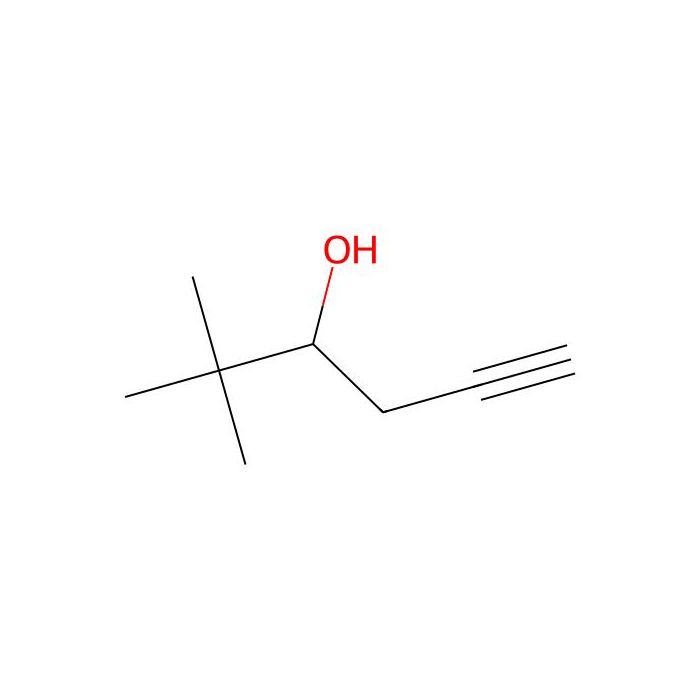
This compound belongs to the class of organic compounds known as secondary alcohols. These are compounds containing a secondary alcohol functional group, with the general structure HOC(R)(R') (R,R'=alkyl, aryl).
External Descriptors
Not available
1. Djoumbou Feunang Y, Eisner R, Knox C, Chepelev L, Hastings J, Owen G, Fahy E, Steinbeck C, Subramanian S, Bolton E, Greiner R, and Wishart DS. ClassyFire: Automated Chemical Classification With A Comprehensive, Computable Taxonomy. Journal of Cheminformatics, 2016, 8:61.
Certificati (CoA, COO, BSE/TSE e tabella di analisi)
C of A & Other Certificates(BSE/TSE, COO):
Analytical Chart:
Proprietà chimiche e fisiche
Peso molecolare
126.200 g/mol
XLogP3
1.900
Hydrogen Bond Donor Count
1
Hydrogen Bond Acceptor Count
1
Rotatable Bond Count
2
Exact Mass
126.104 Da
Monoisotopic Mass
126.104 Da
Topological Polar Surface Area
20.200 Ų
Heavy Atom Count
9
Formal Charge
0
Complexity
121.000
Isotope Atom Count
0
Defined Atom Stereocenter Count
0
Undefined Atom Stereocenter Count
1
Defined Bond Stereocenter Count
0
Undefined Bond Stereocenter Count
0
The total count of all stereochemical bonds
0
Covalently-Bonded Unit Count
1
Calcolatori di soluzioni
Molarity Calculator
Determine the necessary mass, volume, or concentration for preparing a solution.
Dilution Calculator
Determine the dilution needed to prepare a stock solution.
Reconstitution Calculator
Recensioni
Recensioni dei clienti
Application Protocols
No tested bioanalytical application protocols (WB, IHC, IF, FC) are specified for this item. For synthetic applications, follow standard organic chemistry protocols appropriate to terminal alkynes and secondary alcohols (see Reaction Conditions tab) and consult primary literature for detailed procedures.
Biological Roles
This compound is a synthetic organic intermediate; no intrinsic biological role is specified for this item.
In chemical biology (literature context), terminal alkynes are widely used as bioorthogonal “click” tags for post-labeling via CuAAC, enabling incorporation into probe molecules for enrichment or imaging after reaction with azides. The secondary alcohol can be derivatized to esters or carbonates to modulate physicochemical properties for such probes.
Metabolic processing of this specific branched alkynyl alcohol has not been characterized here; avoid extrapolation to biological activity. Any use should be restricted to in vitro research or materials synthesis.
Note: No medical, diagnostic, or therapeutic use is intended or implied for this product. For research use only.
Buffer Applications
Not typically applicable. 2,2-Dimethyl-5-hexyn-3-ol is a hydrophobic organic intermediate, not a buffering agent. If used in biochemical experiments (e.g., click labeling), select buffers compatible with copper catalysis (e.g., phosphate or HEPES) and ensure the compound is pre-dissolved in a miscible co-solvent (t‑BuOH, DMSO, or EtOH) before dilution into aqueous media.
Green Alternatives
Although 2,2-dimethyl-5-hexyn-3-ol is a building block rather than a solvent, greener choices can be made around its use and preparation.
Greener media for typical transformations:
Replace DCM with EtOAc or 2‑MeTHF for extractions and many reactions.
Use 2‑MeTHF or cyclopentyl methyl ether (CPME) in place of THF for base-mediated steps (improved safety and life‑cycle metrics).
For CuAAC, prefer t‑BuOH/H2O or EtOH/H2O mixtures over DMF/DMSO when solubility allows.
Oxidations: Favor Dess–Martin periodinane (under controlled conditions) or catalytic TEMPO/bleach where compatible, minimizing chromium waste.
Protection chemistry: Consider carbonate or ester protections formed under mild, catalytic conditions rather than stoichiometric chlorosilanes when feasible.
Energy and safety: Perform metal-catalyzed couplings at ambient temperature where possible; use flow or microwaves to reduce reaction time and solvent volumes.
Comparison snapshot (general):
DCM → EtOAc/2‑MeTHF: lower toxicity, non-halogenated, similar solvency for C8 substrates.
Adopt these alternatives subject to catalyst/solubility constraints of your specific protocol.
Pharmaceutical Uses
No pharmacopeial or excipient status is specified for this item; refer to CoA/Spec Sheet if regulatory attributes are needed.
Formulation context (general): Alkynyl alcohol motifs can serve as synthetic intermediates en route to APIs or adjuvants but are not typically used directly in dosage forms. Any application would be confined to upstream R&D or process development.
If materials compatibility is under evaluation (e.g., for preclinical synthetic routes), document residual solvents and impurities via ICH Q3A/B and perform risk assessments per internal quality systems.
This product is supplied strictly for research use only, not for human or veterinary use.
Physical Properties
Appearance: Not specified for this item; refer to CoA/Spec Sheet.
Boiling point: Not specified for this item; refer to CoA/Spec Sheet.
Literature context: Secondary C8 alkynyl alcohols often boil in the ~150–180 °C range at 1 atm (family trend; verify experimentally for this specific isomer).
Melting point: Not specified for this item; refer to CoA/Spec Sheet.
Density: Not specified for this item; refer to CoA/Spec Sheet.
Literature expectation: Branched C8 alcohols typically have densities slightly below or around 0.90 g/mL at 20–25 °C (family trend; not a specification).
Refractive index: Not specified for this item; refer to CoA/Spec Sheet.
pKa (alcohol OH): Literature (secondary alcohols): pKa ~16–18 in water; terminal alkyne C–H pKa ~25 (DMSO scale) — indicative of acetylide formation under strong base (general literature values).
LogP / solubility: Not specified for this item; refer to CoA/Spec Sheet.
Literature expectations: Moderately hydrophobic with limited water solubility; miscible with common organic solvents (ethers, chlorinateds, aromatics, many esters) given the C8 backbone.
All numerical values above labeled “literature/expectation” are provided for context only and are not item specifications.
Quality and Grades
Grade / Purity: Not specified for this item; refer to CoA/Spec Sheet.
What to expect:
In the absence of a stated grade (e.g., “>98%,” “GC,” “HPLC,” or “anhydrous”), assume a standard research-grade reagent suitable for general synthetic use. Verify exact assay, residual solvents, and impurity profile on the accompanying CoA for your specific lot.
If your application is moisture- or peroxide-sensitive: although alkynyl alcohols are not classic peroxide-forming ethers, confirm low peroxide content by appropriate tests if long-term storage or repeated air exposure occurred (general precaution; not a specification).
Chromatography-sensitive uses: For photometric or LC applications, request low-UV/low-fluorescence grade if needed. Absent a designated HPLC grade, pre-qualify by blank runs.
Stabilizers/inhibitors: None specified for this item. If stabilizers are critical to your workflow, contact Technical Support for current lot information.
Documentation: The definitive specifications for assay, water content, and trace metals are provided on the lot-specific CoA/Spec Sheet.
Reaction and Applications
As a branched homopropargylic secondary alcohol with a terminal alkyne, 2,2-dimethyl-5-hexyn-3-ol is a versatile handle for C–C bond formation, heterocycle synthesis, and functional group interconversions.
Terminal alkyne transformations:
CuAAC “click” to 1,4‑disubstituted 1,2,3‑triazoles with azides (Cu(I) catalysis), enabling installation of a compact polar headgroup while preserving the secondary alcohol.
Sonogashira coupling with aryl/vinyl halides (Pd/Cu, amine base) to form aryl- or alkenyl‑substituted alkynes; downstream hydrogenation or hydrofunctionalization expands scope.
Glaser–Hay oxidative dimerization to symmetrical diynes (Cu, O2) if desired.
Acetylide formation: Deprotonation with alkyl lithiums or NaNH2 to give nucleophilic acetylides for addition to carbonyls or substitution on activated electrophiles.
Alcohol-site chemistry:
Oxidation to the corresponding ketone (e.g., DMP, PCC, Swern), enabling access to branched ynones and subsequent conjugate additions or cyclizations.
Esterification (Steglich, acid chloride) for protecting group or handle introduction; silylation (TBS/TIPS) to mask the OH under basic/palladium conditions.
Mitsunobu inversion to invert configuration at C3 where stereochemical control is required (general method; item stereochemistry not specified).
Cyclizations and heterocycles (literature): Gold- or Brønsted acid-catalyzed alkyne activation can induce intramolecular reactions when paired with suitable partners installed at the OH site.
Practical tips: Dry, oxygen-free conditions improve outcomes in metal-catalyzed alkyne couplings; pre-dry substrate if needed. For strong-base steps, titrate base and maintain ≤−78 to 0 °C to control acetylide formation and side reactions.
Reaction Conditions
General literature guidance for common transformations of terminal alkynes and secondary alcohols (optimize for your system; not item specifications):
CuAAC (click): CuSO4·5H2O (1–5 mol%) + sodium ascorbate (5–10 mol%) in t‑BuOH/H2O (1:1), rt to 50 °C, 1–12 h; typical isolated yields high (70–95%) with clean azides.
Sonogashira coupling: Pd(PPh3)2Cl2 (1–3 mol%), CuI (2–5 mol%), Et3N or i‑Pr2NH as base, in THF, 2‑MeTHF, toluene, or DMF; 25–80 °C, 2–24 h. Aryl iodides/bromides couple readily; chlorides may require Pd–NHC systems.
Glaser–Hay dimerization: CuCl (5–10 mol%), TMEDA (10–20 mol%), O2 (air), toluene or THF, rt to 50 °C, 2–24 h; affords diyne dimers.
Acetylide formation: n‑BuLi (1.05–1.2 equiv) in anhydrous THF or 2‑MeTHF at −78 to 0 °C; quench into electrophile (e.g., aldehyde). Strictly exclude moisture/CO2.
Oxidation of secondary alcohol to ketone: Dess–Martin periodinane (1.3 equiv) in DCM, 0 °C to rt, 0.5–2 h; or Swern (oxalyl chloride/DMSO, −78 °C; then Et3N). Typical yields 70–95% with careful workup.
Protection (silylation): TBSCl (1.2–1.5 equiv), imidazole (2 equiv), DMF or DCM, rt, 2–6 h. For acid- or base-sensitive downstream steps, choose TIPS or TBDPS variants.
Notes: Avoid copper in the presence of free terminal alkyne when Glaser coupling is undesired. For Pd-catalysis, protect the OH if it inhibits catalysis or coordinates strongly.
Safety and Handling
GHS classification / pictograms / H‑statements: Not specified for this item; refer to the SDS for authoritative hazard information.
General hazards (literature/chemical class):
Secondary alcohol: combustible liquid; may cause irritation to eyes/skin upon contact and to respiratory tract if inhaled (general for organic solvents/intermediates).
Terminal alkyne: can be deprotonated by strong base to form reactive acetylides; avoid contact with incompatible oxidants and strong bases unless intended.
PPE: Lab coat, nitrile gloves, splash goggles; handle in a fume hood to minimize vapor/aerosol exposure (general best practice).
Incompatibilities: Strong oxidizers, strong bases (if acetylide formation is not desired), and acid chlorides/anhydrides without appropriate controls. Avoid ignition sources.
First aid (overview; consult SDS):
Skin/eye contact: Rinse with water for ≥15 min; remove contaminated clothing; seek medical attention if irritation persists.
Inhalation: Move to fresh air; monitor breathing; seek medical attention if symptoms occur.
Ingestion: Rinse mouth; do not induce vomiting; seek medical advice.
Handling notes:
Keep containers tightly closed. Ground/bond when transferring flammable liquids.
For moisture- or air-sensitive transformations (e.g., acetylide chemistry), handle under inert atmosphere and use anhydrous techniques.
Spill/Fire: Absorb small spills with inert material; for fire use CO2, dry chemical, or foam. Refer to SDS for full response procedures.
Always consult the product SDS. This product is supplied for research use only.
Solvent Selection
This material is a small-molecule building block rather than a bulk solvent; however, choosing appropriate media for dissolving and reacting it is important.
Polarity class (general): Moderately nonpolar to amphiphilic; the secondary alcohol increases polarity versus hydrocarbons, while the C8 skeleton maintains hydrophobic character.
Miscibility (literature expectations):
Good solubility in ethers (THF, MTBE), chlorinated solvents (DCM, CHCl3), aromatics (toluene), esters (EtOAc), and alcohols.
Limited solubility in water.
Dielectric context (solvent choices):
For base-mediated acetylide chemistry: anhydrous THF, MTBE, or toluene/THF blends under inert atmosphere are typical.
For CuAAC (click) transformations: t‑BuOH/H2O or MeOH/H2O mixtures frequently used; DMF/H2O for poorly soluble partners.
For protection/silylation: DCM, acetonitrile, or DMF depending on silyl chloride used.
Comparison guidance:
THF vs 2‑MeTHF: 2‑MeTHF offers greener profile and higher hydrophobic solubility for C8 substrates while maintaining good base compatibility.
DCM vs EtOAc: EtOAc can replace DCM in many workups and some reactions, with reduced toxicity and halogen footprint.
Always verify solvent choice against catalyst/base compatibility and substrate solubility for your specific transformation.
Container: Store tightly closed in an amber glass bottle to minimize light exposure and evaporation of volatiles.
Atmosphere: For moisture- or air-sensitive reactions planned with this material, consider storing under inert gas after opening; otherwise, ambient storage is acceptable per product data.
Stability: No inhibitor or stabilizer is specified. Keep away from strong oxidizers and bases. Avoid prolonged exposure to air if acetylide sensitivity is a concern in downstream steps.
Reconstitution/Preparation: Delivered neat. If preparing stock solutions, use dry, oxygen-free solvents for base-mediated chemistry (e.g., THF, 2‑MeTHF). For bioconjugation workflows, prepare concentrated stocks in t‑BuOH, EtOH, or DMSO, then dilute into aqueous buffer immediately prior to use.
Freeze–thaw: Not applicable to neat liquid reagents; if solutions are frozen for storage, aliquot to avoid repeated freeze–thaw cycles that may introduce moisture.
Always refer to the lot-specific CoA and SDS for definitive handling and storage guidance. Research use only.
Structure and Identity
A branched, homopropargylic secondary alcohol bearing a terminal alkyne.
Skeletal description (2D): A six‑carbon chain with a terminal alkyne at C5–C6 (–C≡CH), a hydroxyl at C3 (secondary alcohol), and geminal dimethyl substitution at C2. The OH-bearing carbon (C3) is a stereogenic center in principle; unless specified, commercial material is typically racemic (general note; this item not specified).
Synthetic Utility
Functional group set: secondary alcohol + terminal alkyne + tert-alkyl branching. This combination offers orthogonal handles for stepwise diversification.
Alkyne handle:
C(sp)–C(sp2)/C(sp2) via Sonogashira; C(sp)–N via hydroamination; C(sp)–C(sp) via Glaser–Hay.
Nucleophilicity upon deprotonation: Form lithium/sodium acetylides to attack aldehydes/ketones or participate in SN2 on benzylic/allylic substrates bearing good leaving groups.
Click chemistry (CuAAC): Rapidly build triazoles from azides for library or tag construction.
Alcohol handle:
Oxidation to ynone, then further transformations (conjugate addition, Pauson–Khand, cycloadditions after partial hydrogenation).
Protection: TBS/TIPS ethers preserve alkyne reactivity under basic/palladium catalysis; carbonates (e.g., p‑nitrophenyl) create leaving groups for intramolecular cyclizations.
Inversion/activation: Mitsunobu or tosylation/mesylation to enable substitution or anchoring to solid supports.
Steric effects: The 2,2-dimethyl (tert‑butyl-like) environment can bias conformations and reactivity, suppressing over-oxidation at C3 and influencing regioselectivity in metal-catalyzed additions to the alkyne.
Strategic note: Orthogonal manipulation (protect OH, couple alkyne; or vice versa) allows convergent introduction into complex scaffolds with minimal protecting group interference.
Target Specificity
Not applicable. This product is a small-molecule chemical intermediate and is not an antibody, enzyme, or affinity reagent. No target, epitope, or isotype information applies.
We use cookies to ensure the website functions properly and, where permitted, to improve your experience. You can manage your preferences at any time in Settings. Learn more in our Cookie Policy.
Shall we send you a message when we have discounts available?
Remind me later
Thank you! Please check your email inbox to confirm.
Products are supplied to verified businesses, institutions, and qualified professionals for research and development use only. Not for use in humans, animals, diagnosis, or therapy.