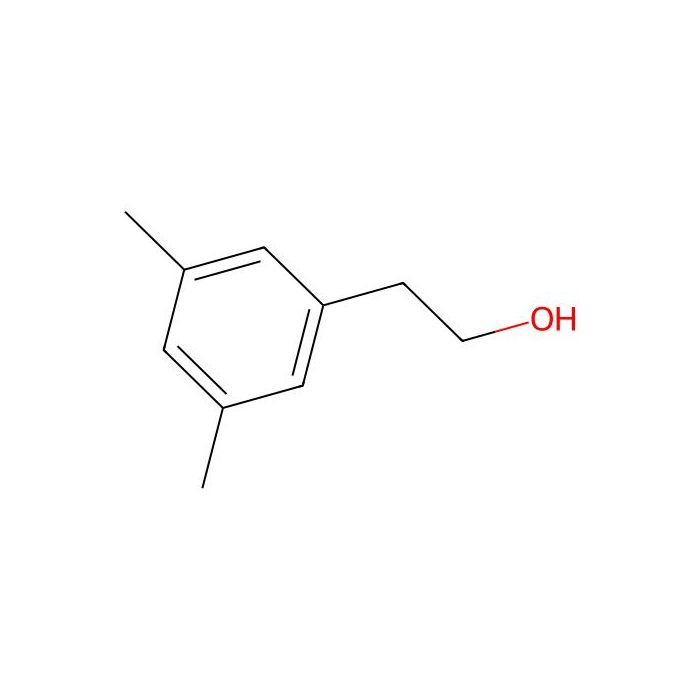
This compound belongs to the class of organic compounds known as m-xylenes. These are aromatic compounds that contain a m-xylene moiety, which is a monocyclic benzene carrying exactly two methyl groups at the 1- and 3-positions.
External Descriptors
Not available
1. Djoumbou Feunang Y, Eisner R, Knox C, Chepelev L, Hastings J, Owen G, Fahy E, Steinbeck C, Subramanian S, Bolton E, Greiner R, and Wishart DS. ClassyFire: Automated Chemical Classification With A Comprehensive, Computable Taxonomy. Journal of Cheminformatics, 2016, 8:61.
Certificati (CoA, COO, BSE/TSE e tabella di analisi)
C of A & Other Certificates(BSE/TSE, COO):
Analytical Chart:
Proprietà chimiche e fisiche
Peso molecolare
150.220 g/mol
XLogP3
2.200
Hydrogen Bond Donor Count
1
Hydrogen Bond Acceptor Count
1
Rotatable Bond Count
2
Exact Mass
150.104 Da
Monoisotopic Mass
150.104 Da
Topological Polar Surface Area
20.200 Ų
Heavy Atom Count
11
Formal Charge
0
Complexity
101.000
Isotope Atom Count
0
Defined Atom Stereocenter Count
0
Undefined Atom Stereocenter Count
0
Defined Bond Stereocenter Count
0
Undefined Bond Stereocenter Count
0
The total count of all stereochemical bonds
0
Covalently-Bonded Unit Count
1
Calcolatori di soluzioni
Molarity Calculator
Determine the necessary mass, volume, or concentration for preparing a solution.
Dilution Calculator
Determine the dilution needed to prepare a stock solution.
Reconstitution Calculator
Recensioni
Recensioni dei clienti
Application Protocols
No tested bioassay or immunoassay protocols are provided for this item. For synthetic applications, refer to the Reaction Conditions and Synthetic Utility sections. For biocatalysis or aqueous reactions, pre-dissolve in a compatible organic cosolvent (e.g., DMSO, EtOH) and titrate into buffered media while monitoring for precipitation.
Biological Roles
Item-specific
None specified; this product is sold for research use only.
General/literature context (no clinical claims)
2-(3,5-Dimethylphenyl)ethanol is a small aromatic primary alcohol with limited inherent biological function. Compared with benzyl alcohol or phenethyl alcohol, additional ring methyls increase hydrophobicity and can modulate membrane partitioning and protein binding in model systems.
Such aryl-ethyl alcohols are occasionally used as reference substrates in biocatalysis screenings (alcohol dehydrogenases, oxidases) to probe substrate scope toward homobenzylic primary alcohols.
Metabolic considerations (in vitro): expected phase I oxidation of the primary alcohol to aldehyde/acid and phase II conjugation (glucuronidation/sulfation) are typical for aliphatic alcohols; aromatic ring methyls may undergo oxidative hydroxylation. These are general expectations from literature and not specific to this product’s tested behavior.
Buffer Applications
This compound is not a buffering agent and is not typically used to prepare biological buffers. If working in aqueous media (e.g., biocatalysis), use an appropriate buffer system (phosphate, Tris, HEPES) and add this hydrophobic alcohol via cosolvent (e.g., ≤10% v/v DMSO, EtOH) or emulsification to achieve the desired concentration.
Green Alternatives
While 2-(3,5-dimethylphenyl)ethanol is itself a reagent/intermediate rather than a process solvent, greener choices can be made for its use and conversion.
Greener solvent swaps (literature; general guidance)
Replace DCM/CHCl3 with EtOAc, 2-MeTHF, or CPME in extractions and many couplings/esterifications.
Substitute DMF/DMSO with Cyrene, NBP (N-butylpyrrolidone), or propylene carbonate for SN2 reactions on derived tosylates/halides when compatible.
Use MeCN alternatives such as green acetonitrile grades or bio-based solvents (e.g., 2-MeTHF) in oxidation protocols.
Oxidation choices (comparative)
Swern/Dess–Martin avoid heavy metals but require low temperature or hypervalent iodine; aqueous TEMPO/NaOCl offers high E-factor efficiency and easy workup.
Small comparison (illustrative; not item-specific specs)
DCM vs 2-MeTHF: similar solvating power for many transformations; 2-MeTHF offers renewable sourcing and easier phase separations; DCM offers lower boiling point but higher toxicity.
DMF vs Cyrene: Cyrene reduces reproductive toxicity concerns and can match DMF polarity; viscosity and base sensitivity may require condition tuning.
Waste minimization
Favor catalytic oxidations (TEMPO, PDC alternatives), in-situ activation (e.g., CDI for carbonate formation), and solvent recycling when feasible.
Pharmaceutical Uses
Item-specific
No pharmacopeial grade or excipient role is specified for this item; it is provided for research use only.
General/literature context (no therapeutic claims)
Aromatic primary alcohols like phenethyl alcohol find uses as fragrance ingredients and occasionally as processing intermediates in API synthesis. The 3,5-dimethyl analogue is primarily a synthetic building block rather than a common excipient.
Potential roles in development workflows include: intermediate en route to amides/acids (after oxidation), hydrophobic linker fragments in prodrug exploration, or model substrate in process development to optimize oxidation/activation unit operations.
Any application in human or veterinary products would require separate qualification to relevant pharmacopeial and GMP standards; none are implied for this catalog item.
Physical Properties
Item-specific (from Product Data)
Appearance: Not specified for this item; refer to CoA/Spec Sheet.
Grade/Purity: Not specified for this item; refer to CoA/Spec Sheet.
Molecular Formula: Not specified for this item; refer to CoA/Spec Sheet.
Molecular Weight: Not specified for this item; refer to CoA/Spec Sheet.
Literature/estimated properties (for reference; not item specifications)
Aggregation state: typically a colorless to pale yellow liquid for analogous phenethyl alcohols with ring alkyl substituents.
Molecular formula (literature): C10H14O; MW ~150.22 g/mol (see Structure & Identity).
Hydrogen bond donors/acceptors: 1 HBD / 1 HBA (alcohol).
Expected solubility profile: miscible with common organic solvents (EtOH, MeOH, acetone, DCM, EtOAc, toluene); low solubility in water, but higher than purely hydrocarbon analogs due to –OH.
Polarity: moderately polar protic compound with a hydrophobic aromatic core; suitable for reverse-phase chromatographic retention.
Volatility: relatively low; boiling points for 3,5-dimethyl-substituted phenethyl alcohols are typically high compared with phenethyl alcohol; vacuum may be preferred for distillation.
Not specified for this item; refer to CoA/Spec Sheet
Melting point / boiling point / density / refractive index / pKa / logP / UV-Vis λmax or cutoff.
Quality and Grades
Item-specific (from Product Data)
Grade/Purity: Not specified for this item; refer to CoA/Spec Sheet.
Guidance on interpreting grades (general)
Research-grade aromatic alcohols are commonly offered in technical, laboratory, or ≥95–99% purity. Higher grades may specify GC purity, residual solvents, water (Karl Fischer), or UV absorbance for chromatographic uses. In absence of a stated grade here, confirm assay, residual solvents, and moisture on the CoA for your lot.
Stabilizers: None specified for this item. Phenethyl-type alcohols are generally stable without added inhibitors; if your application is moisture- or acid-sensitive (e.g., Mitsunobu, Appel), ensure material is dry and free of acidic impurities.
Trace metals/ions: Not specified. If using in organometallic chemistry after conversion to a leaving group (e.g., tosylate), consider pre-drying and optionally passing through basic alumina to minimize acidic/metal contaminants.
Practical QC checks (user-side; general)
Identity: 1H/13C NMR should show a primary alcohol methylene (~3.6–3.8 ppm), benzylic methylene (~2.7–2.9 ppm), two equivalent ring methyl singlets (~2.2–2.3 ppm), and aromatic protons (~6.7–7.2 ppm) consistent with 1,3,5-substitution.
Purity: GC or HPLC with RI/UV detection; dry over molecular sieves (3Å/4Å) if water content is critical.
Not specified for this item; refer to CoA/Spec Sheet for any numeric limits (water, peroxide, metals, UV cutoff).
Reaction and Applications
As a 3,5-dimethyl-substituted phenethyl alcohol, this material is a versatile intermediate for generating 2-(3,5-dimethylphenyl)ethyl derivatives and phenylacetic-type motifs.
Representative transformations (literature; not item-specific performance)
Oxidation to aldehyde/acid: Primary alcohol oxidation to 2-(3,5-dimethylphenyl)acetaldehyde (e.g., Swern, PCC, Dess–Martin) or further to the corresponding acid (e.g., TEMPO/bleach, Jones). The aldehyde is valuable for aldol/imine chemistries.
Activation as a leaving group: Conversion to tosylate/mesylate enables SN2 displacement to install heteroatoms (Cl, Br, I via halide, or O/N/S nucleophiles), furnishing 2-(3,5-dimethylphenyl)ethyl ethers, amines, or thioethers.
Appel or halogenation: PPh3/CBr4 or SOCl2 furnishes the corresponding bromide/chloride, a useful electrophile for alkylations and phase-transfer reactions.
Esterification/Carbonate formation: Formation of benzylic carbonates/carbamates for protecting-group strategies or as bench-stable activated intermediates.
Mitsunobu coupling: Inversion is not relevant (primary, achiral center), but provides access to 2-(3,5-dimethylphenyl)ethyl ethers/esters under mild conditions.
Oxidative/photoredox derivatization: Homobenzylic C–H functionalization adjacent to the ring is accessible under certain radical or photocatalytic conditions.
Application contexts (literature)
Building block for hydrophobic linkers, fragrance analogues, and aryl-ethyl fragments in medicinal chemistry discovery.
Precursor to 3,5-dimethylphenylacetic acid derivatives (after oxidation), common anchors for amide/ester SAR exploration.
Practical notes
Drying over molecular sieves improves outcomes in moisture-sensitive couplings.
Monitor reactions by GC or RP-HPLC; the aromatic UV chromophore facilitates UV detection (254–280 nm).
Reaction Conditions
The following conditions are representative literature guidance for transforming primary aryl-ethyl alcohols and should be optimized per substrate and scale. They are not item-specific specifications.
Oxidation to aldehyde/acid
Swern oxidation: DMSO (activated with oxalyl chloride) in dry DCM at −78 to −40 °C; add alcohol then NEt3; warm to 0 °C; typical rapid conversions to aldehyde.
Dess–Martin periodinane (DMP): DCM at 0–25 °C, 1.3–1.6 equiv DMP, 0.5–2 h to aldehyde; quench with Na2S2O3/NaHCO3.
TEMPO/NaOCl: pH ~9–10 (NaHCO3/Na2CO3 buffer), catalytic TEMPO (0.05–0.1 equiv) and NaClO (1.5–2.0 equiv) in biphasic EtOAc/H2O, 0–10 °C for aldehyde or add NaClO excess for acid.
Activation and substitution
Tosylation: TsCl (1.1–1.5 equiv), DMAP (0.05 equiv) in dry DCM or pyridine, 0 °C→rt, 1–4 h; work up then purify.
Appel bromination: PPh3 (1.2 equiv)/CBr4 (1.2 equiv) in DCM at 0 °C→rt, 1–3 h to give bromide; or PBr3 (0.5–1.0 equiv) in ether at 0 °C→rt.
SN2 on tosylate/halide: Nucleophile (2–3 equiv) in DMF/DMSO/MeCN, 25–80 °C; PTC (e.g., TBAB) may enable reactions in biphasic systems.
CDI carbonate: CDI (1.1–1.5 equiv) in THF/MeCN, rt; then add nucleophile.
Workup/purification
Typical aqueous workups with NaHCO3/Na2S2O3 where oxidants are used; silica gel chromatography with hexanes/EtOAc or toluene/EtOAc mixtures; avoid strong acid to limit dehydration/side reactions.
Safety and Handling
Item-specific (from Product Data)
Storage conditions: Room temperature.
GHS classification, signal word, pictograms, H-statements: Not specified for this item; refer to SDS/CoA.
General safety guidance for aromatic primary alcohols (literature; not item-specific classification)
Hazards: May cause skin/eye irritation; combustible liquid; harmful if swallowed in large amounts. Avoid inhalation of vapors or mists generated during heating or spraying.
PPE: Wear lab coat, safety glasses or splash goggles, and appropriate gloves (e.g., nitrile). Use in a fume hood when heating, performing reactions, or handling reagents that generate vapors/aerosols.
Incompatibilities: Strong oxidizers (risk of exothermic reaction), strong acids/bases (can promote dehydration/etherification), acid chlorides/anhydrides (acylation). Keep away from ignition sources.
First aid (overview; consult SDS for full guidance):
Inhalation: Move to fresh air; seek medical advice if symptoms persist.
Skin: Wash with soap/water; remove contaminated clothing.
Eyes: Rinse cautiously with water for several minutes; remove contact lenses if present and easy; seek medical attention if irritation continues.
Ingestion: Rinse mouth; do not induce vomiting; seek medical advice.
Spill/Fire response: Absorb small spills with inert material (vermiculite) and dispose per local regulations. For fire, use CO2, dry chemical, or foam; water spray for cooling only.
Always consult the product’s SDS for authoritative, item-specific hazard and response information.
Solvent Selection
This compound is a solid/liquid aromatic alcohol reagent, not typically used as a bulk solvent.
How to dissolve and handle (general guidance)
Highly soluble in polar organic solvents (MeOH, EtOH, acetone, acetonitrile) and chlorinated solvents (DCM, chloroform); good solubility in ethers (THF, MTBE) and aromatics (toluene).
Poorly soluble in water; cosolvent or emulsification required for aqueous workups or biotransformations.
Polarity and interactions (literature)
Protic H-bond donor/acceptor with moderate polarity; aromatic ring increases hydrophobicity. Useful for reactions requiring homogeneous conditions in mid-polar media (e.g., DCM, THF, toluene).
When to choose which solvent (general)
Oxidations (e.g., TEMPO, Swern, PCC): DCM or MeCN are common to limit side reactions and control exotherm.
Tosylation/mesylation: Use dry DCM, THF, or pyridine/DMAP systems.
Mitsunobu etherification/esterification: THF, toluene, or DCM under anhydrous conditions.
For greener profiles, replace DCM with EtOAc or 2-MeTHF where compatible; replace DMF/DMSO with Cyrene or propylene carbonate when feasible (see Green Alternatives).
Storage and Reconstitution
Item-specific (from Product Data)
Storage Conditions: Room temperature.
Shipped In: Not specified for this item; refer to CoA/Spec Sheet.
General handling guidance (literature; not item-specific specifications)
Storage: Keep tightly closed in an amber glass bottle at ambient temperature, away from strong oxidizers and sources of ignition. Desiccation is optional; dryness benefits moisture-sensitive downstream reactions.
Stability: Aromatic primary alcohols are typically stable for ≥12 months at RT when protected from air/light; check periodically by GC/NMR for any oxidation.
Reconstitution/Preparation: If solidified or viscous, gently warm to 30–40 °C to homogenize. For anhydrous applications, dry over 3–4 Å molecular sieves or azeotrope with toluene/benzene under inert gas.
Inert atmosphere: Not required for storage, but useful during moisture-sensitive transformations (e.g., tosylation, Mitsunobu).
Always consult the lot-specific CoA/SDS for definitive storage and handling instructions.
Structure and Identity
A benzylic primary alcohol bearing two ring methyl groups at the 3- and 5-positions; useful as a hydrophobic phenethyl building block.
Literature/computed identifiers and description (for reference; not item specifications)
Synonym: 3,5-Dimethylphenethyl alcohol
Molecular formula (literature): C10H14O
Molecular weight (literature): ~150.22 g/mol
SMILES (literature): OCCc1cc(C)cc(C)c1
Structural features: monosubstituted phenethyl core with a primary alcohol (–CH2–CH2–OH) para-related to two ring methyls in meta positions (3,5-dimethyl). No stereocenters; aromatic ring with two alkyl substituents; one primary alcohol capable of hydrogen bonding.
2D description: A benzene ring bearing methyl groups at positions 3 and 5 relative to a –CH2–CH2–OH substituent at position 1; the side chain terminates in a primary hydroxyl group.
Reactivity handles: alcohol for derivatization; benzylic-adjacent (homobenzylic) C–H bonds amenable to oxidation/activation.
Synthetic Utility
2-(3,5-Dimethylphenyl)ethanol is a robust handle for elaborating the 2-(3,5-dimethylphenyl)ethyl motif widely used in discovery chemistry.
Functional-group interconversions (literature)
Oxidation: Primary alcohol → aldehyde (Swern, PCC, DMP) → acid (TEMPO/NaOCl or Pinnick after aldehyde). The acid/amide series enables rapid SAR generation on the arylacetic acid scaffold.
Activation: Alcohol → mesylate/tosylate → SN2 with amines, azide, thiols, or alkoxides to furnish 2-(3,5-dimethylphenyl)ethyl amines/ethers/sulfides.
Halide formation: Appel (PPh3/CBr4 or CCl4), SOCl2, PBr3 to generate corresponding halides for alkylations and as precursors to Grignard-type chemistry after halogen–metal exchange (on the side chain, not the ring).
Carbonate/carbamate installation: Using CDI/Boc2O for temporary protection or for downstream decarboxylative couplings.
Strategic roles
Linker fragment: Provides a hydrophobic spacer between aromatic cores and polar heads in probe or ligand design; the –CH2–CH2– unit imparts flexibility compared to benzylic alcohols.
Late-stage diversification: Ring methyls are relatively inert but enable directed metalation or C–H activation strategies at remaining ring positions under specialized conditions.
Practical considerations
Use anhydrous conditions for activation/coupling steps; pre-dry with 3–4 Å sieves.
Monitor reactions by NMR/GC; aromatic methyl singlets aid tracking conversions.
Purify by silica gel chromatography; eluents from hexanes/EtOAc to toluene/EtOAc are commonly effective.
Target Specificity
Not applicable. This product is a small-molecule reagent and is not an antibody, enzyme, or affinity reagent. No target-binding specificity is provided in the Product Data.
We use cookies to ensure the website functions properly and, where permitted, to improve your experience. You can manage your preferences at any time in Settings. Learn more in our Cookie Policy.
Shall we send you a message when we have discounts available?
Remind me later
Thank you! Please check your email inbox to confirm.
Products are supplied to verified businesses, institutions, and qualified professionals for research and development use only. Not for use in humans, animals, diagnosis, or therapy.