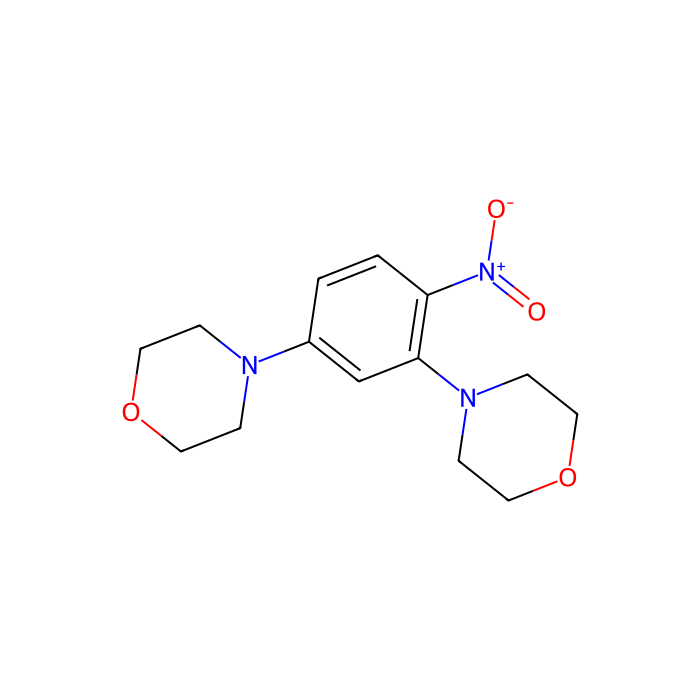
This compound belongs to the class of organic compounds known as phenylmorpholines. These are aromatic compounds containing a morpholine ring and a benzene ring linked to each other through a CC or a CN bond.
External Descriptors
Not available
1. Djoumbou Feunang Y, Eisner R, Knox C, Chepelev L, Hastings J, Owen G, Fahy E, Steinbeck C, Subramanian S, Bolton E, Greiner R, and Wishart DS. ClassyFire: Automated Chemical Classification With A Comprehensive, Computable Taxonomy. Journal of Cheminformatics, 2016, 8:61.
Determine the necessary mass, volume, or concentration for preparing a solution.
Dilution Calculator
Determine the dilution needed to prepare a stock solution.
Reconstitution Calculator
Recensioni
Recensioni dei clienti
Application Protocols
No assay or bioanalytical application protocols are specified for this item. It is supplied as a research chemical building block.
For synthetic use, see the Reaction Conditions and Synthetic Utility sections for generalized procedures (nitro reduction, quaternization, N-oxidation, diazotization).
For analytical characterization, typical small-molecule workflows apply: NMR (1H, 13C), IR (nitro stretches ~1520–1550 and ~1340–1370 cm−1; literature general), HRMS, and LC–MS. Exact spectral data are not specified for this item; refer to your own measurements and the CoA.
Biological Roles
This product is a synthetic organic reagent/building block and is not intended for biological systems. No intrinsic biological role is assigned.
Biological functions, metabolism, or signaling relevance: Not typically applicable for a specialized nitroaromatic with morpholine substituents.
Any discussion of enzymatic pathways or receptor interactions would be speculative and is outside the intended research-use scope.
Research-use scope: For research use only (as provided). If used in chemical biology or probe development, characterize biological properties independently (solubility, stability, cytotoxicity) as they are not specified for this item.
Buffer Applications
Not typically applicable. 2,4-Dimorpholinonitrobenzene is not a buffering agent and is not used to prepare biochemical buffers.
If aqueous handling is required (e.g., in assay development), solubility may be achieved via co-solvents (DMSO) or by forming acid salts of the morpholine nitrogens; however, no item-specific solubility/pKa data are provided and should be determined empirically.
Green Alternatives
While 2,4-dimorpholinonitrobenzene itself is a specialty building block, greener choices relate to solvent systems and process design rather than replacement of the reagent. Consider the following when planning syntheses or formulations involving this compound.
Greener solvent and process substitutions (general guidance):
Replace dipolar aprotic solvents of high environmental burden (DMF, NMP) with lower-toxicity options where feasible:
Acetonitrile, propylene carbonate, dimethyl sulfone, or Cyrene (dihydrolevoglucosenone) for some polar reactions.
2-MeTHF or CPME in place of DCM/THF for extractions and medium-polarity reactions when solubility permits.
Workup and purification:
Prefer EtOAc/MeOH/IPA over chlorinated solvents when chromatographic selectivity allows.
Minimize silica waste by using crystallization or liquid–liquid extraction purifications when possible.
Energy and safety:
Conduct reductions of the nitro group using catalytic hydrogenation with reusable catalysts (Pd/C, Raney Ni) under controlled conditions instead of stoichiometric metal/acid where appropriate.
Concise comparison (illustrative; select based on your chemistry):
DCM vs EtOAc: EtOAc is biodegradable with lower toxicity; DCM offers superior solvency and easy evaporation but has higher environmental and health concerns.
DMF/NMP vs MeCN/Cyrene: MeCN and Cyrene often provide adequate polarity with improved operator safety; check compatibility with amine-containing substrates.
Note: Verify solubility/reactivity trade-offs experimentally; no item-specific solvent compatibility data are specified here.
Pharmaceutical Uses
This product is offered strictly for research and laboratory use; it is not an excipient or active pharmaceutical ingredient.
Pharmacopeial status: Not specified/Not monographed.
Typical role in pharma R&D (general): heteroaromatic building block for SAR exploration, probe/dye precursor exploiting donor–acceptor electronics, or intermediate en route to anilines or cationic morpholinium derivatives.
Formulation/excipient uses: Not applicable.
No medical or clinical claims are made or implied. Any use in drug discovery should include de novo evaluation of purity, residual solvents, and stability under storage and processing conditions.
Physical Properties
Item-specific physicochemical specifications are not provided in the Product Data. Refer to the CoA/Spec Sheet for authoritative values.
Appearance: Not specified for this item; refer to CoA/Spec Sheet.
Molecular formula: Not specified for this item; refer to CoA/Spec Sheet.
Molecular weight: Not specified for this item; refer to CoA/Spec Sheet.
Boiling point, melting point, density, refractive index, UV cutoff: Not specified for this item; refer to CoA/Spec Sheet.
Literature/general expectations for this structural class (aromatic nitro compounds with dialkylamino substituents; for context only, not item specifications):
Physical state: typically crystalline solids at ambient temperature due to the aromatic core and multiple heteroatoms.
Solubility: often soluble in polar aprotic organic solvents (e.g., DMSO, DMF, NMP, acetonitrile) and moderately soluble in chlorinated solvents; limited solubility in nonpolar hydrocarbons; very low solubility in water due to hydrophobic aromatic core despite tertiary amines.
Ionization: morpholine nitrogens are basic; protonation in strong acid increases aqueous solubility (forms ammonium salts). The nitro group is not basic or acidic under neutral conditions.
Partitioning: push–pull substitution can increase polarity relative to simple nitrobenzenes, but cLogP remains moderate; exact logP/pKa values must be taken from literature or experimental determination for this CAS.
Note: Always rely on the batch-specific CoA for numerical property values relevant to method development or safety assessments.
Quality and Grades
Grade/purity: Not specified for this item; refer to CoA/Spec Sheet for assay, impurity profile, and any stabilizers.
Context for purchasers (general):
Research grade (typical for specialty building blocks) emphasizes suitability for synthetic and analytical research. It is not certified for clinical or food use.
If HPLC/LC–MS suitability is important (e.g., for analytical method development), review UV absorbance background and LC–MS background ions on the batch CoA or request additional testing.
If trace metals or water content impact your application (e.g., cross-coupling catalysis, moisture-sensitive transformations), request Karl Fischer and metals screening data. Absent explicit values, assume routine drying and purification may be beneficial prior to critical reactions.
What to check on receipt:
Assay/purity by NMR/GC/LC, identity confirmation (NMR, HRMS), residual solvent content, and water (KF) — Not specified for this item; refer to CoA/Spec Sheet.
Stabilizers: None are listed in the Product Data. If stabilization is relevant (e.g., acid scavengers for amines), verify on the CoA.
Documentation available upon request: batch-specific CoA, SDS, technical note on recommended purification/drying if required by your workflow.
Reaction and Applications
2,4-Dimorpholinonitrobenzene is a push–pull tri-substituted aromatic reagent combining two strong electron-donating morpholine groups with a nitro acceptor. This makes it useful in advanced organic synthesis and materials development.
Representative uses (literature/general for this motif):
Precursor to highly electron-rich anilines via selective reduction of the nitro group (e.g., catalytic hydrogenation, Fe/acid, SnCl2). The aniline can then undergo diazotization, Sandmeyer, or be incorporated into azo dyes and functional materials.
Nucleophilic aromatic substitution (SNAr) platform when suitably activated (e.g., if halogens or additional nitro groups are introduced in subsequent steps); the existing nitro group can direct reactivity and tune electronics.
Donor–acceptor chromophore component: dialkylamino groups serve as donors; nitro is a strong acceptor, enabling intramolecular charge transfer (ICT) systems for dyes, sensors, and nonlinear optical materials after appropriate elaboration.
Ligand/scaffold elaboration: morpholine substituents are versatile handles for quaternization, acylation, or alkylation, enabling cationic materials, ionic liquids precursors, or tethered catalysts.
Practical tips:
Amines can coordinate to transition metals; when using metal-catalyzed reactions (e.g., cross-couplings after derivatization), consider ligand/catalyst selection and potential inhibition.
For chromatographic purification, include a volatile base (e.g., triethylamine) in eluents to minimize amine tailing.
Prior to moisture-sensitive chemistry, dry the material under high vacuum over P2O5 or 3Å molecular sieves to remove adventitious moisture (KF not specified; check CoA).
Related transformations:
N-oxidation of morpholine nitrogens, ring opening under strong nucleophiles, and formation of salts with mineral acids for solubility tuning.
Reaction Conditions
The following are general literature-style conditions for common transformations of nitroaromatics bearing tertiary amino substituents. They are provided as guidance, not as item-specific specifications.
Nitro reduction to aniline:
Catalytic hydrogenation: H2 (1–5 bar) with 5–10 wt% Pd/C (5–10 mol% Pd relative to substrate) in EtOH/EtOAc/MeOH or AcOH/EtOH mixtures at 20–40°C; typical times 1–6 h. Monitor for over-reduction or hydrogenolysis.
Tin(II) chloride: SnCl2·2H2O (3–6 equiv) in ethanol or HCl/EtOH at reflux, 2–6 h; work up by basification and extraction.
Iron–acid: Fe powder (5–10 equiv) in AcOH/H2O or NH4Cl/H2O/EtOH at 60–90°C; filter and basify to isolate.
Quaternization of morpholine nitrogens:
RX (e.g., MeI, BnBr, MeOTf) in MeCN/acetone or neat, 0–60°C, 2–24 h; may require excess alkylating agent. Resulting salts can be isolated by precipitation from ether.
N-oxidation (morpholine):
m-CPBA (1.1–1.5 equiv) in DCM at 0–25°C, 1–3 h; monitor by TLC/LC–MS. N-oxides often increase polarity and can direct further functionalization.
Diazotization (after nitro reduction to aniline):
NaNO2 (1.1 equiv) in 2–4 M HCl at 0–5°C, then capture with CuX or BF4− salts for Sandmeyer/Meerwein reactions. Maintain low temperature to control diazonium stability.
Solvent and base/acid choices should account for the tertiary amines (possible salt formation) and the compound’s solubility profile (typically polar aprotic). Expected yields vary widely (50–95%) depending on substitution and conditions; optimize empirically.
Safety and Handling
Authoritative safety classification is not provided in the Product Data; consult the product SDS for definitive information.
GHS/CLP classification, signal word, hazard (H) statements, pictograms: Not specified for this item; refer to SDS.
Likely hazards (general for nitroaromatics/tertiary amines; informational only): may cause eye/skin irritation; harmful if swallowed or inhaled; dust may be irritating. Nitroaromatics can present methemoglobinemia risk upon significant exposure; handle to minimize inhalation/dermal contact. Tertiary amines can be irritating and may form salts with acids.
PPE (good laboratory practice):
Wear lab coat, safety glasses or face shield, and suitable chemical-resistant gloves (e.g., nitrile). Work in a fume hood to avoid inhalation of dust or vapors.
Avoid contact with strong oxidizers and strong acids/bases unless intended; tertiary amines may react exothermically with strong acids; nitro group is generally stable but avoid strong reducing agents unless in a controlled reaction.
Handling & hygiene:
Avoid generating dust. Use antistatic measures when handling powders. Wash thoroughly after handling.
First-aid (general guidance; defer to SDS):
Inhalation: move to fresh air; seek medical attention if symptoms persist.
Skin/eye contact: rinse with water for several minutes; remove contaminated clothing; get medical advice if irritation develops.
Ingestion: rinse mouth; do not induce vomiting; seek medical attention.
Fire & reactivity:
Nitroaromatics are combustible; use dry chemical, CO2, or foam. Avoid strong reducing agents and energetic nitration conditions. Thermal decomposition may release NOx.
Storage incompatibilities: segregate from strong oxidizers and strong acids/bases; store desiccated at room temperature as specified.
Solvent Selection
This compound is an aromatic nitro derivative bearing two morpholine rings (tertiary amines + ether oxygens), giving it moderate polarity and good compatibility with polar aprotic solvents.
Practical miscibility/solubility (general expectations; verify experimentally for your batch):
Moderate: alcohols (MeOH/EtOH; protonation of amines can enhance solubility), acetone, toluene (heated).
Poor: aliphatic hydrocarbons (hexanes, heptane), water (unless protonated as a salt).
Selection guidance by application:
Nucleophilic or base-mediated reactions: polar aprotic solvents (DMF/DMSO/MeCN) often maximize reactivity of amino-substituted aromatics.
Electrophilic functionalization or salt formation: alcohols or ethereal solvents may be suitable; avoid strong acids unless forming salts intentionally.
Purification: normal-phase chromatography with moderately polar eluents (DCM/MeOH, DCM/EtOAc with base modifier like 0.1–1% NEt3 to suppress tailing of tertiary amines).
Dielectric constant/polarity index: Not specified for this item; use solvent properties to tune elution and reactivity.
Quick comparison (contextual):
DMSO/DMF maximize solubility and reactivity but complicate workup; MeCN offers a balance; DCM is excellent for extractions and chromatography but is less green; EtOAc is greener but may require larger volumes due to solubility limits.
Note: For spectroscopic work (UV–vis), determine the compound’s background absorbance in chosen solvents; exact UV cutoff is Not specified for this item.
Shipping (from Product Data): Shipped at ambient temperature (Normal).
Container considerations: Store tightly sealed in chemically compatible containers (amber glass recommended) with desiccant to minimize moisture uptake. Protect from prolonged exposure to strong light and ambient humidity.
Stability: No item-specific stability data are provided. As a general rule, nitroaromatics and tertiary amines are stable under dry, dark, room-temperature storage. Avoid contact with strong oxidizers/reductants unless intended.
Prepare stock solutions in DMSO, DMF, MeCN, or dichloromethane depending on application. Begin at 10–100 mg/mL to gauge solubility, adjusting as needed.
For aqueous applications, dissolve in a miscible organic co-solvent (e.g., DMSO) first; optional formation of a protonated salt with a volatile acid (e.g., HCl in IPA/Et2O) can improve water compatibility. Verify stability upon protonation.
Filter solutions (0.2 µm PTFE) for analytical or sensitive synthetic applications.
Freeze–thaw: Not typically required for solids. If solutions are prepared, store aliquots at 2–8°C or −20°C depending on solvent; bring to room temperature and mix before use to redissolve any precipitate.
Always consult the batch CoA and SDS for any additional storage notes and safety considerations.
Structure and Identity
A tri-substituted nitrobenzene bearing two morpholine rings is a versatile electron-rich/electron-poor push–pull aromatic building block for synthesis and materials chemistry.
Item-specific identifiers (from Product Data)
SKU: D293912
Product name: 2,4-Dimorpholinonitrobenzene
CAS: 133387-34-5
PubChem CID: 2829644
InChIKey: 160942 (as provided)
SMILES: Not specified for this item; refer to CoA/Spec Sheet.
Structural features (general, based on name; not item-specific specs)
Core: nitrobenzene ring (one –NO2 substituent on an aromatic ring).
Substituents: two morpholino (morpholin-4-yl) groups arranged at the 2- and 4-positions relative to the nitro group (i.e., 1-nitro-2,4-bis(morpholin-4-yl)benzene by conventional naming).
Functional groups: tertiary amine nitrogens (within each morpholine), cyclic ether oxygens (morpholine), and an aromatic nitro group.
Electronic character: strongly donating dialkylamino-type substituents (morpholine) conjugated to a strongly withdrawing nitro group; useful for push–pull systems and nucleophilic aromatic substitution chemistry.
2D description: a benzene ring bearing –NO2 at position 1, with morpholine rings attached via their ring nitrogen at positions 2 and 4; each morpholine is a six-membered heterocycle containing one O and one N opposite each other.
Molecular formula and molecular weight: Not specified for this item; refer to CoA/Spec Sheet. (Literature/computed values for this specific CAS have not been verified here.)
Synthetic Utility
Key reactive elements enable diverse downstream chemistry:
Functional groups driving reactivity:
Nitro group: reducible to an aniline; amenable to partial reduction (NHOH) or conversion to other functionalities via diazotization after reduction.
Tertiary amines (morpholine nitrogens): can be protonated (salt formation for phase-transfer or solubility control), quaternized (alkyl halides, MeOTf) to generate cationic species, or acylated to give amide-like derivatives via N-acylation.
Ether oxygens in morpholine: generally inert but influence conformation/polarity; oxidative transformations to N-oxides possible (m-CPBA), which can alter electronics and reactivity.
Nitro reduction: catalytic hydrogenation (H2/Pd–C) or Fe/AcOH, SnCl2, Zn/NH4Cl to anilines.
Sandmeyer/Meerwein aryl diazonium chemistry following aniline formation for installation of Cl, Br, CN, CF3 (via modern variants), or coupling to form azo dyes.
Electrophilic aromatic substitution (EAS) is deactivated by –NO2 yet activated ortho/para by dialkylamino donors; the net pattern depends on position—further substitution typically requires directed or metal-catalyzed methods.
Formation of ionic liquids or phase-transfer catalysts by quaternization of morpholine nitrogens with suitable alkylating agents.
Retrosynthetic value:
Serves as a convergent node: ring reductions or morpholine functionalization allow rapid access to families of donor–acceptor chromophores or polycationic materials.
Note: Specific reactivity/yields depend on conditions and substitution pattern; optimize for your target.
Target Specificity
Not applicable. This product is a small-molecule chemical reagent and does not have biological target specificity, antigen/epitope information, clone IDs, or species reactivity. No antibody or biochemical targeting data are provided or implied.
Domande frequenti
What is the purity of this product?
This product is supplied at ≥97% purity (chemical assay). Lot-specific values are stated on the Certificate of Analysis.
How should this product be stored?
Store at room temperature, desiccated. Keep the container tightly closed with desiccant — the material is moisture-sensitive.
How is this product shipped?
This product ships under standard ambient conditions. No temperature-controlled packaging is required.
What are the CAS number, molecular formula and molecular weight?
The CAS Number is 133387-34-5, the molecular formula is C14H19N3O4, and the molecular weight is 293.32 g/mol. InChIKey JHXWNZPLYVFBSY-UHFFFAOYSA-N.
What documentation is provided?
Available product documentation, including Certificates of Analysis (COA), Safety Data Sheets (SDS), and specification sheets, is shown in the product document area. Document availability and access follow the current site policy.
Utilizziamo i cookie per garantire il corretto funzionamento del sito web e, ove consentito, per migliorare la tua esperienza. Puoi gestire le tue preferenze in qualsiasi momento nelle Impostazioni. Per saperne di più, consulta la nostra Cookie Policy.
Desidera che le inviamo un messaggio quando avremo sconti disponibili?
Ricordamelo più tardi
Grazie! Controlli la sua casella di posta per confermare.
Products are supplied to verified businesses, institutions, and qualified professionals for research and development use only. Not for use in humans, animals, diagnosis, or therapy.