This compound belongs to the class of organic compounds known as benzyl bromides. These are organic compounds containing a benzene skeleton substituted with a bromomethyl group.
External Descriptors
Not available
1. Djoumbou Feunang Y, Eisner R, Knox C, Chepelev L, Hastings J, Owen G, Fahy E, Steinbeck C, Subramanian S, Bolton E, Greiner R, and Wishart DS. ClassyFire: Automated Chemical Classification With A Comprehensive, Computable Taxonomy. Journal of Cheminformatics, 2016, 8:61.
Determine the necessary mass, volume, or concentration for preparing a solution.
Dilution Calculator
Determine the dilution needed to prepare a stock solution.
Reconstitution Calculator
Recensioni
Recensioni dei clienti
Application Protocols
Not applicable. No validated biological assay protocols (e.g., WB, IHC, IF, FC) apply to this chemical reagent. For use protocols, refer instead to Reaction Conditions, Reaction & Applications, and Synthetic Utility for synthetic procedures.
Biological Roles
This product is a synthetic benzylic halide used as a chemical building block and protecting-group reagent. It does not have a recognized endogenous biological role.
General context (literature):
Benzylic halides act as alkylating agents; their biological interactions are non-specific and primarily reactive/chemical rather than receptor-mediated.
Fluorinated benzyl groups are used in medicinal chemistry to modulate lipophilicity and metabolic stability of small molecules after incorporation, but the reagent itself is not a biochemical metabolite.
Use in bioconjugation (general):
Direct use in aqueous/biological media is uncommon due to hydrolysis and non-selective alkylation. If derivatizing biomolecules, strictly anhydrous, organic-compatible conditions and protective-group strategies are required.
Conclusion: No specific biological roles are assigned; handle strictly as a reactive laboratory chemical for synthesis.
Buffer Applications
Not typically applicable. 2,5-Difluorobenzyl bromide is a reactive, water-insoluble alkylating agent and is not used to prepare laboratory buffer systems or for electrophoresis/cell-culture buffering. For relevant information, see Reaction & Applications, Synthetic Utility, and Reaction Conditions.
Green Alternatives
Greener choices can be made at the level of solvent, leaving group, or activation strategy. Trade-offs are summarized below (literature/general guidance).
Solvent substitutions:
Replace DMF/DMSO with MeCN, 2-MeTHF, CPME, or toluene under phase-transfer catalysis to reduce environmental and EHS burdens while maintaining reaction performance.
Leaving group/activation alternatives:
Use 2,5-difluorobenzyl alcohol with enzymatic or catalytic activation (e.g., carbonate formation with green reagents) to avoid handling benzylic bromide; however, reactivity is lower and conditions can be more specialized.
Employ 2,5-difluorobenzyl chloride (less hazardous than bromide) where feasible, at the cost of reduced rate; iodide (in situ via NaI) increases rate but introduces iodide waste.
Comparison (qualitative):
2,5-DFBn–Br in DMF: high rate, challenging solvent EHS.
2,5-DFBn–Br in MeCN: good rate, improved workup, lower toxicity.
2,5-DFBn–OH with green activation: best from a hazard perspective; potentially lower yields/longer times, specialized catalysts.
Practical tips:
Choose phase-transfer catalysis in toluene or 2-MeTHF to enable lower temperatures and easier separations.
Apply solvent recycling and minimal halogenated waste strategies.
Ensure closed transfers and fume-hood operations to limit exposure to lachrymatory vapors.
Pharmaceutical Uses
This material is a research chemical/reagent; it is not an approved excipient or active ingredient.
Potential roles in pharmaceutical R&D (literature/general):
Synthetic intermediate: introduces a 2,5-difluorobenzyl fragment into drug candidates or intermediates via O/N/S/C-alkylation.
Protecting group reagent: transient installation of the 2,5-difluorobenzyl group on phenols, carboxylates, or amines, with later deprotection.
Pharmacopeial status, impurity limits, and residual solvent guidance: Not specified for this item; consult internal specifications and regulatory guidelines if using in GMP-related routes.
Reminder: For research use only (per Product Data). No medical or clinical claims are made.
Physical Properties
Only general/literature information is provided below; do not treat as item specifications.
Aggregate state/appearance: Not specified for this item; refer to CoA/Spec Sheet.
Boiling point: Typical benzylic bromides boil in the 220–240 °C range at 1 atm (literature, class information). Specific BP for 2,5-difluorobenzyl bromide: literature values around the low–mid 200s °C have been reported; verify with primary sources before process design.
Melting point: Not applicable/typically liquid; exact MP not widely reported (literature). Item-specific MP: Not specified for this item; refer to CoA/Spec Sheet.
Density (20–25 °C): Not specified for this item; refer to CoA/Spec Sheet.
Refractive index (n20 D): Not specified for this item; refer to CoA/Spec Sheet.
Solubility: Insoluble in water; miscible with common organic solvents such as dichloromethane, chloroform, acetonitrile, THF, and toluene (literature/general for benzyl bromides).
Partitioning: Expect high hydrophobicity due to aryl and benzylic bromide; logP not specified for this item. Literature analogs show logP > 2.
Vapor pressure: Low at ambient temperature (literature for aryl/benzylic bromides).
UV cutoff: Not specified for this item; refer to CoA/Spec Sheet.
pKa: Not applicable (no ionizable proton in neutral form); benzylic cation is stabilized (qualitative, literature).
Quality and Grades
Item-specific grade/purity: Not specified for this item; refer to CoA/Spec Sheet.
Implications of grade (general guidance):
Research-grade benzylic halides are typically suitable for synthesis, protection steps, and quaternization reactions. Higher grades (e.g., ≥98–99%) reduce byproducts such as dibenzyl ethers and hydrolysis products.
HPLC grade (if applicable) emphasizes low UV-absorbing impurities for analytical use; for this reagent, chromatography-grade purity reduces tailing and baseline drift when used as a standard or derivatization agent.
Water/peroxide/metal specifications: Not specified for this item; refer to CoA/Spec Sheet. Benzylic bromides are not peroxide formers, but adventitious hydrolysis (water) and formation of benzylic alcohol are typical impurities.
Stabilizers/inhibitors: Not specified for this item; refer to CoA/Spec Sheet. In general, benzylic bromides are sold neat without stabilizers; maintaining dryness minimizes degradation.
Verification: For moisture/identity checks, 1H/13C NMR (benzylic CH2 ~4.4–4.6 ppm, literature), GC or GC–MS, and halide assay are commonly used (general practice).
Reaction and Applications
As a benzylic bromide, 2,5-difluorobenzyl bromide is a versatile electrophile for installing a 2,5-difluorobenzyl (DFBn) motif.
Typical transformations (literature/general):
O-alkylation: Converts alcohols/phenols to benzyl ethers; phenoxide alkylations proceed efficiently under K2CO3/Cs2CO3 in DMF/MeCN or under phase-transfer catalysis.
N-alkylation: Primary/secondary amines to benzylamines; quaternization of tertiary amines to ammonium salts.
S-alkylation: Thiols/thioates to thioethers.
C-alkylation: Enolate or malonate alkylations (benzylic substrates are effective in SN2 with soft carbanions).
Quaternary phosphonium/sulfonium salt formation: Useful for Wittig reagents or PTC catalysts.
Utility of 2,5-difluoro substitution (literature): Fluorine atoms modulate electronics (inductive –I) and block metabolic hotspots in medicinal chemistry scaffolds; the DFBn group can serve as a protecting group removable by catalytic hydrogenolysis or strong Lewis acids (conditions vary by substrate).
Practical notes:
Minimize water; benzylic bromides hydrolyze.
Control stoichiometry to limit overalkylation of amines.
For hindered nucleophiles, iodide catalysis (NaI, Finkelstein) can accelerate substitution by in situ benzyl iodide formation.
For sensitive substrates, conduct at 0–25 °C; exotherms are possible when adding base or nucleophile.
Representative applications (literature examples): preparation of benzyl-protected phenols, benzyl thioethers, benzylated heterocycles, and quaternary ammonium salts containing the 2,5-difluorobenzyl moiety.
Reaction Conditions
General literature guidance; optimize for your substrate. Item-specific specifications are not implied.
O-Alkylation (phenols/alcohols):
Base: K2CO3 (1.2–2.0 equiv) or Cs2CO3.
Solvent: DMF or MeCN (0.1–0.5 M).
Temperature: 20–60 °C.
Time: 1–12 h.
Notes: Add NaI (10–20 mol%) to accelerate; exclude water.
N-Alkylation (amines):
Base: DIPEA or NaHCO3 (1.0–2.0 equiv).
Solvent: MeCN, THF, or toluene (with PTC).
Temperature: 0–40 °C; monitor to avoid overalkylation to tertiary or quaternary salts.
S-Alkylation (thiols):
Base: Na2CO3 or Et3N.
Solvent: MeCN, acetone, or biphasic toluene/H2O with Bu4NBr (PTC).
Temperature: 0–25 °C; reactions are typically fast (0.5–4 h).
Enolate/malonate alkylation:
Base: NaH (1.1–1.5 equiv) or K2CO3 for activated nucleophiles.
Solvent: THF or DMF.
Temperature: 0–25 °C initially, then allow to warm as needed.
Quaternization of tertiary amines:
Neat or in MeCN/acetone; 20–60 °C, 1–24 h, to give benzyl ammonium salts.
Workup tips:
Quench with water, extract with DCM/EtOAc; wash with NaHCO3 and brine to remove HBr and base.
For reactions in DMF/DMSO, aqueous workup followed by high-vacuum removal or co-evaporation with toluene is useful.
Expected performance: Benzylic bromides typically afford high conversions under mild conditions; actual yields depend on substrate and conditions (consult primary literature for analogous cases).
Safety and Handling
GHS/Classification (item-specific): Not specified for this item; refer to SDS for authoritative hazard, pictograms, signal word, and H-statements.
General hazard profile (literature): Benzylic bromides are potent alkylating agents and common lachrymators. They can cause severe eye/skin irritation and respiratory tract irritation. They may be harmful if inhaled, swallowed, or absorbed through skin. Handle as a suspected acute toxin/irritant.
PPE recommendations (good lab practice):
Use chemical-resistant gloves (e.g., nitrile), lab coat, and splash goggles.
Work in a certified fume hood to avoid inhalation exposure and lacrimation.
Storage incompatibilities and precautions:
Store tightly closed at room temperature (per Product Data). Keep in a dry place, away from bases, strong nucleophiles, and strong oxidizers.
Moisture can promote hydrolysis to the corresponding benzyl alcohol and HBr; minimize exposure to humid air. For long-term storage, consider inert atmosphere and a desiccant (general best practice).
First-aid overview (consult SDS for details):
Inhalation: Move to fresh air; seek medical attention if symptoms persist.
Skin contact: Remove contaminated clothing; wash with soap and water.
Eye contact: Rinse cautiously with water for several minutes; remove contact lenses if present; seek medical attention.
Ingestion: Rinse mouth; do not induce vomiting; get medical advice.
Spill/cleanup: Absorb with inert material; avoid contact and vapors; dispose via hazardous waste procedures per institutional policy.
Solvent Selection
2,5-Difluorobenzyl bromide is a moderately polarizable, non-protic, electrophilic organic liquid. Solvent choice is typically driven by the nucleophile and mechanism (SN1 vs SN2):
Polarity/miscibility (literature/general):
Water: immiscible.
Miscible/soluble in common organic media: dichloromethane (DCM), chloroform, acetonitrile (MeCN), dimethylformamide (DMF), dimethyl sulfoxide (DMSO), tetrahydrofuran (THF), toluene, and ethers.
Selection guidelines:
SN2 alkylations of alcohols/phenols: polar aprotic solvents (DMF, DMSO, MeCN) accelerate reaction rates with inorganic bases (K2CO3, Cs2CO3).
Alkylation of amines: MeCN, THF, or isopropanol with a non-nucleophilic base (DIPEA, NaHCO3) to limit overalkylation.
Phase-transfer conditions: biphasic toluene or DCM/water with quaternary ammonium salts (PTC) for deprotonated phenols or thiols.
Avoid strongly nucleophilic protic solvents (e.g., MeOH) unless solvent participation is intended, as solvent can compete to form benzyl ethers.
Comparisons (general):
DMF/DMSO: highest rates for SN2; challenging workup.
MeCN: good balance of rate and easy removal.
2-MeTHF/CPME: greener alternatives with lower miscibility with water, often suitable when using bases soluble in the organic phase.
Drying and degassing: Use anhydrous solvents to suppress hydrolysis and formation of 2,5-difluorobenzyl alcohol (general practice).
Storage and Reconstitution
Storage conditions (item-specific): Room temperature (per Product Data). Shipped under normal conditions.
Container/handling: Store in a tightly sealed amber glass bottle to limit light and moisture ingress. Use dry, inert headspace for long-term storage (best practice for benzylic bromides). Keep away from bases, strong nucleophiles, and oxidizers.
Stability considerations (general): Benzylic bromides can slowly hydrolyze to the corresponding benzyl alcohol and generate HBr in the presence of moisture; maintain anhydrous conditions. Monitor for changes in color or acidity as indicators of degradation.
Reconstitution: Supplied neat; no reconstitution required. If dilution is needed for dosing or stock solutions, prepare under dry conditions in anhydrous solvents such as MeCN, DCM, or THF. Label solutions with preparation date and solvent.
Freeze–thaw: Not applicable for neat liquids; avoid unnecessary cooling that may induce crystallization of impurities. If stored cold for any reason, allow to equilibrate to room temperature before opening to prevent moisture condensation.
For research use only (per Product Data). Refer to the SDS and CoA/Spec Sheet for definitive guidance.
Structure and Identity
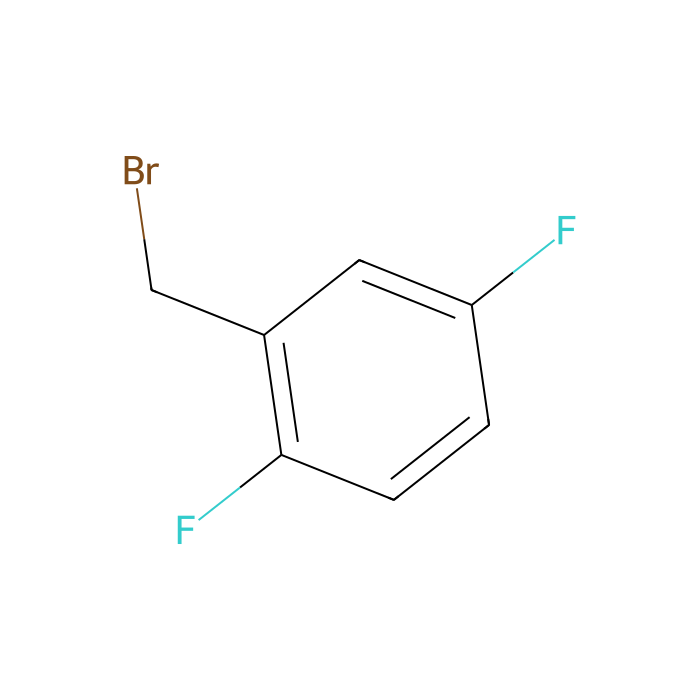
Brief description: 2,5-Difluorobenzyl bromide is a benzylic bromide bearing fluorine substituents at the ortho (2-) and meta (5-) positions on the aromatic ring; it serves as an electrophilic benzylating agent.
Item-specific identifiers (from Product Data)
SKU: D120601
Product name: 2,5-Difluorobenzyl bromide
CAS: 85117-99-3
PubChem CID: 522830
InChIKey: Not specified for this item; refer to CoA/Spec Sheet.
SMILES: Not specified for this item; refer to CoA/Spec Sheet.
Literature/computed identity details (for reference; not item specifications)
Molecular formula: C7H5BrF2 (literature)
Molecular weight: ~207.01 g/mol (computed from formula)
Structural features: one benzene ring bearing F at positions 2 and 5; a benzylic –CH2–Br substituent at position 1. The benzylic carbon is primary, enabling SN1/SN2 reactivity. No stereocenters.
2D description: a monosubstituted benzene where the ring carbon at C1 carries a –CH2Br group; ring carbons at C2 and C5 carry fluorine atoms; remaining ring positions are protonated.
Key functional element: a benzylic bromide attached to a 2,5-difluorophenyl ring. The primary benzylic carbon is highly susceptible to nucleophilic substitution; the aryl difluoro pattern tunes electronics and sterics.
Strategic uses (literature/general):
Protecting-group chemistry: DFBn ethers of phenols/thiols; removable by hydrogenolysis (Pd/C, H2) or Lewis acid-promoted cleavage, depending on substrate sensitivity.
Diversification: Rapid access to 2,5-difluorobenzylated amines, heterocycles, and thioethers by direct SN2.
Quaternization: Formation of benzyl ammonium, phosphonium, and sulfonium salts, enabling phase-transfer catalysts or Wittig reagents.
Enolate alkylation: Soft carbon nucleophiles (malonates, β-ketoesters) couple efficiently at the benzylic position.
Considerations:
Competing elimination is minor for primary benzylic bromides but can occur under strong base/heat; keep temperatures moderate.
Iodide catalysis (Finkelstein) and crown ethers can enhance rates with inorganic bases.
Fluorine substituents may slow SN1 solvolysis relative to unsubstituted benzyl bromide (inductive effect) yet SN2 remains rapid due to benzylic activation.
Analysis/characterization (general): Benzylic CH2 typically at δ 4.4–4.6 ppm (1H NMR); 19F NMR shows two aromatic F signals (often meta-split patterns). GC–MS commonly shows m/z corresponding to MW ~207 with characteristic Br isotopic pattern.
Target Specificity
Not applicable. This product is a small-molecule reagent, not an antibody, probe, or biological targeting agent. No antigen/epitope or species reactivity is defined.
We use cookies to ensure the website functions properly and, where permitted, to improve your experience. You can manage your preferences at any time in Settings. Learn more in our Cookie Policy.
Shall we send you a message when we have discounts available?
Remind me later
Thank you! Please check your email inbox to confirm.
Products are supplied to verified businesses, institutions, and qualified professionals for research and development use only. Not for use in humans, animals, diagnosis, or therapy.

 D2318435