This compound belongs to the class of organic compounds known as polyhalopyridines. These are organic compounds containing a pyridine ring substituted at two or more positions by a halogen atom.
External Descriptors
Not available
1. Djoumbou Feunang Y, Eisner R, Knox C, Chepelev L, Hastings J, Owen G, Fahy E, Steinbeck C, Subramanian S, Bolton E, Greiner R, and Wishart DS. ClassyFire: Automated Chemical Classification With A Comprehensive, Computable Taxonomy. Journal of Cheminformatics, 2016, 8:61.
Determine the necessary mass, volume, or concentration for preparing a solution.
Dilution Calculator
Determine the dilution needed to prepare a stock solution.
Reconstitution Calculator
Recensioni
Recensioni dei clienti
Application Protocols
Not applicable. No immunoassay or bioanalytical application protocols (e.g., WB, IHC, IF, FC) are associated with this small-molecule reagent.
Synthetic use examples (literature-style guidance only):
Typical C–H arylation setup: Charge a dry tube with 2,6-dichloropyridine N-oxide (1.0 equiv), Pd(OAc)2 (5 mol%), Ag2CO3 (2.0 equiv), arene coupling partner (2–3 equiv), and DMF (0.1–0.2 M). Heat at 110 °C under argon for 12 h. Quench, extract, and purify by column chromatography. Then reduce the N-oxide if desired.
Deoxygenation: Dissolve the N-oxide in toluene/MeCN (0.1–0.2 M) under argon, cool to 0 °C, add PCl3 (1.5 equiv) dropwise, stir to RT for 1–2 h, then quench cautiously with aqueous NaHCO3, extract, and purify. Verify preservation of 2,6-dichloro substituents by MS (3:1 35/37Cl isotopic pattern).
These are illustrative only. Validate conditions for your substrate and safety requirements.
Biological Roles
Applicability: This product is intended for research use only and is primarily a synthetic building block. No biological role is assigned to this catalog item.
General context (literature):
Pyridine N-oxides occur as metabolic oxidation products of pyridine-containing xenobiotics in mammals and microbes. The N-oxide increases polarity, often enhancing aqueous solubility and modulating clearance. Such N-oxide formation is reversible in vivo (via reductases) in some systems.
In chemical biology, pyridine N-oxides can act as hydrogen-bond acceptors and weak Lewis bases in ligand–protein interactions; however, 2,6-dichloro substitution increases steric hindrance and electron withdrawal, which can diminish basicity and alter binding profiles compared to unsubstituted pyridine N-oxides.
As small heteroaromatics, pyridine derivatives are common fragments in medicinal chemistry screening libraries. N-oxides are sometimes used as masked pyridines to influence solubility and crystallinity of intermediates during SAR campaigns.
Caveats:
No biochemical activity, target engagement, or physiological function is claimed or implied for this specific compound in our catalog entry.
For any work involving cells or biomolecules, ensure appropriate controls and confirm that solvent vehicles and concentrations are compatible with your assay system.
Buffer Applications
Not typically applicable. 2,6-Dichloropyridine N-oxide is a neutral/weakly basic heteroaromatic building block, not a buffering reagent. It is not used to prepare defined pH buffers or electrophoresis running buffers.
Practical note: If using this compound in biochemical assays, choose an appropriate buffer system (e.g., phosphate, HEPES, Tris) based on your pH requirements, and first confirm the compound’s solubility and stability in the selected buffer with a small-scale compatibility test. Dissolution in a co-solvent (DMSO or MeCN) followed by dilution into buffer is a common approach; keep final organic content low (≤1–2%) to avoid perturbing biological systems.
Green Alternatives
Perspective: As a heteroaromatic building block, the “green” discussion centers on solvent/reagent choices used with 2,6-dichloropyridine N-oxide rather than on alternatives to the molecule itself.
Greener solvent choices (literature/general):
Prefer MeCN, 2-MeTHF, CPME, or EtOAc where compatible; avoid high-boiling, toxic dipolar aprotics (e.g., NMP) unless necessary.
For polar needs, dimethyl carbonate (DMC) or propylene carbonate can sometimes substitute for DMF/DMSO, though solubility must be validated.
Reagent alternatives:
For deoxygenation, consider catalytic hydrogenation over Pd/C under mild conditions as a substitute for PCl3/P(OEt)3 where chemoselectivity permits.
For C–H functionalization, ligand-enabled palladium catalysis in green solvents (e.g., aqueous micellar media or MeOH/Water) has emerging precedent; applicability must be verified experimentally for this substrate.
Waste minimization:
The N-oxide can obviate the need for pre-installed directing groups, reducing protection/deprotection steps and total waste.
2,6-Dichloro substituents are compatible handles for subsequent cross-coupling, enabling convergent syntheses that minimize step count.
Comparison snapshot (literature-based):
Traditional vs greener approach
Solvent: DMF/DMSO → MeCN, 2-MeTHF, EtOAc (tradeoff: solubility and temperature windows)
Note: Always pair green choices with safety and performance requirements of your specific transformation.
Pharmaceutical Uses
No excipient or compendial status is provided for this item; it is supplied for research use only.
General formulation/manufacturing context (literature/industry practice):
Heteroaromatic N-oxides are occasionally used as synthetic intermediates in the manufacture of drug substances. The N-oxide can serve as a transient directing group to enable regioselective functionalization (e.g., at the 4-position), after which it is reduced back to the pyridine. This strategy can streamline route development by avoiding protecting-group manipulations.
Because the N-oxide increases polarity and can change crystallization behavior, it may be used to temporarily alter physical properties (solubility, solid form) of an intermediate during process optimization.
Regulatory note: If a route uses an N-oxide intermediate, residual N-oxide content in the final API and potential nitroso/oxide-related impurities are typically controlled per ICH Q3A/B guidelines.
No medical or therapeutic claims are made. For GMP or pharmaceutical development use, specification setting (assay, residual solvents, metals, related substances) must be established project-specifically; consult the CoA and process validation data.
Physical Properties
Item-specific specs (from Product Data):
Appearance: Not specified for this item; refer to CoA/Spec Sheet.
Molecular formula: Not specified for this item; refer to CoA/Spec Sheet.
Molecular weight: Not specified for this item; refer to CoA/Spec Sheet.
Literature/general values for the compound (for planning purposes; not lot-specific):
Molecular formula (literature): C5H3Cl2NO
Molecular weight (literature): ~164.0 g/mol
Physical state/appearance (literature): typically an off-white to light-colored crystalline solid for many pyridine N-oxides bearing aryl chlorides; actual item appearance not specified here.
Melting point (literature): commonly solid; specific MP for this compound is not universally consistent in secondary sources; consult primary literature or CoA for an authoritative value.
Boiling point: Not widely reported for this specific N-oxide; decomposition may precede boiling at ambient pressure.
Density: Not broadly tabulated; Not specified for this item; refer to CoA/Spec Sheet.
Solubility (qualitative, literature): expected to be soluble in polar aprotic organic solvents (e.g., DMSO, DMF, acetonitrile) and moderately soluble in ethyl acetate and chloroform; limited solubility in alkanes/hexanes and water.
LogP/logD: Not broadly reported; expect modest polarity increase vs 2,6-dichloropyridine due to N-oxide.
pKa (literature): pyridine N-oxides are much less basic than pyridines; conjugate acid pKa typically ≤0; specific value for this compound not widely tabulated.
UV-vis (literature): aromatic π–π* absorption in 230–280 nm region typical of pyridines; specific cutoff not compiled.
Always verify critical parameters experimentally or via the certificate of analysis for your lot.
Quality and Grades
Item-specific grade/purity: Not specified for this item; refer to CoA/Spec Sheet.
Guidance for interpreting grades (general information):
Research/technical grade: Suitable for most synthetic and exploratory research. Typical specifications control identity and basic purity, but may not define trace metals, water content, or UV absorbance.
High-purity/assay grades: When available, indicate tighter control of organic purity (e.g., by GC/HPLC, NMR) and often lower levels of residual solvents. For heteroaromatics, verification of halogen content and identity (NMR, MS) is common.
Stabilizers/inhibitors: Not indicated for this item. Many pyridine N-oxides are stable without added stabilizers; if a stabilizer is present, it would be listed on the CoA.
Trace specifications: For parameters such as water (Karl Fischer), residual halides, or metal content, consult the CoA. Do not assume values in the absence of documentation.
What to check on receipt (practical tips):
Confirm identity via 1H/13C NMR; the N-oxide typically shifts the ring protons downfield relative to the parent pyridine. 35/37Cl isotopic pattern in MS confirms dichloro substitution; exact mass consistent with C5H3Cl2NO (literature formula).
Assess purity with HPLC/GC as appropriate; many N-oxides are thermally stable enough for HPLC; GC may require on-column temperature control.
If your application is moisture or metal sensitive (e.g., Pd-catalyzed C–H functionalization), consider passing through a short plug of basic alumina to remove adventitious acid or drying under high vacuum before use.
Reaction and Applications
This 2,6-dichlorinated pyridine N-oxide is a versatile heteroaromatic substrate. The N-oxide functionality profoundly alters reactivity, enabling transformations difficult on the parent pyridine.
Electrophilic substitution and C–H functionalization (literature):
The N-oxide strongly directs electrophilic substitution to the 4-position of the ring. Halogenation, nitration, and sulfonylation at C4 are facilitated relative to the parent 2,6-dichloropyridine.
Transition-metal-catalyzed C–H activation (e.g., Pd, Rh): The N-oxide can serve as a weakly coordinating/directing group to promote regioselective arylation, alkenylation, or borylation at C4 under oxidative conditions.
Nucleophilic aromatic substitution (SNAr) at C4 (literature):
The combined effects of ring deactivation by the N-oxide and ortho chlorides can make C4 the kinetic site for SNAr with suitable nucleophiles (alkoxides, amines) especially when an activating group is first introduced at C4 via EAS.
Reductive deoxygenation to 2,6-dichloropyridine (literature):
Convenient access to the parent pyridine using reagents such as PCl3, P(OEt)3, Zn/AcOH, or Mo(CO)6; these conditions often tolerate aryl chlorides.
O-activation chemistry (literature):
Conversion to O-acyl or O-sulfonyl derivatives enables rearrangements and ring-functionalization (e.g., Boekelheide-type 4-acyloxylation on other N-oxides); with 2,6-dichloro substitution, sterics guide selectivity.
Ligand/oxidant roles (literature):
Pyridine N-oxides can act as mild oxygen donors or ancillary ligands in metal catalysis (e.g., radical generation, oxidative coupling enhancement). 2,6-Disubstitution reduces chelation at C2/C6, often improving selectivity by suppressing undesired coordination.
Applications span synthesis of 4-functionalized dichloropyridines (handles for cross-coupling) and preparation of densely substituted pyridine scaffolds common in agrochemical and materials research.
Reaction Conditions
General literature guidance; optimize for your system and consult primary sources.
N-oxide-directed halogenation at C4:
Typical: NBS or NCS (1.0–1.5 equiv) in AcOH, MeCN, or DCM; ambient to 60 °C; 1–6 h. NIS for iodination may require oxidant or photochemical activation. Regioselective 4-halogenation is promoted by the N-oxide; 2,6-chloro substituents help suppress competing ortho reactions.
Pd-catalyzed C–H arylation at C4:
Catalyst: Pd(OAc)2 (2–10 mol%); ligand often not required or uses simple phosphines; oxidant: Ag2CO3, AgOAc, or Cu(OAc)2 (1–2 equiv). Solvent: DMF, DMAc, DMSO, or MeCN. Temperature: 80–130 °C. Time: 6–24 h. Products: 4-aryl-2,6-dichloropyridine N-oxides, which can be reduced to the corresponding pyridines.
Borylation (electrophilic or via Ir-catalysis):
Electrophilic borylation at C4 using BCl3 or BBr3 derivatives is documented for N-oxides; alternatively, Ir(cod)(OMe)2/dtbpy catalysis in 2-MeTHF/MeCN with HBPin under 60–90 °C may install BPin at activated positions, though conditions must be tuned for dichloro substitution.
Reduction to the pyridine:
PCl3 or P(OEt)3 (1.5–3.0 equiv) in toluene/MeCN, 0–80 °C, 1–4 h; or Zn/AcOH at reflux. Alternative: Mo(CO)6 in MeCN at 60–80 °C. Typically high conversion with preservation of aryl chlorides.
O-Acylation/O-sulfonylation:
Acyl chloride or sulfonyl chloride (1.2–1.5 equiv) with a base (Et3N, pyridine) in DCM or MeCN at 0–25 °C; minutes to hours. Useful for activating the N–O bond for rearrangements.
Note: Reported yields vary widely (40–90%) depending on substrates/conditions. Run small-scale screens to map solvent, oxidant, and catalyst sensitivities.
Safety and Handling
Item-specific hazard data (from Product Data):
Signal word: Not specified for this item; refer to SDS.
H-statements: Not specified for this item; refer to SDS.
GHS classification/pictograms: Not specified for this item; refer to SDS.
General safety information for chlorinated pyridine N-oxides (literature/typical; defer to SDS):
Hazards: May cause irritation to skin, eyes, and respiratory tract. Avoid dust formation and inhalation. While many pyridine N-oxides are not strong oxidizers in bulk, they can participate in redox chemistry; keep away from strong reducing agents unless intended.
Incompatibilities: Strong acids/bases (can lead to decomposition), strong reducing agents (e.g., PCl3, PBr3, P(OEt)3, Zn/AcOH) which can reduce the N-oxide; strong oxidants may cause over-oxidation or ring chlorination side reactions.
PPE: Lab coat, safety glasses or splash goggles, and appropriate chemically resistant gloves (e.g., nitrile). Work in a fume hood to control dust and vapors.
Handling: Minimize dust; use inert atmosphere if moisture/air sensitivity is a concern for your application. The product is supplied argon charged per Product Data—maintain an inert headspace after opening.
First aid (overview): If inhaled—move to fresh air; seek medical advice if symptoms persist. Skin contact—wash with soap and water. Eye contact—rinse cautiously with water for several minutes; remove contact lenses if present and easy; seek medical attention. Ingestion—rinse mouth; do not induce vomiting; seek medical attention.
Fire safety: Combustible organic solid; use CO2, dry chemical, or foam. Thermal decomposition can generate HCl, NOx.
Always consult the product SDS for authoritative, current hazard and response information.
Solvent Selection
Applicability: This is a heteroaromatic solid; solvent selection is relevant for dissolution, reactions, and workup.
Polarity and miscibility (literature/general):
Expected to dissolve well in polar aprotic solvents such as DMSO, DMF, NMP, acetonitrile, and moderately in ethyl acetate or chlorinated solvents (DCM, chloroform). Poorly soluble in alkanes and water.
The N-oxide enhances polarity vs the parent 2,6-dichloropyridine, improving solubility in medium-to-high polarity organics.
Typical use scenarios:
C–H activation/functionalization: DMF, DMAc, DMSO, or MeCN are commonly selected for Pd/Cu-catalyzed arylation, borylation, or halogenation leveraging the N-oxide as a directing group.
Nucleophilic aromatic substitution (SNAr) at 4-position (literature): Polar aprotic media (DMSO, DMF) with inorganic bases can be effective.
Reductive deoxygenation to the pyridine: Conducted in nonprotic polar solvents (MeCN, toluene) depending on the reductant (e.g., PCl3, Zn/AcOH—then protic cosolvent is used intentionally).
Practical selection tips:
Start with MeCN or DMF for homogeneous reactions; scale to DMSO/NMP for very high solubility needs.
Avoid strongly basic alcohols unless the reaction pathway requires them; N-oxides can undergo side reactions under strongly basic, protic conditions.
For crystallizations, consider EtOAc/hexanes or toluene/hexanes systems; confirm experimentally.
Brief comparison (literature-based):
DMF vs MeCN: DMF affords higher solubility and thermal stability; MeCN offers easier removal and lower coordinating strength—often better for oxidative couplings.
Keep container tightly closed under an inert atmosphere (argon or nitrogen) to maintain the supplied inert headspace. While many pyridine N-oxides are reasonably air-stable solids, maintaining inert cover gas minimizes moisture uptake and preserves quality, especially for long-term storage.
Store in a dry, well-ventilated area away from strong acids, bases, and reducing agents. Protect from prolonged exposure to heat and direct light.
If transferring to a working vial, flush with inert gas before resealing. For weighing, minimize time open to air; recap promptly.
Reconstitution/dissolution: Prepare stock solutions in dry, oxygen-free organic solvents compatible with your application (e.g., MeCN, DMF, DMSO). Filter (0.2 µm PTFE) if particulate is present. Record concentration gravimetrically when possible.
Solution stability: Not specified for this item; refer to CoA/Spec Sheet. As a general practice, prepare fresh solutions for sensitive reactions, or store aliquots at 2–8 °C or −20 °C under inert gas if prolonged storage is required. Allow to equilibrate to room temperature before opening to avoid moisture condensation.
Always rely on the product’s label and CoA/SDS for definitive storage and handling instructions.
Structure and Identity
Brief description: 2,6-Dichloropyridine N-oxide is a chlorinated pyridine N-oxide, useful as a heteroaromatic building block and as a directing-group-enabled substrate in electrophilic and metal-catalyzed C–H functionalization.
Item-specific (from Product Data)
Product name: 2,6-Dichloropyridine N-oxide
CAS: 2587-00-0
PubChem CID: 817673
InChIKey (as provided): 315125
Storage: Room temperature, Argon charged; Shipped in: Normal
Research use: For research use only
Literature/Computed identity details (general reference; not item-specific specs)
Molecular formula (literature): C5H3Cl2NO
Molecular weight (literature): ~164.0 g/mol
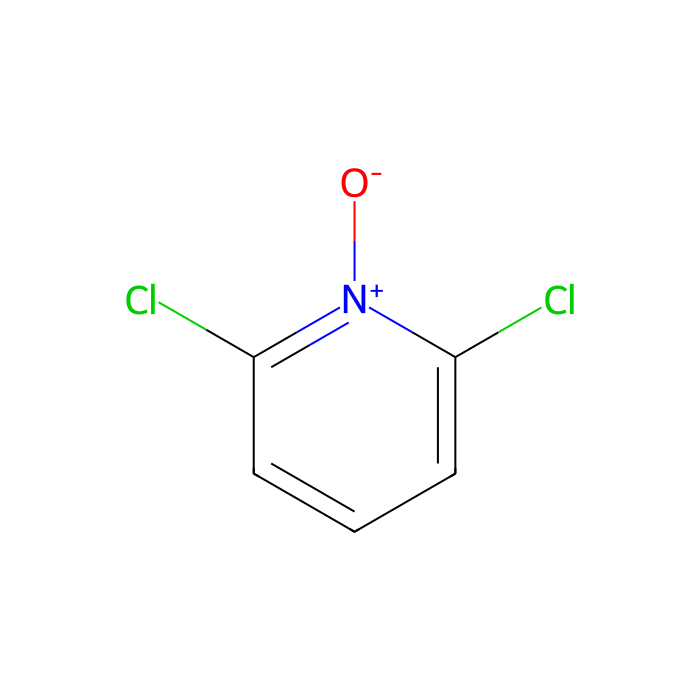
SMILES (literature): Clc1cccc(Cl)[n+]1[O-]
Structural features: one six-membered aromatic ring containing an N-oxide ([n+]-O−) functionality; chlorine substituents at the 2- and 6-positions (ortho to the ring nitrogen), creating a 2,6-disubstituted pattern that increases steric hindrance around the N-oxide center.
Functional groups: pyridine N-oxide (zwitterionic resonance form), two aryl chlorides.
2D structure description (literature): A planar pyridine ring with the ring nitrogen bearing an exocyclic oxygen (N→O). Chlorine atoms occupy the positions adjacent to N (C2 and C6). The N-oxide withdraws electron density from N while increasing electrophilic substitution propensity at the 4-position; the 2,6-dichloro substituents are deactivating/withdrawing and introduce significant ortho steric bulk.
Notes: Where specific identifiers (full InChI, full InChIKey) are required for compliance or registration, consult the CoA/Spec Sheet or SDS.
Synthetic Utility
Functional group set: pyridine N-oxide plus two ortho aryl chlorides.
Key strategic utilities (literature):
Directing-group chemistry: The N-oxide functions as a powerful director for EAS/C–H activation at C4, enabling introduction of halogens, nitro, sulfonyl, acyl, or boryl groups with high regioselectivity on the 2,6-dichloro scaffold.
Handle multiplication: Installation of a 4-substituent via N-oxide-directed chemistry yields a 2,6-dichloro-4-X pyridine that bears up to three orthogonal handles (Cl–Cl–X) for subsequent cross-couplings (Suzuki, Buchwald–Hartwig, Negishi) or SNAr.
Deoxygenation step: Post-functionalization, the N-oxide can be cleanly removed under mild reductive conditions to reveal the corresponding pyridine, often preserving aryl chlorides for later transformations.
O-Activation manifold: Transient O-acylation or O-sulfonylation of the N-oxide can trigger rearrangements or facilitate substituent migration to the ring (e.g., Boekelheide variants), though steric congestion from 2,6-dichloro must be considered.
Retrosynthetic value:
Starting from 2,6-dichloropyridine, in situ oxidation (e.g., mCPBA) to the N-oxide provides access to the enhanced-reactivity platform; conversely, when the N-oxide is on hand (as here), it enables a convergent path to densely substituted 2,6-dichloropyridines.
Practical tips:
Control regioselectivity by leveraging the N-oxide’s directing effect; verify by 1H/13C NMR and 2D correlations.
Preserve aryl chlorides for late-stage diversification; they are competent in Pd-catalyzed couplings with the right ligands (e.g., dialkylbiaryl phosphines).
Target Specificity
Not applicable. This product is a small-molecule heteroaromatic building block, not an antibody, enzyme, or affinity reagent. No biological target, clone, isotype, or species reactivity is associated with this item.
Utilizziamo i cookie per garantire il corretto funzionamento del sito web e, ove consentito, per migliorare la tua esperienza. Puoi gestire le tue preferenze in qualsiasi momento nelle Impostazioni. Per saperne di più, consulta la nostra Cookie Policy.
Desidera che le inviamo un messaggio quando avremo sconti disponibili?
Ricordamelo più tardi
Grazie! Controlli la sua casella di posta per confermare.
Products are supplied to verified businesses, institutions, and qualified professionals for research and development use only. Not for use in humans, animals, diagnosis, or therapy.

 F2601040