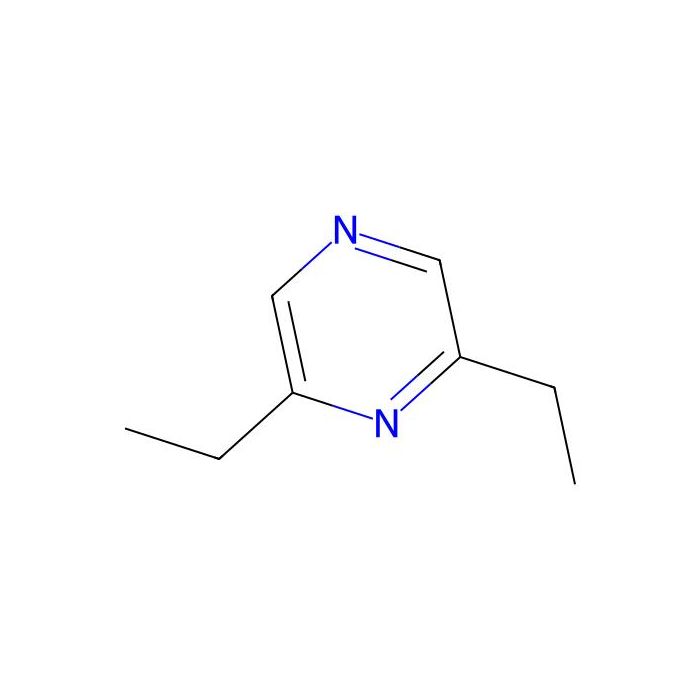
2,6-Diethylpyrazine - ≥95% , CAS No.13067-27-1

CAS: 13067-27-1 Cat. No.: D1067097 Formula: C8H12N2 Peso molecolare: 136.19 Numero EC: 603-430-2
Disponibile su ordine
GRADE & PURITY ≥95%
Storage
Store at 2-8°C,Argon charged
Shipped In
Wet ice
★
Size
Germania (EU)
USA*
Price
Qty
10mg
D1067097-10mg
Su ordinazione · 8–12 settimane
43,30€
50mg
D1067097-50mg
Su ordinazione · 8–12 settimane
112,72€
250mg
D1067097-250mg
Su ordinazione · 8–12 settimane
320,98€
Enter a quantity for the sizes you want to add.
🧪

Why this grade

≥95% for sensitive chromatographic and analytical workflows requiring minimal baseline interference.

🌡

Storage & shipping

Store at 2-8°C,Argon charged Ships Wet ice Check lot-specific COA for exact specifications.

📋

Quality documents

SDS, COA, datasheet, and spec sheet available for download. Lot-specific COA accessible via lot number lookup.

📚

Literature proof

Cited in 0 peer-reviewed publications across chromatography, organic synthesis, and cross-coupling reactions.

Specifications

Specifiche e purezza
≥95%
Condizioni di conservazione di stoccaggio
Store at 2-8°C,Argon charged
Spedito in
Wet ice
Questo prodotto richiede spedizione a catena fredda. I servizi di terra e altri servizi economici non sono disponibili.
Purezza
≥95%
Nomi e identificatori
Sorrisi canoniciCCC1=CN=CC(=N1)CC
IUPAC Name2,6-diethylpyrazine
InChIKeyQDWOWLUANUBTGE-UHFFFAOYSA-N
INCHI1S/C8H12N2/c1-3-7-5-9-6-8(4-2)10-7/h5-6H,3-4H2,1-2H3
Peso molecolare 136.19

Documentazione

📋 Safety Data Sheet (SDS)

Comprehensive hazard, handling, storage, and regulatory compliance document.

Download SDS →

✅ Certificate of Analysis (COA)

Lot-specific quality data. Enter your lot number to retrieve the exact COA.

Look up COA →

📊 Datasheet

Quick-reference summary of product specifications and applications.

View datasheet →

🔬 Specification Sheet

Full quality attributes and acceptance criteria for this grade.

View spec sheet →

Advanced Data

Taxonomic Classification

Taxonomy Tree

KingdomOrganic compounds
SuperclassOrganoheterocyclic compounds
ClasseDiazines
SubclassPyrazines
Intermediate Tree Nodes Not available
Direct ParentPyrazines
Alternative Parents Heteroaromatic compounds  Azacyclic compounds  Organopnictogen compounds  Organonitrogen compounds  Hydrocarbon derivatives  
Molecular FrameworkAromatic heteromonocyclic compounds
Substituents Pyrazine - Heteroaromatic compound - Azacycle - Organic nitrogen compound - Organopnictogen compound - Hydrocarbon derivative - Organonitrogen compound - Aromatic heteromonocyclic compound
DescrizioneThis compound belongs to the class of organic compounds known as pyrazines. These are compounds containing a pyrazine ring, which is a six-member aromatic heterocycle, that consists of two nitrogen atoms (at positions 1 and 4) and four carbon atoms.
External Descriptors Not available
Struttura 3D
Modello di struttura chimica interattiva


Certificati (CoA, COO, BSE/TSE e tabella di analisi)
C of A & Other Certificates(BSE/TSE, COO):
Analytical Chart:

Find and download the COA for your product by matching the lot number on the packaging.

4 results found

Lot NumberCertificate TypeDataOggetto
C2604425Certificate of AnalysisFeb 09, 2026 D1067097
C2604427Certificate of AnalysisFeb 09, 2026 D1067097
C2604430Certificate of AnalysisFeb 09, 2026 D1067097
G2630067Certificate of AnalysisFeb 09, 2026 D1067097
Proprietà chimiche e fisiche
Peso molecolare136.190 g/mol
XLogP31.400
Hydrogen Bond Donor Count0
Hydrogen Bond Acceptor Count2
Rotatable Bond Count2
Exact Mass136.1 Da
Monoisotopic Mass136.1 Da
Topological Polar Surface Area25.800 Ų
Heavy Atom Count10
Formal Charge0
Complexity83.300
Isotope Atom Count0
Defined Atom Stereocenter Count0
Undefined Atom Stereocenter Count0
Defined Bond Stereocenter Count0
Undefined Bond Stereocenter Count0
The total count of all stereochemical bonds0
Covalently-Bonded Unit Count1
Calcolatori di soluzioni
Recensioni

Recensioni dei clienti

Application Protocols

No assay-specific application protocols (e.g., WB, IHC, IF, FC) apply to this small molecule. For synthetic and analytical workflows, refer to Reaction Conditions and Reaction & Applications for practical guidance. For analytical standards work, prepare solutions gravimetrically in suitable solvents (e.g., MeOH, DCM, or hexane) and validate by GC–MS/LC–MS as per your method.

Biological Roles

This compound is a small, non-ionic heteroaromatic. It is not a biomolecule and has no intrinsic physiological role; however, alkylpyrazines are well-known as Maillard reaction products in roasted/thermal-processed foods.

  • General (literature; not product-specific and not a health claim)

    • Origin in model systems: Formed from amino acids and reducing sugars via Maillard chemistry and Strecker degradation, leading to a family of alkylated pyrazines differing by chain length and substitution pattern.
    • Sensory relevance: Many dialkylpyrazines contribute roasted, nutty, and earthy notes; 2,6-diethylpyrazine is often studied as a reference standard in aroma chemistry and analytical profiling.
    • Biotransformation: In vivo metabolic pathways for alkylpyrazines are not comprehensively characterized; oxidative metabolism (e.g., N-oxidation or side-chain oxidation) is commonly observed for heteroaromatic amines/azines in general models.
  • Laboratory use

    • Employed as a calibration/reference compound in GC–MS and GC–O studies for volatile profile mapping of thermally processed matrices.

Research use only: this product is not intended for diagnostic or therapeutic use.

Buffer Applications

Not typically applicable. 2,6-Diethylpyrazine is a neutral organic building block and is not used to prepare aqueous biological buffers. For experimental work, see Reaction & Applications and Synthetic Utility for relevant guidance.

Green Alternatives

Although 2,6-diethylpyrazine itself is a target molecule rather than a solvent, greener choices can be made in its synthesis, handling, and purification.

  • Greener solvent choices (general recommendations)

    • Replace DCM/CHCl3 with EtOAc, MTBE, or cyclopentyl methyl ether (CPME) for extractions and chromatography when feasible.
    • Prefer 2-MeTHF or CPME over THF for organometallic steps; they are derived from bio-feedstocks (2-MeTHF) and offer improved safety profiles (lower peroxide rates, higher boiling points) with similar performance.
    • Use toluene or dimethyl carbonate (DMC) as alternatives to more hazardous aromatics or chlorinated solvents for high-temperature steps.
  • Energy and waste considerations

    • Consolidate steps to minimize solvent swaps; use azeotropes (e.g., toluene or 2-MeTHF) for controlled drying instead of extensive vacuum heating.
    • Employ catalytic oxidations (e.g., TEMPO/O2 or Mn-catalyzed oxidations) instead of stoichiometric Cr(VI) or Se reagents for side-chain functionalization, where compatible.
  • Comparative snapshot (general)

    • THF vs 2-MeTHF: similar reactivity; 2-MeTHF offers bio-based sourcing and easier phase separation in workups.
    • DCM vs EtOAc: EtOAc has lower toxicity and environmental persistence; may require larger volumes to achieve equivalent solubility.
    • NMP/DMF vs Cyrene/PC/MeCN: emerging dipolar aprotic replacements (e.g., Cyrene, propylene carbonate) can work for SNAr or coupling preps; assess viscosity and solubility trade-offs case-by-case.
Pharmaceutical Uses

No pharmacopeial grade or excipient role is specified for this item. In a pharmaceutical R&D context, 2,6-diethylpyrazine may be used as a heteroaromatic building block or analytical reference standard during discovery-stage research.

  • Item-specific status

    • Grade/purity: Not specified for this item; refer to CoA/Spec Sheet.
    • Regulatory listings: Not specified; not indicated as USP/Ph.Eur./JP.
  • Formulation relevance (general)

    • Typically not used as an excipient. Any incorporation into formulations would be limited to research prototypes or impurity profiling standards in analytical methods.

Strictly for research use only; not for human or veterinary use.

Physical Properties

Item-specific values (grade-specific specs, appearance, exact physical constants) are not provided in the Product Data and should be confirmed from the item’s CoA/Spec Sheet.

  • Item-specific (Product Data)

    • Appearance: Not specified for this item; refer to CoA/Spec Sheet.
    • Molecular weight: Not specified for this item; refer to CoA/Spec Sheet.
    • Molecular formula: Not specified for this item; refer to CoA/Spec Sheet.
  • Literature/Computed values (for reference; not item specifications)

    • Molecular formula (literature): C8H12N2
    • Molecular weight (literature): 136.20 g/mol
    • Typical physical state: low-viscosity liquid at ambient temperature (literature reports for dialkylated pyrazines)
    • Boiling point: literature reports place 2,6-diethylpyrazine in the high-180s °C range at 1 atm; consult primary references for exact values.
    • Density (20–25 °C): often near 0.95–1.00 g/mL for similar dialkylated pyrazines; verify for this item from CoA.
    • Refractive index: commonly around 1.49–1.52 for related alkylpyrazines; check item CoA for exact value.
    • LogP (estimated, cLogP; literature/computation): approximately 1.3–1.6, reflecting increased hydrophobicity relative to pyrazine.
    • pKa (conjugate acid of ring N, literature): pyrazine ~0.6; dialkyl substitution slightly increases basicity but remains a weak base overall (typical pKaH ~1–2).
    • Solubility (qualitative, literature): sparingly soluble in water; miscible with most organic solvents (alcohols, ethers, esters, chlorinated solvents, aromatics).

Always verify any property critical to your process with the specific lot CoA and SDS.

Quality and Grades
  • Item-specific grade/purity: Not specified for this item; refer to CoA/Spec Sheet.

  • Guidance for interpreting common grades (general information)

    • Research/Analytical grade: Typically suitable for synthesis and analytical reference work; impurities are minimized but not pharmacopeial.
    • GC or HPLC grade (if offered): Targeted low residuals (water, non-volatile residue) and low UV absorbance for trace analysis. For volatile aromatics, GC-grade may specify tight limits on non-volatile residue and baseline bleed.
    • Flavor/aroma standard grade (if offered by supplier): Emphasis on compositional identity and absence of confounding odorants—useful for sensory and GC–MS method development. Not for food use unless explicitly certified; this listing is for research use only.
  • Stabilizers/inhibitors

    • None are indicated in the Product Data. If the item contains a stabilizer or antioxidant, it will be explicitly listed on the CoA/label. Absence of such a note generally implies neat material.
  • Lot-specific confirmation

    • For critical applications (e.g., trace analysis, odor threshold studies, or medicinal chemistry SAR), verify lot-specific assay, residual solvents, water content, and any metal/halide traces directly from the CoA/Spec Sheet. If a specific threshold is required: Not specified for this item; refer to CoA/Spec Sheet.
Reaction and Applications

2,6-Diethylpyrazine is a useful heteroaromatic scaffold in flavor chemistry research, heteroarene functionalization studies, and as a model substrate for diazine reactivity.

  • Representative applications (literature/general)

    • Reference standard in GC–MS/GC–Olfactometry for roasted/maillard-derived alkylpyrazines.
    • Substrate for electrophilic substitution on the ring under strongly activating conditions (nitration is difficult due to deactivation by ring nitrogens; Friedel–Crafts on the ring is generally disfavored but side-chain functionalization is accessible).
    • Benzylic/side-chain oxidation of the ethyl groups (e.g., with SeO2 or MnO2 variants) to the corresponding acyl derivatives for SAR libraries.
    • Directed metalation: Lithiation alpha to nitrogen can enable subsequent substitution (requires strong bases such as s-BuLi/t-BuOK or TMP bases; regiocontrol can be challenging with 2,6-disubstitution).
    • Cross-coupling via pre-functionalized derivatives (e.g., halogenation at 3- or 5-position followed by Suzuki–Miyaura, Buchwald–Hartwig N-arylation partners on other substrates, etc.). Parent 2,6-diethylpyrazine itself is not a coupling handle until derivatized.
    • Hydrogenation/partial hydrogenation studies of diazines to piperazine-type motifs (typically under high H2 pressure and catalysts such as Pd/C, Raney Ni).
  • Practical tips

    • Use rigorously dry, oxygen-free conditions for organometallic steps; the product is shipped argon-charged—maintain inert atmosphere to minimize oxidative discoloration and preserve purity.
    • For chromatographic handling, add base modifier (Et3N) to reduce tailing and adsorption on silica.
    • Monitor reactions by GC–MS; the alkylpyrazine mass fragments are diagnostic (e.g., m/z 108, 93, 81 for related compounds; verify for this compound experimentally).
Reaction Conditions

General conditions below are literature-style guidance for heteroarene and side-chain functionalizations of dialkylated pyrazines; they are not item-specific specifications. Optimize for your system.

  • Benzylic oxidation (side chain)

    • SeO2 (0.5–1.0 eq), tBuOOH (4–6 eq), toluene or 1,4-dioxane, 80–110 °C, 6–18 h; affords benzylic alcohol/ketone mixtures depending on conditions. Greener alternative: Cu/TEMPO/O2 in MeCN or AcOH, rt–60 °C.
  • Radical bromination

    • NBS (1.1–1.5 eq), AIBN (5–10 mol%), CCl4 or PhH/PhCF3, reflux or hv (365 nm), 2–6 h; gives benzylic bromides for SN2 diversification. Consider solvent substitution (e.g., EtOAc) and photoredox catalysts to avoid CCl4.
  • N-oxidation

    • mCPBA (1.1–2.0 eq), DCM or EtOAc, 0 °C to rt, 1–4 h; forms N-oxide, enabling enhanced reactivity in subsequent steps. Deoxygenate with PCl3 or Zn/AcOH as needed.
  • Directed metalation

    • s-BuLi (1.1–1.5 eq) with TMEDA in THF or 2-MeTHF, −78 to −30 °C, 0.5–2 h; quench with electrophile (CO2, DMF, ClCO2R, etc.). Strict anhydrous, inert conditions required.
  • Ring halogenation (activated conditions)

    • POCl3/DMF (Vilsmeier-like) often ineffective on unactivated pyrazines; pre-activation (N-oxide) or harsher conditions (NCS/NBS with Lewis acids) may be necessary. Monitor closely to avoid overhalogenation.
  • Hydrogenation

    • Pd/C (5–10 wt%), H2 (10–50 bar), MeOH/EtOH/AcOEt, 25–80 °C, 4–24 h; partial or full saturation depends on pressure/catalyst.

Note: Reaction profiles are sensitive to substitution pattern and electronics; verify on small scale and confirm by GC–MS/NMR.

Safety and Handling
  • Item-specific hazard data (Product Data)

    • Signal word: Not specified for this item; refer to SDS.
    • H-statements: Not specified for this item; refer to SDS.
    • GHS classification/pictograms: Not specified for this item; refer to SDS.
  • General safety considerations for alkylated pyrazines (literature/experience; not a substitute for SDS)

    • Expected hazards: May cause irritation to skin, eyes, and respiratory tract. Some pyrazines exhibit moderate acute toxicity by ingestion/inhalation; treat as harmful if swallowed or inhaled.
    • Flammability: Organic liquid; keep away from ignition sources. Use only in well-ventilated areas or fume hood.
    • Reactivity/incompatibilities: Strong oxidizers (risk of exothermic oxidation), strong acids (protonation; potential exotherm on mixing), and strong bases (possible ring activation under forcing conditions). Avoid reactive halogenating agents and nitrating mixtures.
    • Peroxide formation: Not typically peroxide-forming like ethers; routine peroxide testing not generally required.
    • PPE: Lab coat, safety glasses or splash goggles, and appropriate chemically resistant gloves (e.g., nitrile). Use local exhaust ventilation.
    • First aid (overview): If inhaled—move to fresh air; if on skin—wash with soap/water; if in eyes—rinse cautiously with water for several minutes; if ingested—rinse mouth, do not induce vomiting; seek medical attention in all cases of significant exposure.
    • Spill/cleanup: Absorb with inert material (vermiculite, sand), collect in suitable container for disposal. Prevent entry into drains.

Always consult the current SDS for authoritative hazard classification, exposure limits, and emergency procedures.

Solvent Selection

This product is a heteroaromatic building block, not primarily used as a solvent. However, choosing the right process solvent for its use in reactions and handling is important.

  • Polarity and miscibility (literature/general)

    • 2,6-Diethylpyrazine is a moderately nonpolar, weakly basic aromatic nitrogen heterocycle. It is typically miscible with common organic solvents (e.g., dichloromethane, THF, diethyl ether, ethyl acetate, toluene, acetonitrile, alcohols) and only sparingly soluble in water.
  • Solvent choices by operation

    • Reaction media: Polar aprotics (DMF, DMSO, NMP, MeCN) for SNAr on activated partners or metalation chemistry; ethers (THF, MTBE, CPME) for organometallic steps; aromatics (toluene) for high-temperature electrophilic substitutions or directed lithiation under carefully controlled conditions.
    • Workup/extraction: DCM/EtOAc for efficient liquid–liquid extraction from aqueous phases; brine washes to reduce emulsion formation. Hexanes/heptane can assist in antisolvent crystallization if derivatives are sufficiently nonpolar.
    • Purification: Normal-phase silica often tolerates pyrazines; add 0.1–1% Et3N to the eluent to reduce tailing of basic heteroaromatics. Reverse-phase (C18) with 0.1% formic acid or ammonium buffers for analytical/preparative LC.
  • Comparison (general guidance)

    • THF vs 2-MeTHF: 2-MeTHF offers greener profile and higher hydrophobicity, often improving phase splits while supporting similar organometallic chemistry.
    • DCM vs EtOAc/MTBE: EtOAc or MTBE can replace DCM for many extractions/chromatography steps with lower halogenated solvent use.
Storage and Reconstitution
  • Item-specific (Product Data)

    • Storage conditions: Store at 2–8 °C, Argon charged.
    • Shipped in: Wet ice.
    • Appearance: Not specified for this item; refer to CoA/Spec Sheet.
  • Practical guidance (general)

    • Inert atmosphere: Maintain argon or nitrogen headspace after each use to limit oxidative discoloration and maintain assay.
    • Container: Store in amber, tightly sealed glass vials or bottles to reduce light exposure and volatilization losses. Minimize headspace.
    • Handling: Allow vial to equilibrate to room temperature before opening to avoid moisture condensation. If using as an analytical standard, use gastight syringes and gravimetric dilutions.
    • Solution stability: Prepare stock solutions in dry, oxygen-free solvents (e.g., hexane, toluene, MeCN, or EtOH) and store chilled (2–8 °C) under inert gas. Absent item-specific data, refresh analytical standards periodically (e.g., monthly) and verify by GC–MS.
    • Freeze–thaw: Generally not required for liquids; if freezing is necessary, avoid repeated freeze–thaw by aliquoting into small inert-atmosphere vials.

Always refer to the item’s label and CoA/SDS for authoritative storage and handling instructions.

Structure and Identity

Concise identity for a dialkylated diazine (pyrazine) useful as a heteroaromatic building block and flavor-relevant research standard.

  • Item-specific (Product Data)

    • SKU: D1067097
    • CAS: 13067-27-1
    • Product name: 2,6-Diethylpyrazine
    • InChIKey: 294397 (as provided)
    • SMILES: Not specified for this item; refer to CoA/Spec Sheet.
    • Molecular formula: Not specified for this item; refer to CoA/Spec Sheet.
    • Molecular weight: Not specified for this item; refer to CoA/Spec Sheet.
  • Literature/General identity (for reference; not item-specific specs)

    • Expected molecular formula (literature): C8H12N2
    • Calculated molecular weight (literature): 136.20 g/mol
    • Canonical SMILES (typical literature representation): CCc1nc(ccn1)CC (one of several equivalent kekulé/SMILES forms)
    • InChI (literature): InChI=1S/C8H12N2/c1-3-7-9-5-6-10-8(7)4-2/h5-6H,3-4H2,1-2H3
  • Structural features (general description)

    • Core ring: Aromatic pyrazine (1,4-diazine) with two ring nitrogens para to each other.
    • Substitution pattern: Ethyl substituents at the 2- and 6-positions (alpha to each ring N), imparting increased hydrophobicity and steric bulk versus pyrazine.
    • Functional groups: Aromatic diazine (weakly basic), two alkyl (ethyl) substituents; no additional heteroatoms or leaving groups.
    • 2D description: A six-membered aromatic ring with N atoms at positions 1 and 4; ethyl groups attached at the two positions adjacent to one N and to the other N (2,6-). No stereocenters; planar heteroaromatic core.
Synthetic Utility

The 2,6-diethyl substitution pattern on a pyrazine ring provides a useful platform for exploring heteroarene functionalization, side-chain transformations, and SAR expansion.

  • Key reactive elements (general)

    • Aromatic diazine ring: Electron-deficient relative to benzene; disfavors electrophilic aromatic substitution but can undergo SNAr after appropriate activation/halogenation at 3- or 5-positions.
    • Ring nitrogens: Weakly basic, coordinate to metals; can direct lithiation or serve as ligation sites in transition-metal-catalyzed transformations.
    • Ethyl groups at 2,6: Amenable to oxidation (alcohol/aldehyde/acid), halogenation at the benzylic position, or radical-mediated functionalization (e.g., photoredox C–H abstraction followed by trapping).
  • Typical transformations

    • Benzylic C–H oxidation: SeO2- or Cu/Mn-catalyzed aerobic oxidations to ketones/acids; TEMPO or electrochemical methods offer greener alternatives.
    • Halogenation and subsequent substitution: NBS or NCS for radical bromination/chlorination at the side chain, followed by nucleophilic substitution or elimination to install further functionality.
    • Directed ortho metalation analogs: Strong base (e.g., s-BuLi/TMEDA) enabling subsequent trapping with electrophiles; sterics at 2,6 can bias site-selectivity.
    • Formation of N-oxides: mCPBA oxidation to pyrazine N-oxide, altering electronics for downstream functionalization (e.g., Meisenheimer-type substitutions), then deoxygenation.
    • Cross-coupling from halogenated derivatives: After ring halogenation, Suzuki–Miyaura, Negishi, or Stille couplings extend the scaffold.
  • Retrosynthetic value

    • Provides access to sterically encumbered diazines, useful for modulating polarity (cLogP), basicity, and conformational preferences in medicinal chemistry campaigns.
Target Specificity

Not applicable. This product is a small-molecule heteroaromatic, not an antibody, enzyme, or biological targeting reagent. No antigen/epitope specificity is relevant.

Shall we send you a message when we have discounts available?

Remind me later

Thank you! Please check your email inbox to confirm.

Oops! Notifications are disabled.