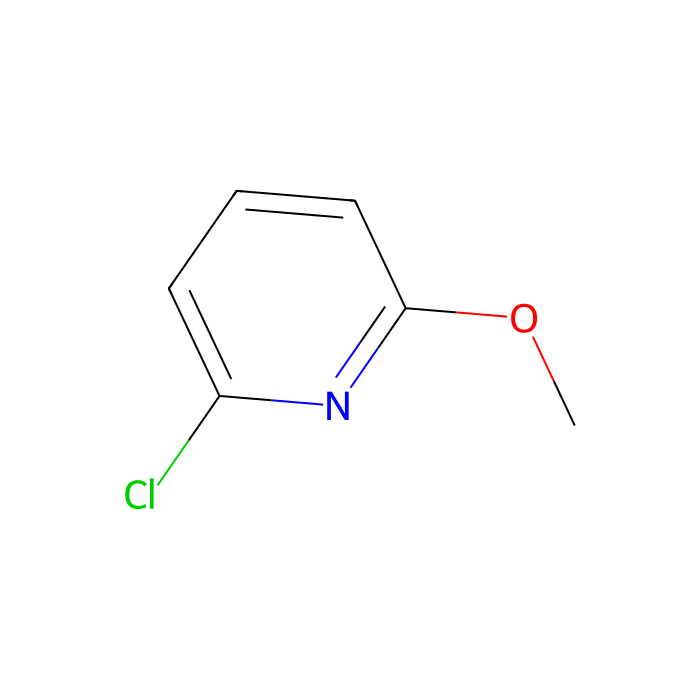
2-Chloro-6-methoxypyridine - ≥97% , CAS No.17228-64-7

CAS: 17228-64-7 Cat. No.: C115751 Formula: C6H6ClNO Peso molecolare: 143.57 Numero EC: 241-264-9
Disponibile su ordine
QUALITÀ & PUREZZA ≥97%
Synonyms
2-chloro-6-(methyloxy)pyridine|6-Chloro-2-methoxypyridine|PYRIDINE,2-CHLORO,6-METHOXY|Pyridine, 2-chloro-6-methoxy-|2-Chloro-6-methoxypyridine|2-chloro-6-methoxy-pyridine|methyl-3-thenoate|3-Pyrazolecarboxylic acid|2-chloro-6-methoxy pyridine|2-Methoxy-6-chloropyridine|6-methoxy-2-chloropyridine
Storage
Room temperature
Shipped In
Normal
★
Dimensione
Germania (EU)
USA*
Prezzo
Qtà
5g
C115751-5g
—
5 Disponibile

8,59€

12,93€
Salva 4,34 € (33.56%)
10g
C115751-10g
—
3 Disponibile

9,46€

14,66€
Salva 5,21 € (35.50%)
25g
C115751-25g
—
4 Disponibile

14,66€

22,47€
Salva 7,81 € (34.75%)
100g
C115751-100g
—
1 Disponibile

41,56€

62,39€
Salva 20,83 € (33.38%)
Enter a quantity for the sizes you want to add.

Specifiche

Sinonimi
2-chloro-6-(methyloxy)pyridine | 6-Chloro-2-methoxypyridine | PYRIDINE,2-CHLORO,6-METHOXY | Pyridine, 2-chloro-6-methoxy- | 2-Chloro-6-methoxypyridine | 2-chloro-6-methoxy-pyridine | methyl-3-thenoate | 3-Pyrazolecarboxylic acid | 2-chloro-6-methoxy pyridine | 2-Methoxy-6-chloropyridine | 6-methoxy-2-chloropyridine
Specifiche e purezza
≥97%
Condizioni di conservazione di stoccaggio
Room temperature
Spedito in
Normal
Purezza
≥97%
Nomi e identificatori
Pubchem Sid
Pubchem Sid Url
https://pubchem.ncbi.nlm.nih.gov/substance/488186385
SMILES
COC1=NC(=CC=C1)Cl
IUPAC Name
2-chloro-6-methoxypyridine
InChIKey
VAVGOGHLNAJECD-UHFFFAOYSA-N
InChI
1S/C6H6ClNO/c1-9-6-4-2-3-5(7)8-6/h2-4H,1H3
Isomeri SMILES
COC1=NC(=CC=C1)Cl
WGK Germania
3
Peso molecolare
143.57
Reaxys
1364500
Reaxys-RN_link_address
https://www.reaxys.com/reaxys/secured/hopinto.do?context=S&query=IDE.XRN=1364500&ln=

Dati avanzati

Taxonomic Classification

Taxonomy Tree

KingdomOrganic compounds
SuperclassOrganic oxygen compounds
ClasseOrganooxygen compounds
SubclassEthers
Intermediate Tree Nodes Not available
Direct ParentAlkyl aryl ethers
Alternative Parents 2-halopyridines  Aryl chlorides  Heteroaromatic compounds  Azacyclic compounds  Organopnictogen compounds  Organonitrogen compounds  Organochlorides  Hydrocarbon derivatives  
Molecular FrameworkAromatic heteromonocyclic compounds
Substituents 2-halopyridine - Alkyl aryl ether - Pyridine - Aryl halide - Aryl chloride - Heteroaromatic compound - Azacycle - Organoheterocyclic compound - Organic nitrogen compound - Organopnictogen compound - Hydrocarbon derivative - Organonitrogen compound - Organochloride - Organohalogen compound - Aromatic heteromonocyclic compound
DescrizioneThis compound belongs to the class of organic compounds known as alkyl aryl ethers. These are organic compounds containing the alkyl aryl ether functional group with the generic formula R-O-R' , where R is an alkyl group and R' is an aryl group.
External Descriptors Not available
Struttura 3D
Modello di struttura chimica interattiva


Certificati (CoA, COO, BSE/TSE e tabella di analisi)
C of A & Other Certificates(BSE/TSE, COO):
Analytical Chart:

Find and download the COA for your product by matching the lot number on the packaging.

16 results found

Lot NumberCertificate TypeDataOggetto
B2208112B2208112Certificate of AnalysisOct 30, 2025 C115751
J1209019J1209019Certificate of AnalysisJul 16, 2024 C115751
H2402082H2402082Certificate of AnalysisJun 12, 2024 C115751
H2402083H2402083Certificate of AnalysisJun 12, 2024 C115751
H2408328H2408328Certificate of AnalysisJun 12, 2024 C115751
H2408329H2408329Certificate of AnalysisJun 12, 2024 C115751
E2323316E2323316Certificate of AnalysisApr 08, 2023 C115751
E2323325E2323325Certificate of AnalysisApr 08, 2023 C115751
E2323330E2323330Certificate of AnalysisApr 08, 2023 C115751
E2323331E2323331Certificate of AnalysisApr 08, 2023 C115751
E2323332E2323332Certificate of AnalysisApr 08, 2023 C115751
H2315186H2315186Certificate of AnalysisApr 08, 2023 C115751
H2315187H2315187Certificate of AnalysisApr 08, 2023 C115751
H2315188H2315188Certificate of AnalysisApr 08, 2023 C115751
H2315189H2315189Certificate of AnalysisApr 08, 2023 C115751
C23211092C23211092Certificate of AnalysisFeb 16, 2022 C115751
Proprietà chimiche e fisiche
Indice di rifrazione1.528
Punto di infiammabilità (°F)168.8 °F
Punto di infiammabilità (°C)76 °C
Punto di ebollizione (°C)185-186°C
Peso molecolare143.57
XLogP33.000
Hydrogen Bond Donor Count0
Hydrogen Bond Acceptor Count2
Rotatable Bond Count1
Exact Mass143.014 Da
Monoisotopic Mass143.014 Da
Topological Polar Surface Area22.100 Ų
Heavy Atom Count9
Formal Charge0
Complexity89.100
Isotope Atom Count0
Defined Atom Stereocenter Count0
Undefined Atom Stereocenter Count0
Defined Bond Stereocenter Count0
Undefined Bond Stereocenter Count0
The total count of all stereochemical bonds0
Covalently-Bonded Unit Count1
Sicurezza e pericoli (GHS)
Pictogrammi
Segnale
Warning
Indicazioni di pericolo

H315:Causes skin irritation

H319:Causes serious eye irritation

H335:May cause respiratory irritation

Precauzioni

P261:Avoid breathing dust/fume/gas/mist/vapors/spray.

P264:Wash hands [and …] thoroughly after handling.

P271:Use only outdoors or in a well-ventilated area.

P280:Wear protective gloves/protective clothing/eye protection/face protection.

P321:Specific treatment (see ... on this label).

P302+P352:IF ON SKIN: wash with plenty of water.

P304+P340:IF INHALED: Remove person to fresh air and keep comfortable for breathing.

P305+P351+P338:IF IN EYES: Rinse cautiously with water for several minutes. Remove contact lenses if present and easy to do - continue rinsing.

P362+P364:Take off contaminated clothing and wash it before reuse.

P405:Store locked up.

P403+P233:Store in a well-ventilated place. Keep container tightly closed.

P501:Dispose of contents/container to an approved waste disposal plant.

P264+P265:Wash hands [and …] thoroughly after handling. Do not touch eyes.

P337+P317:If eye irritation persists: Get medical help.

P332+P317:If skin irritation occurs: Get medical help.

P319:Get medical help if you feel unwell.

WGK Germania
3
Reaxys
1364500
Reaxys-RN_link_address
https://www.reaxys.com/reaxys/secured/hopinto.do?context=S&query=IDE.XRN=1364500&ln=
Calcolatori di soluzioni
Recensioni

Recensioni dei clienti

Application Protocols

Not applicable. No validated bioassay protocols (e.g., WB, IHC, IF, FC) are associated with a small-molecule building block. For synthetic usage, see Reaction Conditions and Synthetic Utility for general procedural guidance.

Biological Roles

This compound is a synthetic heteroaromatic building block and is not known as a natural metabolite or cofactor.

General context (non-clinical, literature-based):

  • Substituted pyridines are common motifs in bioactive molecules due to their tunable basicity and ability to engage in hydrogen bonding as acceptors. The 2-chloro handle enables late-stage diversification to probe structure–activity relationships (SAR).
  • The 6-methoxy group modulates electronics and lipophilicity of the pyridine ring and can serve as a protected phenolic equivalent (via subsequent demethylation) during synthetic sequences.

No biological activity or roles are claimed for this specific item. Any assessments of ADME, target engagement, or toxicity must be generated within the user’s own research framework and are outside the scope of this catalog entry.

Buffer Applications

Not typically applicable. 2-Chloro-6-methoxypyridine is a neutral/weakly basic organic building block and is not used as a buffer component. For aqueous work, select established buffering systems (e.g., phosphate, acetate, Tris) appropriate to your application. See Reaction & Applications and Synthetic Utility for relevant usage.

Green Alternatives

This product is a building block rather than a process solvent; green considerations focus on reaction media and coupling strategies rather than replacing the reagent itself.

Greener media choices (general guidance):

  • Replace high-toxicity or problematic solvents:
    • Swap DMF/NMP with alternatives like Cyrene, propylene carbonate, Me-THF, 2-MeOx (2-methyloxazoline), or CPME when compatible with the reaction.
    • Prefer EtOAc, Me-THF, CPME, or toluene over chlorinated solvents for workups and chromatography.
  • Aqueous/solvent-minimized couplings:
    • Employ micellar catalysis (e.g., TPGS-750-M or SDS systems) for Suzuki/Buchwald couplings to reduce organic solvent usage.
  • Catalyst/ligand efficiency:
    • Use highly active Pd-ligand systems (e.g., BrettPhos/XPhos-derived) that operate at low loadings and in greener solvents; consider Ni catalysis for aryl chloride activation under milder, less expensive conditions.

Comparison (illustrative):

  • Traditional: Pd(PPh3)4 in dioxane/DMF, inorganic base, elevated temperature.
  • Greener alternative: Ni(cod)2 with bipyridine-type ligand in 2-MeTHF or aqueous micelles, K3PO4 or carbonate base; reduced metal loading and improved EHS profile.

Process-intensification tips:

  • Continuous-flow heating for SNAr/couplings allows safer high-temperature operation and reduced solvent volumes.
  • Solvent recycling (EtOAc, toluene) and in-process crystallizations can cut waste.
Pharmaceutical Uses

No excipient or pharmacopeial status is specified for this item; refer to CoA/Spec Sheet if formulation-related attributes are needed.

General context (non-clinical):

  • Role: heteroaryl intermediate for API/process development rather than a formulated ingredient. The aryl chloride enables installation of diverse substituents (amines, aryls, heteroaryls), facilitating rapid exploration of medicinal chemistry space.
  • Process considerations: select coupling conditions compatible with late-stage functional groups (e.g., amide, sulfone, nitrile) common in API scaffolds; assess residual palladium/nickel controls and purge strategies if used in GMP routes.
  • Solid form control: if crystalline derivatives are targeted downstream, polymorph and salt screening may be performed after transforming this intermediate to the desired core.

Use strictly for research and development. No therapeutic claims are made or implied.

Physical Properties

Item-specific specifications: Not specified for this item; refer to CoA/Spec Sheet.

Literature/general properties (for context only, not product specifications):

  • Physical state/appearance: commonly reported as a low- to mid-boiling organic liquid or low-melting solid depending on purity and temperature window; color often colorless to pale yellow for related chloropyridines.
  • Acid-base character: weakly basic heteroaromatic (pyridine-type ring nitrogen); forms salts with strong mineral acids.
  • Polarity/solubility: expected moderate polarity; typically soluble in common organic solvents (e.g., dichloromethane, ethyl acetate, toluene, THF, acetonitrile) and only sparingly soluble in water, consistent with substituted pyridines bearing halogen and methoxy groups.
  • Hydrogen-bonding: can act as a hydrogen-bond acceptor at the ring nitrogen and the methoxy oxygen; no donor functionality.
  • Volatility: less volatile than unsubstituted pyridine; handle in a fume hood to control vapors.

Practical notes (general):

  • For analytical work, refractive index, density, and UV cutoff should be determined on receipt if critical to your method. For purification, distillation under reduced pressure or flash chromatography on silica/alumina are common, with attention to potential base sensitivity of stationary phase.

Always verify exact values (bp, mp, density, nD, logP, pKa) from primary literature or the item’s CoA before method development.

Quality and Grades

Item-specific grade/purity: Not specified for this item; refer to CoA/Spec Sheet for actual assay, impurity profile, and limits.

Guidance on typical grades (general, for context):

  • Research grade: suitable for most synthesis and screening work; may not include low-UV specifications.
  • High-purity/assay ≥98–99%: preferred for medicinal chemistry SAR, NMR characterization, and route scouting; reduces background in kinetic/analytical studies.
  • HPLC grade (solvents) or LC-MS grade do not apply here; this is a solid/liquid building block, not a chromatography solvent.

Stabilizers/inhibitors:

  • None are typically added to chloropyridine building blocks; any stabilizer would be declared on the CoA if present. For this item: Not specified for this item; refer to CoA/Spec Sheet.

Release/trace analytics (what to look for on the CoA):

  • Identity confirmation by 1H/13C NMR, MS, FTIR; purity by GC or HPLC area %; residual solvents; water (Karl Fischer) if relevant; and assay against a primary standard. For halogenated heteroaromatics, GC is commonly used to quantify residual monochloro/over-substituted isomers.
Reaction and Applications

As a 2-chloropyridine bearing a 6-methoxy substituent, this reagent is a versatile building block for heteroaryl elaboration.

Typical applications (literature/general):

  • Cross-coupling at C2 (Ar–Cl):
    • Suzuki–Miyaura: formation of 2-aryl-6-methoxypyridines using aryl/heteroaryl boron reagents under Pd catalysis.
    • Buchwald–Hartwig amination: installation of amines/anilines at C2 using Pd catalysts and tailored ligands for heteroaryl chlorides.
    • Negishi/Stille/Kumada: C–C bond formation via organozinc/stannane/magnesium partners.
  • Nucleophilic aromatic substitution (SNAr):
    • The pyridine ring activates the 2-chloro toward attack by strongly nucleophilic amines/alkoxides under heat or with catalytic assistance, furnishing 2-amino or 2-alkoxy derivatives.
  • Directed metalation/functionalization:
    • The ring nitrogen and 6-methoxy substituent influence regioselectivity; ortho-lithiation strategies (e.g., LDA/s-BuLi with TMP bases) can enable further elaboration at specific positions, followed by quench with electrophiles (CO2, DMF, halogens).
  • Functional group interconversions:
    • Demethylation of the 6-methoxy group (e.g., BBr3, AlCl3/thiols) to access 6-hydroxypyridine derivatives, enabling downstream etherifications or cross-couplings via triflates.

Use cases:

  • Scaffold diversification in medicinal chemistry (SAR), agrochemical intermediate synthesis, and heteroaryl fragment construction for materials discovery.
Reaction Conditions

General literature guidance (illustrative conditions; optimize per substrate and not product specifications):

  • Suzuki–Miyaura at C2–Cl:

    • Catalyst: Pd2(dba)3 (0.5–2 mol%) with SPhos/XPhos; or Pd(PPh3)4 (2–5 mol%) for activated heteroaryl chlorides.
    • Base: K3PO4, K2CO3, Cs2CO3 (2–3 equiv).
    • Solvent: 1,4-dioxane/H2O (3:1), toluene/H2O, or Me-THF/H2O.
    • Temperature: 70–110 °C; time: 2–16 h under N2.
  • Buchwald–Hartwig amination:

    • Catalyst/ligand: Pd-precatalyst (e.g., Pd-PEPPSI, Pd2(dba)3) with BrettPhos/XPhos/BippyPhos (1–3 mol% Pd, 2–6 mol% ligand).
    • Base: NaOtBu, KOtBu, Cs2CO3.
    • Solvent: toluene, dioxane, CPME; 60–110 °C.
  • SNAr (amines/alkoxides):

    • Reagents: neat amine or amine in DMF/DMSO; alkoxides in alcohol or DMSO.
    • Conditions: 80–160 °C (batch or flow); catalysts (e.g., DBU, phase-transfer) may assist.
  • Demethylation to phenol:

    • BBr3 (1–3 equiv) in CH2Cl2, −78 to 0 °C then warm to rt; or AlCl3/thiol systems; quench carefully to avoid exotherm.

Tips:

  • Dry, degassed solvents and inert atmosphere improve reproducibility with Pd/Ni catalysts.
  • For heteroaryl chlorides, ligands designed for challenging C–Cl activation (e.g., BrettPhos) often outperform simple phosphines.
  • Monitor by GC or LC-MS; pyridine nitrogen can coordinate catalysts—ligand/catalyst choice and base strength are critical.
Safety and Handling

Item-specific hazard statements/classification: Not specified for this item; refer to SDS for authoritative information.

General GHS considerations for chlorinated pyridines (informational, not product-specific):

  • Likely to be harmful if swallowed, inhaled, or in contact with skin; may cause eye/skin/respiratory irritation. Combustible organic liquid; vapors may form flammable mixtures with air at elevated temperatures.

Recommended PPE/controls (good lab practice):

  • Wear lab coat, safety glasses or chemical splash goggles, and nitrile gloves. Handle in a certified chemical fume hood to avoid inhalation exposure.
  • Avoid contact with strong oxidizers and strong acids/bases unless controlled; form salts with strong acids.

First aid (general guidance; defer to SDS):

  • Inhalation: move to fresh air; seek medical attention if symptoms persist.
  • Skin contact: wash with soap and water; remove contaminated clothing.
  • Eye contact: rinse cautiously with water for several minutes; remove contact lenses if present and easy; seek medical advice for persistent irritation.
  • Ingestion: rinse mouth; do not induce vomiting unless directed by medical personnel; seek medical attention.

Spills and waste:

  • Absorb small spills with inert material (vermiculite/sand), collect for disposal. Prevent entry to drains. Dispose of contents/container per local regulations.

Special risks/notes:

  • Heteroaromatics can have noticeable odor—maintain containment. Ensure grounding/bonding during transfer if handling warm/heated material.
Solvent Selection

Not a solvent; this product is a heteroaromatic building block. However, choosing appropriate solvents is critical for its handling, purification, and reactions.

General solvent compatibility and selection (literature/practice):

  • Solubility profile: typically soluble in moderately polar organic solvents (DCM, THF, EtOAc, MeCN, toluene) and less soluble in alkanes; limited aqueous solubility.
  • Reaction media:
    • SNAr and cross-couplings: toluene, dioxane, THF, CPME, Me-THF, or DMF/DMAc; mixed dioxane/water for Suzuki with inorganic bases.
    • Nucleophilic substitutions with amines: polar aprotic solvents (DMF, NMP) or alcoholic solvents with base.
  • Purification solvents:
    • Normal-phase flash: hexanes/EtOAc or toluene/EtOAc gradients; watch for tailing from basicity—0.1–1% Et3N can sharpen bands.
    • Distillation: if liquid, short-path under reduced pressure; verify thermal stability first.

When to choose alternatives:

  • If high basicity of silica causes streaking or decomposition, use neutral alumina or add a basic modifier.
  • For greener processing, prefer 2-MeTHF/CPME over THF/Et2O, and EtOAc/toluene over chlorinated solvents when compatible with reactivity.
Storage and Reconstitution

Item-specific storage/shipping (from Product Data):

  • Storage Conditions: Room temperature
  • Shipped In: Normal

General handling and stability (literature/practice):

  • Store tightly closed in a dry, well-ventilated place away from strong oxidizers and strong acids. Protect from prolonged light and heat. For long-term storage, consider inert gas blanketing (argon/nitrogen) after opening to minimize oxidative discoloration.
  • If solidifies or crystallizes upon cooling, gently warm to ambient and homogenize before use. If moisture sensitivity impacts your process, store with desiccant.

Reconstitution: Not applicable; supplied neat. If preparing stock solutions for screening, use dry, oxygen-free solvents when required (e.g., anhydrous DMSO, MeCN, or toluene), filter through PTFE syringe filter (0.2 µm) if particulates are present, and record exact concentration gravimetrically.

Research Use Only: As stated by the manufacturer, for research use only. Consult the product’s CoA/SDS for any additional storage or stability constraints specific to your lot.

Structure and Identity

Brief description: 2-Chloro-6-methoxypyridine is a heteroaromatic pyridine derivative bearing a chloro substituent at C2 (ortho to the ring nitrogen) and a methoxy substituent at C6 (the other ortho position). The ring nitrogen and the electron-withdrawing/–donating substituents create a distinct electronic profile useful in cross-coupling and SNAr chemistry.

Item-specific facts (from Product Data):

  • SKU: C115751
  • Product Name: 2-Chloro-6-methoxypyridine
  • CAS: 17228-64-7
  • CID: 87009
  • InChIKey: 374277 (as provided)
  • Storage Conditions: Room temperature; Shipped: Normal

Literature/general identifiers and composition (not item-specific):

  • Molecular formula (literature): C6H6ClNO
  • Molecular weight (literature): ~143.57 g/mol
  • Structural features: one six-membered aromatic ring containing one ring nitrogen (pyridine), with Cl at C2 and –OCH3 at C6; no stereocenters.
  • 2D structure in words: a pyridine ring with the ring nitrogen at position 1; chlorine on the carbon adjacent to nitrogen (position 2); methoxy substituent on the carbon adjacent to nitrogen on the opposite side (position 6). This places substituents ortho/ortho to N, influencing reactivity at C2 and directing metalation patterns.

Notes:

  • SMILES/InChIKey not specified for this item; refer to CoA/Spec Sheet. Any structural strings shown in third-party references should be validated against the provided CAS (17228-64-7).
Synthetic Utility

Key functional elements and reactivity (literature/general):

  • Electrophilic handle: C2–Cl on a pyridine ring is activated toward metal-catalyzed cross-coupling and, under appropriate conditions, toward SNAr with hard nucleophiles.
  • Modulating group: the 6-methoxy substituent tunes electron density and serves as a latent phenol (accessible via demethylation) for further diversification (e.g., ether formation, sulfonylation, or triflate formation → cross-coupling).

Representative transformations:

  • C–N bond formation: Buchwald–Hartwig coupling with primary/secondary amines or anilines; also copper-catalyzed Ullmann-type aminations with tailored ligands.
  • C–C bond formation: Suzuki–Miyaura (boronic acids/esters), Negishi (organozincs), Stille (stannanes), and Kumada (Grignards; with care due to ring basicity and potential side reactions).
  • SNAr: displacement of Cl by alkoxides/thiolates/amines at elevated temperature, aided by the ring nitrogen’s electron-withdrawing effect.
  • Orthogonal derivatization: demethylate → phenol, then convert to aryl triflate/halide for a second, independent coupling vector.

Retrosynthetic value:

  • Serves as a convergent linchpin to introduce polar/basic functionality at C2 while independently modifying the C6 position via ether/phenol chemistry—valuable for SAR arrays in medicinal chemistry and for assembling heteroaryl ligands in catalysis/materials.
Target Specificity

Not applicable. This product is a small-molecule chemical building block, not a biological targeting reagent. No antigen/epitope or species reactivity is relevant.

Domande frequenti

What is the purity of this product?
This product is supplied at ≥97% purity (chemical assay). Lot-specific values are stated on the Certificate of Analysis.
How should this product be stored?
Store at room temperature.
How is this product shipped?
This product ships under standard ambient conditions. No temperature-controlled packaging is required.
What are the CAS number, molecular formula and molecular weight?
The CAS Number is 17228-64-7, the molecular formula is C6H6ClNO, and the molecular weight is 143.57 g/mol. InChIKey VAVGOGHLNAJECD-UHFFFAOYSA-N.
What documentation is provided?
Available product documentation, including Certificates of Analysis (COA), Safety Data Sheets (SDS), and specification sheets, is shown in the product document area. Document availability and access follow the current site policy.

Desidera che le inviamo un messaggio quando avremo sconti disponibili?

Ricordamelo più tardi

Grazie! Controlli la sua casella di posta per confermare.

Ops! Le notifiche sono disabilitate.