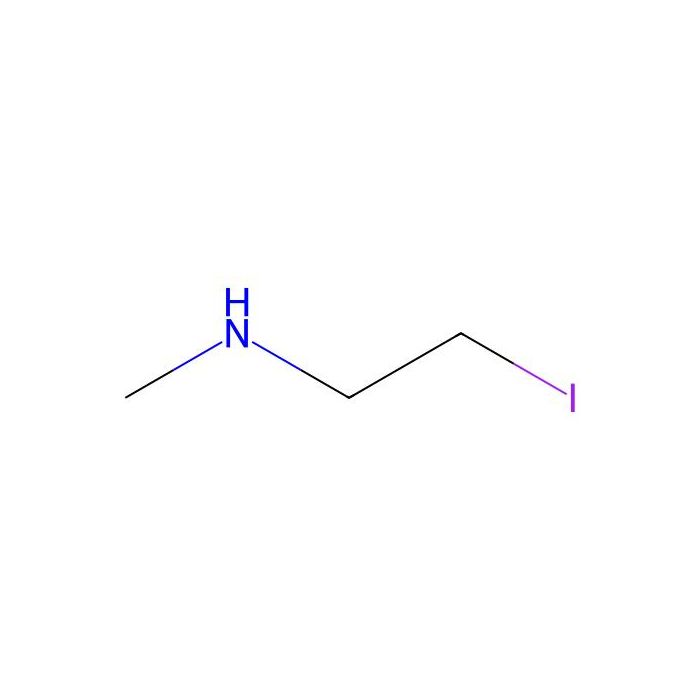
This compound belongs to the class of organic compounds known as dialkylamines. These are organic compounds containing a dialkylamine group, characterized by two alkyl groups bonded to the amino nitrogen.
External Descriptors
Not available
1. Djoumbou Feunang Y, Eisner R, Knox C, Chepelev L, Hastings J, Owen G, Fahy E, Steinbeck C, Subramanian S, Bolton E, Greiner R, and Wishart DS. ClassyFire: Automated Chemical Classification With A Comprehensive, Computable Taxonomy. Journal of Cheminformatics, 2016, 8:61.
Certificati (CoA, COO, BSE/TSE e tabella di analisi)
C of A & Other Certificates(BSE/TSE, COO):
Analytical Chart:
Proprietà chimiche e fisiche
Peso molecolare
185.010 g/mol
XLogP3
0.900
Hydrogen Bond Donor Count
1
Hydrogen Bond Acceptor Count
1
Rotatable Bond Count
2
Exact Mass
184.97 Da
Monoisotopic Mass
184.97 Da
Topological Polar Surface Area
12.000 Ų
Heavy Atom Count
5
Formal Charge
0
Complexity
16.400
Isotope Atom Count
0
Defined Atom Stereocenter Count
0
Undefined Atom Stereocenter Count
0
Defined Bond Stereocenter Count
0
Undefined Bond Stereocenter Count
0
The total count of all stereochemical bonds
0
Covalently-Bonded Unit Count
1
Calcolatori di soluzioni
Molarity Calculator
Determine the necessary mass, volume, or concentration for preparing a solution.
Dilution Calculator
Determine the dilution needed to prepare a stock solution.
Reconstitution Calculator
Recensioni
Recensioni dei clienti
Application Protocols
No tested bioassay or immunoassay protocols are specified for this item. Typical usage is as a synthetic intermediate in organic reactions.
General laboratory protocol examples (illustrative, not item-specific specifications)
O-alkylation of phenol: Dissolve phenol (1.0 eq) and K2CO3 (2.0 eq) in dry MeCN; add 2-iodo-N-methylethanamine (1.2 eq) dropwise at 0–5 °C; stir at RT 4 h; monitor by TLC; work up and purify on TEA-treated silica.
S-alkylation of thiol: Generate thiolate with NaH or NaOMe in THF at 0 °C; add reagent (1.1–1.3 eq); warm to RT; typical completion within 1–2 h.
Adjust equivalents, temperature, and bases according to substrate sensitivity. Verify compatibility and hazards in the SDS and CoA before scaling.
Biological Roles
This product is a small synthetic intermediate and not intended for biological use in vivo.
General context (biochemistry knowledge; not specific to this item)
β-Haloamines and aziridinium-forming species are recognized as potent alkylating agents toward nucleophilic residues (e.g., cysteine, lysine) in proteins under suitable conditions. Such reactivity underpins their use as bioconjugation handles in vitro but also necessitates strict handling controls to avoid nonspecific modification.
Secondary aliphatic amines are protonated at physiological pH (pKaH ~10–11, literature), conferring water solubility in their conjugate-acid forms and enabling salt-based formulation for biochemical assays.
No medical or clinical claims are made. For research use only, as stated in the Product Data.
Buffer Applications
Not typically applicable. 2-iodo-N-methylethanamine is not a buffering agent and lacks a defined conjugate acid/base pair suitable for precise pH buffering over a broad range. While secondary amines can accept a proton, this reagent is primarily used as a reactive intermediate rather than a pH buffer.
For aqueous work, if temporary protonation is required (e.g., to prepare a water-soluble salt), use standard laboratory acids (HCl, H2SO4) to form the ammonium salt and adjust pH with conventional buffers (HEPES, phosphate, acetate) as appropriate to your system.
Green Alternatives
Green chemistry perspective (general guidance; assess fitness for your route): primary alkyl iodides are highly reactive but less preferred environmentally than chlorides, tosylates, or alternative activation modes due to halogen content and iodine scarcity.
Comparison options
Replace C–I with greener leaving groups where feasible:
2-chloro- or 2-tosyloxyethyl analogs: lower hazard profile and reduced iodine footprint; may require higher temperatures or phase-transfer catalysis to match reactivity.
Mesylates/carbonates (e.g., 2-(N-methylamino)ethyl mesylate): good balance of reactivity and handling; often crystalline salts, simplifying isolation.
Alternative activation:
Use of aziridines/aziridiniums generated in situ from amino alcohols or chlorides with catalytic halide shift avoids isolating alkyl iodides.
Reductive amination to install the N-methylaminoethyl unit directly from 2-carbonyl precursors, bypassing halides entirely.
Mini-comparison (literature trends; not specifications)
Iodide: highest SN2 rate, mildest conditions, but light/air sensitivity and waste iodine management required.
Tosylate/mesylate: greener leaving groups, often solids; need stronger nucleophiles/heat, but improved shelf stability.
2-MeTHF or CPME as solvents can replace DMF/DMSO in many substitutions, improving EHS profile and workup.
Trade-offs
Greener routes may reduce waste and hazards but can introduce longer steps or higher temperatures. Conduct route scouting to confirm overall PMI/E-factor improvements.
Pharmaceutical Uses
Not formulated as a drug product. No compendial grade is specified for this item.
Functional role: reactive intermediate to introduce an N-methylaminoethyl moiety into small molecules. Often converted into a salt (e.g., hydrochloride) for improved handling and measured assay.
Considerations for process chemistry: preference for crystalline, non-hygroscopic salts for storage; control of residual iodide/iodine and amine-related impurities per ICH Q3A/B in API intermediate manufacturing.
Extractables/leachables: alkyl iodides can interact with certain elastomers; glass or fluoropolymer contact surfaces are typically preferred for storage/transfer in process environments.
No therapeutic claims are made. For research and manufacturing intermediate use only.
Physical Properties
Item-specific specifications
Boiling point, melting point, density, refractive index, water/peroxide/metal limits, UV cutoff: Not specified for this item; refer to CoA/Spec Sheet.
Computed/literature values (typical for the free base; for reference only, not specifications)
Formula: C3H8IN; MW ≈ 185.00 g/mol (computed from formula).
Expected physical state: low-molecular-weight, likely colorless to pale liquid or low-melting solid (literature trend for small secondary β-haloamines). Not a specification.
Acid-base: secondary amine pKaH typically ~10–11 (literature, secondary aliphatic amines), implying the conjugate acid forms stable salts in protic acids.
Solubility profile (qualitative, literature):
Miscible with polar organics (alcohols, acetone) and many aprotic solvents (THF, acetonitrile, DCM).
Limited solubility in water as free base; water-soluble as protonated salts (e.g., HCl salt). Actual solubility not specified for this item.
Notes for practitioners
The primary alkyl iodide is highly polarizable and reactive in SN2 reactions; the amine functionality can hydrogen bond and may raise basicity of solutions.
If precise physicochemical constants are critical (e.g., density for stoichiometry, bp for distillation), verify with the item-specific CoA/SDS before process scale-up.
Quality and Grades
Item-specific grade/purity: Not specified for this item; refer to CoA/Spec Sheet.
Guidance on grades for this compound class (general information)
Research-grade/AR-grade: Suitable for most synthetic applications. Key attributes are identity confirmation (NMR/GC-MS/HRMS), residual solvent profile, and halide content.
Low-halide impurities vs. stabilized forms: Some alkyl iodides are offered with trace stabilizers (e.g., copper inhibitors or base traces) to suppress HI/I2 formation; verify whether a stabilizer is present before moisture-sensitive reactions. For this item, stabilizer presence is Not specified.
Impact on chromatography: Iodides can exhibit tailing on silica if partially protonated; pretreatment of silica with base or conversion to a salt/free-base as needed can improve separations.
Documentation: For regulated environments or scale-up, request the latest CoA for assay method (e.g., quantitative NMR), residual iodine/HI content, and titratable amine base content.
Reaction and Applications
As a β-halo secondary amine bearing a primary alkyl iodide, 2-iodo-N-methylethanamine is a compact, versatile electrophile/nucleophile pair useful in installing N-methylaminoethyl fragments or generating aziridinium intermediates.
Key application families (literature/general)
Nucleophilic substitution (SN2) at C–I: Enables coupling with O-, N-, S-, or C-nucleophiles to afford 2-substituted N-methylethylamines (e.g., thioethers, ethers, secondary/tertiary amines). Iodide is an excellent leaving group, allowing milder conditions versus bromides/tosylates.
Intramolecular cyclization to aziridinium: Under basic or polar aprotic conditions, the secondary amine can form an aziridinium ion, which can be ring-opened regioselectively by nucleophiles, providing β-functionalized amines with controlled substitution patterns.
Quaternization: The amine can be quaternized by external alkyl halides; conversely, the iodide can quaternize other amines, making this a dual-mode alkylating agent for tertiary amine synthesis.
Polymer/bioconjugation handles: The 2-iodoethyl group serves as a reactive tag for post-functionalization of nucleophilic surfaces (thiols, phenoxides) under mild conditions.
Practical tips
Protect the nitrogen (e.g., Boc) when selective substitution at the iodide is required without competing N-alkylation. Deprotect post-coupling.
Use non-nucleophilic bases (DIPEA, K2CO3, Cs2CO3) to minimize side reactions; avoid strong bases that can induce elimination.
Slow addition at low temperature reduces self-alkylation/polymerization.
Monitor for iodine formation (brown coloration); add a small amount of base or sulfite to sequester HI/I2 during scale-up.
Reaction Conditions
General conditions (literature guidance; adjust per substrate)
Solvents: acetonitrile, DMF, DMSO, THF, 2-MeTHF, or dichloromethane depending on nucleophile polarity and stability.
Bases: K2CO3, Cs2CO3, DIPEA, or NaHCO3 for SN2/O- or S-alkylations; avoid strong bases that promote elimination or aziridinium over-formation unless desired.
Temperatures: 0–25 °C for highly nucleophilic partners; 40–80 °C for less reactive nucleophiles or tosylate/mesylate surrogates. For iodide-based SN2, room temperature often suffices.
Catalysis/additives: Phase-transfer catalysts (TBAB, TBAI) can assist poorly soluble nucleophiles in biphasic media; crown ethers (18-crown-6) enhance carbonate bases in MeCN/THF.
Times/yields: Many SN2 couplings with thiolates/phenoxides reach completion in 1–6 h at RT (literature precedent for primary iodides). Monitor by TLC/GC/MS.
Selectivity control
To favor C-alkylation of external nucleophiles over N-quaternization: protect the amine (Boc) or use protonation (temporary salt) followed by neutralization just-in-time.
For aziridinium route: treat with base in polar aprotic solvent at low temperature, then add nucleophile to intercept the intermediate, guiding regioselectivity by nucleophile hardness and solvent.
Workup/purification
Quench with dilute base or sulfite to consume any iodine/HI; extract into appropriate organic phase; wash with brine and dry.
Purify by silica chromatography pre-neutralized with 1–2% triethylamine to prevent streaking of amines. Alternatively, isolate as a crystalline acid salt, then regenerate the free base if needed.
Safety and Handling
Authoritative hazard data (GHS signal word, hazard statements, pictograms, classification) are Not specified for this item; refer to the product SDS for definitive information.
General laboratory safety considerations for β-halo secondary amines (literature-based; not product specifications)
Potential hazards: primary alkyl iodides are strong electrophiles; β-haloamines can form aziridinium ions and act as alkylating agents. Avoid contact with skin/eyes and inhalation of vapors.
PPE: safety glasses or goggles, nitrile gloves (change regularly), lab coat; use in a fume hood to control vapors and iodine odors/byproducts.
Incompatibilities: strong oxidizers, strong bases/acids (uncontrolled salt formation or elimination), silver/mercury salts (halide precipitation/complexation), and light/air that can promote iodide oxidation to iodine.
Handling tips:
Work under dry, inert atmosphere for moisture- or air-sensitive transformations.
Minimize exposure to light; amber glass is recommended for storage/handling of alkyl iodides.
First aid (overview; defer to SDS):
Skin/eye contact: immediate decontamination with water for ≥15 min; remove contaminated clothing.
Inhalation: move to fresh air; seek medical attention if symptoms persist.
Ingestion: do not induce vomiting; rinse mouth and obtain medical attention.
Waste: collect halogenated organic waste separately. Neutralize residual iodine (if formed) with sodium thiosulfate solution before aqueous disposal per institutional protocols.
Solvent Selection
Applicability: As a small, polar, bifunctional molecule (secondary amine + primary alkyl iodide), solvent choice strongly influences reactivity and stability.
Polarity and miscibility (literature/general)
Polar aprotic solvents (DMSO, DMF, acetonitrile) enhance SN2 reactions at the iodide and can accelerate intramolecular aziridinium formation.
Moderately polar solvents (THF, 2-MeTHF, EtOAc) often balance solubility with controlled reactivity.
Protic solvents (alcohols, water) will protonate the amine, suppressing nucleophilicity and often attenuating undesired self-alkylation; suitable for making salts.
Hydrocarbon solvents (toluene, hexanes) may require cosolvents to dissolve the amine.
When to choose what
For nucleophilic substitution (alkylating an external nucleophile): use dry polar aprotic media (MeCN, DMF) with base scavengers; keep temperature low-to-moderate to manage side reactions.
For quaternization at nitrogen: less polar solvents (DCM, MeCN) with controlled addition minimize exotherms.
For salt formation/purification: anhydrous ether solvents to precipitate ammonium salts; alcohols for controlled protonation.
Comparison notes
Using MeCN vs DMF: MeCN is easier to remove and often gives comparable SN2 rates for primary iodides; DMF may offer higher solubility for polar nucleophiles.
THF/2-MeTHF: greener and easier to remove; may slow SN2 relative to MeCN/DMF but provide better handling.
Shipping: Not specified for this item; refer to label/SDS.
General guidance for this class of reagents (not item-specific specifications)
Light/air: Store in tightly sealed, preferably amber glass to limit photolytic/oxidative iodide degradation (iodine formation). Purge headspace with inert gas if long-term storage is planned.
Moisture: Keep dry; moisture can promote hydrolysis and HI formation and affect amine protonation state.
Stabilization: If discoloration (brown/purple) appears, indicating iodine, a small amount of base or sulfite can be used during handling; replace if significant degradation is observed.
Reconstitution: If supplied as a solid (e.g., salt), dissolve in anhydrous solvent appropriate for the intended reaction (MeCN, THF, DCM). For aqueous operations, first form a defined acid salt (e.g., HCl) to improve solubility and stability.
Freeze–thaw: Typically not required at room temperature storage; if stored cold, minimize freeze–thaw cycles by aliquoting.
Always consult the SDS and the item’s CoA/Spec Sheet for definitive storage and stability parameters. For research use only (per Product Data).
Structure and Identity
Brief description: 2-iodo-N-methylethanamine is a secondary amine bearing a β-iodo substituent (a 2-iodoethyl side chain) on nitrogen; it is a compact, highly nucleophilic/alkylating building block.
From Product Data
CAS: 50491-15-1
InChIKey: 234593 (as provided)
Computed/literature identifiers (non-specification; for reference)
Preferred name (IUPAC-style): N-methyl-2-iodoethan-1-amine (common: 2-iodoethylmethylamine)
SMILES: CNCCI (secondary amine with an N–CH3 and –CH2–CH2–I)
Topology: short 2-carbon tether between N and I (β-haloamine), enabling intramolecular aziridinium formation.
Stereochemistry: none (achiral, all centers are sp3 without stereogenicity).
2D depiction in words: methyl substituent on nitrogen; nitrogen bound to CH2–CH2–I. The iodine is terminal and activated for SN1/SN2 processes.
Synthetic Utility
Functional profile
Electrophile: the primary alkyl iodide reacts readily with O-, N-, S-, and soft C-nucleophiles (thiolates, malonates) to build β-substituted N-methylethylamines.
Nucleophile/base: the secondary amine participates in acylation, sulfonylation, and reductive alkylation; it can also be protected (Boc, Cbz) to direct selectivity to the iodide carbon.
O-alkylation to form 2-(N-methylamino)ethyl ethers under mild base in MeCN/acetone.
N-alkylation of heterocycles (e.g., imidazoles, pyridines) to give quaternary ammonium or N-alkylated products.
Aziridinium-mediated ring opening: base-promoted intramolecular cyclization to aziridinium, followed by regioselective attack to furnish 1,2-diamines or β-heteroatom-substituted amines.
Retrosynthetic value
Serves as a convergent handle to graft N-methylaminoethyl units late-stage, avoiding over-alkylation typical with 2-haloethylamine salts.
Iodide leaving group enables low-temperature couplings with sensitive substrates, reducing protecting-group gymnastics.
Practical notes
Control N vs C alkylation by protection or by using sterically hindered, non-nucleophilic bases.
If iodide exchange is undesirable, exclude halide-scavenging metals (Ag+, Hg2+) that can trigger side reactions.
Target Specificity
Not applicable. This product is a small-molecule reagent, not a biological targeting agent (no antigen/epitope, clone, isotype, or species reactivity). For molecular targeting applications, see the Reaction & Applications and Synthetic Utility sections for how it can be used to functionalize target molecules chemically.
We use cookies to ensure the website functions properly and, where permitted, to improve your experience. You can manage your preferences at any time in Settings. Learn more in our Cookie Policy.
Shall we send you a message when we have discounts available?
Remind me later
Thank you! Please check your email inbox to confirm.
Products are supplied to verified businesses, institutions, and qualified professionals for research and development use only. Not for use in humans, animals, diagnosis, or therapy.