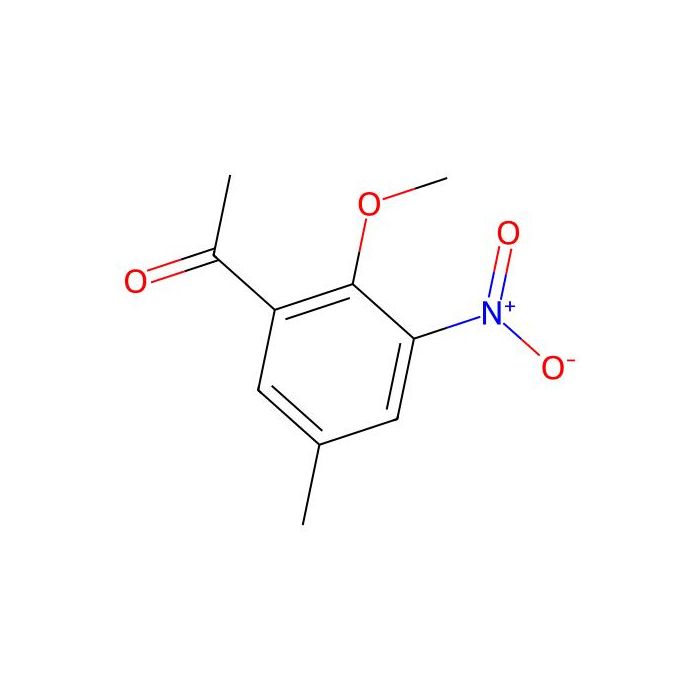
This compound belongs to the class of organic compounds known as alkyl-phenylketones. These are aromatic compounds containing a ketone substituted by one alkyl group, and a phenyl group.
External Descriptors
Not available
1. Djoumbou Feunang Y, Eisner R, Knox C, Chepelev L, Hastings J, Owen G, Fahy E, Steinbeck C, Subramanian S, Bolton E, Greiner R, and Wishart DS. ClassyFire: Automated Chemical Classification With A Comprehensive, Computable Taxonomy. Journal of Cheminformatics, 2016, 8:61.
Certificati (CoA, COO, BSE/TSE e tabella di analisi)
C of A & Other Certificates(BSE/TSE, COO):
Analytical Chart:
Proprietà chimiche e fisiche
Punto di ebollizione (°C)
192-194°/20mm
Punto di fusione (°C)
41-42°
Peso molecolare
209.200 g/mol
XLogP3
1.800
Hydrogen Bond Donor Count
0
Hydrogen Bond Acceptor Count
4
Rotatable Bond Count
2
Exact Mass
209.069 Da
Monoisotopic Mass
209.069 Da
Topological Polar Surface Area
72.100 Ų
Heavy Atom Count
15
Formal Charge
0
Complexity
261.000
Isotope Atom Count
0
Defined Atom Stereocenter Count
0
Undefined Atom Stereocenter Count
0
Defined Bond Stereocenter Count
0
Undefined Bond Stereocenter Count
0
The total count of all stereochemical bonds
0
Covalently-Bonded Unit Count
1
Calcolatori di soluzioni
Molarity Calculator
Determine the necessary mass, volume, or concentration for preparing a solution.
Dilution Calculator
Determine the dilution needed to prepare a stock solution.
Reconstitution Calculator
Recensioni
Recensioni dei clienti
Application Protocols
No assay or bioanalytical protocols are defined for this product in the Product Data. Typical usage is as a chemical intermediate in organic synthesis.
If using in screening assays or materials studies, users should develop fit-for-purpose protocols including:
Stock preparation (e.g., DMSO or ethanol concentrates), dilution schemes, and solubility verification.
Analytical QC (HPLC/LC–MS and NMR) of in-house derivatives.
Purification workflows (flash chromatography or crystallization) tailored to your route.
For any standardized methods, consult primary literature relevant to your specific transformation; none are item-specific here.
Biological Roles
This product is intended for research and laboratory use as an organic building block. No biological function, pathway role, or endogenous activity is provided in the Product Data.
General notes (literature/general):
Substituted acetophenones and their aniline/phenol derivatives are frequently explored as fragments or intermediates in medicinal chemistry programs. However, any biological activity depends on the final structures prepared and cannot be inferred for this intermediate.
Nitroaromatics can undergo bioreduction in living systems, but such behavior is highly context-dependent and is not a basis for use claims here.
Research Use Only: This material is not intended for diagnostic, therapeutic, or clinical use.
Buffer Applications
Not typically applicable. This item is a hydrophobic organic building block and is not used as a buffering agent or pH calibrant.
Practical guidance:
If dissolution in aqueous buffer is required for an assay, prepare concentrated stock solutions in DMSO or ethanol and dilute into the buffer with vigorous mixing, keeping final cosolvent content low (e.g., ≤1–2%). Verify compatibility with your biological system separately.
No buffer system recipes apply to this compound.
Green Alternatives
While this product is a solid reagent (not a solvent), greener choices can be made in its use and downstream transformations (literature/general guidance):
Greener solvent choices (for typical operations):
Prefer 2-MeTHF over THF where feasible (bio-based, higher boiling, lower peroxide rate); EtOAc or MeTHF over DCM for extractions and chromatography when separation permits.
Use ethanol/i-PrOH as reduction media instead of chlorinated solvents for nitro-to-aniline reductions.
Reagent substitutions/tradeoffs:
Nitro reduction: Replace stoichiometric tin/iron salts (high waste) with catalytic hydrogenation (H2/Pd/C) or transfer hydrogenation using formic acid/ammonium formate with Pd/C. Tradeoff: equipment and safety considerations for H2.
Demethylation: Consider AlCl3/thiols or TMSI generated in situ from NaI + TMSCl as alternatives to BBr3; tradeoff: selectivity and waste streams may vary. Enzymatic O-demethylation is conceptually green but rarely practical for this scaffold.
Oxidations/halogenations: Employ electrochemical or photocatalytic variants when possible to reduce hazardous oxidants.
Process-intensification:
Microwave heating or flow hydrogenation can reduce solvent volumes and improve energy efficiency.
Waste minimization:
Recycle chromatographic solvents; adopt crystallization or trituration purification to avoid silica waste where possible.
Always validate that greener choices maintain chemoselectivity (especially preserving methoxy vs. planned demethylation) and meet impurity limits.
Pharmaceutical Uses
No pharmacopeial status, excipient role, or formulation use is provided in the Product Data. This product is supplied for research use only.
General context (literature/general):
Substituted acetophenones are common synthetic intermediates in API discovery and process routes. They may be elaborated to anilides, heterocycles, and other scaffolds of interest.
Any discussion of therapeutic application would pertain to downstream compounds synthesized from this intermediate and is outside the scope of this listing.
Regulatory note: For GMP or clinical manufacturing, source-grade, impurity profiles, and regulatory documentation requirements differ substantially from research-grade materials; consult your quality organization if such use is contemplated.
Physical Properties
Item-specific numerical specifications (BP, MP, density, refractive index, UV cutoff, metal content, water content) are not provided in the Product Data and should be taken from the CoA/Spec Sheet when available.
Qualitative/expected properties (literature/general for this structural class):
Physical state/appearance: Aromatic acetophenone derivatives with multiple ring substituents are typically crystalline solids at ambient conditions; however, appearance for this specific item is Not specified for this item; refer to CoA/Spec Sheet.
Aromatic ketone polarity: Moderately polar due to the carbonyl; overall hydrophobicity is increased by aryl/alkyl substitution. Nitro elevates dipole; methoxy can enhance solubility in moderately polar organics.
Solubility (qualitative): Commonly soluble in organic solvents such as dichloromethane, ethyl acetate, acetonitrile, THF, toluene, methanol/ethanol, and DMSO (literature/general). Very low solubility in water is expected for aryl ketones with this substitution pattern.
Acidity/basicity: No ionizable centers of strong acidity/basicity. Phenolic acidity is absent; nitro is not basic. The ketone can form hydrogen-bond acceptor interactions (literature/general).
Partitioning: LogP is typically in the moderate range for multiply substituted acetophenones; exact value Not specified for this item; refer to CoA/Spec Sheet.
Spectroscopy: Strong IR C=O band near ~1680–1715 cm⁻¹, nitro asymmetric/symmetric stretches ~1520–1550/1340–1370 cm⁻¹, and anisole-like C–O stretches (literature/general). UV-vis shows aryl ketone π→π* bands; exact λmax Not specified for this item; refer to CoA/Spec Sheet.
Do not treat these qualitative expectations as specifications; consult the item’s CoA for numeric values.
Quality and Grades
Grade/Purity: Not specified for this item; refer to CoA/Spec Sheet.
In the absence of an explicit grade, consult the lot-specific Certificate of Analysis (CoA) for assay/purity method (e.g., GC, HPLC, NMR), residual solvents, and impurity profiles relevant to your application (e.g., synthesis vs. analytical reference use).
Stabilizers/Inhibitors: None are listed in the Product Data. If your process is sensitive to Lewis acids/bases or reductants/oxidants, confirm absence of stabilizers on the CoA.
UV/LC suitability: For chromatography or photochemical applications, check low-UV background and fluorescence impurities on the CoA if planning detection below 230 nm. Not specified for this item; refer to CoA/Spec Sheet.
Residual metals/ionic content: Not specified for this item; refer to CoA/Spec Sheet. For catalytic sequences (e.g., C–N couplings after nitro reduction), ensure trace metals are controlled upstream.
Drying and headspace: If water content is critical (e.g., base-catalyzed condensations at the α-carbonyl), verify Karl Fischer data. Not specified for this item; refer to CoA/Spec Sheet.
Guidance on common grades (general):
Research grade: Suitable for most discovery-scale organic syntheses.
Analytical/Reference grade: Tight assay, identity confirmation by multiple orthogonal methods.
HPLC grade (solvents) vs. reagent grade: Not applicable here; this is a solid reagent, not a solvent.
Always align the material’s grade with the sensitivity of your intended transformation.
Reaction and Applications
As a multiply substituted acetophenone, this compound is a versatile building block in heterocycle synthesis, medicinal chemistry SAR, and materials intermediates.
Key application families (literature/general):
Nitro group transformations:
Catalytic hydrogenation (H2/Pd, H2/Pt) or transfer hydrogenation (e.g., Fe/AcOH, SnCl2, Zn/NH4Cl) to the corresponding aniline. The resulting 2-methoxy-5-methyl-3-aminoacetophenone is a gateway to benzoxazoles, benzimidazoles, and anilide derivatives.
Partial reductions/condensations can afford azoxy/azo linkages under specialized conditions.
Carbonyl chemistry:
Formation of enolates/silyl enol ethers enables α-halogenation, aldol condensations, Claisen–Schmidt arylidene formation, and Mannich reactions.
Oxime formation followed by Beckmann rearrangement provides amide scaffolds (acetanilide-type), modulated by the ring substituents.
Methoxy handle:
Demethylation (e.g., BBr3) to the phenol unlocks SNAr or ether formation; phenol can be converted to aryl triflates for cross-coupling (Suzuki, Buchwald–Hartwig after nitro reduction to anilide).
Benzylic methyl:
Benzylic bromination (NBS, light) for further elaboration; oxidation to the benzoic acid derivative is also accessible (literature/general).
Electrophilic/nucleophilic aromatic substitutions: The nitro (–M) and methoxy (+M) create a differentiated reactivity map, enabling regioselective further substitution after functional group interconversions.
Practical tips:
Control moisture for strong-base enolate steps; use dry glassware/solvents.
Sequence planning: nitro reduction often precedes metal-catalyzed couplings at the aniline to avoid catalyst poisoning.
Monitor for potential demethylation in Lewis acidic environments if the methoxy must be retained.
Reaction Conditions
General literature guidance for common transformations of substituted nitro acetophenones; adjust to your substrate and scale.
Nitro reduction to aniline:
H2 (1–5 bar) with 5–10 wt% Pd/C in EtOH or EtOAc, 20–40 °C, 2–6 h. Work up by filtration over celite. Alternative: Fe/AcOH or Zn/NH4Cl in EtOH/H2O at 50–80 °C, 3–8 h.
O-Demethylation:
BBr3 (1.2–3.0 equiv) in dry DCM, −78 to 0 °C then to rt, 2–16 h; quench carefully with MeOH/H2O. Alternative: TMSI (generated from NaI + TMSCl) in MeCN, reflux, 2–6 h. Note compatibility with the nitro/ketone.
Enolate α-functionalization:
LDA (1.1–1.5 equiv) in dry THF at −78 to −20 °C, 0.5–2 h, then electrophile addition (e.g., Br2, aldehydes for aldol). Quench at low temperature to maintain selectivity.
Benzylic bromination:
NBS (1.1 equiv), AIBN, CCl4 or PhMe under hv/reflux, 2–6 h; greener variant uses PhMe/MeCN and LED irradiation. Monitor by TLC/GC.
Oxime formation/Beckmann:
Hydroxylamine·HCl (1.2–2.0 equiv), pyridine or AcONa, EtOH/H2O, 25–60 °C; subsequent Beckmann with SOCl2/POCl3 or catalytic conditions.
Notes:
Times/yields vary with substitution; the nitro group can slow reductions sterically/electronically. Always run small-scale scouting experiments and monitor by LC/MS or NMR.
Safety: Exotherms possible in reductions and demethylations; control addition rates and ensure efficient cooling and venting.
Safety and Handling
GHS/CLP classification, pictograms, signal word, and H-statements: Not specified for this item; refer to SDS for authoritative safety information.
General hazards (literature/general for aryl nitro ketones): May cause skin/eye irritation and respiratory irritation upon dust/vapor exposure. Nitroaromatics can show higher toxicity than simple aromatics; avoid ingestion and inhalation. Combustible as an organic solid.
Peroxide formation: Not applicable as a neat substance (non-ether). However, always assess solvent peroxidation if storing/using in ethers.
Incompatibilities: Strong reducing agents (risk of nitro reduction), strong oxidizers (combustion/exotherm), strong bases under forcing conditions (risk of condensation at the α-carbonyl), and Lewis acids/halophiles if demethylation is not intended (e.g., BBr3).
Thermal stability: Typical aromatic ketones are thermally stable under ambient conditions; avoid prolonged heating near decomposition temperatures (Not specified for this item; refer to SDS/CoA).
PPE: Laboratory coat, safety glasses or splash goggles, and appropriate gloves (e.g., nitrile). Use a fume hood to control dust/vapor and to avoid exposure during weighing and transfers.
First aid (overview; defer to SDS):
Inhalation: Move to fresh air; seek medical attention if symptoms persist.
Skin: Wash with soap and water; remove contaminated clothing.
Eyes: Rinse cautiously with water for several minutes; remove contact lenses if present and easy.
Ingestion: Rinse mouth; do not induce vomiting; seek medical attention.
Spill/cleanup: Avoid dust generation; collect with inert absorbent; dispose of according to local regulations.
Solvent Selection
This product is a functionalized aromatic ketone (reagent/building block), not a solvent. Solvent selection guidance below concerns its dissolution, reaction use, and purification.
Polarity profile (qualitative, literature/general): Moderately polar aromatic due to the ketone and nitro groups; readily dissolves in medium-polarity organic solvents. Water solubility expected to be very low.
Good dissolution solvents: DCM, CHCl3, EtOAc, acetone, acetonitrile, THF/2-MeTHF, toluene (warm), MeOH/EtOH, and DMSO/DMF.
Reaction media considerations:
For nucleophilic steps at the α-carbonyl (enolate chemistry): use dry THF, 2-MeTHF, MTBE, toluene, or DMF/DMSO depending on base and temperature.
For nitro reduction to anilines: ethanol, i-PrOH, EtOAc, or EtOH/THF mixtures are common; aqueous conditions can be used with phase-transfer if solubility permits.
For demethylation (BBr3/TiCl4/AlCl3): non-protic halogenated solvents (DCM) under inert atmosphere are typical.
Purification: Flash chromatography on silica using hexane/EtOAc or toluene/EtOAc gradients works well; nitro/ketone increase polarity vs. hydrocarbons. Monitor by UV (254 nm).
Crystallization: Frequently feasible from EtOAc/hexane or toluene/EtOH mixtures; screen solvent pairs to maximize yield and purity (literature/general).
Selection tips:
Prefer greener ethers (2-MeTHF) or esters (EtOAc) over chlorinated solvents where possible.
Confirm absence of base- or acid-catalyzed degradation in the chosen medium (watch for aldol/condensation under strong base or demethylation under strong Lewis acids).
Shipping: Not specified for this item; refer to CoA/Spec Sheet.
Appearance: Not specified for this item; refer to CoA/Spec Sheet.
Good practice (general for aromatic ketones):
Store tightly closed in a dry, inert environment away from light and heat sources. Use desiccation if your process is moisture-sensitive (e.g., strong-base enolate chemistry).
Segregate from strong oxidizers and strong reducing agents.
Prepare stock solutions in suitable organic solvents such as DCM, EtOAc, acetonitrile, THF/2-MeTHF, methanol/ethanol, toluene (warm), or DMSO/DMF depending on intended use.
For bioassay contexts requiring aqueous media, dissolve first in DMSO or ethanol to make a concentrated stock, then dilute into buffer with vigorous mixing; keep final cosolvent low and verify absence of precipitation.
Shelf life:
Not specified for this item; refer to CoA/Spec Sheet. As with most stable aromatics, multi-year stability at room temperature is common when stored properly, but always confirm by assay before critical use.
Structure and Identity
A substituted acetophenone bearing methoxy, nitro, and methyl substituents on the aromatic ring.
Product name: 2'-Methoxy-5'-methyl-3'-nitroacetophenone (interpretable as 1-acetyl-2-methoxy-3-nitro-5-methylbenzene)
CAS: 103204-71-3 (Product Data)
CID: 2759588 (Product Data)
InChIKey: 414382 (Product Data)
SMILES: Not specified for this item; refer to CoA/Spec Sheet.
Molecular formula: C10H11NO4 (computed/literature, consistent with an acetophenone bearing –OCH3, –NO2, and –CH3)
Molecular weight: ~209.20 g/mol (computed from formula; literature value)
Structural features (descriptive, literature/general):
Core scaffold: Acetophenone (aryl–CO–CH3)
Ring substitution pattern: Ortho methoxy (–OCH3), meta nitro (–NO2), and para (to nitro) methyl (–CH3) relative to the acyl group in a typical naming convention.
2D description: A benzene ring bearing an acetyl group; adjacent to the carbonyl-bearing carbon is a methoxy substituent; separated by one carbon is a nitro group; the ring also carries a methyl substituent para to the nitro (5′ position). No stereocenters.
Notes:
Any alternative tautomeric or resonance depictions do not affect connectivity; the compound is not chiral.
Exact connection table/identifier strings should be taken from the CoA/SDS if needed for registration or informatics.
Nitro → Aniline: Reduction unlocks a rich set of downstream reactions: acylation/sulfonylation, Buchwald–Hartwig amination (after further activation), diazotization for Sandmeyer-type substitutions, and heterocycle annulations (benzoxazole/benzimidazole via amide/urea formation followed by cyclodehydration).
Ketone chemistry: Enolate formation (LDA, NaHMDS, KHMDS) for α-functionalization; aldol and Claisen–Schmidt condensations to build chalcone-like motifs; conversion to oximes/hydrazones for Beckmann or Fischer-type rearrangements.
Methoxy handle: Orthogonal to many conditions; can be strategically demethylated (BBr3/TMSI) to generate a phenol for O-alkylation/arylation or to install leaving groups (aryl triflates) for cross-coupling.
Benzylic methyl: Allows benzylic halogenation (NBS) to provide benzyl electrophiles or oxidation to acids/alcohols/aldehydes (e.g., SeO2 allylic-like oxidation or KMnO4 to acid), complementing the carbonyl site.
Regiochemical control: The juxtaposition of a strong deactivator (NO2) and activator (OMe) creates predictable EAS/SNAr patterns after appropriate functional group interconversions, aiding late-stage diversification.
Strategic advice:
Plan step order to protect/transform the methoxy as needed (avoid unintended demethylation under Lewis acids).
Conduct nitro reductions before Pd-catalyzed couplings involving the aniline to minimize catalyst poisoning.
Exploit crystallinity for purification where possible to limit chromatographic waste.
Target Specificity
Not applicable. This product is a small-molecule organic intermediate, not a biologic, antibody, or assay reagent with defined biological target specificity. No target, epitope, clone, or isotype information applies.
We use cookies to ensure the website functions properly and, where permitted, to improve your experience. You can manage your preferences at any time in Settings. Learn more in our Cookie Policy.
Shall we send you a message when we have discounts available?
Remind me later
Thank you! Please check your email inbox to confirm.
Products are supplied to verified businesses, institutions, and qualified professionals for research and development use only. Not for use in humans, animals, diagnosis, or therapy.