≥95% for sensitive chromatographic and analytical workflows requiring minimal baseline interference.
🌡
Storage & shipping
Store at 2-8°C Ships Wet ice Check lot-specific COA for exact specifications.
📋
Quality documents
SDS, COA, datasheet, and spec sheet available for download. Lot-specific COA accessible via lot number lookup.
📚
Literature proof
Cited in 1 peer-reviewed publications across chromatography, organic synthesis, and cross-coupling reactions.
Specifications
Sinonimi
4-?Hydroxy-?L-?isoleucine | 4-HYDROXY-L-ISOLEUCINE | (2S,3R)-2-amino-4-hydroxy-3-methylpentanoic acid | CCG-266183 | 4-ydroxy--soleucine | 4-Hydroxyisoleucine, United States Pharmacopeia (USP) Reference Standard | Rel-(2S,3R)-2-amino-4-hydroxy-3-methylpen
Specifiche e purezza
≥95%
Meccanismi biochimici e fisiologici
A special amino acid extracted from the seeds of fenugreek, which has never been found in mammalian tissues, shows proinsulin activity; Effects on insulin secretion, plant-based treatment of metabolic syndrome.
Condizioni di conservazione di stoccaggio
Store at 2-8°C
Spedito in
Wet ice
Questo prodotto richiede spedizione a catena fredda. I servizi di terra e altri servizi economici non sono disponibili.
This compound belongs to the class of organic compounds known as isoleucine and derivatives. These are compounds containing isoleucine or a derivative thereof resulting from reaction of isoleucine at the amino group or the carboxy group, or from the replacement of any hydrogen of glycine by a heteroatom.
External Descriptors
Not available
1. Djoumbou Feunang Y, Eisner R, Knox C, Chepelev L, Hastings J, Owen G, Fahy E, Steinbeck C, Subramanian S, Bolton E, Greiner R, and Wishart DS. ClassyFire: Automated Chemical Classification With A Comprehensive, Computable Taxonomy. Journal of Cheminformatics, 2016, 8:61.
1.Emmanuel Osei Nkansah, Yunzhu Lan, Hui Zhang, Binbin Xu, Qiaodan Li, Mohammad Ishraq Zafar, Jian Xu. (2025) Potential role of 4-hydroxyisoleucine in enhancing fertility in male mice with diet-induced obesity. Frontiers in Endocrinology, [PMID:40917356][10.3389/fendo.2025.1561543]
Calcolatori di soluzioni
Molarity Calculator
Determine the necessary mass, volume, or concentration for preparing a solution.
Dilution Calculator
Determine the dilution needed to prepare a stock solution.
Reconstitution Calculator
Recensioni
Recensioni dei clienti
Application Protocols
No vendor‑validated application protocols are provided in the Product Data for this item. The following general procedures are offered as nonbinding guidance for common laboratory uses of amino acids; adapt to your system and consult the primary literature.
Preparation of aqueous stock solutions
Weigh appropriate amount to achieve 100 mM in water or buffer. Adjust pH to 1–2 (HCl) or 9–10 (NaOH) if needed to fully dissolve, then readjust to target pH. Filter through 0.22 µm for sterile work. Store aliquots at 2–8 °C for short term.
RP‑HPLC quantitation (example conditions)
Column: C18, 150 × 4.6 mm, 3–5 µm. Mobile phase A: water + 0.1% formic acid; B: acetonitrile + 0.1% formic acid. Gradient: 2%→20% B over 15 min. Detection: UV after precolumn derivatization (e.g., OPA/FMOC) or MS.
Chiral analysis (illustrative)
Derivatize with Marfey’s reagent (FDAA) at pH ~8–9, 40–60 °C for 30–60 min; analyze by RP‑HPLC to separate diastereomers representing enantiomers/diastereomers.
Peptide coupling (small scale)
Dissolve N‑protected, C‑protected derivative in DMF; add HATU (1.1 equiv) and DIPEA (2 equiv) at 0 °C; add amine partner; stir 1–2 h, monitor by LC‑MS; quench and purify.
Note: These are example workflows. Validate all conditions, especially pH and solvent content, for compatibility with your downstream application. For regulated or critical uses, develop and document formal SOPs.
Biological Roles
General context (literature)
4‑Hydroxy isoleucine is a non‑proteinogenic amino acid reported in seeds of Trigonella foenum‑graecum (fenugreek). It is structurally related to the branched‑chain amino acids (BCAAs) and bears a γ‑hydroxy substituent.
In biochemical studies, hydroxylated BCAAs serve as probes for transamination, deamination, and β‑oxidation‑adjacent pathways, as well as substrate/ligand analogs for amino acid transporters.
Physicochemical/biochemical properties
Zwitterionic at neutral pH; participates in hydrogen bonding via both the α‑amino/α‑carboxylate and the secondary alcohol. These features influence transporter affinity and enzyme recognition in vitro.
The γ‑hydroxy group can engage in intra/intermolecular H‑bonds, affecting peptide secondary structure when incorporated into synthetic peptides.
Research applications (nonclinical)
Used as a reference standard in metabolomics of plant matrices and as a model compound to study structure–activity relationships of BCAA derivatives.
Investigations in cell‑free and cellular systems have explored its impact on carbohydrate/fuel metabolism signaling pathways; any such findings are context‑dependent and research‑only. No claims are made here regarding therapeutic or clinical performance.
Handling in biological experiments
Prepare isotonic, pH‑controlled aqueous solutions to avoid osmotic or pH artifacts.
Filter‑sterilize (0.22 µm) for cell culture compatibility; confirm endotoxin/bioburden requirements with your QA if applicable.
Note: Specific biological properties of this catalog item (e.g., enantiomeric form, salt state) should be verified against the CoA, as these materially influence transport and enzyme interactions.
Buffer Applications
4‑Hydroxy isoleucine is not a conventional buffering agent. As an α‑amino acid, it exhibits two principal titratable groups (carboxyl and ammonium), but it is typically used as a substrate, standard, or building block rather than as a pH buffer.
Practical guidance
If used in buffered solutions, select an external buffer appropriate to your target pH (e.g., phosphate pH 6–8, acetate pH 4–5.5, Tris pH 7–9). Keep amino acid concentration independent of buffer capacity to avoid pH drift.
The amino acid’s zwitterionic form around neutral pH contributes minimally to buffering compared with classical buffers.
Recipes (illustrative; buffer components only)
Phosphate buffer (50 mM, pH 7.4): Na2HPO4/NaH2PO4 in water; add the weighed amino acid and adjust pH if needed.
Acetate buffer (50 mM, pH 4.5): Sodium acetate/acetic acid; dissolve the amino acid last to ensure complete dissolution.
Compatibility notes
Avoid strong base during prolonged storage; hydroxy‑amino acids may undergo undesirable side reactions at high pH over time.
For ion‑exchange separations, the amphoteric nature can be exploited, but the amino acid itself is not the buffering species.
Green Alternatives
Greener strategies for working with 4‑hydroxy isoleucine focus on solvent selection, coupling chemistry, and protection/deprotection conditions.
Solvent and media choices
Prefer water or water‑rich media for dissolution and biocatalysis; consider buffer‑compatible coupling agents (e.g., EDC with NHS) that operate in aqueous systems.
Replace DMF/NMP in peptide couplings with greener alternatives like 2‑MeTHF, CPME, or propylene carbonate when compatible with solubility and reagents. Co‑solvent systems (water/EtOH or water/2‑MeTHF) can be effective.
Coupling chemistry
Use carbodiimide (EDC·HCl) in water or aqueous alcohols to minimize dipolar aprotic usage; HOAt/HOBt alternatives with improved safety (e.g., OxymaPure) reduce explosive hazard.
Enzymatic ligation (proteases, ligases) in aqueous media can install peptide bonds under mild, waste‑minimizing conditions where sequence allows.
Protection/deprotection
Choose protecting groups removable under mild, atom‑economical conditions (e.g., carbonate‑type for OH, avoiding heavy‑metal catalysis). Hydrogenolysis with catalytic hydrogen (EtOH/water) can replace harsher reagents for benzyl groups.
Workup and purification
Favor crystallization or aqueous phase separations over silica chromatography. If chromatography is required, minimize chlorinated solvents; use EtOAc/MeOH or EtOAc/EtOH mixtures.
Comparison (general guidance)
Conventional: DMF/HATU, DCM workups, HOBt additives; high E‑factor.
Greener: Water/EtOH media, EDC/Oxyma or enzymatic coupling, reduced dipolar aprotics; lower solvent hazard and waste.
Trade‑offs: Greener media may reduce substrate solubility and coupling rates; small amounts of DMSO/EtOH as co‑solvents often restore performance while keeping hazard lower.
Pharmaceutical Uses
No pharmacopeial status or excipient grade is specified for this item; refer to the CoA/Spec Sheet for any regulatory designations. The information below addresses general formulation roles of amino acid derivatives in research and development settings without implying therapeutic use.
Potential roles (R&D context)
Excipients in research formulations: Amino acids can act as stabilizers, tonicity adjusters, or pH co‑modulators in experimental injectables or lyophilized cakes; suitability of 4‑hydroxy isoleucine must be established empirically.
Enabling salts: Formation of well‑defined salts (e.g., hydrochlorides, sodium carboxylates) can tune solubility and crystallinity for preformulation studies.
Protic coformers: The carboxyl and amino functionalities may support cocrystal screening as coformers in solid‑state R&D.
Considerations
Safety/tox profile: Use is limited to research use only per Product Data; no clinical claims are made. If advancing to regulated work, establish full impurity, residual solvent, and elemental impurity profiles.
Solid‑state behavior: Hygroscopicity, polymorphism, and potential for lactone formation under dehydrating conditions should be assessed by PXRD/DSC/TGA.
Compatibility: Evaluate interactions with reducing sugars (Maillard pathways) and reactive carbonyl excipients. Control pH to limit degradation.
Analytical control
Assay by HPLC with pre‑ or post‑column derivatization for UV detection, or LC‑MS/MS for direct quantification.
Chiral integrity must be monitored if enantiopure material is required (chiral HPLC or derivatization methods).
Note: No pharmacopoeial monograph or excipient designation is claimed for this catalog item.
Physical Properties
Item-specific values are not provided in the Product Data; consult the CoA/Spec Sheet for definitive specifications.
Appearance: Not specified for this item; refer to CoA/Spec Sheet.
Grade/Purity: Not specified for this item; refer to CoA/Spec Sheet.
Physical constants (literature/general; for reference only, not item specs)
Molecular formula (free amino acid): C6H13NO3 (literature)
Molecular weight: ~147.17 g/mol (literature)
Acid–base behavior: Typical of α‑amino acids; pKa values depend on stereochemistry/ionic strength. Representative literature values for related hydroxy‑branched amino acids: pKa1 (CO2H) ~2.1–2.5; pKa2 (NH3+) ~9.0–9.6; side‑chain OH pKa >>12 (poorly acidic). Verify experimentally for this item.
Solubility: Amino acid zwitterions are generally highly soluble in water and poorly soluble in most aprotic organics; solubility increases in alcohol–water mixtures and at extreme pH. Quantitative solubility for this item is not specified.
Partitioning: Expected low logP and strong polarity/zwitterionic character at neutral pH (literature trend for α‑amino acids).
Optical rotation: Dependent on isomeric composition and solvent; not specified for this item.
Melting/decomposition: Many amino acids exhibit high melting points with decomposition; specific MP for this item is not specified.
Item-specific grade/purity: Not specified for this item; refer to CoA/Spec Sheet.
Typical quality considerations for amino acid building blocks
Chemical purity: For synthetic and biochemical applications, assay by quantitative NMR or HPLC is common. Reported impurities may include related stereoisomers, lactones, dehydration products, and residual inorganic salts from isolation.
Optical purity: Enantiomeric/diastereomeric excess is critical. Verification by chiral HPLC or Marfey’s/OPA derivatization methods is routine. If your work is stereosensitive (e.g., peptide synthesis), confirm ee/de with the CoA.
Inorganic content: Ash or residual metal content is occasionally reported for biogenic amino acids. If trace metals matter (e.g., catalysis inhibition), request ICP data.
Water content: Karl Fischer moisture can influence weighing accuracy and coupling efficiency. When critical, request KF data and dry under vacuum before use.
Microbial/bioburden: For cell‑related research, vendors may provide bioburden or endotoxin data; none are specified here.
Grade definitions (general)
Research grade: Suitable for most synthetic/analytical uses; UV/background and particle control are general laboratory standards.
BioUltra/BioXtra/USP/JP/EP grades (if applicable): Imply tighter controls on bioburden, heavy metals, and assay. Not specified for this item.
Stabilizers/additives
Amino acids typically ship neat without stabilizers. Any additives would be declared on the CoA; none are specified for this item.
Reaction and Applications
As a hydroxylated, branched‑chain amino acid, 4‑hydroxy isoleucine serves as a versatile chiral building block and probe in biochemical and synthetic settings.
Research applications (general)
Biochemistry/nutrition: Standard for quantification of fenugreek secondary amino acids; tracer in metabolic studies of branched‑chain amino acid pathways (in vitro/in vivo models—nonclinical research only).
Analytical standards: Calibration for LC‑MS/LC‑UV methods profiling plant‑derived amino acids and for stability studies of hydroxy‑amino acids.
Synthetic chemistry
Peptide incorporation: Introduces a γ‑hydroxy, β‑branched residue to modulate peptide conformation and H‑bonding. Requires protection (e.g., Boc/Fmoc on Nα, benzyl/tert‑butyl or silyl protection of the γ‑OH, and esterification of C‑terminus) before SPPS/LPPS.
Chemoselective derivatization: The secondary alcohol enables selective acylation, carbamate formation (e.g., with CDI), or Mitsunobu inversion to access epi‑isomers or O‑alkylated analogs.
Lactonization: Under dehydrative conditions, intramolecular ester formation can afford γ‑lactones—useful intermediates in diversity‑oriented synthesis.
Resolution/chirality transfer: The multiple stereocenters allow chiral relay strategies; diastereomeric salt formation or enzymatic resolution may be used when racemates are prepared.
Practical tips
Protecting group strategy dictates solubility and coupling efficiency; select orthogonal protections compatible with your route (e.g., Fmoc‑strategy for SPPS with acid‑labile side‑chain protection for –OH).
Minimize base exposure during workups to avoid β‑elimination or epimerization at C2; perform couplings at controlled pH and low temperature when possible.
For analytical tracking, derivatize with Marfey’s reagent or PITC for enhanced UV detection.
Reaction Conditions
The following are literature‑style general conditions for transformations involving hydroxy‑substituted amino acids like 4‑hydroxy isoleucine; optimize for your substrate and verify with small‑scale trials.
Peptide coupling (solution phase)
Reagents: HATU (1.0–1.2 equiv), DIPEA (2–3 equiv) in DMF/DMF–CH2Cl2; or EDC·HCl (1.2–1.5 equiv) with Oxyma (1.2 equiv) in DMF or water/DMF.
Temperature/time: 0–25 °C, 0.5–12 h depending on sterics.
Notes: Protect γ‑OH to prevent undesired O‑acylation. Minimize base to avoid epimerization at C2.
O‑Acylation of γ‑OH
Reagents: Acyl chloride/anhydride (1.1–1.5 equiv), DMAP (0.05–0.2 equiv), pyridine or CH2Cl2 with added base.
Temperature/time: 0 °C to RT, 1–6 h.
Selectivity: Protect Nα (Boc/Fmoc) and C‑terminus (ester) first for clean O‑acylation.
Reagents: DEAD or DIAD (1.2 equiv), PPh3 (1.2 equiv), ROH or acid pronucleophile in THF/THF–DMF.
Temperature/time: 0–25 °C, 2–12 h.
Caution: Sensitive to moisture; ensure terminals are protected; handle azodicarboxylates with care.
Lactonization (γ‑lactone formation)
Reagents: DCC or EDC with catalytic DMAP; or acid catalysis (p‑TsOH) in toluene with azeotropic water removal.
Temperature/time: RT to reflux, 2–24 h.
Control: Monitor to avoid over‑cyclization or dehydration side products.
Analytical monitoring
RP‑HPLC with ion‑pairing or HILIC for polar intermediates; LC‑MS for mass tracking.
Yields vary widely with protection strategy and stereochemistry; consult primary literature for closely related substrates and scale‑up guidance.
Safety and Handling
Authoritative source: Always consult the product SDS for definitive hazard classification, PPE, and first‑aid instructions.
GHS/CLP status (from Product Data)
Signal word: Not specified for this item; refer to SDS.
H‑statements: Not specified for this item; refer to SDS.
GHS classification/pictograms: Not specified for this item; refer to SDS.
General laboratory handling (amino acids; informational)
Low volatility solid; dust generation should be minimized. Avoid inhalation of dusts and contact with eyes/skin.
Use standard PPE: lab coat, safety glasses, and suitable gloves (e.g., nitrile). Handle in a clean, dry environment.
Hygroscopicity for many amino acids is moderate; keep containers tightly closed to avoid moisture uptake and caking.
Incompatibilities and stability (general)
Incompatible with strong oxidizers and strong mineral acids or bases under forcing conditions (may cause degradation).
Amino acids can undergo Maillard‑type reactions with reducing sugars upon heating; avoid unnecessary heat in presence of carbonyl compounds.
Avoid prolonged exposure to elevated temperatures; decomposition/melting may occur with browning.
First‑aid overview (general guidance; defer to SDS)
Inhalation: Move to fresh air; seek medical attention if symptoms persist.
Skin/eye contact: Rinse with water for several minutes; remove contaminated clothing; seek medical attention if irritation develops.
Ingestion: Rinse mouth; do not induce vomiting; seek medical advice if unwell.
Fire safety
Organic solid; combustible at high temperature. Use water spray, CO2, foam, or dry chemical for incipient fires. Thermal decomposition may produce nitrogen oxides and carbon oxides.
Solvent Selection
4‑Hydroxy isoleucine is a polar, zwitterionic α‑amino acid; solvent behavior follows that class.
Polarity/miscibility (literature/generic trends)
Highly soluble in water across a range of pH; solubility often increases markedly at pH <2 (cationic) or pH >10 (anionic).
Poorly soluble in nonpolar and many aprotic organic solvents (e.g., hexanes, toluene, CH2Cl2). Limited solubility in MeOH/EtOH; improved in water–alcohol mixtures.
Partitioning: Very low organic/water partitioning at neutral pH due to zwitterion formation.
Practical choices by task
Stock solutions: Use water or aqueous buffers (e.g., 10–100 mM). Adjust pH to 1–2 (HCl) or 10–11 (NaOH) to increase solubility if needed; return to target pH after dilution.
Peptide coupling/derivatization: Dissolve as the appropriate salt in polar aprotics with additives (DMF/DMSO with small amounts of base/activator) or use water‑compatible coupling systems.
Chromatography: For RP‑HPLC, use ion‑pairing or high aqueous mobile phases; HILIC is often effective for retention.
Comparison (general)
Water: Best solvating medium; biocompatible; may require pH control.
DMSO: Excellent for concentrated stocks when water solubility is limiting; viscous and can complicate bioassays at >1–2% v/v.
Methanol/Ethanol: Moderate aid in co‑solvent systems; limited alone at neutral pH.
Tips
Filter aqueous solutions (0.22–0.45 µm) to remove particulates prior to analytical or biological use.
Avoid high‑pH storage; β‑elimination/dehydration of hydroxy amino acids can occur under strong basic conditions over time.
Storage and Reconstitution
Storage conditions (from Product Data)
Store at 2–8 °C.
Shipped on wet ice.
General stability guidance
Keep container tightly closed in a dry environment. Protect from excessive heat and prolonged exposure to high pH to minimize degradation (e.g., dehydration or lactonization pathways in hydroxy amino acids).
For long‑term studies, consider storing as desiccated solid at 2–8 °C; if material is hygroscopic, limit headspace humidity.
Reconstitution (aqueous use)
Solvent: Water or appropriate buffer. Start with 10–100 mM stocks.
pH: Adjust to facilitate dissolution if necessary (acidic or mildly basic), then readjust to the desired working pH.
Filtration: For cell‑related work, sterile‑filter through 0.22 µm. Avoid repeated freeze–thaw of solutions; prepare single‑use aliquots.
Light sensitivity: Not typically light‑sensitive; however, store solutions in amber vials as a good laboratory practice when prolonged storage is expected.
Solution stability (general)
Aqueous solutions are typically stable for days to a few weeks at 2–8 °C depending on pH. For maximum integrity, prepare fresh before critical experiments.
Specifications not provided
Appearance, exact solubility, and concentration limits: Not specified for this item; refer to CoA/Spec Sheet.
Research Use Note: For research use only (per Product Data).
Structure and Identity
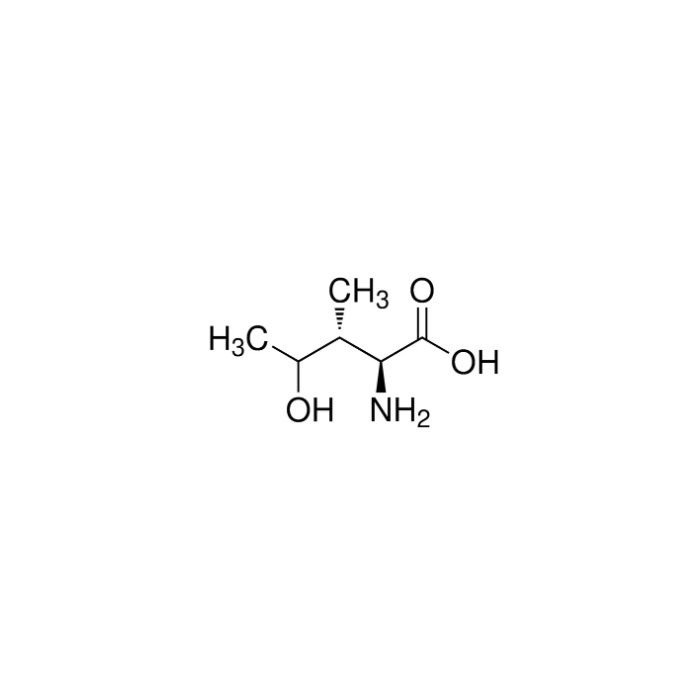
4‑Hydroxy isoleucine is a hydroxylated, branched‑chain amino acid structurally related to L‑isoleucine and commonly encountered as the fenugreek metabolite 4‑hydroxy‑L‑isoleucine.
Item-specific identifiers (from Product Data)
SKU: H134438
CAS: 781658-23-9
PubChem CID: 2773624
InChIKey: 265937 (as provided)
SMILES: Not specified for this item; refer to CoA/Spec Sheet.
Literature identity (for reference only; not item specifications)
Common name: 4‑Hydroxyisoleucine (often encountered as the L‑isomer: 4‑hydroxy‑L‑isoleucine)
Molecular formula (free amino acid, literature): C6H13NO3
Molecular weight (literature): ~147.17 g/mol
Stereochemistry: Naturally occurring material is typically 2S,3R,4S (literature). Commercial materials may be enantiopure or mixtures; verify CoA.
Structural features (descriptive)
Backbone: α‑amino acid with a carboxylic acid (–CO2H) at C1 and a primary amino group (–NH2) at C2.
Side chain: A branched alkyl chain analogous to isoleucine bearing a secondary alcohol at the γ‑position (C4). One methyl branch at C3.
Zwitterion formation: At neutral pH the amino group is typically protonated (–NH3+) and the carboxylate deprotonated (–COO−). This strongly influences solubility and chromatography.
2D structure in words
Starting from the carboxyl carbon (C1), the α‑carbon (C2) bears –NH2 and the side chain; the β‑carbon (C3) is substituted with a methyl; the γ‑carbon (C4) carries –OH and continues to a terminal methyl. Three stereogenic centers may be present depending on substitution pattern.
Synthetic Utility
4‑Hydroxy isoleucine offers a compact set of orthogonal functionalities: a nucleophilic α‑amine, a carboxylic acid, and a secondary alcohol on a β‑branched side chain. This constellation enables diverse, chemoselective transformations.
Functional group handles
Nα: Protect as Boc or Fmoc; convert to ureas/carbamates; engage in reductive amination with prior carboxyl protection.
C‑terminus: Esterify (Me, Bn, tBu) to facilitate O‑acylation at the side‑chain OH without backbone scrambling.
γ‑OH: Form carbonates, esters, or undergo Mitsunobu reaction for inversion/alkylation; oxidize to ketone (carefully) to access 4‑oxo isoleucine analogs.
Named/typical reactions
Peptide coupling: HATU/DIPEA or EDC/Oxyma systems; SPPS with Fmoc‑strategy and acid‑labile side‑chain protection on OH.
Intramolecular cyclization: Dehydrative lactonization to γ‑lactones; subsequent ring‑opening provides access to regio‑ and stereochemically diverse derivatives.
Chemoenzymatic steps: Lipase‑mediated acylations at the secondary alcohol can provide high stereocontrol under mild, green conditions.
Retrosynthetic value
Serves as a chiral pool starting point for γ‑functionalized BCAA motifs in natural products and peptidomimetics.
The β‑branch and γ‑OH enable chiral relay to construct vicinal stereocenters in adjacent frameworks.
Practical guidance
Sequence protection to avoid over‑acylation and minimize epimerization at C2; conduct couplings at ≤0–25 °C when feasible.
Monitor reactions by LC‑MS; derivatize for UV detection if needed (e.g., Fmoc‑Cl, Marfey’s).
For O‑acylations, use mild bases (pyridine, DMAP) and pre‑protected N/C termini to ensure selectivity.
Target Specificity
This product is a small‑molecule amino acid standard/building block and is not an antibody, enzyme, or receptor ligand with defined biological target specificity. No target, epitope, or isotype information applies.
Item-specific data: None provided in Product Data for target specificity.
Guidance: If using as a probe or standard in bioassays, define your target and validation strategy empirically (transporters, enzymes, or signaling readouts) and cite primary literature for assay‑specific interactions.
We use cookies to ensure the website functions properly and, where permitted, to improve your experience. You can manage your preferences at any time in Settings. Learn more in our Cookie Policy.
Shall we send you a message when we have discounts available?
Remind me later
Thank you! Please check your email inbox to confirm.
Products are supplied to verified businesses, institutions, and qualified professionals for research and development use only. Not for use in humans, animals, diagnosis, or therapy.

 B2301363