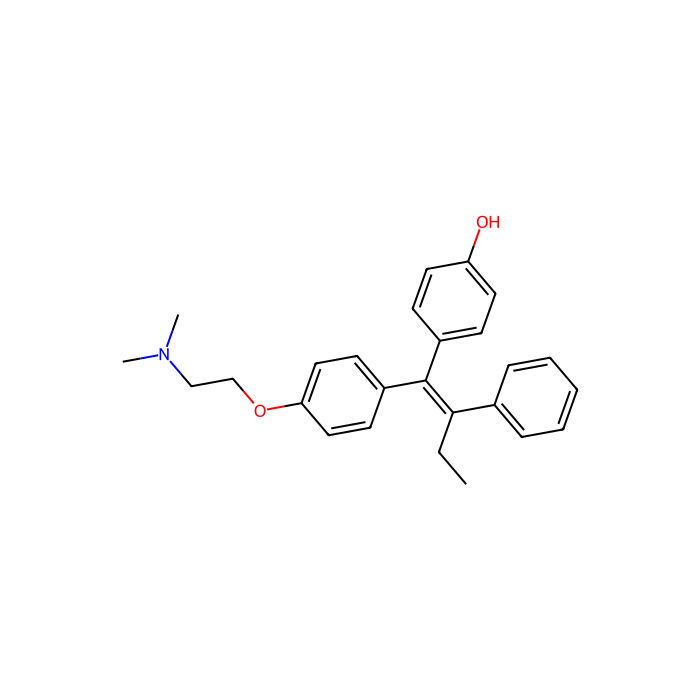
4-Hydroxytamoxifen - ≥98%, E:Z isomers=50:50 , CAS No.68392-35-8

CAS: 68392-35-8 Cat. No.: H113421 Formula: C26H29NO2 Peso molecolare: 387.51 Numero EC: 627-097-8
Disponibile su ordine
QUALITÀ & PUREZZA ≥98% E:Z isomers=50:50
Synonyms
4-OHT|4-((1Z)-1-(4-(2-(dimethylamino)ethoxy)phenyl)-2-phenyl-1-butenyl)phenol|4-OH-TAM|BIDD:PXR0104|Opera_ID_600|Hydroxytamoxifen|TAMOXIFEN, 4-HYDROXY-, (Z)-|(Z)-4-OHT|4-[(1Z)-1-[4-[2-(Dimethylamino)ethoxy]phenyl]-2-phenyl-1-buten-1-yl]phenol|4-[(1Z)-1-[4-[2-(dimethylamino)ethoxy]phenyl]-2-phenyl-1-buten-1-yl]-phenol|4-(1-(4-(2-(Dimethylamino)ethoxy)phenyl)-2-phenylbut-1-en-1-yl)phenol|Phenol, 4-(1-(4-(2-(dimethylamino)ethoxy)phenyl)-2-phenyl-1-butenyl)-,|R-LIPOIC ACID POTASSIUM COMPUND|(Z)-4-(1-(4-(2-(Dimethylamino)ethoxy)-phenyl)-2-phenylbut-1-en-1-yl)phenol|(Z)-4-(1-(4-(2-(Dimethylamino)ethoxy)phenyl)-2-phenylbut-1-en-1-yl)phenol|4-Hydroxy Tamoxifen|ICI-79280|4-Hydroxytamoxifen (E) and (Z) isomers (50:50)|Tamogel (TN)|4-OH tamoxifen|(Z)-4-Hydroxy Tamoxifen|[3H]4-OHT|4-[(1z)-1-{4-[2-(dimethylamino)ethoxy]phenyl}-2-phenyl-1-buten-1-yl]phenol|Z-4-hydroxytamoxifen|(Z)-4-(1-(4-(2-(dimethylamino)ethoxy)phenyl)-2-phenylbut-1-enyl)phenol|4-(1-[4-(Dimethylaminoethoxy)phenyl]-2-phenyl-1-butenyl)phenol|(Z)-4-Hydroxytamoxifen (Z-4-OHT)|Afimoxifene (USAN/INN)|(E/Z)-4-Hydroxytamoxifen|Afimoxifene [USAN:INN]|(Z)-4-Hydroxytamoxifen|Afimoxifene|Phenol, 4-((1Z)-1-(4-(2-(dimethylamino)ethoxy)phenyl)-2-phenyl-1-butenyl)-|4-Monohydroxytamoxifen|trans-4-(1-(4-(2-(Dimethylamino)ethoxy)phenyl)-2-phenyl-1-butenyl)phenol|trans-4-Hydroxytamoxifen|N-((3R,4R,5S,6R)-2,4-dihydroxy-6-(hydroxymethyl)-5-((2S,3R,4S,5R,6R)-3,4,5-trihydroxy-6-(hydroxymethyl)tetrahydro-2H-pyran-2-yloxy)tetrahydro-2H-pyran-3-yl)acetamide|4-{1-[4-(2-Dimethylamino-ethoxy)-phenyl]-2-phenyl-but-1-enyl}-phenol|3-[.beta.-(diethylamino)ethyl]-4-methyl-7-(carbethoxymethoxy)-coumarin hydrochloride|4-[(1Z)-1-{4-[2-(dimethylamino)ethoxy]phenyl}-2-phenylbut-1-en-1-yl]phenol|4-{(1Z)-1-[4-(2-Dimethylamino-ethoxy)-phenyl]-2-phenyl-but-1-enyl}-phenol|N-[4-cyano-3-(trifluoromethyl)-phenyl-]-3-[4-fluorophenylthio]-2-hydroxy-2-methyl-propionamide|PSEUDOEPHEDRINE SULFATE [USP MONOGRAPH]|4-Hydroxytamoxifen|4-[(Z)-1-[4-[2-(dimethylamino)ethoxy]phenyl]-2-phenylbut-1-enyl]phenol|CALCIPOTRIOL IMPURITY C [EP IMPURITY]|Ici 79280|Phenol, 4-(1-(4-(2-(dimethylamino)ethoxy)phenyl)-2-phenyl-1-butenyl)-, (Z)-|ICI 79,280
Storage
Store at 2-8°C,Protected from light,Argon charged
Shipped In
Wet ice
Application
PROTAC
★
Dimensione
Germania (EU)
USA*
Prezzo
Qtà
10mg
H113421-10mg
—
3 Disponibile
104,04€
50mg
H113421-50mg
—
5 Disponibile
374,78€
Enter a quantity for the sizes you want to add.

Panoramica

4-hydroxytamoxifen (OHT), an active metabolite of tamoxifen, is a selective estrogen receptor modulator, is in wide clinical use for the treatment and prevention of breast cancer.

Specifiche

Sinonimi
4-OHT | 4-((1Z)-1-(4-(2-(dimethylamino)ethoxy)phenyl)-2-phenyl-1-butenyl)phenol | 4-OH-TAM | BIDD:PXR0104 | Opera_ID_600 | Hydroxytamoxifen | TAMOXIFEN, 4-HYDROXY-, (Z)- | (Z)-4-OHT | 4-[(1Z)-1-[4-[2-(Dimethylamino)ethoxy]phenyl]-2-phenyl-1-buten-1-yl]phenol | 4-[(1Z)-1-[4-[2-(dimethylamino)ethoxy]phenyl]-2-phenyl-1-buten-1-yl]-phenol | 4 Mostra altro
Specifiche e purezza
≥98%, E:Z isomers=50:50
Meccanismi biochimici e fisiologici
A metabolite of the chemotherapy drug tamoxifen that exhibits more potent estrogen agonist/antagonist activity than the parent drug. Also has activity as an intramembrane inhibitor of lipid peroxidation.
Condizioni di conservazione di stoccaggio
Store at 2-8°C,Protected from light,Argon charged
Spedito in
Wet ice
Questo prodotto richiede spedizione a catena fredda. I servizi di terra e altri servizi economici non sono disponibili.
Tipo di azione
MODULATOR
Nota
Wherever possible, you should prepare and use solutions on the same day. However, if you need to make up stock solutions in advance, we recommend that you store the solution as aliquots in tightly sealed vials at -20°C. Generally, these will be useable for up to one month. Before use, and prior to opening the vial we recommend that you allow your product to equilibrate to room temperature for at least 1 hour. Need more advice on solubility, usage and handling? Please visit our frequently asked questions (FAQ) page for more details.
Purezza
≥98%
Nomi e identificatori
Pubchem Sid
Pubchem Sid Url
https://pubchem.ncbi.nlm.nih.gov/substance/488189864
SMILES
CCC(=C(C1=CC=C(C=C1)O)C2=CC=C(C=C2)OCCN(C)C)C3=CC=CC=C3
IUPAC Name
4-[(Z)-1-[4-[2-(dimethylamino)ethoxy]phenyl]-2-phenylbut-1-enyl]phenol
InChIKey
TXUZVZSFRXZGTL-QPLCGJKRSA-N
InChI
1S/C26H29NO2/c1-4-25(20-8-6-5-7-9-20)26(21-10-14-23(28)15-11-21)22-12-16-24(17-13-22)29-19-18-27(2)3/h5-17,28H,4,18-19H2,1-3H3/b26-25-
Isomeri SMILES
CC/C(=C(\C1=CC=C(C=C1)O)/C2=CC=C(C=C2)OCCN(C)C)/C3=CC=CC=C3
WGK Germania
3
RTECS
SL1210000
CAS alternativo
68047-06-3
Peso molecolare
387.51
Reaxys
7941290
Reaxys-RN_link_address
https://www.reaxys.com/reaxys/secured/hopinto.do?context=S&query=IDE.XRN=7941290&ln=

Dati avanzati

Taxonomic Classification

Taxonomy Tree

KingdomOrganic compounds
SuperclassPhenylpropanoids and polyketides
ClasseStilbenes
SubclassNot available
Intermediate Tree Nodes Not available
Direct ParentStilbenes
Alternative Parents Diphenylmethanes  Phenylpropanes  Phenoxy compounds  Phenol ethers  Alkyl aryl ethers  1-hydroxy-2-unsubstituted benzenoids  Trialkylamines  Organopnictogen compounds  Hydrocarbon derivatives  
Molecular FrameworkAromatic homomonocyclic compounds
Substituents Stilbene - Diphenylmethane - Phenylpropane - Phenoxy compound - Phenol ether - Alkyl aryl ether - 1-hydroxy-2-unsubstituted benzenoid - Phenol - Monocyclic benzene moiety - Benzenoid - Tertiary aliphatic amine - Tertiary amine - Ether - Organooxygen compound - Organonitrogen compound - Organic nitrogen compound - Organopnictogen compound - Organic oxygen compound - Amine - Hydrocarbon derivative - Aromatic homomonocyclic compound
DescrizioneThis compound belongs to the class of organic compounds known as stilbenes. These are organic compounds containing a 1,2-diphenylethylene moiety. Stilbenes (C6-C2-C6 ) are derived from the common phenylpropene (C6-C3) skeleton building block. The introduction of one or more hydroxyl groups to a phenyl ring lead to stilbenoids.
External Descriptors tertiary amino compound - phenols
Struttura 3D
Modello di struttura chimica interattiva


Obiettivi associati (umani)
ESR1 Tclin Estrogen receptor (9 Activities)
Activity TypeActivity Value -log(M)Mechanism of ActionActivity ReferencePublications (PubMed IDs)
ESR1 Tclin Estrogen receptor alpha (17718 Activities)
Activity TypeRelationActivity valueUnitsAction TypeJournalPubMed IddoiAssay Aladdin ID
NR3C1 Tclin Glucocorticoid receptor (14987 Activities)
Activity TypeRelationActivity valueUnitsAction TypeJournalPubMed IddoiAssay Aladdin ID
AR Tclin Androgen Receptor (11781 Activities)
Activity TypeRelationActivity valueUnitsAction TypeJournalPubMed IddoiAssay Aladdin ID
VDR Tclin Vitamin D receptor (26531 Activities)
Activity TypeRelationActivity valueUnitsAction TypeJournalPubMed IddoiAssay Aladdin ID
CYP19A1 Tclin Cytochrome P450 19A1 (6099 Activities)
Activity TypeRelationActivity valueUnitsAction TypeJournalPubMed IddoiAssay Aladdin ID
PPARG Tclin Peroxisome proliferator-activated receptor gamma (15191 Activities)
Activity TypeRelationActivity valueUnitsAction TypeJournalPubMed IddoiAssay Aladdin ID
ESR2 Tclin Estrogen receptor beta (9272 Activities)
Activity TypeRelationActivity valueUnitsAction TypeJournalPubMed IddoiAssay Aladdin ID
THRB Tclin Thyroid hormone receptor beta-1 (7926 Activities)
Activity TypeRelationActivity valueUnitsAction TypeJournalPubMed IddoiAssay Aladdin ID
RXRA Tclin Retinoid X receptor alpha (3637 Activities)
Activity TypeRelationActivity valueUnitsAction TypeJournalPubMed IddoiAssay Aladdin ID
GBA1 Tclin Beta-glucocerebrosidase (14647 Activities)
Activity TypeRelationActivity valueUnitsAction TypeJournalPubMed IddoiAssay Aladdin ID
NR1H4 Tclin Bile acid receptor FXR (6228 Activities)
Activity TypeRelationActivity valueUnitsAction TypeJournalPubMed IddoiAssay Aladdin ID
HDAC3 Tclin Histone deacetylase 3 (3654 Activities)
Activity TypeRelationActivity valueUnitsAction TypeJournalPubMed IddoiAssay Aladdin ID
NFKB1 Tclin Nuclear factor NF-kappa-B p105 subunit (1459 Activities)
Activity TypeRelationActivity valueUnitsAction TypeJournalPubMed IddoiAssay Aladdin ID
GLP1R Tclin Glucagon-like peptide 1 receptor (111429 Activities)
Activity TypeRelationActivity valueUnitsAction TypeJournalPubMed IddoiAssay Aladdin ID
TP53 Tchem Cellular tumor antigen p53 (48468 Activities)
Activity TypeRelationActivity valueUnitsAction TypeJournalPubMed IddoiAssay Aladdin ID
DU-145 (51482 Activities)
Activity TypeRelationActivity valueUnitsAction TypeJournalPubMed IddoiAssay Aladdin ID
MCF-10A (2462 Activities)
Activity TypeRelationActivity valueUnitsAction TypeJournalPubMed IddoiAssay Aladdin ID
MCF7 (126967 Activities)
Activity TypeRelationActivity valueUnitsAction TypeJournalPubMed IddoiAssay Aladdin ID
U2OS (164939 Activities)
Activity TypeRelationActivity valueUnitsAction TypeJournalPubMed IddoiAssay Aladdin ID
T47D (39041 Activities)
Activity TypeRelationActivity valueUnitsAction TypeJournalPubMed IddoiAssay Aladdin ID
HepG2 (196354 Activities)
Activity TypeRelationActivity valueUnitsAction TypeJournalPubMed IddoiAssay Aladdin ID
Ishikawa (877 Activities)
Activity TypeRelationActivity valueUnitsAction TypeJournalPubMed IddoiAssay Aladdin ID
HeLa (62764 Activities)
Activity TypeRelationActivity valueUnitsAction TypeJournalPubMed IddoiAssay Aladdin ID
MDA-MB-231 (73002 Activities)
Activity TypeRelationActivity valueUnitsAction TypeJournalPubMed IddoiAssay Aladdin ID
POLI Tchem DNA polymerase iota (116820 Activities)
Activity TypeRelationActivity valueUnitsAction TypeJournalPubMed IddoiAssay Aladdin ID
KDM4A Tchem Lysine-specific demethylase 4A (52245 Activities)
Activity TypeRelationActivity valueUnitsAction TypeJournalPubMed IddoiAssay Aladdin ID
UBE2N Tchem Ubiquitin-conjugating enzyme E2 N (1570 Activities)
Activity TypeRelationActivity valueUnitsAction TypeJournalPubMed IddoiAssay Aladdin ID
EHMT2 Tchem Histone-lysine N-methyltransferase, H3 lysine-9 specific 3 (93046 Activities)
Activity TypeRelationActivity valueUnitsAction TypeJournalPubMed IddoiAssay Aladdin ID
TDP1 Tchem Tyrosyl-DNA phosphodiesterase 1 (345557 Activities)
Activity TypeRelationActivity valueUnitsAction TypeJournalPubMed IddoiAssay Aladdin ID
CAMA-1 (145 Activities)
Activity TypeRelationActivity valueUnitsAction TypeJournalPubMed IddoiAssay Aladdin ID
KDM4E Tchem Lysine-specific demethylase 4D-like (40243 Activities)
Activity TypeRelationActivity valueUnitsAction TypeJournalPubMed IddoiAssay Aladdin ID
LMNA Tbio Prelamin-A/C (36751 Activities)
Activity TypeRelationActivity valueUnitsAction TypeJournalPubMed IddoiAssay Aladdin ID
SMAD3 Tchem Mothers against decapentaplegic homolog 3 (68039 Activities)
Activity TypeRelationActivity valueUnitsAction TypeJournalPubMed IddoiAssay Aladdin ID
GMNN Tbio Geminin (128009 Activities)
Activity TypeRelationActivity valueUnitsAction TypeJournalPubMed IddoiAssay Aladdin ID
microRNA 21 (64692 Activities)
Activity TypeRelationActivity valueUnitsAction TypeJournalPubMed IddoiAssay Aladdin ID
BAZ2B Tchem Bromodomain adjacent to zinc finger domain protein 2B (56204 Activities)
Activity TypeRelationActivity valueUnitsAction TypeJournalPubMed IddoiAssay Aladdin ID
ATXN2 Tbio Ataxin-2 (54410 Activities)
Activity TypeRelationActivity valueUnitsAction TypeJournalPubMed IddoiAssay Aladdin ID
IDH1 Tclin Isocitrate dehydrogenase [NADP] cytoplasmic (40980 Activities)
Activity TypeRelationActivity valueUnitsAction TypeJournalPubMed IddoiAssay Aladdin ID
MEN1 Tchem Menin/Histone-lysine N-methyltransferase MLL (48157 Activities)
Activity TypeRelationActivity valueUnitsAction TypeJournalPubMed IddoiAssay Aladdin ID
HEK-293T (167025 Activities)
Activity TypeRelationActivity valueUnitsAction TypeJournalPubMed IddoiAssay Aladdin ID
Obiettivi associati (non umani)
Ppard Peroxisome proliferator-activated receptor delta (358 Activities)
Activity TypeRelationActivity valueUnitsAction TypeJournalPubMed IddoiAssay Aladdin ID
Hdac6 Histone deacetylase 6 (222 Activities)
Activity TypeRelationActivity valueUnitsAction TypeJournalPubMed IddoiAssay Aladdin ID
Vero (26788 Activities)
Activity TypeRelationActivity valueUnitsAction TypeJournalPubMed IddoiAssay Aladdin ID
Npsr1 Neuropeptide S receptor (260 Activities)
Activity TypeRelationActivity valueUnitsAction TypeJournalPubMed IddoiAssay Aladdin ID
rep Replicase polyprotein 1ab (378 Activities)
Activity TypeRelationActivity valueUnitsAction TypeJournalPubMed IddoiAssay Aladdin ID
Mapt Microtubule-associated protein tau (6 Activities)
Activity TypeRelationActivity valueUnitsAction TypeJournalPubMed IddoiAssay Aladdin ID
Nfe2l2 Nuclear factor erythroid 2-related factor 2 (214 Activities)
Activity TypeRelationActivity valueUnitsAction TypeJournalPubMed IddoiAssay Aladdin ID
Rorc Nuclear receptor ROR-gamma (89407 Activities)
Activity TypeRelationActivity valueUnitsAction TypeJournalPubMed IddoiAssay Aladdin ID
ffp 4'-phosphopantetheinyl transferase ffp (24982 Activities)
Activity TypeRelationActivity valueUnitsAction TypeJournalPubMed IddoiAssay Aladdin ID
FTL Ferritin light chain (43324 Activities)
Activity TypeRelationActivity valueUnitsAction TypeJournalPubMed IddoiAssay Aladdin ID
NS1 Nonstructural protein 1 (33327 Activities)
Activity TypeRelationActivity valueUnitsAction TypeJournalPubMed IddoiAssay Aladdin ID
Nr1i2 Nuclear receptor subfamily 1 group I member 2 (14 Activities)
Activity TypeRelationActivity valueUnitsAction TypeJournalPubMed IddoiAssay Aladdin ID
Meccanismi d'azione
Certificati (CoA, COO, BSE/TSE e tabella di analisi)
C of A & Other Certificates(BSE/TSE, COO):
Analytical Chart:

Find and download the COA for your product by matching the lot number on the packaging.

5 results found

Lot NumberCertificate TypeDataOggetto
A2619118A2619118Certificate of AnalysisDec 30, 2022 H113421
C2324027C2324027Certificate of AnalysisDec 30, 2022 H113421
C2324028C2324028Certificate of AnalysisDec 30, 2022 H113421
C2324029C2324029Certificate of AnalysisDec 30, 2022 H113421
C2324030C2324030Certificate of AnalysisDec 30, 2022 H113421
Proprietà chimiche e fisiche
SensibilitàLight 、Moisture、Heat、Air sensitive
Peso molecolare387.5
XLogP36.800
Hydrogen Bond Donor Count1
Hydrogen Bond Acceptor Count3
Rotatable Bond Count8
Exact Mass387.22 Da
Monoisotopic Mass387.22 Da
Topological Polar Surface Area32.700 Ų
Heavy Atom Count29
Formal Charge0
Complexity493.000
Isotope Atom Count0
Defined Atom Stereocenter Count0
Undefined Atom Stereocenter Count0
Defined Bond Stereocenter Count1
Undefined Bond Stereocenter Count0
The total count of all stereochemical bonds1
Covalently-Bonded Unit Count1
Sicurezza e pericoli (GHS)
Pictogrammi
GHS07,   GHS08
Segnale
Warning
Indicazioni di pericolo

H302:Harmful if swallowed

H312:Harmful in contact with skin

H332:Harmful if inhaled

H361:Suspected of damaging fertility or the unborn child

Precauzioni

P261:Avoid breathing dust/fume/gas/mist/vapors/spray.

P264:Wash hands [and …] thoroughly after handling.

P270:Do not eat, drink or smoke when using this product.

P271:Use only outdoors or in a well-ventilated area.

P280:Wear protective gloves/protective clothing/eye protection/face protection.

P321:Specific treatment (see ... on this label).

P330:Rinse mouth.

P302+P352:IF ON SKIN: wash with plenty of water.

P304+P340:IF INHALED: Remove person to fresh air and keep comfortable for breathing.

P362+P364:Take off contaminated clothing and wash it before reuse.

P405:Store locked up.

P501:Dispose of contents/container to an approved waste disposal plant.

P203:Obtain, read and follow all safety instructions before use.

P301+P317:IF SWALLOWED: Get medical help.

P318:if exposed or concerned, get medical advice.

P317:Get emergency medical help.

WGK Germania
3
RTECS
SL1210000
Reaxys
7941290
Reaxys-RN_link_address
https://www.reaxys.com/reaxys/secured/hopinto.do?context=S&query=IDE.XRN=7941290&ln=
Domande frequenti e articoli
Calcolatori di soluzioni
Recensioni

Recensioni dei clienti

Application Protocols

Item-specific, validated protocols are not provided for this catalog entry. The following are general literature practices for research use; optimize for your system.

  • Stock preparation
    • Dissolve 4-Hydroxytamoxifen in dry DMSO or ethanol to 10–50 mM. Vortex and, if needed, sonicate briefly. Filter through 0.20 μm PTFE for sterile applications.
  • Cell-based dosing (literature guidance)
    • Working concentrations commonly range from 5–500 nM for ER LBD fusion systems (e.g., Cre-ERT2) and 0.1–1 μM in some reporter assays. Start with a wide range and include vehicle controls. Keep final DMSO/EtOH at ≤0.1–0.5% v/v.
    • Add stock slowly to pre-warmed medium with thorough mixing to avoid precipitation. Use amberware or minimize light exposure during setup.
  • Timing and light
    • Incubation times vary from minutes to hours depending on the readout; for inducible recombination, pulse treatments (e.g., 1–24 h) are common. Protect plates and solutions from light to preserve isomeric composition.
  • Storage of working solutions
    • Short-term (same day) at 2–8 °C protected from light; discard if precipitation or color change occurs. For longer-term aliquots, see Storage & Reconstitution.

These guidelines are informational and not a guarantee of performance. Validate conditions empirically in your system.

Biological Roles
  • Functional role in research (general/literature)
    • 4-Hydroxytamoxifen (4-OHT) is a high-affinity ligand for estrogen receptor (ER) ligand-binding domains. It is widely used to control ER-fusion proteins (e.g., Cre-ERT/ERT2, ERα/β LBD fusions) in inducible gene expression and recombination systems. In many cellular contexts it exhibits selective estrogen receptor modulator (SERM)-like behavior, enabling precise temporal control of ER-dependent signaling in research.
  • Mechanistic notes
    • Binding of 4-OHT to ER LBD induces conformational states that modulate coactivator/corepressor recruitment, influencing transcriptional programs in cell-based assays (literature). The E-isomer is typically more active in many systems; protect from light to preserve activity.
  • Assay contexts
    • Reporter gene assays (ERE-luc/SEAP), chromatin immunoprecipitation following ER activation/inhibition, ligand-binding competition, and pulse–chase experiments to probe ER turnover.
    • Inducible genetic systems in cells and model organisms (e.g., temporal control of recombinase activity) using low nanomolar to submicromolar concentrations, with careful vehicle controls (literature guidance).
  • Practical cautions
    • Vehicle effects: DMSO/EtOH can influence cell physiology; keep final concentrations minimal and equalize across treatments.
    • Light and time dependence: Photoisomerization and adsorption to plastics can affect apparent potency; use amberware and consistent plasticware, pre-equilibrate if necessary.

Research use only. No medical or clinical use is implied or intended.

Buffer Applications

This compound is not a buffering agent and is not used to control pH. Accordingly, there are no standard buffer recipes centered on 4-Hydroxytamoxifen.

  • Practical note
    • When dosing into biological buffers, prepare a concentrated stock in DMSO or ethanol and add slowly to the buffer or culture medium with mixing to avoid precipitation. Consider limited cyclodextrin carriers if aqueous delivery is required (literature practice). Adjust pH only with conventional buffers (HEPES, PBS, Tris, etc.).
Green Alternatives

While 4-Hydroxytamoxifen itself has no direct “green” substitute for its biological function, solvent and process choices around its use can be optimized.

  • Preferable solvent options (general guidance)
    • Ethanol (EtOH): bio-based availability, lower toxicity, fast evaporation. Tradeoff: lower solubility vs DMSO; risk of precipitation upon aqueous dilution—add slowly with stirring and consider co-solvent strategies.
    • 2-Propanol (IPA): greener than many aprotic dipolar solvents; moderate solubility; suitable for cleaning and some processing steps.
    • Water-based vehicles: feasible only after salt formation (e.g., HCl salt) or via cyclodextrin inclusion; may alter biological activity—validate in your assay (literature caution).
  • Solvents to minimize when possible
    • DMF, dichloromethane: effective but with unfavorable EHS profiles. Reserve for synthetic steps or specific analytical needs.
  • Process considerations
    • Use amber, reusable glassware to reduce plastic waste and limit light exposure.
    • Prepare higher-concentration master stocks to reduce solvent volume in assays, keeping final DMSO/EtOH below typical cell-tolerated limits (e.g., ≤0.1–0.5% v/v; literature guidance).
    • Implement in-line filtration rather than repeated single-use filters where validated.

Note: Any switch in solvent system can change solubility, isomer distribution, and biological readouts. Re-validate dose–response when adopting greener conditions.

Pharmaceutical Uses

No excipient or formulation-grade information is provided for this catalog item.

  • Item-specific status
    • Grade/Purity: Not specified for this item; refer to CoA/Spec Sheet.
  • Research/manufacturing context (general)
    • 4-Hydroxytamoxifen is commonly employed as a reference material and system suitability standard in analytical methods (e.g., HPLC/LC–MS) that characterize tamoxifen-related substances, metabolites, or ER ligands (literature). Such uses may involve calibration curves, identity confirmation, and impurity profiling.
    • For any GMP or pharmacopoeial application, procure material with an appropriate certification and documented traceability. Verify isomer composition, related impurities, and residual solvents per your method.

No therapeutic claims are made. This product is supplied strictly for research use only.

Physical Properties
  • Item-specific specifications
    • Appearance: Not specified for this item; refer to CoA/Spec Sheet.
    • Grade/Purity: Not specified for this item; refer to CoA/Spec Sheet.
  • Storage/transport (from Product Data)
    • Store at 2–8 °C, protected from light, argon charged; shipped on wet ice.
  • General/literature properties (for context; not item specifications)
    • Aggregated polarity: amphiphilic aromatic with one phenol and one tertiary amine; overall highly hydrophobic with limited aqueous solubility.
    • Solubility (qualitative): freely soluble in DMSO and ethanol; soluble in methanol and acetonitrile; practically insoluble in water (literature).
    • Acid–base behavior: phenolic pKa typically ~10; tertiary amine pKa (conjugate acid) typically ~8–9 (literature, analogous tertiary aryl-dimethylamines). Salt formation with strong acids markedly increases water solubility.
    • Partitioning: high lipophilicity (logP of triphenylethylenes often ~5–6; literature, qualitative guidance).
    • Solid-state form: commonly isolated as crystalline or amorphous solid; E/Z photoisomerization and oxidation can affect color and spectral properties (literature).
    • Spectroscopic notes: UV–vis shows strong π→π* bands in the near-UV due to the triphenylethylene chromophore; phenolic OH gives diagnostic signals in IR/NMR (literature).

Note: Where precise numerical values (mp, bp, logP, refractive index, water content, UV cutoff, metal limits) are required for your application, consult the item-specific CoA/Spec Sheet.

Quality and Grades
  • Item-specific details
    • Grade/Purity: Not specified for this item; refer to CoA/Spec Sheet.
    • Stabilizers: Not specified for this item; refer to CoA/Spec Sheet.
    • E/Z isomer content: Not specified for this item; refer to CoA/Spec Sheet.
  • Interpreting quality for 4-Hydroxytamoxifen (general guidance)
    • Isomeric purity: The E-isomer is typically the more commonly used form in research. Monitor E/Z ratio by HPLC or 1H NMR (vinylic and allylic proton patterns) and protect from light to minimize photoisomerization.
    • Chemical purity: For bioassays, ≥98% (HPLC) is commonly targeted in the literature; verify by HPLC/UPLC with UV and, if available, MS detection. Residual solvents and volatile impurities should be assessed if making concentrated stocks for sensitive cell systems.
    • Water and peroxide levels: Not specified for this item; refer to CoA/Spec Sheet. For best performance, use anhydrous solvents to prepare stocks; avoid peroxide-containing ethers.
    • Identity confirmation: Combine orthogonal methods—1H/13C NMR, HRMS, and IR; UV–vis profile is sensitive to isomerization and can be used as a quick check.
  • Practical QC notes
    • Store under inert gas and subdued light (as per Product Data) to maintain isomeric integrity.
    • Re-test purity and E/Z after prolonged storage or repeated thawings; slight yellowing can indicate oxidation or isomerization (literature observation).
Reaction and Applications

This compound is primarily a bioactive research tool rather than a general-purpose synthetic reagent. Nevertheless, several application domains are relevant.

  • Research applications (general/literature)
    • Ligand-inducible systems: Widely used to activate Cre-ERT/Cre-ERT2 and other estrogen receptor (ER)-based ligand-binding domain fusions in cells and model organisms; 4-OHT exhibits high affinity for ER LBDs (literature). Avoid therapeutic inferences; use strictly for research.
    • Receptor pharmacology: Reference agonist/antagonist in ERα/ERβ signaling studies; supports binding assays, reporter gene assays, and transcriptional profiling.
  • Chemical/transformation context (general)
    • Functional handle: The para-phenol allows derivatization (e.g., carbonate, carbamate, ether, or ester formation) to prepare probes (biotinylated, fluorophore-tagged) or immobilized ligands.
    • Photoisomerization: E↔Z interconversion under light can be exploited or must be controlled, depending on assay design; spectral monitoring (UV–vis or HPLC) is recommended.
  • Practical tips
    • Prepare concentrated stocks in dry DMSO or ethanol; filter-sterilize (0.2 μm PTFE) for cell-based work. Add to aqueous systems slowly with vigorous mixing to prevent precipitation.
    • Minimize light exposure at all stages; use amber glassware and wrap vessels with foil.
    • Confirm concentration by UV–vis using literature extinction coefficients if quantitative dosing is critical (verify instrument linearity and isomer state).
Reaction Conditions

General literature guidance for transformations of 4-Hydroxytamoxifen’s functional groups (not item specifications):

  • O-Functionalization of phenol
    • Carbonate formation: 4-OHT + p-nitrophenyl chloroformate or triphosgene in dry DCM or THF with pyridine/DMAP (0.1 equiv) at 0–25 °C, 0.5–4 h, gives activated carbonate for subsequent coupling to amines/PEGs.
    • Etherification: Mitsunobu (DIAD/DEAD, PPh3) with primary alcohols in THF/THF–toluene at 0–25 °C; or SN2 alkylation with alkyl halides using K2CO3/Cs2CO3 in acetone/DMF at 25–60 °C. Monitor for elimination or over-alkylation.
    • Esterification: DCC/DMAP or EDCI/DMAP in DCM/DMF at 0–25 °C; typical times 2–12 h.
  • Alkene manipulation
    • Photochemical E↔Z: minimize by using amber glass and low light; if desired, isomerize with controlled UV exposure and separate by HPLC.
    • Hydrogenation: Pd/C (5–10%), H2 (1–3 bar) in EtOH/EtOAc at rt–40 °C; rapid loss of conjugation; verify product by NMR/MS (literature transformation).
  • Purification and analysis
    • Reverse-phase HPLC (C18) with MeCN/H2O (0.05–0.1% formic acid) separates E/Z isomers and many derivatives; detection at near-UV (literature).
  • Yields
    • Typical O-acylation/alkylation conversions are high (60–90%) under optimized conditions; verify on small scale first. Actual results depend on substrate and conditions.

Always protect from light, use anhydrous conditions where relevant, and confirm isomer ratio pre- and post-reaction.

Safety and Handling
  • Item-specific hazard data
    • GHS classification, pictograms, signal word, and H-statements: Not specified for this item; refer to SDS.
  • Known risks and handling considerations (general/literature)
    • 4-Hydroxytamoxifen is a potent bioactive small molecule with endocrine activity in cell systems. Avoid ingestion, inhalation, and skin contact. Use containment (chemical fume hood or biosafety cabinet for solution handling), especially when weighing powders or making stock solutions.
    • Photosensitivity: can undergo E/Z photoisomerization; protect from ambient and UV light during handling and storage.
    • Incompatibilities: strong oxidizers may degrade the phenolic/alkenyl motif; strong acids/bases can cause salt formation or O-/N-alkylation under forcing conditions (synthetic context).
  • PPE and engineering controls
    • Wear lab coat, safety glasses, and appropriate chemically resistant gloves (e.g., nitrile). Handle powders with dust control; handle solutions in a hood.
  • First-aid overview (general)
    • Skin/eye contact: rinse with water for at least 15 minutes; remove contaminated clothing. Inhalation: move to fresh air. Ingestion: rinse mouth; seek medical attention. Provide SDS to responders.
  • Waste and decontamination
    • Collect in halogen-free organic waste streams unless otherwise directed by institutional EHS. Decontaminate work surfaces; segregate light-sensitive waste in amber containers.

Always consult the current SDS for authoritative hazard, exposure limit, and emergency information.

Solvent Selection
  • Solubility/miscibility profile (literature/general)
    • Highly soluble: DMSO, DMF, dichloromethane, acetone, ethanol, methanol, acetonitrile.
    • Poorly soluble: water and aqueous buffers at neutral pH (free base); solubility can improve upon salt formation or with co-solvents.
  • Polarity class and behavior
    • Aromatic, lipophilic base with one phenolic OH; behaves as a weak Brønsted base (tertiary amine) and weak acid (phenol). Partitioning strongly favors organic phases; ionization state modulates aqueous solubility.
  • Practical selection for common workflows
    • Cell biology stocks: DMSO is preferred for 10–50 mM concentrates; ethanol (absolute or 95%) is a common alternative when DMSO must be minimized (literature).
    • Chromatography: Normal-phase silica can retain via H-bonding (phenol) and π–π interactions; elute with hexanes/ethyl acetate containing 0.1–1% triethylamine to mitigate tailing. Reverse-phase: C18 with water–acetonitrile or methanol; slight acidification (0.05% formic acid) sharpens peaks (literature practice).
    • Spectroscopy and stability: Use dry, oxygen-free, amber vials. DMSO and ethanol minimize crystallization at working concentrations; protect from light to maintain E-isomer content.
  • Quick comparison (general)
    • DMSO: maximal solubility, biologically tolerated at ≤0.1–0.5% v/v in many cell assays.
    • Ethanol: greener, volatile, easier to remove, but lower solubility; precipitation may occur on dilution into aqueous media—pre-warm and add slowly with mixing.
Storage and Reconstitution
  • Item-specific storage and shipping (from Product Data)
    • Store at 2–8 °C.
    • Protect from light.
    • Argon charged.
    • Shipped on wet ice.
  • Practical handling guidance
    • Minimize headspace oxygen and light exposure each time the container is opened. Work quickly, recap promptly, and keep containers wrapped or in amber secondary containment.
    • If the product is supplied as a solid, allow the container to equilibrate to room temperature in the dark before opening to prevent moisture condensation (general good practice).
  • Preparing solutions (general/literature guidance)
    • Dissolve in anhydrous DMSO or ethanol to make concentrated stocks (e.g., 10–50 mM). Use amber vials and inert gas overlay. Mix thoroughly; gentle warming (≤40 °C) may help dissolution.
    • Filter sterilize through 0.20 μm PTFE for cell culture use. Dispense single-use aliquots to avoid repeated freeze–thaw and light exposure.
    • For extended storage of solutions, many laboratories keep DMSO stocks at −20 °C to −80 °C protected from light (literature practice). Note: this is general guidance and not an item-specific specification.
  • Stability notes
    • Light can induce E/Z isomerization; maintain light protection across storage and use. Periodically verify integrity by HPLC/UV–vis if critical.

For definitive shelf-life, retest intervals, and exact specifications, consult the item’s CoA/Spec Sheet.

Structure and Identity

Brief description: 4-Hydroxytamoxifen (4-OHT) is a triphenylethylene derivative bearing a para-phenolic group and a dimethylaminoethoxy side chain; it exists as E/Z geometric isomers around the central alkene.

  • Item-specific identifiers (from Product Data)
    • SKU: H113421
    • Product Name: 4-Hydroxytamoxifen
    • CAS: 68392-35-8
    • PubChem CID: 449459
    • InChIKey: 352742 (as provided)
    • SMILES: Not specified for this item; refer to CoA/Spec Sheet.
  • Structural features (general/literature)
    • Core scaffold: triphenylethylene (three aryl rings connected through an ethylene bridge and ether-linked side chain)
    • Functional groups: phenol (p-hydroxy), tertiary amine (N,N-dimethyl), ether (–O–CH2–CH2–NMe2), alkene (E/Z isomerism)
    • Isomerism: typically supplied as predominantly E-isomer; light can promote E↔Z photoisomerization (literature)
    • Typical molecular formula: C26H29NO2 (literature)
    • Typical molecular weight: ~387.5 g/mol (literature)
  • 2D structure (described in words)
    • A central C=C double bond links a substituted diphenyl unit to a para-hydroxylated phenyl ring. One phenyl ring bears a para-2-(dimethylamino)ethoxy substituent. The tertiary amine is tethered via an ethoxy linker to the aromatic ring; the opposite ring carries the phenolic OH para to the vinyl junction.
Synthetic Utility

Although primarily a bioactive probe, 4-Hydroxytamoxifen offers several synthetic handles that enable probe or materials development.

  • Functional group leverage (general)
    • Phenol: enables formation of aryl carbonates, carbamates, esters, and ethers. Useful for conjugation to affinity tags (biotin), fluorophores, or solid supports via linker chemistry (e.g., NHS carbonate formation, Mitsunobu etherification under appropriate conditions).
    • Tertiary amine: can be quaternized to generate water-soluble salts; reductive amination/alkylation not applicable directly (tertiary), but the amine can be engaged in ion-pair or phase-transfer strategies.
    • Alkene: geometric isomerization under light; hydrogenation yields the corresponding ethyl derivative (altered bioactivity; literature transformation).
  • Retrosynthetic perspective
    • The scaffold derives from substituted benzophenone and aryl Grignard/organolithium additions followed by Wittig/Julia–Kocienski olefination or McMurry coupling (literature strategies). While not typically disassembled in routine synthesis, understanding origins informs impurity tracking.
  • Immobilization and materials
    • Phenol-based linkers (e.g., carbonate to PEG or polymer backbones) allow preparation of immobilized ER ligands for pull-downs and SPR/biolayer interferometry studies.

These synthetic utilities are general literature guidance and not specific performance guarantees for this item.

Target Specificity

Not applicable to this product type. This listing is a small-molecule reagent, not an antibody or biologic; therefore, antigen/epitope specificity, clone, isotype, and species reactivity do not apply. For molecular interaction context, see Biological Roles for ER-related binding information (general/literature).

Desidera che le inviamo un messaggio quando avremo sconti disponibili?

Ricordamelo più tardi

Grazie! Controlli la sua casella di posta per confermare.

Ops! Le notifiche sono disabilitate.