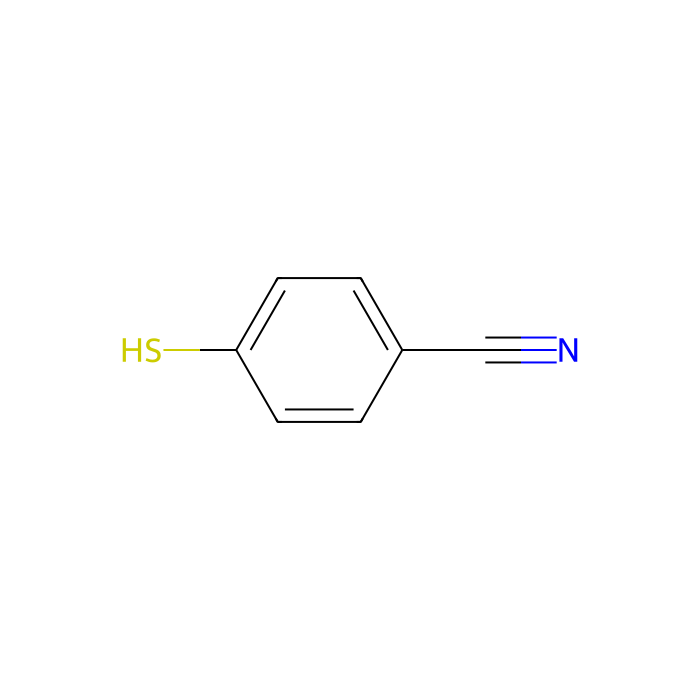
4-Mercaptobenzonitrile - ≥95% , CAS No.36801-01-1

CAS: 36801-01-1 Cat. No.: M184058 Formula: C7H5NS Peso molecolare: 135.2 Numero EC: 813-133-1
Disponibile su ordine
GRADE & PURITY ≥95%
Synonyms
AM806854 | A874280 | 4-cyanobenzenethiol | AKOS000218115 | Benzonitrile, 4-mercapto- | 4-sulfanylbenzonitrile;4-CYANOTHIOPHENOL | 4-Sulfanylbenzonitrile | F31167 | 4-Sulfanylbenzonitrile # | FT-0600237 | p-cyanothiophenol | SCHEMBL487363 | 4-mercaptobenzo
Storage
Protected from light,Store at -20°C,Argon charged
Shipped In
Ice chest + Ice pads
★
Size
Germania (EU)
USA*
Price
Qty
100mg
M184058-100mg
—
4 Disponibile
17,27€
250mg
M184058-250mg
—
3 Disponibile
25,95€
1g
M184058-1g
Su ordinazione · 8–12 settimane
69,33€
5g
M184058-5g
—
1 Disponibile
329,65€
Enter a quantity for the sizes you want to add.
🧪

Why this grade

≥95% for sensitive chromatographic and analytical workflows requiring minimal baseline interference.

🌡

Storage & shipping

Protected from light,Store at -20°C,Argon charged Ships Ice chest + Ice pads Check lot-specific COA for exact specifications.

📋

Quality documents

SDS, COA, datasheet, and spec sheet available for download. Lot-specific COA accessible via lot number lookup.

📚

Literature proof

Cited in 26 peer-reviewed publications across chromatography, organic synthesis, and cross-coupling reactions.

Specifications

Sinonimi
AM806854 | A874280 | 4-cyanobenzenethiol | AKOS000218115 | Benzonitrile, 4-mercapto- | 4-sulfanylbenzonitrile;4-CYANOTHIOPHENOL | 4-Sulfanylbenzonitrile | F31167 | 4-Sulfanylbenzonitrile # | FT-0600237 | p-cyanothiophenol | SCHEMBL487363 | 4-mercaptobenzo
Specifiche e purezza
≥95%
Condizioni di conservazione di stoccaggio
Protected from light,Store at -20°C,Argon charged
Spedito in
Ice chest + Ice pads
Questo prodotto richiede spedizione a catena fredda. I servizi di terra e altri servizi economici non sono disponibili.
Purezza
≥95%
Nomi e identificatori
Pubchem Sid504759371
Pubchem Sid Urlhttps://pubchem.ncbi.nlm.nih.gov/substance/504759371
Sorrisi canoniciC1=CC(=CC=C1C#N)S
IUPAC Name4-sulfanylbenzonitrile
InChIKeyMVPUXVBBHWUOFS-UHFFFAOYSA-N
INCHI1S/C7H5NS/c8-5-6-1-3-7(9)4-2-6/h1-4,9H
Isomeri SMILES C1=CC(=CC=C1C#N)S
Peso molecolare 135.2
Reaxy-Rn 2802323
Reaxys-RN_link_address https://www.reaxys.com/reaxys/secured/hopinto.do?context=S&query=IDE.XRN=2802323&ln=

Documentazione

📋 Safety Data Sheet (SDS)

Comprehensive hazard, handling, storage, and regulatory compliance document.

Download SDS →

✅ Certificate of Analysis (COA)

Lot-specific quality data. Enter your lot number to retrieve the exact COA.

Look up COA →

📊 Datasheet

Quick-reference summary of product specifications and applications.

View datasheet →

🔬 Specification Sheet

Full quality attributes and acceptance criteria for this grade.

View spec sheet →

Advanced Data

Taxonomic Classification

Taxonomy Tree

KingdomOrganic compounds
SuperclassBenzenoids
ClasseThiophenols
SubclassNot available
Intermediate Tree Nodes Not available
Direct ParentThiophenols
Alternative Parents Benzonitriles  Nitriles  Thiols  Organopnictogen compounds  Hydrocarbon derivatives  
Molecular FrameworkAromatic homomonocyclic compounds
Substituents Thiophenol - Benzonitrile - Monocyclic benzene moiety - Arylthiol - Nitrile - Carbonitrile - Organic nitrogen compound - Organopnictogen compound - Hydrocarbon derivative - Organosulfur compound - Organonitrogen compound - Aromatic homomonocyclic compound
DescrizioneThis compound belongs to the class of organic compounds known as thiophenols. These are compounds containing a thiophenol ring, which a phenol derivative obtained by replacing the oxygen atom from the hydroxyl group (attached to the benzene) by a sulfur atom.
External Descriptors Not available
Struttura 3D
Modello di struttura chimica interattiva


Certificati (CoA, COO, BSE/TSE e tabella di analisi)
C of A & Other Certificates(BSE/TSE, COO):
Analytical Chart:

Find and download the COA for your product by matching the lot number on the packaging.

23 results found

Lot NumberCertificate TypeDataOggetto
G2617517Certificate of AnalysisMar 16, 2026 M184058
G2617518Certificate of AnalysisMar 16, 2026 M184058
G2617519Certificate of AnalysisMar 16, 2026 M184058
K2525626Certificate of AnalysisNov 13, 2025 M184058
K2525624Certificate of AnalysisNov 13, 2025 M184058
K2525623Certificate of AnalysisNov 13, 2025 M184058
K2525606Certificate of AnalysisNov 13, 2025 M184058
G2503499Certificate of AnalysisJun 10, 2025 M184058
G2503500Certificate of AnalysisJun 10, 2025 M184058
G2503501Certificate of AnalysisJun 10, 2025 M184058
G2503502Certificate of AnalysisJun 10, 2025 M184058
C2519397Certificate of AnalysisMar 26, 2025 M184058
L2129396Certificate of AnalysisOct 12, 2024 M184058
L2129398Certificate of AnalysisOct 09, 2024 M184058
K2201570Certificate of AnalysisNov 16, 2022 M184058
K2201572Certificate of AnalysisNov 16, 2022 M184058
K2201633Certificate of AnalysisNov 16, 2022 M184058
G2402056Certificate of AnalysisNov 16, 2022 M184058
I2207935Certificate of AnalysisJul 21, 2022 M184058
I2207934Certificate of AnalysisJul 21, 2022 M184058
I2207932Certificate of AnalysisJul 21, 2022 M184058
F2419164Certificate of AnalysisJul 21, 2022 M184058
A2410056Certificate of AnalysisJul 21, 2022 M184058

Show more ⌵

Proprietà chimiche e fisiche
SensibilitàLight sensitive
Punto di infiammabilità (°F)114 ℃
Punto di infiammabilità (°C)114 ℃
Punto di ebollizione (°C)264℃
Punto di fusione (°C)51-52℃
Peso molecolare135.190 g/mol
XLogP32.100
Hydrogen Bond Donor Count1
Hydrogen Bond Acceptor Count2
Rotatable Bond Count0
Exact Mass135.014 Da
Monoisotopic Mass135.014 Da
Topological Polar Surface Area24.800 Ų
Heavy Atom Count9
Formal Charge0
Complexity127.000
Isotope Atom Count0
Defined Atom Stereocenter Count0
Undefined Atom Stereocenter Count0
Defined Bond Stereocenter Count0
Undefined Bond Stereocenter Count0
The total count of all stereochemical bonds0
Covalently-Bonded Unit Count1
Domande frequenti e articoli
Citations of This Product
Riferimenti
1. Xueliang Lin, Youliang Weng, Yi Liu, Duo Lin, Huishan Yang, Zhiwei Chen, Shangyuan Feng.  (2023)  Ratiometric SERS sensing chip for high precision and ultra-sensitive detection of SARS-CoV-2 RNA in human saliva.  SENSORS AND ACTUATORS B-CHEMICAL,      [PMID:] [10.1016/j.snb.2023.134803]
2. Sheng Chen, Mengya Lv, Jiayi Fan, Yanjie Huang, Gaolin Liang, Shusheng Zhang.  (2023)  Bioorthogonal surface-enhanced Raman scattering flower-like nanoprobe with embedded standards for accurate cancer cell imaging.  ANALYTICA CHIMICA ACTA,      [PMID:36764777] [10.1016/j.aca.2023.340895]
3. Panxue Wang, Li Wang, Cen Li, Xiang Li, Guoliang Li.  (2022)  Reliable and Rapid Detection and Quantification of Enrofloxacin Using a Ratiometric SERS Aptasensor.  MOLECULES,  27  (24): (8764).  [PMID:36557895] [10.3390/molecules27248764]
4. Sheng Chen, Jiayi Fan, Mengya Lv, Chenfeng Hua, Gaolin Liang, Shusheng Zhang.  (2022)  Internal Standard Assisted Surface-Enhanced Raman Scattering Nanoprobe with 4-NTP as Recognition Unit for Ratiometric Imaging Hydrogen Sulfide in Living Cells.  ANALYTICAL CHEMISTRY,      [PMID:36222749] [10.1021/acs.analchem.2c02961]
5. Chen Jiaming, Qu Xiaozhang, Qi Guohua, Xu Weiqing, Jin Yongdong, Xu Shuping.  (2022)  Electrostimulus-triggered reactive oxygen species level in organelles revealed by organelle-targeting SERS nanoprobes.  ANALYTICAL AND BIOANALYTICAL CHEMISTRY,  414  (23): (6965-6975).  [PMID:35976421] [10.1007/s00216-022-04265-3]
6. Ailing Su, Yuan Liu, Xiumian Cao, Weiqing Xu, Chongyang Liang, Shuping Xu.  (2022)  A universal CRISPR/Cas12a-mediated AuNPs aggregation-based surface-enhanced Raman scattering (CRISPR/Cas-SERS) platform for virus gene detection.  SENSORS AND ACTUATORS B-CHEMICAL,      [PMID:] [10.1016/j.snb.2022.132295]
7. Dan Zhu, Anran Li, Yunsong Di, Zhuyuan Wang, Jingzhan Shi, Xiaoqi Ni, Yiping Wang.  (2021)  Interference-free SERS nanoprobes for labeling and imaging of MT1-MMP in breast cancer cells.  NANOTECHNOLOGY,  33  (11): (115702).  [PMID:34874311] [10.1088/1361-6528/ac4065]
8. Xiangru Bai, Aiguo Shen, Jiming Hu.  (2020)  A sensitive SERS-based sandwich immunoassay platform for simultaneous multiple detection of foodborne pathogens without interference.  Analytical Methods,  12  (40): (4885-4891).  [PMID:32966366] [10.1039/D0AY01541E]
9. Xiang-Ru Bai, Li-Hua Wang, Jia-Qiang Ren, Xiang-Wei Bai, Ling-Wen Zeng, Ai-Guo Shen, Ji-Ming Hu.  (2019)  Accurate Clinical Diagnosis of Liver Cancer Based on Simultaneous Detection of Ternary Specific Antigens by Magnetic Induced Mixing Surface-Enhanced Raman Scattering Emissions.  ANALYTICAL CHEMISTRY,      [PMID:30689353] [10.1021/acs.analchem.8b05153]
10. Mingmin Li, Jin Li, Huixia Di, Huiqiao Liu, Dingbin Liu.  (2017)  Live-Cell Pyrophosphate Imaging by in Situ Hot-Spot Generation.  ANALYTICAL CHEMISTRY,      [PMID:28230967] [10.1021/acs.analchem.6b04786]
11. Peipei Xu, Qingling Nie, Runbing Huang, Jing Shi, Junjie Ren, Ruiyun You, Hengfang Wang, Yan Yang, Yudong Lu.  (2024)  A fast and highly efficient strategy for detection of camellia oil adulteration using machine learning assisted SERS.  LWT-FOOD SCIENCE AND TECHNOLOGY,      [PMID:] [10.1016/j.lwt.2024.117069]
12. Mingzhong Zhang, Shanshan Xu, Peng-Cheng Guan, Yue-Jiao Zhang, Jian-Feng Li.  (2024)  Application of Gap Mode Ultrasensitive P-GERTs in SERS-Based Rapid Detection.  Photonics,  11  (8): (708).  [PMID:] [10.3390/photonics11080708]
13. Peng-Cheng Guan, Qian-Jiao Qi, Yu-Qing Wang, Jia-Sheng Lin, Yue-Jiao Zhang, Jian-Feng Li.  (2024)  Development of a 3D Hydrogel SERS Chip for Noninvasive, Real-Time pH and Glucose Monitoring in Sweat.  ACS Applied Materials & Interfaces,      [PMID:39197856] [10.1021/acsami.4c10817]
14. Xinyuan Bi, Zhicheng He, Zhewen Luo, Wensi Huang, Xingxing Diao, Jian Ye.  (2024)  Digital colloid-enhanced Raman spectroscopy for the pharmacokinetic detection of bioorthogonal drugs.  Chemical Science,      [PMID:39144465] [10.1039/D4SC02553A]
15. Xiaoming Li, De Zhang, Yufeng Wang, Jie Huang, Qianmin Dong, Shangzhong Jin, Pei Liang.  (2024)  Dual trace detection of hazardous substances by aptamer-functionalized gold nanofilms based on surface-enhanced Raman spectroscopy.  Surfaces and Interfaces,      [PMID:] [10.1016/j.surfin.2024.105438]
16. Rongjing Hu, Shilan Fu, Yongcong Zhou, Zhenyu Lin, Fengfu Fu, Yongqiang Dong.  (2025)  Energy-level rich nanorings hybridizing Ag, Au and AgCl as high-performance SERS substrate for numerous molecules.  TALANTA,      [PMID:39755077] [10.1016/j.talanta.2025.127517]
17. Zhu Dan, Zhong Hanyan, Shi Jingzhan, Liu Qiang, Wang Yiping.  (2025)  Ratiometric surface-enhanced Raman scattering quantification of extracellular matrix metalloproteinase-2 activity for tumor diagnosis.  ANALYTICAL AND BIOANALYTICAL CHEMISTRY,      [PMID:39966175] [10.1007/s00216-025-05792-5]
18. Zhao-He Chen, Nan Sun, Jian-Ping Li, Jia-Wei Zheng, Ya-Hao Wang, Xiao-Shun Zhou, Bin Zheng.  (2024)  SERS calibration substrate with a silent region internal standard for reliable simultaneous detection of multiple antibiotics in water.  TALANTA,      [PMID:39488159] [10.1016/j.talanta.2024.127133]
19. Ailing Su, Yuan Liu, Weihan Sun, Chongyang Liang, Weiqing Xu, Alison Rodger, James Piper, Yuling Wang, Shuping Xu.  (2024)  Silver Nanoparticles with Dual-Recognition via CRISPR/dCas9 for SERS Identification of Two KRAS Mutations in Nucleic Acid Targets.  ACS Applied Nano Materials,      [PMID:] [10.1021/acsanm.4c01925]
20. Panxue Wang, Ying Liu, Xiang Li, Cen Li, Guoliang Li.  (2024)  A SERS aptasensor based on HCR mediated signal conversion strategy for the rapid and reliable determination of Escherichia coli O157:H7.  MICROCHEMICAL JOURNAL,      [PMID:] [10.1016/j.microc.2024.109951]
21. Huixia Di, Zhouhao Lei, Qianyu Li, Peize Xu, Yadi Wang.  (2025)  Accurate and sensitive determination of sialic acid using three-dimensional Raman imaging based on a background-free SERS strategy.  ANALYTICA CHIMICA ACTA,      [PMID:41167897] [10.1016/j.aca.2025.344736]
22. Jiadan Zhang, Baiwen Wei, Jingwen Zhang, Pengzhao Wang, Jiefeng Rong, Fengfu Fu, Zhenyu Lin, Yongqiang Dong.  (2025)  Dual-Fermi-level hydrogel SERS substrates for synergistic chemical and physical enhancement.  SPECTROCHIMICA ACTA PART A-MOLECULAR AND BIOMOLECULAR SPECTROSCOPY,      [PMID:41072249] [10.1016/j.saa.2025.127027]
23. Huixia Di, Zhouhao Lei, Jianing Li, Xiaochun Li.  (2026)  A Highly Sensitive Silver Nanostars/Silver Nanoisland Films Hybrid SERS Platform Assisted by a Convolutional Neural Network for Accurate Pesticide Detection.  JOURNAL OF AGRICULTURAL AND FOOD CHEMISTRY,      [PMID:41649966] [10.1021/acs.jafc.5c11974]
24. Haoran Liu, Zihe Jiang, Zhiwei Hu, Banghuan Zhang, Tao He, Xiaohui Dong, Chaowei Sun, Jun Tian, Wei Jiang, Ferruccio Pisanello, Huatian Hu, Wen Chen, Hongxing Xu.  (2026)  Spatiotemporal Raman probing of molecular transport in sub–2-nm plasmonic quasi-2D nanochannels.  Science Advances,  12  (9):   [PMID:41739928] [10.1126/sciadv.aec3641]
25. Qian Xie, Jinxin Chi, Zhixin Li, Limei Xu, Yujuan Xiao, Xucong Lin, Guihua Huang.  (2026)  DNA-programmed nanogap 3D SERS aptasensor via silica monoliths for ultrasensitive detection of BPA leaching from microplastics.  TALANTA,      [PMID:42349260] [10.1016/j.talanta.2026.130211]
26. Wangyu Nan, Qingdan Ye, Jie huang, Pei Liang, Qianmin Dong, Kun Pang, Zihong Ye, Kai Sun, Yufeng Wang.  (2026)  Ultrasensitive aptasensor based on SERS-coupled immunochromatography for rapid detection of fenvalerate in food samples.  TALANTA,      [PMID:42468172] [10.1016/j.talanta.2026.130320]
Calcolatori di soluzioni
Recensioni

Recensioni dei clienti

Application Protocols

Item-specific, tested applications and dilutions: Not specified for this item.

General guidance (non-validated; literature practices)

  • Self-assembled monolayers (SAMs) on gold:
    • Clean Au substrates (e.g., piranha or UV–ozone; observe safety), rinse, and dry.
    • Prepare 0.1–1 mM solution of 4-mercaptobenzonitrile in anhydrous ethanol or acetonitrile under inert gas.
    • Immerse substrates 2–24 h in the dark; rinse thoroughly with dry solvent and dry under inert gas.
    • Characterize by contact angle, IR (C≡N stretch as reporter), XPS.
  • S-alkylation example setup:
    • Generate thiolate with K2CO3 in acetone or MeCN; add primary alkyl bromide (1.1 equiv) at rt; monitor by TLC/GC; quench, extract, and purify.

Note: The above are literature-style procedures and are not validated for this specific catalog item. Verify and optimize experimentally.

Biological Roles

Scope note

  • 4-Mercaptobenzonitrile is a synthetic, small-molecule aromatic thiol. It is not a biological metabolite and has no known endogenous role. Content below is general background to aid research planning; no clinical/medical claims are made.

General biochemical considerations (literature context)

  • The –SH group can form strong bonds to soft metal centers (e.g., Au, Ag, Cu) and is widely used in biomaterials interfaces (e.g., SAMs on gold for biosensing). The para-nitrile can act as a weak ligand or a spectroscopic probe (IR-active C≡N stretch ~2220–2260 cm⁻¹; literature range), useful for tracking surface coverage or microenvironmental polarity.
  • In protein chemistry analogies, thiols undergo disulfide formation; however, this aryl thiol is not used in vivo and is intended strictly for in vitro/materials or synthetic applications.
  • Reactivity toward electrophiles (maleimides, acrylates) mirrors common bioconjugation strategies, but this compound lacks water solubility commonly required for bioconjugation in aqueous buffers; organic or mixed media are typically necessary.
Buffer Applications

Not typically applicable.

  • 4-Mercaptobenzonitrile is hydrophobic and not used as a buffering agent. It does not form defined buffer systems over biological pH ranges.
  • For experiments involving this compound in aqueous settings (e.g., surface functionalization of Au in mixed solvents), buffers may be used to condition substrates or for post-assembly rinses, but the compound itself does not contribute to buffering capacity.
Green Alternatives

Considerations for greener practice (general guidance)

  • Main environmental/health burdens arise from: (1) sulfur odor/volatility control, and (2) choice of solvent and initiators/catalysts.

Greener solvent choices

  • Prefer low-toxicity, biodegradable, and low-VOC solvents when compatible with the chemistry:
    • Ethyl acetate or isopropanol for extractions and SAM solution preparation (if solubility is adequate).
    • 2-Methyltetrahydrofuran (2-MeTHF) over THF for base-promoted S-alkylations (biomass-derived, better EHS profile).
    • Dimethyl carbonate (DMC) or propylene carbonate as replacements for chlorinated solvents where feasible.

Process improvements

  • Use solvent recycling and closed systems to capture thiol vapors/odors and minimize emissions.
  • Employ photochemical LED sources for thiol–ene reactions (energy-efficient) and organobase or carbonate bases instead of strong, hazardous bases where possible.
  • Favor catalytic S-arylation (e.g., Cu-catalyzed) under mild conditions in green solvents (alcohols, water/ethanol with phase-transfer) when substrate scope permits.

Comparison (illustrative)

  • Chlorinated solvents (DCM, CHCl3): good solubility, easy workup; environmental/health concerns high.
  • Ethyl acetate, 2-MeTHF, isopropanol: lower toxicity/impact; may require longer times or temperature adjustments to match rates/solubility.

Note

  • Compound substitution is often not practical because the thiol and nitrile functions are intrinsic to the intended reactivity/surface chemistry. Greener practice therefore focuses on solvent, energy, and waste reduction.
Pharmaceutical Uses

Not a pharmaceutical product.

  • This item is offered for research use only. It is not formulated as a drug substance or excipient.
  • In a manufacturing or analytical research context, aromatic thiols and nitriles can serve as process intermediates, surface modifiers, or analytical probes, but there are no pharmacopeial monographs or excipient roles specific to 4-mercaptobenzonitrile noted here.
Physical Properties

Item-specific specifications

  • Appearance: Not specified for this item; refer to CoA/Spec Sheet.
  • Grade/Purity: Not specified for this item; refer to CoA/Spec Sheet.

Literature/typical properties (for general guidance; not item specifications)

  • Molecular formula: C7H5NS; Molecular weight: ~135.19 g/mol.
  • Physical state: Typically a low-melting solid or crystalline powder for many aryl thiols of similar size; distinct thiol odor (general class property).
  • Solubility: Expected to be sparingly soluble in water; soluble in common organic solvents (e.g., ethanol, methanol, acetone, acetonitrile, THF, dichloromethane, toluene). Actual solubility depends on temperature and purity.
  • Acid/base: Aryl thiols are weak acids (pKa typically ~6–7 for thiophenols; literature, compound-specific values may vary). The nitrile is neutral and non-basic.
  • Partitioning: Aromatic thiols with a single nitrile substituent generally show moderate hydrophobicity (literature expectation); exact logP for this item is not specified.
  • Melting point, boiling point, density, refractive index, UV cutoff: Not specified for this item; refer to CoA/Spec Sheet.

Notes for use

  • The –SH group can oxidize to disulfide upon air exposure; physical observations (darkening, loss of thiol odor) may correlate with oxidation but must be confirmed analytically.
Quality and Grades

Item-specific

  • Grade/Purity: Not specified for this item; refer to CoA/Spec Sheet.
  • Stabilizers/inhibitors: Not specified for this item; refer to CoA/Spec Sheet.

Context for this compound type (general guidance)

  • For sulfur-containing aromatics, specifications often include thiol assay by titration or GC/HPLC area %, residual disulfide content, and limits on sulfur oxidation products. Trace metal limits may be relevant if used for surface chemistry on metals (e.g., Au SAMs).
  • Low-water content is generally preferred to limit thiolate hydrolysis and to control surface assembly or nucleophilic reactions. If Karl Fischer data are needed, consult the CoA.
  • If the item is offered as “anhydrous” or “inhibitor-free,” that typically indicates rigorous drying and oxygen exclusion during packaging; because this listing specifies argon-charged storage, it suggests protection against oxidative dimerization (formation of the corresponding disulfide), but no item-specific inhibitor is stated.
  • For surface science use (e.g., self-assembled monolayers, SAMs), high purity and low disulfide content are often critical to achieve homogeneous packing densities and reproducible contact angles—verify via CoA/GC/MS/NMR as needed.
Reaction and Applications

General applications (literature; expand as relevant to this structure)

  • Gold-binding thiol headgroup enables formation of self-assembled monolayers (SAMs) on Au surfaces. The para-nitrile tail can serve as an infrared-visible reporter (C≡N stretch) and as a handle for further transformations or coordination.
  • Nucleophilic S-chemistry: The aryl thiol can be deprotonated (e.g., with NaH, K2CO3, or organobases) to form the thiolate, enabling S-alkylation (thioether formation), S-acylation (thioesters), and S-arylation (e.g., via SNAr on activated aryl halides or Ullmann-type couplings with aryl halides under Cu catalysis).
  • Radical thiol–ene/thiol–yne additions: Under photochemical or thermal radical initiation (e.g., UV + photoinitiator or AIBN), adds across alkenes/alkynes to form thioethers/vinyl sulfides with anti-Markovnikov preference in many cases.
  • Thio-Michael additions: Conjugate addition to electron-deficient alkenes (e.g., acrylates, maleimides) in the presence of base or nucleophilic catalysts.
  • Oxidation/reduction: Controlled oxidation affords disulfides; over-oxidation can yield sulfinyl/sulfonyl derivatives. Reductive protocols (e.g., Raney Ni desulfurization) remove sulfur for specific transformations.
  • Nitrile derivatization: Hydrolysis to amide (mild) or carboxylic acid (vigorous) under acidic/basic conditions; reduction to amine (e.g., catalytic hydrogenation or metal hydride systems); Pinner/imidate chemistry in alcohol + HCl; [3+2] cycloaddition with azide to give tetrazoles under Lewis acid catalysis.

Practical tips

  • Work under inert atmosphere to preserve thiol; include oxygen scrubbing/degassing of solvents. Monitor for disulfide by TLC/GC/HPLC; reduce back to thiol with DTT, TCEP, or thiol-selective reducing conditions if needed.
  • For SAMs, rigorously clean Au substrates, use anhydrous solvent, and allow sufficient assembly time (hours) with minimal light/air exposure for high-quality monolayers.
Reaction Conditions

General literature guidance (not item-specific; optimize per substrate scope)

  • Formation of thiolate:
    • Bases: K2CO3, Cs2CO3 (mild); NaH, t-BuOK (strong). Solvents: DMF, DMSO, MeCN, THF. Temperatures: 0–25 °C (mild) to 50–80 °C (for sluggish couplings).
  • S-alkylation / thioether formation:
    • Alkyl halides or sulfonates, 1.0–1.5 equiv; thiolate generated in situ. Solvents: acetone, MeCN, DMF. Typical times: 0.5–6 h; yields often high with primary halides.
  • Thio-Michael addition:
    • Acceptors: acrylates, maleimides, vinyl sulfones. Catalysis: base (e.g., DBU, TEA) or nucleophilic catalysts (thiolates). Solvents: MeCN, DMF, alcohols. Temp: 0–25 °C. Rapid reactions; monitor by TLC.
  • Thiol–ene (radical):
    • Initiation: Photochemical (365–405 nm LEDs) with photoinitiator, or AIBN (thermal, 60–80 °C). Solvents: toluene, MeCN, bulk. Oxygen exclusion recommended. Times: minutes to hours.
  • S-acylation (thioesters):
    • Reagents: acyl chlorides/anhydrides, 1.0–1.2 equiv; base: pyridine, NEt3. Solvents: DCM, THF. Temp: 0 °C to rt; fast.
  • Nitrile hydrolysis:
    • To amide: acid (H2SO4, HCl) or base (NaOH) under reflux in aqueous alcohols; to acid: stronger/longer conditions. Workups neutralize carefully to avoid disulfide formation.
  • Nitrile reduction:
    • Catalytic hydrogenation (Raney Ni, Pd/C) or metal hydrides (e.g., BH3·THF with prior thiol protection). Protect –SH as needed to avoid catalyst poisoning.

Notes

  • Maintain inert atmosphere and low oxygen/light to limit oxidation to disulfide throughout handling. Include antioxidant-free, deoxygenated solvents and freshly dried glassware.
Safety and Handling

Item-specific (from Product Data)

  • GHS classification, signal word, H-statements, pictograms: Not specified for this item; refer to the SDS.
  • Storage: Protected from light; Store at −20 °C; Argon charged (to minimize oxidative dimerization to disulfide).

General safety guidance for aromatic thiols and nitrile-containing compounds (literature/class-based; defer to SDS)

  • Hazards (typical): May cause skin and eye irritation; thiols often have strong odor and can cause headache or nausea at high vapor concentrations. Nitriles can hydrolyze under extreme conditions to release acidic/byproduct species.
  • Incompatibilities: Strong oxidizers (risk of rapid oxidation to disulfides or sulfonic derivatives); strong bases (thiolate formation, enhanced nucleophilicity/odor release); strong acids or bases for prolonged times (nitrile hydrolysis). Avoid contact with metals that catalyze oxidation.
  • Peroxide/disulfide formation: Thiols readily oxidize to disulfides upon exposure to air/oxygen, light, or elevated temperature. Use under inert gas with antioxidant-free, oxygen-minimized conditions.
  • PPE: Lab coat, safety glasses or chemical splash goggles, and appropriate chemically resistant gloves (e.g., nitrile). Work in a functioning chemical fume hood to control odor and vapors.
  • First aid (overview): Eye/skin contact—flush with water for ≥15 min, remove contaminated clothing; inhalation—move to fresh air; ingestion—rinse mouth. Seek medical attention per SDS.
  • Spill response: Absorb with inert material; avoid sources of ignition; ventilate area. Manage waste as hazardous organic sulfur-containing waste.
  • SDS: For definitive hazard classification and response procedures, consult the product-specific SDS.
Solvent Selection

Applicability

  • 4-Mercaptobenzonitrile is a neutral aromatic containing a thiol and nitrile. It is moderately polar aprotic overall and typically dissolves in common organic solvents; it is only sparingly soluble in water.

Solvent compatibility (literature-based guidance)

  • Good solvents: Ethanol, methanol, acetone, acetonitrile, THF, DCM, chloroform, toluene, ethyl acetate. Dry, oxygen-poor solvents are preferred to limit oxidation to disulfide.
  • Poor solvents: Water (low solubility expected); highly basic aqueous media generate thiolate salts, altering reactivity/solubility.
  • For SAM formation on gold: Anhydrous ethanol, isopropanol, or acetonitrile are commonly used to prepare 0.1–5 mM thiol solutions (literature practice). Oxygen exclusion improves monolayer quality.

When to choose alternatives

  • If odor control is critical, choose higher-boiling, less volatile solvents (e.g., propylene carbonate or dimethyl carbonate) in closed systems.
  • For base-promoted thio-Michael additions, polar aprotic solvents (DMF, DMSO, MeCN) often accelerate reactions; for radical thiol–ene, non-protic, deoxygenated media (toluene, MeCN) support photochemical initiation.

Notes

  • Avoid strongly oxidizing or peroxide-laden solvents. If using ethers (THF, Et2O), ensure they are peroxide-free and oxygen-removed; for protic alcohols, keep water content low if surface chemistry or moisture-sensitive coupling is planned.
Storage and Reconstitution

Item-specific (from Product Data)

  • Storage conditions: Protected from light; Store at −20 °C; Argon charged.
  • Shipping: Ice chest + Ice pads.

General handling recommendations

  • Keep container tightly closed under inert gas (argon or nitrogen). Minimize headspace oxygen and light exposure to limit oxidation to the disulfide.
  • After opening, backfill with inert gas promptly. If repeated access is anticipated, consider aliquoting into small vials under inert atmosphere.
  • Reconstitution/dissolution: Use anhydrous, oxygen-free solvents (e.g., ethanol, acetonitrile, THF, DCM) to prepare stock solutions. Degas solvents (sparging or freeze–pump–thaw) for sensitive applications (e.g., SAM formation).
  • Stability: Thiols can slowly oxidize even at low temperature; periodic QC (e.g., 1H NMR for disulfide signals, HPLC/GC) is recommended for long-term stored material.
  • Freeze–thaw: Solid material tolerates freezing; minimize temperature cycling. For solutions, store at low temperature under inert gas and avoid repeated freeze–thaw cycles by aliquoting.
  • Disposal: Treat waste and rinsates as hazardous sulfur-containing organic waste; follow institutional/municipal regulations.

Note: For definitive shelf-life, impurity limits, and solution stability of this item, consult the product’s CoA and SDS.

Structure and Identity

Item-specific (from Product Data)

  • SKU: M184058
  • Product name: 4-Mercaptobenzonitrile
  • CAS: 36801-01-1
  • InChIKey: 229684 (as provided)
  • Storage notes: Protected from light; Store at -20°C; Argon charged
  • Shipping: Ice chest + Ice pads

Literature/derived identity (general reference information; not item-specific)

  • Synonyms: p-Mercaptobenzonitrile; 4-mercapto-benzonitrile; p-cyanothiophenol
  • Molecular formula (literature): C7H5NS
  • Molecular weight (literature): ~135.19 g/mol
  • SMILES (literature): N#Cc1ccc(S)cc1
  • InChI (literature): InChI=1S/C7H5NS/c8-6-5-1-2-7(9)4-3-5/h1-4,7H,9H

Structural features (general description)

  • Aromatic ring bearing two para-substituted functional groups: a nitrile (–C≡N) and a thiol (–SH) at the para (4) positions.
  • Functional groups: electron-withdrawing nitrile (strong –M/–I effects), weakly acidic aryl thiol (thiophenol).
  • 2D description: A benzene ring with –C≡N at C1 and –SH at C4 (para to each other); no stereocenters.
  • Reactivity handles: the thiol sulfur is nucleophilic/reducible/oxidizable; the nitrile carbon is electrophilic and can be hydrolyzed/reduced or used as a directing/coordination site.
Synthetic Utility

Functional group leverage

  • Thiol (–SH):
    • Deprotonation to thiolate enables S-alkylation (forming thioethers) and S-acylation (thioesters). Useful for installing sulfur as a handle in further cross-couplings or for modulating electronics.
    • Participation in radical thiol–ene/–yne additions to build C–S bonds rapidly under mild photochemical or thermal conditions.
    • Oxidation to disulfide can be exploited synthetically as a reversible protecting/dimerization strategy.
  • Nitrile (–C≡N):
    • Convertible to amide/acid (hydrolysis), amine (reduction), or tetrazole (azide cycloaddition) enabling diversity-oriented synthesis with retention of the aryl–S framework.
    • Acts as a directing/coordination group in certain metal-catalyzed transformations and as a vibrational reporter for surface/bulk studies.

Retrosynthetic value

  • Provides a para relationship between electron-withdrawing nitrile and thiol, enabling selective downstream functionalizations and conjugations while maintaining a compact aromatic core.

Representative transformations (literature examples)

  • Cu-catalyzed S-arylation (Ullmann-type) of the thiolate to give diaryl sulfides.
  • SNAr with activated fluoro- or nitro-arenes.
  • Base-promoted thioester formation from acid chlorides/anhydrides.
  • Hydrogenation or hydride reduction of the nitrile to yield p-aminothiophenol analogs (post-protection of –SH often required).
Target Specificity

Not applicable.

  • This product is a small-molecule reagent, not a biological targeting reagent (e.g., antibody, ligand with defined biomolecular target). No antigen/epitope or species reactivity is relevant.

Shall we send you a message when we have discounts available?

Remind me later

Thank you! Please check your email inbox to confirm.

Oops! Notifications are disabled.