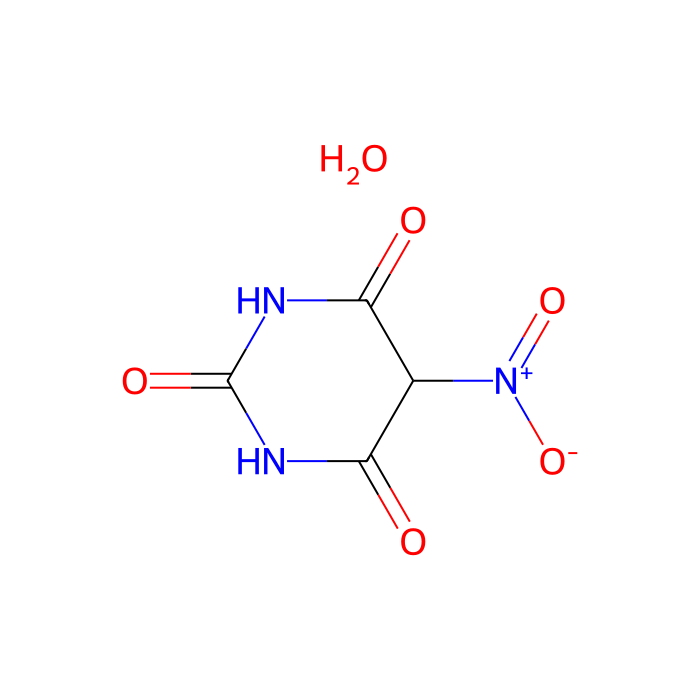
This compound belongs to the class of organic compounds known as alpha amino acids and derivatives. These are amino acids in which the amino group is attached to the carbon atom immediately adjacent to the carboxylate group (alpha carbon), or a derivative thereof.
External Descriptors
Not available
1. Djoumbou Feunang Y, Eisner R, Knox C, Chepelev L, Hastings J, Owen G, Fahy E, Steinbeck C, Subramanian S, Bolton E, Greiner R, and Wishart DS. ClassyFire: Automated Chemical Classification With A Comprehensive, Computable Taxonomy. Journal of Cheminformatics, 2016, 8:61.
Certificati (CoA, COO, BSE/TSE e tabella di analisi)
C of A & Other Certificates(BSE/TSE, COO):
Analytical Chart:
Proprietà chimiche e fisiche
Peso molecolare
191.100 g/mol
XLogP3
Hydrogen Bond Donor Count
3
Hydrogen Bond Acceptor Count
6
Rotatable Bond Count
0
Exact Mass
191.018 Da
Monoisotopic Mass
191.018 Da
Topological Polar Surface Area
122.000 Ų
Heavy Atom Count
13
Formal Charge
0
Complexity
259.000
Isotope Atom Count
0
Defined Atom Stereocenter Count
0
Undefined Atom Stereocenter Count
0
Defined Bond Stereocenter Count
0
Undefined Bond Stereocenter Count
0
The total count of all stereochemical bonds
0
Covalently-Bonded Unit Count
2
Calcolatori di soluzioni
Molarity Calculator
Determine the necessary mass, volume, or concentration for preparing a solution.
Dilution Calculator
Determine the dilution needed to prepare a stock solution.
Reconstitution Calculator
Recensioni
Recensioni dei clienti
Application Protocols
No item-specific tested application protocols are provided for this reagent. As a small-molecule building block, usage is highly context dependent. The following general outlines may assist method development:
Stock solution preparation (general):
Dissolve at 10–100 mM in anhydrous DMSO or DMF. For aqueous applications, titrate with base (e.g., 0.1 M NaOH) to aid dissolution, then neutralize after dilution if necessary.
Filter through 0.2 µm PTFE or PES to remove particulates.
Nitro-to-amine reduction (bench-scale):
Charge solvent (EtOH or EtOH/H2O), add substrate (0.05–0.2 M), then Pd/C (5–10 wt%). Stir under H2 (balloon or low pressure) at room temperature, monitor by LC–MS. Filter through celite, rinse, and concentrate. Optionally convert to the hydrochloride salt for isolation.
N-alkylation screening:
In dry DMF, cool to 0–5 °C, add NaH portionwise (caution: gas evolution), then add electrophile dropwise. Warm to RT and stir until complete. Quench cautiously with MeOH/H2O, extract, and purify by crystallization or chromatography.
These are generic, literature-style procedures. Optimize equivalents, temperature, and times for your system. Always consult institutional safety resources for pressure hydrogenations and pyrophoric base handling.
Biological Roles
Item-specific biological annotations are not provided for this product. The following are general remarks for context only and do not imply suitability for biological or clinical use.
Barbituric acid itself is a biochemical scaffold with limited direct physiological role; many barbiturate derivatives are historically significant in neuroscience research, but 5-nitrobarbituric acid is primarily a synthetic intermediate rather than a bioactive ligand per se.
Functional groups:
The cyclic imide can participate in hydrogen bonding and may interact with proteins or nucleic acids via H-bonding networks in vitro; however, specific targets for 5-nitrobarbituric acid are not established.
The nitro group is a strong electron-withdrawing substituent and can influence redox behavior; enzymatic nitro reductions (e.g., nitroreductases) are known for various nitroaromatics/heterocycles, but specific pathways for this compound are not characterized here.
Metabolism/biotransformation (general): nitro groups may be reduced to amines in biological systems; cyclic imides can be hydrolyzed or undergo ring-opening under certain enzymatic conditions. No item-specific data are available.
Research-use statement: For research use only. Not for diagnostic or therapeutic applications. If using in biological assays, determine cytotoxicity and off-target effects empirically and consult institutional biosafety guidelines.
Buffer Applications
This compound is not a conventional buffering agent. As a weakly acidic cyclic imide, it can form salts under basic conditions, but it is not used to maintain a defined pH range like standard buffers (e.g., phosphate, Tris, HEPES).
Practical note (if dissolution in aqueous media is needed):
Dissolve in a small amount of DMSO or DMF, or adjust aqueous media to mildly basic pH (e.g., pH 8–9) to solubilize the imide as its mono- or dianion, then back-adjust pH after dilution if necessary.
For applications requiring stable buffering capacity, select an appropriate buffer system independent of this reagent and confirm compatibility with nitro/imide functionalities.
Green Alternatives
While 5-nitrobarbituric acid hydrate is a solid reagent rather than a solvent, greener process choices primarily concern solvent and reductant selection for its transformations.
Greener choices (literature/general):
Solvents
Prefer water or aqueous ethanol under basic conditions for dissolution of the imide anion when feasible.
DMSO is generally considered a greener high-boiling polar aprotic alternative to DMF/NMP.
Ethyl acetate or 2-MeTHF are favorable for extractions/crystallizations vs chlorinated solvents.
Reductants for nitro-to-amine conversion
Catalytic hydrogenation (H2, Pd/C) in ethanol or EtOH/H2O is atom-economical and generates minimal waste versus stoichiometric metals (SnCl2, Fe).
Transfer hydrogenation using ammonium formate or hydrazine alternatives may reduce hazard, but assess EHS profiles.
Comparison (general; qualitative):
DMF vs DMSO: DMSO has better EHS profile and lower chronic toxicity; DMF often offers lower viscosity and faster mass transfer but is a reproductive toxin.
Tin(II) chloride vs H2/Pd: H2/Pd minimizes metal salt waste; SnCl2 produces significant inorganic waste requiring special disposal.
Trade-offs:
DMSO can be harder to remove and may carry over; plan for anti-solvent precipitation.
Hydrogenations require pressure-rated equipment and catalyst handling; ensure proper safety controls and catalyst recovery/recycling.
Pharmaceutical Uses
No item-specific pharmacopeial status or excipient role is provided. The following general remarks are for synthetic/formulation context only and must not be construed as clinical claims.
Role in pharma R&D (general): 5-nitrobarbituric acid can serve as a synthetic intermediate toward C5-functionalized barbiturates after nitro-group manipulation (e.g., reduction to 5-amino followed by further derivatization). Such steps may be part of medicinal chemistry campaigns exploring barbiturate-like cores.
Excipient status: Not recognized as a typical excipient. No compendial monograph is indicated here.
Process/formulation considerations:
Control of hydration state is important for accurate dosing in solid-state processing (blend uniformity, stoichiometry in API intermediate synthesis).
Residual metal or inorganic salts from reductions (if performed in-process) should be controlled to meet downstream specifications.
Solid-state characterization (XRPD, DSC/TGA) is advisable if material is to be used in any preformulation study to understand polymorphism/hydration.
Item-specific grade/purity, residual solvents, and elemental impurities: Not specified for this item; refer to CoA/Spec Sheet.
Physical Properties
Item-specific specifications (from Product Data):
Appearance: Not specified for this item; refer to CoA/Spec Sheet.
Grade/Purity: Not specified for this item; refer to CoA/Spec Sheet.
Molecular weight: Not specified for this item; refer to CoA/Spec Sheet.
Literature/computed (general reference; not product specs):
Estimated formula for monohydrate: C4H3N3O5·H2O (overall C4H5N3O6); Mr ≈ 191.11 g/mol (calculated)
Physical state: typically a crystalline solid for nitrobarbiturates (literature, general)
Solubility profile: expected low solubility in nonpolar solvents; improved solubility in polar aprotic solvents (DMSO, DMF). Aqueous solubility likely limited at neutral pH but increases in basic media via imide deprotonation (general behavior of barbituric acids; literature).
Acid–base: two weakly acidic imide NHs; nitro substitution generally increases acidity relative to barbituric acid (qualitative, literature). Exact pKa values not specified for this item.
Partitioning: expected low logP and high polarity due to multiple carbonyls and nitro group (qualitative, literature).
Melting point, boiling point, density, refractive index, UV cutoff, water or peroxide content, metal limits: Not specified for this item; refer to CoA/Spec Sheet.
Notes for handling solutions (general): dissolve first in a small volume of DMSO/DMF or mildly basic aqueous buffer to aid dissolution; filter sterilize (0.2 µm) if particulate persists. Always verify compatibility with your application.
Quality and Grades
Item-specific grade/purity: Not specified for this item; refer to CoA/Spec Sheet.
Stabilizers/inhibitors: None specified for this item; refer to CoA/Spec Sheet.
Interpretation and guidance (general):
For synthetic and analytical work, typical quality designations you may encounter include:
Analytical Reagent (AR) or ACS grade: impurity limits suitable for general analytical use.
High-purity or ≥98–99%: often sufficient for most synthetic transformations without further purification.
HPLC grade (for solvents) or LC–MS grade: denotes low background/UV absorbance and low metal content; not generally applicable to solid reagents like this unless explicitly stated.
For heterocycles bearing multiple heteroatoms (imide/nitro), trace metal content and residual inorganic salts can influence catalysis and analytical baselines. If your application is sensitive (e.g., catalysis, electrochemistry), consult the CoA for: residual metals, water content, and assay.
Barbiturate derivatives can exhibit polymorphism or variable hydration. If your process is stoichiometry-sensitive, confirm hydration level (Karl Fischer or TGA) and normalize equivalents accordingly.
If very low UV background is required (chromatographic derivatizations), consider verifying UV absorbance profile of your lot; otherwise, routine synthetic use typically proceeds without additional purification.
Reaction and Applications
Use-cases (literature/general; expand according to project needs):
Reductive transformations:
The nitro group at C5 can be reduced to the corresponding 5-aminobarbituric acid using catalytic hydrogenation (H2, Pd/C), transfer hydrogenation, or classical reagents (Fe/HCl, SnCl2/HCl). The resulting 5-amino derivative is a versatile handle for further functionalization (acylation, sulfonylation, diazotization, coupling).
Electrophilic/nucleophilic derivatization at C5 (via nitro as a synthetic handle):
Although direct SNAr is not typical on this non-aromatic scaffold, the nitro group can participate in substitution after activation or via reduction–functionalization sequences (e.g., formation of diazonium-like equivalents from the amine for C–N or C–C bond formation; literature strategies vary).
Condensation and salt formation:
The imide nitrogens are weakly acidic and form stable mono- or dianions under basic conditions. These anions can undergo alkylation/acylation under controlled conditions to furnish N1/N3-substituted barbiturates. Nitro substitution modulates acidity/electrophilicity.
Use as an electron-deficient scaffold:
The conjugated trione ring with a nitro substituent can serve as a hydrogen-bond donor/acceptor motif in supramolecular assemblies and as a reporter chromophore in UV due to π→π*/n→π* transitions (qualitative, literature).
Practical notes:
Maintain anhydrous, oxygen-free conditions when performing moisture- or base-sensitive alkylations.
For hydrogenations, pre-wet Pd/C, monitor carefully by HPLC/LC–MS; nitro-to-amine reductions are often high-yielding at ambient temperature/pressure.
Workup: basic aqueous washes can partition anionic forms into water; re-acidify to precipitate the neutral imide when desired.
Reaction Conditions
General literature guidance for common transformations of 5-nitrobarbituric acid (hydrate); adjust to your system through small-scale optimization. These are not product specifications.
Nitro reduction to amine:
Catalytic hydrogenation: H2 (1–3 bar), 10% Pd/C (5–10 wt% cat. vs substrate), EtOH or EtOH/H2O, 20–40 °C, 1–6 h. Monitor by TLC/LC–MS. Work up by filtering catalyst, concentrating, and, if needed, basifying/acidifying to isolate the desired form.
Alternative: Fe (3–5 equiv) in EtOH/H2O with catalytic acid, 50–80 °C, 2–8 h; or SnCl2·2H2O (2–4 equiv) in HCl/EtOH at reflux. These give high conversions but generate inorganic waste.
N-alkylation (at N1/N3):
Base: NaH (60% in oil, 1.0–2.0 equiv) or K2CO3 (2–3 equiv) in DMF/DMSO, 0–25 °C to start, then 25–60 °C for 2–16 h.
Electrophiles: alkyl halides, benzyl halides, or sulfate esters. For selectivity, use sterics/temperature and slow addition.
Salt formation and aqueous processing:
Deprotonate with NaHCO3/Na2CO3 (pH 8–10) to dissolve; re-precipitate by careful acidification (pH 3–4) with HCl.
Purification:
Crystallization from polar mixtures (DMF/EtOAc, DMSO/EtOH) or trituration. For amines, form a crystalline HCl salt then free-base if desired.
Analytical control:
UV detection at low UV (π–π* region) often adequate; LC–MS in ESI−/ESI+ (amine after reduction) provides orthogonal confirmation.
Note: Exact pKa, solubilities, and melting points are not specified for this item; verify on your scale.
Safety and Handling
Authoritative safety information is provided in the product SDS. The following is general guidance only.
GHS classification, signal word, hazard and precautionary statements, and pictograms: Not specified for this item; refer to SDS.
General hazards (literature-based, non-specific): imide/nitro-containing heterocycles may cause eye, skin, and respiratory irritation. Dust may be irritating. Avoid inhalation and contact.
PPE recommendations (good laboratory practice):
Safety glasses or chemical splash goggles
Lab coat and suitable gloves (e.g., nitrile); change gloves regularly
Handle powders in a fume hood or with local exhaust to minimize dust exposure
Handling tips:
Avoid generating dust/aerosols. Use clean, dry tools.
Prepare solutions in a fume hood. If using strong acids/bases or reducing agents, assess compatibility.
Incompatibilities (general): strong reducing agents can convert nitro groups to amines; strong bases deprotonate imide nitrogens; powerful oxidizers and strong acids/bases should be used with caution and appropriate controls.
First-aid overview (non-authoritative):
Inhalation: move to fresh air; seek medical attention if symptoms persist.
Skin/eyes: rinse with water for at least 15 minutes; remove contaminated clothing; seek medical attention if irritation develops.
Ingestion: rinse mouth; do not induce vomiting; seek medical attention.
Spill/accident: avoid dust, collect mechanically or dampen and wipe; dispose according to institutional and local regulations.
Fire: Use water spray, CO2, dry chemical, or foam as appropriate for surrounding materials. Combustion may produce nitrogen oxides and CO/CO2.
Solvent Selection
Applicability: 5-Nitrobarbituric acid hydrate is a polar, hydrogen-bonding solid. Solvent choice is driven by its imide functionality and nitro substitution.
Polarity/miscibility (general literature):
Highly polar aprotic solvents (DMSO, DMF, NMP) generally provide the best solubility.
Moderately polar protic solvents (methanol, ethanol) may dissolve it to a limited extent, enhanced by warming or base.
Water solubility is expected to be modest at neutral pH but improves in basic media (formation of imide anions). Acidic water reduces solubility.
Insoluble or poorly soluble in nonpolar solvents (hexanes, toluene).
Practical guidance:
For stock solutions: prepare 10–100 mM in anhydrous DMSO or DMF, then dilute into the reaction or assay medium; verify compatibility.
For aqueous workups: dissolve under mild basicity (e.g., NaHCO3, pH 8–9), then neutralize if required.
For crystallizations: mixed solvent systems (e.g., DMF/EtOAc or DMSO/EtOH) can be tuned for controlled precipitation.
Comparison with alternatives (general):
DMSO vs DMF: DMSO offers higher solvating power and greener profile; DMF may give lower viscosity at similar concentrations.
Alcohols: greener and easier to remove but may not reach high concentrations without base.
Water (basic): excellent for salt forms; requires careful pH control to avoid hydrolysis of sensitive partners.
Drying/compatibility: Dry polar aprotics can absorb water; for water-sensitive transformations downstream, use molecular sieves or pre-dried solvents.
Storage and Reconstitution
Storage conditions (item-specific): Room temperature (as provided in Product Data). Protect from moisture if precise hydration level must be maintained; store tightly sealed in original container.
Shipped in: Not specified for this item; refer to CoA/Spec Sheet.
Stability considerations (general):
Solid is typically stable under ambient laboratory conditions. Avoid prolonged exposure to strong light and humidity to minimize changes in hydration state.
Hygroscopicity: hydrate level may equilibrate with ambient humidity. For quantitative work, determine water content (Karl Fischer) or dry to constant weight if appropriate for your application.
For concentrated stocks: dissolve in anhydrous DMSO or DMF (10–100 mM). Gentle warming and sonication can assist dissolution.
For aqueous use: dissolve under mild basicity (e.g., pH 8–9) to form soluble salt; adjust pH after dilution if needed.
Filter sterilize (0.2 µm) if sterility is required; store aliquots to minimize freeze–thaw where applicable.
Solution storage (general):
DMSO or DMF solutions: store at 2–8 °C protected from light for short term (days–weeks); assess stability by LC before use.
Aqueous basic solutions: use freshly prepared when possible; monitor for hydrolysis or discoloration over time.
Research Use: For research use only (as stated in Product Data).
Structure and Identity
Overview: 5-Nitrobarbituric acid hydrate is a nitro-substituted barbiturate (pyrimidine-2,4,6-trione) bearing a nitro group at the C5 position; supplied as a hydrate.
SMILES: Not specified for this item; refer to CoA/Spec Sheet.
Molecular formula (item-specific): Not specified for this item; refer to CoA/Spec Sheet.
Molecular weight (item-specific): Not specified for this item; refer to CoA/Spec Sheet.
Literature/computed identifiers and descriptors (for reference only; not item specifications):
Core framework: barbituric acid (pyrimidine-2,4,6-trione) with a C5 substituent
Substitution: nitro (–NO2) at C5
Hydration state: monohydrate commonly encountered; empirical composition for monohydrate would correspond to C4H3N3O5·H2O (overall C4H5N3O6); calculated Mr ≈ 191.11 g/mol (literature/computed)
2D structural description (general):
A six-membered diazine (pyrimidine) ring bearing three carbonyls at positions 2, 4, and 6 (trione), two endocyclic imide nitrogens at N1 and N3, and a nitro group attached to the sp2 C5 carbon.
Functional groups: imide (cyclic ureide), three ketones, one nitro group; hydrogen-bond donor (two NH) and multiple acceptors (C=O, NO2).
Planarity: the barbiturate ring is largely planar; the nitro group is typically near-coplanar with the ring due to conjugation (general literature).
Synthetic Utility
Functional handles and reactivity (literature/general):
Nitro group at C5:
Readily reduced to an amine, enabling access to 5-amino derivatives; from there, one can install diverse substituents via acylation, sulfonylation, urea/carbamate formation, or cross-coupling after appropriate activation.
Can modulate the electron density of the barbiturate ring, potentially affecting rates/selectivity in N-alkylation at N1/N3.
Imide nitrogens (N1, N3):
Deprotonation with bases (e.g., NaH, K2CO3 in polar aprotics) affords mono- or dianions that undergo N-alkylation. Careful base/temperature control helps avoid over-alkylation or side reactions.
The trioxo-pyrimidine is a versatile hydrogen-bonding motif for supramolecular synthesis and crystal engineering.
Retrosynthetic value:
Starting from malonate/urea condensations (Biginelli-type or related), nitration at C5 affords the nitro derivative; conversely, 5-nitrobarbituric acid serves as a branch point to 5-amino and other C5-substituted analogs.
Derivatization pathways:
Reduction → amine → diazotization/azo coupling (for chromophoric materials) or Sandmeyer-type transformations after suitable activation.
N-alkylation under phase-transfer conditions can be used to introduce solubilizing groups, tuning physicochemical properties for subsequent steps.
Tips:
Protecting-group strategies are rarely needed on the trione, but transient silylation of NHs can modulate reactivity if selectivity issues arise.
Monitor reactions by LC–MS; nitro-to-amine mass shift of −30 Da on the neutral core (−16 O + −14 N + +2 H) aids identification.
Target Specificity
This product is a small-molecule reagent and does not possess biological “target specificity” in the sense of antibodies, enzymes, or affinity probes.
Antigen/epitope, clone, isotype, and species reactivity: Not applicable.
If used in biochemical assays, any observed selectivity toward proteins or enzymes arises from experimental design rather than inherent target specificity of the reagent. Empirical determination is required.
We use cookies to ensure the website functions properly and, where permitted, to improve your experience. You can manage your preferences at any time in Settings. Learn more in our Cookie Policy.
Shall we send you a message when we have discounts available?
Remind me later
Thank you! Please check your email inbox to confirm.
Products are supplied to verified businesses, institutions, and qualified professionals for research and development use only. Not for use in humans, animals, diagnosis, or therapy.