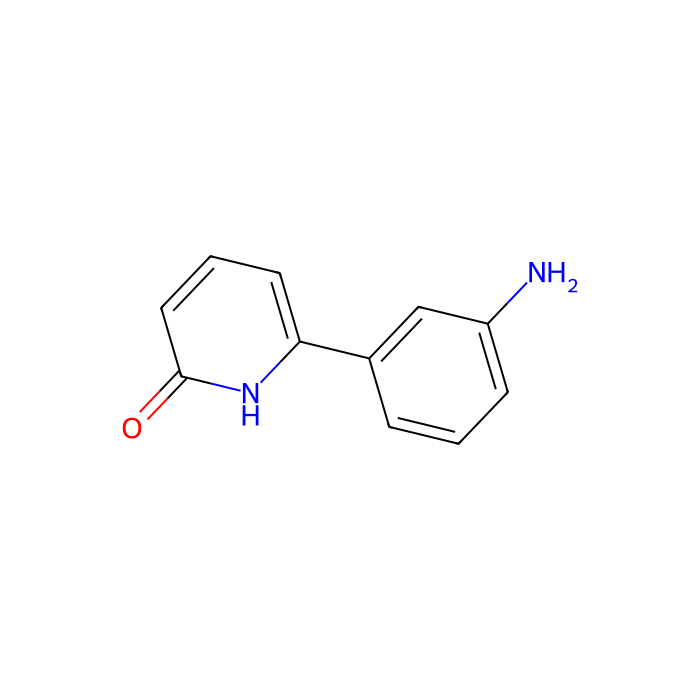
This compound belongs to the class of organic compounds known as phenylpyridines. These are polycyclic aromatic compounds containing a benzene ring linked to a pyridine ring through a CC or CN bond.
External Descriptors
Not available
1. Djoumbou Feunang Y, Eisner R, Knox C, Chepelev L, Hastings J, Owen G, Fahy E, Steinbeck C, Subramanian S, Bolton E, Greiner R, and Wishart DS. ClassyFire: Automated Chemical Classification With A Comprehensive, Computable Taxonomy. Journal of Cheminformatics, 2016, 8:61.
Certificati (CoA, COO, BSE/TSE e tabella di analisi)
C of A & Other Certificates(BSE/TSE, COO):
Analytical Chart:
Proprietà chimiche e fisiche
Peso molecolare
186.210 g/mol
XLogP3
1.200
Hydrogen Bond Donor Count
2
Hydrogen Bond Acceptor Count
2
Rotatable Bond Count
1
Exact Mass
186.079 Da
Monoisotopic Mass
186.079 Da
Topological Polar Surface Area
55.100 Ų
Heavy Atom Count
14
Formal Charge
0
Complexity
294.000
Isotope Atom Count
0
Defined Atom Stereocenter Count
0
Undefined Atom Stereocenter Count
0
Defined Bond Stereocenter Count
0
Undefined Bond Stereocenter Count
0
The total count of all stereochemical bonds
0
Covalently-Bonded Unit Count
1
Calcolatori di soluzioni
Molarity Calculator
Determine the necessary mass, volume, or concentration for preparing a solution.
Dilution Calculator
Determine the dilution needed to prepare a stock solution.
Reconstitution Calculator
Recensioni
Recensioni dei clienti
Application Protocols
No application protocols (e.g., WB, IHC, IF, FC) are applicable to this small-molecule building block. Typical laboratory uses involve organic synthesis and analytical characterization (NMR, LC–MS, HPLC). For handling guidance:
Prepare stock solutions in DMSO or DMF (e.g., 10–100 mM) for high-throughput synthesis/screening; filter if needed.
For purification, use silica gel chromatography with base-modified eluents to minimize tailing (e.g., 0.1–1% Et3N in EtOAc/hexanes or DCM/MeOH).
Characterize by NMR (look for tautomer-sensitive resonances), HRMS, and, where appropriate, melting point and elemental analysis.
Refer to your internal SOPs for reaction setup and analytical methods.
Biological Roles
This product is provided for research use only. No biological or clinical activity is claimed for the material as supplied.
General context (literature; not product-specific claims)
The 2-hydroxypyridine/2-pyridone motif is a classic tautomeric pair found in nucleobase analogs and metal-binding fragments; it can participate in hydrogen bonding as both donor and acceptor and coordinate to transition metals.
Aniline derivatives are ubiquitous in medicinal chemistry as adjustable basic/aromatic fragments that modulate solubility, permeability, and binding through π-stacking and H-bonding.
A biaryl linking a pyridine to an aniline generates a push–pull system in which substituent electronics (e.g., acylation of the aniline) can tune pKa values and spectroscopic properties.
Such frameworks can serve as starting points for probe or ligand development (e.g., via amide/sulfonamide formation, azo coupling to chromophores, or metal-chelating elaboration), enabling studies in enzymology or chemical biology when further derivatized.
Physicochemical features (literature)
Multiple ionizable centers (pyridine N, aniline N, lactam OH/NH) allow pH-dependent speciation, which influences aqueous solubility and target engagement in biochemical assays.
Potential for intramolecular hydrogen bonding (e.g., between aniline-derived substituents and the 2-pyridone) can influence conformational preference and binding modes.
Any use in biological systems should be preceded by appropriate characterization, dose–response assessment, and safety review.
Buffer Applications
This compound is not a conventional buffer component. It lacks a well-defined conjugate acid/base pair with a narrow pH range and high buffering capacity suitable for routine buffer preparation.
Guidance
If aqueous work is required (e.g., biochemical assays), prepare concentrated stock solutions in DMSO or DMF and dilute into buffered media, keeping final cosolvent levels low (typically ≤1–2%).
Protonation of the pyridine and/or aniline nitrogens can increase apparent water solubility; salts may be prepared in situ by adding acid to the organic solution before aqueous mixing.
For true buffering needs, select established systems (e.g., phosphate, HEPES, MOPS, Tris) matched to your target pH range.
Green Alternatives
Solvent and reagent choices can substantially improve the sustainability profile when working with this heteroaromatic building block. Below are general, literature-based recommendations (not product specifications):
Greener solvent options (relative to DMF/DMAc/NMP)
2-Methyltetrahydrofuran (2-MeTHF): Bio-derived ether; good for extractions and some alkylations. Less miscible with water; peroxide monitoring required over storage.
Cyrene (dihydrolevoglucosenone): Polar aprotic alternative to DMF/DMAc for some amide couplings and SNAr/alkylations; higher viscosity and limited base compatibility.
Propylene carbonate or ethyl lactate: Useful for certain base-mediated reactions and as crystallization media; removal can be more energy-intensive.
Acetonitrile and acetone: Lower toxicity and easier recovery compared to DMF/NMP in many cases.
Greener coupling strategies
Enabling agents: CDI or T3P for amide/urea formation in less hazardous solvents versus acid chlorides in chlorinated media.
Solid-supported scavengers to reduce solvent-intensive purifications.
Comparative considerations (literature)
DMF/NMP: Broad reactivity and solubilization but reproductive-toxicity concerns and difficult removal at scale.
2-MeTHF/MeCN: Faster workups and improved EHS profiles; may require higher temperatures or catalysts to match rates.
Workup and waste minimization
Favor aqueous salt formation/crystallization for isolation of anilinium salts (reduces silica use).
Recycle solvents where feasible; monitor for amine-containing waste streams and treat/neutralize appropriately.
Pharmaceutical Uses
Scope
This product is supplied for research and laboratory use only. It is not an excipient or active ingredient as supplied.
General relevance (literature; not a product claim)
Heteroaryl–aryl aniline scaffolds are common intermediates in small-molecule discovery. The free aniline enables rapid parallel synthesis of amides, sulfonamides, ureas, and imines for SAR exploration.
The 2-pyridone/2-hydroxypyridine functionality serves as a tunable H-bonding element and potential metal-binding handle in lead optimization and in the design of enzyme inhibitors or coordination probes.
Formulation considerations for research samples
When dosing in in vivo or in vitro studies, compounds of this class are often formulated via cosolvent systems (e.g., PEG400/EtOH/saline) or as HCl salts to improve solubility. These are end-user decisions and are outside the scope of the supplied material.
No pharmacopeial status or compendial grade is specified for this item; refer to the CoA/Spec Sheet if formulation-relevant purity attributes are required.
Physical Properties
Item-specific (from Product Data)
Appearance: Not specified for this item; refer to CoA/Spec Sheet.
Grade/Purity: Not specified for this item; refer to CoA/Spec Sheet.
Molecular Weight: Not specified for this item; refer to CoA/Spec Sheet.
Literature/expected characteristics for this scaffold (non-specification)
Physical state: Typically an off-white to light tan crystalline solid for analogous biaryl 2-pyridone/aniline motifs.
Formula and FW (literature): C11H10N2O; ~186.21 g/mol.
Tautomerism: 2-hydroxypyridine ⇌ 2-pyridone; the lactam (2-pyridone) form is often favored in polar media and in the solid state, impacting H-bonding and spectroscopic signatures (e.g., strong C=O band ~1650–1690 cm−1, literature).
Solubility (qualitative, literature):
Good: DMSO, DMF, NMP, hot ethanol/methanol, acetonitrile.
Moderate: ethyl acetate, acetone, isopropanol.
Low: nonpolar hydrocarbons (hexanes, toluene) and water (aromatic amine reduces, but does not eliminate, hydrophobicity).
Acid–base behavior (literature):
Aniline –NH2 is weakly basic (pKaH of anilinium typically ~4.5–5.5).
Pyridine N is basic (pKaH typically ~5.0–6.0) but conjugation with the 2-pyridone tautomer and intramolecular H-bonding may reduce apparent basicity.
UV–vis (literature, qualitative): Conjugated biaryl heteroaromatic typically shows π→π* absorption in 230–300 nm region; auxochromic –NH2 may add a band near 300–350 nm depending on solvent and protonation state.
Note: Numerical values (bp, mp, density, refractive index, water content, logP) are not specified for this item; refer to CoA/Spec Sheet.
Quality and Grades
Item-specific
Grade/Purity: Not specified for this item; refer to CoA/Spec Sheet.
Stabilizers/Additives: Not specified for this item; refer to CoA/Spec Sheet.
Interpreting grades (general guidance)
Research/technical grade: Suited for most synthetic and screening workflows; impurity profile may include trace metals/solvents.
Analytical/HPLC grade (if offered): Emphasis on low nonvolatile residue and low UV background—useful where spectroscopic purity is critical.
Pharmaceutical/USP/EP grades: Include compendial tests for identity and impurities; typically not applicable to bespoke heteroaromatic building blocks like this compound.
Impurity considerations for bifunctional heteroaromatics (general)
Likely impurities may include regioisomers, over-acylated/alkylated byproducts, and tautomer-related isomers (analytical indistinguishability should be evaluated by NMR, LC–MS).
For reactions sensitive to amines (e.g., metal catalysis), consider pre-treatment: free-basing, salt formation, or protection (Boc, Cbz) to reduce catalyst poisoning.
Documentation
For exact acceptance criteria (assay, residual solvents, water, metals, UV cutoffs), and any stabilizer content, see the product’s CoA/Spec Sheet for the specific lot.
Reaction and Applications
Role: Bifunctional heteroaromatic building block enabling orthogonal transformations on an aniline ring and a 2-hydroxypyridine/2-pyridone motif.
Transformations on the aniline (literature)
Acylation/sulfonylation to amides/sulfonamides (acyl chlorides/anhydrides, sulfonyl chlorides; base such as Et3N, pyridine, or NaHCO3).
Carbamate/urea formation (e.g., Boc, Cbz protections; CDI- or triphosgene-mediated urea couplings with amines).
Reductive amination with aldehydes/ketones to access secondary/tertiary anilines (NaBH3CN, NaBH(OAc)3).
Diazotization–functionalization sequences from the aniline (Ar–NH2 → diazonium → Ar–X/Ar–CN/Ar–CF3 etc.; Sandmeyer-type reactions), mindful of meta-directing effects on further EAS.
Azo coupling (with activated phenols/anilines) to form azobenzenes linked to the pyridinyl core.
Transformations on the 2-hydroxypyridine/2-pyridone (literature)
Alkylation: Regioselective N- vs O-alkylation of 2-pyridone is tunable by base/solvent and counterion; phase-transfer and silver/carbonate systems often favor O-alkylation, while K2CO3/DMF or NaH/DMF frequently deliver N-alkyl-2-pyridones.
Acylation to form O-acyl or N-acyl derivatives; subsequent rearrangements or cyclizations possible.
Metal coordination/ligand elaboration: The 2-pyridone motif is a competent bidentate/monodentate ligand; derivatization can generate chelating ligands for catalysis/materials.
Applications
Scaffold in heteroaryl–aryl libraries for SAR in discovery chemistry (donor–acceptor balance; intramolecular H-bonding potential).
Precursor to biaryl ligands, fluorescent probes (via azo or push–pull derivatization), or heteroaromatic polymers.
Practical tips: Dry polar aprotic media, exclude strong oxidants, and consider protecting the aniline (e.g., Boc) to avoid undesired side reactions during O/N-alkylations or acylations.
Reaction Conditions
The following are general literature guidelines for typical transformations of this scaffold; they are not product specifications.
Aniline acylation/sulfonylation
Conditions: Acyl or sulfonyl chloride (1.05–1.2 equiv), base (Et3N, DIPEA, or NaHCO3), solvent (DCM, THF, MeCN), 0–25 °C, 0.5–4 h. Often quantitative to high yields (70–95%).
Carbamate protection (Boc)
Conditions: Boc2O (1.1–1.5 equiv), base (Et3N/DMAP), solvent (THF/MeCN), 0–25 °C, 1–3 h. Typical yields: 80–95%.
Urea formation
Conditions: CDI (1.2–1.5 equiv) activation of amine partner, then coupling with the aniline in DMF or MeCN at 25–60 °C; or triphosgene-mediated isocyanate formation followed by trapping. Yields: 50–85% depending on nucleophile.
2-Pyridone alkylation (N vs O)
N-Alkylation: Alkyl halide (1.1–1.5 equiv), K2CO3 or Cs2CO3 (2–3 equiv), DMF/DMSO, 25–80 °C, 2–16 h; N-selectivity commonly observed.
O-Alkylation: Phase-transfer (TBAB) with Ag2CO3 or strong base (NaH, KH) in THF/DMF; lower temperatures and counterion effects can bias O-selectivity. Monitor by NMR/LC–MS.
Diazotization (from aniline) and Sandmeyer variants
Conditions: NaNO2 (1.1 equiv) in HCl or tBuONO in MeCN, 0–5 °C to form diazonium salts; trap with CuX for Ar–X or BF4− for Ar–F (specialized). Handle with care; diazonium salts can be energetic.
Reductive amination
Conditions: Carbonyl (1.1 equiv), AcOH catalytic, MeOH/THF; reduce with NaBH3CN or NaBH(OAc)3 at 0–25 °C. Yields: 60–90%.
General: Exclude strong oxidants; dry glassware/solvents improve reproducibility. Use amine-compatible ligands/catalysts or protect the aniline for metal-catalyzed steps.
Safety and Handling
Item-specific hazard data
Signal Word: Not specified for this item; refer to SDS.
H-Statements: Not specified for this item; refer to SDS.
GHS Classification/Pictograms: Not specified for this item; refer to SDS.
General safety considerations for aromatic amines and 2-pyridone systems (literature/good practice)
Potential hazards: Aromatic amines may cause skin and eye irritation and can be harmful if inhaled or ingested. Dusts or aerosols may irritate the respiratory tract. Avoid skin contact and inhalation.
PPE: Lab coat, safety glasses, and appropriate chemical-resistant gloves (e.g., nitrile). Use in a fume hood to control vapors and dust. For weighing, consider antistatic measures and local exhaust.
First aid (overview; defer to SDS):
Inhalation: Move to fresh air; seek medical attention if symptoms persist.
Skin contact: Wash with soap and water; remove contaminated clothing.
Eye contact: Rinse cautiously with water for several minutes; remove contact lenses if present and easy to do; continue rinsing.
Ingestion: Rinse mouth; do not induce vomiting; seek medical advice.
Incompatibilities: Strong oxidizers (aromatic amines may be oxidized), acyl/alkylating agents without appropriate controls, strong acids/bases may cause decomposition or salt formation; nitrosating agents should be avoided.
Stability: Typical stability at room temperature when stored dry and protected from light; tautomeric systems can show solvent-dependent behavior.
Always consult the product SDS for authoritative hazard classifications and emergency procedures. Research use only.
Solvent Selection
Polarity and functional-group profile
The molecule bears both hydrogen-bond donors and acceptors (aniline NH2; pyridone OH/NH and pyridine N). It is moderately polar and aromatic.
Dissolution (literature expectations)
Preferred: DMSO, DMF, NMP for stock solutions and coupling chemistry.
Viable: Acetonitrile, ethyl acetate, acetone, methanol/ethanol (often improved by warming or sonication).
Poor: Alkanes and other nonpolar media; water solubility is typically low at neutral pH but can increase under acidic (anilinium/pyridinium salts) conditions.
When to choose which solvent
Reaction setup: Use polar aprotic solvents (DMF/DMAc/NMP/MeCN) for acylations, urea/sulfonamide formation, and alkylations. For metal-catalyzed steps where amines can poison catalysts, consider protection or biphasic protocols.
Purification: Ethyl acetate/hexanes or toluene/EtOAc gradients often give good chromatographic separation; inclusion of a small % of MeOH with 0.1–1% NH4OH or TEA can suppress tailing of the basic compound on silica.
Crystallization: Alcohols (EtOH/iPrOH) or EtOAc/hexanes mixtures are typical starting points; salt formation with HCl or HBr may improve crystallinity if needed.
Small comparison (general)
DMSO vs DMF: DMSO offers superior solubilization for screening stocks; DMF is preferred for many acylations due to lower viscosity and easier removal.
MeCN: Cleaner workup and faster removal but lower solubility for highly polar substrates.
Storage and Reconstitution
Item-specific
Storage Conditions: Room temperature (as provided in Product Data). Store tightly closed in a dry place.
Shipped In: Normal conditions.
General guidance
Protect from moisture and prolonged light exposure to maintain integrity, especially for aromatic amines.
If long-term storage is anticipated, consider storing in amber glass under inert gas after initial opening. Desiccant recommended.
Reconstitution/stock preparation: Dissolve in dry DMSO, DMF, or acetonitrile to prepare concentrated stocks (e.g., 10–100 mM). For aqueous applications, prepare acidic salts (e.g., HCl salt) or dilute organic stocks into buffer while maintaining low cosolvent content.
Freeze–thaw: If preparing aliquots in solution, store at −20 °C or −80 °C to minimize degradation; avoid repeated freeze–thaw by aliquoting.
Stability testing
Monitor by LC–MS/HPLC over time to assess purity; tautomeric balance does not imply degradation but may shift with solvent and pH.
For any lot-specific stability, recommended shelf life, and impurity limits, consult the CoA/Spec Sheet and SDS. Research use only.
Structure and Identity
Brief description: 6-(3-Aminophenyl)-2-hydroxypyridine is a bifunctional heteroaromatic building block combining a 2-hydroxypyridine (2-pyridone tautomeric system) with a meta-anilide (3-aminophenyl) substituent at the pyridine 6-position.
Item-specific (from Product Data)
CAS: 161887-04-3
PubChem CID: 22009927
InChIKey: 355063 (as provided)
SMILES: Not specified for this item; refer to CoA/Spec Sheet.
Molecular Formula: Not specified for this item; refer to CoA/Spec Sheet.
Molecular Weight: Not specified for this item; refer to CoA/Spec Sheet.
Literature/computed identifiers (general reference for this structure; not product specifications)
Empirical formula (literature, based on structure): C11H10N2O
Formula weight (literature): ~186.21 g/mol
Core structural features: one six-membered pyridine ring bearing a hydroxyl at C2 (tautomeric with a lactam N–H at the 2-pyridone form), para to N is C4, and at C6 the ring is bonded to a phenyl ring that bears an –NH2 group at the position meta to the biaryl bond (3-aminophenyl).
A pyridine ring with the ring nitrogen at position 1; a hydroxyl at position 2; at position 6 a phenyl ring is attached. On that phenyl, an –NH2 resides at the position meta to the biaryl junction (i.e., relative 1,3-relationship). The molecule presents two H-bond donors (OH/2-pyridone NH and aniline NH2) and multiple H-bond acceptors (pyridine N, carbonyl-like 2-pyridone O).
Synthetic Utility
Functional group handles
Aromatic amine (meta to biaryl junction): amenable to acylation, sulfonylation, carbamate/urea formation, diazotization, and reductive amination.
2-Hydroxypyridine/2-pyridone: ambident nucleophile enabling N- or O-alkylation/acylation; capable of metal coordination and further heterocycle construction.
Retrosynthetic value
Disconnection at the biaryl bond suggests access via cross-coupling (e.g., Suzuki–Miyaura between 6-halopyridin-2-ol and 3-aminophenylboronates or Negishi/Kumada using appropriate partners), followed by protection/deprotection of the aniline and selective O/N transformations.
Alternatively, form the 2-pyridone first, then introduce the aniline-bearing aryl via C–C coupling.
Named reaction contexts (literature)
Suzuki–Miyaura, Buchwald–Hartwig (on suitably halogenated derivatives), Chan–Lam for C–N/O bond formation in derivatives, and Sandmeyer-type sequences from anilines.
Divergent synthesis
From this node, rapid exploration of derivatives is possible: amides/sulfonamides (diverse acyl/sulfonyl chlorides), N- or O-alkylated 2-pyridone/2-pyridinyl ethers, and azo-linked chromophores. Orthogonal protection (e.g., Boc on aniline; silyl or acyl on the 2-pyridone oxygen/nitrogen) enables selective downstream elaboration.
Analytical considerations
Monitor N- vs O-alkylation selectivity by 1H/13C NMR (diagnostic carbonyl and α-CH shifts) and IR (lactam C=O vs ether bands). LC–MS is valuable to confirm mass and polarity changes after each transformation.
Target Specificity
Not applicable. This product is a small-molecule chemical building block and is not an antibody, enzyme, or affinity reagent. No target, epitope, clone, isotype, or species reactivity information is provided or relevant for this item.
We use cookies to ensure the website functions properly and, where permitted, to improve your experience. You can manage your preferences at any time in Settings. Learn more in our Cookie Policy.
Shall we send you a message when we have discounts available?
Remind me later
Thank you! Please check your email inbox to confirm.
Products are supplied to verified businesses, institutions, and qualified professionals for research and development use only. Not for use in humans, animals, diagnosis, or therapy.