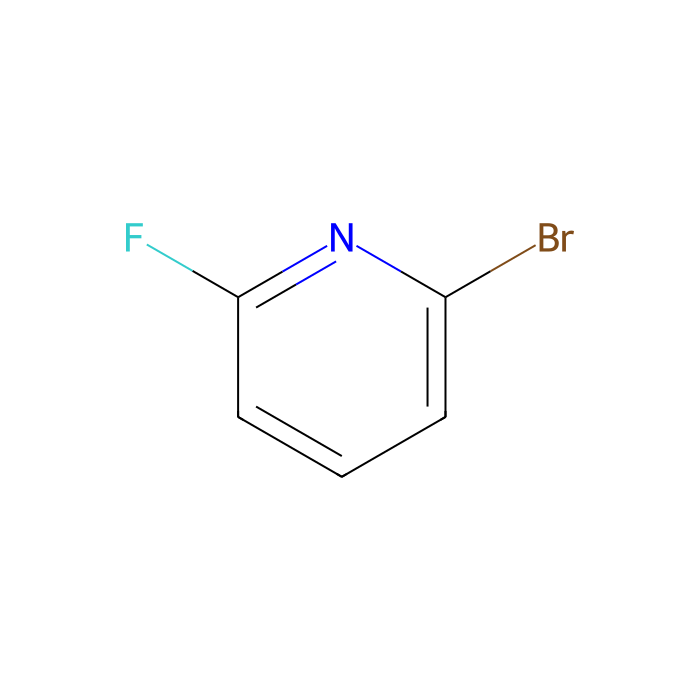
This compound belongs to the class of organic compounds known as polyhalopyridines. These are organic compounds containing a pyridine ring substituted at two or more positions by a halogen atom.
External Descriptors
Not available
1. Djoumbou Feunang Y, Eisner R, Knox C, Chepelev L, Hastings J, Owen G, Fahy E, Steinbeck C, Subramanian S, Bolton E, Greiner R, and Wishart DS. ClassyFire: Automated Chemical Classification With A Comprehensive, Computable Taxonomy. Journal of Cheminformatics, 2016, 8:61.
Certificati (CoA, COO, BSE/TSE e tabella di analisi)
C of A & Other Certificates(BSE/TSE, COO):
Analytical Chart:
Proprietà chimiche e fisiche
Peso molecolare
175.990 g/mol
XLogP3
1.800
Hydrogen Bond Donor Count
0
Hydrogen Bond Acceptor Count
2
Rotatable Bond Count
0
Exact Mass
174.943 Da
Monoisotopic Mass
174.943 Da
Topological Polar Surface Area
12.900 Ų
Heavy Atom Count
8
Formal Charge
0
Complexity
78.800
Isotope Atom Count
0
Defined Atom Stereocenter Count
0
Undefined Atom Stereocenter Count
0
Defined Bond Stereocenter Count
0
Undefined Bond Stereocenter Count
0
The total count of all stereochemical bonds
0
Covalently-Bonded Unit Count
1
Calcolatori di soluzioni
Molarity Calculator
Determine the necessary mass, volume, or concentration for preparing a solution.
Dilution Calculator
Determine the dilution needed to prepare a stock solution.
Reconstitution Calculator
Recensioni
Recensioni dei clienti
Application Protocols
Not applicable. There are no immunoassay or bioassay protocols (e.g., WB, IHC, IF, FC) associated with this small-molecule building block. For synthetic applications, refer to the Reaction Conditions and Synthetic Utility sections for literature-based guidance.
Biological Roles
This compound is a synthetic heteroaromatic building block and does not have an intrinsic biological role. No endogenous metabolic or signaling function is associated with 6-bromo-2-fluoropyridine.
General context (literature):
Halogenated pyridines are common motifs in medicinal chemistry as fragments used to probe structure–activity relationships. The 2,6-disubstitution pattern adjacent to the pyridine nitrogen can modulate basicity, polarity, and binding vectors in designed ligands.
The electron-deficient ring can participate in halogen bonding or polar–π interactions in protein environments when incorporated into larger molecules, but such behavior pertains to derived compounds rather than the building block itself.
Note: Any biological activity or target engagement would arise from specific derivatives synthesized from this substrate. No claims are made for biological efficacy, safety, or pharmacology of this item. For research use only.
Buffer Applications
Not typically applicable. 6-Bromo-2-fluoropyridine is not used as a buffering agent or pH modifier. For experimental work involving this building block, choose buffers appropriate to your reaction/workup (e.g., phosphate or bicarbonate buffers for aqueous quench/extraction) but the compound itself does not serve a buffering function.
Green Alternatives
While the compound itself is a building block, greener choices can be made in the transformations it undergoes. The table summarizes commonly used options versus greener substitutes (literature-based guidance):
Greener: 2-MeTHF/H2O or CPME/H2O (biobased/low peroxide tendency), propylene carbonate; aqueous micellar media (e.g., TPGS-750-M) enabling low Pd loadings.
SNAr media:
Conventional: DMF/NMP/DMSO.
Greener: Water–ethanol with phase-transfer, 2-PrOH or MeOH when using alkoxides; sulfolane as a DMF/NMP alternative (handle with care, review SDS).
Catalysts and loadings:
Favor modern Pd ligands (BrettPhos/XPhos/SPhos) that permit ppm–low mol% Pd at reduced temperatures; consider Ni catalysis for certain couplings to reduce precious metal use.
Workup/recycling:
Employ solvent recovery (2-MeTHF recycles well), minimize halogenated solvent use (avoid CH2Cl2 where feasible), and use aqueous crystallization over chromatographic purification when possible.
Tradeoffs:
2-MeTHF/CPME can change selectivity or rates; water content must be controlled for moisture-sensitive steps.
Propylene carbonate is high-boiling, complicating removal; micellar systems may require surfactant recovery.
Conclusion: Select greener solvents/catalysts that maintain orthogonal reactivity (C6–Br coupling vs. C2–F SNAr) while reducing EHS impact.
Pharmaceutical Uses
This product is not an excipient and is not intended for clinical use. It can serve as a synthetic intermediate in the discovery and development of active pharmaceutical ingredients (APIs), enabling installation of 2- and 6-substituted pyridine motifs (literature context).
Formulation/manufacturing context (general):
Route scouting: orthogonal handles (C6–Br for cross-coupling; C2–F for SNAr) facilitate building convergent routes to candidate molecules.
Impurity control: halopyridine residuals are typically controlled via ICH Q3A/B guidelines when present in API processes; ensure purge via robust workup and crystallization protocols.
Regulatory compendia: No pharmacopeial monograph is expected for this specific building block.
Note: No therapeutic claims are made. This product is supplied strictly for research and process development use only.
Physical Properties
Item-specific specifications are not provided in the Product Data. The following are typical literature/computed values for 6-bromo-2-fluoropyridine; they are for general reference only and are not item specifications.
Physical state/appearance: Often a colorless to pale liquid or low-melting solid (literature, depends on purity and temperature). Item-specific appearance: Not specified for this item; refer to CoA/Spec Sheet.
Boiling point: ca. 170–175 °C at 1 atm (literature).
Melting point: near/below room temperature; may be a low-melting solid or liquid (literature).
Density: approximately 1.7–1.8 g/mL at 20–25 °C (literature for similar bromofluoropyridines).
Refractive index (nD20): typically around 1.57–1.62 (literature, indicative for halopyridines).
Solubility: miscible with common organic solvents (e.g., DCM, EtOAc, ethers, aromatics); low solubility in water (literature, qualitative).
LogP (octanol/water): expected moderate due to aryl halogens and ring nitrogen; reported values for related halopyridines are ~1–2.5 (literature trend).
Notes:
Actual values for this catalog item are Not specified for this item; refer to CoA/Spec Sheet.
Volatility at room temperature is moderate; use in a fume hood. Moisture sensitivity is low, but the compound can undergo slow hydrolysis under strongly basic/aqueous SNAr conditions (general literature caution).
Quality and Grades
Grade/Purity: Not specified for this item; refer to CoA/Spec Sheet.
Appearance: Not specified for this item; refer to CoA/Spec Sheet.
How to interpret grade (general guidance):
For heteroaromatic building blocks such as 6-bromo-2-fluoropyridine, common grades include “98%” (synthetic grade) and “≥99%” (high-purity). Higher assay is often preferred for cross-coupling chemistry to reduce proto-dehalogenation and improve reproducibility.
Trace impurities (water, halide salts, residual solvents, metal catalysts) can impact catalytic reactions. If performing ppm-level Pd couplings, verify metals by ICP and water by Karl Fischer where relevant. Since item-specific limits are Not specified for this item; refer to CoA/Spec Sheet, consider requesting a current CoA if your process is sensitive.
Practical considerations:
Stabilizers: None are typically added to this class; confirm on CoA if stabilizers/inhibitors are present. Not specified for this item; refer to CoA/Spec Sheet.
Chromatographic use: If using as an analytical reference, ensure a tight assay and low UV-active impurities; otherwise routine synthetic grade is generally adequate.
Batch consistency: For scale-up, match lot-to-lot impurity profiles (GC/HPLC) and verify halogen content by NMR/HRMS as needed.
Reaction and Applications
6-Bromo-2-fluoropyridine is a bifunctional heteroaromatic electrophile ideally suited for divergent synthesis by exploiting orthogonal reactivity at C6–Br and C2–F (literature guidance):
Pd-catalyzed cross-coupling at C6–Br:
Suzuki–Miyaura: couples with aryl/heteroaryl/alkenyl boron reagents to furnish 6-substituted-2-fluoropyridines. The C2–F typically survives under mild coupling conditions.
Negishi/Stille/Kumada: useful when boron partners are unsuitable; enable C(sp2)–C(sp2) or C(sp2)–C(sp3) bond formation.
Buchwald–Hartwig amination: Amination at C6–Br using Pd(0)/phosphine ligands (e.g., BrettPhos, BINAP, XPhos) affords 6-arylamino-2-fluoropyridines; ring N can assist oxidative addition but may require ligand/base tuning.
SNAr at C2–F: The 2-fluoro substituent on an electron-deficient pyridine undergoes SNAr with amines, alkoxides, or thiolates to install –NR2, –OR, or –SR groups at C2. Substitution often proceeds with the 6-bromo intact, enabling sequential elaboration.
Orthogonal sequences:
C6–Br cross-coupling first, then SNAr at C2–F to diversify with minimal protecting-group manipulations.
SNAr first (e.g., 2-aryloxy-6-bromopyridines), then cross-coupling at C6.
Halogen–metal exchange/lithiation: C6–Br allows low-temperature metalation (e.g., n-BuLi or i-PrMgCl·LiCl) to access 6-functionalized derivatives via trapping with electrophiles (formylation, borylation, carboxylation).
Applications:
Fragment in medicinal chemistry SAR campaigns to explore 2,6-disubstituted pyridine motifs.
Precursor to ligands, catalysts, and agrochemical scaffolds where ortho or peri substitution relative to ring N is desired.
Practical tips:
Use soluble bases (K2CO3, Cs2CO3) and water co-solvent to accelerate Suzuki couplings. Control temperature in SNAr to avoid double substitution or ring N quaternization when using strong alkylating conditions.
Reaction Conditions
Typical conditions (literature guidance; adjust per substrate and scale):
Base: for amines often none or mild base; for alkoxides use NaOMe/NaOEt; for thiolates use NaH or K2CO3.
Solvent: DMF, DMSO, NMP, or alcohols for alkoxides; greener variants include 2-PrOH or aqueous ethanol with PTC.
Temperature: 25–120 °C depending on nucleophile strength.
Notes: Reaction is regioselective for C2; the C6–Br can survive, enabling two-step sequences.
Halogen–metal exchange (C6):
Reagents: n-BuLi (−78 to −40 °C) or i‑PrMgCl·LiCl (Turbo Grignard, −40 to 0 °C).
Traps: DMF (CHO installation), B(OMe)3 (borylation), CO2 (carboxylation).
Precautions: Strictly anhydrous, inert atmosphere; control exotherm.
Expected outcomes: Good to excellent yields are commonly reported for couplings/SNAr under optimized conditions; monitor for proto-debromination and diarylation side products.
Safety and Handling
Authoritative safety and hazard classifications for this SKU are Not specified for this item; refer to SDS. The following general guidance is based on literature and typical behavior of halogenated pyridines.
GHS classification, signal word, H/P-statements, pictograms: Not specified for this item; refer to SDS.
Likely hazards (general): May cause skin/eye irritation and respiratory tract irritation; harmful if swallowed; hazardous to aquatic life with long-lasting effects (common for aryl halides). Avoid inhalation and contact.
PPE: Wear lab coat, chemical-resistant gloves (e.g., nitrile), and safety goggles. Use in a fume hood.
First aid (general):
Inhalation: Move to fresh air; seek medical advice if symptoms persist.
Skin: Wash with soap and water; remove contaminated clothing.
Eyes: Rinse cautiously with water for several minutes; remove contact lenses if present and easy to do.
Ingestion: Rinse mouth; do not induce vomiting unless directed by medical personnel.
Fire safety: Combustible organic; use CO2, dry powder, or foam. Combustion may release HBr/HF/NOx; firefighters wear SCBA.
Reactivity/incompatibilities: Strong bases/nucleophiles promote SNAr at C2–F; strong reducing metals (e.g., reactive alkali metals) or organolithiums can effect halogen–metal exchange—control conditions. Avoid strong oxidizers where possible.
Handling tips: Minimize exposure to moisture under basic conditions. Keep caps tightly closed to limit volatilization. Use amber glass if storing long-term to minimize light exposure.
Research use only: For research use only (not for human or animal use). Always consult the SDS for this catalog item before use.
Solvent Selection
This product is a halogenated heteroaromatic building block, not a solvent. Solvent selection should therefore be guided by the intended transformation (e.g., cross-coupling or SNAr).
General solvent guidance (literature):
Cross-coupling at C6–Br (Suzuki/Negishi/Stille/Kumada):
Common: 1,4-dioxane/H2O, toluene/H2O, DMAc, DMF, MeCN. Aqueous co-solvent often boosts base solubility.
Greener alternatives: 2-MeTHF/H2O, CPME/H2O, propylene carbonate in some systems.
Buchwald–Hartwig amination: toluene, xylene, 1,4-dioxane, tAmOH; greener options include 2-MeTHF or anisole depending on ligand/base.
SNAr at C2–F with amines/alkoxides/thiolates: DMSO, DMF, NMP for strong nucleophiles; MeOH/EtOH for alkoxides; water–ethanol with phase-transfer for milder conditions.
Metal–halogen exchange or directed lithiation at C6: anhydrous ethers (THF, MTBE, CPME) at low temperature.
Miscibility/polarity (qualitative):
The substrate is moderately polar aprotic; soluble in most organic media and poorly soluble in water.
Selection tips:
Start with 2-MeTHF/H2O for Suzuki couplings to improve EHS profile versus dioxane.
For SNAr, prioritize high-boiling polar aprotics but evaluate DMSO or sulfolane if DMF/NMP avoidance is desired.
Consider base solubility (K2CO3/Cs2CO3) and ligand solubility when choosing toluene vs. polar solvents.
Storage and Reconstitution
Storage Conditions (from Product Data): Room temperature. Protect from ignition sources and excessive heat. Keep container tightly closed in a dry, well-ventilated place.
Shipped In: Normal (ambient) conditions.
Reconstitution: Not applicable; supplied as a neat liquid/solid. If solidified, gentle warming to ambient or slightly above may restore fluidity (general guidance). Do not expose to moisture during operations intended for strong-base SNAr or metalation chemistry.
Stability: Halopyridines are generally stable under ambient laboratory conditions. Avoid prolonged exposure to strong light and strong bases in the presence of water to prevent unintended SNAr.
Handling for sensitive reactions: For air/moisture-sensitive transformations (e.g., metal–halogen exchange), pre-dry by azeotroping with toluene or co-evaporating with dry solvent, and handle under inert gas.
Container materials: Glass with PTFE-lined caps is preferred; avoid reactive metals.
Disposal: Treat as halogenated organic waste per institutional and local regulations.
Research Use Note: For research use only.
Structure and Identity
Brief description: 6-Bromo-2-fluoropyridine is a dihalogenated heteroaromatic building block featuring an electron-deficient pyridine ring substituted ortho to the ring nitrogen with fluorine and at the 6-position with bromine.
SKU: B195941
Product Name: 6-Bromo-2-Fluoropyridine
CAS: 937379-49-2
PubChem CID: 639438 (literature)
InChIKey: Not specified for this item; refer to CoA/Spec Sheet.
Molecular Weight: ~176.0 g/mol (literature, calculated from C5H3BrFN)
Structural features (general description):
Core ring: six-membered aromatic pyridine (one ring nitrogen at position 1).
Substituents: fluorine at C2 (ortho to N); bromine at C6 (other ortho position).
Functional groups: aryl fluoride (commonly SNAr-active on electron-poor rings) and aryl bromide (cross-coupling handle).
Electronic characteristics: the ring nitrogen withdraws electron density, activating the C2–F position toward nucleophilic aromatic substitution (SNAr); the C6–Br is well-suited to Pd-catalyzed cross-couplings (Suzuki, Negishi, Stille, Kumada) and Buchwald–Hartwig amination.
2D description in words (general): A planar aromatic ring with one nitrogen atom; a fluorine substituent adjacent to the nitrogen (position 2) and a bromine substituent at the position opposite side-adjacent to nitrogen (position 6). No stereocenters are present.
Synthetic Utility
Functional group handles and reactivity (literature):
Aryl bromide at C6: Excellent partner for Pd-catalyzed cross-couplings (Suzuki, Negishi, Stille, Kumada) and Buchwald–Hartwig amination. Also amenable to metal–halogen exchange to form organolithium/Grignard intermediates for electrophile trapping (e.g., formylation, borylation, silylation, carboxylation).
Aryl fluoride at C2: Activated toward SNAr due to the adjacent ring nitrogen. Enables diversification with O-, N-, and S-nucleophiles under relatively mild conditions while retaining the C6 handle for subsequent transformations.
Strategic value:
Orthogonal diversification: Perform C6 functionalization (C–C or C–N formation) followed by C2 SNAr to rapidly access 2,6-disubstituted pyridines. Alternatively, execute SNAr first if the nucleophile or conditions would be incompatible with Pd catalysis.
Heterocycle synthesis: Serves as a precursor to annulated systems (e.g., benzo-fused or diazine analogs) via intramolecular coupling if a tether is introduced at C6.
Late-stage functionalization: The electron-deficient core tolerates many protecting groups; fluorine at C2 can be retained to tune physicochemical properties or displaced selectively late in a sequence.
Selectivity considerations:
Oxidative addition at C6–Br is faster than at C2–F under Pd catalysis; ligands and bases control chemoselectivity.
SNAr regioselectivity strongly favors C2 over other positions due to activation by ring N and leaving-group ability of F.
Practical notes:
Dry, oxygen-limited conditions benefit Pd couplings; aqueous co-solvent often accelerates Suzuki reactions. Monitor by GC or LC–MS to detect proto-debromination or over-arylation.
Target Specificity
Not applicable. This product is a small-molecule building block and is not an antibody, enzyme, or biological probe with defined target specificity. No antigen/epitope or species reactivity information applies.
Domande frequenti
What is the purity of this product?
This product is supplied at ≥98% purity (chemical assay). Lot-specific values are stated on the Certificate of Analysis.
How should this product be stored?
Store at room temperature.
How is this product shipped?
This product ships under standard ambient conditions. No temperature-controlled packaging is required.
What are the CAS number, molecular formula and molecular weight?
The CAS Number is 937379-49-2, the molecular formula is C5H3BrFN, and the molecular weight is 175.99 g/mol. InChIKey ZIDIKYIZXMYHAW-UHFFFAOYSA-N.
What documentation is provided?
Available product documentation, including Certificates of Analysis (COA), Safety Data Sheets (SDS), and specification sheets, is shown in the product document area. Document availability and access follow the current site policy.
We use cookies to ensure the website functions properly and, where permitted, to improve your experience. You can manage your preferences at any time in Settings. Learn more in our Cookie Policy.
Shall we send you a message when we have discounts available?
Remind me later
Thank you! Please check your email inbox to confirm.
Products are supplied to verified businesses, institutions, and qualified professionals for research and development use only. Not for use in humans, animals, diagnosis, or therapy.