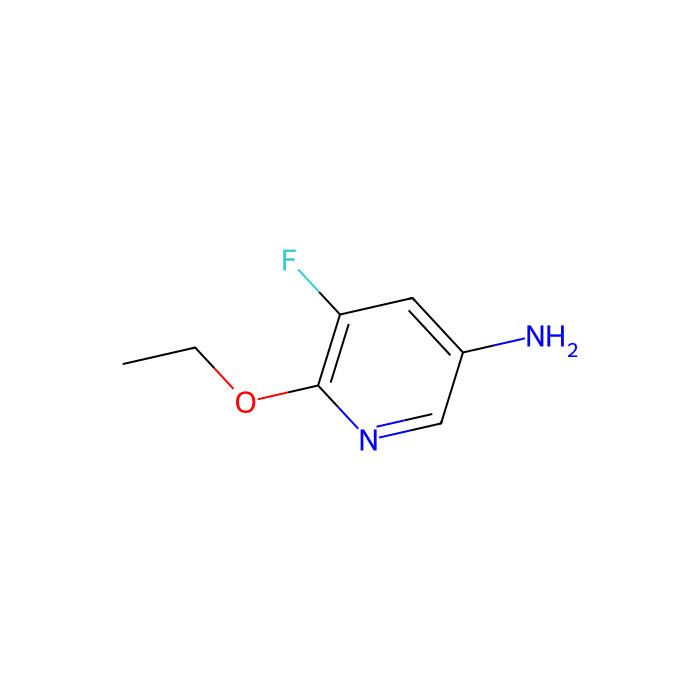
This compound belongs to the class of organic compounds known as aminopyridines and derivatives. These are organic heterocyclic compounds containing an amino group attached to a pyridine ring.
External Descriptors
Not available
1. Djoumbou Feunang Y, Eisner R, Knox C, Chepelev L, Hastings J, Owen G, Fahy E, Steinbeck C, Subramanian S, Bolton E, Greiner R, and Wishart DS. ClassyFire: Automated Chemical Classification With A Comprehensive, Computable Taxonomy. Journal of Cheminformatics, 2016, 8:61.
Certificati (CoA, COO, BSE/TSE e tabella di analisi)
C of A & Other Certificates(BSE/TSE, COO):
Analytical Chart:
Proprietà chimiche e fisiche
Peso molecolare
156.160 g/mol
XLogP3
0.900
Hydrogen Bond Donor Count
1
Hydrogen Bond Acceptor Count
4
Rotatable Bond Count
2
Exact Mass
156.07 Da
Monoisotopic Mass
156.07 Da
Topological Polar Surface Area
48.100 Ų
Heavy Atom Count
11
Formal Charge
0
Complexity
123.000
Isotope Atom Count
0
Defined Atom Stereocenter Count
0
Undefined Atom Stereocenter Count
0
Defined Bond Stereocenter Count
0
Undefined Bond Stereocenter Count
0
The total count of all stereochemical bonds
0
Covalently-Bonded Unit Count
1
Calcolatori di soluzioni
Molarity Calculator
Determine the necessary mass, volume, or concentration for preparing a solution.
Dilution Calculator
Determine the dilution needed to prepare a stock solution.
Reconstitution Calculator
Recensioni
Recensioni dei clienti
Application Protocols
No biological assay protocols (WB, IHC, IF, FC, etc.) are associated with this small-molecule building block.
Synthetic usage (general suggestions)
For parallel synthesis, prepare 0.1–0.5 M stock solutions in dry DMSO or DMF, dispense under inert atmosphere, and combine with electrophiles or nucleophiles as designed.
Monitor reactions by LCMS/UPLC with 254/220 nm detection and 19F NMR where informative.
Refer to the Reaction Conditions and Synthetic Utility sections for chemistry-focused guidance.
Biological Roles
Item is supplied strictly for research use only. No medical or clinical use is intended.
General biochemical context (literature/general)
Pyridine rings are common in cofactors (e.g., NAD+/NADH) and numerous bioactive small molecules, where ring nitrogen modulates basicity and H-bonding.
Fluoro substituents influence metabolic stability and binding by tuning electronics and blocking oxidative sites.
An aniline-like 3-amine can engage in hydrogen bonding as donor/acceptor and is readily derivatized to modulate pKa and permeability in SAR.
This compound’s role
6-Ethoxy-5-fluoropyridin-3-amine is primarily a synthetic intermediate/building block used to access analog libraries; it is not a known natural product or metabolite.
For any biological testing, determine purity, counter-ions (if any), and residual solvent profiles from the lot-specific CoA before use.
Buffer Applications
This product is a small heteroaromatic building block rather than a buffering agent. It does not constitute a defined buffer system with a predictable Henderson–Hasselbalch range like phosphate, Tris, or HEPES.
If needed for aqueous studies (literature/general):
Prepare as an acid salt (e.g., HCl salt) to enhance aqueous solubility and enable dosing into pre-made buffers.
Select buffer based on the biology/assay (e.g., phosphate pH 6–8, acetate pH 4–5.5). Determine apparent pKa values experimentally for precise speciation control.
For formulation-grade buffer recipes and pH ranges, consult standard buffer references; this item itself is not typically used to make buffers.
Replace DMF/NMP with safer polar aprotics where feasible: Cyrene (dihydrolevoglucosenone), propylene carbonate, or dimethyl carbonate for certain couplings or SNAr reactions.
2-MeTHF or CPME can substitute for DCM/THF in protection/acylation workflows, improving safety and solvent recovery.
Aqueous micellar media (TPGS-750-M) may enable amide/sulfonamide formations and SNAr at reduced organic solvent usage.
Workup and purification
Favor crystallization or trituration over silica chromatography when possible (amine salts often crystallize well), reducing solvent and silica waste.
Use greener eluents (EtOAc/hexanes in place of DCM) and minimize halogenated solvent usage.
Reagent selection
For amide couplings, consider catalytic coupling technologies (e.g., DIC/oxyma with catalytic DMAP) or peptide-coupling reagents with improved EHS profiles; avoid excess carbodiimides to reduce urea waste.
For dealkylation, explore catalytic hydrogenolysis routes only if a suitable protecting-group strategy is viable; classic BBr3 methods carry higher hazard.
Energy efficiency
Employ microwave or flow setups for SNAr to shorten reaction times and temperatures, lowering energy footprint.
Tradeoffs: Highly activated SNAr often still benefits from DMSO/DMF for rate; greener substitutes may require higher temperature, longer time, or give lower solubility—optimize case-by-case.
Pharmaceutical Uses
No excipient or pharmacopeial status is provided for this item. It is offered for research use only as a synthetic intermediate.
General formulation/manufacturing context (literature/general)
Heteroaromatic amines like this are commonly employed as key starting materials or intermediates in API discovery and process routes, enabling rapid analog generation via amide/sulfonamide formation or SNAr diversification.
Salt selection (e.g., HCl, mesylate, tosylate) may be leveraged for isolation or purification during process development but is application-specific.
Compliance note
No claims are made regarding GMP, compendial compliance (USP/EP/JP), residual solvent class control, or elemental impurity limits for this catalog item. For regulated uses, request lot-specific documentation or consider custom manufacture.
Physical Properties
Item-specific specifications are not provided in the Product Data.
Item-specific values
Appearance: Not specified for this item; refer to CoA/Spec Sheet.
Purity/grade: Not specified for this item; refer to CoA/Spec Sheet.
Literature/general properties (for context; not item specifications)
State at ambient conditions: Typically an organic solid or low-melting solid for substituted pyridin-3-amines of this size; verify on CoA.
Acid–base: Aromatic amine (weak base) and ring nitrogen (weak base) enable salt formation with mineral acids; free-base form is neutral and more soluble in organic solvents.
Polarity/solubility (qualitative): Expected to dissolve in polar aprotic solvents (DMF, DMSO, NMP, MeCN) and moderately in alcohols/EtOAc; limited solubility in alkanes (literature/general).
LogP/logD: Likely low-to-moderate lipophilicity given one F and one ethoxy substituent countered by amine; consult literature or predictive tools for exact values (not item-specific).
UV characteristics: Heteroaromatic chromophore absorbs in near-UV; specific cutoffs/ε not established here (literature/general).
For authoritative BP/MP, density, refractive index, water/peroxide/metal limits, and UV cutoff, refer to the product’s CoA/Specification Sheet.
Quality and Grades
Item-specific information
Grade/purity: Not specified for this item; refer to CoA/Spec Sheet.
Stabilizers/additives: Not specified for this item; refer to CoA/Spec Sheet.
Guidance on interpreting grades (general)
Research/technical grade: Suitable for most synthesis and screening work; impurity profile adequate for discovery chemistry.
≥98–99% purity (if specified on CoA): Typical for building blocks intended for parallel synthesis and SAR work; check residual solvents, inorganic salts, and isomeric impurities.
HPLC/LCMS suitability: Low UV background and clean MS ionization are desirable for medicinal chemistry workflows; confirm UV cutoff and LCMS trace on CoA if needed.
Implications for this chemotype
Amino- and fluoro-substituted pyridines can contain regioisomeric impurities; confirm identity by 1H/13C NMR (diagnostic patterns at the 3-,5-,6-positions), 19F NMR, and HRMS.
Trace inorganic salts may persist if supplied as a salt; verify free-base vs salt form on the CoA.
Contact Aladdin Scientific for lot-specific analytical data (HPLC area %, NMR, MS, residual solvents, and water content) as needed for regulated or high-sensitivity applications.
Reaction and Applications
As a multifunctional heteroaromatic building block, 6-ethoxy-5-fluoropyridin-3-amine supports diverse transformations in discovery and process chemistry.
Electrophilic derivatization of the 3-amine (literature/general)
Amide formation: HATU/HBTU/EDC·HCl with DIPEA in DMF/MeCN affords amides under mild conditions.
Sulfonamide/urea/carbamate synthesis: React with sulfonyl chlorides, isocyanates, or chloroformates; protect amine (Boc/CBz) if orthogonality is needed.
Reductive amination (on the amine) is not applicable; use acylation or N-alkylation protocols instead.
Nucleophilic aromatic substitution at C-5 (SNAr)
The 5-fluoro substituent on a pyridine ring is a competent leaving group under basic conditions with nucleophiles (RO−, RS−, amines). Polar aprotic solvents and elevated temperatures (80–140 °C) accelerate substitution.
Competing N-arylation of the substrate amine can be minimized by temporary protection (Boc) or by using excess external amine nucleophile with a hindered base (e.g., DIPEA, Cs2CO3) and phase-transfer strategies.
Ether manipulation at C-6
Demethylation-type methods (e.g., BBr3, BCl3, AlCl3) can sometimes dealkylate aryl ethyl ethers to the phenolic (pyridinol) analog; ethyl ethers are more resistant than methyl ethers—optimize conditions carefully.
Transition-metal-catalyzed C–O activation (Ni/Cu) may allow cross-coupling after converting to suitable leaving groups (triflates from the pyridinol intermediate).
Convert the C-5 position to boronate or stannane after halogen exchange or via directed lithiation, enabling Suzuki/Stille reactions (advanced, substrate-dependent).
Applications span SAR exploration, heteroaromatic substitution patterns, and late-stage diversification in medicinal chemistry.
Reaction Conditions
The following are literature/general guidelines for this chemotype; optimize per substrate and scale. These are not item-specific specifications.
Amide formation at the 3-amine
Reagents: HATU (1.1–1.5 eq) or EDC·HCl (1.2–1.5 eq) + HOAt/Oxyma; base DIPEA (2–3 eq).
Solvent/temperature: DMF/MeCN/DCM; 0–25 °C for activation, then 25–40 °C, 1–4 h. Typical isolated yields: 70–95% for unhindered acids.
Sulfonamide/carbamate/urea formation
Sulfonyl chloride or chloroformate (1.05–1.2 eq) with base (Et3N/DIPEA) in DCM/THF at 0–25 °C. Isocyanates for ureas at 0–25 °C. Yields commonly 60–90%.
SNAr at C-5 (displacing F)
Nucleophiles: Primary/secondary amines, alkoxides (generated in situ), thiolates.
Base/solvent: Cs2CO3 or K2CO3 (2–3 eq) in DMSO/DMF/NMP, 80–140 °C (oil bath or sealed tube) for 2–16 h; microwave 120–160 °C, 10–60 min. Typical conversions high; isolated yields 50–85% depending on nucleophile and sterics.
Notes: Protect the substrate amine (e.g., Boc) if competitive intramolecular N-arylation or self-condensation is observed.
Ether dealkylation (to 6-hydroxypyridin-3-amine)
Reagents: BBr3 (1–5 eq) in DCM, −78 to 0 °C to RT, 2–24 h. Ethyl ethers require stronger/longer conditions than methyl ethers; monitor by LCMS. Work up cautiously (methanol quench).
Purification: Aqueous workups exploiting basic/acidic extractions (free-base vs salt) are effective. Final products often crystallize as acid salts or can be purified by silica with EtOAc/hexanes or DCM/MeOH gradients.
Safety and Handling
GHS information (item-specific)
Signal word: Not specified for this item; refer to SDS.
Hazard statements, pictograms, classification: Not specified for this item; refer to SDS.
General safety guidance for substituted pyridin-3-amines (literature/general)
Likely hazards: May cause skin/eye irritation and respiratory irritation; aromatic amines can be harmful if swallowed/inhaled. Avoid dust/particulate generation. Handle in a fume hood.
PPE: Laboratory coat, safety glasses/goggles, and appropriate chemical-resistant gloves (e.g., nitrile). Use local exhaust ventilation.
Incompatibilities: Strong oxidizers; strong acids/bases can form salts or promote decomposition; electrophiles (acylating/sulfonylating agents) react readily with the amine. Avoid strong Lewis acids if aryl ether cleavage is not intended.
Special risks/notes: Although aryl ethers are not classic peroxide formers, always store tightly closed and protect from moisture and light as good practice. Ensure containers are properly labeled; prevent contact with reactive halogenating agents.
First aid (overview; follow SDS/ institutional protocol):
Inhalation: Move to fresh air; seek medical attention if symptoms persist.
Skin: Wash with soap and water; remove contaminated clothing.
Eyes: Rinse cautiously with water for several minutes; remove contact lenses if present.
Ingestion: Rinse mouth; seek medical advice.
Always consult the product SDS for authoritative safety, toxicological, and disposal information.
Solvent Selection
This heteroaromatic amine is moderately polar and generally compatible with common polar organics.
Limited solubility expected in nonpolar hydrocarbons (hexanes, heptane); solubility improves with chlorinated solvents (DCM, CHCl3) and polar aprotics.
Salt formation with HCl or TsOH can enhance aqueous solubility for workup, but reduces solubility in nonprotic organics.
Use-case guidance
For SNAr at C-5 (F displacement): Choose high-boiling polar aprotics (DMSO, DMF, NMP) with inorganic bases (Cs2CO3/K2CO3).
For amide/sulfonamide formation at the 3-amine: Use DCM/DMF or MeCN with coupling reagents; control base to limit O-acylation.
For protecting-group operations (Boc, Cbz): DCM/MeCN or THF with mild base (DIPEA, NaHCO3).
Comparison (general)
DMSO vs DMF: DMSO often gives higher SNAr rates; DMF simplifies removal by aqueous workup. NMP provides higher temperature headroom.
Alcohols (MeOH/EtOH): Useful for salt screening and recrystallization but can participate in transetherification under strong acid.
Always verify solvent purity, water content, and inhibitor status per your reaction’s sensitivity.
Storage and Reconstitution
Item-specific storage and shipping
Storage conditions: Room temperature (per Product Data).
Shipped in: Normal (per Product Data).
General handling (literature/practice)
Keep container tightly closed in a dry, well-ventilated place. Protect from strong acids/bases and oxidizers. If sensitive to moisture, store under inert gas with desiccant.
For solution stocks: Prepare in dry DMSO, DMF, MeCN, or alcohols at known concentration; store aliquots in amber vials at 2–8 °C or −20 °C as appropriate to mitigate degradation. Avoid repeated freeze–thaw.
Salt formation: If provided as the free base, salts (e.g., HCl) can be generated for crystallinity and aqueous handling; confirm identity by NMR/HRMS after neutralization when needed.
Stability
Appearance, purity, and assay over time are lot-dependent. For shelf-life and retest period, consult the CoA. If solids clump due to hygroscopicity, dry under vacuum before use.
Always refer to the lot-specific CoA and SDS for definitive storage, stability, and handling instructions.
Structure and Identity
A heteroaromatic amine/aryl ether building block featuring a pyridine ring bearing an aniline-like amino group at C-3, a fluorine at C-5 (activated for SNAr), and an ethoxy (aryloxy) substituent at C-6.
Item-specific identifiers (from Product Data)
SKU: E187735
Product name: 6-Ethoxy-5-fluoropyridin-3-amine
CAS: 886372-67-4
CID: 55253199
InChIKey (as provided): 309566 (note: not in standard 27-character format)
SMILES: Not specified for this item; refer to CoA/Spec Sheet.
Literature/computed identity (general reference only; not item-specific specs)
Core structural features: 1,4-diazine-like electron distribution of pyridine nitrogen; para-/meta-directing effects modulated by the ring N, ring F (strong –I, weak +M), and the 6-ethoxy (strong +M donor) substituent.
2D description: A six-membered aromatic ring containing one ring nitrogen (pyridine). At the 3-position relative to ring N is –NH2; at the 5-position is –F; at the 6-position is –O–CH2–CH3.
Stereochemistry: None (achiral).
Synthetic Utility
Key functional elements and how to exploit them (literature/general):
3-Amino group (aniline-like on pyridine)
Rapid diversification through acylation (amides), sulfonylation (sulfonamides), carbamoylation (ureas/carbamates), and N-alkylation (with careful control to avoid overalkylation).
Temporary protection (Boc, Cbz, Fmoc) enables orthogonal manipulations at C-5/C-6 without competitive N-acylation/arylation.
5-Fluoro handle
Readily displaced via SNAr by O-, N-, or S-nucleophiles under basic conditions, giving access to 5-substituted libraries. Rate enhanced by ring N activation and, context-dependently, by the 6-ethoxy donor.
Alternative activation: Halogen exchange (F→Cl/Br) or metalation can unlock cross-coupling after transforming to boronate/triflate derivatives.
6-Ethoxy aryl ether
Potentially convertible to the corresponding 6-hydroxypyridin-3-amine via Lewis-acid-mediated dealkylation (ethoxy > methoxy in difficulty; requires stronger/longer conditions). Phenolic derivative is a versatile node for further O-functionalization or C–O activation (triflation → cross-coupling).
Retrosynthetic value: Serves as a convergent junction where amide-sidechain installation (on N3) orthogonalizes with C-5 diversification (SNAr) and C-6 ether editing, enabling efficient matrix libraries in medicinal chemistry.
Target Specificity
Not an antibody, enzyme, or biological targeting agent. No target specificity data are provided for this catalog item.
We use cookies to ensure the website functions properly and, where permitted, to improve your experience. You can manage your preferences at any time in Settings. Learn more in our Cookie Policy.
Shall we send you a message when we have discounts available?
Remind me later
Thank you! Please check your email inbox to confirm.
Products are supplied to verified businesses, institutions, and qualified professionals for research and development use only. Not for use in humans, animals, diagnosis, or therapy.