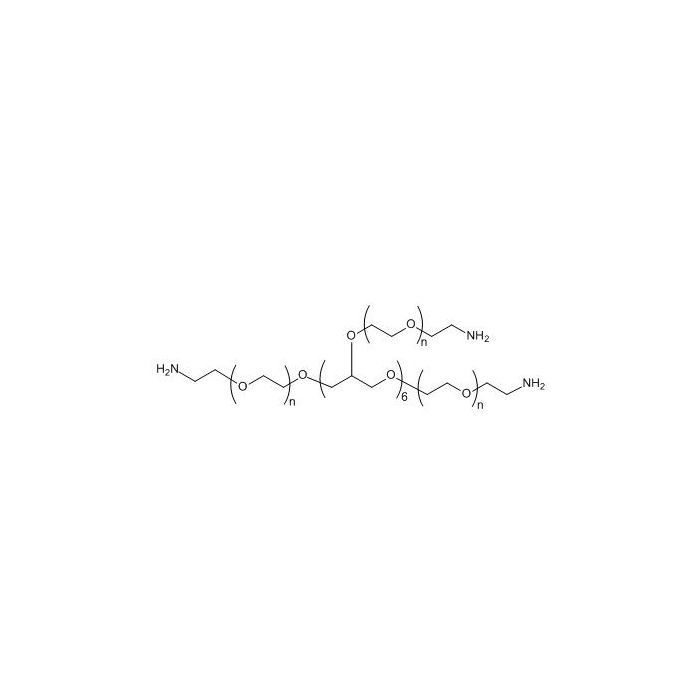
8-Arm PEG Amine - MW 20000 Da

Cat. No.: A163143
Disponibile su ordine
GRADE & PURITY MW 20000 Da
Storage
Store at -20°C,Argon charged
Shipped In
Ice chest + Ice pads
★
Size
Germania (EU)
USA*
Price
Qty
100mg
A163143-100mg
—
3 Disponibile
51,98€
500mg
A163143-500mg
—
3 Disponibile
152,64€
Enter a quantity for the sizes you want to add.
🧪
Why this grade

MW 20000 Da for sensitive chromatographic and analytical workflows requiring minimal baseline interference.

🌡

Storage & shipping

Store at -20°C,Argon charged Ships Ice chest + Ice pads Check lot-specific COA for exact specifications.

📋

Quality documents

SDS, COA, datasheet, and spec sheet available for download. Lot-specific COA accessible via lot number lookup.

📚

Literature proof

Cited in 0 peer-reviewed publications across chromatography, organic synthesis, and cross-coupling reactions.

Panoramica

8 arm PEG derivatives have multiple reactive groups that can be used to modify proteins, peptides and other materials via their functional groups. PEGylation can increase solubility and stability and reduce immunogenicity of peptides and proteins. It can also suppress the non-specific binding of charged molecules to the modified surfaces. .

Specifications

Specifiche e purezza
MW 20000 Da
Condizioni di conservazione di stoccaggio
Store at -20°C,Argon charged
Spedito in
Ice chest + Ice pads
Questo prodotto richiede spedizione a catena fredda. I servizi di terra e altri servizi economici non sono disponibili.

Documentazione

📋 Safety Data Sheet (SDS)

Comprehensive hazard, handling, storage, and regulatory compliance document.

Download SDS →

✅ Certificate of Analysis (COA)

Lot-specific quality data. Enter your lot number to retrieve the exact COA.

Look up COA →

📊 Datasheet

Quick-reference summary of product specifications and applications.

View datasheet →

🔬 Specification Sheet

Full quality attributes and acceptance criteria for this grade.

View spec sheet →

Advanced Data

Certificati (CoA, COO, BSE/TSE e tabella di analisi)
C of A & Other Certificates(BSE/TSE, COO):
Analytical Chart:

Find and download the COA for your product by matching the lot number on the packaging.

8 results found

Lot NumberCertificate TypeDataOggetto
H1722073Certificate of AnalysisMay 21, 2026 A163143
G2511120Certificate of AnalysisJun 26, 2025 A163143
G2511121Certificate of AnalysisJun 26, 2025 A163143
B2528226Certificate of AnalysisJan 16, 2025 A163143
C2504017Certificate of AnalysisJan 16, 2025 A163143
C2504018Certificate of AnalysisJan 16, 2025 A163143
K2110459Certificate of AnalysisAug 09, 2024 A163143
E2429130Certificate of AnalysisMay 07, 2024 A163143
Proprietà chimiche e fisiche
SolubilitàOff-white/white solid or viscous liquid depends on molecule weight;Soluble in regular aqeous solution as well as most organic solvents;
SensibilitàHygroscopic
Domande frequenti e articoli
Calcolatori di soluzioni
Recensioni

Recensioni dei clienti

Application Protocols

Tested application protocols, recommended dilutions, and positive controls are not specified for this item; refer to the product’s CoA/Spec Sheet and SDS.

Given the diversity of uses (e.g., NHS-ester coupling, EDC/NHS activation workflows, reductive amination, hydrogel formation), users should tailor protocols to their substrates, considering:

  • End-group assay (mmol –NH2/g) from CoA for stoichiometry.
  • Buffer choice (avoid primary-amine buffers during electrophile couplings).
  • Purification strategy suited to polymer Mn (dialysis/UF).

For detailed, application-specific procedures, consult peer-reviewed literature and validated internal SOPs.

Biological Roles

General context (no clinical claims)

  • Poly(ethylene glycol) (PEG) is widely regarded as biologically inert and highly hydrophilic, reducing protein adsorption and nonspecific cell interactions. Multi-arm architectures increase local density of functional groups for biomaterials engineering.
  • Terminal primary amines enable conjugation to biomolecules carrying carboxylates (e.g., proteins, peptides, polysaccharides) via amide formation, facilitating construction of PEGylated constructs or crosslinked hydrogels for research.
  • In aqueous environments, protonated amine ends can impart mild cationic character that promotes electrostatic association with anionic surfaces (e.g., carboxylated nanoparticles or oxidized graphene/oxide supports) prior to covalent attachment.
  • Star-shaped PEG scaffolds can serve as multivalent display platforms for ligands, allowing controlled spatial presentation and valency tuning in receptor-binding or materials-interface studies.
  • PEG backbones are resistant to many enzymatic degradative pathways, providing temporal stability in in vitro assays and device coatings. Degradation (if any) typically occurs via oxidative pathways or hydrolysis of core/linker chemistries rather than the ether backbone under physiological conditions.

Note: Any biological compatibility or endotoxin specifications are application- and grade-dependent and are not provided for this item. Verify bioburden/endotoxin levels on the CoA/Spec Sheet if use in sensitive biological systems is intended.

Buffer Applications

This product is not a buffer system; however, its performance in conjugation and materials workflows depends on buffer choice. The following are general, literature-based considerations for using 8-arm PEG amine in aqueous buffers:

  • Avoid primary-amine buffers (e.g., Tris, glycine) during NHS-ester or isothiocyanate couplings—these compete with the PEG amines and quench electrophiles.
  • Recommended for NHS-ester coupling: phosphate (50–100 mM, pH 7.5–8.5), bicarbonate/carbonate (50–100 mM, pH 8.5–9.2), or HEPES (50 mM, pH 7.5–8.0). Maintain ionic strength to ensure solubility and reduce aggregation of reactants.
  • For EDC/NHS activation of carboxylates: activate in MES buffer (50–100 mM, pH 5.0–6.0), then exchange to phosphate or HEPES at pH 7.2–7.8 for coupling to the PEG amine.
  • For aza-Michael addition to acrylates: carbonate/bicarbonate buffer at pH 9–10 can increase nucleophilicity of the amine, but consider competing hydrolysis of acrylates.
  • Salt effects: high NaCl (≥0.5 M) can screen electrostatic interactions, often improving homogeneity during coupling to charged biomolecules.
  • Filtration: 0.22–0.45 µm filtration of buffer and polymer solutions helps remove particulates prior to sensitive applications.

Item-specific buffer compatibility/limits: Not specified for this item; refer to CoA/Spec Sheet.

Green Alternatives

Greener practices for PEG-amine chemistry (general/literature)

  • Prefer aqueous media when feasible: NHS-ester and EDC/NHS couplings proceed efficiently in water or buffered solutions, reducing reliance on DMF/DMSO.
  • Buffer selection: MES, phosphate, or bicarbonate buffers at appropriate pH can replace organic bases; avoid amine-containing buffers that compete.
  • Reagent choice: carbodiimide chemistry (EDC) with catalytic NHS or sulfo-NHS can avoid uronium/phosphonium coupling reagents with higher hazard profiles.
  • Purification: use dialysis/ultrafiltration instead of large-volume organic precipitations; minimizes solvent waste.

Trade-offs

  • Aqueous routes may reduce reaction rates with hydrophobic substrates; limited solubility can necessitate benign cosolvents (≤10–20% ethanol, isopropanol) instead of DMF/NMP.
  • EDC/NHS generates urea byproducts that must be removed; aqueous workups are straightforward but require suitable MWCO devices.

Illustrative comparison (general)

  • Aqueous NHS-ester coupling vs anhydrous DMF coupling:
    • Solvent: Water/buffer (greener) vs DMF (problematic).
    • Rate/selectivity: High at pH 7.5–8.5 (good) vs high under base in DMF (good).
    • Workup: Dialysis/UF (low solvent use) vs precipitation/solvent exchange (higher solvent use).
    • Safety: Minimal VOC exposure vs DMF toxicity concerns.

Adopt right-first-time stoichiometry (based on CoA amine loading) to reduce rework and waste.

Pharmaceutical Uses

No therapeutic or clinical claims are made. The following are general, non-clinical roles for multi-arm PEG amines in formulation and manufacturing research:

  • Excipient research: PEG frameworks are explored as viscosity modifiers, stabilizers, and matrix formers in topical and parenteral prototype formulations. Amine-terminated stars enable further derivatization to tailor solubility or charge.
  • Conjugation intermediates: primary amines provide handles to install linkers, spacers, or targeting ligands (e.g., via NHS esters), supporting the preparation of PEGylated constructs for preclinical evaluation.
  • Hydrogel systems: 8-arm PEG amine crosslinked with multifunctional electrophiles can form hydrogels used in device coatings or depot matrices in laboratory studies.
  • Surface modification: covalent attachment to carboxylated device surfaces can improve fouling resistance in process equipment or analytical components.

Regulatory/compendial status for this specific item (e.g., USP/NF, Ph. Eur., endotoxin/bioburden limits, residual solvent specs): Not specified for this item; refer to CoA/Spec Sheet.

Note: Any use in manufacturing or clinical settings requires verification of grade, impurity profile, and regulatory compliance appropriate to the application; this listing is for research use only.

Physical Properties

Item-specific properties

  • Grade/Purity: Not specified for this item; refer to CoA/Spec Sheet.
  • Appearance: Not specified for this item; refer to CoA/Spec Sheet.
  • Molecular Weight: Not specified for this item; refer to CoA/Spec Sheet (multi-arm PEGs are provided as average Mn ranges).

General/literature characteristics (poly(ethylene glycol) multi-arm amine)

  • Physical state: typically solid (waxy to glassy) at ambient temperature; softens upon warming depending on Mn and end-groups.
  • Solubility: highly soluble in water and polar organic solvents (e.g., DMSO, DMF); variable solubility in alcohols; limited solubility in nonpolar solvents (e.g., hexanes, toluene). Salt solutions and buffered aqueous media generally dissolve well when pH ≥ 6 (amines partially protonated).
  • pKa (terminal primary amines, literature): ~9–10 for small-molecule analogs; effective apparent pKa can shift with local environment and arm length.
  • Hygroscopicity: PEG matrices are hygroscopic; amine termini can absorb CO2 from air to form ammonium carbamates—store under inert gas.
  • Thermal transitions (literature, polymer-dependent): PEG Tg typically around −60 °C; melting transitions broaden with Mn and architecture; no sharp boiling point (non-volatile polymer).
  • Viscosity: aqueous/organic solutions can be markedly viscous at high concentrations due to multi-arm topology and hydrogen bonding.
  • Refractive index/logP: Not typically defined for polymers as single values; varies with concentration and wavelength (RI) and is not meaningful as logP.

Note: For exact Mn, polydispersity (Đ), water/solvent content, and residual metals, consult the item’s CoA/Spec Sheet.

Quality and Grades

Item-specific grade/purity

  • Grade/Purity: Not specified for this item; refer to CoA/Spec Sheet.

How multi-arm PEG amines are typically specified (general/literature)

  • Average molecular weight (Mn) and polydispersity index (Đ, e.g., GPC vs PEG standards). These define arm length and batch uniformity.
  • Functionality: assay of amine end-group content (e.g., mmol –NH2/g by titration or TNBS assay) to confirm eight reactive ends.
  • Residuals: water content (Karl Fischer), residual solvents (GC), inorganic impurities/metals (ICP-MS), and organic byproducts (HPLC/SEC). Low residuals are critical for reproducible bioconjugation and hydrogel formation.
  • Biologics/biomaterials grade options may include endotoxin/bioburden testing and low UV/fluorescent impurities for optical work. Unless expressly stated for this item, do not assume such grades—verify on CoA.

Implications for use

  • Reaction stoichiometry in conjugations should be based on the measured amine loading (mmol/g) from the CoA, not nominal Mn alone.
  • Color/appearance (clear, off-white) and solution transmittance can indicate oxidation or contamination; however, rely on analytical data for acceptance.
  • Stabilizers: PEG amines typically do not require stabilizers, but an inert-atmosphere fill minimizes carbamate formation and oxidation. Any added stabilizers would be disclosed on the Spec Sheet (none specified for this item).
Reaction and Applications

Typical application families (general/literature)

  • Hydrogel network formation via amide bond formation between 8-arm PEG amine and multi-acid/NHS-activated PEGs or carboxylated polymers/proteins.
  • Surface and nanoparticle functionalization: covalent attachment to carboxylated or activated surfaces to impart PEGylation (protein-resistance) while retaining pendant amines for further modification.
  • Bioconjugation scaffolds: installation of fluorophores, haptens, or ligands using NHS esters, isothiocyanates, succinimidyl carbonates, or aldehydes (via imine formation followed by reductive amination).
  • Polymer–polymer couplings: formation of polyureas/urethanes via reaction with di/tri-isocyanates or carbonates; aza-Michael addition to acrylates/maleimides (slower for primary amines in water unless catalyzed).

Practical tips

  • Drying: if low-water conditions are required, azeotropically dry from toluene or co-evaporate with anhydrous acetonitrile/DMF under vacuum, then backfill with argon (avoid high temperatures that can cause degradation).
  • CO2 control: handle solutions under inert gas; brief argon sparging of aqueous solutions minimizes carbamate formation.
  • Stoichiometry: base on measured mmol –NH2/g (CoA). For complete end-group conversion, use slight excess of electrophile (1.05–1.2 eq per –NH2) while monitoring viscosity/gel point for crosslinking systems.
  • pH: for NHS-ester couplings, maintain pH 7.5–8.5; higher pH accelerates hydrolysis of NHS and may increase side reactions.
  • Workup: dialysis (MWCO << Mn/2) or spin filtration effectively removes small-molecule reagents; precipitation in cold acetone/ether may be used for some organic-soluble systems.
Reaction Conditions

The following are general, literature-based conditions commonly used with multi-arm PEG amines. They are guidance only and should be optimized per substrate and the item’s CoA end-group loading.

  • NHS-ester coupling (to carboxyl-bearing partners)

    • Solvent: aqueous phosphate or bicarbonate buffer (50–100 mM), pH 7.5–8.5; optional 0–10% DMSO for solubility.
    • Temperature/time: 20–25 °C, 0.5–4 h; monitor by amine assay or SEC.
    • Stoichiometry: 1.05–1.2 eq NHS-ester per –NH2 for near-quantitative end-capping; lower equivalents for partial substitution.
  • EDC/NHS aqueous coupling

    • Activate carboxyl partner in MES buffer (pH 5.0–6.0) with EDC (1–2 eq) and NHS (1–2 eq) for 15–30 min; then add PEG amine in phosphate buffer (pH 7.4–8.0).
    • Temperature/time: 20–25 °C, 1–4 h; avoid high ionic strength during activation.
  • Reductive amination (with aldehydes)

    • Solvent: aqueous buffer pH 6.5–7.5 with 10–30% ethanol/DMSO as needed; or anhydrous MeOH/DMF.
    • Reductant: NaBH3CN (10–50 mM) or picoline borane; 20–25 °C, 2–16 h.
  • Urea/thiourea formation

    • Solvent: anhydrous DCM/DMF; base: DIPEA/TEA (1–3 eq); 0–25 °C, 1–6 h.
  • Aza-Michael addition to acrylates

    • Solvent: water or DMF; base: bicarbonate/carbonate (pH 9–10) or catalytic tertiary amine; 20–40 °C, 2–24 h.

Purification: dialysis (MWCO 3–50 kDa depending on Mn), ultrafiltration, or precipitation from IPA/acetone/ether as compatible. Always confirm conversion via amine titration and SEC/GPC.

Safety and Handling

Item-specific hazard data

  • Signal Word: Not specified for this item; refer to SDS.
  • H-Statements: Not specified for this item; refer to SDS.
  • GHS Classification/Pictograms: Not specified for this item; refer to SDS.

General safety guidance (literature/practice)

  • Although PEGs are generally of low acute toxicity, primary amines are basic/nucleophilic and may cause irritation to skin, eyes, and respiratory tract. Avoid aerosolization and dust formation.
  • PPE: wear laboratory coat, safety glasses or goggles, and appropriate chemically resistant gloves (e.g., nitrile). Use in a fume hood during weighing and solution preparation, especially when using organic solvents or coupling reagents.
  • Incompatibilities: strong oxidizers; acylating/alkylating agents (acid chlorides, anhydrides, isocyanates, epoxides) unless intentional reaction; CO2 (can react with free amines); copper(II) salts can catalyze oxidative discoloration of PEG matrices.
  • Special risks: hygroscopic uptake of water can interfere with moisture-sensitive coupling chemistry; exposure to CO2 can reduce free amine content via carbamate formation—store and handle under inert atmosphere.
  • First aid (overview): in case of skin or eye contact, rinse with copious water for ≥15 min; remove contaminated clothing. If inhaled, move to fresh air; if ingested, rinse mouth. Seek medical attention in all cases of persistent symptoms. Defer to SDS for authoritative instructions.
  • Waste: collect aqueous and organic solutions containing PEG amines as chemical waste; segregate from halogenated waste where applicable. Neutralize reactive coupling reagents prior to disposal per institutional EHS guidance.
Solvent Selection

Polarity and miscibility (general/literature)

  • PEG backbones are highly polar and hydrophilic; terminal amines increase water solubility when protonated. Typical solvents: water, PBS, HEPES, MES, carbonate buffers; organic: DMSO, DMF, NMP. Limited or no solubility in nonpolar solvents (hexanes, cyclohexane, toluene).

Choosing solvents by application

  • Aqueous bioconjugation (e.g., NHS-ester coupling to carboxylates): use buffered water (pH 7.5–8.5). Avoid primary-amine buffers (Tris, glycine) that compete with the reaction.
  • Carbodiimide activation (EDC/NHS): activation in mildly acidic buffer (MES, pH 5–6), then couple in neutral/basic buffer. Keep organic cosolvent ≤20% to maintain activation efficiency.
  • Low-water coupling or moisture-sensitive chemistries: dissolve in anhydrous DMF or DMSO under argon; then add to reaction/buffer. Degas if oxidation-sensitive components are present.
  • Surface modification/nanoparticles: use solvent compatible with substrate dispersion (e.g., DMF for hydrophobic surfaces, water for oxides); adjust ionic strength to control adsorption.

Comparative notes

  • 8-arm vs linear/4-arm PEG: multi-arm scaffolds increase local amine density, enabling efficient crosslinking at lower polymer mass; however, solution viscosity rises more sharply with concentration.
  • If precipitation occurs in buffers at high ionic strength, add gradually with stirring or include 5–10% DMSO as a cosolvent (compatibility permitting).
Storage and Reconstitution

Item-specific storage and shipping

  • Storage Conditions: Store at −20 °C, argon charged (as provided).
  • Shipped In: Ice chest + Ice pads.
  • Research Use Note: For research use only.

General handling/reconstitution advice (literature/practice)

  • Minimize moisture and CO2 exposure: keep container tightly closed; warm to room temperature in a desiccator before opening to prevent condensation. Backfill with argon or nitrogen after use.
  • Aliquoting: if frequent use is expected, prepare single-use aliquots under inert gas to avoid repeated freeze–thaw and headspace moisture accumulation.
  • Dissolution: add to the chosen solvent/buffer with gentle stirring. Typical concentrations for stock solutions: 10–200 mg/mL depending on viscosity and Mn. For moisture-sensitive couplings, use anhydrous DMF/DMSO and dry glassware.
  • Filtration: 0.22–0.45 µm filtration can remove particulates prior to sensitive applications.
  • Stability: PEG backbones are generally stable at −20 °C; avoid prolonged exposure >40 °C. Terminal amines can slowly oxidize or form carbamates if stored in air; inert atmosphere storage mitigates this.
  • Documentation: record exact mass and calculate mmol –NH2 using CoA loading (mmol/g) for each batch; label aliquots accordingly.

Any item-specific reconstitution solvent preferences, stabilizers, or shelf life: Not specified for this item; refer to CoA/Spec Sheet.

Structure and Identity

Item-specific identifiers

  • SKU: A163143
  • Product Name: 8-Arm PEG Amine
  • CAS: Not specified for this item; refer to CoA/Spec Sheet.
  • InChIKey: Not specified for this item; refer to CoA/Spec Sheet.
  • SMILES: Not specified for this item; refer to CoA/Spec Sheet.
  • Molecular Formula: Not specified for this item; refer to CoA/Spec Sheet.
  • Molecular Weight: Not specified for this item; refer to CoA/Spec Sheet (note: multi-arm PEGs are typically specified by an average Mn and a polydispersity index).

Structural description (general/literature)

  • 8-arm PEG amine is a star-shaped, multi-functional polymer consisting of a central core (often a small polyfunctional scaffold) from which eight poly(ethylene glycol) chains radiate.
  • Each arm terminates in a primary amine group (–NH2), yielding eight nucleophilic, cationic (upon protonation) chain ends.
  • The repeating unit of each arm is –CH2–CH2–O– (ethylene oxide) conferring high hydrophilicity and flexibility.
  • Typical features: no defined small-molecule stereochemistry; polymer features an average chain length per arm and a distribution of chain lengths (Đ > 1).
  • Functional groups: multiple ether linkages along the backbone; eight terminal primary amines enabling amide/urea/thiourea formation, imine formation (reversible), Michael addition to activated alkenes, and quaternization.

2D structural features (verbal)

  • Central core node with eight spokes (PEG chains). Each spoke is a repeating –CH2–CH2–O– segment ending with –CH2–CH2–NH2 (typical) or similar amine-terminated linker, depending on the specific architecture (core/linker not specified for this item; refer to CoA/Spec Sheet).
Synthetic Utility

Functional group chemistry (general/literature)

  • Primary amines at eight termini act as nucleophiles and bases, enabling:
    • Amide formation with activated carboxylic acids (NHS esters, mixed anhydrides, acyl chlorides—latter typically in anhydrous media with base).
    • Urea/thiourea formation with isocyanates/isothiocyanates.
    • Carbamate formation with activated carbonates (e.g., pNPC) and CO2 (reversible carbamate under ambient conditions).
    • Schiff base (imine) formation with aldehydes/ketones; stabilize via reductive amination (e.g., NaBH3CN, picoline borane) under mild conditions.
    • Aza-Michael addition to acrylates/maleimides; rate enhanced under basic conditions or with catalysts.
    • Quaternary ammonium formation via alkylation (e.g., methyl iodide) to install permanent cationic sites.

Architectural advantages

  • Star topology concentrates functional groups, lowering per-functional-group diffusion distances and often increasing apparent reaction rates; useful for crosslinking networks at lower polymer mass fraction.
  • Acts as a multivalent linker or hub in modular builds, enabling parallel installation of diverse moieties or network formation with stoichiometric control.

Retrosynthetic considerations

  • View each arm end as an independent amine nucleophile; plan for orthogonal protection if partial substitution or patterning is desired (e.g., temporary Boc/Fmoc masks on subsets of arms—performed on starting material prior to final deprotection).
Target Specificity

Not applicable. This product is a multi-functional polymer reagent, not a biological targeting reagent or antibody. No antigen/epitope, clone, isotype, or species reactivity information applies to this item.

Shall we send you a message when we have discounts available?

Remind me later

Thank you! Please check your email inbox to confirm.

Oops! Notifications are disabled.