GRADE & PURITYMoligand™?Moligand™ — Aladdin's line of ligands and bioactive small molecules. Use for receptor, pathway, and binding studies needing defined small-molecule tools.10 mM in DMSO
Moligand™, 10 mM in DMSO Moligand™ for sensitive chromatographic and analytical workflows requiring minimal baseline interference.
🌡
Storage & shipping
Protected from light,Argon charged,Store at -80°C Ships Dry ice packs + Cold packs Check lot-specific COA for exact specifications.
📋
Quality documents
SDS, COA, datasheet, and spec sheet available for download. Lot-specific COA accessible via lot number lookup.
📚
Literature proof
Cited in 0 peer-reviewed publications across chromatography, organic synthesis, and cross-coupling reactions.
Panoramica
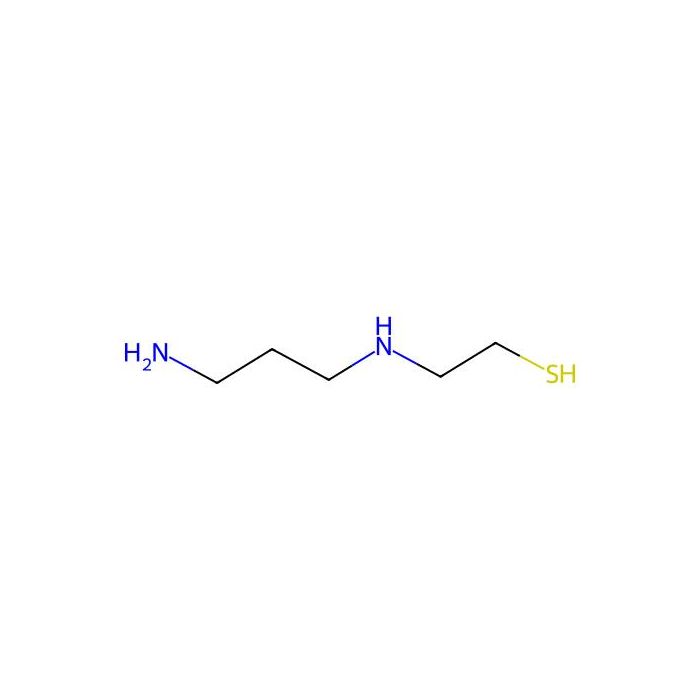
Amifostine thiol (WR-1065) is an active metabolite of the cytoprotector Amifostine. Amifostine thiol is a cytoprotective agent with radioprotective abilities. Amifostine thiol activates p53 through a JNK-dependent signaling pathway.
Specifications
Specifiche e purezza
Moligand™, 10 mM in DMSO
Condizioni di conservazione di stoccaggio
Protected from light,Argon charged,Store at -80°C
Spedito in
Dry ice packs + Cold packs
Questo prodotto richiede spedizione a catena fredda. I servizi di terra e altri servizi economici non sono disponibili.
Grado
Moligand™
Nomi e identificatori
Isomeri SMILES
C(CN)CNCCS
PubChem CID
104807
Peso molecolare
134.24
Documentazione
📋 Safety Data Sheet (SDS)
Comprehensive hazard, handling, storage, and regulatory compliance document.
Certificati (CoA, COO, BSE/TSE e tabella di analisi)
C of A & Other Certificates(BSE/TSE, COO):
Analytical Chart:
Calcolatori di soluzioni
Molarity Calculator
Determine the necessary mass, volume, or concentration for preparing a solution.
Dilution Calculator
Determine the dilution needed to prepare a stock solution.
Reconstitution Calculator
Recensioni
Recensioni dei clienti
Application Protocols
Not applicable in the sense of immunoassay workflows (e.g., WB, IHC, IF, FC) since this is a small-molecule reagent. For practical usage, consider the following general, literature-based handling notes for aminothiols:
Stock preparation: Dissolve immediately before use in degassed water, PBS, or anhydrous DMSO/DMF under inert gas. Filter only if necessary and compatible.
Bioconjugation (thiol–maleimide): Mix thiol (1.1–1.5 eq) with maleimide partner in pH 6.5–7.2 buffer at RT for 0.5–2 h; quench unreacted maleimide with excess cysteine or mercaptoethanol if appropriate.
Verification: Assess coupling by LC–MS/HPLC; check residual free thiol via Ellman’s assay.
For detailed, validated protocols tailored to your system, perform small-scale pilots to optimize pH, stoichiometry, and reaction time. Always refer to the SDS and CoA for constraints and compatibility.
Biological Roles
General, literature-based context for aminothiols (not item-specific claims and not for clinical use):
Redox chemistry:
Free thiols participate in reversible redox cycles (R–SH ⇌ R–S–S–R) that modulate protein function and small-molecule stability. Aminothiols can scavenge electrophiles and radical species in chemical biology assays.
Structural/functional analogs:
Endogenous thiols such as cysteine and glutathione maintain cellular redox homeostasis; low-molecular-weight aminothiols are often leveraged in vitro to emulate aspects of thiol-dependent biochemistry (e.g., preserving reduced cysteines in enzyme preparations).
Conjugation handles:
Thiol groups provide chemoselective points of attachment for probes, affinity tags, and crosslinkers (e.g., maleimide, iodoacetamide chemistry) facilitating pull-downs, imaging agent assembly, or surface immobilization.
pH-dependent speciation:
Amines modulate local microenvironment and can enhance cellular mimicry in membrane-interaction studies, while the thiol/thiolate equilibrium influences reactivity toward soft electrophiles.
Use constraints:
For research use only (as specified). Any discussion of pharmacology or therapeutic benefit is outside scope and not implied by this listing.
Practical note:
When employing aminothiols in biochemical assays, remove dissolved oxygen (argon sparging), include metal chelators if compatible, and validate the reduced state by Ellman’s assay or LC–MS prior to critical experiments.
Buffer Applications
While not a classical buffering agent, an aminothiol can be used in research buffers as a redox-active additive or conjugation partner. The following are general, literature-based practices (not item-specific specifications):
Redox maintenance:
Include low millimolar aminothiol in degassed phosphate or HEPES buffers to preserve reduced thiols in proteins/enzymes. Supplement with 0.1–1 mM EDTA to suppress metal-catalyzed oxidation when compatible.
Bioconjugation buffers:
Thiol–maleimide coupling is typically performed in phosphate buffer, pH 6.5–7.2, at room temperature for 0.5–2 h, minimizing competing amine acylation and hydrolysis.
Handling recommendations:
Prepare solutions immediately before use under inert gas; filter-sterilize only if necessary and compatible. Avoid repeated freeze–thaw of stock solutions; aliquot under argon.
Analytical confirmation:
Verify free thiol content via Ellman’s reagent (DTNB) or LC–MS to ensure minimal disulfide formation before sensitive labeling steps.
Not a formal buffer system:
This compound is not intended as a primary buffering agent with defined pKa/pH range. If a specific buffer capacity is required, choose an appropriate buffering system (e.g., phosphate, HEPES, MOPS) and use the aminothiol as an additive under oxygen-controlled conditions.
Green Alternatives
Selecting greener conditions for aminothiol chemistry focuses on solvent choice, energy input, and minimizing oxidation/waste. The following are general, literature-based considerations (not item-specific specifications).
Prefer aqueous media when feasible:
Degassed water or phosphate buffers reduce reliance on high-boiling polar aprotics. Conduct reactions at ambient temperature to cut energy consumption.
Use bio-based or lower-toxicity solvents for non-aqueous needs:
Ethyl acetate or 2-methyltetrahydrofuran (2-MeTHF) as extraction solvents post-reaction; avoid chlorinated solvents unless required for selectivity.
Enable catalysis and flow:
Photochemical thiol–ene reactions under LED irradiation can proceed at room temperature with high atom economy and minimal additives.
Waste minimization:
Prepare concentrated stock solutions just-in-time to avoid disposal of oxidized thiol solutions. Employ micro-scale screening to reduce solvent volumes.
Illustrative comparison (general):
Aqueous buffer (degassed): green profile; requires oxygen control; excellent for bioconjugation.
DMSO/DMF (anhydrous): strong solvency but poorer EHS footprint; use sparingly and recover where possible.
2-MeTHF/EtOAc: greener workup solvents with good separations; check thiol odor containment measures.
Trade-offs:
While aqueous media are greener, they may accelerate oxidation without inert conditions. Balancing reactivity with oxygen management is key to both performance and sustainability.
Pharmaceutical Uses
This product is supplied strictly for research use only. No clinical or therapeutic use is intended or implied.
General formulation/CMC context for small-molecule aminothiols (literature-based, not item-specific):
Excipient/compatibility studies:
Aminothiols may be evaluated as model nucleophiles or reductants in preformulation stress-testing to probe excipient reactivity and oxidative stability pathways.
Prototyping conjugates and linkers:
The thiol function enables rapid assembly of small-molecule–biomolecule conjugates (e.g., maleimide linkages) to study linker stability, release mechanisms, or ADC-mimetic constructs in vitro.
Salt forms and solid state:
Many aminothiols are handled as hydrochloride or other salts to improve stability and manage odor/volatility; final form selection affects hygroscopicity and processing.
Analytical controls:
Because thiols readily oxidize, release/stability methods often include impurity tracking for disulfides and thioethers by LC–MS, as well as derivatization assays for free thiol content.
Regulatory note:
No pharmacopeial monograph, quality standard, or GMP status is stated for this item. For any regulated work, establish internal specifications and qualify suppliers accordingly. Refer to the CoA/Spec Sheet for lot-specific quality attributes.
Physical Properties
Item-specific physicochemical values are not provided in the Product Data. Do not use literature values as specifications.
Item-specific specifications:
Appearance: Not specified for this item; refer to CoA/Spec Sheet.
Molecular weight: Not specified for this item; refer to CoA/Spec Sheet.
Melting point: Not specified for this item; refer to CoA/Spec Sheet.
Boiling point: Not specified for this item; refer to CoA/Spec Sheet.
Density: Not specified for this item; refer to CoA/Spec Sheet.
Refractive index: Not specified for this item; refer to CoA/Spec Sheet.
Solubility: Not specified for this item; refer to CoA/Spec Sheet.
logP/logD: Not specified for this item; refer to CoA/Spec Sheet.
pKa(s): Not specified for this item; refer to CoA/Spec Sheet.
General characteristics for aminothiols (literature/general knowledge):
Aminothiols are typically hygroscopic, strongly hydrophilic due to protonated amines, and readily soluble in water and polar protic media; they may also dissolve in polar aprotic solvents (e.g., DMF/DMSO) when anhydrous handling is required.
The free thiol is air-sensitive and can oxidize to disulfides; solutions often require degassing and antioxidant precautions.
Multiple basic centers (amines) confer pH-dependent speciation; free base vs. salt forms can show distinct melting points and hygroscopicity.
Practical notes (non-spec):
Prepare solutions immediately before use in oxygen-minimized conditions (argon or nitrogen). Include chelators (e.g., EDTA) to limit metal-catalyzed oxidation if compatible with your workflow.
Quality and Grades
Grade/Purity: Moligand™ (as provided). This designation indicates inclusion in a curated small-molecule/ligand collection suitable for discovery, screening, and chemical biology workflows. While not a regulatory grade, Moligand™ emphasizes structural fidelity, screening readiness, and handling/stability practices enabling reproducible research results.
What Moligand™ typically implies (general description):
Identity confirmation by orthogonal methods (e.g., LC–MS, NMR) appropriate for small-molecule libraries.
Purity suitable for screening and exploratory synthesis; specific numeric purity and impurity profiles are lot-dependent and must be verified on the CoA/Spec Sheet for this item.
Packaging oriented to air-/light-sensitive compounds (argon charge, light protection, dry/cold chain) to preserve the reduced thiol state.
Item-specific statements:
Numerical purity (%), residual solvents, water content, metal limits, stabilizers, and UV cutoffs: Not specified for this item; refer to CoA/Spec Sheet.
Practical guidance:
Upon receipt, document lot number and retain the CoA. For screening, consider immediate re-aliquoting under inert gas to minimize headspace oxygen. For analytical work (e.g., bioassays, SAR), confirm purity by LC–MS/HPLC prior to use to ensure the thiol remains in the reduced state and has not partly oxidized to disulfide.
Reaction and Applications
As a bifunctional aminothiol, “Amifostine thiol” supports diverse transformations and conjugations. The following are general applications for small-molecule aminothiols (literature/general knowledge), not item-specific specifications.
Chemoselective bioconjugation:
Thiol–maleimide coupling for labeling peptides/proteins or assembling small-molecule conjugates. Typically conducted at pH 6.5–7.2 to favor cysteine-like selectivity and suppress competing amine reactions.
Disulfide exchange with activated disulfides for reversible linkers or redox-responsive constructs.
Click and radical processes:
Thiol–ene (radical-mediated) additions to alkenes under photochemical or peroxide initiation.
Thiol–Michael additions to acrylates, acrylamides, and vinyl sulfones, typically base-catalyzed to generate the thiolate.
Reductive roles:
Small aminothiols can serve as sacrificial reductants or redox buffers in sensitive transformations (e.g., maintaining enzyme active-site thiols in biochemical assays; verify compatibility case-by-case).
Protecting-group strategies:
Formation of thioethers or temporary disulfides as protective handles; subsequent cleavage under reducing conditions (DTT/TCEP) allows dynamic covalent manipulations.
Practical tips:
Exclude oxygen (argon/nitrogen), add trace metal scavengers (EDTA), and prepare fresh solutions. Monitor by LC–MS for disulfide formation. For conjugations, slight excess of thiol (1.1–1.5 eq) often drives completion without excessive side reactions.
Reaction Conditions
Typical, literature-based conditions relevant to aminothiol chemistry (general guidance; not item-specific specifications):
Stoichiometry: 1.1–1.5 eq thiol to drive completion.
Notes: Avoid high pH to limit maleimide ring-opening; exclude oxygen.
Thiol–Michael addition to acrylates/acrylamides:
Solvent: Anhydrous DMF, DMSO, or MeOH; can be run in water for some substrates.
Base: Tertiary amines (e.g., DIPEA) or carbonate; catalytic amounts often sufficient.
Temperature: 0–25°C typically; higher temperatures accelerate but raise side-reactions.
Thiol–ene (radical) additions:
Initiation: Photochemical (365–405 nm LEDs) with photoinitiator (e.g., DMPA) or thermal/peroxide initiation (AIBN).
Solvent: Neat or inert organic solvent; oxygen quenching must be managed (argon sparging).
Disulfide formation/exchange:
Oxidation: DMSO, iodine, or air/O2 under controlled conditions; monitor to avoid over-oxidation to sulfinic/sulfonic acids.
Exchange: Activated disulfides in buffered aqueous media at neutral to slightly basic pH.
Monitoring and analytics:
Track progress by LC–MS or HPLC-UV; confirm free thiol via Ellman’s assay. Control metal ions (EDTA 0.1–1 mM) to suppress radical/metal-catalyzed pathways.
Safety and Handling
Hazard classification (item-specific):
Signal word: Not specified for this item; refer to SDS.
H-statements: Not specified for this item; refer to SDS.
GHS classification/pictograms: Not specified for this item; refer to SDS.
General safety guidance for aminothiols (literature/general knowledge):
Thiols may have strong odors and can cause irritation to skin, eyes, and respiratory tract. Avoid inhalation and contact.
Aminothiols can reduce oxidants; avoid contact with strong oxidizers and peroxides. They may form disulfides upon air exposure.
PPE and engineering controls:
Use a certified chemical fume hood or well-ventilated enclosure.
Wear lab coat, safety glasses or face shield, and appropriate chemical-resistant gloves (e.g., nitrile; confirm compatibility in SDS).
Use gas-tight syringes and septa when handling oxygen-sensitive solutions.
First-aid overview (consult SDS for details):
Inhalation: Move to fresh air; seek medical attention if symptoms persist.
Skin contact: Remove contaminated clothing; wash with soap and water.
Eye contact: Rinse cautiously with water for several minutes; remove contact lenses if present and easy to do; get medical attention.
Ingestion: Rinse mouth; do not induce vomiting; seek medical advice.
Storage incompatibilities and stability:
Keep protected from light and oxygen; inert-gas blanket recommended.
Avoid metals and metal salts that catalyze thiol oxidation.
Follow the item’s specified storage of −80°C, argon charged, light protection; see Storage & Reconstitution.
Solvent Selection
This item is an aminothiol; solvent selection should prioritize maintaining the reduced thiol state while achieving target concentration and compatibility with downstream chemistry/biology.
General solvent guidance (literature/general knowledge):
Aqueous media: Aminothiols are typically water-soluble due to protonated amines; use degassed, oxygen-free buffers. Include 0.1–1 mM EDTA when compatible to limit metal-catalyzed oxidation.
Polar aprotic solvents: Anhydrous DMSO or DMF can be used for stock solutions under inert gas; avoid prolonged storage in solution. Dry, deoxygenated acetonitrile may also be suitable for some workflows.
Alcohols: Methanol/ethanol can dissolve small aminothiols but may accelerate air oxidation; use only freshly degassed, inhibitor-free grades.
When to choose what:
Bioconjugation (maleimide coupling): Degassed PBS or phosphate buffer at pH 6.5–7.2 often balances thiolate reactivity and selectivity for cysteine-like chemistry.
Organic synthesis (thiol–ene/thiol–Michael): Anhydrous polar aprotic solvents under inert gas minimize side-oxidation.
Comparison (general):
Water (degassed) – green, biocompatible; requires oxygen control.
DMSO (anhydrous) – strong solvency; may participate in redox under harsh conditions; keep cold and oxygen-free.
DMF (anhydrous) – good solvency; control moisture; remove promptly after reaction by extraction/evaporation.
Storage and Reconstitution
Item-specific storage/shipping (as provided):
Storage conditions: Protected from light, Argon charged, Store at −80°C.
Shipped in: Dry ice packs + Cold packs.
Research use only.
General reconstitution and stability guidance for aminothiols (not specifications):
Work quickly on ice and under inert gas. Open vials only after equilibrating to cold, dry atmosphere to prevent condensation.
Solvent choice: Use freshly degassed water or buffer for immediate use; for stock solutions, employ anhydrous, oxygen-free DMSO or DMF. Avoid basic conditions unless required, as high pH accelerates oxidation and side reactions.
Aliquoting: Prepare single-use aliquots in gas-tight vials or sealed microtubes under argon/nitrogen to minimize headspace oxygen. Avoid repeated freeze–thaw cycles.
Additives: If compatible with downstream use, include 0.1–1 mM EDTA to limit metal-catalyzed oxidation; consider adding small amounts of reducing agents only if validated for your assay.
Short-term solution handling: Keep solutions cold and protected from light; use within the same day whenever possible. Discard visibly discolored or malodorous solutions suggestive of oxidation/decomposition.
Always consult the lot-specific CoA/Spec Sheet for any additional stabilizers, concentration limits, and recommended reconstitution solvents unique to this item.
Structure and Identity
Brief overview: This catalog entry refers to the “Amifostine thiol,” the reduced aminothiol form related to the radioprotective pro-moiety amifostine. For this specific item, only limited identifiers are provided in the product data.
CAS: 31098-42-7 (as provided)
CID: 104807 (as provided)
InChIKey: Not specified for this item; refer to CoA/Spec Sheet.
SMILES: Not specified for this item; refer to CoA/Spec Sheet.
Molecular formula: Not specified for this item; refer to CoA/Spec Sheet.
Molecular weight: Not specified for this item; refer to CoA/Spec Sheet.
Structural features (general, literature context):
Expected functional groups for an “amifostine thiol” species: a free thiol (-SH) and one or more amino groups (-NH2/-NH-), giving a bifunctional aminothiol scaffold. Such structures are typically highly polar and prone to form disulfides upon oxidation.
Typical 2D depiction (general description): a short aliphatic chain bearing terminal/secondary amines and a terminal thiol; no aromatic rings; no stereocenters in the simplest aminothiol congeners.
Important note:
Do not infer identity-specific structural parameters for this item beyond what is listed above. For definitive structure, elemental composition, and spectral characterization (NMR, LC–MS, HPLC purity), consult the Certificate of Analysis (CoA) accompanying the lot shipped.
Synthetic Utility
Aminothiols combine a soft nucleophile (thiol/thiolate) with one or more amine functions (harder nucleophiles), enabling orthogonal or tandem transformations. General synthetic utilities (literature-based):
Chemoselective S-functionalization:
Alkylation with soft electrophiles (e.g., benzyl bromides, activated allylic/benzylic systems) under basic conditions; thiolate formation enhances rate and selectivity.
Michael addition to α,β-unsaturated carbonyls/vinyl sulfones for rapid thioether formation.
Disulfide chemistry:
Oxidative coupling to homodimers/heterodimers; exchange with activated disulfides to introduce cleavable linkers. Useful for redox-responsive materials and conjugates.
Orthogonal amine derivatization:
Amide coupling (HATU/EDC) at amine while preserving thiol under mild conditions using thiol-protecting groups (e.g., Acm, Trt) or oxygen-free handling.
Protecting-group strategies:
Temporary S-protection (e.g., thioacetate, S-Trt) facilitates multi-step sequences; final deprotection under mild nucleophilic or acidic conditions restores the thiol for late-stage conjugation.
Surface and polymer modification:
Thiol–ene and thiol–yne click processes enable grafting onto unsaturated polymers and surfaces; photoinitiated at ambient temperature with high functional-group tolerance.
Practical considerations:
Maintain inert atmosphere; use dry solvents and chelators to suppress oxidation. Sequence steps to exploit differential reactivity: perform S-alkylation/Michael first, then amide formation, or vice versa with appropriate masking.
Target Specificity
Not applicable. This product is a small-molecule aminothiol, not an antibody, enzyme, or targeted biologic. No antigen, epitope, clone, isotype, or species reactivity is defined for this item. For biochemical selectivity or binding studies, users should determine target interactions empirically under their specific assay conditions.
Need help choosing the grade?
Our grade selection guide covers purity, stabilizer status, and application suitability for all variants in our catalog.
We use cookies to ensure the website functions properly and, where permitted, to improve your experience. You can manage your preferences at any time in Settings. Learn more in our Cookie Policy.
Shall we send you a message when we have discounts available?
Remind me later
Thank you! Please check your email inbox to confirm.
Products are supplied to verified businesses, institutions, and qualified professionals for research and development use only. Not for use in humans, animals, diagnosis, or therapy.