GRADE & PURITYMoligand™?Moligand™ — Aladdin's line of ligands and bioactive small molecules. Use for receptor, pathway, and binding studies needing defined small-molecule tools.10 mM in DMSO
Moligand™, 10 mM in DMSO Moligand™ for sensitive chromatographic and analytical workflows requiring minimal baseline interference.
🌡
Storage & shipping
Store at -80°C Ships Dry ice packs + Cold packs Check lot-specific COA for exact specifications.
📋
Quality documents
SDS, COA, datasheet, and spec sheet available for download. Lot-specific COA accessible via lot number lookup.
📚
Literature proof
Cited in 0 peer-reviewed publications across chromatography, organic synthesis, and cross-coupling reactions.
Panoramica
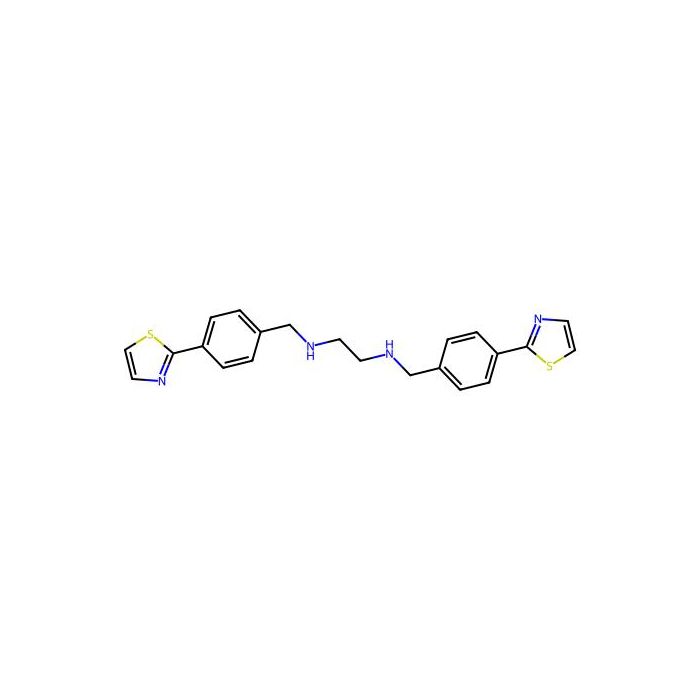
BC-1258, an F-box/LRR-repeat protein 2 (FBXL2) activator, can stabilize and upregulate FBXL2 levels. BC-1258 induces apoptosis of tumorigenic cells, and profoundly inhibits tumor formation in mice.
Specifications
Specifiche e purezza
Moligand™, 10 mM in DMSO
Condizioni di conservazione di stoccaggio
Store at -80°C
Spedito in
Dry ice packs + Cold packs
Questo prodotto richiede spedizione a catena fredda. I servizi di terra e altri servizi economici non sono disponibili.
Certificati (CoA, COO, BSE/TSE e tabella di analisi)
C of A & Other Certificates(BSE/TSE, COO):
Analytical Chart:
Calcolatori di soluzioni
Molarity Calculator
Determine the necessary mass, volume, or concentration for preparing a solution.
Dilution Calculator
Determine the dilution needed to prepare a stock solution.
Reconstitution Calculator
Recensioni
Recensioni dei clienti
Application Protocols
Item-specific
No validated application protocols are provided for BC-1258 in the Product Data.
General protocols for small-molecule screening compounds (literature/general)
DMSO stock preparation
Bring vial to room temperature in a desiccator to prevent condensation. Quickly weigh the required amount.
Add anhydrous DMSO to prepare a convenient concentration (e.g., 10, 20, or 50 mM). Vortex and, if needed, sonicate briefly. Record exact concentration based on weight and MW from the CoA (if MW is not provided, determine analytically).
Optional: Aliquot into low-dead-volume, amber tubes under dry nitrogen/argon. Freeze at -80°C.
Working solution for assays
Thaw an aliquot on ice, vortex, and inspect for clarity. Dilute into pre-chilled assay buffer to the desired final concentration, keeping DMSO ≤ assay tolerance.
Prepare serial dilutions (e.g., 1:3 or 1:2) to generate concentration–response curves. Include vehicle controls.
Quality checks
Confirm identity/purity by LC–MS on receipt and after defined storage intervals. Assess precipitation or adsorption by measuring apparent concentration before and after incubation using UV or LC–MS.
Plate handling
For high-throughput use, dispense with acoustic droplet ejection or positive-displacement systems. Seal plates to limit evaporation; equilibrate to assay temperature before readout.
Biological Roles
Item-specific
No biological function, target, or pathway annotation is provided for BC-1258 in the Product Data. Target specificity and mode of action are not specified.
General context (literature/general)
Small-molecule ligands serve as chemical probes to modulate or report on biological targets (enzymes, receptors, transporters). Their roles include transient inhibition/activation, stabilization/destabilization of protein conformations, and perturbation of signaling cascades in controlled research settings.
Absent structural and target data, BC-1258 should be treated as an uncharacterized ligand candidate. Any biological role must be empirically determined using properly controlled assays (biochemical, biophysical, cellular) and verified with orthogonal techniques.
Good practices: Confirm purity and identity before inferring biological effects; use concentration–response studies with appropriate vehicle and positive/negative controls; monitor cytotoxicity and nonspecific effects (e.g., membrane disruption, aggregation) independent of target engagement.
Important limitation
No medical or clinical claims are made or implied. This product is supplied strictly for laboratory research use, not for diagnostic, therapeutic, or human/animal consumption purposes.
Buffer Applications
Applicability note
BC-1258 is not a buffering agent. However, it is commonly handled in assay buffers after dilution from organic stock solutions.
Practical guidance (literature/general)
Stock preparation: Dissolve in anhydrous DMSO to a concentrated stock (e.g., 10–50 mM), then dilute into the desired assay buffer immediately before use.
Acceptable DMSO levels: Many enzyme assays tolerate up to 1–2% v/v DMSO; many cell-based assays aim for ≤0.1–0.5% v/v. Validate tolerance for each assay.
Typical biochemical buffers: HEPES, Tris, or phosphate buffers at pH 7.2–7.5 with 100–150 mM NaCl; include 0.01–0.05% nonionic detergent (e.g., Tween 20) if aggregation is a concern. Ensure buffer components do not react with the compound (avoid strong oxidants/reductants).
Solubility checks: After dilution, inspect for turbidity/precipitation. If needed, reduce concentration, increase temperature slightly (to 25–30°C), or adjust buffer ionic strength.
Adsorption mitigation: For sticky hydrophobic ligands, consider low-binding plasticware, addition of 0.1% BSA (if assay-compatible), or preconditioning tips/plates with buffer + DMSO.
Green Alternatives
Context
BC-1258 is a discrete small-molecule library member, not a commodity solvent or bulk reagent. "Green alternatives" therefore pertain to greener handling, solvents for dissolution/dilution, and waste minimization rather than replacing the compound itself.
Greener handling strategies (literature/general)
Prefer greener co-solvents when assay-compatible: use ethanol or water-based buffers with minimal DMSO where feasible. Keep final DMSO ≤0.1–0.5% v/v for many cell-based assays to reduce solvent burden.
Minimize waste via microvolume operations: prepare high-concentration stocks (e.g., 10–50 mM) and dispense with acoustic or low-dead-volume liquid handlers to reduce solvent usage and plastic waste.
Energy-efficient storage: Consolidate aliquots and avoid unnecessary deep-freeze door openings. Maintain accurate inventories to limit redundant orders and associated cold-chain footprint.
Safer cleaning: Choose aqueous or alcohol-based cleaning systems over chlorinated solvents for glassware where compatible.
Comparison of common stock solvents (general)
DMSO: Highest solvency; moderate environmental burden; typically essential for dissolution.
Ethanol/Isopropanol: Lower toxicity and better EHS profile; limited solvency for some hydrophobic/heteroaromatic scaffolds.
DMF/NMP: Strong solvency but higher hazard classification—avoid in bioassays when possible.
Pharmaceutical Uses
Applicability note
No pharmacopeial status, excipient role, or formulation use is specified for BC-1258. This product is designated For research use only and is not intended for human or veterinary applications.
General context (literature/general)
In early discovery, small molecules may be profiled for developability attributes (solubility, stability, permeability) using preformulation screens. If such studies are undertaken, perform them strictly within research settings and not for clinical use.
Any discussion of dosage forms or therapeutic use would be inappropriate here. Instead, focus on analytical characterization (LC–MS, purity), stability in common media, and compatibility with in vitro assay matrices.
Recommended practices
If employing BC-1258 as an internal standard or reference material in analytical method development, document lot-specific purity and exact mass, and store under recommended conditions to maintain integrity.
For any scale-up or formulation-like experiments, ensure complete review of the SDS/CoA and institutional approvals.
Physical Properties
Item-specific (from Product Data)
Appearance: Not specified for this item; refer to CoA/Spec Sheet.
Molecular weight: Not specified for this item; refer to CoA/Spec Sheet.
Not specified for this item (consult CoA/SDS for authoritative values)
Melting point (MP)
Boiling point (BP)
Density
Refractive index
LogP/logD
pKa(s)
UV-Vis maxima / cutoff
Water solubility, DMSO solubility
General guidance (literature/general)
Many library compounds are solids at ambient temperature and are typically provided for dissolution in anhydrous DMSO to prepare concentrated stocks (e.g., 10–50 mM). Actual solubility may vary widely and should be confirmed empirically.
If UV-active, approximate quantitation can be performed by UV-Vis in organic solvent; however, extinction coefficients are compound-specific.
Hygroscopicity, polymorphism, and amorphous/crystalline state can influence handling and dissolution; verify on receipt by visual inspection and a small-scale solubility screen (DMSO, DMF, ethanol, acetonitrile, assay buffer with ≤1–2% co-solvent).
Item-specific purity assays, water/peroxide/metal limits, residual solvents, stabilizers: Not specified for this item; refer to CoA/Spec Sheet.
What Moligand™ generally implies (literature/general)
Focus: Compounds intended for screening and chemical biology workflows, typically provided to enable target engagement studies, SAR exploration, and hit validation.
Typical characterization package: Identity confirmation by LC–MS or HRMS, and chromatographic purity assessment (e.g., LC/UV, LC/MS). Exact methods, thresholds, and acceptance criteria vary by item and should be verified on the item’s CoA.
UV background: For use in optical assays (UV/fluorescence), low baseline absorbance and absence of fluorescent impurities are preferred; check LC–DAD traces if provided.
Impurities and salt form: If a salt or solvate is supplied, the counterion/stoichiometry will be listed on the CoA; this affects molar calculations. Absent such data here, assume free base/neutral form only after confirming on the documentation.
Best practices
Always consult the CoA/SDS bundled with the lot you receive to confirm identity, purity, salt state, and recommended handling.
For sensitive assays (e.g., biophysics), consider additional in-house QC (orthogonal LC methods, NMR, water content by KF) as needed.
Reaction and Applications
Applicability note
BC-1258 is supplied as a Moligand™ small-molecule screening compound rather than a synthetic reagent. As such, its primary applications are in discovery biology and analytical/biophysical assays rather than as a stoichiometric or catalytic reagent in preparative chemistry.
Research and screening uses (literature/general)
Target engagement studies: Use in biochemical inhibition/activation assays, thermal shift assays (DSF/TS), differential scanning calorimetry (DSC), surface plasmon resonance (SPR), bio-layer interferometry (BLI), or microscale thermophoresis (MST) to quantify binding.
Cellular assays: Evaluate pathway modulation, reporter readouts, or phenotypic screens, ensuring DMSO controls and solubility checks. Determine apparent potency (e.g., AC50/EC50) where applicable.
Orthogonal confirmation: Employ orthogonal biophysical methods (NMR line broadening, WaterLOGSY, CETSA) to support binding mechanisms and reduce false positives.
SAR enablement: Use BC-1258 as a reference point in series expansion; compare activity profiles across panels to infer pharmacophore features (once structure is known).
Analytical applications: Use as an LC–MS reference standard for retention time matching and mass confirmation in metabolism or stability studies.
Practical tips
Verify solubility and absence of aggregation (e.g., detergent controls, dynamic light scattering) before drawing mechanistic conclusions.
Include assay interference controls (redox cycling, PAINS filters, fluorescence quenching/emission overlap) as appropriate for the detection modality.
Reaction Conditions
Applicability note
Preparative chemical reactions specific to BC-1258 cannot be provided without structural information. This product is not positioned as a reagent or catalyst.
General stability/handling conditions for small molecules (literature/general)
Solution stability: Evaluate in DMSO and in assay buffer at intended temperatures (4–37°C) over relevant timeframes (hours to days) by LC–MS. Monitor for hydrolysis, oxidation, or isomerization.
Light and oxygen: In the absence of data, handle under ambient light with caution; consider amber vials and inert gas headspace if instability is suspected.
Adsorptive losses: Test recovery from plastics vs glass. Low-binding consumables can mitigate losses for hydrophobic compounds.
Lyophilization and reconstitution: If provided as a film or solid, reconstitute with dry solvent and vortex/sonicate briefly. Avoid heating above ~40°C unless stability is confirmed.
Assay implementation
Establish concentration ranges with half-log or quarter-log serial dilutions from a well-characterized DMSO stock. Include vehicle controls matched for DMSO percentage.
Safety and Handling
Item-specific (from Product Data)
GHS classification, signal word, pictograms, H-statements: Not specified for this item; refer to SDS.
Storage conditions: Store at -80°C.
Shipped in: Dry ice packs + Cold packs.
Research use: For research use only.
General safety guidance (literature/general)
Handle all research chemicals in a certified chemical fume hood using appropriate PPE: lab coat, safety glasses, and suitable chemical-resistant gloves (e.g., nitrile). Avoid inhalation, ingestion, and skin or eye contact.
Unknown hazard profile: Until the SDS is reviewed, treat as potentially harmful. Avoid creating dust or aerosols; keep containers tightly closed. Use secondary containment when transporting between cold storage and work areas to prevent condensation ingress.
First aid (overview; defer to SDS): In case of skin contact, wash with soap and water. If in eyes, rinse cautiously with water for several minutes and seek medical attention. If inhaled, move to fresh air. If swallowed, rinse mouth and seek medical advice.
Incompatibilities: Without structural data, avoid strong oxidizers/reducers, strong acids/bases, and reactive metals. Do not mix with unknowns. Segregate from foodstuffs and out of reach of unauthorized users.
Thermal stability: Keep frozen as specified; warm to room temperature only for the minimum time necessary to weigh or aliquot. Minimize freeze–thaw cycles by aliquoting on first thaw.
Waste: Dispose according to institutional hazardous chemical waste protocols.
Solvent Selection
Item-specific (from Product Data)
No solvent preferences or solubility data are specified for this item; refer to CoA/Spec Sheet.
General selection strategy for screening compounds (literature/general)
Primary stock solvent: Anhydrous DMSO is the default for most small organic ligands due to broad solvating power and compatibility with biochemical assays at ≤0.1–1% v/v.
Alternative/co-solvents: DMF (high solvency; more assay-interfering), acetonitrile (moderate solvency; volatile), ethanol or isopropanol (greener, but lower solvency for polar/large molecules). Choose based on assay tolerance and compound stability.
Aqueous handling: Prepare concentrated organic stock, then dilute into assay buffer to the working concentration. Keep final organic co-solvent low to minimize biological interference. Typical DMSO in-well: 0.1–0.5% for cellular assays, up to 1–2% for many biochemical assays (verify per assay).
Solubility testing: Execute a tiered screen (e.g., DMSO → DMF → MeCN → EtOH) and assess clarity by visual inspection and nephelometry or plate-based turbidimetry. For problematic compounds, gentle warming (<40°C) and brief sonication can aid dissolution.
Stability considerations: Protect from moisture, oxygen, and light as appropriate; avoid prolonged exposure of DMSO stocks to air and repetitive freeze–thaw. Evaluate stability by LC–MS after storage under intended conditions.
Storage and Reconstitution
Item-specific (from Product Data)
Storage conditions: Store at -80°C.
Shipping: Dry ice packs + Cold packs.
Appearance: Not specified for this item; refer to CoA/Spec Sheet.
General guidance (literature/general)
Upon receipt: Keep the vial frozen. Allow to equilibrate in a desiccator before opening to avoid moisture condensation. Record lot number and date.
Aliquoting: On first thaw, subdivide into single-use aliquots (e.g., 10–100 µL of concentrated stock) in inert, amber vials/tubes. Minimize headspace; consider nitrogen/argon backfill.
Reconstitution: Dissolve the solid (if supplied as such) in anhydrous DMSO to a convenient stock concentration (commonly 10–50 mM; adjust to your assay). If the molecular weight is not provided, determine concentration by weight-to-volume using MW from the CoA or by quantitative NMR/UV when appropriate.
Stability: Avoid repeated freeze–thaw cycles. Store aliquots at -80°C and use thawed aliquots the same day. Protect from light and moisture if the compound is photosensitive or hygroscopic (unknown here—exercise caution).
Documentation: Retain CoA/SDS and annotate all in-lab labels with concentration, solvent, date, and operator initials.
Note
Where any value is not explicitly provided for this item, treat it as Not specified for this item; refer to CoA/Spec Sheet and consult the SDS for authoritative safety information.
Structure and Identity
Item-specific (from Product Data)
SKU: B1495957
Product Name: BC-1258 (Moligand series)
CAS: 1507370-40-2
PubChem CID: 91885440
Grade: Moligand™
Molecular formula: Not specified for this item; refer to CoA/Spec Sheet.
Molecular weight: Not specified for this item; refer to CoA/Spec Sheet.
SMILES: Not specified for this item; refer to CoA/Spec Sheet.
InChIKey: Not specified for this item; refer to CoA/Spec Sheet.
General notes (literature/general)
Structural class: The exact structure for BC-1258 is not disclosed here. As a Moligand screening compound, it is expected to be an organic small molecule designed for biochemical target engagement studies.
Functional groups and ring systems: Not available for this item. Without a disclosed structure, specific functional motifs (heteroaromatics, halogens, HBD/HBA counts, stereocenters) cannot be enumerated.
2D description in words: Not available due to missing structural representation. When the structure is provided (SMILES/InChI), we recommend generating a 2D depiction and annotating key pharmacophore elements (aromatic cores, linkers, donors/acceptors).
Synthetic Utility
Applicability note
BC-1258 is supplied as a screening compound rather than a functionalized building block. Without disclosed structure or functional groups, specific synthetic transformations cannot be recommended.
General utility in research workflows (literature/general)
Reference and control material: Use as a benchmark in SAR studies, assay development, or analytical methods (LC–MS retention/mass control) once its behavior is characterized in your system.
Derivatization for studies: If/when structure is available and functional handles exist, derivatives (e.g., biotinylated or fluorophore-tagged analogs) may be prepared for chemoproteomics, pull-downs, or imaging. Standard linker strategies (amide formation, click chemistry) require confirmation of suitable reactive sites.
Metabolite identification: Employ microsomal/S9 incubations and LC–HRMS to map soft spots and potential metabolic liabilities; use BC-1258 as parent reference.
Solid-phase or parallel synthesis relevance: If BC-1258 belongs to a known scaffold family, parallel synthesis can be used to explore substitutions; however, such planning awaits structural disclosure.
Target Specificity
Item-specific
Target(s), pathway, species reactivity, and binding parameters for BC-1258 are not specified in the Product Data.
General notes (literature/general)
Until target specificity is defined experimentally, treat BC-1258 as an uncharacterized ligand. Employ broad profiling (e.g., biochemical panels, CETSA-proteomics, thermal proteome profiling, or activity-based protein profiling if chemistry permits) to discover potential targets.
Confirm hits by orthogonal methods and counter-screens to rule out assay interference or nonspecific mechanisms (e.g., redox cycling, colloidal aggregation).
Need help choosing the grade?
Our grade selection guide covers purity, stabilizer status, and application suitability for all variants in our catalog.
We use cookies to ensure the website functions properly and, where permitted, to improve your experience. You can manage your preferences at any time in Settings. Learn more in our Cookie Policy.
Shall we send you a message when we have discounts available?
Remind me later
Thank you! Please check your email inbox to confirm.
Products are supplied to verified businesses, institutions, and qualified professionals for research and development use only. Not for use in humans, animals, diagnosis, or therapy.