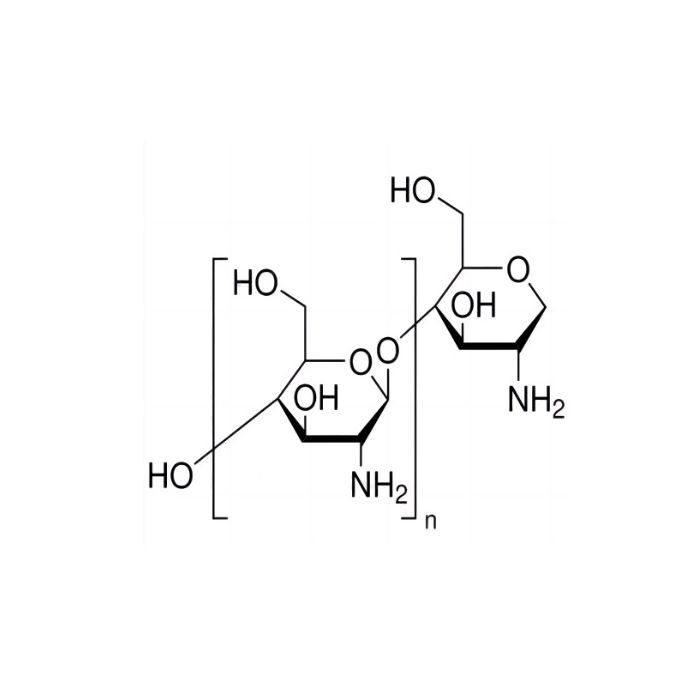
Carboxylated chitosan - BioReagent, Water-soluble , CAS No.9012-76-4

CAS: 9012-76-4 Cat. No.: C105800 Formula: (C6H11NO4)n Numero EC: 618-480-0
Disponibile su ordine
QUALITÀ & PUREZZA BioReagent ? BioReagent grade — tested suitable for life-science and molecular-biology use. Use for cell culture, assays, and biochemical work needing biological compatibility. Water-soluble
Synonyms
Kytex M|Toluene, o-chloro-|Chitopearl BCW 3505|Chitopearl BCW 2500|YEA|Toluene, o-bromo-|Chitopearl BCW 3507|Chitosan|Sea Cure F|N-[(2S,3R,4R,5S,6R)-5-[[(2S,3R,4R,5S,6R)-3-amino-5-[[(2S,3R,4R,5S,6R)-3-amino-5-[[(2S,3R,4R,5S,6R)-3-amino-5-[[(2S,3R,4R,5S,6R)-3-amino-5-[[(2S,3R,4R,5S,6R)-3-amino-5-[[(2S,3R,4R,5S,6R)-3-amino-4,5-dihydroxy-6-(hydroxymethyl)-2-oxanyl]oxy]-4-hydroxy-6-(hy|Chitosan high molecular weight,310000-375000Da|Kimitsu Chitosan H|Flonac N|Chitopearl BC 3000|Flonac C|Sea Cure Plus|Chitopearl BCW 3500|Chicol|methyl N-[(2S,3R,4R,5S,6R)-5-[(2S,3R,4R,5S,6R)-3-azanyl-5-[(2S,3R,4R,5S,6R)-3-azanyl-5-[(2S,3R,4R,5S,6R)-3-azanyl-5-[(2S,3R,4R,5S,6R)-3-azanyl-5-[(2S,3R,4R,5S,6R)-3-azanyl-5-[(2S,3R,4R,5S,6R)-3-azanyl-6-(hydroxymethyl)-4,5-bis(oxidanyl)oxan-2-yl]oxy-6-(hy|methyl N-[5-[3-amino-5-[3-amino-5-[3-amino-5-[3-amino-5-[3-amino-5-[3-amino-4,5-dihydroxy-6-(hydroxymethyl)tetrahydropyran-2-yl]oxy-4-hydroxy-6-(hydroxymethyl)tetrahydropyran-2-yl]oxy-4-hydroxy-6-(hydroxymethyl)tetrahydropyran-2-yl]oxy-4-hydroxy-6-(hydrox|Chitosan - Non-animal origin|Kimitsu Chitosan M|Dilantin DB|Chitopearl 3510|Kimitsu Chitosan L|Kimitsu Chitosan F|2-AMINOTOLUENE|Chitopearl BCW 3000|Kimitsu Chitosan F 2|o-Aminochlorobenzene|Poliglusam
Storage
Room temperature
Shipped In
Normal
★
Dimensione
Germania (EU)
USA*
Prezzo
Qtà
25g
C105800-25g
—
3 Disponibile
46,77€
100g
C105800-100g
—
2 Disponibile
156,11€
250g
C105800-250g
1 Disponibile
2 Disponibile
340,07€
500g
C105800-500g
5 Disponibile
4 Disponibile
642,04€
Enter a quantity for the sizes you want to add.

Panoramica

Forms gels with multivalent anions. Gives clear solutions that dry to strong, clear films.

Specifiche

Sinonimi
Kytex M | Toluene, o-chloro- | Chitopearl BCW 3505 | Chitopearl BCW 2500 | YEA | Toluene, o-bromo- | Chitopearl BCW 3507 | Chitosan | Sea Cure F | N-[(2S,3R,4R,5S,6R)-5-[[(2S,3R,4R,5S,6R)-3-amino-5-[[(2S,3R,4R,5S,6R)-3-amino-5-[[(2S,3R,4R,5S,6R)-3-amino-5-[[(2S,3R,4R,5S,6R)-3-amino-5-[[(2S,3R,4R,5S,6R)-3-amino-5-[[(2S,3R,4R,5S,6R)-3-amino Mostra altro
Specifiche e purezza
BioReagent, Water-soluble
Condizioni di conservazione di stoccaggio
Room temperature
Spedito in
Normal
Grado
BioReagent
Nomi e identificatori
Pubchem Sid
IUPAC Name
methyl N-[(2S,3R,4R,5S,6R)-5-[(2S,3R,4R,5S,6R)-3-amino-5-[(2S,3R,4R,5S,6R)-3-amino-5-[(2S,3R,4R,5S,6R)-3-amino-5-[(2S,3R,4R,5S,6R)-3-amino-5-[(2S,3R,4R,5S,6R)-3-amino-5-[(2S,3R,4R,5S,6R)-3-amino-4,5-dihydroxy-6-(hydroxymethyl)oxan-2-yl]oxy-4-hydroxy-6-(hydroxymethyl)oxan-2-yl]oxy-4-hydroxy-6-(hydroxymethyl)oxan-2-yl]oxy-4-hydroxy-6-(hydroxymethyl)oxan-2-yl]oxy-4-hydroxy-6-(hydroxymethyl)oxan-2-yl]oxy-4-hydroxy-6-(hydroxymethyl)oxan-2-yl]oxy-2-[(2R,3S,4R,5R,6S)-5-amino-6-[(2R,3S,4R,5R,6R)-5-amino-4,6-dihydroxy-2-(hydroxymethyl)oxan-3-yl]oxy-4-hydroxy-2-(hydroxymethyl)oxan-3-yl]oxy-4-hydroxy-6-(hydroxymethyl)oxan-3-yl]carbamate
InChIKey
FLASNYPZGWUPSU-SICDJOISSA-N
InChI
1S/C56H103N9O39/c1-87-56(86)65-28-38(84)46(19(10-74)96-55(28)104-45-18(9-73)95-49(27(64)37(45)83)97-39-12(3-67)88-47(85)20(57)31(39)77)103-54-26(63)36(82)44(17(8-72)94-54)102-53-25(62)35(81)43(16(7-71)93-53)101-52-24(61)34(80)42(15(6-70)92-52)100-51-23(60)33(79)41(14(5-69)91-51)99-50-22(59)32(78)40(13(4-68)90-50)98-48-21(58)30(76)29(75)11(2-66)89-48/h11-55,66-85H,2-10,57-64H2,1H3,(H,65,86)/t11-,12-,13-,14-,15-,16-,17-,18-,19-,20-,21-,22-,23-,24-,25-,26-,27-,28-,29-,30-,31-,32-,33-,34-,35-,36-,37-,38-,39-,40-,41-,42-,43-,44-,45-,46-,47-,48+,49+,50+,51+,52+,53+,54+,55+/m1/s1
Isomeri SMILES
COC(=O)N[C@@H]1[C@H]([C@@H]([C@H](O[C@H]1O[C@@H]2[C@H](O[C@H]([C@@H]([C@H]2O)N)O[C@@H]3[C@H](O[C@H]([C@@H]([C@H]3O)N)O)CO)CO)CO)O[C@H]4[C@@H]([C@H]([C@@H]([C@H](O4)CO)O[C@H]5[C@@H]([C@H]([C@@H]([C@H](O5)CO)O[C@H]6[C@@H]([C@H]([C@@H]([C@H](O6)CO)O[C@H]7[C@@H]([C@H]([C@@H]([C@H](O7)CO)O[C@H]8[C@@H]([C@H]([C@@H]([C@H](O8)CO)O[C@H]9[C@@H]([C@H]([C@@H]([C@H](O9)CO)O)O)N)O)N)O)N)O)N)O)N)O)N)O

Dati avanzati

Taxonomic Classification

Taxonomy Tree

KingdomOrganic compounds
SuperclassOrganic oxygen compounds
ClasseOrganooxygen compounds
SubclassCarbohydrates and carbohydrate conjugates
Intermediate Tree Nodes Not available
Direct ParentOligosaccharides
Alternative Parents Aminoglycosides  O-glycosyl compounds  Oxanes  Methylcarbamates  1,2-aminoalcohols  Secondary alcohols  Hemiacetals  Organic carbonic acids and derivatives  Acetals  Oxacyclic compounds  Monoalkylamines  Primary alcohols  Hydrocarbon derivatives  Carbonyl compounds  Organic oxides  Organopnictogen compounds  
Molecular FrameworkAliphatic heteromonocyclic compounds
Substituents Oligosaccharide - Aminoglycoside core - Glycosyl compound - O-glycosyl compound - Amino saccharide - Oxane - Methylcarbamate - Carbamic acid ester - 1,2-aminoalcohol - Secondary alcohol - Hemiacetal - Carbonic acid derivative - Acetal - Oxacycle - Organoheterocyclic compound - Organic nitrogen compound - Organonitrogen compound - Primary alcohol - Primary aliphatic amine - Primary amine - Hydrocarbon derivative - Carbonyl group - Organic oxide - Amine - Alcohol - Organopnictogen compound - Aliphatic heteromonocyclic compound
DescrizioneThis compound belongs to the class of organic compounds known as oligosaccharides. These are carbohydrates made up of 3 to 10 monosaccharide units linked to each other through glycosidic bonds.
External Descriptors Not available
Certificati (CoA, COO, BSE/TSE e tabella di analisi)
C of A & Other Certificates(BSE/TSE, COO):
Analytical Chart:

Find and download the COA for your product by matching the lot number on the packaging.

20 results found

Lot NumberCertificate TypeDataOggetto
C2623319C2623319Certificate of AnalysisMar 10, 2026 C105800
C2623320C2623320Certificate of AnalysisMar 10, 2026 C105800
C2623338C2623338Certificate of AnalysisMar 10, 2026 C105800
D2609591D2609591Certificate of AnalysisMar 10, 2026 C105800
F2622108F2622108Certificate of AnalysisMar 10, 2026 C105800
K2514772K2514772Certificate of AnalysisNov 15, 2025 C105800
K2510660K2510660Certificate of AnalysisNov 11, 2025 C105800
C1806048C1806048Certificate of AnalysisOct 14, 2025 C105800
L2129170L2129170Certificate of AnalysisOct 11, 2025 C105800
L2129111L2129111Certificate of AnalysisOct 11, 2025 C105800
G2503046G2503046Certificate of AnalysisJul 14, 2025 C105800
C2321009C2321009Certificate of AnalysisMay 26, 2025 C105800
G2230083G2230083Certificate of AnalysisJun 27, 2022 C105800
G2501721G2501721Certificate of AnalysisJun 27, 2022 C105800
G2230085G2230085Certificate of AnalysisJun 27, 2022 C105800
G2230084G2230084Certificate of AnalysisJun 27, 2022 C105800
G2230082G2230082Certificate of AnalysisJun 27, 2022 C105800
C2408180C2408180Certificate of AnalysisJun 27, 2022 C105800
D2516076D2516076Certificate of AnalysisJan 04, 2022 C105800
L2417450L2417450Certificate of AnalysisJan 04, 2022 C105800
Proprietà chimiche e fisiche
Punto di fusione (°C)102.5°C
Peso molecolare1526.5
XLogP3-21.400
Hydrogen Bond Donor Count29
Hydrogen Bond Acceptor Count47
Rotatable Bond Count27
Exact Mass1525.64 Da
Monoisotopic Mass1525.64 Da
Topological Polar Surface Area808.000 Ų
Heavy Atom Count104
Formal Charge0
Complexity2630.000
Isotope Atom Count0
Defined Atom Stereocenter Count45
Undefined Atom Stereocenter Count0
Defined Bond Stereocenter Count0
Undefined Bond Stereocenter Count0
The total count of all stereochemical bonds0
Covalently-Bonded Unit Count1
Sicurezza e pericoli (GHS)
Indicazioni di pericolo

H401:Toxic to aquatic life

Precauzioni

P273:Avoid release to the environment.

P501:Dispose of contents/container to an approved waste disposal plant.

Domande frequenti e articoli
Targeted drug discovery: scarce and inefficient, what is the geometry of its effectiveness?
Applications of Nanoclay in Materials and Formulations: Dispersion Mechanisms, Performance Enhancement, and Product Selection
A Practical Guide to Fragrance Compositions: Turning a Black-Box Formula into an Engineerable System—Compatibility, Stability, Controlled Release, Traceability, and Selection
An Introduction to Research-Grade Carbohydrates: Decoding the “Glycan Language” and a Product-Selection Guide (with Tables 1–3)
Materials Can “Switch”: How Smart Polymers Respond to Temperature, pH, and Light (with Experimental Selection Tips & Product Navigation)
Understanding Hydrophilic Polymers in Aqueous Systems: Hydration Mechanisms, Structural Knobs, and Task-Oriented Selection Guide (Including Tables 1–3)
Biomedical Polymer Insights: Role-Based Task Map, Six Key Material Levers, and a Risk-Driven Evidence Chain (including the Product Navigation Guide and Product Tables 1–3)
Pharmaceutical Formulation and Delivery in Research Settings: Core Definitions, Controllable Frameworks and Practical Guidelines
Chitosan Selection and Application Guide: pH-Responsive Cationic Charge, Key Parameters, and Scenario-Based Experimental Selection Map (Tables 1–4)
Alginate : An Overview of Extraction and Purification Processes, Quality Identification, and Multidomain Applications
Review of the Structural Characteristics, Biological Functions, and Application Advances of Lycopene
Phthaloyl: Its Role in Primary Amine Protection and Practical Considerations for Experimental Selection
Research Value of Polyelectrolyte Multilayers: Layer-by-Layer Design of Interfacial Composition, Mass Transport, and Function
Key Judgments in Medical Hydrogel R&D: From Polymer Source and Crosslinking Strategy to Sterilization Planning, Scale-Up Feasibility, and Quality Control
Injectable Thermosensitive Gels: Gelation Behavior, Rheological Properties, and Drug Release Characteristics
Applications of Enzymatic Protein Crosslinking Systems in Gel Construction and Functional Evaluation
From Natural Cellulose to Nanocrystals: Structural Characteristics, Application Directions, and Industrialization Challenges of CNC
Natural Resins in Coating Formulations: Functional Positioning, Structure–Property Relationships, and Selection Validation
Signal Transduction Mechanism of Graphene Biosensors: From Molecular Recognition to Electrical/Optical Signal Readout and Materials Selection
Structure, Properties, and Mechanisms of Powdered Fragrances and Fragrance Delivery Materials: Stability, Release Mechanisms, and Selection Logic
How to Extend Fragrance Longevity in Personal and Home Care Products: Fragrance Structure, Surface Deposition, and Release Modulation
UVA Absorption Mechanism of Avobenzone: Keto–Enol Tautomerism, Photochemical Instability, and Formulation Photostabilization Strategies
Potential Mechanisms of p-Cymene in Problem-Prone Skin: Membrane Perturbation, Inflammatory Signaling Modulation, and Localized Delivery
How Arbutin Regulates Melanin Production: α/β Anomeric Configuration and Tyrosinase Action
Niacinamide Brightening Mechanisms and Formulation Design: Melanosome Transfer, pH Regulation, and Combination Strategies
Citations of This Product
Calcolatori di soluzioni
Recensioni

Recensioni dei clienti

Hai bisogno di aiuto per scegliere la qualità?

La nostra guida alla selezione delle qualità copre purezza, stato dello stabilizzatore e idoneità all'applicazione per tutte le varianti del nostro catalogo.

Visualizza la guida alle qualità BioReagent →

Desidera che le inviamo un messaggio quando avremo sconti disponibili?

Ricordamelo più tardi

Grazie! Controlli la sua casella di posta per confermare.

Ops! Le notifiche sono disabilitate.